
In this answer
Short answer
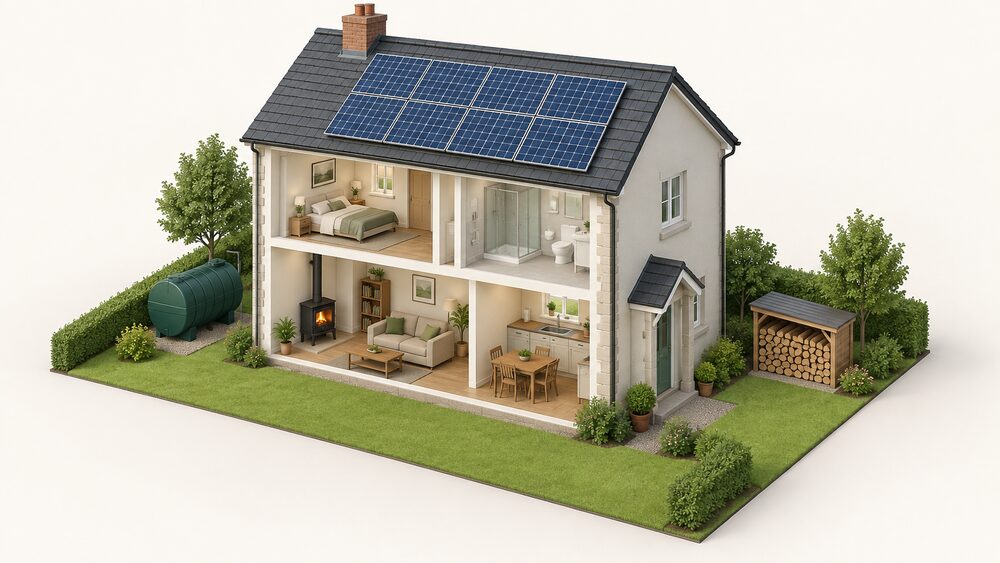
Homes off the gas grid heat with one of five fuel routes: heating oil, liquefied petroleum gas (LPG), solid fuels, mains electricity, or microgeneration such as solar, wind and hydro1. More than one million homes are not connected to the gas grid and use oil, LPG, electric heating or renewable energy for heat2. Oil boilers are the main heating method in 5% of homes, according to official statistics from winter 20253.
The choice matters because off-grid households sit outside the Ofgem price cap that governs mains gas and electricity. Heating oil prices doubled in recent weeks for off-gas homes in one 2026 report4, and refill prices doubling were reported separately5. Off-grid homes are also the most difficult to treat, and many owners already support their system with secondary heating such as wood burners6.
This page sets out what each fuel is, what it costs in carbon and cash terms, how the four nations differ, and what each option means for a household's energy independence.
The five fuels an off-gas-grid home can heat with
Official guidance lists the fuels used by off-gas grid households as heating oil, liquefied petroleum gas (LPG), solid fuels, mains electricity, and microgeneration1. That is the full menu. Each has a different supply chain, a different carbon profile and a different relationship with the grid.
Microgeneration is defined in legislation as relying wholly or mainly on biomass, biofuels, fuel cells, photovoltaics, water (including waves and tides), wind, solar power, geothermal sources, combined heat and power systems and other sources of energy or technologies for the generation of electricity or the production of heat10. In practice, for a single dwelling, that means solar panels, a small wind turbine, a micro hydro plant or a biomass boiler.
The policy direction is toward electrification. The scenario to meet the fifth carbon budget includes the cost effective uptake of 1.2 million heat pumps in homes off the gas grid by 2030, plus a further 20% of non-residential heating by the same year8. In Northern Ireland, a 2023 consultation proposed that under Option 1, heat pumps or alternative solutions (potentially biofuel) would be required in areas without access to mains gas11.
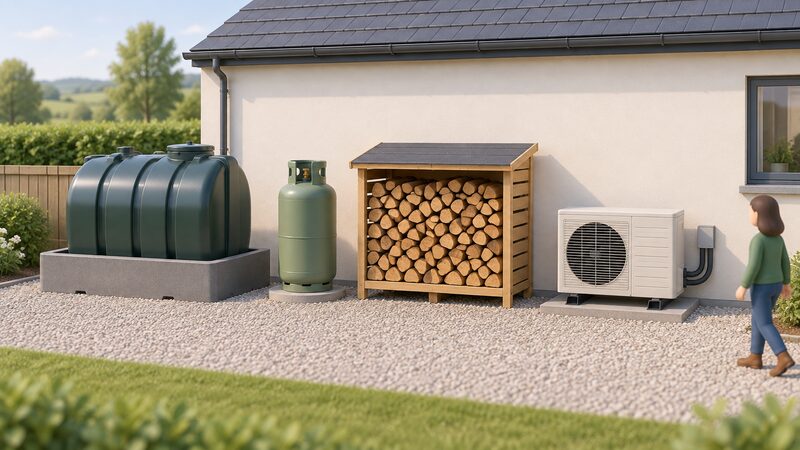
For a household, the five fuels divide into two groups. Oil, LPG and solid fuels are delivered and stored on site, so the home holds its own stock and is independent of the gas network but dependent on a distributor and a tank or store. Electricity and microgeneration connect the home to the grid or to its own generation, which changes both the carbon profile and the resilience picture.
Heating oil and LPG: the dominant fuels for most off-grid homes
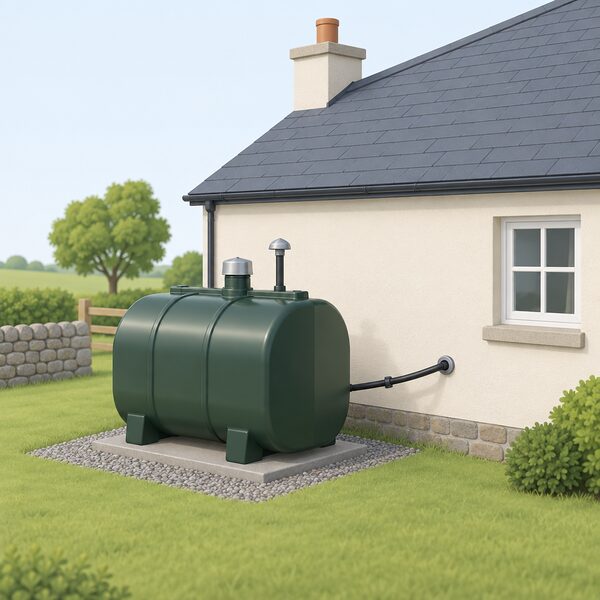
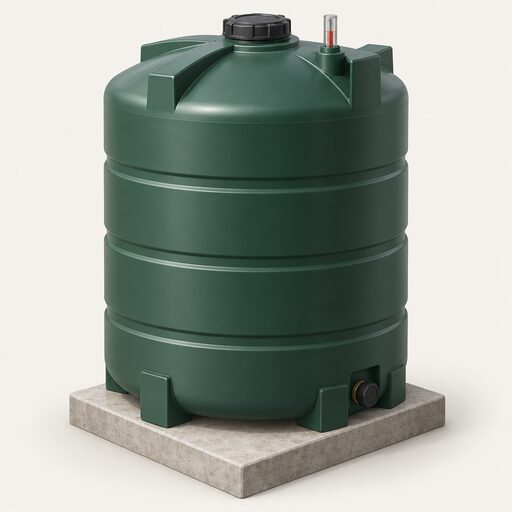
Heating oil is an alternative fuel used to heat homes and buildings that aren't connected to the gas grid12, and it is often used in homes across the UK and Ireland in that position13. Homes not connected to the main gas grid typically use more carbon intensive heating methods or solutions such as oil and solid fuels14.
LPG occupies a different niche. Some two million properties are off-grid and therefore depend on alternative fuel sources for heating and cooking7, and a separate figure puts some four million properties off-grid on the same basis15. The two numbers come from different documents and are not reconciled here.
On carbon, LPG emits 33% less CO2 than coal and 12% less than oil16. Independent guidance confirms LPG has lower carbon emissions than oil17. On cost, the picture reverses: LPG is the most expensive of the three fuel types compared with gas and oil18, and it is one of the most expensive heating fuels, with homeowners usually tied into long contracts19. The same disadvantage is repeated in a second guide20. Installation, however, is significantly cheaper than electric, oil and air source heat pumps15.
| Fuel | Carbon position | Cost position | Supply arrangement |
|---|---|---|---|
| Heating oil | More carbon intensive than LPG14 | Comparable annual running costs to mains gas over the long term19 | Bulk purchase, upfront cost4 |
| LPG | 12% less CO2 than oil7 | Most expensive of gas, oil and LPG18 | Long contracts common19 |
| Solid fuels | High carbon; coal being phased out in England21 | Varies by fuel and stove22 | Delivered and stored on site |
| Mains electricity | Lower carbon intensive than fossil fuel heating23 | Standard or off-peak tariff | Grid connection required |
| Microgeneration | Lowest where generation is renewable24 | High initial cost, long-term savings25 | On-site generation |
"The biggest disadvantage of LPG is that it is one of the most expensive heating fuels, and homeowners are usually tied into long contracts"
Solid fuels and coal: traditional but high-carbon
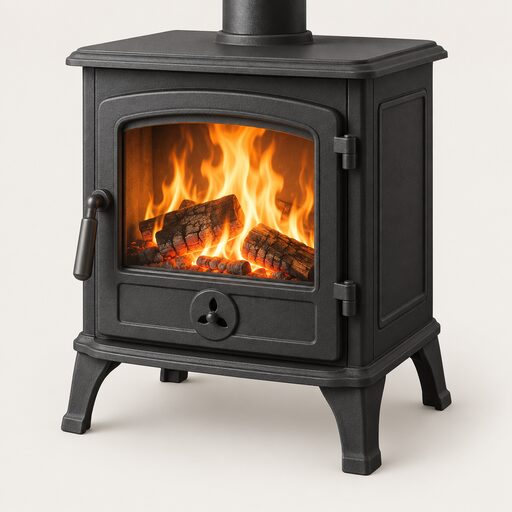
Solid fuel heating ranges from simple open fires and stoves, useful as secondary heating, to more sophisticated biomass boilers that run on specially-prepared pellets19. Coal was the default choice of domestic fuel in the UK, but its use has fallen with the development of modern central heating systems, and it is still used in smokeless forms in solid fuel stoves17.
The regulatory position has tightened. Traditional house coal can no longer legally be sold in England, and alternatives must carry the Ready to Burn certification mark for manufactured solid fuels21. That is an England-only rule; households in Scotland, Wales and Northern Ireland face a different position, and the equivalent rules for those nations are not set out here.
Where solid fuel is burned, the physics favours coal on heat output: coal has a much higher density than wood so it delivers more heat22. That is precisely why it is high-carbon. Biomass boilers running on pellets are the lower-carbon end of this category, and government consultation on alternative clean heating solutions has covered infrared heating, solid biomass boilers using agricultural waste and renewable liquid fuels26.
For energy independence, solid fuel is the most self-contained option: a store of logs or pellets is held on site and does not depend on a supplier's delivery schedule in the short term. The dependence that remains is on the fuel supply chain, on dry storage, and on the air quality rules that govern what may be burned and where. Solid fuel is also the least compatible with a heat pump transition, since a stove and a heat pump compete for the same heat demand unless the stove is genuinely secondary.

Mains electricity and microgeneration as alternatives
Electric heating, both at the off-peak and standard rate, is now lower carbon intensive than fossil fuel heating alternatives23. The same finding is repeated in a second industry source27. That is a significant shift: it means a home on a standard electricity tariff can heat with a lower carbon footprint than one burning oil or LPG, even before any renewable generation is added.
Microgeneration changes the independence picture most. For houses with no mains connection but with access to a micro hydro site, a good hydro system can generate a steady, more reliable electricity supply than other renewable technologies at a lower cost28. Micro-hydro systems generate power from running water and are ideal for off-grid homes, offering long-term savings despite high initial costs25. Space and water heating can be supplied when available power exceeds demand28.
Heat pumps are the main electrified heating route. Hybrid heat pumps are recognised as a practical and affordable solution for both existing on-grid and off-grid homes6. The combination of a heat pump with an LPG or oil condensing boiler along with biofuel can significantly reduce carbon emissions for off-grid users6. Home Energy Scotland advises that it can help households explore options like installing a heat pump or other home energy upgrades which can reduce energy costs29.
Low carbon heating generally gives a significantly lower carbon footprint than other kinds of heating24. The dependence that remains with electrification is on the grid, a supplier and a tariff, plus the manufacturer's company for the equipment and any app or cloud service that controls it. Microgeneration reduces the first of those but not the last.
Why off-grid energy prices run higher and more volatile
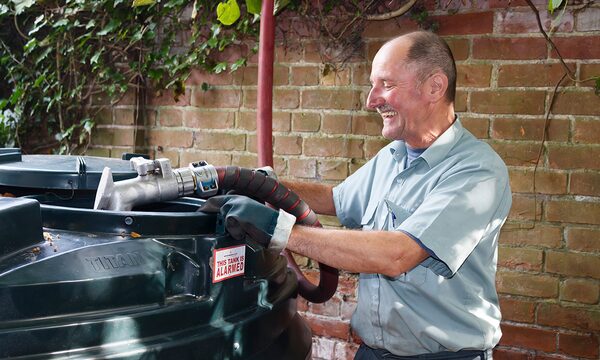
Off-gas homes sit outside the protection of the Ofgem price cap4. That single fact explains most of the price difference. The cap governs mains gas and electricity, and it has risen as a result of ongoing volatility in wholesale gas markets30. A household burning oil or LPG is exposed to a different market entirely.
The volatility is real and recent. Heating oil prices doubled in recent weeks for off-gas homes sitting outside the protection of the Ofgem price cap4. Off-gas households relying on heating oil have reported refill prices doubling in recent weeks5. One report attributes immediate impacts on the price of fuel at the forecourt to the crisis caused by President Trump's decisions on Iran4.
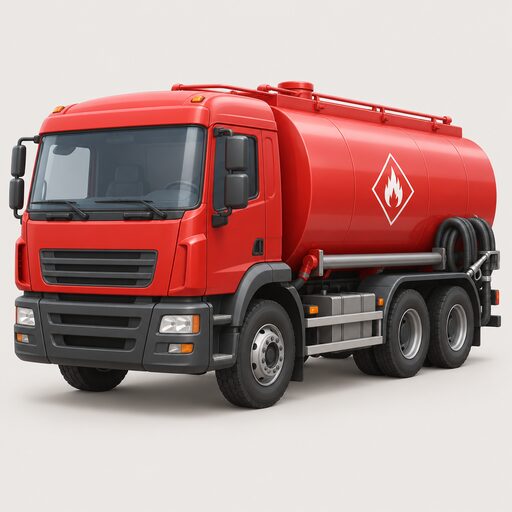
Against that, longer-term comparisons show heating oil has comparable annual running costs to mains gas19, and the same point appears in a second guide20. The pattern is not that oil is always dearer, but that the timing of a bulk purchase drives the bill. Off-grid households often buy in bulk, with upfront costs4, so a refill landed in a spike month costs far more than one landed in a quiet month.
The affordability picture is stark. More than 9-in-10 (93%) of off-grid homeowners would not be able to afford to decarbonise their heating system via heat pumps, and over a quarter (28%) of homeowners living off the gas grid have said that they would not be able to afford a new heating system9. Renewable liquid fuels, blending and hybrids are all offered as choices to the consumer in this transition4.
How to tell whether a property is off the gas grid
Official scheme rules define an off-gas grid property as one that is not attached to a heat network, not fuelled by mains gas, has no record of an existing gas meter point at the property, and is not a new-build property31. A simpler working definition used in scheme guidance is a home that does not use mains gas for heating purposes32. Home Energy Scotland's plain version is a home that is not connected to the natural gas network29.
In practice, the test is whether a gas meter point exists and whether a pipe serves the property. A home with no meter record and no connection is off the grid, whatever fuel it currently burns. This matters because grant schemes and advice services use the definition to decide eligibility, and because the definition determines which decarbonisation route a property is expected to take.
The numbers vary by nation. Around 9% of Scottish dwellings on the gas grid use an alternative fuel, such as electricity, as their main heating fuel33. That figure describes dwellings on the gas grid using something else, which is a different measure from the off-grid count, and the two should not be conflated.
For a household planning work, the practical next step is to establish the current fuel, the age and condition of the heat source, and whether the property has any renewable generation already. A home energy assessment establishes the baseline, and a whole house plan sets the order of work. Households in Scotland can use Home Energy Scotland for funded advice, and those in Northern Ireland have NI Energy Advice.
What each fuel means for household energy independence
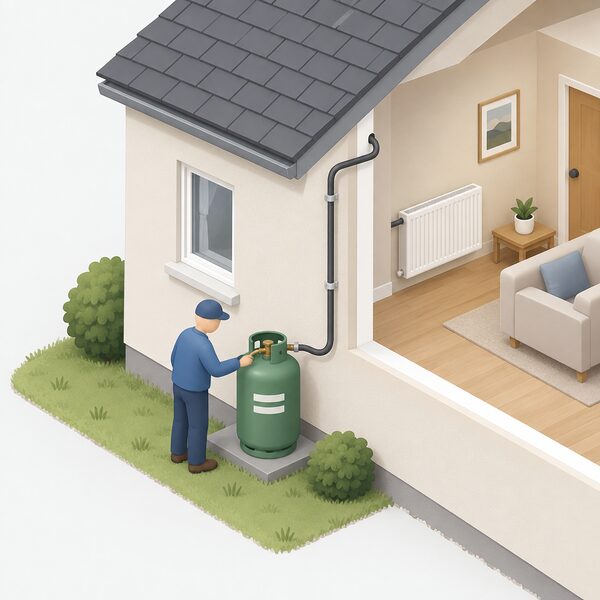
Every off-grid fuel trades one dependence for another. Oil and LPG give a home its own stored stock, so a delivery delay does not immediately stop the heating, but they tie the household to a distributor, a tank or cylinder contract, and a price it cannot cap. LPG contracts in particular are described as long, which limits switching19.
Solid fuel is the most self-contained in the short term and the most constrained by air quality rules, with traditional house coal no longer legally sold in England21. Electricity and heat pumps remove the fuel delivery entirely but replace it with a grid connection, a supplier and a tariff, and with the manufacturer's company for the equipment and any app that runs it.
Microgeneration is the only route that reduces dependence on an external supplier rather than shifting it. A micro hydro site can generate a steady, more reliable electricity supply than other renewable technologies at a lower cost28, and micro-hydro is described as ideal for off-grid homes with long-term savings despite high initial costs25. Solar, wind and biomass sit in the same category under the legislative definition10.
The direction of policy is toward heat pumps in off-gas homes, with 1.2 million targeted by 2030 under the fifth carbon budget scenario8, and Northern Ireland consulting on requiring heat pumps or alternatives such as biofuel where there is no mains gas11. For a household, that means the fuel decision made now shapes what is feasible later. The getting started guide sets out how to sequence the work, and planning for energy independence covers the wider route.
Sources33 cited
- Fuel poverty and off-gas grid households, House of Commons Library, 2026
- The best heating for your home, Which?, 2025
- Public attitudes tracker: heat and energy use in the home, winter 2025, Department for Energy Security and Net Zero, 2025
- COBRA must act on energy costs, not just talk, End Fuel Poverty Coalition, 2026
- Government urged to prepare emergency energy bill support, End Fuel Poverty Coalition, 2026
- Hybrid heat pumps guidance, HHIC, 2026
- New to LPG, Liquid Gas UK, 2026
- Heat pumps significant for UK heat policy, Eurovent Certification, 2020
- The views of rural households, Liquid Gas UK, 2026
- Microgeneration (Northern Ireland) Regulations 2015, legislation.gov.uk, 2015
- Building regulations discussion document 2023, Northern Ireland Department of Finance, 2023
- Heating oil and other alternative fuels, House of Commons Library, 2026
- Heating oil buying guide, UKIFDA, 2026
- Rural households and net zero, Liquid Gas UK, 2026
- LPG in the home, Liquid Gas UK, 2026
- What is LPG, Liquid Gas UK, 2026
- Heating fuel guide, Uswitch, 2026
- Boilers, Energy Saving Trust, 2026
- What heating options are available off the grid?, OFTEC, 2026
- What heating options are available off the grid?, OFTEC, 2026
- Log burner rules, HETAS, 2026
- Energy efficient heaters, Uswitch, 2026
- What are the benefits of electric heating and hot water?, BEAMA, 2025
- Renewable heat: right for your home, Energy Saving Trust, 2026
- Sustainable home energy solutions, Planning Portal, 2024
- Government expands Boiler Upgrade Scheme to include low carbon heating solutions, Electrical Contractors' Association, 2025
- Benefits of electric space and water heating, BEAMA, 2026
- Hydro electricity, Planning Portal, 2026
- Support for people in rural homes, Home Energy Scotland, 2026
- Explaining the October 2026 price cap, Energy UK, 2026
- Boiler Upgrade Scheme guidance for installers, Ofgem, 2026
- Warm Homes: Social Housing Fund Wave 3 scheme guidance addendum, Department for Energy Security and Net Zero, 2026
- Scottish House Condition Survey 2024: key findings, Scottish Government, 2024
 Heating Off the Gas GridThe options for the four million UK households with no mains gas connection: oil, LPG, electric, heat pump, biomass and solid fuel, and how their costs, storage and supply security compare.
 Living Off the Gas GridNo mains gas at your home?
 Energy IndependenceA heat pump runs your heating on electricity instead of gas or oil, so how much does that really cut what you pay and how exposed you are when fuel prices jump?
 Energy in Rural HomesHeating a rural home costs more because there is often no gas supply, so you rely on oil or electricity instead.
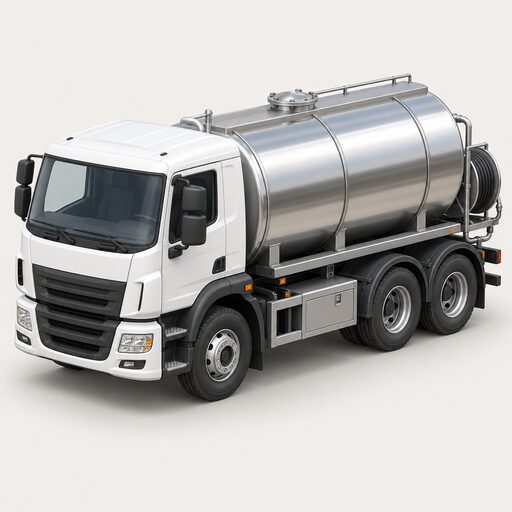 Heating Oil and LPG SupplyHow heating oil and bulk LPG reach off-grid homes, who owns the tank, what the fuels cost, why neither is covered by the price cap, and what supply risk looks like in winter.
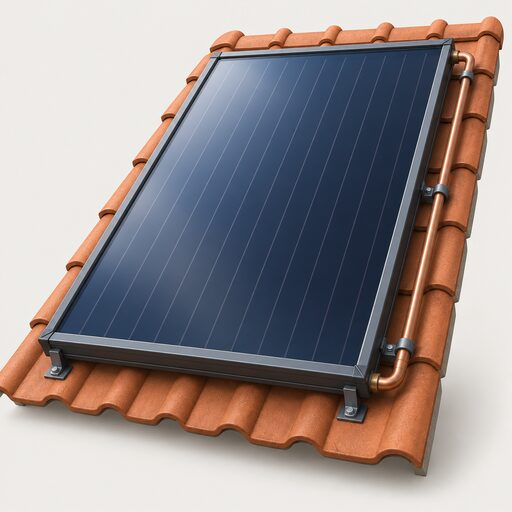 Heating and Energy IndependenceCan you heat your home without relying on gas or oil, and what would that take?