
In this comparison
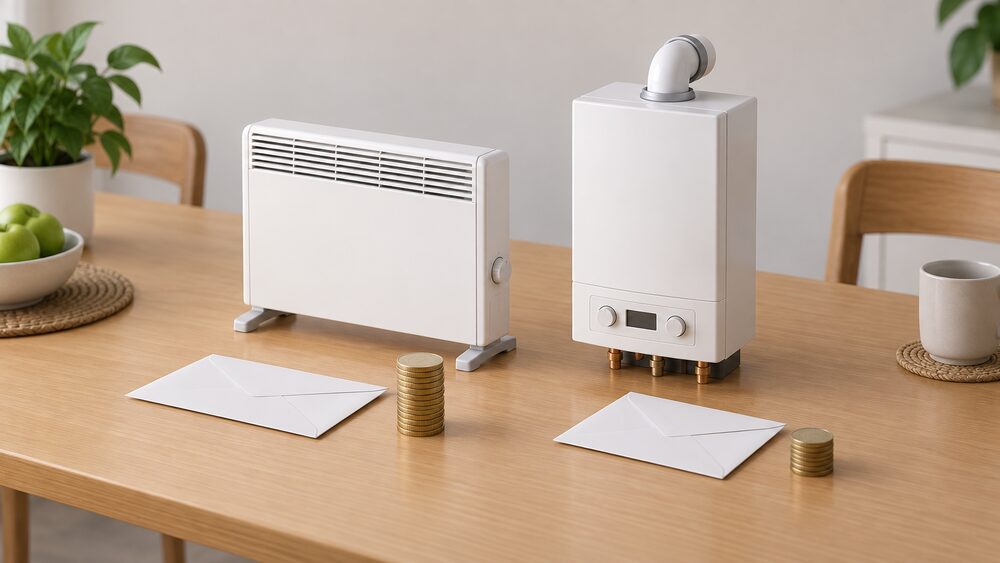
Electric heating is more efficient than a gas boiler at the point of use, and it still costs more to run. Electric heaters turn all the electricity they use into heat, and portable electric heaters are described as almost 100% energy-efficient1. Gas heating wastes some of its fuel. Yet electricity is priced at around four times gas per kWh, and some electrically heated homes face bills up to three times those of homes heated using gas3.
The gap is a price ratio, not an efficiency ratio. Heat pumps are around three to four times more efficient than gas boilers, which should lead to lower household energy bills, but the Climate Change Committee states the electricity-to-gas price ratio is still too high for households who switch to heat pumps to see the full benefit of that efficiency5. Where the ratio exceeds 3.4 to 1, heat pumps become more expensive to run than gas boilers under existing market arrangements7.
For a household weighing the two fuels, the practical picture is this: direct electric heating such as panel heaters, storage heaters and electric boilers is much less efficient than a heat pump, carries very high running costs and imposes extra stress on the grid, while a heat pump in a well-insulated home is reported to cost about the same to run as a gas boiler for a typical-sized home4. The sections below set out how each system converts fuel, what the efficiency figures actually measure, and what remains outside a household's control.
How the two systems turn fuel into heat
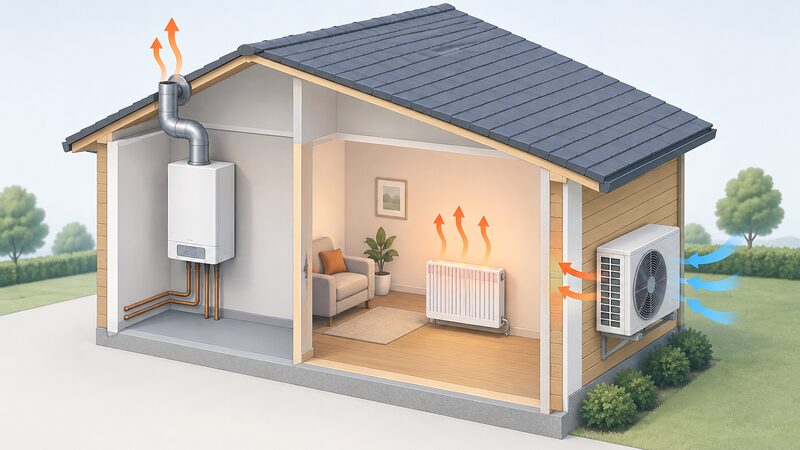
Electric heating is any system that uses electricity as the main energy source to heat a home1. That covers direct resistance heating, where a current passes through an element and the heat is released into the room, and heat pumps, which use electricity to move heat from outside air or ground into the building rather than to create it. Heat pumps require electricity to operate but generally produce more energy as heat than the electricity they use9.
Gas heating burns methane in a boiler and distributes the heat through water to radiators or underfloor loops, or through air in the case of gas fires and fixed gas heaters. The combustion step is where the losses sit: some of the fuel's energy leaves through the flue rather than entering the water. That is the structural difference between the two, and it is the reason a resistance heater can claim near-total conversion while a boiler cannot.
The two fuels also occupy different shares of a household's consumption. Households consume a larger proportion of gas, over half, than electricity, around a third8. That split reflects how much of domestic demand is space heating and hot water, and it is why the price of gas dominates most household energy bills.
Storage heating adds a third pattern. A storage plus direct acting configuration in existing dwellings, when correctly sized and properly installed, draws only 10% of its heating demand from peak rate electricity, with the rest taken overnight on cheaper rates10. That is a load-shifting arrangement rather than an efficiency gain, and it depends on the property being set up for it.
Efficiency: electric heaters convert all their electricity to heat, gas boilers do not

The efficiency claim for electric resistance heating is straightforward. Portable electric heaters are almost 100% energy-efficient, converting nearly all energy into heat2. Electric central heating uses 100% of the electric for heat, unlike gas, some of which gets wasted11. Electric heaters are more efficient than gas boilers because all the electricity they use is turned into heat12.
That figure measures one thing only: the proportion of delivered energy that becomes useful heat inside the home. It says nothing about how the electricity was generated, what it cost, or what happens at the meter. A resistance heater with 100% conversion and a heat pump with a coefficient of performance of three both deliver heat, but the heat pump delivers roughly three units for every unit of electricity, which is why heat pumps are typically over three times more efficient than the most efficient gas boilers or electric heaters13.
Cooking illustrates the same distinction at a smaller scale. Gas hobs run at around 40% efficiency and electric hobs at around 75%14. The electric appliance converts more of its input into useful heat on the hob, and the gas appliance is generally cheaper to run because the fuel costs less.
"Electric heaters are more efficient than gas boilers as all the electricity they use is turned into heat"
The efficiency advantage is therefore real but narrow. It applies to the conversion step, and it is the reason direct electric heating is not dismissed outright on technical grounds. It does not extend to the cost of the fuel, and it does not by itself make an electrically heated home cheaper to run.
Running costs: why electrically heated homes can pay up to three times as much
Electricity costs around four times as much as gas per kWh12. The Energy Saving Trust puts electricity at around four times more expensive than gas per unit, and notes that direct electric heating typically has high running costs because standard rate electricity is more expensive than gas or oil1. Electric central heating is usually more expensive because electricity unit prices are up to four times more costly than gas11. The Scottish Government's consultation recorded electricity prices at 4 to 5 times greater than gas15.
The bill consequence is larger than the unit price gap alone, because policy costs are distributed unevenly across the two fuels. Some electrically heated homes face bills up to three times those of homes heated using gas, and electric heating users pay nearly eight times as much in levies and taxes as gas heating users4. The Climate Change Committee has previously found that higher increases would be required for households with electric heating, given that additional costs would fall disproportionately on that group, and that electrically heated homes are particularly exposed to the costs of low-carbon policies16.
| Measure | Electric heating | Gas heating |
|---|---|---|
| Unit price relative to gas | Around four times gas per kWh12 | Baseline |
| Levies and taxes paid | Nearly eight times gas heating users4 | Baseline |
| Bills in the worst cases | Up to three times gas heated homes4 | Baseline |
| Reported warmth shortfall | 34% say heating does not always keep them warm18 | 24%18 |
The Scottish House Condition Survey found that households with electric heating were more likely to report that their heating does not always keep them warm, at 34% against 24% for gas heated households18. That is a comfort finding rather than a cost one, but it points the same way: the fuel that is more efficient at the point of use is not delivering a better outcome for a substantial minority of the homes using it.

Gas heating is three to four times cheaper per unit of heat
Gas is still around four times cheaper than electricity19. The retail price of electricity per kWh is approximately four times more expensive than gas20. Electricity unit prices are currently at around four times the price of gas, so on average every unit saved makes a larger difference to an electricity bill than to a gas one6.
That ratio is the single figure that decides most of the comparison. It has been stable in direction for years: historically, electricity has been more expensive than gas, which erodes the effect that the energy savings from using heat pumps have on bills7. The ratio has moved within a band rather than reversing. The Scottish Government recorded 4 to 5 times in 202115, the Energy Saving Trust records around four times, and the Climate Change Committee's 2025 progress report treats the ratio as still too high for heat pump households to capture the full benefit of efficiency6.
The comparison with other fuels puts gas at the cheap end. The UK average cost of heating a typical three bedroom house is around 50% higher with heating oil than with mains gas21. Electric heating sits above gas on the same measure, and its carbon footprint per unit of heat delivered is around three times that of gas and twice that of oil-fired central heating22.
For a household on the gas grid, the arithmetic of switching to direct electric heating is therefore unfavourable on running cost, whatever the efficiency figure says. For a household off the gas grid, the comparison is against oil or LPG rather than gas, and the gap narrows, though electricity remains more expensive per unit than either.
Why efficiency alone does not decide the bill
Efficiency decides how much heat each unit of energy delivers. The bill is decided by that figure multiplied by the price of the unit, and the price is set by the market and by policy rather than by the appliance. Even though electric heating is more efficient than using a boiler, the higher cost of electricity more than offsets the efficiency gain1.
Heat pumps show what happens when the efficiency figure is large enough to matter. Heat pumps are around three-to-four times more efficient than gas boilers, which should lead to lower household energy bills5. For a typical-sized home, a heat pump currently costs about the same to run as a gas boiler, with the unit price of electricity almost four times higher relative to gas4. The efficiency gain and the price penalty roughly cancel in that case, which is a different outcome from direct electric heating, where there is no efficiency gain to offset the price.
The building itself is part of the calculation. More energy efficient houses, as measured by the EPC rating, tend to have lower gas consumption, even after adjusting for floor area23. The lower the flow temperature, the better the efficiency of the heat pump, and the lower a household's electricity use24. A heat pump installed in a poorly insulated home may increase energy bills instead, because electricity is more expensive than gas25. The same heat pump in a fabric-first retrofit performs differently.
| System | Efficiency at point of use | Running cost position |
|---|---|---|
| Direct electric (panel, storage, electric boiler) | Near 100% conversion2 | Very high running costs4 |
| Heat pump | Over three times the most efficient gas boiler13 | About the same as a gas boiler for a typical-sized home4 |
| Gas boiler | Loses some fuel as flue losses11 | Baseline, gas around four times cheaper per unit19 |
Electric boilers sit in the direct electric group and carry an additional constraint: they typically have lower maximum outputs than gas and oil boilers, so may struggle to meet the higher heating demands of larger homes19. Running an electric boiler is likely to increase heating bills compared with running a gas model, because electricity is more expensive per kWh than gas19.
Time of use tariffs change the picture only for electricity. They are only relevant to electricity usage, as gas is not generated on demand in the same way26. A household that can shift demand into cheaper periods can reduce the effective unit price of electricity, which is the mechanism behind the 10% peak-rate figure for correctly configured storage heating10. That is a tariff arrangement, not an efficiency one, and it does not apply to gas.
What the comparison means for household energy independence
Neither fuel delivers independence on its own. A gas heated home depends on the gas grid, on imported gas, and on a supplier. An electrically heated home depends on the electricity grid, on a supplier, and on whatever generated the power. The household buys its heat either way, and the price it pays is set outside the home.
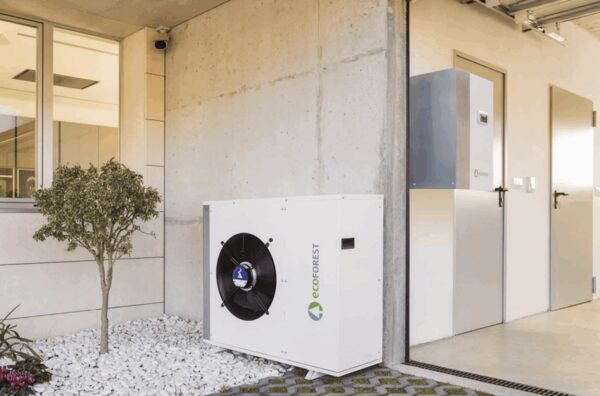
The energy volume differs sharply. The higher efficiency of a heat pump means the amount of energy needed can be less than a third the amount of energy needed by a gas boiler to produce an equivalent amount of heat27. That is a reduction in the quantity of energy a household must buy, and it is the strongest independence argument in the comparison. It does not remove the dependence, but it shrinks the exposure.
The price exposure runs the other way. Reducing the price of electricity relative to gas would make heat pumps more competitive28. The Climate Change Committee's 2026 assessment states that faster electrification would cut UK household bills29. Until the ratio moves, a household that electrifies its heat takes on a larger unit price in exchange for a smaller energy volume, and the net effect depends on the building and the tariff.
Scotland's framework illustrates the tension. The current EPC framework is not compatible with incentivising the uptake of zero emissions heating, because mains gas fuel price is significantly lower than electricity, so mains gas heating may achieve a better Energy Efficiency Rating than a zero emissions heating system in an equivalent building30. A rating that rewards the cheaper fuel rather than the lower energy use is a policy artefact, but it reflects the same underlying price relationship that households face.
For a household thinking about independence rather than cost alone, the useful questions are how much energy the home needs, how well the fabric holds it, and what the unit price of the chosen fuel is likely to do. The comparison between electric and gas heating answers the second and third of those, and leaves the first to the building. Households with electric heating were also more likely to report that their heating does not always keep them warm, at 34% against 24% for gas heated households, which suggests that for some homes the electrification decision has not yet been matched by the fabric and system design needed to make it work18.
Sources30 cited
- Electric heating, Energy Saving Trust, 2026-07-01
- Energy efficient heaters, Uswitch, 2026-07-01
- The UK needs more affordable electric heating tariffs, E3G, 2025-07-04
- Domestic heating technology options, Nesta, 2025-02-03
- The Seventh Carbon Budget, Climate Change Committee, 2025-02-26
- Insulation and heat pumps: the perfect pairing, MIMA, 2026-09-20
- Benefits of heat pumps and the role of electricity and gas prices, UKERC, 2023-03-29
- Policy solutions: taking immediate action to make bills affordable this winter, Energy UK, 2024-07-22
- Microgeneration planning advice, Scottish Government, 2013-03-04
- What is direct electric space heating and where is it best used, BEAMA, 2025-09-01
- Central heating systems, Uswitch, 2022-09-25
- Electric central heating, Which?, 2025-09-22
- Bristol Warm Homes Plan, Bristol City Council, 2025-04
- Energy efficient cooking, Uswitch, 2025-01-27
- Delivering net zero for Scotland's buildings: heat in buildings bill consultation analysis, Scottish Government, 2021-02
- CCC analysis: low carbon policies account for only a small part of energy bill increases, Climate Change Committee, 2013-10-21
- Low carbon policies provide insurance against risk of high costs of unabated gas-fired generation, Climate Change Committee, 2012-12-13
- Scottish House Condition Survey 2024: key findings, Scottish Government, 2026-02
- What type of boiler should your next one be, Which?, 2022-02-17
- Heat in Buildings Strategy consultation, Scottish Government, 2026-01-29
- Warm Home Discount cost recovery: government response, Department for Energy Security and Net Zero, 2026-09-17
- Heating fuel, Uswitch, 2026-01-27
- National Energy Efficiency Data Framework: need report summary of analysis 2026, Department for Energy Security and Net Zero, 2026
- Air and ground source heat pumps, London Borough of Croydon, 2026-09-17
- Progress in reducing emissions: 2025 report to Parliament, Climate Change Committee, 2025
- Science and Technology Committee inquiry, House of Commons Science and Technology Committee, 2016-09-16
- Heat in Buildings Strategy, Scottish Government, 2021-10
- Research briefing on heat pumps, Parliamentary Office of Science and Technology, 2026-09-19
- Faster electrification would cut UK household bills, say climate advisers, Climate Change Committee, 2026-06-24
- Domestic EPC reform consultation, Scottish Government, 2021-07-23
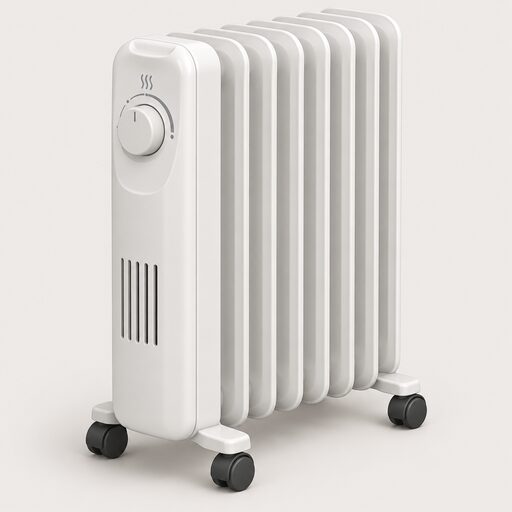 Electric Radiators and PanelsDo electric radiators cost more to run than gas heating, and are they worth it for one room or a whole house?
 Unit Rates by RegionWhy do electricity and gas prices differ depending on where you live?
 UK Energy Prices vs EuropeWhy does the UK pay so much for electricity when our gas is cheaper than most of Europe?
 Running Costs by FuelHow the cost of heat compares across mains gas, heating oil, LPG, electricity, solid fuel and heat pumps once efficiency and the price cap are applied.
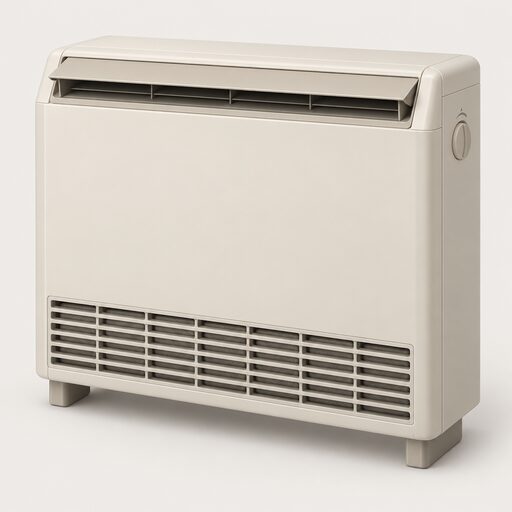 Electric Heating CostsHow to work out what electric radiators, panel heaters, infrared and storage heaters cost to run per hour and per season.
 Energy IndependenceA heat pump runs your heating on electricity instead of gas or oil, so how much does that really cut what you pay and how exposed you are when fuel prices jump?