

In this guide
Daikin is one of the largest heat pump manufacturers selling into UK homes, and the only one of the four market leaders whose UK range spans air-to-water, air-to-air and hybrid systems. The company states that it specialises in all three, and that its heat pump technology has been in development since 19581. For a household, the practical question is which of those three types fits the building, what it costs, and how much of the system still depends on the grid, a gas supplier or a manufacturer's app.
On cost, the independent figures cluster around £8,000 to £15,000 for a heat pump bought and installed, with a typical figure of approximately £13,000 and a range of £6,800 to £17,700 in one estimate2. Daikin's own headline running-cost claim is that in a typical four-bedroom home a Daikin heat pump can cost over £110 a year less to run than a gas boiler5. The warranty is a standard 2 years on air-to-water products, extended free from 2 to 5 years once the installer registers the unit on the Stand By Me platform6.
Daikin's position in the UK market is substantial. It accounted for approximately 28% of MCS-certified installed heat pumps between January 2010 and September 2021, and is one of four manufacturers, alongside Mitsubishi Electric, Vaillant and Samsung, accounting for nearly two-thirds of total annual UK air source heat pump sales7.
What Daikin offers UK households: air-to-air, air-to-water and hybrid
Daikin's UK residential range divides into three system types, and the choice between them is the first decision a household faces. Air-to-water heat pumps provide heating, cooling and warm water, and Daikin describes them as heating the home, cooling the spaces and providing warm water10. Air-to-air heat pumps provide both heating and cooling, extracting warmth from outside air in winter and reversing to cool indoors on hot days, but they do not produce domestic hot water11. Hybrid heat pumps combine a heat pump with an existing or new gas boiler, and can also connect air-to-air indoor units for cooling12.
The three types differ in what they replace. An air-to-water unit is a full replacement for a boiler and its hot water cylinder arrangement, and Daikin states that domestic hot water will also be provided via the heat pump4. An air-to-air unit is a replacement for the heating and cooling function only, leaving hot water to another source. A hybrid keeps the gas boiler in place and adds a heat pump alongside it, which means the household remains connected to the gas grid.
Daikin states that all three types are easy to install by one of its Sustainable Home Network professionals and can be integrated with existing radiators or underfloor heating1. A hybrid system can be configured either to replace a gas boiler while keeping existing radiators, or to connect air-to-air indoor units for cooling, and a multi air-to-air heat pump can connect one outdoor unit with up to five indoor units12.
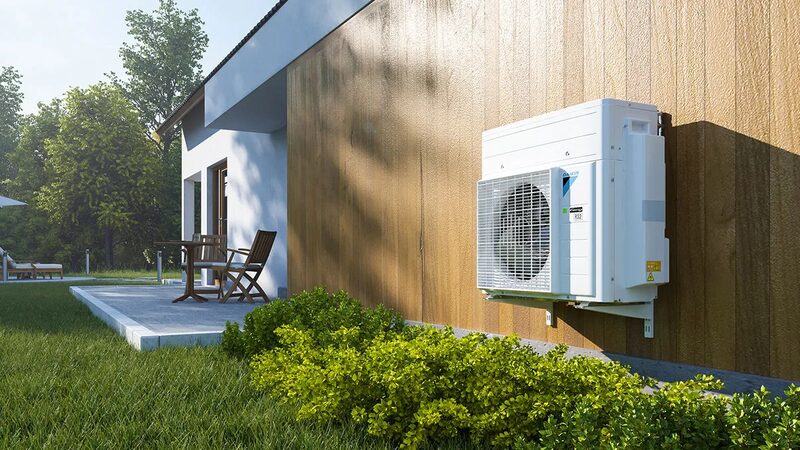
Range and specifications: Altherma, high-temperature units and hybrids
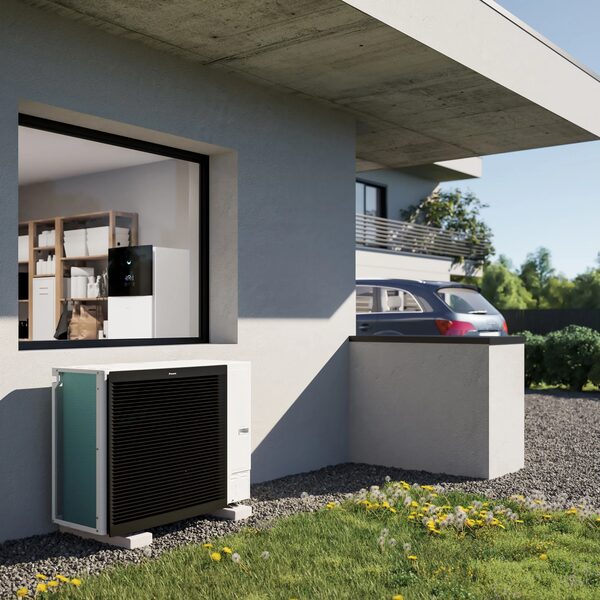
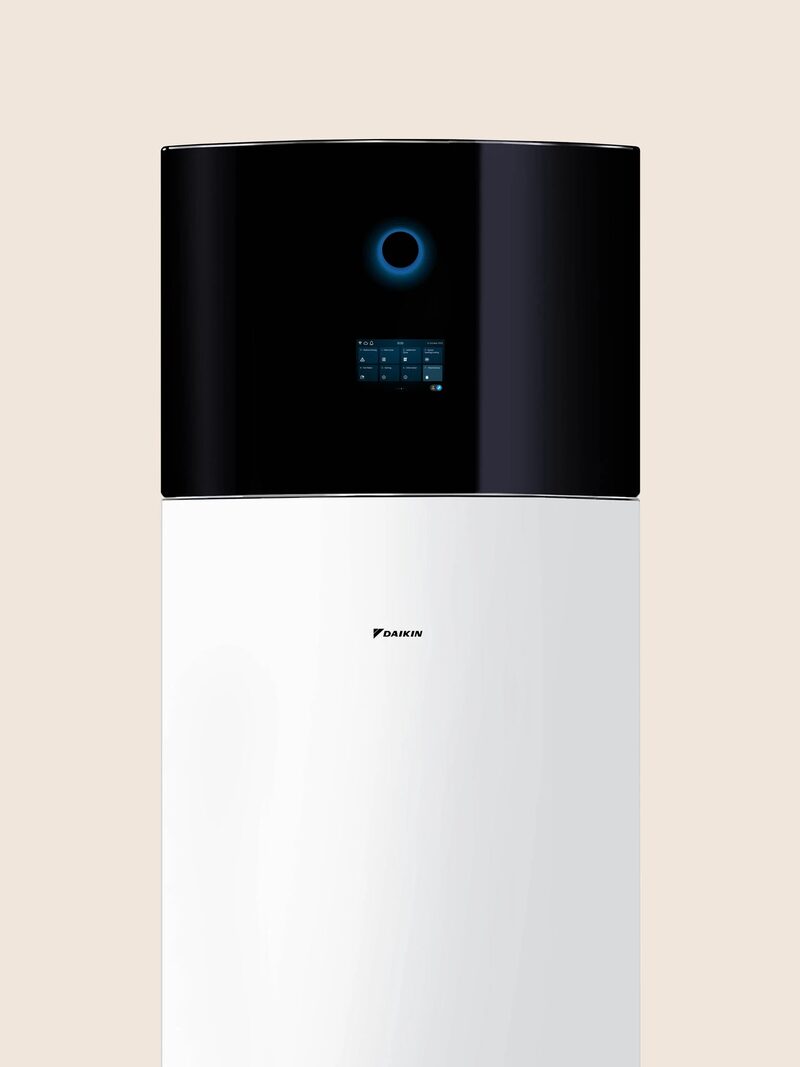
The Altherma name covers Daikin's air-to-water heat pumps, and the high-temperature variants are aimed squarely at retrofit. Daikin describes them as an easy replacement for an old heating and hot water system, and the same wording appears on both the air-to-water category page and the high-temperature product page10. That positioning matters for older UK housing stock, where radiators were sized for a boiler running at higher flow temperatures.
The hybrid range is built around automatic mode selection. Daikin states that the system automatically selects the most efficient operation mode, meaning whether to use the heat pump, the boiler or both, based on the prices of electricity and gas and the outdoor temperature12. The company lists five parameters that define hybrid operational efficiency: electricity price, gas price, outdoor temperature, heat pump efficiency and hot water temperature12. Hybrid models are described as compact and space-saving12.
| System type | What it provides | Hot water | Notes |
|---|---|---|---|
| Air-to-water (Altherma) | Heating, cooling, warm water10 | Yes, via the heat pump4 | High-temperature variants for replacing old systems13 |
| Air-to-air | Heating and cooling11 | No | Can be added as a multisplit with solar PV to an existing gas boiler11 |
| Hybrid | Heat pump plus gas boiler12 | Via the boiler | Up to five indoor units on one outdoor unit12 |
Daikin's air-to-air units can also be added as a multisplit system with photovoltaic solar panels to an existing gas boiler, with radiators acting as a secondary heat source in cold snaps11. That arrangement keeps the boiler as backup while shifting part of the load to electricity generated on the roof.
Efficiency and refrigerants: why seasonal performance shapes running costs
The efficiency figure that matters for running costs is not a single test number but a seasonal one. The Energy Saving Trust explains that a Seasonal Coefficient of Performance (SCoP) or Seasonal Performance Factor (SPF) shows efficiency averaged across the whole year14. A heat pump's real-world performance therefore depends on how it is designed and operated over a heating season, not on a badge.
CIBSE sets out what drives that figure: system design, operating temperatures, building fabric performance, emitter sizing, controls strategy and commissioning quality15. Daikin makes the same point about fabric, stating that proper insulation will boost a heat pump's efficiency and positively impact running costs4. For a poorly insulated house, Daikin states that a larger heat pump will be required, which will cost more to install and run11.
Running costs can also be shifted by when the heat pump operates. MCS notes that allowing heating to run at times when electricity is cheaper, through time of use tariffs and the demand flexibility service, is part of how a heat pump system is run16. That is a control strategy rather than a hardware feature, and it depends on a smart meter and a tariff that offers cheaper periods.
For exhaust air heat pumps, the Energy Saving Trust states that the designed seasonal performance factor indicates running costs17. The same logic applies across the Daikin range: the seasonal figure, not the headline output, is the number to compare.
"Its efficiency depends on system design, operating temperatures, building fabric performance, emitter sizing, controls strategy and commissioning quality."
Cost: £8,500 to £13,000 installed, plus the £2,500 grant in England and Wales
There is no published Daikin list price for a supplied and fitted heat pump, so quotes come from installers after a survey. The independent figures give a working range. The Low Carbon Hub puts air source heat pump installation at £8,000 to £12,0002. Nesta gives about £10,500 to buy and install, with a range from £8,000 to £15,0003. A parliamentary committee report records a wider range of £8,000 to £15,000 depending on the work needed to the home18. Which? puts the typical cost at approximately £13,00019.
Costs also vary by property type. Nesta's median figures are approximately £9,700 for flats, £12,000 for semi-detached and terraced houses, and £14,000 for detached houses7. A separate estimate gives total costs of £6,800 to £17,700 with an average of £13,00020.
On grants, the Energy Saving Trust gives a cost to switch to a heat pump with government grant of £4,200 for England, Wales and Scotland21. The Centre for Sustainable Energy states that air-to-water heat pumps cost around £11,000 to install, but that the Boiler Upgrade Scheme provides a grant of £7,50022. The two documents give different grant figures and different resulting net costs, and the discrepancy is not resolved here.
Warranty: 5 years, extended by Daikin engineer commissioning
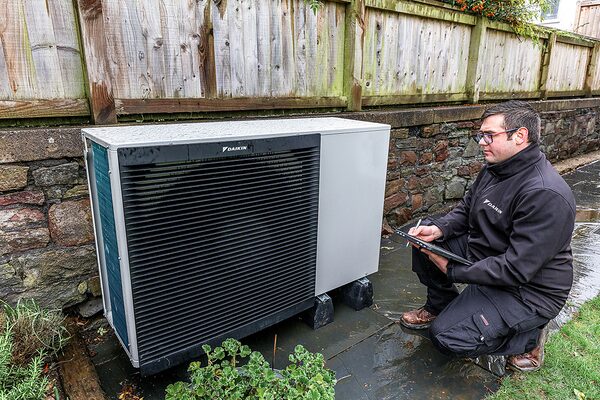
Daikin offers a standard 2 year warranty on all its air-to-water heat pump products6. The free extension from 2 to 5 years is claimed once the installer has registered the unit on the Stand By Me platform, and it can be claimed from the moment the unit is commissioned6. Registration is therefore the installer's action, not something the householder can complete alone.
Beyond the free extension, the terms depend on who fitted the system. Where the air-to-water heat pump was installed by a Daikin Sustainable Home Expert, an additional 2 years can be purchased, taking the total to 7 years6. Where it was installed by a Daikin Sustainable Home Installer, a warranty extension of up to 3 years can be claimed completely free6. For hybrid systems installed by a Daikin Sustainable Home Expert, the extension runs up to 5 years, or up to 7 years for hybrid systems6.
Both figures are given here as published, and the applicable term depends on the system type and the installer's accreditation.
Where Daikin sits in the UK market
Daikin's share of the UK heat pump market is significant but the figures come from different periods and measure different things. Nesta records Daikin at approximately 28% of MCS-certified installed heat pumps between January 2010 and September 20217. Government statistics for 2024 show at least 33 manufacturers supplying air source heat pumps in the UK, with Mitsubishi Electric, Vaillant, Daikin and Samsung accounting for nearly two-thirds of total annual UK sales8.
The wider market context is one of rapid growth from a low base. Around 1% of UK homes have a heat pump installed23. Government-supported heat pump installations in the year ending September 2024 were 98% air source24. Less than half of annual domestic heat pump installations are MCS registered25, and 58% of MCS certified contractors are certified for heat pumps26.
Manufacturing location is a separate question from brand. In 2025, 36% of heat pump sales were manufactured in the UK27, and the government predicts the market share will grow to around one half of heat pumps manufactured in the UK by 203028. The main companies manufacturing air source heat pumps in the UK in 2024 were Mitsubishi Electric, Vaillant, Ideal and Octopus Energy, with a total market share of 34%8. Daikin does not appear in that list of UK manufacturers, so its units sold here are imported.
The government's longer-term target is up to 1.9 million heat pump installations a year by 203529, with hydronic heat pumps taking 78% of new installations in that year30. For a household, the relevant point is that Daikin is an established supplier with a large installed base, which supports the availability of service and spare parts.
Owning a Daikin heat pump: Onecta, Hive and servicing
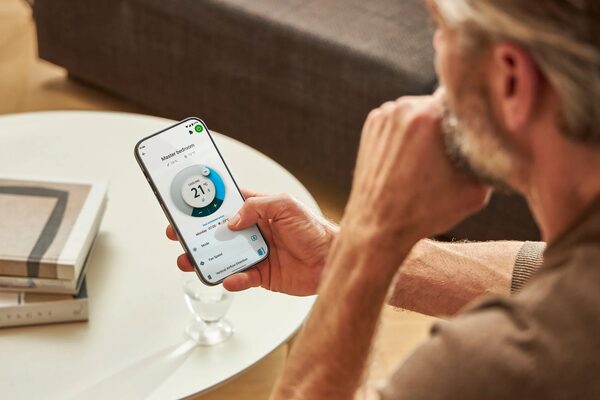
Daikin's control layer runs through the Onecta app, which the company describes as free and able to control heating and hot water from a smartphone, on an Apple or Android device9. The app allows adjustment of heating and hot water temperature, scheduling, energy use insights and remote control when away9. Air-to-water and hybrid units also offer smart home connectivity to Amazon Alexa or Google Assistant through Onecta10.
Hive integration is available on air-to-water units. Daikin states that its air-to-water heat pumps are compatible with the Hive smart home ecosystem through the Works With Hive programme8. The heat pump must first be connected to the Onecta app using a Daikin WLAN adaptor, which connects the unit to the home internet8. The setup runs in three steps: open the Hive app and select Add a device; choose Works With Hive and select Daikin; then follow the on-screen instructions to link the Onecta and Hive accounts8.
Once linked, the Hive app can turn space heating on or off, turn hot water heating on or off, adjust the target temperature, and check the current temperature and system status8. No Hive thermostat is needed, and heating and hot water can be controlled through Hive without one installed8. The household can continue to use the Onecta app, the Hive app, or both8. Daikin air-to-air heat pumps are not currently compatible with Hive8.
On servicing, Daikin states that its heat pumps will operate reliably for 15 to 20 years or more with routine servicing, and elsewhere that a household can rest easy for the next 15 years once the unit is installed5. The warranty terms are tied to installer registration and commissioning rather than to a published maintenance contract.
How a Daikin heat pump fits an energy-independent home
A heat pump changes where a home's heat comes from, and that is the core of its contribution to energy independence. A gas boiler burns a fuel that arrives by pipe from the grid and is bought from a supplier. An air-to-water or air-to-air heat pump runs on electricity, which can be generated on the roof, stored in a battery and drawn at times when grid prices are low. Daikin's air-to-air units can be added as a multisplit system with photovoltaic solar panels to an existing gas boiler11, which is the clearest route to pairing the heat pump with on-site generation.
Sizing is the first practical step, and it is based on the building rather than the old appliance. Daikin states that heat pumps are sized based on the home's heat loss, not on boiler output5. The installer determines the right capacity from factors including square footage, property age, room type, emitters, outdoor temperature, indoor temperature, heat loss and insulation4. Daikin offers a heat pump calculator that gives a personalised cost estimate and shows how much could be saved on carbon, energy and day-to-day bills31.
The dependence that remains is worth stating plainly. An air-to-water heat pump still needs electricity, so it stays connected to the grid unless the home has enough on-site generation and storage to cover it. A hybrid system keeps the gas boiler and therefore the gas connection. Remote control through Onecta or Hive depends on home broadband, the manufacturer's servers and a smartphone app, though local control at the controller continues without an internet connection. The warranty depends on the installing firm's accreditation and on registration at commissioning. And because Daikin's units sold in the UK are imported rather than made here, spare parts and service run through the manufacturer's UK operation rather than a domestic supply chain.
For a household weighing the change, the position is that a Daikin heat pump can move space heating and hot water off gas and onto electricity, with the option of solar and battery to supply that electricity. It does not remove the connection to the grid, and the hybrid option deliberately keeps the gas boiler in place.
Sources31 cited
- Air-to-water heat pumps, Daikin UK, 2026
- The real cost of a heat pump, Low Carbon Hub, 2025
- Reduce the cost of heat pumps, Nesta, 2026
- What to consider when investing in a heat pump, Daikin UK, 2026
- Thinking about heat pumps, Daikin UK, 2026
- Warranty, Daikin UK, 2026
- How to make heat pumps more affordable: assumptions and methods, Nesta, 2024
- Works with Hive, Daikin UK, 2026
- Get connected, Daikin UK, 2026
- Hybrid heat pumps, Daikin UK, 2026
- Are air-to-air heat pumps best for renovation or new builds?, Daikin UK, 2026
- Warm water and cool air, Daikin UK, 2026
- What is a heat pump?, Daikin UK, 2026
- In-depth guide to heat pumps, Energy Saving Trust, 2026
- Heat pumps, CIBSE, 2026
- Smart meters, MCS Certified, 2026
- Exhaust air heat pumps, Energy Saving Trust, 2025
- Heat pumps: progress and challenges, Public Accounts Committee, 2024
- Which? annual sustainability report 2024: home insulation and heating, Which?, 2024
- Savanta Cadent consumer choice, Cadent Gas, 2026
- Flexible futures: integrating smart tariffs with low carbon home technologies, Energy Saving Trust, 2026
- Electric heating, Centre for Sustainable Energy, 2026
- Heat pumps in the UK, Environmental Audit Committee, 2025
- Heat pump deployment quarterly statistics, United Kingdom, 2024 Q3, Department for Energy Security and Net Zero, 2024
- Domestic heat pump guide, MCS Certified, 2024
- MCS celebrates milestone of 5,000 certified contractors, MCS Certified, 2024
- UK heat pump sales reach record high in 2025, CIBSE, 2025
- Raising minimum standards for heat pumps: options assessment, Department for Energy Security and Net Zero, 2024
- Heat pumps investment roadmap, Department for Energy Security and Net Zero, 2023
- From carbon to competitiveness, Heat Pump Association, 2026
- Is my home ready for a heat pump?, Daikin UK, 2026
 Daikin air conditioning for UK homesDaikin air conditioning can heat your home in winter as well as cool it in summer, so is it a real alternative to a gas boiler?