
In this comparison
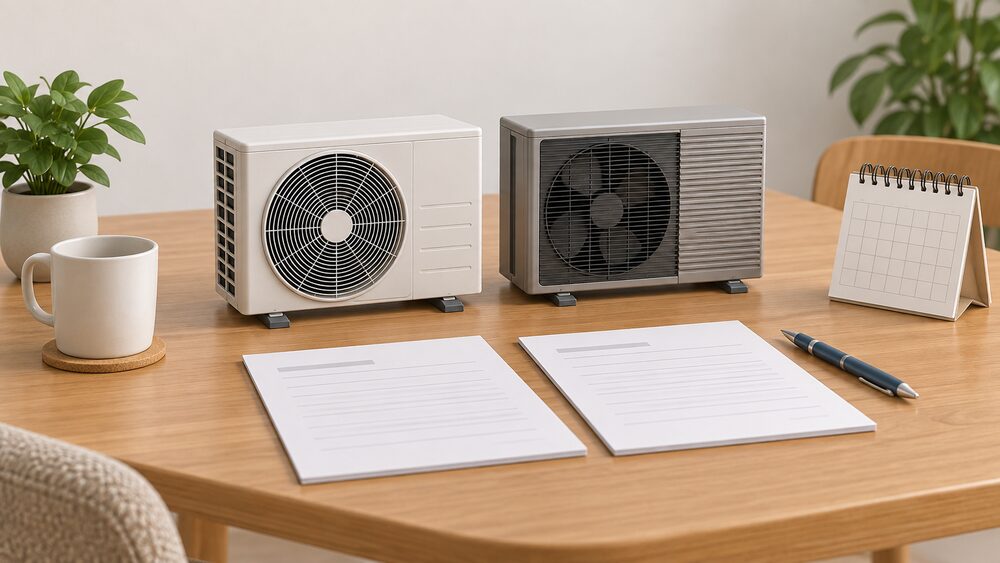
Daikin and Mitsubishi Electric are two of the four brands that dominate UK heat pump sales. Official statistics put at least 33 manufacturers supplying air source heat pumps in the UK, with Mitsubishi Electric, Vaillant, Daikin and Samsung accounting for nearly two-thirds of total annual UK sales1. That concentration matters to a householder: it means both brands have deep installer networks, published technical support and long warranty structures, and it also means neither is a niche choice with unusual parts or unfamiliar service arrangements.
The two companies differ in where the equipment comes from. Mitsubishi Electric manufactures heat pumps in the UK and describes itself as a UK manufacturer producing the crucial components, including the heat exchanger, compressor and controls2. Its Livingston factory has operated for over 30 years, employs more than 1,100 people and produces the Ecodan range of air-to-water heat pumps3. Daikin's UK presence is built around training and installer support rather than a stated UK heat pump factory, and it has added four new training centres in the UK4.
On guarantees, the headline difference is the standard term. Daikin states that all its domestic products come with a two-year guarantee as standard5, while Mitsubishi Electric's Homeowner Guarantee covers domestic heating products if components it supplied fail6, with extended warranties of up to 10 years available through its Business Solutions and Diamond Quality Partners7. Both brands lean on approved installers to deliver the longer terms.
Two of the biggest names in UK heat pumps: how they compare
The starting point for any comparison is scale, and here the official figures are more useful than either company's own marketing. The UK had at least 33 manufacturers supplying air source heat pumps, with Mitsubishi Electric, Vaillant, Daikin and Samsung accounting for nearly two-thirds of total annual UK sales1. On the manufacturing side, the main companies making air source heat pumps in the UK in 2024 were Mitsubishi Electric, Vaillant, Ideal and Octopus Energy, with a combined market share of 34%1.
Mitsubishi Electric reports a strong position in installer surveys. It says it was ranked first as the UK's most trusted air source heat pump manufacturer, first as a brand installers would recommend, first for manufacturing the highest quality air source heat pumps, first for providing industry-leading training and first as the easiest air source heat pump to install8. The same survey work found it was the most widely installed air source heat pump brand among installers surveyed and the manufacturer most frequently selected as the brand they install most often9. These are the company's own reports of survey results, with fieldwork running from May 2025 to February 20268.
Daikin's position is different in emphasis. It is one of the four largest sellers by volume, and it estimates that heat pumps already have up to 50% market share in new single family houses in Europe10. It also works through partnerships with large energy firms: Octopus has a list of recognised technology partners, and Daikin was already one of them11.
For a household, the practical reading is that both brands are mainstream, both have the volume to support spare parts and trained engineers, and neither is likely to leave an owner without service options. The difference is that Mitsubishi Electric can point to UK manufacturing and a long-running installer survey record, while Daikin's case rests on range breadth, refrigerant policy and its training and partner network.
Company background and UK presence
Mitsubishi Electric was founded in 1921 and describes itself as a global environmental technologies manufacturer7. Its UK manufacturing story is the more concrete of the two: the company says it has been investing in UK manufacturing and skills for more than five decades3, and its Livingston site in Scotland has been operating for over 30 years as the largest manufacturer of air source heat pumps in the UK3. The site produces the Ecodan range of air-to-water heat pumps and employs more than 1,100 people3. Independent product listings describe the Ecodan range as made in Britain, to British Standard, for British homes12.
The company also states that its air source heat pumps have been designed and developed for UK conditions for over a decade13, and that it can advise housing developers on meeting requirements under the Future Homes Standard13. In February 2023 it launched what it described as the widest range of commercial and residential heat pumps, spanning from a small modern home up to a 1000+kW heat pump chiller14.
Daikin's UK presence is expressed through its product range and its training infrastructure. It specialises in air-to-air, air-to-water and hybrid heat pumps15, and it has expanded its UK training network with four new centres4. Its stated refrigerant strategy is to choose the ideal refrigerant for each application by balancing safety, energy efficiency, environmental impact and cost over the whole life cycle of a product, always in line with current regulations16.
Range: air-to-air, air-to-water and hybrid options
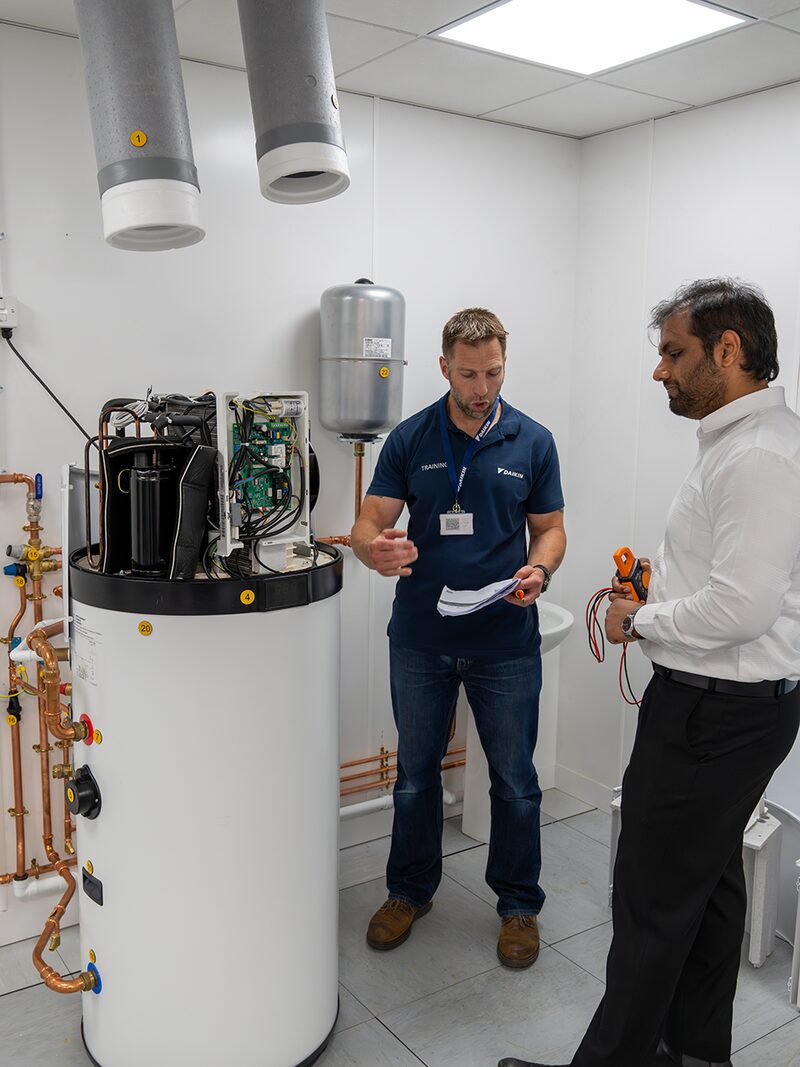
Daikin's range is the broader of the two on paper. It specialises in air-to-air, air-to-water and hybrid heat pumps15, and says these can be integrated with existing radiators or underfloor heating15. Its hybrid heat pumps are designed to let a household either replace a gas boiler while keeping existing radiators, or connect air-to-air indoor units for cooling as well17. A multi air-to-air heat pump, also known as an air conditioner, can connect one outdoor unit with up to five indoor units17. Daikin describes these hybrid models as compact and space-saving, able to combine with existing and new heating and cooling emitters17.
Mitsubishi Electric's residential heating range is built around the Ecodan air-to-water heat pump, manufactured at Livingston3. On the air conditioning side, its multi-split systems allow connections of between two and eleven indoor units to a single outdoor unit18. It also makes domestic ventilation units7 and ventilation systems that provide fresh, clean air to improve indoor air quality in homes and commercial buildings19.
The distinction that matters most for a household is between air-to-water and air-to-air. An air-to-water heat pump feeds radiators, underfloor heating or a hot water cylinder, and is the route that replaces a boiler. An air-to-air unit heats and cools the air in a room directly and does not produce hot water. Daikin states plainly that its heat pumps provide one system for heating and hot water19, and that its products comply with the ErP because they are designed for seasonal efficiency20. Mitsubishi Electric's Ecodan range is air-to-water, so a household wanting cooling as well as heating would be looking at its air conditioning products rather than the heating range.
Installer network, training and technical support
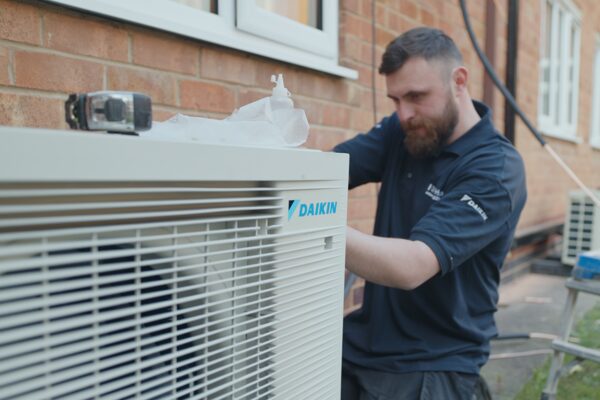
Both brands route almost everything through approved installers, and the quality of that network is the part a household actually experiences.
Mitsubishi Electric says it has a vast network of reliable national heating installers, who receive comprehensive training on installing and maintaining Ecodan heat pumps6, and thousands of nationwide Accredited Ecodan Installers, searchable by postcode21. Its partner structure has three tiers: Diamond Quality Partners, Business Solutions Partners and Accredited Installers7. Diamond Quality Partners undergo external auditing to ensure they maintain high installation standards18. The company reports being ranked first for providing industry-leading training8.
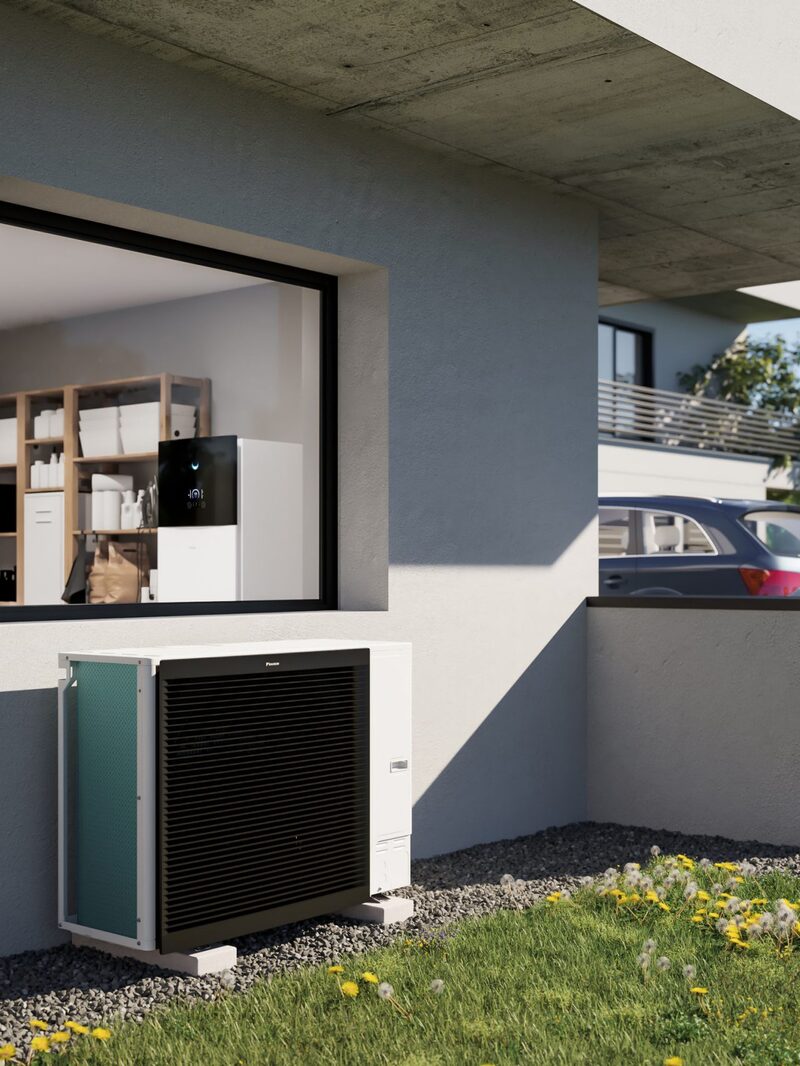
Daikin's route is through Daikin-trained installers, who guide a household from assessing the home through to installing and commissioning19. The company has expanded its UK training provision with four new centres4.
On technical support, Mitsubishi Electric publishes several contact routes. Its Homeowner Support Team is on 0161 866 60646, the main support line is 0161 866 6089, option 121, and Residential Heating Sales can be reached on 0170727866622. Service and maintenance enquiries go to ecodan.service@meuk.mee.com23. A pre-sales technical team assists with design, feasibility and purchase costs13, and the company publishes a Heating Product Catalogue and a Heating Domestic Applications Brochure13.
Daikin offers service plans delivered with its Service Partners to oversee, manage and monitor an installation24, and annual maintenance packages for its Altherma and Hybrid systems24. It also takes requests for site visits to residential or commercial properties24. Mitsubishi Electric runs a comparable site visit process to check installation compliance, requested through a form and followed up by its site services team13, and offers support across the full life cycle of a development project, from design through commissioning to ongoing support23.
Warranty, commissioning and maintenance plans
This is where the two brands diverge most sharply on paper, and where the detail matters more than the headline.
Daikin states that all its domestic products come with a two-year guarantee as standard5. It also says that having Daikin engineers personally commission each unit on site extends the warranty, and describes this as giving the client extra confidence11. That statement appears in a project case study rather than a published warranty schedule, so the additional term is not stated in the material available; a household would need the extension confirmed in writing.
Mitsubishi Electric's Homeowner Guarantee covers domestic heating products in the event of any components supplied by Mitsubishi Electric failing22. For Lossnay MVHR units, guarantee servicing is free of charge for parts and labour, subject to all guarantee conditions being met25. Eligibility is tightly drawn: the guarantee applies only to residential Lossnay MVHR units supplied by Mitsubishi Electric Europe and purchased from Mitsubishi Electric Europe or an approved wholesaler, value added reseller or merchant, installed and commissioned by an ARLI or SAH25. Where there is no fault found, or a claim is rejected under the conditions, Mitsubishi Electric is entitled to charge all reasonable costs incurred in attending the home25.
Extended warranties come through the partner tiers. Mitsubishi Electric says its partners can offer extended warranties and that using an approved installer gives reassurance18, and that with its Business Solutions and Diamond Quality Partners, extended warranties can be offered of up to 10 years7.
"Guarantee servicing is free of charge to you for any parts and labour, subject to all the guarantee conditions having been met."
On maintenance, Mitsubishi Electric offers three service and maintenance plans21, and Daikin offers annual maintenance packages for Altherma and Hybrid systems alongside its wider service plans24. Both brands also publish material on keeping a home free of damp and mould: a practical guide on mould and damp prevention in new and existing homes is available to download for free from BESA and Mitsubishi Electric26.
UK market standing: what installer surveys and MCS data show
The wider market context is worth setting out, because it explains why both brands behave as they do.
MCS certified renewable installations reached 210,000 in the UK between January and June 2026, with 36,000 MCS certified battery storage installations in 2026 so far27. That volume of certified work is what sustains the installer networks both brands depend on. On the installer side, a Mitsubishi Electric survey found 23% of installers were not interested in learning to upskill, and 15% of respondents believed the absence of a skilled heat pump installer had stopped them buying a unit9. Those figures describe installer and consumer sentiment rather than either brand's performance, but they explain why manufacturer training programmes carry weight.
Mitsubishi Electric's own survey reporting is the most detailed brand-level evidence available. It says it was ranked first as the UK's most trusted air source heat pump manufacturer, first as a brand that can be relied on to do the job well, first as a manufacturer installers would recommend, first as the market leader in air source heat pumps in the UK, first for manufacturing the highest quality air source heat pumps, first for providing industry-leading training and first as the easiest to install8. It also emerged as the manufacturer most likely to be considered for future installations8. These are the company's reports of installer survey results, with fieldwork from May 2025 to February 20268.
Daikin's market evidence in the material available is thinner on installer sentiment and stronger on new build. It estimates heat pumps already have up to 50% market share in new single family houses in Europe10, and it works as a recognised technology partner to Octopus11. Its installer incentive scheme covered England, Scotland or Wales4, which is a reminder that some commercial schemes do not extend across all four nations.

Which brand suits which home
Neither brand is a universal answer, and the deciding factors are usually the building and the installer rather than the badge.
A household replacing a boiler and wanting hot water from the same system is looking at air-to-water: Mitsubishi Electric's Ecodan range, made at Livingston3, or Daikin's air-to-water and hybrid options15. A household wanting cooling in summer as well as heating in winter is looking at air-to-air, where Daikin's hybrid models can connect air-to-air indoor units for cooling17 and its multi air-to-air heat pump can serve up to five indoor units from one outdoor unit17. Mitsubishi Electric's multi-split air conditioning connects between two and eleven indoor units to a single outdoor unit18, which suits a larger property wanting several rooms conditioned.
Where a home already has radiators that are staying, Daikin states its heat pumps can be integrated with existing radiators or underfloor heating15, and its hybrid models are designed to combine with existing and new heating and cooling emitters17. Where a household wants a single manufacturer for heating, hot water and ventilation, Mitsubishi Electric covers all three through Ecodan, its air conditioning ranges and its domestic ventilation units7.
On indoor air quality, the two brands answer differently. Daikin sells air purifiers offering whisper-quiet filtration for spaces up to 41m228. Mitsubishi Electric's answer is ventilation: systems that provide fresh, clean air to improve indoor air quality in homes and commercial buildings19. Filtration and ventilation do different jobs, and a household concerned about stuffiness in a well-sealed home is usually looking at ventilation rather than a purifier.
The remaining variables are support and warranty. Mitsubishi Electric publishes a Homeowner Support line on 0161 866 60646 and extended warranties of up to 10 years through its partner tiers7. Daikin's standard domestic guarantee is two years, with an extension tied to its own engineers commissioning the unit5. Both brands offer maintenance plans21. For a household, the practical step is to ask each installer which partner tier they hold, what the warranty term will be in writing, and who attends if something fails.

Sources28 cited
- EINAS 2025: Heat and Buildings, GOV.UK, 2024
- Residential heating, Mitsubishi Electric, 2026
- Minister visits Mitsubishi Electric's Livingston factory, Mitsubishi Electric, 2025
- Daikin adds four new centres, CIPHE, 2023
- How to install a heat pump, Daikin UK, 2026
- Homeowners, Mitsubishi Electric, 2026
- Domestic ventilation units, Mitsubishi Electric, 2026
- The most trusted heat pump manufacturer, Mitsubishi Electric, 2026
- Speed, cost awareness, trust, Mitsubishi Electric, 2026
- 4 steps to decarbonizing residential heat, Daikin UK, 2026
- Hares Leap case study, Daikin UK, 2026
- Mitsubishi Electric brand page, Quiet Mark, 2026
- Preparation and brief for Ecodan air source heat pumps, Mitsubishi Electric, 2026
- Mitsubishi Electric launches its widest range of heat pumps, Mitsubishi Electric, 2023
- What is a heat pump?, Daikin UK, 2026
- F-Gas regulation, Daikin UK, 2026
- Hybrid heat pumps, Daikin UK, 2026
- Multi-splits, Mitsubishi Electric, 2026
- Switch to a heat pump, Daikin UK, 2026
- What is seasonal efficiency, SCOP and SEER?, Daikin UK, 2026
- Help and support, Mitsubishi Electric, 2026
- Handover and completion for air source heat pumps, Mitsubishi Electric, 2026
- Use for Ecodan air source heat pump, Mitsubishi Electric, 2026
- Operate, maintenance and repairs, Daikin UK, 2026
- Register Lossnay guarantee, Mitsubishi Electric, 2026
- Four steps to mould free homes, BESA, 2024
- Record number of UK households combining renewables, MCS Certified, 2026
- Daikin brand page, Quiet Mark, 2026
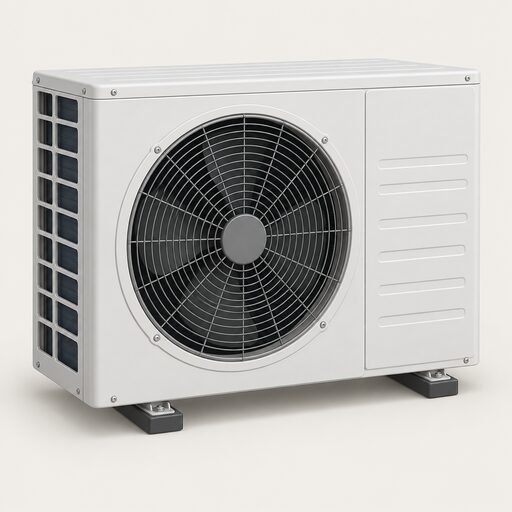 Heat Pump ManufacturersWhich heat pump brands can you actually buy in the UK, and who makes them?
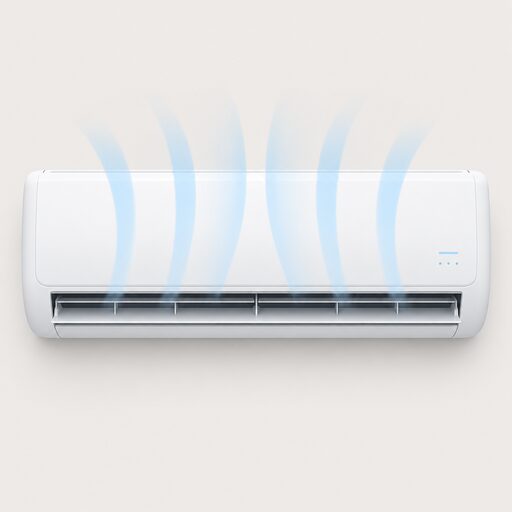 Air Conditioning BrandsWhich air conditioning brands can you actually buy in the UK, and who makes them?
 The Full Brands GuideWhich boiler, heat pump or solar brand can you trust, and who actually owns it?
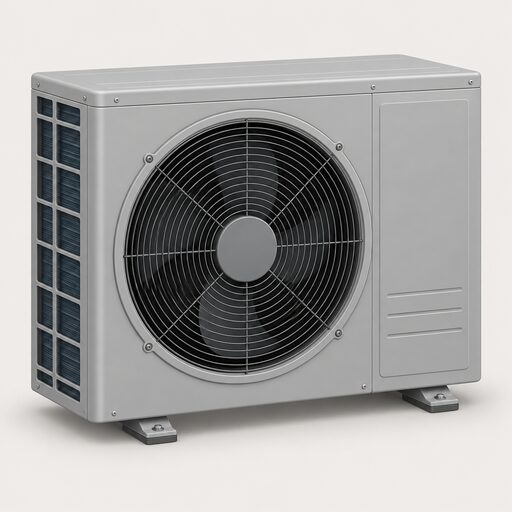 Cooling and Heat PumpsCan an air conditioner heat your home as well as cool it?
 Builders' Merchants and TradeWondering whether you can buy a boiler, heat pump kit or the parts for an outdoor cable run from a builders' merchant rather than through an installer?
 Boiler Manufacturers in the UKCovers the manufacturers supplying gas, oil, LPG and electric boilers to UK homes, their main ranges and where they are made.