
In this comparison
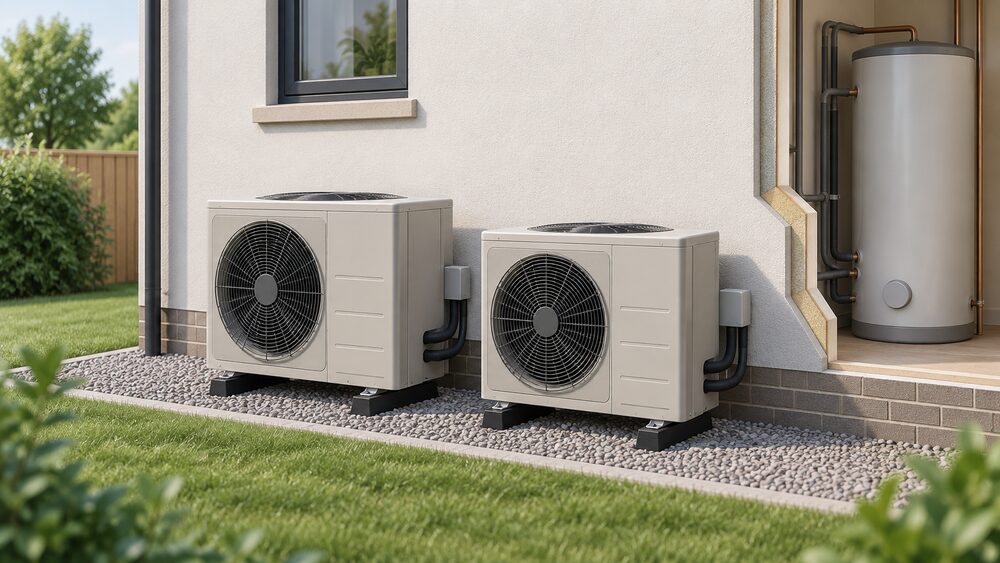
Mitsubishi Electric and Daikin are the two names most UK householders weigh up when they start looking at an air source heat pump, and the comparison is closer than the marketing suggests. Both makers build air-to-water units for the replacement boiler market, both offer air-to-air and hybrid options, and both sit inside the group of four brands that government statistics for 2024 record as accounting for nearly two-thirds of total annual UK air source heat pump sales, alongside Vaillant and Samsung1.
The clearest split is on refrigerant. Mitsubishi Electric's Ecodan R290 range uses R290, a natural refrigerant, and the models carry A+++ heating efficiency and Quiet Mark certification2. Daikin states that in its heat pumps the refrigerant is usually R-32, filled in liquid state through the gas pipe, and that its strategy is to choose the ideal refrigerant for each application by balancing safety, energy efficiency, environmental impact and cost over the whole life cycle of a product5.
On market position, the two sources that speak to it measure different things. A Mitsubishi Electric press release dated 22 June 2026 states that the company was the most widely installed air source heat pump brand among the installers it surveyed, and the market leader in air source heat pumps in the UK on the same survey7. The Scottish House Condition Survey 2024 records heat pumps at 2% of the Scottish housing stock8. Daikin does not appear in that breakdown.
Mitsubishi vs Daikin at a glance
The two ranges overlap on the fundamentals. Both makers supply air-to-water heat pumps that provide domestic hot water as well as space heating, and both can be integrated with existing radiators or underfloor heating rather than requiring a full emitter replacement12. Daikin states that its air-to-water heat pumps can be used with any type of emitter: underfloor heating, radiators or convectors, and that some 97% of homes are suitable for a Daikin heat pump14.
Where they diverge is in the shape of the range. Daikin states that it specialises in air-to-air, air-to-water and hybrid heat pumps, and that its hybrid units switch between heat pump only, heat and gas combined, or gas only, to keep efficiency high12. Hybrid mode works during cooler seasons with temperatures around 1°C, and the unit switches to gas consumption only at around -10°C when capacity is required13. Mitsubishi Electric's UK residential presence in the facts available here is the Ecodan R290 air-to-water range, with the Quiet Mark certified models2.
| Mitsubishi Electric Ecodan R290 | Daikin | |
|---|---|---|
| Refrigerant | R2902 | Usually R-325 |
| Range | Ecodan R290 air-to-water2 | Air-to-air, air-to-water and hybrid12 |
| Efficiency label | A+++ heating efficiency2 | Up to 5 times more efficient than a standard fossil fuel boiler, maker claim12 |
| Quiet certification | Quiet Mark certified2 | Wall-mounted units described as whisper-quiet15 |
| Hybrid option | Not in the facts available here | Yes, with gas backup13 |
| Stated lifespan | Not in the facts available here | 15 to 20 years or more with routine servicing10 |
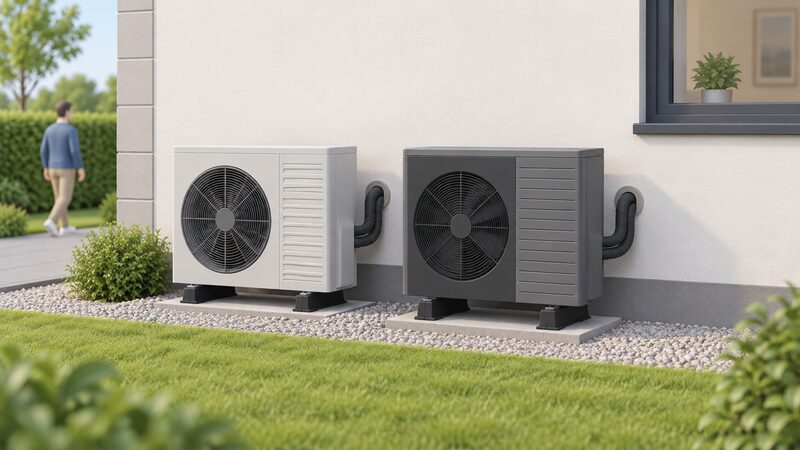
The two makers: history, scale and standing in the UK
Daikin states that it has been developing and refining its heat pump technology since 1958, which is the earliest date the company gives for its heat pump work12. That is a global development history rather than a UK installation record, and the company's UK residential business today runs through its Sustainable Home Network of installers, who manage ordering, delivery and installation of the heat pump16.
Mitsubishi Electric's standing in the UK rests on installer survey evidence rather than a stated founding date. The company's press release of 22 June 2026 states that it was recognised by UK air source heat pump installers as the country's most trusted air source heat pump manufacturer, ranked first, and separately that it was the most widely installed air source heat pump brand among the installers surveyed and the brand they install most often7. Both claims come from the maker's own survey of installers, so they describe installer sentiment rather than metered sales.
The independent picture is narrower and older. Government statistics for 2024 record at least 33 manufacturers supplying air source heat pumps in the UK, with Mitsubishi Electric, Vaillant, Daikin and Samsung accounting for nearly two-thirds of total annual UK sales1. The Scottish House Condition Survey 2024 records heat pumps at 2% of the Scottish housing stock8. The two figures are not directly comparable: one is a 2024 sales concentration across four named brands, the other a measure of installed stock in Scotland.
For a household, the practical reading is that both brands have the scale to support parts, training and installer networks over the life of a unit. Neither is a small or marginal supplier, and neither is in administration on the evidence here. The dependence that remains is ordinary: an installer, a manufacturer's spares operation, and in Daikin's hybrid case a gas supply.
Product range: air-to-air, air-to-water and hybrid
Daikin's range is the broader of the two on the evidence here. The company states that it specialises in air-to-air, air-to-water and hybrid heat pumps, and that these can be integrated with existing radiators or underfloor heating12. Air-to-water units are designed for the renovation market and can be used with any type of emitter14. Air-to-air units provide both heating and cooling, extracting warmth from outside air in winter and reversing to cool indoors on hot days, and Daikin states they are appropriate for both renovation projects and new builds15.
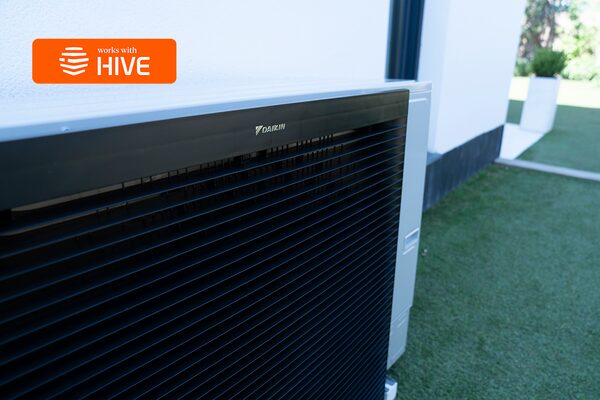
The hybrid is the distinctive Daikin product. It combines with existing and new heating and cooling emitters, and can connect air-to-air indoor units for cooling as well13. A multi air-to-air heat pump can connect one outdoor unit with up to five indoor units13. Daikin also states that its air-to-water heat pumps are compatible with the Hive smart home ecosystem through the Works With Hive programme, allowing heating and hot water to be managed through the Hive app, while noting that Daikin air-to-air heat pumps are not currently compatible with Hive17.
Mitsubishi Electric's Ecodan R290 range in the facts available here is air-to-water, with A+++ heating efficiency and Quiet Mark certification2. The Daikin Altherma 3 H HT is listed as available to buy via Daikin UK18.

Efficiency and refrigerants: R-290 and seasonal performance
Refrigerant choice is the sharpest technical difference between the two brands in the UK market. Mitsubishi Electric's Ecodan R290 models use R290, a natural refrigerant, and the certified models carry A+++ heating efficiency for minimised energy consumption2. R290 also appears in other UK heat pumps, including the NIBE S2125 and the Trianco Activair Pro, which states an ultra-low Global Warming Potential of just 320.
Daikin's position is different. The company states that in its heat pumps the refrigerant is usually R-32, filled in liquid state through the gas pipe5. Its stated strategy is to choose the ideal refrigerant for each application by balancing safety, energy efficiency, environmental impact and cost over the entire life cycle of a product, always in line with current regulations, and it states that every product it offers fully complies with the F-Gas Regulation and can be sold, operated, maintained and repaired until the end of its lifetime6. For custom-made products with longer production times, Daikin states it only offers products that comply with the F-Gas Regulation at the time of completion and at the time of placing on the market6.
On running efficiency, Daikin states that its heat pumps are up to 5 times more efficient than a standard fossil fuel boiler, and that they are 2 to 24 times less carbon intensive than gas boilers during use12. Both are maker claims rather than independently verified figures, and the carbon range is wide because it depends on the electricity mix at the time of use.
The independence angle is straightforward. A heat pump that runs on electricity from the grid still depends on the grid, but it removes the gas connection from the heating system, and Daikin states that heat pumps work well with solar panels, letting a home use more of its own clean energy16. A hybrid keeps the gas dependence in place.
Market share: where each brand actually sits
The UK heat pump market is concentrated. Government statistics for 2024 record at least 33 manufacturers supplying air source heat pumps in the UK, with Mitsubishi Electric, Vaillant, Daikin and Samsung accounting for nearly two-thirds of total annual UK sales1. That is the strongest independent statement available here on relative position, and it places both brands in the leading group without separating them.
The Mitsubishi Electric claims are more specific but come from the maker. Its press release of 22 June 2026 states that it was the most widely installed air source heat pump brand among the installers surveyed and the brand they install most often, and separately that it is the market leader in air source heat pumps in the UK on the same survey7. Daikin is not named in that survey, so no equivalent figure for Daikin can be given from it.
For context on how early the UK still is, the Scottish House Condition Survey 2024 records heat pumps at 2% of the Scottish housing stock8. Wider European figures show nearly half of Europe's heat pump market concentrated in just three countries, France, Italy and Germany23, and Finland at a 93.1% share of its space heating market in 202424. Those are not UK figures and are given only to show how far the UK market sits behind the leading European ones.
The practical consequence for a household is that both brands have enough UK volume to sustain spares and trained installers. It also means neither is a niche choice with a thin support base.
Warranty, commissioning and installer support
Daikin's warranty structure is tiered by installer type. The company states that an air-to-water heat pump installed by a Daikin Sustainable Home Installer can claim a warranty extension of up to 3 years completely free, and that a unit installed by a Daikin Sustainable Home Expert can have an additional 2 years purchased for a total of 7 years9. The unit must be registered by the installer on the Stand By Me platform once it is put into operation9.
One Daikin page gives a 5-year warranty, while another gives up to 7 years manufacturer's warranty9. Both figures are from Daikin, and the difference turns on which installer tier carried out the work and whether the extra years were purchased. A household reading a quote should establish which tier the installer belongs to before treating either figure as the one that applies.
Daikin's installer matching service selects an installer on stated criteria: experience of the product the household has in mind, speaking the household's language, availability for new projects, proximity, and best feedback score5. The company states that one or two working days after the form is filled in, it will email the name of the best installer for the project5. A Daikin heat pump installer manages everything related to ordering, delivery and installation16.
Mitsubishi Electric's warranty terms are not in the facts available here, so no comparison of warranty length between the two brands can be made from this evidence. For the general framework that applies across makers, see manufacturer warranties and registering a warranty and keeping it valid.
Service plans and maintenance after installation

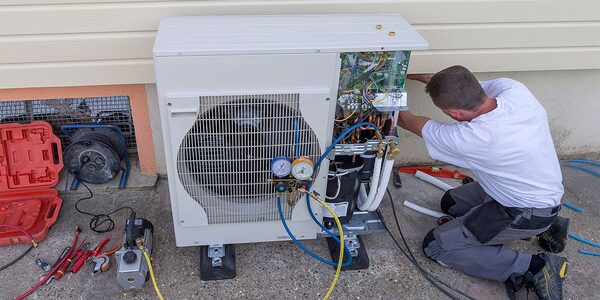
Both brands sit inside a maintenance regime that is lighter than a gas boiler's. Daikin states that heat pumps require less maintenance and servicing than fossil fuel systems, and advises scheduling an annual maintenance appointment with the installer or service provider to keep the pump working22. A typical service includes a number of standard checks as well as a thorough cleaning of the unit and filters16.
The annual check itself is specified: a maintenance check at least once a year, including cleaning filters, checking refrigerants and inspecting the heat exchanger22. Daikin states that its heat pumps will operate reliably for 15 to 20 years or more with routine servicing, and elsewhere that a heat pump typically lasts between 15 and 20 years, although this is determined by a number of factors10. One Daikin page gives a shorter expectation of 15 years once the heat pump is installed22. The maker's own figures therefore range from 15 years to 20 years or more, and the longer figure is explicitly conditional on servicing.
Servicing can also be bundled at the point of sale. Scottish Power offers Daikin, Vaillant and Mitsubishi heat pumps with two years of annual servicing from Domestic & General25. That is a supplier arrangement rather than a manufacturer plan, and it shows that servicing for either brand can be included in an installation package.
Daikin states that the installer might offer a maintenance contract5. For the wider picture on what these contracts cover and how they are priced, see manufacturer service and maintenance plans.
Which brand fits which home
The honest answer is that the property and the emitter system decide more than the badge does. Daikin states that heat pumps can work in a wide range of homes, including older properties, renovations and new builds, and that some 97% of homes are suitable for a Daikin heat pump10. Its air-to-water units can be used with any type of emitter, and its air-to-air units suit both renovation projects and new builds14.
The hybrid is the option for a household that wants to keep a gas boiler in place. Daikin states that a hybrid heat pump can be suitable for a variety of houses, including new builds, apartments, renovations, or existing properties for a boiler replacement, and that the models are compact and space-saving13. The trade-off is funding: the Boiler Upgrade Scheme will only provide funding for heat pumps that provide 100% of the space heating and hot water demand, which effectively discontinues financial support for hybrid heat pumps11. Citizens Advice states that a household choosing a hybrid heat pump cannot apply for Boiler Upgrade Scheme funding19. A full heat pump can qualify where the other rules are met, including replacing a fossil fuel heating system20, and heat pumps may be eligible for BUS funding on self-build properties where all other scheme rules are met11.
Daikin's hybrid has been deployed in UK social housing. A project delivered by housing association Home Group installed 24 Daikin hybrid heat pumps in properties26, and a 2022 trial in the Highlands named Daikin among the heat pump manufacturers involved27. Those are small-scale examples rather than a market picture.
For a household weighing independence, the split is clear. A full air-to-water heat pump removes the gas connection and can be paired with solar to use more self-generated electricity16. A hybrid keeps gas as a backup and forfeits the grant. Mitsubishi Electric's Ecodan R290 range, on the evidence here, is a full air-to-water proposition with A+++ efficiency and Quiet Mark certification2. For the wider brand landscape, see heat pump manufacturers supplying UK homes and Mitsubishi Electric heat pumps: Ecodan for UK homes.
Sources27 cited
- Energy innovation needs assessment: heat and buildings, Department for Energy Security and Net Zero, 2025
- Mitsubishi Ecodan R290 Air Source Heat Pump 8.5kW, Quiet Mark, 2026-09-17
- Mitsubishi Ecodan R290 Air Source Heat Pump 10kW, Quiet Mark, 2026-09-17
- Mitsubishi Ecodan R290 Air Source Heat Pump 12kW, Quiet Mark, 2026-09-17
- How to install a heat pump, Daikin UK, 2026-09-17
- F-gas regulation, Daikin UK, 2026-09-20
- Heat pump research 2026 press release, Mitsubishi Electric Living Environmental Systems, 2026-06-22
- Scottish House Condition Survey 2024: key findings, Scottish Government, 2024
- Warranty, Daikin UK, 2026-09-17
- Thinking about heat pumps, Daikin UK, 2026-09-17
- Boiler Upgrade Scheme and hybrid heat pumps, HHIC, 2026-09-17
- What is a heat pump?, Daikin UK, 2026-09-17
- Hybrid heat pumps, Daikin UK, 2026-09-17
- Heat pump fact checker, Daikin UK, 2026-09-17
- Are air-to-air heat pumps best for renovation or new builds?, Daikin UK, 2026-09-17
- Heating and cooling, Daikin UK, 2026-09-17
- Works with Hive, Daikin UK, 2026-09-17
- Daikin Altherma 3 H HT Heat Pump, Quiet Mark, 2026-09-17
- Deciding if a heat pump is right for you, Citizens Advice, 2025-12-08
- Getting help with your energy bills, Birmingham City Council, 2026-04-15
- Heat pumps vs boilers, Which?, 2025-09-22
- What to consider when investing in a heat pump, Daikin UK, 2026-09-17
- Meet Europe's heat pump hotspots, European Heat Pump Association, 2026-08-20
- EHPA Market Report 2025 executive summary, European Heat Pump Association, 2025
- Industry first trial to decarbonise heat launched in the Highlands, SSEN, 2022-01-27
- Daikin Altherma hybrid heat pumps, Copeland and South Tyneside, National Energy Action, 2017-09-06
- Boiler Upgrade Scheme installers, Ofgem, 2026-09-17
 Heat Pump ManufacturersWhich heat pump brands can you actually buy in the UK, and who makes them?
 The Full Brands GuideWhich boiler, heat pump or solar brand can you trust, and who actually owns it?
 How They Perform in UK HomesHow well do heat pumps really work in UK homes, and why do some run far better than others?
 Air Source Heat PumpsHow an air source heat pump takes heat from outdoor air, the difference between air-to-air and air-to-water systems, typical efficiency, the £7,500 Boiler Upgrade Scheme grant, noise and planning limits, and what ownership means for a household's energy independence.
 Heat Pumps vs BoilersWill a heat pump actually cost less to run than my boiler, and does it heat the house as well?
 Air Conditioning BrandsWhich air conditioning brands can you actually buy in the UK, and who makes them?