
In this comparison
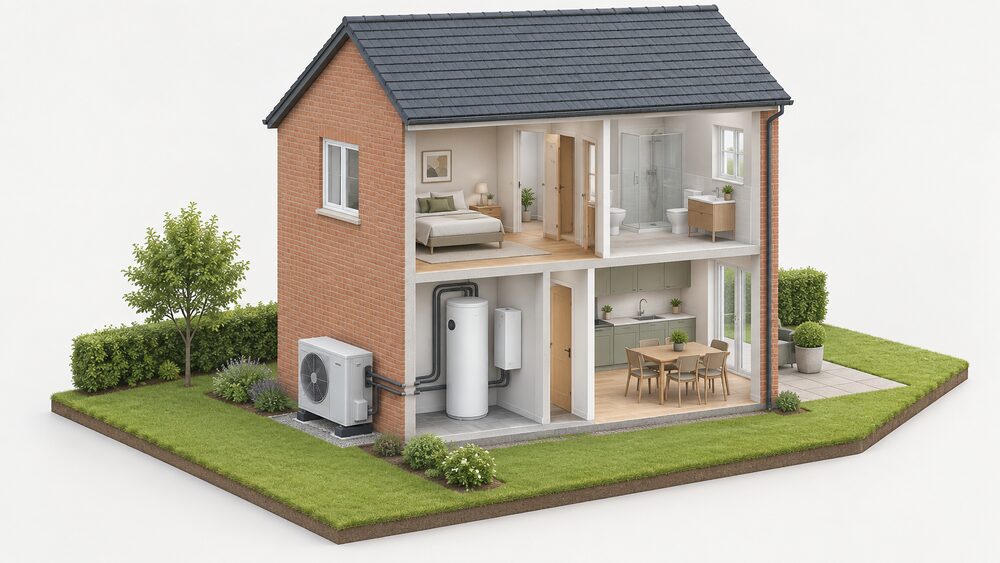
Daikin and Mitsubishi Electric are the two names most UK households meet first when they start pricing an air source heat pump. The comparison is not really like for like: Daikin's Altherma 3 runs on R-32 refrigerant and carries an energy label of up to A+++ (A+++ to D)1, while Mitsubishi Electric has announced a transition from Ecodan R32 to an extended Ecodan R290 range, with the R290 units manufactured in the UK2. Both ranges are MCS certified, which is what makes them eligible for the Boiler Upgrade Scheme3.
The practical differences sit in three places: the refrigerant and what it means for flow temperature and future servicing, the control and support arrangements once the system is in, and the installer route that gets the unit onto the wall. Mitsubishi Electric's Ecodan is described by its maker as the market-leading brand of heat pumps built in the UK3, and independent research among 300 senior installer decision-makers placed the company first for trust, reliability, recommendation, quality, training and ease of installation2.
What follows sets out the two ranges on the evidence available, including where the figures conflict or where no figure is published. Neither range removes a household's dependence on electricity, on a supplier, or on the manufacturer's own cloud service for remote control.
How the two ranges compare
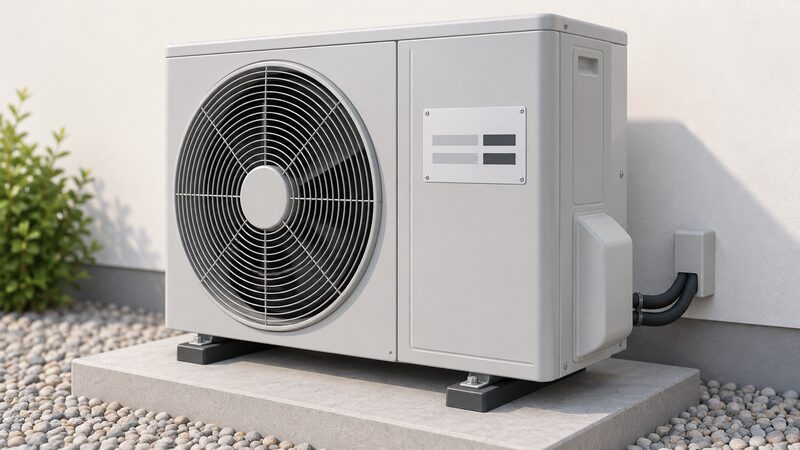
The Altherma range carries an energy label for heating of up to A+++ on a scale running to D1. Mitsubishi Electric's Ecodan line is a range of air source heat pumps rather than a single model, and the entire line up is certified by the Microgeneration Certification Scheme3. The maker describes Ecodan as an inverter-driven air source heat pump that extracts energy from the outdoor air8.
The two ranges differ in how far they stretch. Mitsubishi Electric's heat pump range extends from an energy-efficient 5kW Ecodan domestic air-to-air unit up to commercially sized 1000kW heat pumps, suitable even for the demands of hotels or leisure centres9. That commercial end is not a domestic product, but it shows the breadth of the platform. On the domestic side, the Ecodan R32 Compact Air Source Heat Pump is designed to satisfy smaller heat demand domestic premises, and the same renewable energy solution is also suitable for small retail outlets and commercial buildings8.
Cold weather performance is where the two are most often compared by households in exposed parts of the UK. Mitsubishi Electric states that heat pumps are designed to work in temperatures down to -25 degrees C6, and repeats the figure for Ecodan specifically: Ecodan is designed specifically for UK homes and works at temperatures as low as -25 degrees celsius8. The material reviewed here gives no equivalent minimum operating temperature for the Altherma 3.
| Daikin Altherma 3 | Mitsubishi Electric Ecodan | |
|---|---|---|
| Type | Air-to-water monobloc1 | Air source range, inverter driven8 |
| Refrigerant | R-321 | R32 in current units, R290 in the new range2 |
| Energy label, heating | Up to A+++ (A+++ to D)1 | Not stated in the material reviewed |
| Minimum operating temperature | Not stated in the material reviewed | Down to -25 degrees C6 |
| MCS certification | Required for grant eligibility4 | Entire line up certified3 |
| Typical installation time | Not stated in the material reviewed | Less than 2 days3 |
Market position and track record

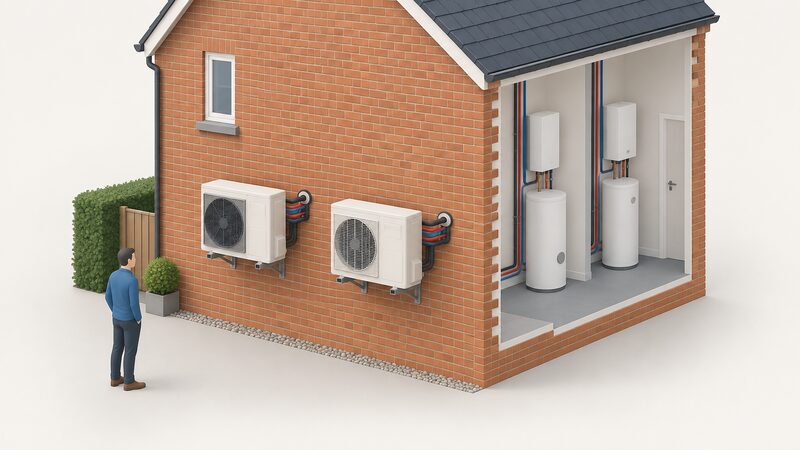
Mitsubishi Electric's claim to the UK market rests on manufacturing location. The Ecodan range is described as made in Britain, to British Standard, for British homes10, and the maker calls Ecodan the market-leading brand of heat pumps which are built here in the UK3. The R290 units carry the same positioning: the Ecodan R290 heat pump is manufactured in the UK and holds Quiet Mark accreditation2, and the models in the range are each listed as made in the UK11.
Daikin's position is different in kind. It is a European manufacturer with a global air conditioning business, and its UK presence in heat pumps runs partly through installer partnerships. EDF Energy installs Ideal, Daikin and Trianco heat pumps through its subsidiary EDF Heat Pumps, a Which? Trusted trader14. EDF is described as the UK's fifth-largest energy supplier15, which gives Daikin a route into homes through an energy company rather than only through independent installers.
The wider context matters for both. The UK has the largest boiler market in Europe and is therefore well placed to take the lead in the widespread deployment of low-carbon heating7. That is the market both manufacturers are competing for, and it is a replacement market rather than a new-build one for most households.
"Made in Britain, to British Standard, for British Homes."
For a household, the track record question is narrower than brand size. What matters is whether the maker will still support the unit in ten years, whether spares and refrigerant are available, and whether the installer who fitted it is still trading. Mitsubishi Electric's UK manufacturing base and Daikin's European scale both bear on the first two. Neither bears on the third, which is a matter of the installing company rather than the brand.
Refrigerant choices: R-32 today, R-290 and R-454C on the way
Refrigerant is the sharpest technical difference between the two ranges, and the one most likely to affect a household buying in the next few years.
Daikin already offers a full range of R-32 systems5, and the Altherma 3 uses R-321. The company states that it is investigating and developing a range of R-290 and R-454C systems, with split systems of 12 kW and under from 20275. That is a stated plan rather than a product on sale, and the date applies to split systems in that size band.
Mitsubishi Electric has moved further and faster. The company announced a transition from Ecodan R32 to the new extended range of Ecodan R290 heat pumps2. The Ecodan R290 uses the refrigerant properties of R2903, and the units are manufactured in the UK with Quiet Mark accreditation2. The R32 generation remains in the range: the Ecodan R32 Compact Air Source Heat Pump and the Ecodan R32 Air Source Heat Pump both use R32 refrigerant16.
R-290 is a natural refrigerant with a much lower global warming potential than the fluorinated gases it replaces, which is why the F-Gas rules bear on the choice. Daikin publishes guidance on the F-Gas regulation as it applies to air-to-water heat pumps5. For a household, the practical consequences are about servicing and future-proofing rather than day-to-day running: a unit on a refrigerant that regulation is pushing away from may face different servicing arrangements later in its life.
Certification and installer routes
Both ranges reach households through the same certification framework, and that framework is what unlocks grant funding.
MCS is an independent UKAS-accredited quality assurance scheme for microgeneration products such as solar panels, heat pumps and wind turbines17. Heat pumps fall under MCS 00717, and the scheme is the route by which products and installers are recognised. Mitsubishi Electric states that the entire Ecodan line up is certified by the Microgeneration Certification Scheme3, and that UK manufacturing and MCS approval make Ecodan eligible for the Boiler Upgrade Scheme18.
The installer side is where the two diverge most in practice. Under the Boiler Upgrade Scheme, installers and the low-carbon heating products supported under the scheme must be Microgeneration Certification Scheme certified, and installers must be MCS certified to participate in the BUS scheme4. RECC advises households to ensure that the company is certified by the MCS, the Government's product and installer certification scheme19.
Mitsubishi Electric has built an additional route for installers coming from gas. In June 2026 the company and Alto Energy launched an MCS umbrella scheme that lets gas boiler installers deliver Ecodan heat pump installations with Alto Energy handling MCS compliance, commissioning, certification and grant paperwork2. That lowers the barrier for a heating engineer without MCS accreditation of their own. Daikin's comparable route runs through energy company installer arms such as EDF Heat Pumps14.
Smart control and connectivity
Both manufacturers offer app control, and both leave the household dependent on a cloud service for the remote parts of it.
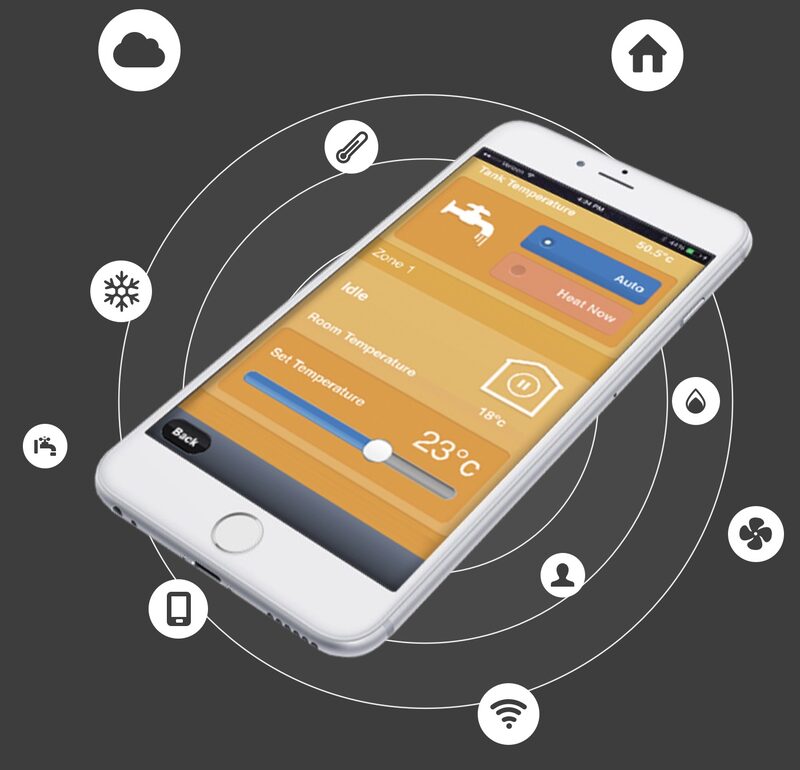
Daikin's system is Onecta. The Altherma 3 offers smart control via the Onecta app, Google Assistant and Amazon Alexa1. With the Daikin Onecta app, you can control your heating and hot water from your smartphone20, and the company states that you can control your system remotely, even when you're away20. The app is free20 and runs on a smartphone or tablet, Apple or Android20. Daikin also states that using an app or control system, you can control your Daikin Altherma 3 at anytime, from anywhere1.
The offline question is the one households ask most. Because Onecta reaches the unit over the internet, a lost connection shows the system as offline in the app. Local control is unaffected: the unit's own controller and any wired thermostat continue to run heating and hot water. The app is a convenience layer, not the control system itself.
Mitsubishi Electric's Ecodan range includes packaged cylinder options, with the Ecodan FTC7 monobloc packaged cylinder combining the outdoor unit and a cylinder in one specification16. The company's homeowner material covers the controls and the app alongside the heat pump itself18.
Support for owners

Support arrangements differ in how directly the manufacturer can be reached.
Mitsubishi Electric publishes a homeowner helpline. The Ecodan Homeowner Helpline number is 0161 866 60646, and the aftersales team can be reached on 0161 866 60896. The Homeowner Support Team is available on 0161 866 606418. For service and maintenance, the company gives the email address ecodan.service@meuk.mee.com, including for personalised group packages supporting numerous homeowners7. Mitsubishi Electric also provides a homeowner helpline and remote fault diagnosis helpdesk to developers7.
Daikin's homeowner support runs through its homeowner hub, which covers getting connected and app setup20, and through the installing company. The material reviewed here gives no public Daikin homeowner helpline number.
For households dealing with grant or energy advice issues rather than the heat pump itself, the public routes are separate. Ofgem's contact centre for ECO and GBIS households is a freephone number, 0808 169 4447, open Monday to Friday, excluding bank holidays, from 9.30 am to 4.30 pm21. The Energy Advice and Support Service runs phone lines and SignVideo open Monday to Thursday 10am to 4pm and Friday 10am to 12.30pm22. The MHCLG energy certificate helpline is open Monday to Friday, 9am to 5pm23.
Which suits which home
The two ranges suit broadly similar properties, and the differences that decide a purchase are usually about the installer and the refrigerant generation rather than the badge.
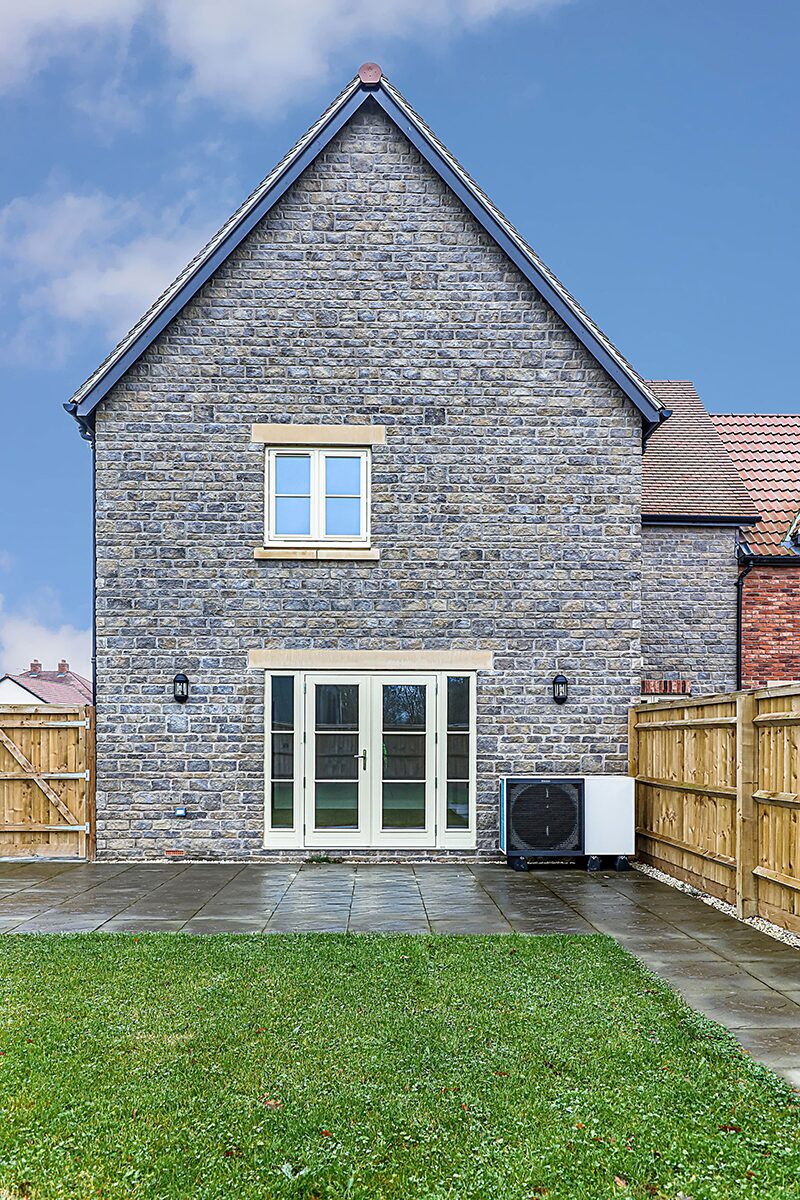
Ecodan domestic air source heat pumps only require water and electric connections8, which keeps the outdoor installation simple, and the range is designed specifically for UK homes and works at temperatures as low as -25 degrees celsius8. The Ecodan R32 Compact Air Source Heat Pump is designed to satisfy smaller heat demand domestic premises18, which points it at flats, smaller terraces and well-insulated new builds. The QUHZ Ecodan, a CO2 unit, is specifically designed with new-build standards of insulations and lower heating loads in mind, and delivers water to a packaged 200 litre thermal store9. That high flow temperature matters where a household wants to keep existing radiators or needs hotter water.
Daikin's Altherma 3 covers the mainstream replacement market, with the A+++ label and R-32 refrigerant1. The company's wider product set includes air-to-air options such as the Sensira range, which comes with an indoor unit, outdoor unit, remote control, Onecta app and warranty and service package, and offers control of the inside from outside with the Onecta app as an optional extra24.
On running costs, Mitsubishi Electric states a saving of up to 30% on heating bills for a 4 bedroom house of standard construction built in 2000, replacing an 80% efficient gas boiler25. That is a modelled figure for one house type, not a guarantee, and it depends on the tariff and the heating pattern.
Sources25 cited
- Daikin Altherma 3 M, Daikin UK, 2026
- Mitsubishi Electric announces transition from Ecodan R32 to Ecodan R290, Mitsubishi Electric, 2025
- Our heat pumps, Mitsubishi Electric, 2026
- Boiler Upgrade Scheme annual report 2024 to 2025, Ofgem, 2025
- F-Gas regulation and air-to-water heat pumps, Daikin UK, 2026
- Heat pump FAQs, Mitsubishi Electric, 2026
- Ecodan help and support, Mitsubishi Electric, 2026
- Ecodan outdoor units, Mitsubishi Electric, 2026
- Mitsubishi Electric Tulloch Homes case study, Heat Pump Association, 2026
- Mitsubishi Electric brand page, Quiet Mark, 2026
- Mitsubishi Ecodan R290 air source heat pump 8.5kW, Quiet Mark, 2026
- Mitsubishi Ecodan R290 air source heat pump 10kW, Quiet Mark, 2026
- Mitsubishi Ecodan R290 air source heat pump 12kW, Quiet Mark, 2026
- Heat pumps vs boilers, Which?, 2025
- Big six energy suppliers guide, Uswitch, 2026
- Ecodan FTC7 monobloc packaged cylinder, Mitsubishi Electric, 2026
- MCS microgeneration certification, BSI, 2026
- Ecodan homeowners, Mitsubishi Electric, 2026
- RECC consumer guidance, RECC, 2026
- Get connected, Daikin UK, 2026
- Retrofit measures, ECO4 and GBIS, Hansard, 2025
- Energy advice and support service, National Energy Action, 2026
- Planning permission regulations information, EPB NI Register, 2026
- Daikin Sensira, Daikin UK, 2026
- Ecodan homeowner presentation, Mitsubishi Electric, 2024
 Heat Pump ManufacturersWhich heat pump brands can you actually buy in the UK, and who makes them?
 Air Conditioning BrandsWhich air conditioning brands can you actually buy in the UK, and who makes them?
 Supplier Market ShareWho supplies most homes in Britain, and does the answer change for gas and electricity?
 The Full Brands GuideWhich boiler, heat pump or solar brand can you trust, and who actually owns it?
 UK Energy Prices vs EuropeWhy does the UK pay so much for electricity when our gas is cheaper than most of Europe?
 Types of Air ConditioningPortable, wall-mounted, multi-room or ducted: which air conditioning suits your home?