

In this answer
Short answer
The quietest bedroom air conditioning in the UK market runs at 19 dB(A) in silent mode on a wall-mounted indoor unit, with the compressor moved outside the room. Hitachi states that its airHome range operates as quietly as 19dB, and a UK retailer's ultra-quiet collection states that many models in the range run as quietly as 19dB1. Fujitsu quotes 27 dB(A) for one indoor unit and 29 dB(A) for another, both measured in cooling on the Quiet setting3.
The type of system matters more than the badge. A split system keeps the noisy part, the compressor, in an outdoor unit on the far side of a wall, while a portable unit puts the whole refrigeration cycle in the bedroom. One energy supplier describes split units as quieter, sleeker and more efficient at cooling, with a whisper-quiet indoor unit that will not wake you5. Maker guidance is blunter still: portable air conditioning is an auxiliary device with limited cooling capacity and is noisier than a fixed unit, while fixed air conditioning is quiet with better performance than portable units1.
For a household, the practical target is an indoor unit that can hold below 30 dB overnight, an outdoor unit sited away from the bedroom wall, and a night quiet mode engaged. What remains outside the household's control is the compressor itself, the refrigerant circuit and the outdoor unit's siting, all of which depend on a certified installer and, in flats, on landlord or freeholder consent.
What makes an air conditioner quiet: decibels explained
Sound from an air conditioner is measured in decibels, and the (A) weighting adjusts the reading to how the human ear responds across the frequency range. That matters because a compressor hum and a fan whoosh at the same dB(A) figure do not sound equally intrusive in a bedroom. Manufacturers publish indoor sound pressure in dB(A) for a stated fan setting, so a figure is only meaningful when the mode and speed are named alongside it.
The mechanism behind a low figure is usually a reduction in airflow. Hitachi's glossary states that silent mode reduces the air volume treated by the air conditioner's indoor unit9. Less air moved means less fan noise, and it also means less cooling delivered, which is why silent mode is a night setting rather than a way to run the unit all summer. Ariston's PRIOS NET carries a silence function that ensures ultra-quiet operation for maximum comfort, with the indoor unit fan settable to low speed10.
The headline numbers across the market sit in a narrow band. Hitachi quotes the airHome 200 at from just 21 dB(A)11, and the airHome range at 19dB in silent mode1. Fujitsu's ARXG18KLLAP is quoted at 27 dB(A) and its ABEG24KRTA at 29 dB(A), both indoor, cooling, Quiet3. A UK retailer's ultra-quiet collection states that many models run as quietly as 19dB, making them ideal for night-time use, focused work, or peaceful relaxation2.
For energy independence, a quiet unit changes little on its own: it still draws grid electricity, and the compressor still runs on a refrigerant circuit serviced under F-gas rules. What it does change is how far a household can lean on cooling overnight without disturbing sleep, which is the point at which many homes abandon air conditioning altogether and open windows instead.
Noise levels to aim for in a bedroom: 19 to 25 dB at night
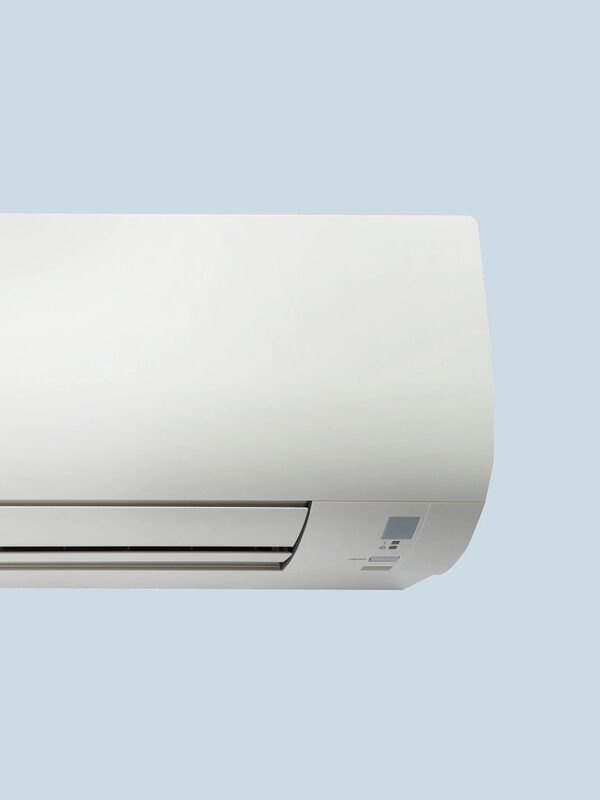
The published guidance on bedroom noise is consistent enough to give a working target. Glazing guidance states that the recommended maximum LAeq levels for noises in the home, in living rooms and bedrooms for example, are between 30 and 34 decibels7. A manufacturer's product documentation states that noise levels within quiet bedrooms should not exceed 30 dB6. Both figures sit well above the 19 to 21 dB(A) that the quietest indoor units quote in silent mode, which is why those units are marketed specifically for night-time use.
Temperature and noise interact in a bedroom. Independent guidance on maintaining the ideal home temperature gives a suggested bedroom figure of 16°C to 18°C12. A unit that has to work hard to reach that band will run its fan faster and its compressor longer, so a correctly sized system is a quieter system in practice. Sizing is covered in What size air conditioner do you need?.
| Target | Figure | Source type |
|---|---|---|
| Quietest quoted indoor unit | 19 dB(A) silent mode | Maker |
| airHome 200 indoor | from 21 dB(A) | Maker |
| Fujitsu indoor, cooling, Quiet | 27 dB(A) and 29 dB(A) | Maker |
| Bedroom ceiling | 30 dB | Maker documentation |
| Recommended maximum LAeq, living rooms and bedrooms | 30 to 34 dB | Glazing guidance |
The gap between the quietest unit and the recommended ceiling is wide: 19 dB against a recommended maximum LAeq of between 30 and 34 dB in living rooms and bedrooms7. In practice that margin is eaten by installation quality, by an undersized unit running flat out, and by an outdoor unit mounted on a wall that shares a bedroom. A household aiming for a genuinely quiet bedroom should treat the indoor figure as the starting point, not the answer.
Split, portable or window: which type runs quietest
The type of system determines where the noise is generated and therefore whether it is heard in the bedroom at all. A mono-split air conditioner consists of an indoor unit and an outdoor unit connected by a pipe, and can only be used for cooling one room1. A split air conditioner is divided into an outdoor unit and one (mono-split) or several (multi-split) indoor units13. That separation is the whole reason a split is quiet indoors: the compressor, the loudest single component, sits outside.
Portable units cannot make that separation. A single portable unit cannot cool multiple rooms at once, though models with wheels can be moved between rooms14. Maker guidance advises that portable air conditioners should be avoided around children, with wall-mounted split systems being the safest option15. On noise, the same guidance describes portable units as noisier than a fixed unit1.
Window units sit between the two. Smart air conditioners are usually window AC units fitted in or under a window, although portable models are also available16. A window unit keeps the compressor in the room, mounted in the frame, so its running noise is heard directly, and the frame itself can transmit vibration into the wall.
| Type | Where the compressor sits | Indoor noise expectation |
|---|---|---|
| Mono-split | Outdoor unit | Quietest; 19 to 29 dB(A) quoted |
| Multi-split | One outdoor unit, several indoor units | Same principle as mono-split |
| Portable | Inside the room | Noisier than a fixed unit |
| Window | In the window frame | Compressor heard in the room |
For a household, the split is the only type that removes the dominant noise source from the bedroom. The trade-off is that it needs a certified installer, a pipe route and, in flats, consent. Portable units need none of that, which is why they remain common in rentals, but the noise penalty is structural rather than a matter of choosing a better model. The comparison is set out in Split vs portable air conditioning for UK homes.
Where noise actually comes from: compressor, fan and vibration
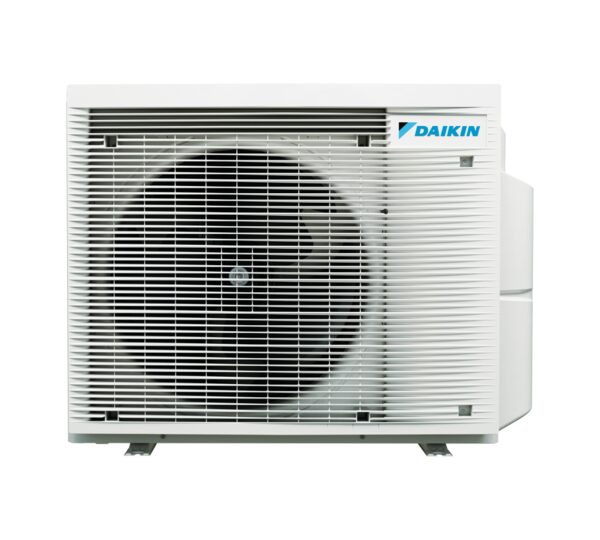
An air conditioning system consists of four main components: condenser and evaporator coils, a compressor and an expansion valve17. Of these, the compressor is the dominant noise source, and the fans are second. A banging noise from an outdoor unit could suggest a loose or broken part, such as a compressor or fan4. That is a fault rather than a design characteristic, and it is distinct from the steady low hum of normal running.
Fan noise scales with airflow, which is why quiet modes work by reducing it. Silent mode reduces the air volume treated by the indoor unit9, and Daikin's quiet operation mode reduces the sound pressure by reducing the airflow rate8. The same principle appears across other household equipment: battery power stations have no combustion engine, and their main sound comes from cooling fans that may stay off at light loads18. Where a fan can slow down or stop, noise falls away.
Vibration is the third path, and it is the one most often missed. Structure-borne noise travels through wall brackets and pipework rather than through the air, so an outdoor unit bolted to a bedroom wall can be audible even when its airborne figure is low. Manufacturers address this in different ways: Heliotherm describes particularly quiet operation due to the noise-optimised case design on its Cube19, and the Comfort Compact is described as quiet operation with sound decoupling technology design and special insulation20. Case design and decoupling tackle different problems, and both appear in the market.
"A banging noise from your outdoor AC unit could suggest a loose or broken part, such as a compressor or fan"
For a household, the practical reading is that a low dB(A) figure on a datasheet describes the unit, not the installation. A well-specified indoor unit on a poorly mounted outdoor bracket can still disturb a bedroom, and the fix is at the bracket and the siting, not the product.
Installation choices that cut noise further
Siting is the single largest installation decision. Manufacturer guidance on choosing an air conditioner location sets out where an outdoor unit should go21, and the distance and orientation relative to a bedroom wall matter more than any indoor figure. An outdoor unit placed below and away from the bedroom, rather than on the wall that shares it, removes both the airborne path and much of the structure-borne one.
Night quiet modes are the second lever. Daikin's multi-split outdoor units carry a night quiet mode setting to reduce the sound pressure during the night8. The indoor units on the same models carry a quiet operation mode that reduces sound pressure by reducing the airflow rate8. Used together, the two modes lower both ends of the system overnight.
Ventilation is a related but separate route to a cooler, quieter bedroom. Demand controlled ventilation is typically very quiet in day-to-day use because the system adjusts gradually24. WOLF describes its CWL-2 as the most efficient and quietest of its central residential ventilation systems, as well as the most compact of its kind on the market25. Mitsubishi Electric's VL-CZPVU-R/L-E is designed to be as quiet as possible, suitable for residential homes and apartments26, and the company's M Series is quick to install and includes one of the quietest units on the market27. Daikin states that its ventilation systems offer quiet operation day and night28.
Other household equipment shows the same design logic. Thermia fan coil units are described as whisper-quiet operation29, and Thermastore HHR storage heaters use a very quiet fan to extract the heat from the storage core30. Kensa lists passive cooling as suited to homes and apartments31, which removes the compressor from the cooling task entirely.
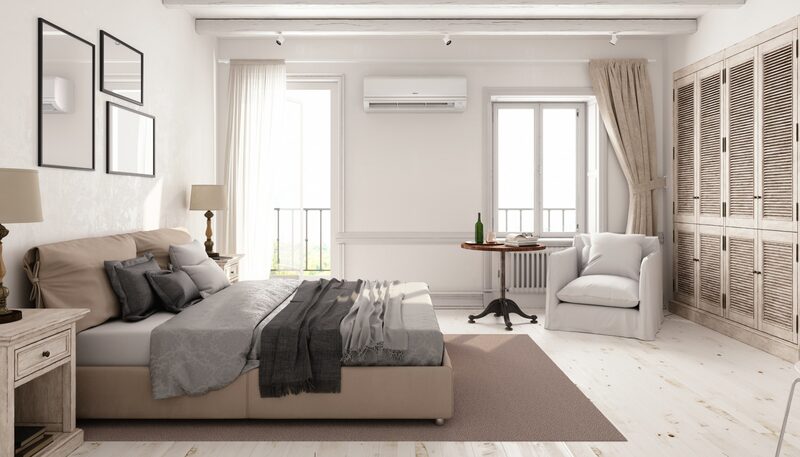
For a household, these choices are made once, at installation, and are difficult to change afterwards. The outdoor unit's position, the bracket type and the pipe route are all fixed at commissioning, which is why the siting conversation belongs in the survey rather than after the first hot night. Installation stages are covered in Air Conditioning Installation: Survey, Pipework, Drainage and Commissioning.
How to compare manufacturer noise figures fairly
Manufacturer noise figures are not directly comparable unless the conditions match. A dB(A) figure is quoted for a stated mode and fan speed, so 19 dB(A) in silent mode and 27 dB(A) in cooling on Quiet describe different operating points. Fujitsu's published figures name the mode explicitly: Quiet, 27 dB(A) for the ARXG18KLLAP and 29 dB(A) for the ABEG24KRTA3. Hitachi's 19dB figure applies to silent mode on wall-mounted units1, and the airHome 200's 21 dB(A) is a separate model figure11.
The second issue is what is being measured. Indoor sound pressure and outdoor sound pressure are different quantities, and a system has both. Daikin's multi-split documentation separates them: the indoor unit's quiet operation mode reduces sound pressure by reducing the airflow rate, and the outdoor unit's night quiet mode reduces sound pressure during the night8. A single headline figure that does not say which unit it describes tells the reader very little.
The third issue is the measurement position and the room. A figure taken in a laboratory is not the same as one taken at the bedside, and hard floors, bare walls and a small room all raise the level a sleeper experiences. Independent verification exists in the UK: QuietMark lists specific Daikin multi-split models8. That gives a household a second reference point beyond the maker's own datasheet.
| Comparison point | What to check |
|---|---|
| Mode | Silent, Quiet or low fan speed named |
| Unit | Indoor or outdoor sound pressure |
| Model | Exact model number, not the range |
| Verification | Independent listing where available |
For a household, the fair comparison is between named models at the same mode, with both indoor and outdoor figures on the table. A range-level claim such as "as quietly as 19dB" describes the best model in the range, not every unit sold under that name. Where a maker quotes a single figure without a mode, the figure is not comparable with one that does.
Where a split falls short
A split system is the quietest type, but it is not a self-contained solution. It needs a certified installer for the refrigerant circuit, an outdoor unit position that is acceptable to the property and, in flats, to the freeholder, and it draws grid electricity whenever it runs. The compressor is outside the bedroom but still outside the household's control: it is a sealed circuit serviced under F-gas rules, and a fault such as a loose compressor or fan produces the banging noise that guidance describes4.
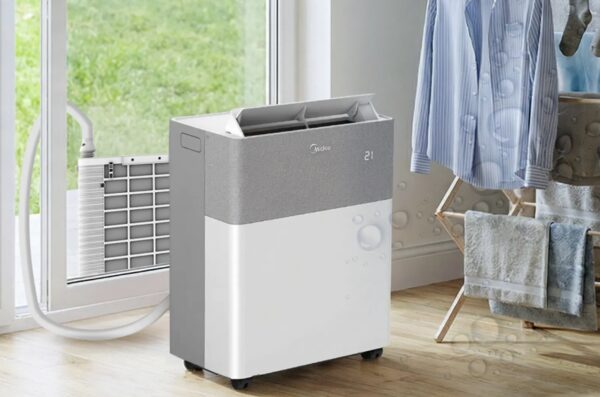
Portable units remain the only option in some homes, and their noise penalty is real rather than a matter of model choice. Maker guidance describes them as noisier than a fixed unit and advises avoiding them around children, with wall-mounted split systems being the safest option1. A household in a rental with no consent for a split is left choosing between a noisier portable unit and passive measures. Those measures are covered in Passive Cooling: Keeping a Home Cool Without Air Conditioning and Night Ventilation and Purge Cooling in UK Homes.
The wider independence picture is set out in Home Cooling and Energy Independence: a quiet split reduces dependence on open windows and on the grid at peak, but it does not remove either. The compressor, the refrigerant and the electricity supply all remain external to the household.
Sources31 cited
- Home air conditioning guide, Netatmo, 2026-09-20
- Ultra quiet air conditioning collection, CoolEasy, 2026-09-23
- ARXG18KLLAP split specification, Fujitsu General, 2026-09-23
- Why does my air conditioner make weird sounds, Hitachi, 2026-09-17
- Guide to air conditioning units, EDF Energy, 2024-05-22
- LUNA2000-7-14-21-S1, Huawei, 2026-09-17
- Sound reducing windows, Anglian Home Improvements, 2026-09-20
- Daikin 4 port multi air conditioner 4MWXM52A9, QuietMark, 2026-09-17
- Silent mode glossary, Hitachi, 2026-09-17
- PRIOS NET split air conditioning, Ariston, 2026-09-17
- airHome 200, Hitachi, 2026-09-17
- Maintaining the ideal home temperature, Smart Energy GB, 2026-08-17
- How does air conditioning work, Netatmo, 2026-09-20
- Air conditioners, Pro Breeze, 2026-09-23
- 8 common air conditioning myths debunked, Hitachi, 2026-09-17
- Smart air conditioner, Netatmo, 2026-09-20
- How does air conditioning work, Netatmo, 2026-09-20
- Best silent generator UK, Bluetti Power, 2026-08-31
- Brine heat pump Cube, Heliotherm, 2026-09-17
- Comfort Compact air heat pump, Heliotherm, 2026-09-17
- How to choose your air conditioner location, Daikin, 2026-09-20
- Daikin 5 port Class 90 multi air conditioner 5MWXM90A9, QuietMark, 2026-09-17
- Daikin 4 port multi air conditioner 5MWXM68A9, QuietMark, 2026-09-17
- DCV made simple for homeowners, Aereco, 2026-04-01
- Central ventilation systems, WOLF, 2026-09-17
- VL-CZPVU-R/L-E domestic ventilation unit, Mitsubishi Electric, 2026-09-17
- Air conditioning products, Mitsubishi Electric, 2026-09-17
- Ventilation systems, Daikin, 2026-09-17
- Fan coil units, Thermia, 2026-09-17
- High heat retention storage heaters, Electrorad, 2026-09-20
- Cooling, Kensa, 2026-09-17
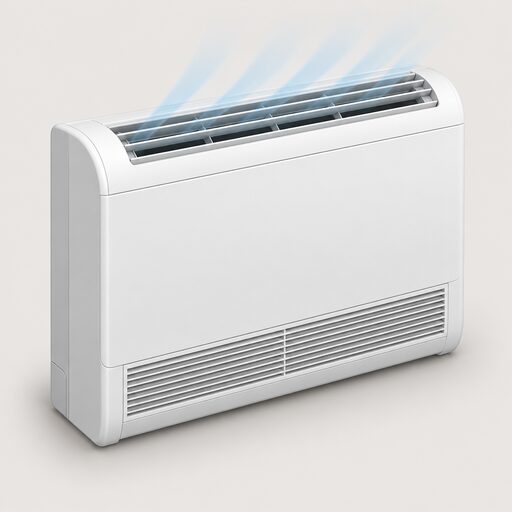 Split Air ConditioningA split air conditioning system cools or heats one room using an indoor unit and an outdoor unit linked by pipes.
 Air Conditioning SizingHow big an air conditioner does a room need?
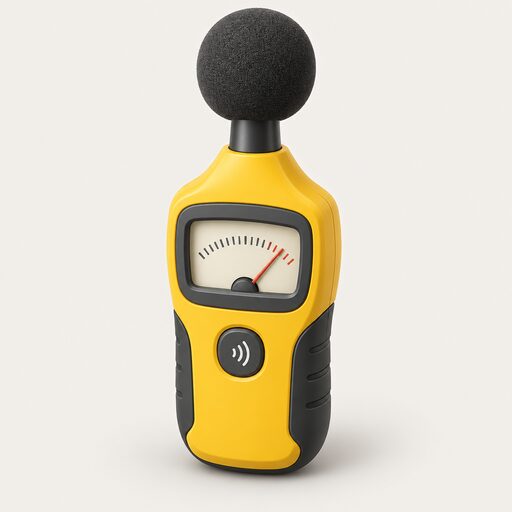 Air Conditioning NoiseHow loud will an air conditioner be inside your home, and how much noise will the outdoor unit make for you and your neighbours?
 Passive Cooling at HomeKeeping a home cool without air conditioning comes down to blocking heat before it gets in, then letting trapped heat out.
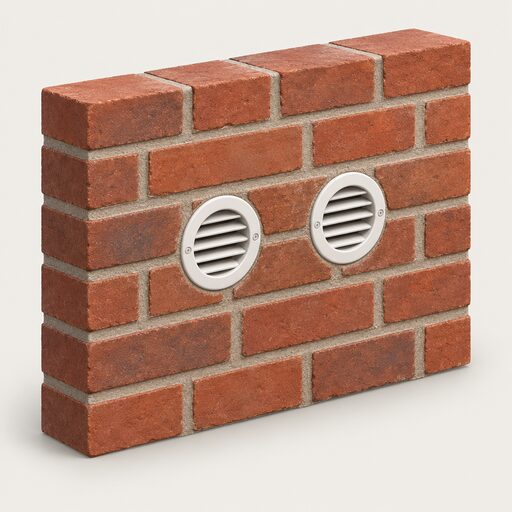 Without an Outdoor UnitFlats and listed homes often cannot have a box on the outside wall, so how does air conditioning work with everything indoors?
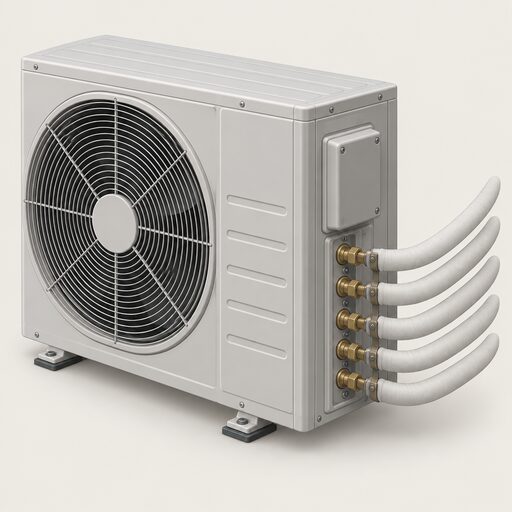 Multi-Split ACHow multi-split air conditioning works when one outdoor unit serves several indoor units: how many rooms one system can serve, independent room control, efficiency, outdoor unit size and sound, planning rules in England and Scotland, servicing and lifespan, the 0% VAT position and how it compares with separate single splits.