
Short answer
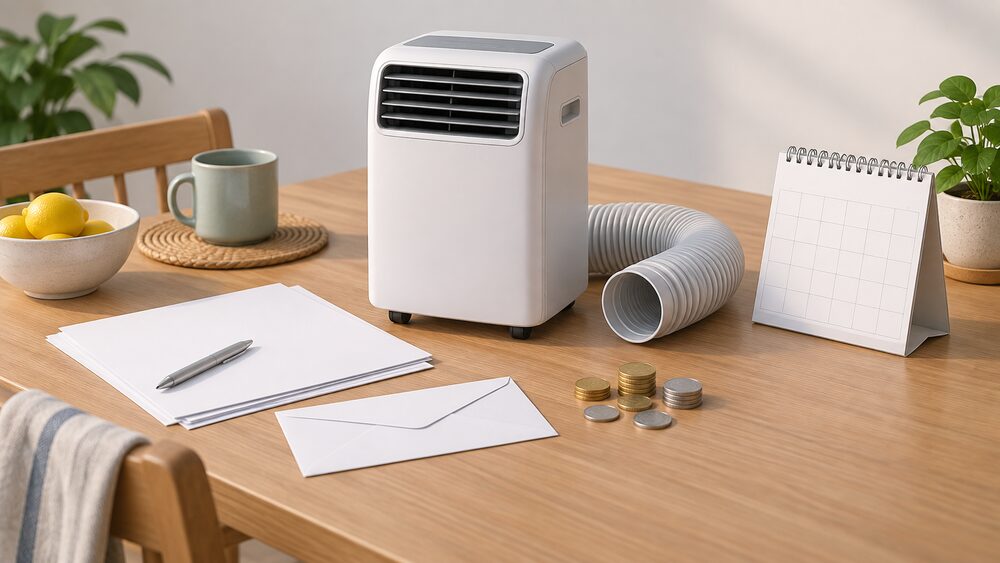
A 7,000 BTU portable air conditioner is a 2.0kW cooling unit, and in the UK it is listed at roughly £200 to £380 depending on the model and the promotion running at the time. The lowest listed figure for a 7,000 BTU unit is £199.99 ex VAT, and a 7,000 BTU 3-in-1 model is listed at a £263.49 sale price against a £499.99 regular price1. A Midea Eco 7,000 BTU unit is listed at £379.99 including VAT3.
Running cost is the figure that decides whether the purchase makes sense. One 7,000 BTU unit is quoted at 21p per hour based on 27.03p per kWh4. Independent guidance puts a typical 1,000 to 1,500W portable air conditioner at around 26p to 39p per hour, roughly 14 to 20 times more than a fan5. A 7,000 BTU unit sits at the low end of that range because it draws less power than larger portables.
What a 7,000 BTU portable air conditioner costs in the UK
The broad market range for portable packaged air conditioners is £170 to £700, depending on capacity and features1. A 7,000 BTU unit sits near the bottom of that band because it is the smallest common capacity sold for domestic use. Within the band, the spread comes from the retailer and the moment: the same nominal capacity can be listed at very different figures depending on whether a promotion is running.
For 7,000 BTU specifically, the listed figures are:
| Model | Listed price | Notes |
|---|---|---|
| Lux Air Portable Air Conditioning Unit, 2.0kW (7,000 Btu) | £199.99 ex VAT | Also listed at £239.99 reduced to £199.992 |
| Pro Breeze 7,000 BTU 3-in-1 with dehumidification | £263.49 sale price | Regular price £499.99, saving £236.508 |
| Midea Eco 7,000 BTU Portable Air Conditioner | £379.99 inc. VAT | Distributor listing3 |
The Lux Air unit also appears with a £240.00 inc VAT figure and a £200.00 ex VAT figure on a hire listing, and a £240.00 deposit figure alongside the £199.99 price2. Those documents disagree on the headline number, so a buyer comparing them should treat the ex VAT and inc VAT figures as separate listings rather than a single price.
Prices are installer-quoted or retailer-listed rather than fixed, and VAT treatment varies between listings. Some trade-oriented sellers quote ex VAT, which makes a unit look cheaper than the price a household actually pays. The £199.99 Lux Air figure is ex VAT; the £379.99 Midea figure includes VAT2.
For a household, the purchase price is the smaller number over the life of the unit. A 7,000 BTU portable bought at £200 and run for three hours a day through a hot summer will spend more on electricity than it cost to buy within a few seasons. That is the trade-off that matters for energy independence: the unit reduces reliance on a single room being tolerable, but it adds a new electricity load that the grid still supplies.
Running cost: about 21p per hour
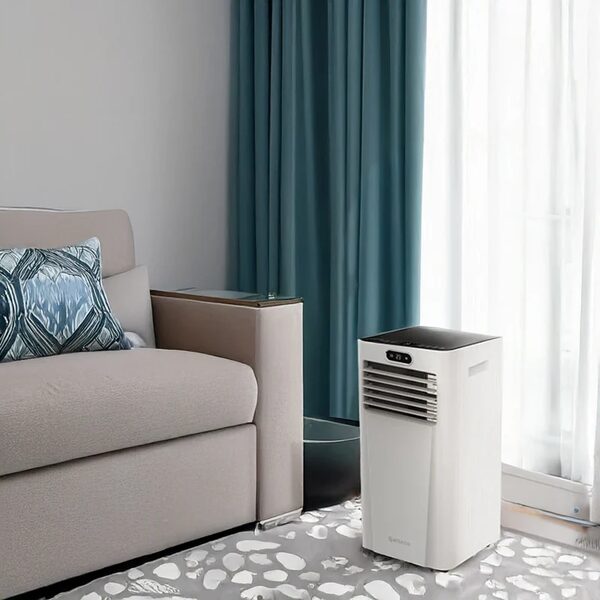
The headline running figure for a 7,000 BTU unit is 21p per hour, quoted on a Meaco Pro 7,000 BTU model and based on 27.03p per kWh4. That is the lowest per-hour figure in the portable range, and it follows directly from the unit's size: a 7,000 BTU portable draws less power than a 12,000 or 14,000 BTU model, so it costs less per hour to run.
The wider evidence puts portable running costs in context:
- Independent guidance gives portable units at 17p to 62p per hour across a 700 to 2,500W power band10.
- A typical portable air conditioner of 1,000 to 1,500W is put at around 26p to 39p per hour, roughly 14 to 20 times more than a fan5.
- A portable unit of similar cooling power to a 2.5kW split is put at 70p to £1 per hour or more11.
- Portable units are given at £0.20 to £0.39 per hour based on a July 2026 Ofgem price cap of 26.11p per kWh12.
The figures differ because they assume different tariffs, different power draws and different definitions of "portable". The 21p figure uses 27.03p per kWh; the £0.20 to £0.39 range uses 26.11p per kWh; the 26p to 39p range assumes 1,000 to 1,500W. A 7,000 BTU unit drawing around 700 to 800W will land below the middle of most of these ranges, but the tariff a household is on decides the final number.
For comparison, an immersion heater is put at around 78p to run for an hour, and a dehumidifier at approximately 4p to 15p per hour depending on size and settings13. A 7,000 BTU portable sits between those two: more than a dehumidifier, less than an immersion heater.
Weekly cost is where the figure bites. An independent press release models a 1kW portable air con unit at £13.37 per week on the cheapest fix rates and £16.70 per week on predicted July rates, both assuming an average 9.1 hours of daily use over seven days15. Nine hours a day is heavy use, but it shows how quickly a low hourly figure becomes a meaningful weekly one.
For energy independence, the running cost is the dependence that remains. A portable unit does not reduce a household's reliance on the grid or on a supplier; it increases electricity consumption at the moment when demand and price are both high. A standard fan is described as costing 20 times less to run than a portable air conditioner16.
Discounts and deals: how much you can save
Portable air conditioner pricing is heavily promotional, and the headline saving on a listing is often larger than the price a household would ever have paid. The clearest 7,000 BTU example is a Pro Breeze 7,000 BTU 3-in-1 unit listed with a saving of £236.50, taking it from a £499.99 regular price to a £263.49 sale price8. The saving is stated against the seller's own regular price, which is the seller's own reference point.
Larger models carry larger headline savings. Two electriQ units are listed with savings of £369 and £799 respectively17. Those are not 7,000 BTU units, but they show the pattern: the bigger the unit, the bigger the discount figure, because the discount is calculated on a higher base price.
The practical effect for a household is that timing matters more than brand for the purchase price. A 7,000 BTU unit bought at full price and one bought in a promotion can differ by more than £200 on the same nominal capacity. That is a purchase-price saving, not a running-cost saving: the electricity figure stays the same whatever the unit cost to buy.
Discounts do not change the energy position. A cheaper unit still draws the same power and still runs off the grid. The saving is a one-off reduction in capital cost, and it does not make the household any more self-sustaining in cooling.
Is a 7,000 BTU unit right for your room?
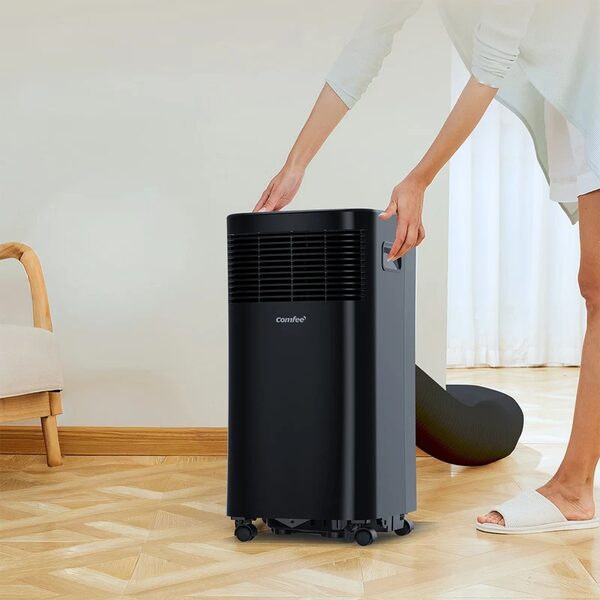
A 7,000 BTU portable air conditioner is a 2.0kW cooling unit18. Sizing guidance from one maker puts 6,000 to 8,000 BTU at 14 to 23 square metres, which covers most bedrooms and small living rooms7. Below that band, 5,000 to 6,000 BTU is given for 9 to 14 square metres; above it, 8,000 to 10,000 BTU for 23 to 32 square metres7.
That makes 7,000 BTU a bedroom-sized unit rather than a whole-floor one. The capacity is fixed, so the question is whether the room's heat gain fits inside it. Floor area is only the starting point: south-facing glazing, a top-floor position, occupancy, and appliances all add load. A 14 m² bedroom with a large south-facing window can carry more heat gain than a 23 m² room facing north.
Portable air conditioners are rated typically at 900 to 2,000W, and the higher the BTUs the higher the power draw6. A 7,000 BTU unit therefore sits at the low end of both capacity and electricity use, which is the trade-off: it costs less to run than a larger portable, but it cools less space.
Two limits are worth stating plainly. First, a portable unit is less efficient than a fixed one: a portable A+ class model could still consume 2.4 times more electricity than a wall-mounted unit of the same class20. Second, a portable unit depends on venting hot air outside through a hose, so it works against itself to some degree in a sealed room. For a household weighing independence, a 7,000 BTU portable is a low-commitment way to cool one room, but it does not reduce reliance on the grid, and it adds a load that a fixed, more efficient system would meet with less electricity.
For a wider view of how portable units compare with fixed systems, see portable air conditioners and split vs portable air conditioning. Running costs across all cooling types are covered in air conditioning running costs, and room sizing in what size air conditioner do you need.
Sources20 cited
- Packaged air conditioning comfort guide, Netatmo, 2026-09-20
- Portable cooling collection, Cool Easy, 2026-09-23
- Midea 2.0kW 7,000 BTU portable air conditioning unit, Air Con Centre, 2026-09-17
- Meaco Pro 7,000 BTU portable air conditioning unit, Air Con Centre, 2026-09-17
- Summer energy tips, National Energy Action, 2026-08-13
- Ratings of electrical appliances, Electrical Safety First, 2026-09-19
- Portable home air conditioner: how to find the right one, Haverland, 2024-06-06
- Air conditioners collection, Pro Breeze, 2026-09-23
- Lux Air portable AC that cools, heats and sterilises, Cool Easy, 2026-09-23
- Air conditioning running costs, Heatable, 2026-04-13
- How much does air conditioning cost to run, Warmzilla, 2026-05-27
- Is air conditioning worth it in the UK?, Uswitch, 2026
- Immersion heaters, Which?, 2026-06-01
- Condensation, damp and mould, Plymouth Energy Community, 2026-09-20
- The cost of keeping cool: four million homes now use air conditioning, Uswitch, 2026-04-30
- Do fans work in hot weather? 5 ways to keep your home cool, Ecotricity, 2025-07-15
- Portable air conditioners, electriQ, 2026-09-23
- Domestic home air cooling solutions, Cool Easy, 2026-09-23
- Nursery and baby room air conditioning systems, Cool Easy, 2026-09-23
- Air-to-air heat pumps for small rooms, Daikin, 2026-09-17
 Running CostsA portable air conditioner costs roughly twenty to forty pence for every hour it runs, while a fixed unit uses far less electricity for the same cooling.
 Air Conditioning CostPublished UK equipment prices and the parts of an installed price for portable, single split, multi-split and whole-house air conditioning.
 Portable Power Station CostHow much does a portable power station cost in the UK, and what does the money actually buy?
 Air Conditioning SizingHow big an air conditioner does a room need?
 How Much Does a Heat Pump CostA heat pump usually costs around eleven thousand pounds installed, though quotes vary a lot depending on your home.
 Home Battery CostA home battery usually costs between one and a half and ten thousand pounds fitted, depending on size.