In this guide
SunPower panels sold in the UK today are made by TCL SunPower Global, a business that took the SunPower name after the original American company's bankruptcy. The Performance range reaches up to 515W per panel and up to 22.8% module efficiency, using TOPCon cells in a shingled, ribbon-free design1. The Maxeon line sits above it on warranty, at 40 years with warranted output of 93.0% in year 25 and 89.3% in year 402.
The brand's history matters more here than for most panel makers. The SunPower name was acquired out of bankruptcy by Complete Solaria and relaunched in 2025 as a dealer and installation platform rather than a manufacturer, and SunPower separately joined the TCL Group, a wafer manufacturer with an annual production capacity of 200 GW1. UK buyers are therefore dealing with a relaunched brand under new ownership, not the vertically integrated American manufacturer that built the original reputation.
For a household, the practical questions are narrower: what the panels deliver, what the warranty actually promises, who honours it, and how the modules reach a UK roof. Panels are sold through installers rather than direct to consumers in the UK, so the installer relationship carries the specification, the documentation and any later claim3.
Chapter 11 in the US: what it means for UK owners
The SunPower name has changed hands. Complete Solaria acquired it out of bankruptcy and relaunched it in 2025 as a dealer and installation platform, not a manufacturer1. That distinction is the one that matters to a UK household: the company selling under the SunPower name in the United States is not the entity that makes the modules, and the manufacturing sits elsewhere in the group structure.
Separately, SunPower joined the TCL Group, described as the world's leading wafer manufacturer with an annual production capacity of 200 GW1. Wafer supply is upstream of cell and module production, so the ownership places the brand inside a larger manufacturing group rather than leaving it as an independent module maker.
For UK owners, the consequences are practical rather than legal. A warranty is only as good as the entity standing behind it, and where a brand has been through insolvency and relaunch, the paperwork route runs through the current owner and the installer network. SunPower states that all of its solar panel warranties provide coverage for panel repair and replacement during the coverage period, and that it provides financial support for the installer as well1. That is a maker's statement about its own warranty, and it should be read alongside the terms attached to the specific model.
The wider point for energy independence is that a panel purchase is a 25 to 40 year relationship with a manufacturer's balance sheet. A household that wants the longest warranty available should ask, in writing, which legal entity issues it and what happens to it if the brand changes hands again. The same question applies to any premium brand, and it is worth asking before signing rather than after a fault appears.
SunPower and Maxeon: one technology, two names
Maxeon and SunPower have been closely linked, and the warranty terms show the split clearly. SunPower states that its Maxeon panels were the world's first solar panels to earn the Cradle to Cradle Certified Silver designation, and that Maxeon panels can be carbon neutral in as little as six months1. Those are sustainability claims attached to the Maxeon line specifically, not to the Performance range.
The two lines also diverge on warranty length and warranted output. Performance panels carry a 30-year warranty, subject to terms and conditions and not available in all countries, with a 25-year warranty applying where the panel is not registered4. Maxeon panels are listed at 40 years, with warranted output of 93.0% in year 25 and 89.3% in year 402. The Performance equivalent is 89.4% in year 25 and 87.4% in year 302.
So the naming is not cosmetic. A buyer comparing a SunPower quote with a Maxeon quote is comparing two different warranty propositions and two different degradation curves, even where the marketing presents them as one family. The Maxeon 3 range has its own specification page for readers who want the model-level detail.
Who makes the panels and where the brand stands now
Manufacturing for the SunPower name now sits within the TCL Group following the 2025 move1. The brand's UK presence is being built through distribution rather than direct sales: TCL SunPower Global announced a UK distribution partnership with Bimble Solar on 18 February 2026, described as strengthening its UK presence1. A parallel partnership with Energy3000 covers the DACH region, announced on 2 February 2026, and a deal with Orduna brought TCL SunPower Global residential technology to Spain on 23 March 20261.
That pattern, a wafer-scale parent company building regional distribution deals, tells a household something useful about availability. Stock reaches the UK through a distributor and then through installers, which is consistent with how solar panels are sold in the UK generally: through installers rather than direct to consumers3. It also means model availability can vary by region and by quarter, so a specification agreed at quotation stage is worth confirming against what the distributor can actually supply.
The company has continued publishing technical and warranty material through 2026, including articles on solar panel efficiency on 28 July 2026, on battery warranty design on 11 August 2026, and on its own warranty on 25 August 20261. A back contact solar solutions announcement followed on 2 June 20261. None of that is a guarantee of long-term presence in the UK market, but it indicates an active commercial operation rather than a dormant brand.
The range: Performance, Maxeon and flexible panels
The Performance range is the volume product. It uses TOPCon solar cells combined with a shingled-cell design, described by the maker as producing reliable, powerful and efficient panels4. The cells are one-third cut, and the ribbon-free construction is patented2. Flexible joint cell connections are part of the design intent, engineered for lasting reliability4.
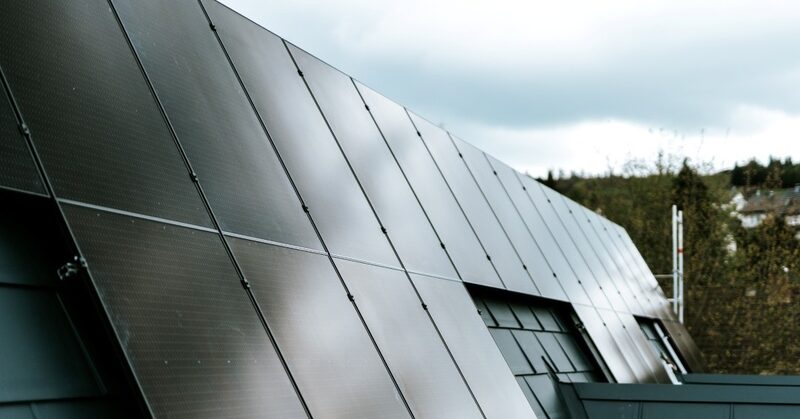
The appearance follows from the construction. The shingled-cell design eliminates gaps between cells, and smaller metallic wires contribute to a sleek black appearance with a strong black frame4. For a household weighing how a roof will look, that is a genuine difference from a standard cell layout with visible busbars and spacing.
The Performance range is also bifacial, capturing sunlight from the front and the back of the panel via reflected light4. Bifacial gain depends on what sits behind the module, so on a close-mounted pitched roof the rear contribution is limited; the benefit is greater on raised or ground-mounted arrays.
| Line | Cell technology | Peak power | Module efficiency | Warranty |
|---|---|---|---|---|
| Performance | TOPCon, shingled, ribbon-free4 | Up to 515W2 | Up to 22.8%2 | 30 years, 25 unregistered4 |
| Maxeon | Maxeon cell platform1 | Not stated | Not stated | 40 years2 |
The Maxeon line is presented on warranty and sustainability grounds rather than on a published power figure in the material available. Readers comparing cell architectures across brands will find the wider context in the guide to solar cell technology.
Efficiency: up to 22.8% from shingled TOPCon cells
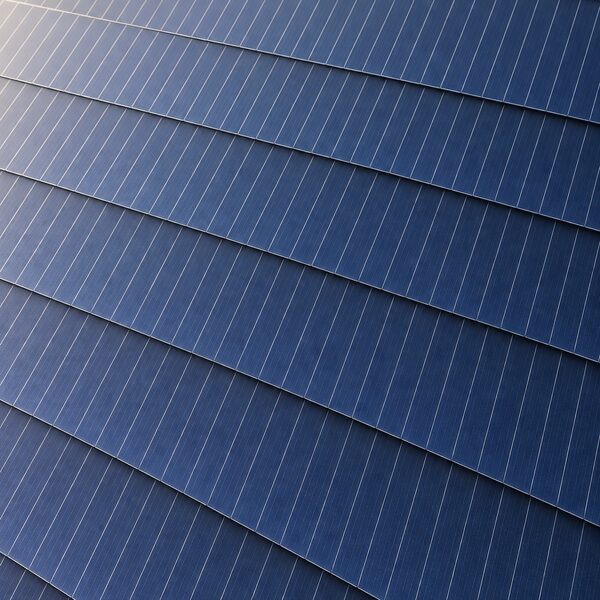
The headline figure for the Performance range is up to 22.8% module efficiency, with panel power up to 515W2. Those two numbers describe different things: efficiency is the share of incident sunlight converted to electricity per unit of area, while wattage is the absolute output of a given module size. A household with limited roof area cares about the first; a household sizing an array to a target output cares about the second.
What drives the figure is the cell and the interconnection. TOPCon cells with a shingled layout remove the ribbon strips that normally run across a module, and the one-third cut cells are overlapped rather than spaced4. Removing the gaps increases the active area within the same frame, which is where the efficiency gain comes from rather than from any exotic material.
The maker also lists the Performance range as a PVEL Reliability Scorecard Top Performer, and states that the M Class line offers safe long-term operation in shade with durable cell connections2. Those are maker claims about its own products, and they are the kind of claim that independent testing programmes exist to check. Which? notes that in the UK solar panels are sold via installers rather than direct to consumers, which shapes how testing information reaches buyers3.
In practice, the module efficiency figure is the ceiling under standard test conditions. Real output depends on orientation, pitch, shading and temperature, and the site-specific factors usually matter more than a percentage point or two of module rating. The guide to reading a datasheet sets out how to compare those figures properly.
Durability: hotspots, microcracks, hail and snow
SunPower states that Performance panels are resilient to power output losses from shade, hotspots and microcracks, and that they can handle temperature swings, snow loads and hail events4. Those are the failure modes that matter in a UK climate: thermal cycling through freeze and thaw, wind-driven rain, and occasional hail.
The mechanism claimed is electrical architecture. A shingled, ribbon-free layout with flexible joint cell connections changes how current moves through the module, which is the basis for the shade and hotspot claim4. Hotspots form where a cell is forced to dissipate power rather than generate it, and microcracks are hairline fractures in cells that can develop during handling or thermal stress.
Structural questions sit with the building rather than the panel. Official guidance is that a household needs to check the roof can support the additional wind, snow and static load imposed by the solar panels, and that it complies with Part A: Structure5. Where panels are proposed on a roof slope facing the highway and rear-facing panels are not feasible, planning guidance asks for technical evidence that no other location could support the equipment, either structurally or in terms of adequate sunlight, with visual impacts minimised6.
Warranty: 30 years, 40 on Maxeon, and what is not covered
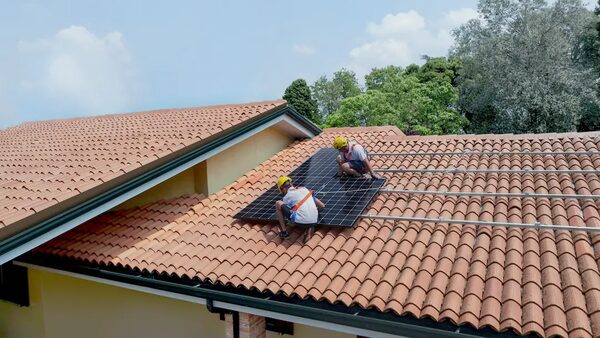
The warranty structure is where the two lines separate most clearly. Performance 7 panels are backed by a 30-year warranty, subject to terms and conditions and not available in all countries4. That 30-year term requires registration; without it, a 25-year warranty applies4. The 30-year term is also not available for earlier generation Performance panels, where a 25-year warranty applies4.
Maxeon panels are listed at 40 years2. Warranted output differs too: Performance panels are warranted to 89.4% in year 25 and 87.4% in year 30, while Maxeon panels are warranted to 93.0% in year 25 and 89.3% in year 402. For context, most solar panels come with a 25-year performance guarantee, and most photovoltaic panels carry a guarantee of something like 90% of maximum output after 25 years7. The Performance figure sits just under that common benchmark; the Maxeon figure sits above it.
What is covered is broader than the panel itself. SunPower states that all of its solar panel warranties provide coverage for panel repair and replacement during the coverage period, and that it provides financial support for the installer1. Performance panels carry 30-year coverage for removal, shipping and re-installation of panels requiring repair or replacement under warranty2. That matters because the cost of getting panels off a roof and back on can approach the cost of the module.
"30-year coverage for removal, shipping, and re-installation of panels requiring repair or replacement under warranty"
Registration is the condition that catches people out. A 30-year Performance warranty requires registration, otherwise the 25-year term applies4. The registration route runs through the installer, which is why the installer relationship carries so much weight on this brand. The wider mechanics of product and performance warranties are set out in the guide to solar panel warranties and degradation.
Cost in the UK: the premium and who supplies them
There is no single published UK price for a SunPower installation, and the figures that circulate are quoted rather than listed. For scale, solar panels cost on average £4,600 to £8,000 among suppliers Uswitch works with, with an average upfront cost of £6,100 according to the Energy Saving Trust, and typical installation costs of £6,000 to £10,0009. Those are system figures across brands, not SunPower-specific.
The premium question is harder to answer precisely. Two sets of installed and per-panel figures for SunPower circulate, at £8,500 to £11,500 installed and £300 to £420 per panel against £6,500 to £8,500 installed and £280 to £400 per panel, and the two sets disagree on which applies. Both should be treated as indicative and confirmed by quotation.
What a household can control is the route. Panels are sold through installers rather than direct to consumers in the UK3, and MCS certification is the recognised quality mark for solar PV installations11. A specification agreed with an MCS certified installer, with the exact model named and the warranty terms attached in writing, is the practical protection.

On value, the evidence on property prices is mixed and worth stating plainly. One study reports a property price premium of around 0.9% to 2%, a Swansea University 2024 paper reports 6.1% to 7.1% for houses with solar panels, and a separate figure puts the average price premium at between £14,062 and £16,36812.
Low light, cold weather and carbon payback
Solar panels work in winter but generate less electricity than in summer, and they work whenever there is daylight14. Cloud cover reduces output rather than stopping it, so a UK array produces across the year with a pronounced seasonal shape. The Performance range's shade tolerance claim is about partial shading from obstructions, which is a different problem from uniform cloud cover4.
On carbon, the carbon payback period for a solar panel, the time taken to offset the emissions from manufacturing, is typically one to four years16. SunPower states that its Maxeon panels can be carbon neutral in as little as six months1. The two figures are not measuring the same thing: one is a general industry range, the other a maker's claim for a specific line, and the maker's figure is the more favourable of the two.
The Performance range is also listed as compliant with RoHS standards2. That is a restriction on hazardous substances in electrical equipment rather than a carbon metric, but it is part of the same materials story.
For a household's energy independence, the position is straightforward. A SunPower array generates on site and reduces the electricity drawn from a supplier, and it keeps working through cloud and winter at reduced output. What remains is the grid connection, the supplier relationship, the inverter as a separate component with its own warranty, and the installer and manufacturer chain behind any claim. The guide to solar panels and household energy independence sets out where those dependencies sit.
Sources16 cited
- SunPower UK homeowner guide, SunPower Global, 2026
- SunPower solar panels product range, SunPower Global, 2026
- How we test solar panels, Which?, 2026
- SunPower Performance solar panel, SunPower Global, 2026
- Solar panels planning and building guidance, East Hertfordshire District Council, 2026
- Solar panels planning permission checklist, Islington Council, 2026
- Solar panels guide, Uswitch, 2026
- Solar photovoltaic panels, Centre for Alternative Technology, 2026
- Are solar panels worth it?, Uswitch, 2026
- Do solar panels increase home value?, The CPA, 2026
- Solar photovoltaic PV certification, MCS Certified, 2026
- How does solar PV affect property value, EPVS, 2026
- Are solar panels worth it?, Which?, 2025
- Solar power facts, Energy Saving Trust, 2026
- Do solar panels work in winter?, Uswitch, 2026
- Plug-in solar explained, Low Carbon Hub, 2026
 SunPower and MaxeonYour SunPower panels are on the roof, so who honours the warranty now the company has gone bust?
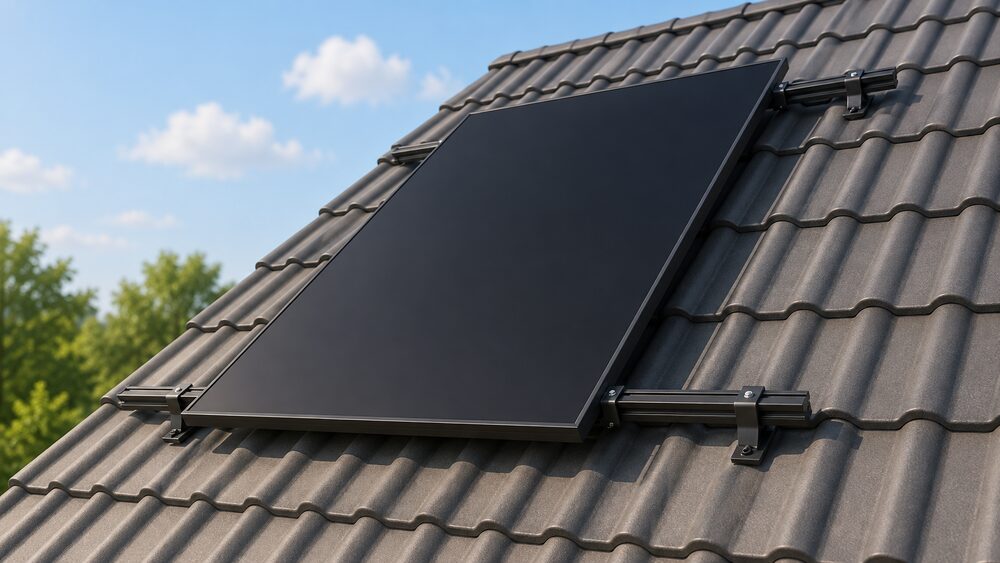 SunPower Maxeon 3 panelsThe Maxeon 3 line, its 40-year warranty, its efficiency and heat performance, and what the SunPower and Maxeon company split means for UK buyers.