
In this answer
Short answer
Solarwatt's glass-glass Panel vision modules carry a 30 year product and performance warranty, and the maker's current warranty conditions guarantee at least 90 per cent of nominal output in the thirtieth year, minus a tolerance range of 5 per cent under standard test conditions1. That is the headline. The detail behind it is messier, because Solarwatt's own documents give two different year-30 figures, and the 30 year term does not apply to every panel the company has sold in the UK.
The 87 per cent figure that circulates comes from an earlier version of the warranty text and from a UK distributor listing, both of which state at least 87 per cent of nominal output in the thirtieth year3. The 2026 conditions and the current datasheets for the Panel vision range state 90 per cent2. Both are Solarwatt documents.
What the guarantee does do is hold for three decades on both product and performance, which is longer than the 25 to 30 years that independent guidance describes as typical for well-known manufacturers6. For a household, that is the independence argument: a module warranted to year 30 is a module whose replacement cost is unlikely to land on the roof owner.
The guarantee: 30 years on product and performance
Solarwatt describes the Panel vision range as carrying a 30 year product and performance warranty on glass-glass modules1. The individual datasheets spell the two halves out separately: a 30 Year Product Warranty and a 30 Year Performance Warranty, listed as distinct lines on the specification sheet5. That split matters, because the two warranties answer different failures. The product warranty covers the module as a manufactured object. The performance warranty covers what it produces.
The same 30 year pairing appears across the current range. The Panel vision GM pure datasheet states a 30 Year Performance Warranty on 90 per cent of nominal power8, the Panel vision H style and H pure datasheets each state a 30 Year Performance Warranty9, and the Panel vision GM style datasheet states a 30 Year Product Warranty and a 30 Year Performance Warranty11. The consistency across datasheets is the useful signal: where a current Solarwatt glass-glass datasheet is in front of a buyer, 30 years on both counts is what it should say.
The warranty conditions themselves were signed by Solarwatt's chief product officer on 23 July 2026 and the document footer identifies revision 5, dated 5 August 20262. That is the version to work from. Older texts remain in circulation and give the lower year-30 figure, so the date on the document is not a detail.
For a household, a 30 year product term on the panel itself is the part that insulates against manufacturing defects, delamination and the slow failures that show up in year 12 rather than year two. It does not cover the inverter, the mounting, the labour or the scaffolding, and it does not make the system independent of the grid. It covers the modules.
What the performance guarantee promises: 87% or 90% after 30 years

The performance guarantee is a floor on output, expressed as a percentage of the module's nominal power measured under standard test conditions. Solarwatt's 2026 warranty conditions set that floor at no less than 90 per cent of nominal output in the thirtieth year, minus a tolerance range of 5 per cent2. The 2024 conditions set it at no less than 87 per cent in the thirtieth year, again minus a 5 per cent tolerance3. A distributor listing for the range states 87 per cent output guaranteed after 30 years4.
The two figures are not a rounding difference. They are two versions of the same promise, and no ruling reconciling them is recorded. A household holding a 2024-vintage document has the 87 per cent floor; one holding the 2026 conditions has the 90 per cent floor. The 2023 conditions add a further waypoint, guaranteeing at least 84.8 per cent of nominal output in the twenty-fifth year12.
How does that sit against other brands? Which? records Jinko Solar at 30 years at 87.04 per cent and SolarEdge at 30 years at 89.4 per cent13. On those numbers Solarwatt's 90 per cent sits at the top of the three and its 87 per cent sits alongside Jinko. The gap between brands is small; the gap between document versions is the one that changes what a household can actually claim.
| Document | Year-30 output floor | Tolerance | Date |
|---|---|---|---|
| Solarwatt warranty conditions, revision 5 | at least 90% of nominal output | minus 5% under STC | 20262 |
| Solarwatt warranty conditions, earlier text | at least 87% of nominal output | minus 5% under STC | 20243 |
| Solarwatt conditions, year-25 waypoint | at least 84.8% of nominal output | minus 5% under STC | 202312 |
| Jinko Solar, per Which? | 87.04% at 30 years | not stated | 202613 |
| SolarEdge, per Which? | 89.4% at 30 years | not stated | 202614 |
What the warranty conditions cover, and which panels
The 30 year term is not a blanket promise across everything Solarwatt has made. The warranty conditions apply to named modules of the glass-glass generation: the SOLARWATT Panel vision M and the SOLARWATT Panel vision XS2. Panel classic belongs to the earlier glass-foil generation and sits under separate conditions15. A buyer looking at older or second-hand stock should establish which generation the module is before treating 30 years as the term.
Within the current range the terms are not uniform either, and the datasheets are the place to check. The Panel vision M and M style each state a 30 year product warranty16, and the Panel vision M datasheet states a 30 year product warranty18. The Panel vision L states a 25 year product warranty alongside its 30 year performance warranty on 90 per cent of nominal power16. The Panel vision XL states a 15 year product warranty19. So a household comparing two Solarwatt modules can find 15, 25 and 30 year product terms in the same catalogue, with the performance term holding at 30 years on the models where it is stated.
The conditions also define what the warranty is attached to. It applies exclusively to solar modules and not to complete systems from Solarwatt3. That is a boundary worth understanding: the guarantee follows the panel, not the installation, the inverter or the battery.
Transferring the guarantee when the house is sold

The guarantee is attached to the modules rather than to the person who bought them. Solarwatt's conditions state that if the end customer sells and transfers title to the modules, the warranty transfers to the new owner for the remainder of the warranty term, and the original customer's warranty expires at the time of transfer2. Earlier versions of the same conditions say the same thing in the same terms7.
In practice that means a 30 year term can outlive two or three owners of the same house. For a household weighing whether solar adds value at resale, the transferability is the mechanism: the incoming owner inherits an asset with a documented output floor and a documented product term, not a warranty that died with the seller. The condition is that title transfers, so the paperwork should travel with the property.
Why glass-glass construction backs a 30-year promise
The 30 year term is offered on glass-glass modules, and the construction is the reason the term is credible rather than promotional. A glass-glass module sandwiches the cells between two sheets of glass instead of glass and a polymer backsheet. The maker's own framing ties the long warranty to that build, describing a 30 year product and performance warranty on glass-glass modules1, and the datasheets for the glass-glass range carry the paired 30 year lines5.
Solarwatt states over 30 years of experience in research, development and production, and separately over 30 years of expertise in clean energy1. The company's own warranty conditions are signed and dated, revision-tracked documents rather than a marketing line, which is what a household would need if a claim ever arose2.
Set against the market, a 30 year product term is at the long end. Independent guidance describes well-known manufacturers as often offering warranties of 25 to 30 years6. A UK mounting and roof-integration maker describes 25 year warranties on its products21, and a UK green supplier describes systems backed by 25 year product warranties and 30 year performance warranties22. Solarwatt's 30 year product term on the glass-glass range sits above the 25 year product norm those examples describe.
The maker behind the guarantee: Solarwatt of Dresden
The warrantor is Solarwatt GmbH, registered at Maria-Reiche-Str. 2a, 01109 Dresden, Germany7. The company describes the guarantee as voluntary, and the conditions are governed by German law23. That is a material point for a UK household: the promise is a German company's voluntary undertaking, enforceable under German law, not a statutory UK consumer right.
The company's UK-facing operation is real. Solarwatt states that with local offices and warehousing it has a strong UK presence24. Its battery products carry PAS 63100:2024, the UK standard for battery installation, and the battery warranty conditions extend to the United Kingdom of Great Britain, Northern Ireland and the Republic of Ireland25. The battery range is manufactured by Solarwatt GmbH28.
The distinction a household should hold on to is between the module warranty and the battery warranty. The battery warranty requires online activation and covers installation and removal costs in the event of a claim28. The module warranty conditions set out no such activation step; they rest on the invoice and, where output or glass breakage is in dispute, on an expert appraisal2. Independent guidance on plug-in solar makes the general case for registering a system with the manufacturer to activate any warranty and to be reachable about safety recalls29, and that habit is worth applying here even where the module conditions do not demand it.
Solarwatt in the UK: presence, partners and support
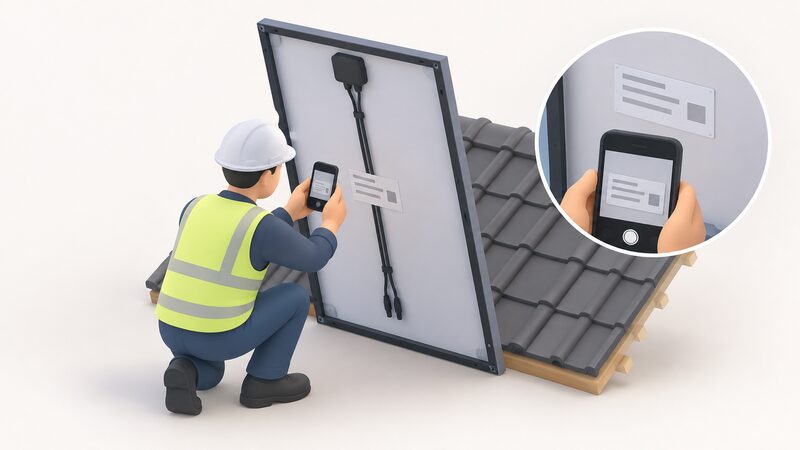
Solarwatt sells into the UK through installers and distributors rather than direct to householders, and the warranty route reflects that. Claims are asserted in writing to service@solarwatt.com with a copy of the original dealer or installer invoice, and Solarwatt may ask for further documents such as photographs or records2. For battery and charger products the UK and Ireland address is support.uk@solarwatt.com26.
Where spontaneous glass breakage or reduced output is claimed, the conditions require verification by an expert appraisal carried out by Solarwatt, a third party commissioned by Solarwatt, or an independent testing institute approved for module certification under IEC 612152. That is a higher evidential bar than a photograph of a cracked panel, and it is the step most likely to slow a claim.
The certification position is current. A certificate of compliance for the Panel vision modules was issued on 12 January 2026 and is stated to expire on 29 May 203030. A separate certificate for the listed Panel vision modules is valid until 18 April 202831. Those dates describe the certification, not the warranty, but they are the paperwork an installer or a buyer would check when confirming a module is the certified article.
For a household, the independence picture is straightforward. The panels generate on the roof and the warranty sits with the modules for 30 years, transferable on sale. What remains dependent is everything around them: the inverter, the mounting system, the installer who commissioned the array, and the grid the system still draws from at night. The guarantee covers the modules and nothing else, and it is a voluntary German-law undertaking from a Dresden manufacturer with UK offices and warehousing behind it.
Sources31 cited
- SOLARWATT Panel vision product page, Solarwatt, 2026-04
- Solarwatt Warranty Conditions, revision 5, Solarwatt, 2026-08-05
- Solarwatt Warranty, 2024 text, Solarwatt, 2024-02-01
- Solarwatt solar PV panels, Wind & Sun
- SOLARWATT Panel vision GM style datasheet, Solarwatt, 2026-09-17
- How long do solar panels last?, Uswitch, 2026-07-13
- Solarwatt Solar Modules warranty, Solarwatt, 2023-12-01
- SOLARWATT Panel vision GM pure datasheet, Solarwatt, 2026-09-17
- SOLARWATT Panel vision H style datasheet, Solarwatt, 2026-09-17
- SOLARWATT Panel vision H pure datasheet, Solarwatt, 2026-09-17
- Vision 36M glass datasheet, Solarwatt, 2026-09-17
- Solarwatt Solar Modules warranty, 2023 text, Solarwatt, 2023-12-01
- Jinko Solar solar panels review, Which?, 2026-08-12
- SolarEdge solar panels review, Which?, 2026-08-12
- Solarwatt Panel classic warranty, Solarwatt, 2024-03-01
- SOLARWATT Panel vision M datasheet, Solarwatt, 2026-07-06
- SOLARWATT Panel vision M style datasheet, Solarwatt, 2026-08-03
- SOLARWATT Panel vision M datasheet, Solarwatt, 2025-10-14
- SOLARWATT Panel vision XL datasheet, Solarwatt, 2026-02-05
- Solarwatt company page, Solarwatt, 2026-08
- GB-Sol batteries and roof products, GB-Sol, 2026-09-17
- What are the benefits of solar panels?, Good Energy, 2026-09-07
- Garantía SOLARWATT Charger vision, Solarwatt, 2025-02-27
- Solarwatt UK, Solarwatt, 2026-09-17
- SOLARWATT Battery vision datasheet, Solarwatt, 2026-05-12
- SOLARWATT Battery vision warranty, Solarwatt, 2025-02-27
- Solarwatt customer service UK and Ireland, Solarwatt, 2025-02-27
- SOLARWATT Battery vision datasheet, 2024, Solarwatt, 2024-07
- Plug-in solar consumer guide, Electrical Safety First, 2026-08
- SOLARWATT Panel vision certificate of compliance, Solarwatt, 2026-01-12
- SOLARWATT Panel vision certificate, Solarwatt, 2028-04-18
 Warranties and DegradationHow long do solar panels actually last, and what do the warranties really cover?
 Workmanship WarrantiesIf something goes wrong with your solar panels, who actually fixes it and who pays?
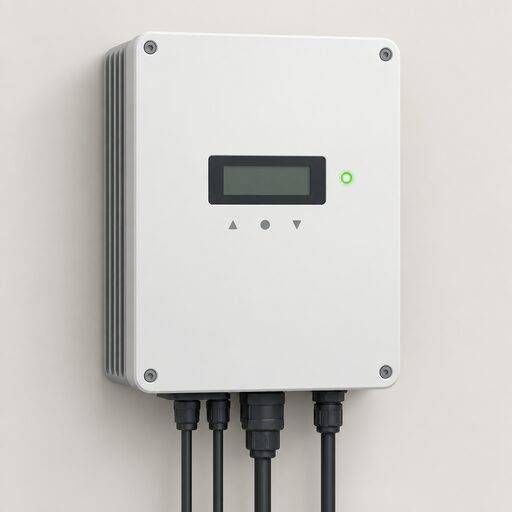 Solar InvertersWhat does the box on the wall next to your solar panels do, and how long will it last?
 Manufacturer WarrantiesHow long does a boiler, heat pump or solar panel warranty actually last, and what do you have to do to keep it valid?
 Solar Control Window FilmSolar control window film reduces solar heat through glazing, but the UK evidence base is thin: most figures here come from glazing and shading research rather than film testing.
 When an Installation Goes WrongYour solar panels have stopped generating.