

In this comparison
So Energy and Octopus Energy are both challenger suppliers founded in 2015, both selling renewable electricity, and both now large enough to be household names. They are not the same size. Octopus Energy is the largest supplier of electricity in Great Britain and the second largest for gas, after British Gas1. So Energy has around 300,000 customers, after merging with ESB Energy in 20212.
The comparison that matters for a household comes down to three things: what the tariff does to your bill and your export income, how the company performs when something goes wrong, and how much of your energy position either supplier actually changes. On service, Which? scored Octopus Energy 74 per cent overall and So Energy 60 per cent in its 2026 survey1. On export, Octopus Energy's standard Smart Export Guarantee tariff pays 4.1p per kWh, while So Energy advertises a 20p SEG rate alongside its solar and battery offer3.
Neither supplier removes your dependence on the grid. Both are licensed suppliers buying wholesale energy and selling it on; a renewable tariff changes what is contracted, not where the electrons physically come from. What they can change is how much you are paid for what you generate, and how quickly a problem is resolved.
What each supplier offers in the UK
Octopus Energy supplies gas and electricity across Great Britain, meaning England, Scotland and Wales. Ofgem's retail market report records it as the largest electricity supplier and second largest gas supplier in that market, where six large companies hold 91 per cent of domestic market share5. It has grown partly by acquisition: it took on customers from suppliers that ceased trading, such as Bulb, and from those that exited voluntarily, such as Shell Energy6. It also supplies white label brands, including London Power and Ebico Living, the latter to September 2024, after which that brand moved to Rebel Energy7.
So Energy is a smaller British supplier offering fixed tariffs that are 100 per cent renewable2. It was set up in 2015 and merged with ESB Energy in 20212. All but one of its plans promise 100% renewable electricity8. It also sells solar panels and battery storage, installing brands including Duracell, with 0% finance available4.
Both appear in the list of providers offering smart time of use tariffs, alongside British Gas, E.ON Next, EDF Energy, Ovo Energy and Scottish Power, and smaller firms including 100Green, Fuse Energy and Good Energy9. That matters for households with an electric vehicle or a battery, because a time of use tariff shifts the cheap hours rather than the total units used.
For a wider view of how these two sit among the rest of the market, see challenger and small energy suppliers and the UK energy suppliers pillar.
Specifications and service scores
The clearest published comparison is Which?'s 2026 survey, which splits each supplier into a customer score and an assessment score covering complaints, contacting the company, supporting customers, smart meters and switching.
| Measure | Octopus Energy | So Energy |
|---|---|---|
| Overall score | 74%1 | 60%1 |
| Customer score | 79%1 | 76%1 |
| Which? assessment score | 69%1 | 44%1 |
| Complaints handling | not published in this table | 5 out of 151 |
| Contacting the company | 8 out of 121 | 4 out of 121 |
| Supporting customers | not published in this table | 7 out of 101 |
| Smart meters | not published in this table | 2 out of 101 |
| Switching | 3 out of 51 | 3 out of 51 |
| Survey sample | not published in this table | 108 customers1 |
So Energy's own review page gives a fuller breakdown of the same survey: customer service overall three of five stars, ease of contacting four of five, usefulness of communications about energy costs three of five, accuracy of payments three of five, and clarity of statements four of five2. Citizens Advice's comparison table places Octopus Energy 4th in the supplier comparison table for January to March 2026, with an overall rating of 3.67 out of 5, against So Energy at 2.86 out of 510.
The gap between the two customer scores is small, 79 per cent against 76 per cent, while the gap in the assessment score is wide, 69 per cent against 44 per cent1. That pattern suggests households are broadly content with both on day to day contact, and that the difference shows up in the harder measures: complaints, smart meter handling and the administrative side.

What the warranty covers
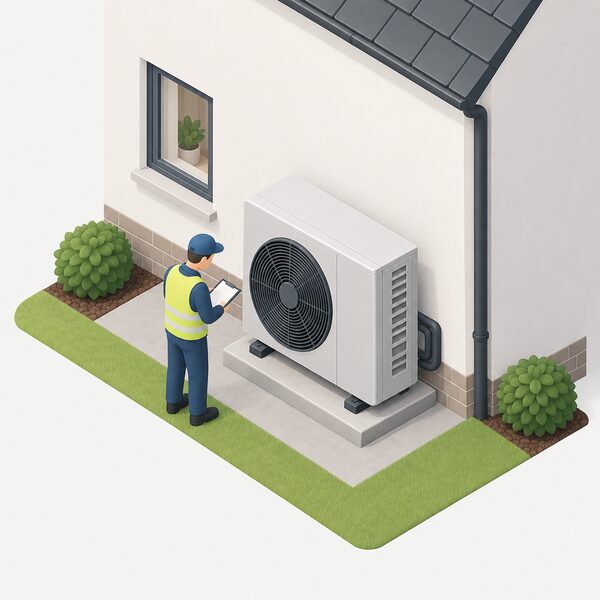
Neither supplier warrants your energy supply. What warranties exist sit with the installation businesses, and they cover hardware and workmanship rather than tariffs.
Octopus Energy offers an eight-year warranty on its own-brand heat pumps and a five-year warranty on other brands11. It installs heat pumps across most of England and Wales and solar across most of England, and was Which?'s only Which? Recommended Provider for energy at the time of that announcement12.
So Energy backs its solar and battery installation work with a five-year workmanship warranty4. It installs trusted brands including Duracell4.
For households weighing generation against a boiler replacement, the wider comparison of heat pumps versus boilers sets out where each fits.
What it costs
Published prices for either supplier's tariffs are not fixed in the way a product price is: they move with the wholesale market and the price cap. What is published is the export side and the structure of the time of use tariffs.
Octopus Energy's standard SEG tariff is 4.1p per kWh3. In the Smart Export Guarantee annual report for year five, the lowest tied and untied tariffs were 5p per kWh (Octopus) and 1p per kWh (E Energy) respectively13. Outgoing Octopus (fixed) pays 15p per kWh exported, and Octopus Energy Flux (variable) pays around 14p per kWh during the rest of the day, for customers with solar and a battery14. Outgoing Octopus Agile paid an average of 9.09p per kWh in April 2026, based on real-time pricing that varies every half hour3.
So Energy advertises a 20p SEG rate alongside its solar and battery offer, with 0% finance available on solar panels and battery storage4. That is a product page figure tied to its own installation offer, not a standard tariff rate available to any exporter.
On import, Octopus Energy's Intelligent Octopus tariff has six hours of cheaper electricity overnight7. Its Agile tariff has capped unit rates at 100p per kWh to protect customers from the biggest shocks9. Octopus Go has peak rates of around 28.69p/kWh, and charging a 7kW wallbox during the off-peak window can add around 28kWh for just £1.9615.
Company status and how each handles problems
Both companies are trading. Octopus Energy was founded in 20156 and is a Which? Recommended Provider again in 2026, having been named one for the ninth year in a row7. It won Overall Customer Satisfaction among big suppliers in the 2026 Uswitch Energy Awards17. Ofgem lists Octopus Energy Limited and Octopus Energy Operations Ltd as mandatory SEG licensees, trading as Octopus, for the sixth SEG year from 1 April 2025 to 31 March 202618.
So Energy received a special commendation for overall improvement in the same 2026 awards, having raised its scores across all ten surveyed categories, the largest improvement across all categories from 2025 to 2026 among suppliers qualifying in both years17. Its low assessment score brought its overall score down to 60 per cent16.
On compliance, Ofgem records that So Energy overcharged 1,558 customers, with total refunds of £266,041.16 and total goodwill of £58,285.8519. That is a resolved enforcement matter, not an ongoing one, but it is part of the company's record.
Contact routes differ. So Energy's phone line is 0330 111 5050, open Monday to Friday 9am to 5pm, with email at help@so.energy20. The same number and address handle refunds21. Octopus Energy offers SignVideo but no ring backs10. So Energy customers who need priority support can call 0333 103 9575 to register, or write to So Energy, Studio 2, Power Road Studios, 114 Power Road, Chiswick, W4 5PY22.
For the process when a supplier does not resolve a complaint, see complaining about an energy supplier.
What it means for energy independence
A renewable tariff from either supplier changes what is contracted, not what physically arrives at the meter. Both buy wholesale and sell on, so a household on either tariff remains dependent on the grid, on wholesale prices, and on the supplier's own financial health. Octopus Energy's scale, as the largest electricity supplier in Great Britain, is a form of resilience for the customer base, but it also means the company is exposed to the same wholesale market as everyone else1.
Where a household can gain real independence is on the generation and export side, and here the two suppliers differ in what they offer. Octopus Energy pays for exports through several routes: a standard SEG rate of 4.1p per kWh, a fixed Outgoing tariff at 15p per kWh, Flux at around 14p per kWh for solar and battery owners, and Agile at an average of 9.09p per kWh in April 20263. Some tariffs also pay if you export at peak times, such as Octopus Flux9. Flux is an import and export tariff, so what you pay to use electricity also varies with those times14.
So Energy's 20p SEG rate is tied to its own solar and battery installation offer, which includes 0% finance and a five-year workmanship warranty4. That bundles generation, storage and export into one commercial relationship, which increases self-sufficiency in supply terms while deepening dependence on a single company for both hardware and tariff.
"All tariffs are administered by Octopus and come with 100% renewable electricity."
The remaining dependence is unavoidable on either tariff: the grid connection, the metering, the wholesale price, and the supplier's continued operation. For how suppliers fit into a household's wider energy position, see energy suppliers and household energy independence.

Sources22 cited
- Which? Energy Survey results, Which?, 2026-01-19
- So Energy review, Which?, 2026-06-16
- Smart Export Guarantee rates: best and worst SEG tariffs, Which?, 2026-04
- Solar calculator, ivie, 2026-03-17
- State of the energy market report: retail, Ofgem, 2025-04-15
- Which energy suppliers are British?, Uswitch, 2026-06-26
- Which? reveals the best and worst energy suppliers for sustainability, Which?, 2024
- Green energy, Uswitch, 2026-09-04
- Time of use tariffs explained, Which?, 2026-04-23
- Octopus Energy details, Citizens Advice, 2026-09-20
- Heat pumps vs boilers, Which?, 2025-09-22
- Which? and Octopus Energy launch solar panel and heat pump offer, Which?, 2023-09-12
- Smart Export Guarantee Annual Report Year 5, Ofgem, 2025-12
- Four ways to make solar panels more cost effective, Which?, 2024-10
- Electric car charging guide, Carwow, 2025-07-16
- Revealed: the energy suppliers that top our rankings for 2026, Which?, 2026-01-19
- Energy customers' satisfaction with their supplier reaches highest point since 2021 energy crisis, Uswitch, 2026
- Smart Export Guarantee supplier list, Ofgem, 2025-03-26
- Supplier compliance: price cap requirements for customers with restricted meters, Ofgem, 2025-05-09
- How to contact your energy supplier, Uswitch, 2026-02-09
- Energy refunds, Uswitch, 2025-10-29
- Vulnerable customers, Energy UK, 2026-09-04
 Export Rates Per kWhHow much will your supplier pay you for the solar power you send to the grid, and why do rates vary so much from one company to another?
 The Full Solar Panels GuideHow much do solar panels cost, and what could they save you each year?
 Customer Service RatingsWhich energy suppliers answer the phone quickly and deal with complaints properly?
 Energy Debt Repayment PlansOwe money to your energy supplier?
 Suppliers and IndependenceCan you really cut your energy bills by making your own power, and how much of your supplier do you still need?
 Solar Export PaymentsIf you have solar panels, how do you actually get paid for the electricity you send back to the grid?