
In this guide
So Energy sells a small number of products: a standard variable tariff called So Flex, green fixed plans, and export tariffs for households with solar. All but one of its plans promise 100% renewable electricity, and the exception is So Flex itself1. The company trades as So Energy under the ESB group name, following a merger in 20212, and it holds mandatory licences for both the Feed-in Tariff and the Smart Export Guarantee3.
For a household, the practical questions are narrower than the marketing. So Flex is a standard variable tariff, so it sits under the Ofgem price cap, which limits the unit rate and standing charge rather than the total bill5. Fixed plans remove that quarterly movement for their term. Export tariffs pay for electricity sent to the grid, and So Energy's rates sit at opposite ends of the market: 4.5p per kWh on So Export Flex, and 20p per kWh on So Bright for households that bought solar and a battery through the company7.
What follows sets out the products, the renewable claim, the service record and the export rates, and then what the arrangement leaves a household dependent on.
So Energy at a glance: size, ownership and status
So Energy Trading Ltd holds encompassing licences and is listed as a Mandatory FIT Licensee, with the Feed-in Tariff contact address fit@so.energy and a telephone number of 0330 111 50503. It is also a Mandatory SEG Licensee, listed for the sixth SEG year running from 1 April 2025 to 31 March 20264. Those two licences matter to households with older solar: the Feed-in Tariff is the closed scheme that pays generation and export tariff payments to qualifying renewable installations11, while the Smart Export Guarantee is its successor for new installations.
Ownership is the part that is often misread. ESB merged with So Energy in 2021, and ESB remains the supplier group name, trading as So Energy2. So Energy is therefore not an independent startup in the way its branding suggests; it sits inside a larger utility group. That is a stability point rather than a consumer-facing one, but it bears on how the supplier is capitalised.
The wider market context is worth holding alongside it. No SEG licensee exited the electricity market because of insolvency during SEG Year 3, according to Ofgem's annual report on the scheme2. That is a statement about the scheme's licensees as a group, not a guarantee about any one supplier, and it covers a period that has passed.
For a household, the status question reduces to this: So Energy is a licensed supplier with statutory obligations, a named parent group, and a place on both the Feed-in Tariff and Smart Export Guarantee licensee lists. It is not a company in administration, and no fact here suggests otherwise.
Fixed and green tariffs: what So Energy sells
The product set is deliberately small. So Flex is the standard variable tariff and the sole plan that does not carry the 100% renewable electricity promise1. Everything else is a green plan, and the export side is split between So Export Flex, which is listed as fixed or variable with no fixed end date at 4.5p per kWh, and So Bright, which pays 20p per kWh7.
Fixed tariffs in the wider market usually run for 12 to 24 months, with the rate held for the agreed term12. That term length is the thing to check on any So Energy fixed plan, because it determines when the household returns to whatever the market offers at renewal. Exit fees, where they exist, are a comparison factor alongside unit rates, standing charges and contract length13.
Green supply is not a separate fuel. A renewable electricity tariff is one of the recognised tariff types a supplier may offer, alongside standard variable, electric vehicle and prepayment products14. What distinguishes it is the sourcing commitment behind the units, not the electrons in the wire.
| Product | Type | Renewable promise | Export rate |
|---|---|---|---|
| So Flex | Standard variable | No, the sole exception1 | Not applicable |
| Green fixed plans | Fixed term | 100% renewable electricity1 | Not applicable |
| So Export Flex | Export, fixed or variable | Not applicable | 4.5p per kWh7 |
| So Bright | Export | Not applicable | 20p per kWh8 |
The gap between 4.5p and 20p on the two export products is the single most consequential number on this page for a solar household, and it turns on how the panels were bought rather than on how much they generate.
100% renewable electricity: what that claim actually means
Green tariffs usually promise 100% renewably sourced electricity as a minimum, and some include renewably sourced gas as well11. So Energy's position is that all but one of its plans promise 100% renewable electricity, with So Flex the exception1. That is a sourcing commitment about the electricity matched to a household's consumption, not a claim about the physical supply reaching the property.
The sourcing itself comes from renewable sources such as solar, wind or waves14. Some suppliers go further and specify origin: Good Energy, for comparison, states that all its electricity tariffs are powered by 100% renewable energy generated in the UK by independent producers1. So Energy's published position does not name generators in the same way, so a household wanting named UK producers is choosing between different levels of specificity, not between renewable and non-renewable supply.
A second mechanism exists alongside sourcing. Some renewable tariffs pay a proportion of the bill into funds that support renewable energy projects14. That is a financial contribution rather than a change in where the electricity comes from, and it is worth separating from the sourcing claim when comparing plans.
"Green tariffs usually promise 100% renewably sourced electricity as a minimum."
What this means for independence is limited but real. A green tariff changes who the household buys from and what is contracted on its behalf; it does not change the fact that the home remains connected to the national grid, dependent on a supplier's billing and balancing, and exposed to wholesale prices when the fixed term ends. The renewable claim is a procurement choice, not a step towards self-sufficiency. Households wanting to reduce that dependence are looking at generation and storage, which is where the export tariffs come in.
So Flex and the price cap: how the variable option compares
So Flex is a standard variable tariff, and standard variable tariffs are the tariff type affected by the Ofgem energy price cap, which changes every three months11. The cap limits how much is paid for each unit of energy and the daily standing charge, not the total bill, so a household using more energy still pays more15. People on a standard variable tariff are protected by the cap6, and if no fixed deal is taken, the default variable rate is what applies12.
The practical consequence is that So Flex moves with the cap on a quarterly cycle. A standard variable rate is tied to Ofgem's cap, so it changes when the cap changes13. That is the trade-off against a fixed plan: no exit fee exposure and no lock-in, in exchange for quarterly price movement in both directions.
Ofgem has consulted on requiring suppliers to offer lower standing charge tariffs, which is a live area of energy pricing rules16. Where that leads affects the shape of a variable bill rather than its unit rate, since the standing charge is the fixed daily element.
For a household weighing independence, So Flex is the lowest-commitment option and the most exposed. It keeps the household free to leave, and it keeps the household fully exposed to whatever the cap does next. A fixed green plan does the opposite for its term. Neither changes the underlying dependence on grid supply and a billing relationship.
Customer service: ratings, wait times and complaint record
So Energy's Which? assessment scores it at 60% overall, with a customer score of 76% and a Which? assessment score of 44%, based on 108 customers surveyed9. Within the assessment, complaints scored 5 out of 15 and contacting the company scored 4 out of 129. Those two sub-scores are the ones that bear on the experience of a household with a problem, and they are low relative to the overall figure.
The contact route is narrow. So Energy's phone line is 0330 111 5050, open Monday to Friday, 9am to 5pm, with help@so.energy as the email address17. No average waiting time is published. The company has described taking a deliberate approach to innovation, where new tools are intended to support staff decision-making and improve visibility of need, rather than acting as standalone solutions or replacing existing support channels18.
Complaints that reach Ofgem cover late, incorrect or missing bills, back billing, being overcharged, a faulty meter, poor customer service, and a supplier refusing to refund credit from an account19. Ofgem expects suppliers to demonstrate excellent customer service as part of their strategies for driving down consumer energy debt21. Research on tariff choices found that suppliers falling to 3.5 stars or below for customer service rating became less appealing to consumers22.
Smart meters, prepayment and who So Energy will not take on
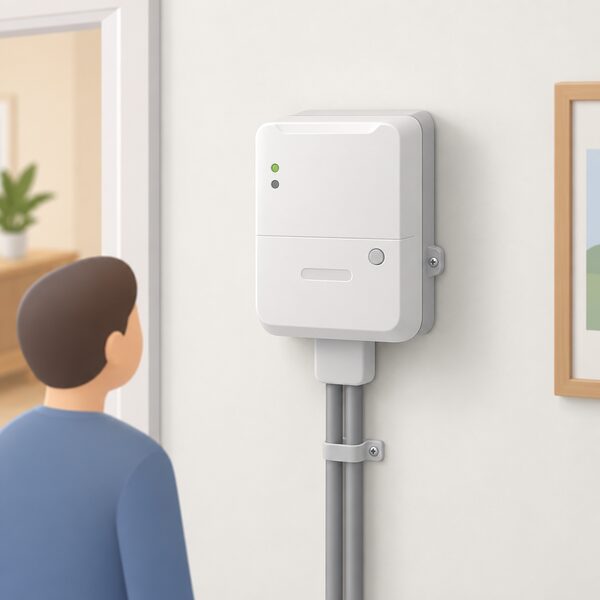
Prepayment is a recognised tariff type, alongside standard variable, renewable and electric vehicle products14. A prepayment meter requires payment for energy before use, topped up via a token, key or smartcard, online or through an app11. Prepayment customers have had their own tariff cap protection since April 2017, when caps were introduced for prepayment customers and for vulnerable customers23. Whether So Energy offers a prepayment product to a given household is not set out in the published material, so it is a question for the supplier.
Smart meters are a separate matter from in-home displays. Energy monitors and smart thermostats are not smart meters: they are not linked to an energy account and do not send information to a supplier24. A smart meter does the metering and the reporting. What a smart meter does not do is give the household control over the tariff, since except by switching, a household does not control the tariff its supplier sets25.
The Priority Services Register is not administered centrally. To sign up, a household must contact all its utility suppliers directly26. That means registering separately with So Energy, with the network operator, and with any water supplier, rather than assuming one registration covers all.
On rented property, the rule is clear: if the tenant pays the energy bills, the tenant can choose to switch supplier or tariff at any time27. That applies to a So Energy customer in rented housing as much as to an owner occupier.
Beyond supply: solar, batteries, EV chargers and the SEG export rate
So Energy's export products are where the tariff choice starts to touch generation. So Export Flex is listed as fixed or variable with no fixed end date at 4.5p per kWh7. So Bright pays 20p per kWh to households that installed solar and a battery through So Energy, and the eligibility note is that a household does not need to be a So Energy customer to receive it8. That is an unusually wide eligibility condition for a high rate.
SEG licensees determine the rate, contract length and other terms they will offer28. The only floor is that suppliers must offer more than £0 per unit of metered exported power29. Rates across the market run as high as 20 to 40p per kWh on some products30, so the spread between So Energy's two products is not unusual in itself.
Independent guidance on matching tariffs to technology is specific. A household with solar panels only is probably best off looking for the best SEG rate export tariff28. A household with solar and a battery should consider a dedicated solar and battery tariff, or a good SEG tariff matched with a dynamic import tariff or an Economy 7 tariff28. A household with a heat pump, solar and a battery should look for a good SEG tariff for exports and then either a dynamic tariff or a heat pump tariff for import, from the same company28. Where a good SEG rate is not available from a company with a good import tariff, a solar and battery tariff becomes the alternative, especially with a larger than average solar system or a smaller than average heat pump28.
What owning a So Energy tariff means for household energy independence
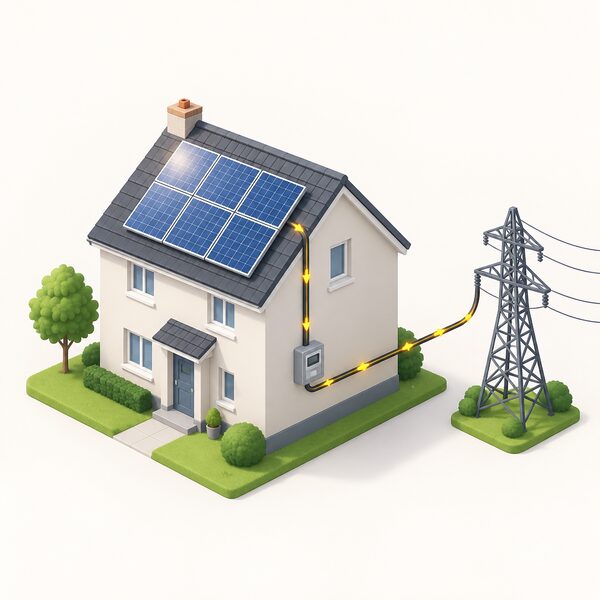
The honest position is that a So Energy tariff changes the commercial relationship and very little else. The household remains connected to the national grid, dependent on a licensed supplier for billing and balancing, and dependent on the wholesale market for whatever happens when a fixed term ends or the price cap moves. A green tariff commits the supplier to renewable sourcing on the household's behalf1; it does not put generation on the roof or a battery in the cupboard.
Three dependencies are worth naming. The first is the grid and the supplier: switching is possible, and the Energy Switch Guarantee commits signatories to complete a switch to a new tariff within five working days, with So Energy signed up as of May 202610. The guarantee is a voluntary set of promises administered by Energy UK, not a statutory protection10. The second is the export relationship: a solar household's return on generation depends on which SEG rate it can access, and So Energy's own rates differ by a factor of more than four depending on how the panels were bought8. The third is the meter and the tariff structure, which the household does not control except by switching25.
Where independence genuinely increases is on the generation side, and the tariff's role is to price the export. A household that installed solar and a battery through So Energy gets 20p per kWh for what it sends to the grid8; one that did not gets 4.5p7. That is the clearest lever on this page, and it is set at the point of purchase rather than at the point of switching.
For the wider picture of how supply tariffs, export rates and generation fit together, the UK energy tariffs guide sets out the full landscape, and tariffs and household energy independence covers what a supply relationship can and cannot deliver. Households comparing export products specifically will find Smart Export Guarantee rates useful, and those weighing a fixed term against a variable one can read fixed-rate energy tariffs alongside fixed vs variable.
Sources30 cited
- Green energy tariffs explained, Uswitch, 2026-09-04
- SEG 2022-23 Annual Report, Ofgem, 2023-09
- Feed-in Tariff licensee contact details, Ofgem, 2026-09-17
- Smart Export Guarantee supplier list, Ofgem, 2025-03-26
- Dual fuel energy guide, Confused.com, 2026
- How your electricity or gas bill is calculated, Ofgem, 2026
- Smart Export Guarantee, Ofgem, 2026-05-12
- Smart Export Guarantee rates: the best and worst SEG tariffs, Which?, 2026-04
- Which? energy survey results, Which?, 2026-01-19
- Energy Switch Guarantee, Uswitch, 2026-07-20
- Energy tariffs explained, Uswitch, 2026-02-17
- How to switch energy supplier, Which?, 2026-05-15
- Switching your energy supplier, Energy Saving Trust, 2026-06-26
- Types of energy tariff, Confused.com, 2025-11-03
- Current gas and electricity prices, Centre for Sustainable Energy, 2026-08-27
- Requirement to offer lower standing charge tariffs, Ofgem, 2025-09-24
- How to contact your energy supplier, Uswitch, 2026-02-09
- Consumer vulnerability strategy progress report, Ofgem, 2026-07-21
- Complain about your energy supplier, Ofgem, 2026
- Complain about your energy supplier or network operator, Ofgem, 2026
- Debt strategy update: supporting reduction of energy debt, Ofgem, 2025-11-06
- Understanding consumers' energy tariff choices, Ofgem, 2025-07-08
- Energy pricing and the prepayment cap, House of Commons Library, 2026-09-20
- How do you know if you have a smart meter?, Smart DCC, 2026
- How do smart meters save energy?, Smart DCC, 2026
- Heating your home, Carmarthenshire County Council, 2026-04-04
- Switch your home energy supplier, Ofgem, 2026
- Tariffs for renewable technology, Energy Saving Trust, 2026-08-12
- Smart Export Guarantee briefing, House of Commons Library, 2026-05-13
- Can I switch energy supplier if I have solar panels?, Uswitch, 2026-06-04
 So EnergySo Energy is a challenger supplier with around 300,000 customers, 100% renewable fixed tariffs, a 20p Smart Export Guarantee rate and solar packages from £4,972.