

In this guide
The standing charge is a daily charge that energy customers have to pay even if they use no energy, and it recovers the cost of the wires, pipes and cables that deliver power to a customer's door as well as the staff and buildings an energy business needs to function1. Reform of that charge is now live policy in Great Britain on three fronts at once: Ofgem has consulted on obliging suppliers to offer a tariff with a much lower daily charge, it has trialled a standing charge split in two so that part of it moves with a household's peak time usage, and government has confirmed it is working with Ofgem on how those costs could be recovered more fairly.
The figures explain why. For dual fuel on a standard variable tariff paid by direct debit, standing charges totalled 86.30p a day from April 2026, of which 57.21p was electricity, after a fall of 12.6 per cent. Even at that reduced level they made up around 19 per cent of the average household's bill2. The burden is not spread evenly across Great Britain: in September 2026 the average was £309 a year, but customers in north Wales and Merseyside paid almost £360 a year in standing charges alone against £267 in London3.
Ofgem's central proposal is not abolition. It is a required option: amending the standard licence conditions so that suppliers must offer a tariff with a standing charge priced £150 below the price cap nil consumption level per annum4. That is a choice offered alongside existing tariffs, not a cut for everyone, and the cost it removes from the daily charge has to reappear somewhere else, ordinarily in the unit rate.
Standing charges now: the capped daily rates
Under the price cap for the quarter beginning 1 January 2026, the daily standing charge for a default tariff paid by direct debit was 54.75 pence per day for electricity and 35.09 pence per day for gas, based on the average across England, Scotland and Wales and including VAT at 5 per cent6. For the preceding quarter, 1 October to 31 December 2025, the capped electricity standing charge on that basis was 53.68 pence per day7. From 1 July 2025 the cap had already moved the other way, with standing charges for most households falling by £19 a year, about 6 per cent: electricity by 2.4p a day (5 per cent) and gas by 2.8p a day (9 per cent) for a typical consumer including VAT8.
Those cap figures are the ceiling, not the market. The specific amount varies depending on the supplier and the tariff, and a standing charge will either be fixed, if the household is on a fixed deal, or variable if not, in which case it is capped9. Households on a standard variable tariff paying by direct debit with single rate meters are the basis of almost every published comparison figure, so a prepayment or standard credit household should not expect its bill to match them10. The rate is written on the bill9, and how it sits alongside unit rates is covered in more detail on standing charges and in what makes up a UK energy bill.
The direction of travel over several years has been upward. Standing charges have been steadily increasing as suppliers transfer more costs from unit rates to fixed daily charges11. Compared with winter 2020/21, daily standing charges for gas were up 8 per cent and electricity up 119 per cent12, and the electricity standing charge doubled between 2022 and 2023. The recent quarterly falls sit on top of that much larger increase rather than reversing it.
What drives the charge
Three forces account for most of the rise, and only one of them is wholesale energy.
The first is network cost recovery. Standing charges increased significantly during 2022 and 2023 as a result of the implementation of Ofgem's Targeted Charging Review and inflation, and standing charge rates for electricity distribution are set 15 months in advance, based on the inflation rate at that time10. That lag is why the daily charge can keep climbing after wholesale prices have fallen, and why it does not respond to a household cutting its usage.
The second is the cost of supplier failure. Standing charges grew through the pass through of costs caused by the cost of failed suppliers13, and much of the rise has been to pay for the cost of transferring the customers of failed energy suppliers to new suppliers, alongside the cost of maintaining infrastructure and the delivery of UK Government obligated programmes9. National Energy Action describes the current level as a conscious decision from Ofgem on how to pay for energy networks9. Ofgem decided against taking supplier failure costs out of standing charges14, which is the decision much of the reform debate has been pushing against.
The third is policy cost placement. Standing charges also help pay for government environmental and social schemes11. Where those costs sit is now moving: Ecotricity states that the Energy Company Obligation and the Great British Insulation Scheme will no longer be levied on energy bills from April 202615. The wider question of which levies sit in the daily charge and which in the unit rate is set out on policy costs and levies on energy bills.
Non-domestic users show the same mechanism at a larger scale. Standing charges rose by up to 462 per cent at rapid and ultra rapid charging sites between 2021/22 and 2024/25, with a 389 per cent increase for slow and fast charge points, and now represent up to 70 per cent of total energy costs at those sites compared with around 15 per cent for comparable businesses16.
Where you live changes the bill
Electricity standing charges vary significantly across Great Britain, primarily because of differences in network costs influenced by population density and terrain17. Ofgem acknowledged, when the cap fell from 1 April 2025, that standing charges would reduce for most households but that some regional variation remains.
| Region | Annual standing charges, September 2026 |
|---|---|
| North Wales and Merseyside | almost £3603 |
| Yorkshire, north east England, southern Scotland | over £3333 |
| Great Britain average | £3093 |
| London | £2673 |
The gap between London and north Wales and Merseyside is close to £93 a year on those two published figures (£267 and almost £360), for the identical service of being connected. Energy Saving Trust argues that the current regional variations in electricity standing charges are designed for the system of the 1990s, with a few centralised power stations that distributed power across the UK, and that this is no longer the case, with more renewable energy being generated regionally and locally, removing the argument that standing charges need to be higher in regions such as Scotland to accommodate higher distribution costs18.
Reform, so far, leaves this alone. National Energy Action's assessment is blunt on the point:
"Nor will the plans address the significant differences consumers pay depending on where they live in Great Britain"
Regional differences in unit rates follow a related pattern and are set out on electricity and gas unit rates by region. The price cap figures quoted throughout this page are averages across England, Scotland and Wales6; Northern Ireland runs a separate market and is not covered by them.
The rules: what a supplier may and may not charge
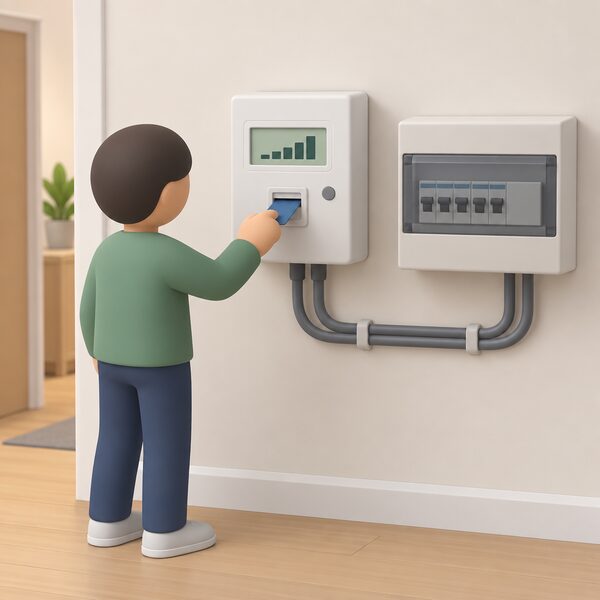
Standing charges are covered by the price cap, which limits how much suppliers can charge, and suppliers are not required to include a standing charge at all10. Ofgem has stated the same point directly: "Suppliers can set the standing charge at zero if they wish and some are doing this"20. The cap is reviewed on a quarterly basis9, and the announcement dates are listed on price cap history and announcement dates.
Two further rules matter for particular households:
- Customers who self disconnect because they cannot afford energy are still liable to pay the standing charge9. The daily amount continues to accrue on a prepayment meter and is deducted automatically, along with any unpaid standing charge or fuel debt, when credit is added.
- Under the Maximum Resale Price rules, where energy is resold the standing charge must be charged pro rata with the amounts payable for units of gas or electricity, with the reseller included in the sharing where they occupy part of the premises or use part for common services.
Throughout the debates on the operating cost allowance and the debt allowance, Citizens Advice has held a consistent line on scope: "In particular, the balance between standing charges and unit rates should be left to the ongoing standing charge review." That has kept the rebalancing question inside a single review rather than being settled piecemeal in cap adjustments.
Ofgem's required lower standing charge tariff
The core proposal is to amend the standard licence conditions to require suppliers to offer a tariff with a standing charge priced £150 below the price cap nil consumption level per annum4. In practice that means a significant reduction in the daily standing charge on at least one tariff each supplier must make available21. It does not lower the cap itself, and Ofgem decided against lowering the standing charge in the cap when it considered that separately22.
What a household gains depends entirely on how much energy it uses. Analysis reported during the debate put an electricity standing charge falling from £219.42 to £149.17 a year, a 32 per cent reduction23. A very low user keeps most of that. A high user pays it back, and more, through the unit rate. Comparison of the two shapes of tariff is covered on no standing charge tariffs vs standard tariffs.
Citizens Advice has raised two objections to a zero standing charge price cap variant: that it could increase overall system costs, and that these changes counteract the need for tariff innovation and increased consumer flexibility as part of the Clean Power 2030 plan24. Energy Saving Trust takes a different view, considering that there is good justification for removing standing charges from energy bills due to the inherent unfairness that such charges can create, because these costs form a disproportionate part of the overall energy costs for customers with very low consumption, making higher energy costs hard to avoid. Its suggested alternative is a flat rate addition to the unit cost for energy, supported by mechanisms such as a social tariff or energy prescriptions for low income or vulnerable customers25.
The split part standing charge trial
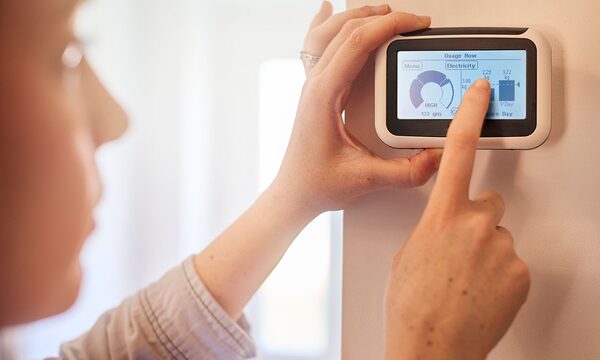
Running alongside the tariff requirement is a structural experiment. The objective of the trial is to explore how domestic consumers respond to a tariff design that introduces a separate element to their standing charge that varies with their electricity usage during peak periods, so that participants can reduce their daily standing charge if they use less energy at peak times5. Energy UK describes the design as a standing charge split in two, with one part varying with the customer's peak period electricity usage10. It forms part of Ofgem's longer term evidence gathering programme on cost recovery and demand flexibility, running in parallel with the shorter term policy work on low or zero standing charge tariffs5.
| Trial element | Detail5 |
|---|---|
| Design | Randomised controlled trial, participants randomly assigned to treatment and control groups |
| Lead | Ofgem's Consumer Insight and Behavioural Science team |
| Expressions of interest | Domestic energy suppliers, by 4 July 2025 |
| Trial design period | July 2025 to September 2025 |
| Live period | October 2025 to July 2026, minimum of nine months |
| Sample size | In the tens or hundreds of thousands |
| Data sharing | Half hourly usage data at two junctures, January 2026 and end-line |
| Interim analysis | February 2026 to March 2026 |
| Final analysis and publication | July 2026, publication July to August 2026 |
Two protections were built in. The trial aims to guarantee a no-loss experience, meaning customers will never pay more for their standing charge than they would have under their existing tariff, and suppliers receive funding to cover under-recovery of standing charges during the trial period5. Participating suppliers had to have the capacity to launch by 1 October 2025, a sufficient base of eligible customers, and a willingness to collaborate under a Memorandum of Understanding including data sharing, support for the user experience study and publication of results5.
The design depends on half hourly metering, which ties it to smart meters and to the sort of time-shifting behaviour explored on tracker and time-of-use tariffs compared with the price cap. A household that cannot move its demand, because of shift work, medical equipment or an unheated home already run at minimum, has little to gain from a charge that rewards off-peak use.
Alternatives still on the table
Rebalancing is not the only route being modelled. The Joseph Rowntree Foundation has modelled a rising block tariff, giving each household a weekly allowance of cheaper units, with a further allowance per child, before a higher rate applies to consumption above it. On the thresholds modelled, the electricity allowance represents 77 per cent of typical annual electricity usage and the gas allowance nearly 50 per cent of annual gas usage, so most of a typical household's demand would sit in the lower-priced block27.
- With around £5 billion of funding, a rising block tariff could reduce bills for the median household by £150 a year, with low income households receiving slightly more and high income households slightly less. The published documents give the cost both as just under £5 billion and as just over £4 billion, and disagree on that point27.
- With £6 billion a year of funding, the modelled saving rises to £180 per annum27.
- A fiscally neutral version, funded by premiums on higher use rather than subsidy, produces winners of £188 on average in income decile 1 and £210 in decile 2, but 14 per cent of decile 1 households lose by £205 on average and between 30 and 40 per cent of households in deciles 5 to 7 lose by around £20027.
- A hybrid using premiums plus £2.5 billion of subsidy reduces the average bill by £86 a year, with winning households in decile 1 down £125 and in decile 5 down £97, while 31 per cent of decile 10 households pay an additional £6527.
The Foundation's own conclusion is that designing a fiscally neutral rising block tariff produces intolerable numbers of losing households with significant redistributive inefficiencies at the top and bottom of the income distribution, and that while targeting excess profits generated by network operators is one funding option, general taxation remains the most progressive and sustainable approach. It suggests introducing a rising block tariff in the gas market, to help progressively distribute some of the costs of rebalancing, as one place to start27.
National Energy Action's reform framing is broader still: recovering some of these charges by reflecting a customer's usage, or by taking into account a customer's payment method, which fuels they use, or even their incomes9. The End Fuel Poverty Coalition has called for urgent reform of what it describes as a regressive and punitive standing charges regime that penalises the most vulnerable, and its Energy For All proposal would mean no standing charges and a free band of essential energy, with excess use charged at a premium. Government has acknowledged that standing charges are "too expensive" for some and confirmed it is working with Ofgem on how those costs could be recovered more fairly28.
Prepayment households and the unavoidable charge
The standing charge is at its harshest where a household has least control. It is a fixed daily amount payable no matter how much energy is used, deducted automatically along with any unpaid standing charge or fuel debt when credit is added to a prepayment meter. A worked example: a gas standing charge of 28p a day means a meter left without credit for ten days builds £2.80 of debt29. A household that has self-disconnected because it cannot afford to top up is therefore still running up a bill, and the arrears must be cleared before any warmth is bought. The mechanics are covered on prepayment meters and repaying energy debt through a prepayment meter.
Increases have also landed unevenly by payment method. When standing charges rose by almost 10 per cent across the board, the increase was 9.7 per cent for dual fuel direct debit, 9.4 per cent for standard credit and 7.8 per cent for prepayment30. Differences by payment method are compared on price cap rates by payment method.
What reform means for a self-sufficient home
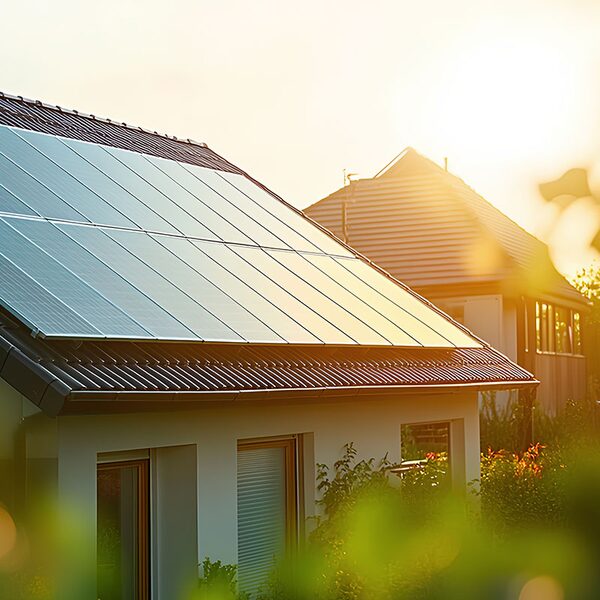
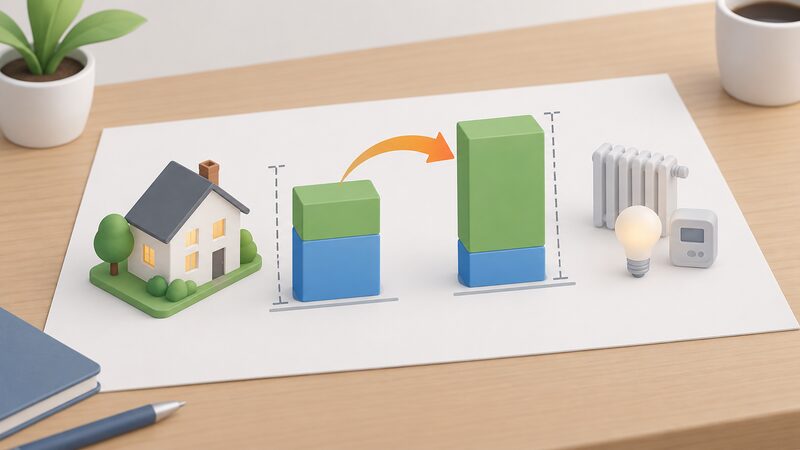
For a household investing in insulation, solar generation, storage or a heat pump, the standing charge is the part of the bill that does not respond. It is a daily charge that cannot be opted out of or reduced26, and it is paid regardless of how much energy is used22. A home that halves its imported units halves only the unit rate portion; on current Great Britain figures it would still face £309 a year on average, and almost £360 in north Wales and Merseyside, for remaining connected3. That is the floor under any grid-connected efficiency measure, and it is why payback calculations that assume savings scale with consumption overstate the result.
Reform changes the shape of that floor rather than removing it. A tariff priced £150 a year below the price cap nil consumption level4 lowers the fixed element, which favours the low-import household, but raises the price of every unit that household does still need to buy: on winter evenings, in a cold snap, when a battery is empty. The split part trial goes further by making part of the charge depend on peak behaviour5, which rewards a home able to shift demand and leaves an inflexible home paying the full amount.
What does not change is the dependence itself. The charge recovers network and supplier costs1, and remaining connected means remaining exposed to a regulated charge set 15 months in advance on an inflation figure10 and to the socialised cost of other suppliers failing13. That is the honest accounting: efficiency and generation reduce the variable half of the bill, and reform of the standing charge redistributes the fixed half between households rather than abolishing it. The wider trade-offs are set out on energy bills and energy independence and in the pillar guide to energy bills and the price cap.
Sources30 cited
- Energy standing charges research briefing, House of Commons Library, 2026-09-17
- Uswitch responds to April energy price cap announcement, Uswitch, 2026-02-25
- News and analysis on standing charges, End Fuel Poverty Coalition, 2026-09-08
- Requirement to offer lower standing charge tariffs, Ofgem, 2025-09-24
- Split standing charge tariff trial, Ofgem, 2025-06-20
- Changes to the energy price cap between 1 January and 31 March 2026, Ofgem, 2025-11-21
- Changes to the energy price cap between 1 October and 31 December 2025, Ofgem, 2025
- Summary of changes to the energy price cap 1 July to 30 September 2025, Ofgem, 2025
- Standing charges, National Energy Action, 2026-04-28
- Energy UK explains standing charges, Energy UK, 2025-07-09
- Gas and electricity standing charges guide, Confused.com, 2026-07-06
- Homes to see energy prices surge overnight, End Fuel Poverty Coalition, 2023-09-26
- NEA on the expected quarterly price cap rise, National Energy Action, 2022-08-03
- Ofgem decides against taking supplier failure costs out of standing charges, Which?, 2022-08-18
- Our energy tariffs, Ecotricity, 2026-04
- Action on high energy costs needed to keep EV transition on track, ChargeUK, 2025-09-17
- Cheapest standing charge electricity in the UK, Fuse Energy, 2026-07-07
- Response to Ofgem's standing charges consultation, Energy Saving Trust, 2025-09-30
- Standing charge proposals leave big unanswered questions, National Energy Action, 2026-08-12
- New standards of conduct for suppliers to domestic consumers, Ofgem, 2013-08-27
- Low standing charge tariffs: who are they for?, Ivie, 2026-09-20
- NEA responds to Ofgem's decision not to lower the standing charge, National Energy Action, 2024-12-12
- Changes could halve energy standing charges, End Fuel Poverty Coalition, 2025-05-08
- Response to Ofgem's introducing a zero standing charge energy price cap variant, Citizens Advice, 2025-04-04
- Energy bills for domestic consumers: response, Energy Saving Trust, 2025-04-09
- How to understand your electricity and gas bills, Energy Ombudsman, 2025-04-24
- Energy affordability: how to reduce bills for the majority of households, Joseph Rowntree Foundation, 2025-11-18
- Minister hints at more household energy support to come, End Fuel Poverty Coalition, 2026-08-28
- Prepayment meters advice, Changeworks, 2026-07-16
- Customers to see energy bills soar from 1 April, End Fuel Poverty Coalition, 2023-03-14
 Standing ChargesWhy is there a daily charge on a gas or electricity bill even when nothing is used, and what does it actually pay for?
 The Full Energy Bills and the Price Cap GuideWondering why your bill went up even when you used less power?
 Supplier-Controlled ChargingSmart charging tariffs let your energy supplier decide when your car charges, usually overnight when electricity is cheaper.
 Batteries and Smart TariffsA home battery can earn its keep if your electricity prices change through the day.
 The Full Tariffs GuideWhich energy tariff suits how you live, and will switching really save you money?
 Time-of-Use Tariffs ExplainedCan you pay less for electricity by using it at different times of day?