
In this answer
Short answer
The short answer is yes, if you pay the energy supplier directly. Tenants who pay their energy bills directly are entitled to switch gas and electricity supplier, and consumer guidance states plainly that you can switch energy supplier or tariff if you pay your supplier directly, including with a prepayment meter1. No landlord permission is needed for the switch itself in that situation2.
The whole question turns on one thing: who holds the account. If the bill is in your name, the switching right is yours. If the landlord pays the supplier, or energy is bundled into the rent, the account is theirs and you cannot move it3. A preferred supplier named in a tenancy agreement does not change that, because such a clause cannot be enforced4.
What follows sets out the two situations, the step by step process, what to do about a clause in the agreement, and how prepayment meters and shared bills affect the position.
When the landlord pays the bills or includes energy in the rent
Where the cost of your energy is included in your rent, the landlord is responsible, and the household has to ask them to switch rather than doing it7. The same applies where the landlord pays the supplier and reclaims the money, or takes responsibility for the supply between tenancies4. In those arrangements you do not have the right to switch, because the contract with the supplier is not yours3.
In England, tenants in this position will probably pay their gas or electricity as part of the rent, and the guidance is explicit that you cannot switch energy supplier or tariff yourself if your landlord pays the supplier for you1. The landlord, by contrast, can switch whenever they want if they are responsible for paying the energy supplier2. They might agree to a request to move supplier, but they do not have to1.
There is a further category that catches some renters without them realising it. Where a resident pays the landlord or site owner for energy by meter readings or estimates, rather than holding their own contract, they cannot switch suppliers themselves8. Residents who do hold their own contract with a supplier may be able to switch, which is the dividing line to check8.
The practical consequence for energy independence is stark. In an all inclusive rent, the household controls consumption but not price, tariff or supplier, and any saving from switching accrues to the landlord. The lever available is the meter reading and the request, not the account. Where a landlord pays for a meter replacement, for example under the radio teleswitch switch-off, that too is theirs to arrange9.
How to switch while renting, step by step
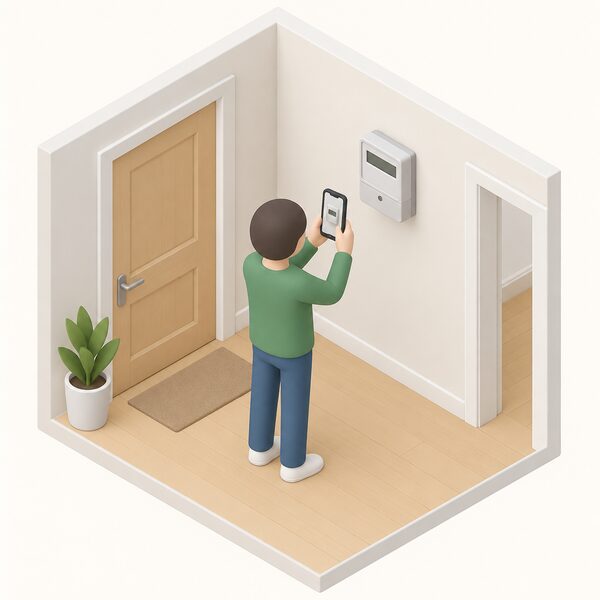
Where the bill is in your name, the process is the same as for any householder. The steps below follow the sequence set out for setting up gas and electricity in a new home2.
- Find out who your energy supplier is, from the previous occupant's paperwork, the meter, or the supplier's own finder service2.
- Contact the supplier to tell them you have moved in, so the account is in your name from the right date2.
- Submit your meter readings, and take photographs as evidence of the readings at the point you took over2.
- Compare tariffs and choose a supplier or tariff, using the annual figures rather than the headline rate10.
- Start the switch with the new supplier, who runs the process and the cooling off period11.
- Give a final reading on the old supply so the final bill is accurate, and check it when it arrives12.
Two details matter in a rental. First, the switch itself does not require the landlord's involvement, but a meter exchange does, so keep the two separate in your mind6. Second, if you are moving from prepayment to credit, that is a physical change to the property and the landlord should be consulted first13.
Should you tell your landlord before you switch?
There is no general requirement to tell a landlord before switching supplier where you pay the bill. One supplier's guidance puts it narrowly: tell the landlord only if there is a clause in the lease stipulating it4. Another supplier's guidance recommends informing the landlord beforehand to make sure there will be no issues12. The two positions differ in emphasis rather than in rule, and neither creates a permission requirement.
Where the change involves the meter, notification becomes a recommendation rather than a courtesy. It is recommended that you let your landlord know before a smart meter is installed6, and official guidance says renters should discuss any changes with the landlord, because each meter may form part of the tenancy agreement14. Where a lease requires the landlord's permission to change the meter, the regulator's position is that they should not unreasonably prevent it6.
The sensible reading is that the supplier switch is yours to make and the meter is shared property. Telling the landlord about the first is optional and about the second is expected. Neither affects your right to switch the supply itself.
What a tenancy clause about energy suppliers can and cannot do

If you have to pay your energy bills, official guidance states you can choose to switch your supplier or tariff at any time11. That is the baseline, and it applies to rented properties where the tenant pays the bills11. You can switch energy supplier as a renter if the lease says the bills are your responsibility10, and if you rent and pay the energy company directly, you can choose your supplier under consumer protection law16.
A default supplier clause is the common friction point. Where there is no such clause and the tenant is directly responsible for paying the bills, there is no bar to selecting any new energy supplier3. Where there is one, the clause names a company but does not compel the tenant to use it. Landlords may include a preferred supplier clause in leases and rental agreements, but they cannot enforce it, so tenants do not have to use the company named4. Practical guidance points to checking the agreement for a listed preferred supplier, noting that a tenant can still switch but may need to switch back when they leave2.
"Some landlords may include a 'preferred supplier' clause in leases and rental agreements, but they can't enforce this, so tenants don't have to use the company named in the clause."
The distinction between a supplier clause and a meter clause is worth holding onto. A clause about who supplies the energy does not bind the tenant. A clause requiring permission to change the meter does have effect, but the regulator's expectation is that permission is not withheld unreasonably6.
Can I switch gas and electricity separately in a rented property?
Yes, where you are directly responsible for the bills. You can switch your gas supplier if you are directly responsible for paying your gas bill, and if gas is included in the rent the landlord must make the switch17. The same logic applies to electricity: if the cost of your energy is included in your rent, the landlord is responsible, and if the bill is in your name you are free to switch7.
| Arrangement | Who can switch | What it means in practice |
|---|---|---|
| Bill in your name, dual fuel | You, gas and electricity together or separately17 | Two accounts if split, two final bills on moving out |
| Bill in your name, gas only | You, for gas17 | Electricity may sit with the landlord or a separate account |
| Energy included in rent | The landlord7 | You ask; they decide |
| Landlord pays and reclaims | The landlord4 | No switching right for the household |
| Paying the landlord by meter reading | No right to switch suppliers yourself8 | The site owner or landlord holds the contract |
Splitting the fuels is a legitimate choice rather than a compromise. It means two sets of readings, two direct debits and two final bills, and it removes the dual fuel discount that some tariffs carry. The switching right itself is unaffected by whether the two fuels sit with one supplier or two17.
Prepayment meters in a rental
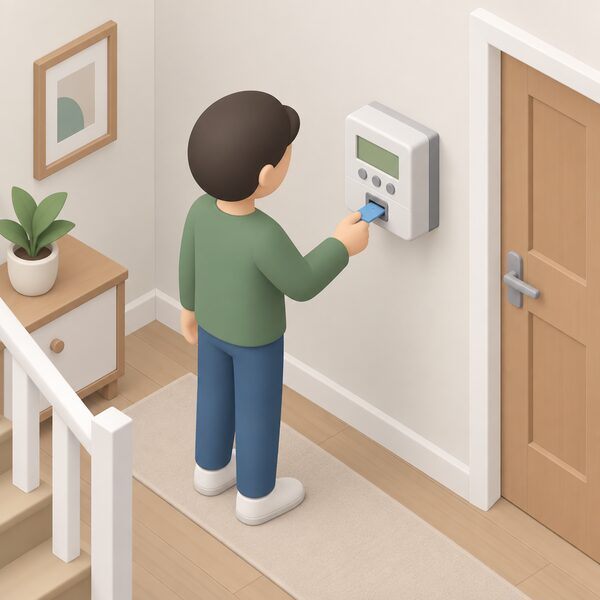
Being on a prepayment meter does not prevent customers from switching tariff or supplier, and the process is the same as for credit meter customers19. A prepayment meter in a rented home is not a bar to switching16. Tenants who pay the supplier directly can switch supplier or tariff, including with a prepayment meter1.
Debt is the real limit. You cannot switch if you owe your current supplier more than £500 for gas or £500 for electricity5. Below that threshold, you can switch if you pay by prepayment meter top-up and have less than £500 debt for each meter, repaying the debt to the new supplier instead16. Official guidance frames the same figure as owing your supplier up to £50011.
Changing the meter type is a separate matter. A householder who directly pays the supplier can change from prepayment to credit, but because it requires a physical change to the property, the landlord is the point of contact first13. For a renter, changing the meter requires the landlord's permission20. Some suppliers install a new meter for free, though in most cases a credit check or a refundable deposit applies, and private tenants who are the bill payer have the right to change payment method19. Once any debt is settled, the supplier may be able to change the prepayment meter to a credit meter21.
Smart meters soften the edges here. Renters who prepay can get a smart meter6, and many customers can switch supplier while keeping their smart meter22. A supplier can change between credit and prepay without a whole new meter23, and with smart meters suppliers can switch a consumer from credit to prepayment mode without the cost of a new meter being added to existing debt24.
Who is responsible for switching when bills are shared
Whoever pays the energy bills is responsible for switching, including in rented accommodation, and this holds even where a rental contract says otherwise27. A tenant directly responsible for paying the energy bill is in a position to switch28. Tenants who pay their energy bills directly can switch energy at any time3.
In a shared flat, that usually means the account holder holds the right and the others do not. The practical consequences are worth stating plainly: the named account holder can switch without the others' agreement, the others cannot switch at all, and any debt on the account sits with the named person and counts against the £500 threshold if they later want to move supplier5. Where the landlord pays and reclaims from the household, no one in the property has the switching right4.
For a household's energy independence, the account name is the control point. Holding the account means choosing the tariff, the payment method and the supplier. Sharing a bill through one flatmate's name, or through the landlord, means the household's influence runs through a conversation rather than a contract.
Moving out: what happens to the tariff
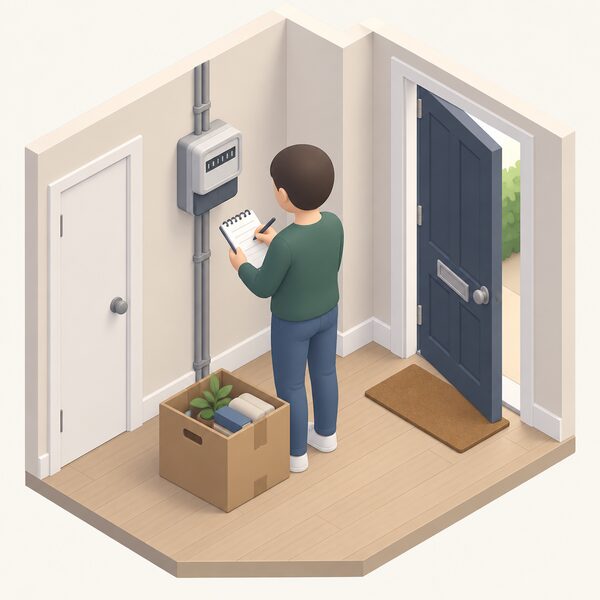
When you move, you are automatically switched to the new property's supplier, and it is likely your tariff will change29. If you were on a fixed rate tariff and chose to leave before it ended, you may have to pay your previous supplier an exit fee11. If you break your contract, you automatically go onto a standard variable tariff in your new home12.
The sequence on leaving is straightforward. Give a final meter reading on the day you leave, keep a photograph of it, and give the supplier a forwarding address for the final bill12. If you are moving into a rental where the bill is in your name, the same steps as above apply at the new address2. If the new home has a smart meter, the in-home display and the readings travel with the property rather than with you.
For a renter, the tariff is a temporary possession. It lasts as long as the tenancy and the account, and it does not transfer. That is the honest limit on energy independence in rented housing: the household can choose the supplier and the tariff while it holds the account, and it hands both back when it leaves.
Sources29 cited
- Switching energy supplier if you're a tenant, Citizens Advice, 2026-09-17
- A step by step guide to setting up gas and electricity in a new home, Energy Helpline, 2026-09-20
- Tenants' guide to switching, Uswitch, 2026-05-29
- Switching when renting or in debt, OVO Energy, 2026-09-17
- You can't afford to top up your prepayment meter, Citizens Advice, 2026-09-17
- Smart meters for renters, Smart Energy GB, 2026-03-16
- Electricity only, Confused.com, 2026
- If you live in a home with a business energy contract, Ofgem, 2026
- RTS meter switch off, Energy Saving Trust, 2026-05-08
- Gas and electricity switching, Confused.com, 2026
- Switch your home energy supplier, Ofgem, 2026
- Moving home: dealing with your energy supply, Citizens Advice, 2026-09-20
- Prepayment meter change to credit meter, Uswitch, 2026-04-23
- How to get a smart meter, Smart DCC, 2026
- Moving home checklist, National Energy Action, 2026-06-12
- How to switch energy supplier, Which?, 2026-05-15
- Gas only energy, Confused.com, 2026
- Gas only energy guide, Uswitch, 2026-09-07
- Prepayment meters advice, Centre for Sustainable Energy, 2025-08
- Prepayment meters, Uswitch, 2026-08-26
- Energy tariffs explained, Uswitch, 2026-02-17
- How to use a smart meter in prepay mode to save money, Smart Energy GB, 2026-08-17
- Benefits for prepay customers, Smart Energy GB, 2026-08-19
- Can a smart meter cut off power, Smart Energy GB, 2026-04-24
- Advice for those worried about energy bills, Smart Energy GB, 2026-08-19
- Check energy suppliers can install prepayment meters without household permission, Ofgem, 2026
- Switching energy suppliers guide, EDF Energy, 2026-08-26
- How to switch energy supplier, Confused.com, 2025-12-15
- Who supplies my electricity and gas, Uswitch, 2026-06-29
 Rented Homes and Landlord MetersWho is responsible for the energy in your rented home?
 Prepayment Meters and DebtCan your energy supplier force you onto a prepayment meter because you owe them money?
 Where to Start If You RentRenting means you can switch supplier or get a smart meter yourself, but insulation, glazing and heating need your landlord's agreement.
 Which Tariffs Your Meter AllowsHow meter type decides which energy tariffs a household can access, from single-rate and two-rate meters to smart, prepay and restricted configurations, and the constraints faced by flats, rented homes and homes without a working smart connection.
 Export Rates Per kWhHow much will your supplier pay you for the solar power you send to the grid, and why do rates vary so much from one company to another?
 Disconnection and WarrantsCan your energy supplier force you onto prepayment or cut you off for debt?