
In this comparison
Smart charging and bidirectional charging are two different things, and the difference is direction. Smart charging moves one-way power around in time: the car charges when electricity is cheapest and greenest, often overnight, without the driver changing their routine1. Bidirectional charging lets an EV either draw or supply power to the home or the grid, so the same battery that stores energy can later give it back2.
The practical gap between them is availability. Smart charging is a normal purchase today, supported by regulation and by time-of-use tariffs that an average-consumption household with an EV could already use to save around £330 annually compared with a static tariff3. Bidirectional charging is being trialled in some places but is not widely available, and it carries eligibility requirements such as a compatible car, charger and smart meter2.
For a household thinking about energy independence, smart charging is the low-risk option that shifts when power is bought. Bidirectional charging is the one that could turn a car into a home asset, providing backup power during outages and export to the grid, but it remains a trial-stage technology with a protocol bottleneck that shapes which cars can take part5.
Bidirectional vs smart charging: the short answer
The two terms describe different capabilities, not competing products. Smart charging is a control behaviour: a smart charge point must be able to respond to information received from a communications network by increasing or decreasing the rate of electricity flowing through the charge point, or by changing the time at which electricity flows through it9. That is a one-way function. Power goes into the car, and the intelligence decides when and how fast.
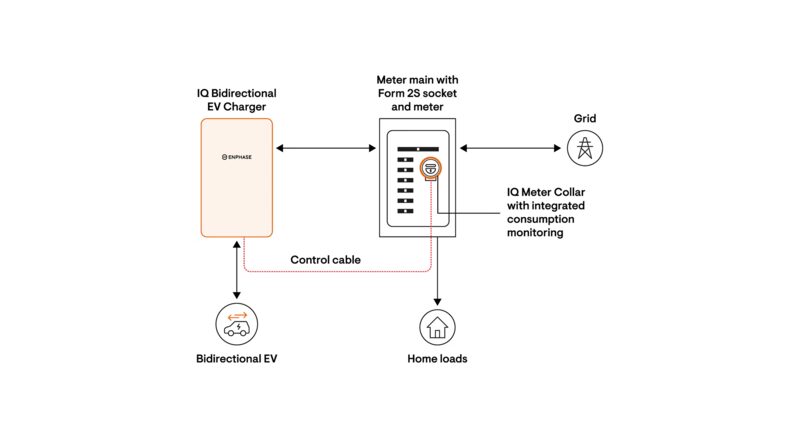
Bidirectional charging adds a second direction. It lets an EV either draw or supply power to the home or the grid, and it can provide backup power during outages2. The car becomes a store that can be discharged, not just filled.
The distinction matters commercially because the two sit at very different stages of maturity. Smart charging is embedded in regulation, in tariffs and in the mainstream charger market. Bidirectional charging is being trialled in some places but is not widely available, and general guidance on home battery storage states plainly that a household generally cannot use its EV as a battery2.
There is also a hardware difference. A bidirectional setup needs three conditions to be met: an electric car, suitable charging infrastructure including public chargers and wallboxes that support bidirectional charging, and a uniform software language6. Smart charging needs a compatible charge point and, for tariff-based optimisation, a smart meter that knows when the price of electricity is low10.
What smart charging does: one-way power, shifted in time
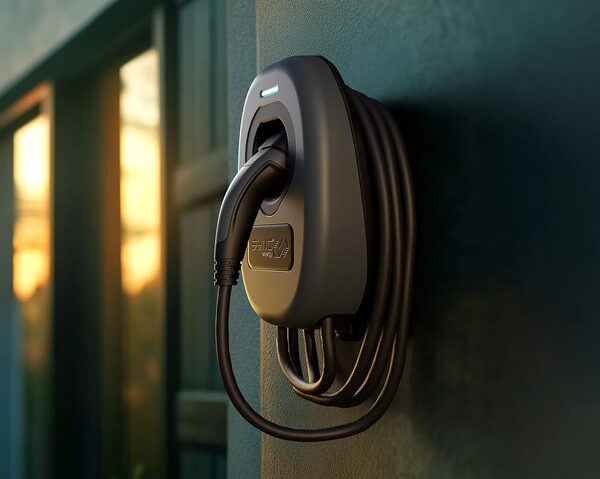
Smart charging is best understood as demand shifting rather than generation. The Energy Saving Trust describes it simply: your smart meter or your battery charger knows when the price of electricity is low, so you can charge during times that will cost less10. FlexAssure frames the household benefit in the same terms, letting your car charge when electricity is cheapest and greenest, often overnight, without changing your routine1.
The regulatory backbone is the Electric Vehicles (Smart Charge Points) Regulations 2021, which apply to charge points sold in Great Britain only9. A compliant smart charge point must be able to respond to network information by varying the rate of electricity or the time at which it flows9. That requirement is what makes domestic charging a controllable load rather than an unpredictable one.
Smart charging also pairs naturally with solar. Smart chargers can monitor real-time solar electricity production and adjust charging speed accordingly, drawing more or less power as generation rises and falls, and switching between solar and grid supply depending on availability11. For a household with panels, that means the car can absorb surplus generation instead of exporting it.
The system-level case is about avoiding reinforcement. Shifting electricity demand to off-peak times or times of high renewable generation can reduce or defer costly investment in generation capacity and network reinforcement, a benefit that official guidance attaches to the smart meter rollout, smart heat pumps, energy smart appliances and smart EV charge points alike12. The household sees a lower bill; the network sees a flatter peak.
What bidirectional charging adds: power that flows both ways
Bidirectional charging turns the vehicle into a dispatchable asset. It allows EVs to power the home or export energy to the grid, and it provides backup power during outages5. The Energy Saving Trust describes the same capability as a two-way movement of energy, where energy stored in the car battery could be used in the home or sold back to the grid at times of peak demand10.
The equipment exists. Smart V2G chargers such as the Wallbox Quasar 1 and Indra V2G units enable bidirectional energy flow, allowing the EV to both charge and discharge to the grid4. On the vehicle side, the Nissan Leaf has been able to charge bidirectionally for several years and is the pioneer of the technology6.
Plug-in hybrids can also do it, but the benefits are slight: they only have a small battery that can store a limited amount of energy6. The value of bidirectional charging scales with battery size, which is why the technology is discussed almost entirely in the context of full battery electric cars.
The three conditions for a working setup bear repeating because each is a potential blocker: an electric car, suitable charging infrastructure, and a uniform software language6. A household that has the car but not the wallbox, or the wallbox but not the protocol, has nothing.
What bidirectional can do for a household: backup power and running a heat pump
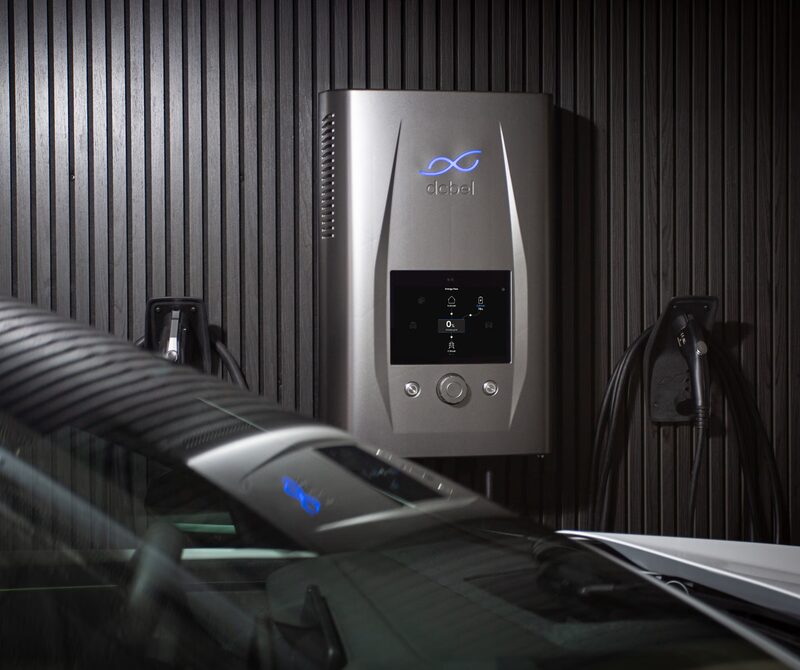
The household case for bidirectional charging rests on two uses: keeping the lights on during an outage, and moving stored energy into the home when electricity is expensive. The first is stated directly in the guidance, which notes that bidirectional charging provides backup power during outages5. The second appears in the home storage literature, where a battery can either be used in the home when electricity is expensive or fed back to the National Grid to make a profit13.
Running a heat pump from a car battery is the question households ask most often, and the answer today is that it is not a normal purchase. Bidirectional charging, which lets an EV either draw or supply power to the home or the grid, is being trialled in some places but is not widely available, and the same guidance states that a household generally cannot use its EV as a battery2. A heat pump draws a sustained load through the coldest hours, which is precisely when a car would need to be plugged in and available.
What a household can do now is manage heating and charging together through controls rather than through the car. Smart heating controls are connected to the internet and offer more functionality than conventional controls14. Smart meters are independent of smart heating controls, but combining the two can enhance the ability to manage a home's heating and energy use remotely15. That combination does not discharge a car into a heat pump, but it does align when the two biggest domestic loads run.
Availability: trials today, not yet a normal purchase
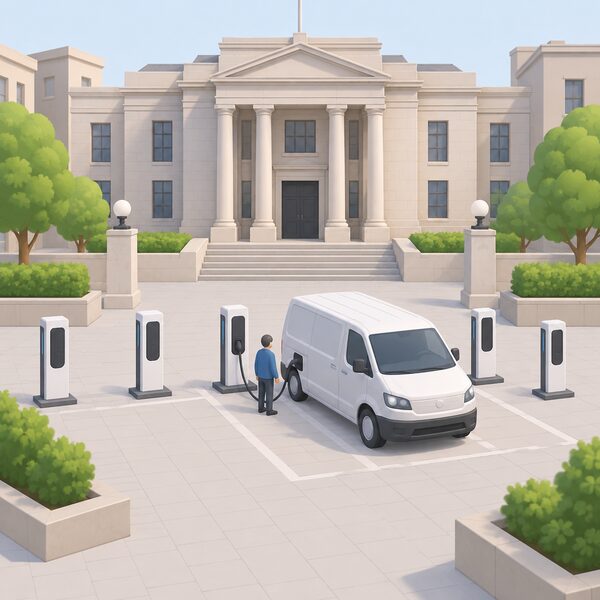
The honest position on bidirectional charging is that it is a demonstration technology in the UK, not a product category. It is being trialled in some places but is not widely available2. Vehicle-to-grid specifically is still not widely available and carries eligibility requirements such as a compatible car, charger and smart meter4.
Trials have run for years. Moixa, Islington Council and Honda installed five bidirectional chargers at Islington Town Hall in January 2020 for Nissan e-NV200 vans. In December 2023 the government funded four V2X smart charging projects in London, Chelmsford, Gateshead and Leatherhead with a share of £4.8m. In October 2024 the Mobilize Power V2G service launched in France, and Nuvve joined the EVVE project, committing to install approximately 100 charging stations as part of a plan to deploy 800 V2G charging stations across Europe.
The pattern is consistent: pilots, funding rounds and consortium projects, with commercial availability lagging. On the charging network side, Zapmap has been trialling its own smart charging service, optimising a home charge for the cheapest, greenest time of day16. That is a smart charging trial, not a bidirectional one, which illustrates where the market currently sits.
For a household, the practical consequence is that a bidirectional purchase today means joining an early cohort with specific hardware requirements, not buying a finished consumer product. The eligibility list, a compatible car, charger and smart meter, is the thing to check first4.
UK legality and the CHAdeMO protocol limit
Bidirectional charging is allowed in the UK, and the government is keen to encourage the technology6. Legality is settled; the constraint is technical.
Only CHAdeMO currently has a valid protocol for V2G charging that feeds electricity into the public grid6. CCS, which is the standard for rapid DC charging in the UK and Europe, has yet to master the same export function17. That single protocol fact explains most of the practical limits on which cars can take part.
CHAdeMO's UK footprint is narrow. In the UK it is limited to a few EV brands, mostly Japanese or Korean in origin18. There are also few CHAdeMO chargers powered at more than 100kW in the UK17. The connector supports rapid and ultra-rapid charging with power levels from 25kW up to 400kW, although the most common is 50kW17.
The regulatory picture around public charging is separate but relevant. Rules mandate a minimum payment method, such as contactless payment, for new 7.1 kW and above charging devices, including rapid devices19. The Electric Vehicles (Smart Charge Points) Regulations 2021 carry a maximum civil penalty of £250,000 for a breach of paragraph 8 of Schedule 220, and later regulations except products that are already charge points to which the 2021 Regulations apply21.
"Only for this connection is there currently a valid protocol for V2G charging in order to feed electricity into the public grid."
Connectors and standards: CCS, CHAdeMO and what's coming
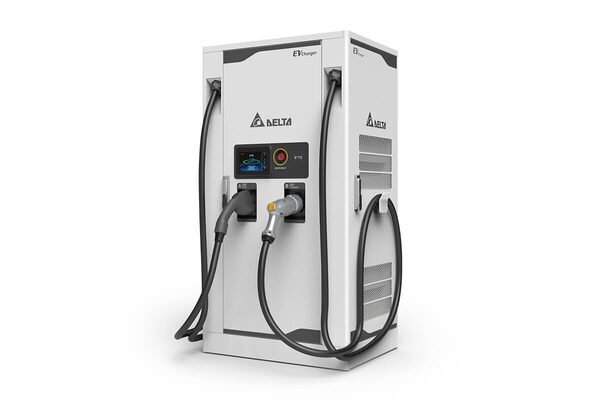
The connector question decides whether a car can participate at all. Most V2G systems use a specific type of charger connector called CHAdeMO, but some models can also use CCS4. Adapters do not bridge the gap: adapters between CCS and CHAdeMO do not exist22.
Public infrastructure reflects both standards. A council network on Anglesey lists CHADeMo (50kW), CCS (50kW) and Type 2 (22kW) sockets across its locations23. On the rapid network, MFG EV Power, Osprey Charging and InstaVolt all provide charging with tethered devices via both CHAdeMO and CCS connectors24. Some EV drivers will require a CHAdeMO or CCS charging adapter if the charging socket is not compatible with their EV24.
The UK public network has carried two entirely different DC plugs, CCS or CHAdeMO, both of which require their own socket25. That duplication is a legacy of early standardisation, and it is the reason a bidirectional purchase cannot be treated as connector-agnostic.
Looking forward, the EU has mandated that newly installed charging points must support the ISO 15118-20 standard from January 2027, enabling bidirectional power flow. That is an EU requirement rather than a UK one, but it points to where the connector and communication standards are heading, and it addresses the uniform software language condition that bidirectional setups currently lack6.
| Standard | Role | UK position |
|---|---|---|
| CHAdeMO | V2G export protocol | Only connector with a valid protocol for feeding the public grid6 |
| CCS | Rapid DC charging standard | Standard for rapid DC charging in the UK and Europe; export not yet mastered17 |
| Type 2 | AC charging | Listed alongside CHAdeMO and CCS on public networks23 |
| ISO 15118-20 | Bidirectional power flow | Mandated for new EU charging points from January 2027 |
What it means for grid costs and renewable energy
The system case for both technologies is about timing and capacity. Smart charging lets households shift energy usage away from traditional peak times, which are currently reliant on fossil fuel energy, and make more use of renewables26. That is the renewable argument in one sentence: the same electrons, moved to a cleaner hour.
The economics of the two approaches have been compared directly. If grid services to the system operator and distribution network operator are excluded, smart charging is able to capture 80% of the value of V2G27. A separate figure from the same body puts smart charging's share of V2G value at 80% for low plug-in scenarios, or 24% for high plug-in cases27. Both figures are reported here.
The scale of the prize is large. The National Energy System Operator estimates that in 2050 vehicle-to-grid, effectively batteries on wheels, could offset as much as 85% of the residual EV demand that remains in peak periods, after smart charging has shifted the majority of EV demand outside peak hours7. An Ofgem case study puts the figure at around 16GW of daily flexible capacity to the grid if 50% of the UK's EVs were V2G enabled by 203028.
There is a caution on complexity. Smart charging depends on multiple software systems running on multiple hardware platforms from multiple vendors connected by multiple communication systems, with a high risk of cyber compromise29. The more the household's energy independence depends on cloud platforms and apps, the more that dependency matters.
Awareness remains the quiet barrier. Official research found that participants often had not heard of and were unfamiliar with the concept of smart charging30, and 24% of EV owners with a conventional charger said they were not aware smart chargers were available8. Findings from Europe's largest vehicle-to-grid pilot reported similarly low public awareness of bidirectional charging and its potential.
For a household, the independence question splits cleanly. Smart charging reduces what you pay and when you draw, but the car still depends on the grid, a supplier and a tariff. Bidirectional charging could reduce dependence on the grid at peak times and during outages, but it currently depends on a compatible car, a specific connector, a smart meter and a manufacturer's software platform. Neither removes the connection.
Sources30 cited
- What is flexibility?, FlexAssure, 2026
- Battery storage, Energy Saving Trust, 2026
- Electricity Distribution Networks Study: government response, GOV.UK, 2025
- Vehicle-to-grid charging guide, Uswitch, 2025
- Integrating solar panels with EV charging, Uswitch, 2025
- What is bidirectional charging?, Carwow, 2025
- Batteries, wheels and smart charging, National Energy System Operator, 2050
- Consumer Survey 2021: decarbonisation and home energy use, Ofgem, 2021
- Guide to EVSCP Regulations 2021, Department for Transport, 2026
- Smart homes: lower carbon footprint, Energy Saving Trust, 2026
- Can solar panels charge electric cars?, The CPA, 2026
- Smart secure energy systems, Parliament, 2022
- Electrical energy storage systems, Flexi-Orb, 2025
- Thermostats and heating controls, Energy Saving Trust, 2026
- Smart meters, Welsh Government, 2026
- Smart charging, Zapmap, 2026
- EV connector types, Zapmap, 2026
- Guide to Electric Vehicle Infrastructure, BEAMA, 2024
- Government cuts plug-in grant scheme, Zapmap, 2021
- The Electric Vehicles (Smart Charge Points) Regulations 2021, legislation.gov.uk, 2021
- The Electric Vehicles (Smart Charge Points) (Amendment) Regulations 2023, legislation.gov.uk, 2023
- Electric car charging guide, Carwow, 2025
- Electric vehicle charging, Isle of Anglesey County Council, 2026
- Tethered vs untethered charging, Zapmap, 2026
- 5 problems with electric car charging, Which?, 2021
- A smarter future: the smart energy system revolution, Smart Energy GB, 2026
- V2GB: Vehicle to Grid Britain, Cenex, 2026
- Case study: UK electric vehicle to grid charging, Ofgem, 2030
- Resilient electric vehicle charging, Energy Systems Catapult, 2022
- Phase 1 EV publication, Ofgem, 2021
 Bidirectional Charging ExplainedCan your electric car actually earn you money by sending power back to the grid?
 Bidirectional Chargers and CostsA bidirectional charger lets your electric car send power back to your home or the grid, not just take it in.
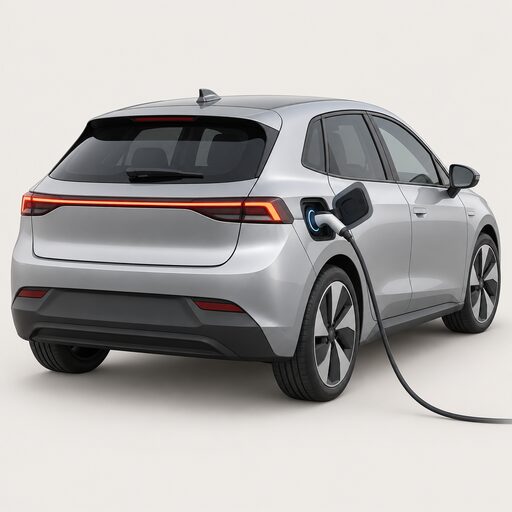 V2G and V2H ChargingCan your electric car earn money by sending power back to your home or the grid?
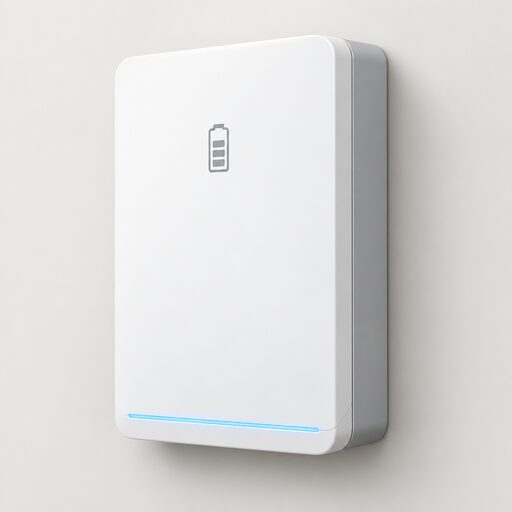 Charging With a Home BatteryHow a home battery and an EV charger share one supply, whether a battery can usefully charge a car, and how combined systems are controlled so the battery is not discharged into the vehicle at a loss.
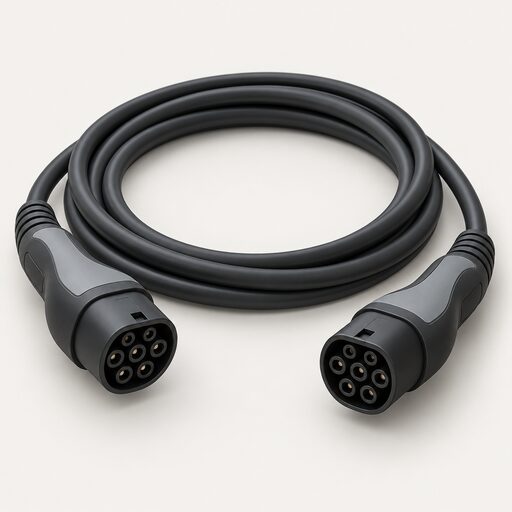 Types of Home EV ChargerWhich home charger suits your car and your driveway?
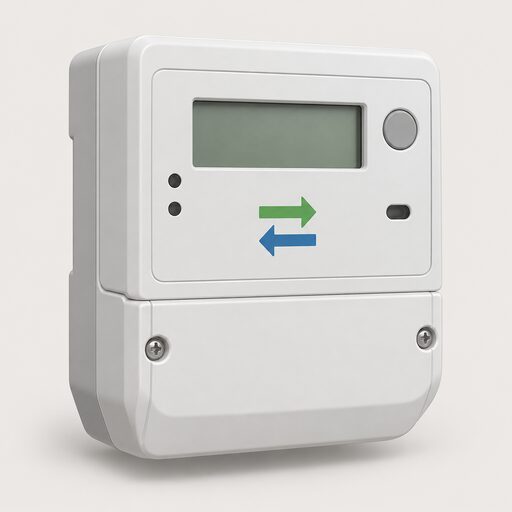 Grid Connection Rules for V2GCan your charger send power back to the grid?