
In this answer
Short answer
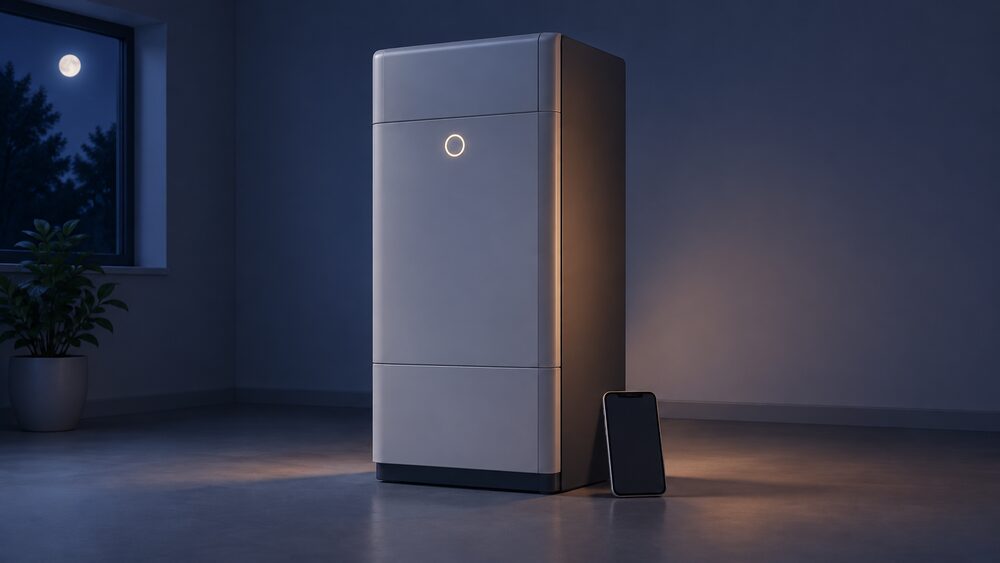
The tepeo ZEB is a heat battery boiler: it takes electricity from the grid, stores it as heat in a thermal core, and releases that heat to the radiators when the home calls for it. Charging is not something the household schedules by hand. The ZEB's Smart Charging works out when and how much to charge based on factors including heating needs, local weather and the electricity tariff1. An empty ZEB takes approximately 4.5 hours to charge fully2.
That single figure shapes everything else. Because the core can hold a full charge in under five hours, the whole of a day's heating can be bought inside an off-peak window, and tepeo recommends a time-of-use tariff with one or more off-peak periods, often marketed as EV or flexible tariffs, naming Octopus, OVO and EDF among the suppliers3. The ZEB can operate on a standard electricity tariff, but a time-of-use tariff gives Smart Charging the opportunity to move more charging into lower-cost periods2.
What the ZEB does for a household's energy independence is real but partial. It moves the timing of heating demand off the evening peak and onto cheaper, often greener overnight electricity, and it removes the gas boiler from the home. It does not remove the grid, the electricity supplier or the tariff: the household still buys every unit, and the savings depend on the tariff being there. tepeo itself states there is no guarantee that the ZEB will reduce bills, because heating costs depend on the property, tariff, energy use, weather and household behaviour4.
How the ZEB decides when to charge: the inputs Smart Charging uses
Smart Charging is the part of the system that answers the question in the title. tepeo describes it as working out when and how much to charge based on factors including heating needs, local weather and the electricity tariff1. The support documentation lists the inputs more precisely: local weather, how much heat the home uses, the energy tariff and the carbon intensity of electricity3. A separate guidance page describes the same algorithm using heating requirements, weather forecast and electricity tariff to plan how, and when, it charges2.
Two pieces of modelling sit underneath. A state-of-charge algorithm helps estimate how much stored heat is available, while machine learning is used to predict heat need8. tepeo describes the ZEB as using machine learning to identify when electricity is at its cheapest, often overnight when demand is low, and storing that energy as heat9. The charging behaviour also shifts with the carbon intensity of the grid, so the schedule is not purely a price calculation10.
In practice the household sets the boundaries and the algorithm works inside them. The app offers app-based controls and smart charging features, using information about the weather, household requirements and electricity tariff information, and it allows charging times to be amended, or the ZEB to be turned off or boosted11. One tepeo case study describes the arrangement from the occupant's side: Smart Charging works in the background, helping the ZEB decide when to charge and how much heat to store12.
The dependence this leaves is worth stating plainly. The ZEB is not a generator and not a battery in the electrical sense: it stores heat, not electricity, and it cannot export anything. Every charge is a purchase from a supplier, and the intelligence that times that purchase runs on tepeo's software and the household's internet connection. The household gains control over when it buys, not over whether it buys.
Charging when electricity is cheaper and cleaner
The commercial case for a heat battery rests on the gap between peak and off-peak electricity. tepeo's own framing is that the ZEB charges up when electricity is cheaper and greener, rather than using carbon intensive solutions such as gas or oil13. One customer story describes the machine charging up when electricity is cheaper and cleaner, and releasing that stored heat exactly when the home needs it14. Another describes letting the ZEB choose the cheapest and greenest times to charge overnight15.
The mechanism is a communication between the appliance and the tariff. tepeo states that the ZEB uses smart charging technology to communicate with your energy provider and automatically draws electricity during the tariff's cheapest overnight window, storing it as heat in its thermal core16. The same page notes that drawing power at night, when overall national demand is lowest and renewable generation such as wind power is often highest, helps balance the grid16. That is a system benefit as much as a household one, and it is the reason a distribution network operator has taken an interest in heat batteries as a way of shifting domestic heating load13.
The size of the saving is not fixed, and tepeo is careful about it. A suitable time-of-use tariff can make a significant difference to running costs, because more charging can take place during lower-cost periods17, but the same company states there is no guarantee that the ZEB will reduce bills4. The honest position is that the tariff does the work: a household on a flat rate gets a heat battery that heats the home, and a household on a tariff with a genuine off-peak window gets one that also moves most of its consumption into it.
"The ZEB uses smart charging technology to communicate with your energy provider. It automatically draws electricity during the tariff's cheapest overnight window, storing it as heat in its thermal core."

The charge window: 4.5 hours and off-peak periods
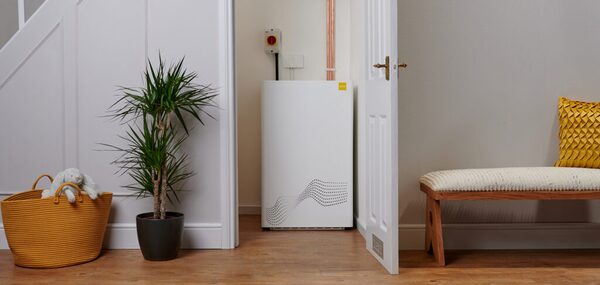
The charge time is the constraint that decides whether a tariff is suitable. tepeo's product page gives 4.5 hours as the charge time18, and its tariff guidance puts it at 4 to 5 hours to get the ZEB full from empty, adding that longer off-peak windows allow the heat battery to build up a store of heat5. The general guide for choosing a tariff is at least four hours of off-peak electricity, given that an empty ZEB takes approximately four and a half hours to charge fully6. The support article repeats the recommendation: the ZEB works best with a time-of-use tariff where it has access to at least 4 to 5 hours of off-peak electricity each day19.
| Figure | Value | Source |
|---|---|---|
| Charge time, product specification | 4.5 hours | tepeo product page18 |
| Charge time, empty to full | 4 to 5 hours | tepeo tariff guidance5 |
| Minimum off-peak window advised | at least four hours | tepeo6 |
| Off-peak access recommended | at least 4 to 5 hours each day | tepeo support19 |
For comparison, the domestic charging picture for electric vehicles is slower: standard chargepoints of 3.7 kW to under 8 kW take five and a half to 11 hours for a full charge20. That is a different appliance with a different job, but it illustrates why the ZEB's window is workable: a heat battery sized for a home's daily heat demand can be refilled inside a typical overnight cheap period, whereas a car battery of comparable energy content generally cannot.
The window also has to be managed at the start of the heating season. tepeo's winter guidance suggests that in Week 1, the household sets Custom Charging to be 50% of State of Charge during the off-peak period for their tariff21. That is a starting point rather than a rule, and it reflects the fact that the algorithm still needs the household to tell it what the tariff actually is.
Setting your tariff in the tepeo App
The tariff is not something the ZEB can discover on its own. tepeo states that once you set your tariff in the App, the ZEB will know when it is best to charge22. The app is described as the place to manage ZEB settings, your tariff, and charging preferences23, and the maker's product page lists automatic optimisation for smart tariffs as a feature10.
The update process is short. tepeo's guidance is to open the tepeo App, select Tariff Settings from the main menu and follow the steps to update21. Away Mode has its own control: if Indefinitely was selected, it is disabled by selecting Enable Automatic Charging in the tepeo App21.
The app is also the window onto what the machine is doing. It shows when the ZEB has charged, how much energy it has used and heat output over time23, and the monitored data includes charge level, power draw, heating output, charging history and carbon data23. One customer describes the arrangement simply: I'm pleased with the app, where I can see charge on the ZEB24.
Internet connection: what the ZEB needs and what happens if it drops
The ZEB needs an internet connection, by Wi-Fi or Ethernet, so that it can use smart charging and stay connected to the tepeo App3. tepeo describes the machine as resilient to temporary outages, and notes that a 4G Wi-Fi dongle is possible where a wired or Wi-Fi link is not practical3. The ZEB is designed to charge intelligently in the background, using smart charging to help make the most of suitable time-of-use electricity tariffs23.
What happens during an outage is documented. For Smart and Basic Charging, the ZEB will use the last charging schedule it received prior to the connection being lost, unoptimised for current weather, until the connection is restored19. In other words, the heat battery keeps working and keeps heating the home, but it stops responding to the forecast and the price signal. A cold snap that arrives during an outage will not be anticipated.
Two other conditions matter for reliability. tepeo advises avoiding switching the ZEB off at the mains, because doing so prevents it from carrying out essential self-maintenance and could cause issues later on25. In Away Mode the ZEB uses minimal electricity to keep itself in good condition, and brief charging periods during that mode are normal and help prevent the core from going completely cold25.
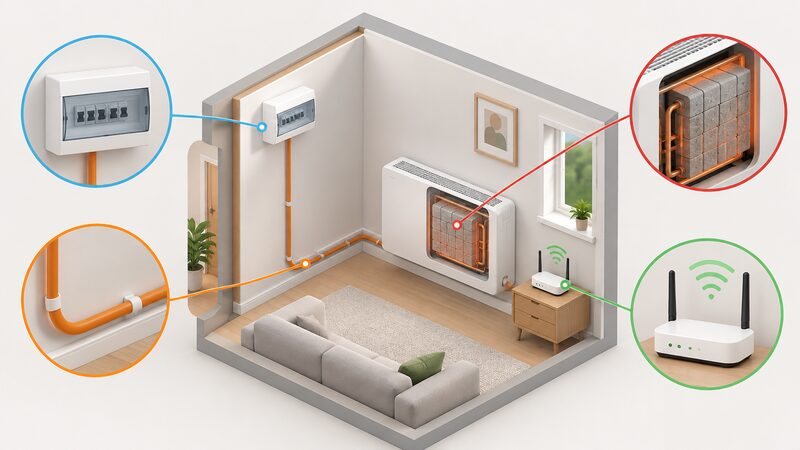
The installation itself needs a dedicated electrical supply run from the consumer unit to the ZEB's location, which tepeo describes as the only major new requirement26. The ZEB is installed indoors and draws power directly from the home's electrical supply9. One customer installation goes further and charges the ZEB directly from a Tesla Powerwall, which shows that the charging source can be a home battery rather than the grid alone14.
What a heat battery costs and why grants don't cover it yet
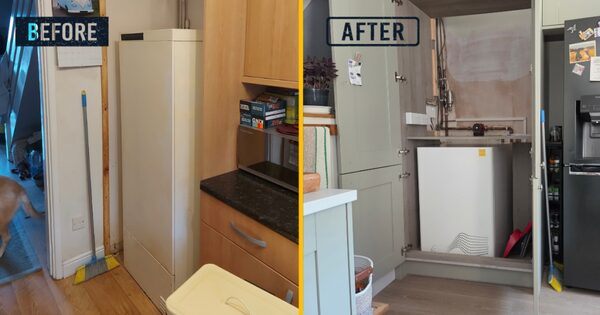
The ZEB is not currently supported by the Boiler Upgrade Scheme3. tepeo states that heat batteries are expected to be included from winter 2026 with a £2,500 grant once standards and scheme rules are in place3. Until then the company runs an Early Grant Match offer, described as matching the proposed boiler upgrade scheme grant so homeowners can upgrade now without waiting for government funding7. The offer is £2,500 off the upfront cost, reducing the product price to £3,5007. Prices are otherwise installer-quoted, and the figure above is the maker's own published product price rather than a fitted cost.
The grant gap has a policy reason behind it. HMRC guidance on VAT for energy saving materials and grant funded heating supplies states that batteries storing energy in the form of heat, meaning thermal or heat batteries, are not included27. That is the published scope position as of 17 September 2026, and it is the same boundary that keeps heat batteries out of the current grant framework. Households should treat VAT treatment on a specific installation as a matter for the installer and the invoice.
There is a second cost consideration that the ZEB's design creates. The tepeo ZEB heat battery is a heat-only boiler, so a separate solution is needed for the home's hot water28. That is a real difference from a combi, which does both, and it means the comparison is not like for like on installed cost. tepeo publishes a cost and carbon page with a maintenance estimate based on the ZEB Care Plan29.
Where the ZEB's independence ends
The ZEB shifts when a home buys its heat, and in doing so it moves domestic heating demand away from the evening peak and towards the hours when national demand is lowest and renewable output is often highest16. For a household, that is a genuine change in the relationship with the grid: the home stops being a live load that must be served the moment a thermostat calls, and becomes a store that can be filled when electricity is cheap.
What remains is substantial. The ZEB is not a source of energy. It has no electrical output, cannot export, and cannot run the home during a power cut. It depends on a supplier, a tariff with a usable off-peak window, a working internet connection, and tepeo's software continuing to optimise on the household's behalf. The company's own position is that bills are not guaranteed to fall4. For households weighing this against other options, the comparison pages on heat battery versus heat pump and tepeo ZEB versus storage heater set out where the technology sits, and the wider picture of how storage technologies affect household autonomy is covered in emerging technology and household energy independence. The company itself is profiled at tepeo.
Sources29 cited
- Can a heat battery boiler replace a combi boiler, tepeo, 2026-09-17
- Energy tariffs, tepeo, 2026-09-02
- tepeo FAQs, tepeo, 2026-09-17
- Moving away from a gas boiler shouldn't feel like a gamble, tepeo, 2026-07-16
- Tariffs for electric heating, tepeo, 2026-07-16
- This summer feels different, so should the way we heat our homes, tepeo, 2026-07-16
- Don't let winter choose your next boiler, tepeo, 2026-07-21
- What is a heat battery boiler, tepeo, 2026-09-17
- How to beat heating oil price spikes permanently, tepeo, 2026-07-16
- What makes the tepeo ZEB the ideal GEC Nightstor replacement, tepeo, 2026-07-16
- Top 7 reasons why UK homes are choosing heat battery boilers, tepeo, 2026-07-30
- Amy: heat pump alternative in London, tepeo, 2026-07-23
- New trial opens the door to low carbon heating, UK Power Networks, 2026-09-17
- A smarter gas boiler replacement: total tranquility in a Hampshire village, tepeo, 2026-07-23
- SJ Ren testimonial, tepeo, 2026
- Heat battery and electric car: the dream team for maximising your off-peak tariff, tepeo, 2026
- Switching to electric heating checklist, tepeo, 2026-09-07
- Heat battery boiler, tepeo, 2026-09-03
- User support, tepeo, 2025-03-20
- Charging electric vehicles, Energy Saving Trust, 2026-04-23
- How to get the best out of your ZEB this winter, tepeo, 2026-07-16
- What tariffs work best with the ZEB, tepeo, 2026-02-02
- The tepeo App, tepeo, 2026-08-28
- Replacing gas heating with a ZEB in my first floor flat, tepeo, 2026-07-23
- Prepare your ZEB for spring and the warmer weather ahead, tepeo, 2026-07-16
- Heat batteries: quick installation, tepeo, 2026-02
- VAT energy saving materials and grant funded heating supplies, HM Revenue and Customs, 2026-09-17
- Hot water solutions, tepeo, 2026-08-28
- Cost and carbon, tepeo, 2026-09-17
 Supplier-Controlled ChargingSmart charging tariffs let your energy supplier decide when your car charges, usually overnight when electricity is cheaper.
 Batteries and Smart TariffsA home battery can earn its keep if your electricity prices change through the day.
 Meters and Time-of-Use TariffsDo you need a smart meter for a time-of-use tariff, and does it have to send readings every half an hour?
 What Is a Smart Charger?A smart EV charger is an internet-connected home charge point that schedules charging around tariff prices, grid demand and household load.
 Time-of-Use Tariffs ExplainedCan you pay less for electricity by using it at different times of day?
 Heat Pump Electricity TariffsA heat pump tariff gives you cheaper electricity for part of the day, so running your heating costs less than on a standard rate.