In this guide
tepeo is a British engineering company that designs, develops and manufactures the ZEB heat battery boiler at its base in Wokingham, Berkshire1. It was founded in 2018 by engineer Johan du Plessis, who is also its CEO, with the stated aim of giving UK households more choice when moving away from gas1. The company is a certified B Corporation and is recognised as an Ethical Consumer Best Buy1.
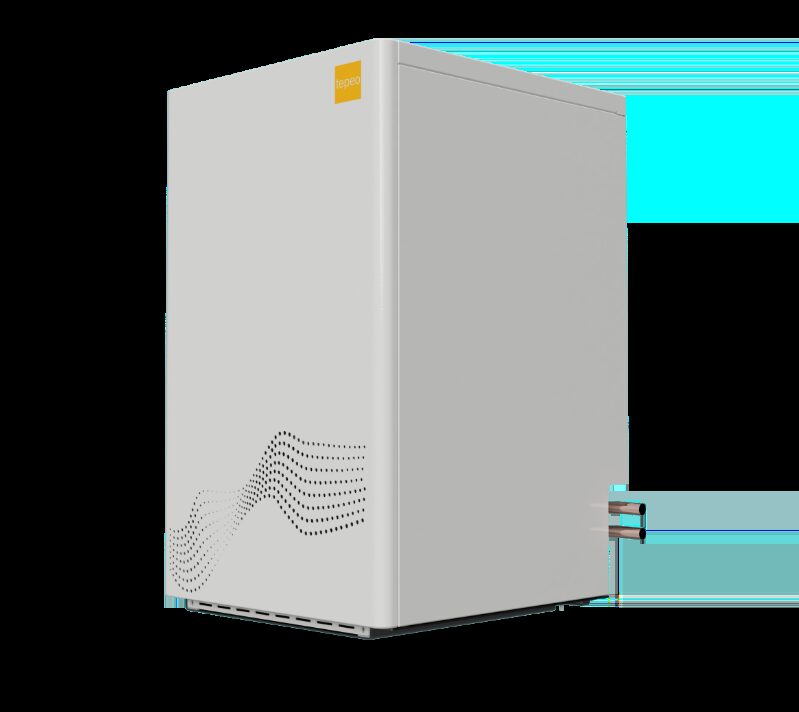
The ZEB itself stores heat in a high-density ceramic core rather than in water, and tepeo positions it as a replacement for a combi boiler3. For a household, the company matters as much as the product: who owns it, how it is financed, who installs it, and what happens when something goes wrong. tepeo sells through a trained installer network called tepeoPRO rather than direct, and it offers finance through two named partners1.
On money, tepeo states that eligible customers can currently receive £2,500 off through its Early Grant Match, reducing the upfront cost of a ZEB to £3,5003. That is a maker's scheme, not a government grant. Finance is arranged through Vendigo and Humm, and covers the ZEB and its installation in monthly instalments, though the finance itself does not include installation costs4.
What tepeo is and who founded it
tepeo was founded in 2018 by Johan du Plessis, an engineer, and the company states that it was created to give UK households more choice when moving away from gas1. Du Plessis remains the CEO, and is named in that role in industry reporting on a low-carbon heating trial run with UK Power Networks2.
That founding story matters for how the company behaves. tepeo is not a division of a boiler manufacturer adding a product line, and it is not an energy supplier diversifying. It is a single-product engineering firm whose commercial fate is tied to one appliance, the ZEB, and to the installer network that fits it. The company describes working closely with trusted tepeoPRO installers, giving them dedicated training, technical support and tools for every ZEB installation, and supporting both householder and installer before, during and after installation1.
For a household, that structure cuts both ways. A single-product maker has every reason to get that product right and to keep supporting it, because there is no wider portfolio to fall back on. The same concentration means the company's health and the product's support are the same question. The ZEB is designed, developed and manufactured at the Wokingham base, which keeps engineering and production in the UK and shortens the route between a fault report and the people who built the unit1.
The company's public positioning is explicitly environmental as well as technical. It describes itself as a certified B Corp and as recognised as an Ethical Consumer Best Buy, and frames both as reflecting a commitment to building better products1. Those are company-level claims about governance and conduct, not statements about how any individual ZEB will perform in a particular house.
The company behind the ZEB: B Corp status and what it covers

tepeo's certified B Corporation status is a company-level certification, and the company pairs it with recognition as an Ethical Consumer Best Buy1. Both are third-party assessments of the business rather than of the appliance. A B Corp certification covers a company's governance, treatment of workers, community impact and environmental performance; it does not certify that a ZEB will heat a given home to a given standard, and it is not a substitute for product certification or for the installer's own assessment.
The distinction is worth holding on to when reading any maker's page. A household weighing a ZEB is weighing two separate things: whether the company is one they want to deal with, and whether the product suits the house. tepeo's B Corp status speaks to the first. The second is settled by a survey and a quote from a tepeoPRO installer, not by a badge1.
tepeo also holds a place in the wider low-carbon heating sector. UK Power Networks ran a trial that it described as opening the door to low-carbon heating, and du Plessis is quoted in that context as tepeo's CEO2. Participation in network trials is a normal route for a young hardware company: it gives the maker real grid data and gives the network operator evidence about how a new kind of load behaves. It does not, on its own, tell a household anything about running costs in their own property.
What the company does not publish is a list of accreditations for the ZEB itself on the pages reviewed here. A household comparing heat batteries should look for the product-level certification separately, and should treat company-level recognition as context rather than as proof of performance.
Where tepeo is based and how to reach it
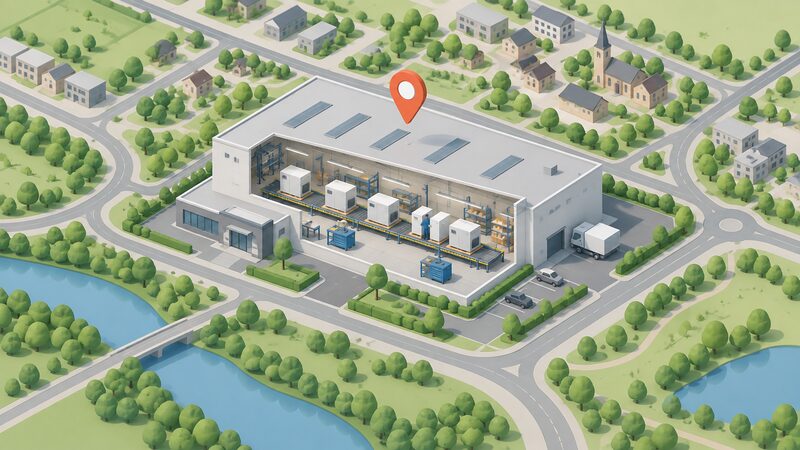
tepeo's base is in Wokingham, Berkshire, and the company states that the ZEB is designed, developed and manufactured there, bringing together British engineering with its own production1. That is a meaningful detail for a household thinking about parts and service: the unit is not shipped in finished from overseas, and the maker's engineering team sits at the same site as production.
Contact runs through the company's own site rather than a single national call centre. Installation enquiries are routed to a tepeoPRO installer, and tepeo states that a bespoke installation quote comes from that installer4. The company's stated model is to support the householder and the installer before, during and after installation, which places the installer as the first point of contact for anything site-specific1.
Finance queries follow a different path. Once installation is complete, tepeo's finance broker, Vendigo, emails the householder to confirm that everything is complete, and a link is then sent to sign the agreement, after which monthly repayments begin4. So a question about the appliance or the installation goes to the installer, and a question about the agreement goes to the broker.
| Enquiry | First point of contact |
|---|---|
| Suitability and installation quote | tepeoPRO installer4 |
| Technical support during installation | tepeo and the tepeoPRO installer1 |
| Finance agreement and repayments | Vendigo, the finance broker4 |
| Company and product information | tepeo's own site1 |
What tepeo sells besides the ZEB
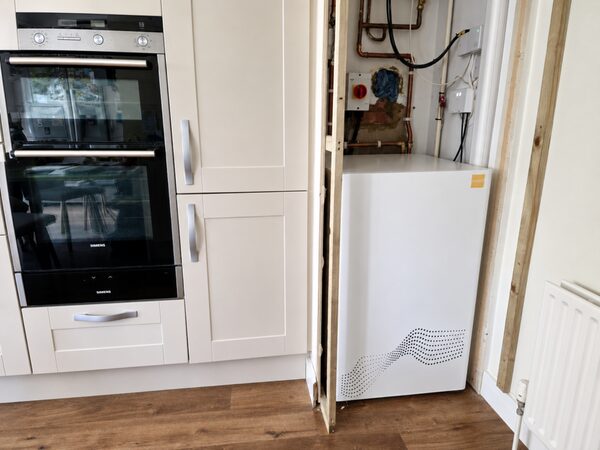
tepeo's own product is the ZEB, and the company's site does not present a wider catalogue of its own appliances. The ZEB stores heat in a high-density ceramic core, using electricity to charge that core rather than heating water in a cylinder3.
Hot water is handled by pairing rather than by a tepeo product. tepeo's site shows a case study in which a ZEB heat battery boiler and a Sunamp Thermino together provided a compact, low-carbon heating and hot water solution for an apartment1. That is a two-maker arrangement: the ZEB covers space heating, and the Sunamp unit covers hot water. A household wanting both would be buying from two companies, with two sets of support arrangements and two sets of warranty terms.
The pairing is a useful illustration of where heat battery technology sits in the market. A heat battery replaces the boiler, not the whole heating system, and hot water still needs a source. For a household moving off gas, that means the hot water decision is a separate one, and the options include a cylinder, a heat pump or another maker's thermal store. The heat battery versus hot water cylinder comparison sets out how those routes differ, and Sunamp heat batteries covers the product tepeo pairs with.
Finance, the £2,500 grant match and how payment works
tepeo's finance offer is arranged through two named partners, Vendigo and Humm, and the company states that it has partnered with them to offer flexible financing4. The structure is set out in four steps: check the home and options, apply for finance, confirm and book installation, and complete the finance agreement after installation4.
Two conditions shape what is actually covered. First, the finance covers the retail price of the ZEB itself and does not include installation costs4. Second, installation is priced separately because the work required varies from home to home, and a bespoke quote comes from a tepeoPRO installer4. So the monthly figure a household sees for the appliance is not the whole cost of the job.
On the grant side, tepeo states that eligible customers can currently receive £2,500 off through its Early Grant Match, which it describes as bringing forward a grant, and that this reduces the ZEB upfront cost to £3,5001. This is a maker's scheme with its own eligibility conditions, not a public grant. The government's Boiler Upgrade Scheme is a separate matter: it pays £2,500, and the published grant category at that level is for an air-to-air heat pump5. Independent analysis has questioned whether the current £7,500 level for other heat pumps still leaves an unobtainable shortfall for many households, and the Association for Decentralised Energy has published on how lower-income homes are supported in the heat transition7. Heat batteries have been discussed at a £2,500 grant level in independent guidance8.
Payment protection is worth understanding on any home improvement of this size. Trusted Payments guidance puts the cost of the service at between £25 and £85 depending on project size, typically less than 1% of project spend9. That is a general consumer protection route rather than anything specific to tepeo.
How tepeo decides if a ZEB suits your home
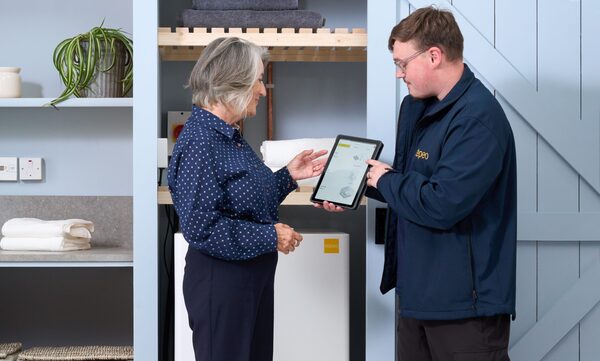
The assessment is not made by tepeo centrally. A household contacts a tepeoPRO installer for a bespoke installation quote, and installation is priced separately because the work required varies from home to home4. The installer's survey is therefore the point at which a ZEB is judged suitable or not, and the quote reflects what that survey finds.
tepeo's stated approach is to back those installers with dedicated training, technical support and tools for every ZEB installation, and to support the householder and installer before, during and after the job1. That is a deliberate model: rather than selling direct and subcontracting, the company puts a trained layer between itself and the house.
For a household, the practical consequence is that the quality of the survey matters more than any published specification. Whether a ZEB replaces a combi successfully depends on the property, the existing system and the hot water arrangement, and tepeo's own guidance on replacing a combi is written around that question3. The tepeo ZEB versus storage heater comparison covers the alternative for homes already on electric heating, and which emerging technologies suit which homes places the ZEB among the wider options.
Support, partnerships and industry standing
tepeo's financing partnership is with Vendigo, which provides the monthly payment calculator and acts as finance broker, and with Humm as financing partner4. Vendigo's role continues after installation, since it is the broker that emails to confirm completion and then sends the link to sign the agreement4.
The company's trial work with UK Power Networks places it in the network-operator side of the sector, where new electrical loads are tested against real grid conditions2. That is a different kind of standing from a consumer endorsement: it means the company's product has been examined by an operator with an interest in how it draws power.
The wider industry picture is one of manufacturers positioning for a shift in how homes are heated. BEAMA, the trade body, states that its members, the manufacturers behind these technologies, are ready to work with government and the wider supply chain to build real momentum10. That is a trade body speaking for a sector rather than for tepeo specifically, but it describes the environment a company like tepeo is operating in.
"our members, the manufacturers behind these technologies, are ready to work with government and the wider supply chain to build real momentum"
What owning a tepeo product means for energy independence
A ZEB changes what a household depends on, rather than removing dependence. The unit charges on electricity and stores heat in a ceramic core, so the gas supply and the gas boiler disappear from the space heating side3. What replaces them is a dependence on electricity, and therefore on the grid and on an electricity supplier.
That is not a small shift. Electricity can be bought from a supplier of the household's choosing, and the grid's fuel mix changes over time, whereas a gas connection ties a home to one network and one fuel. Solar Energy UK's position is that more homegrown energy means greater energy independence11. The grid itself is not uniform across the UK: the Energy Price Guarantee ended in March 2024, and in Northern Ireland energy prices were not capped and suppliers have the flexibility to set their tariffs independently to reflect their costs of operating12.
There are ways to reduce the remaining dependence, and they are the same ones that apply to any electrified heating system. A household with solar panels can sell exported electricity, and the Smart Export Guarantee agreement does not have to be with the same company that supplies the home, so the export relationship can be shopped around14. Behind-the-meter arrangements, where a consumer is sold generated electricity at a reduced rate to market prices, are another route13. Smart meters underpin time-of-use arrangements, and the Demand Flexibility Service helps the National Energy System Operator manage peak demand in a smarter way, which could reduce the risk of blackouts and prevent the use of back-up generation such as gas power stations15.
The dependence that remains is specific and worth naming. A ZEB needs a grid connection and a supplier. Its charging behaviour is a system-level question, covered in how the tepeo ZEB decides when to charge. Finance adds a relationship with Vendigo and Humm that outlasts the installation4. And because tepeo is a single-product company, the household's long-term support depends on that company's continued health, which is the general risk set out in energy technology company failures. The emerging technology and household energy independence page places that trade-off in the wider context.
Sources16 cited
- tepeo, tepeo, 2026
- New trial opens the door to low-carbon heating, UK Power Networks, 2026
- Can a heat battery boiler replace a combi boiler, tepeo, 2026
- Finance your ZEB, tepeo, 2026
- Notice of approved grant categories and values for the Boiler Upgrade Scheme, GOV.UK, 2026
- Apply for the Boiler Upgrade Scheme: what you can get, GOV.UK, 2026
- Future subsidies for heat pumps: statement 4, Nesta, 2026
- No home left behind: how to support lower-income homes in the heat transition, Association for Decentralised Energy, 2026
- Trusted Payments: paying for home improvements, Trading Standards, 2026
- Smart energy supply chain: giving consumers access to clean power, BEAMA, 2025
- Solar Energy Scotland manifesto, Solar Energy UK, 2026
- Energy Price Guarantee up until 30 June 2023, GOV.UK, 2026
- Behind-meter energy systems guidance, Welsh Government, 2026
- Are solar panels worth it, Which?, 2026
- Do I have to get a smart meter, Smart Energy GB, 2026
- Energy pricing and the Demand Flexibility Service, House of Commons Library, 2026
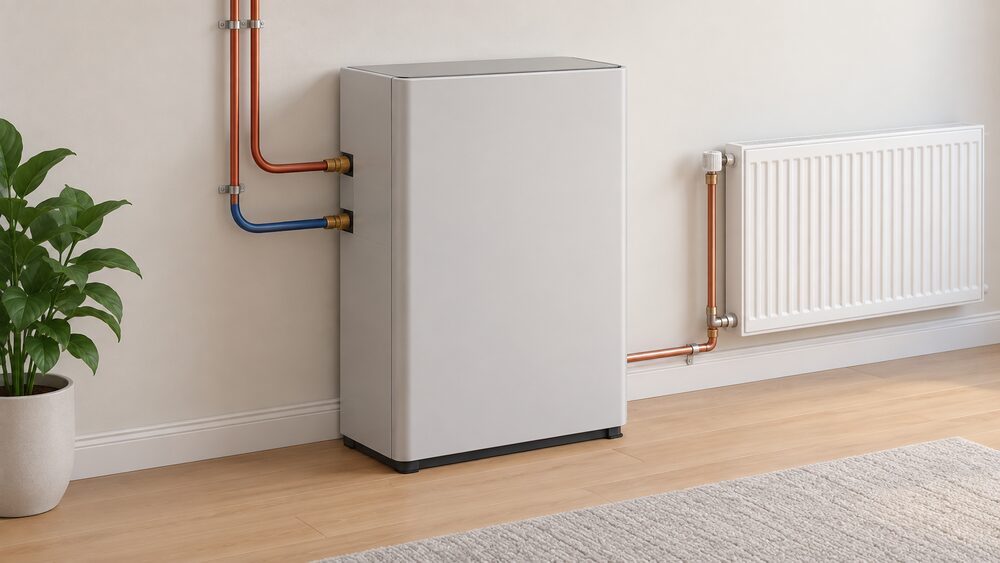 tepeoA tepeo boiler works like a battery for heat, warming up overnight on cheaper electricity and releasing it when you need it.
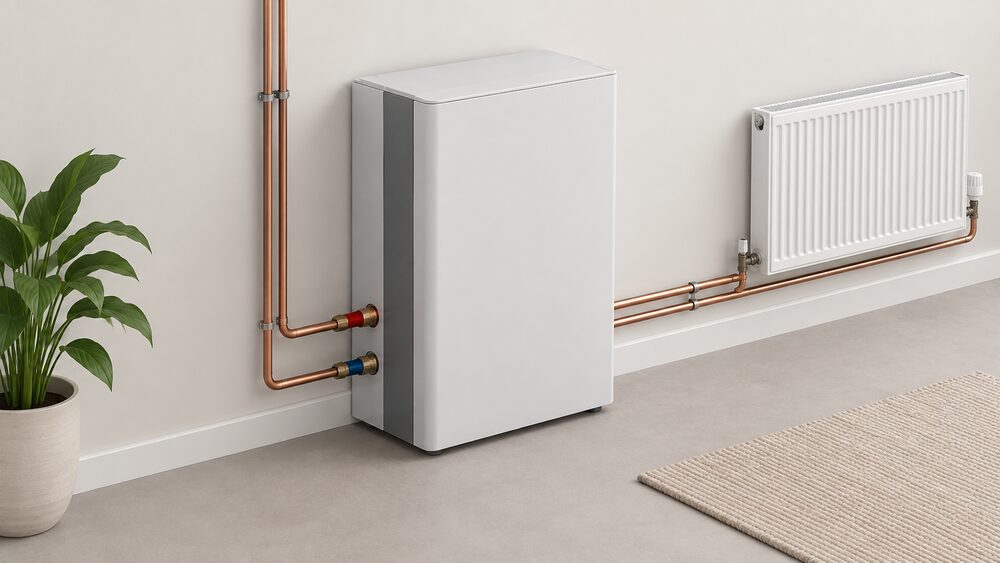 Tepeo heat batteriesA tepeo heat battery stores cheap off-peak electricity as heat and warms your home later, with no gas boiler or outdoor unit.