
In this guide
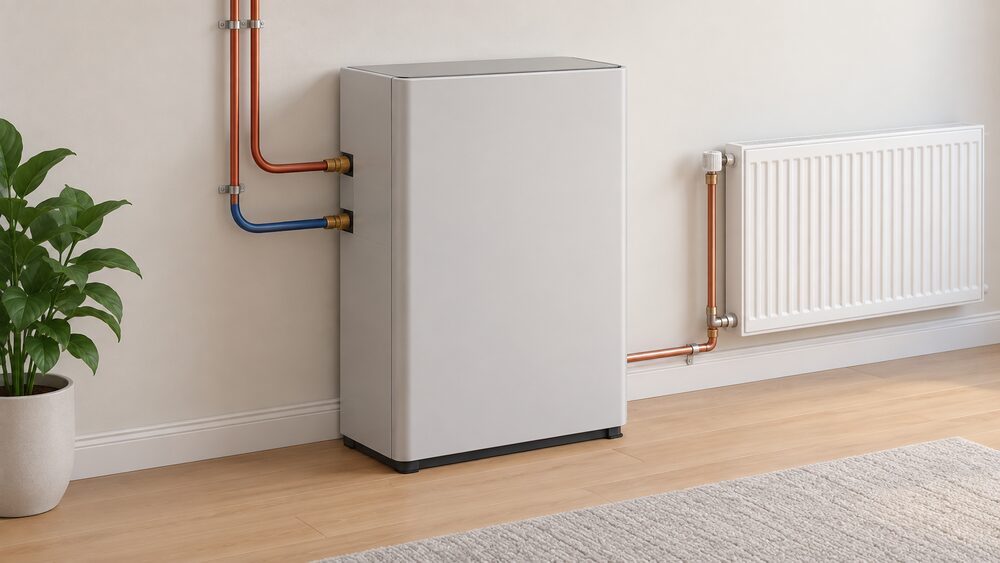
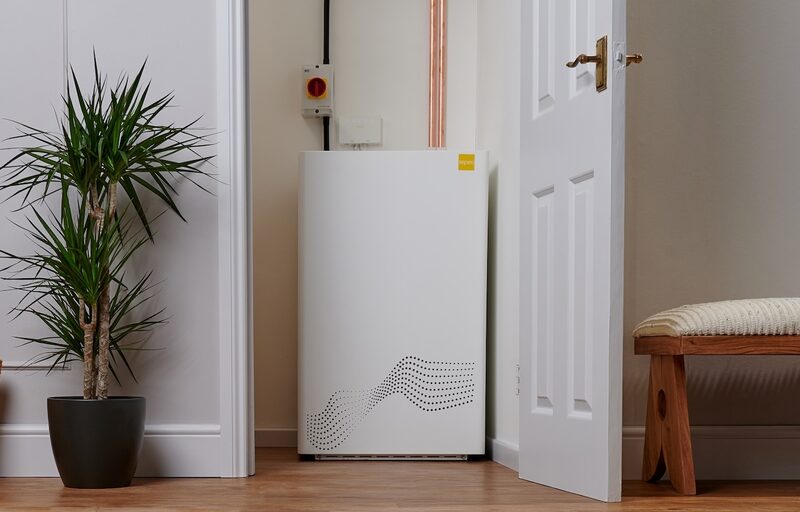
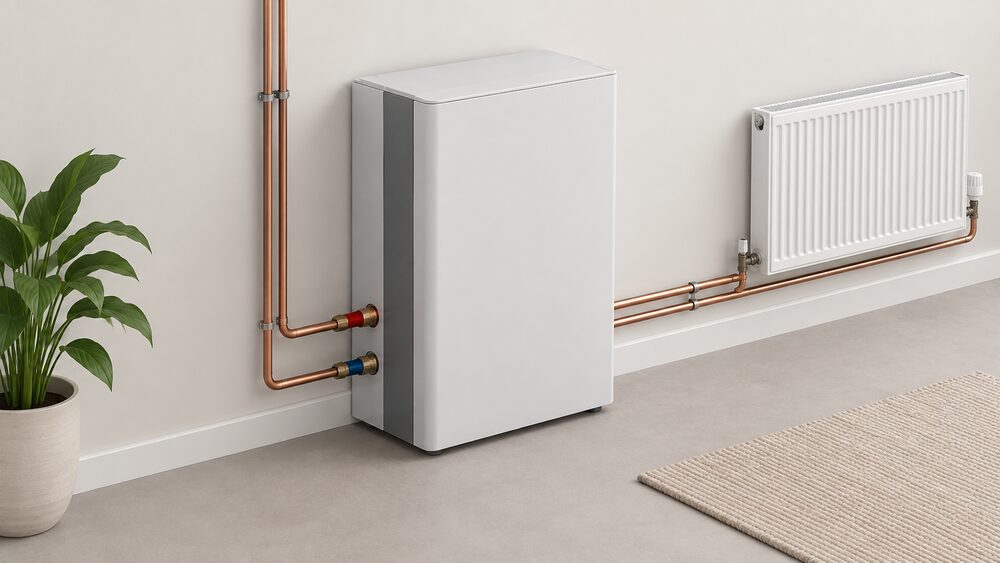
The tepeo Zero Emission Boiler, usually shortened to the ZEB, is a heat battery rather than a boiler in the combustion sense. It uses electricity to heat a high-density ceramic core, stores up to 40kWh of usable heat, and releases it into an existing wet central heating system on demand1. There is no flame, no flue and no gas supply, and the unit sits entirely inside the home with no outdoor component3.
The headline figures are a 40kWh usable store, a 15kW heat output and a 9kW rated electrical input, with a charge time of 4.5 hours1. The retail product price is £6,000, and tepeo is offering eligible customers £2,500 off through its Early Grant Match, which reduces the upfront cost to £3,5003. Installation is priced separately and is quoted per property.
For a household weighing energy independence, the ZEB changes the fuel rather than removing the dependence. It takes the home off gas and off a gas supplier, and moves the running cost question onto electricity tariffs and when power is drawn. It does not remove the grid connection, and it adds a dependence on a smart meter, a time-of-use tariff and an internet connection for its smart functions5.
What the ZEB is: a heat battery that charges on cheap electricity
The ZEB is an entirely internal heat battery engineered to connect directly to the existing flow and return pipework of a wet central heating system10. Electric heating elements charge a core inside the unit, storing energy as heat in a small footprint, and the stored heat is released later when the home calls for it11. tepeo describes it as a heat-only boiler, which is the key limitation to understand before anything else: it provides central heating and not domestic hot water4.
The charging behaviour is the point of the product. The ZEB uses smart charging technology to communicate with an energy provider and automatically draws electricity during the tariff's cheapest overnight window, storing it as heat in the thermal core12. It can charge ahead of time, storing energy as heat and releasing it later, which is what separates it from a direct electric heater that converts power to heat only at the moment it is needed13.
tepeo frames the grid argument around timing. By drawing power at night when overall national demand is lowest and renewable generation such as wind is often highest, the ZEB helps balance the grid rather than adding to the evening peak12. That is a claim about system behaviour rather than a guarantee about any individual tariff, and it depends on the household being on a tariff that prices those hours differently.
The emissions position is straightforward at the appliance. The ZEB produces no emissions at the point of use because it does not burn gas, oil or LPG in the home, and tepeo states that a heat battery boiler is powered by electricity and produces no carbon emissions at the point of use6. The indirect carbon impact depends entirely on how the charging electricity was generated, which is a grid question rather than a product one.
Specifications: 40kWh storage, 15kW output, 9kW input
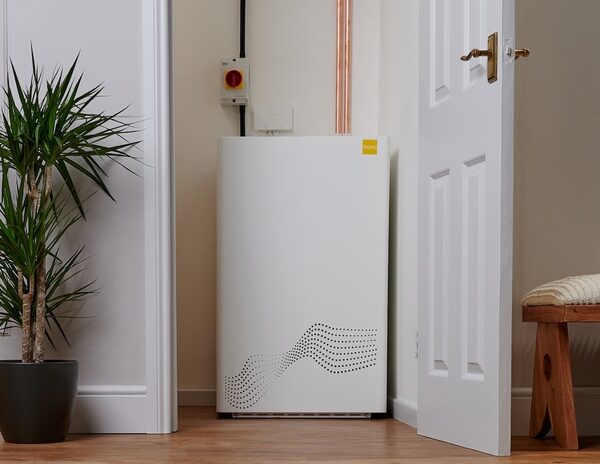
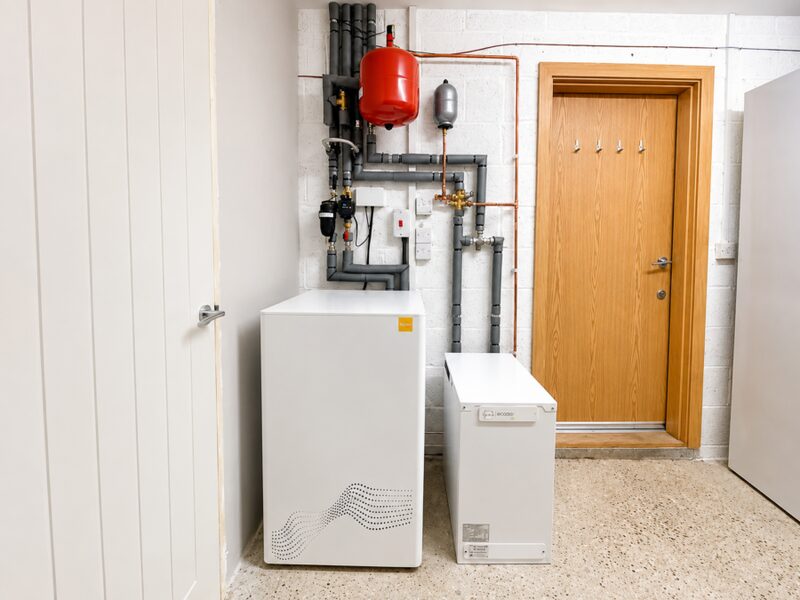
The published specification is compact and consistent across tepeo's pages. Usable storage is 40kWh, the unit holds up to 40kWh of heat in an appliance roughly the size of typical white goods, and the core is a high-density ceramic made from a proprietary mix of high-density, inert, non-toxic and low-impact materials designed not to degrade over time1.
| Specification | Figure |
|---|---|
| Usable storage | 40kWh1 |
| Heat output | 15kW1 |
| Rated electrical input | 9kW4 |
| Charge time | 4.5 hours1 |
| Storage medium | High-density ceramic core2 |
| Core materials | Proprietary mix of high-density, inert, non-toxic, low-impact materials15 |
| Installation time | Often 1 to 2 days8 |
| Guarantee | Up to 10 years, subject to maintenance1 |
The 9kW electrical input is the figure that matters most for a household's electrical setup, because it is a substantial load and tepeo's suitability assessment includes the property's electrical arrangements3. The 15kW heat output is what determines how quickly the stored heat can be delivered to radiators, and the 40kWh store is what determines how long it lasts between charges.
The core is designed not to degrade over time, which is the basis for the long guarantee on the thermal core itself15. That is a maker's design claim rather than an independently tested lifespan figure, and it should be read as such.
Cost: £6,000 product price and a £2,500 Early Grant Match
The tepeo ZEB has a retail product price of £6,0003. Eligible customers can currently receive £2,500 off through tepeo's Early Grant Match, which reduces the ZEB upfront cost to £3,5003. The same £2,500 figure appears across tepeo's pages, described as an early grant match offered until the Boiler Upgrade Scheme opens to heat batteries16.
Installation is priced separately from the product. tepeo gives a worked example: for a typical installation costing around £8,500, the match can reduce the price to approximately £6,000, although the final figure depends on the property17. That is the only combined figure the maker publishes, and it is described as typical rather than fixed.
Finance options may be available for eligible customers3. Beyond that, prices are installer-quoted after a survey, and the assessment covers heat demand, existing radiators and pipework, available indoor space, the electrical setup, domestic hot water requirements and any additional installation work3.
The grant position is worth stating plainly. The ZEB is not currently supported by the Boiler Upgrade Scheme, and tepeo states that heat batteries are expected to be included from winter 2026 with a £2,500 grant once standards and scheme rules are in place15. The Boiler Upgrade Scheme as it stands covers ground source heat pumps, requires the replacement of fossil fuel heating systems such as oil, gas, electric or LPG, and requires installers to be MCS certified and to meet MCS standards18. Until the scheme rules change, the ZEB sits outside it.
Where the ZEB fits: suitability, radiators and the hot water question
The ZEB is designed to work with suitable existing wet central heating, including radiators and underfloor heating, as well as microbore and Thermaskirt3. It installs like a boiler and works with existing wet central heating systems and radiators, which is why tepeo describes upgrading as a seamless way to electrify heating4.
Suitability is assessed rather than assumed. tepeo's Home Check covers the property's heat demand, existing radiators and pipework, available indoor space, the electrical setup, domestic hot water requirements and any additional installation work3. One published eligibility criterion is annual heating and hot water use of around 12,000kWh or less4.
The hot water question is the one that catches combi households. Because the ZEB is a heat-only boiler, a dedicated hot water solution must be added in homes with a combi boiler4. The ZEB replaces only the central heating side of a combi boiler system, so a separate hot water solution is needed1. Homes moving from a combi boiler will usually need to include a hot water solution as part of the overall system13.
Where a cylinder already exists, the picture is simpler. The ZEB can usually connect straight to an existing cylinder, and while tepeo does not manufacture hot water systems, the ZEB is compatible with a variety of solutions that can be paired to it, which might be a traditional cylinder, a smart cylinder or a compact heat-storage solution4. The wider options for stored hot water are set out in hot water cylinders, and the combi alternative is covered in combi boilers.
Installation: what the 1 to 2 day process involves
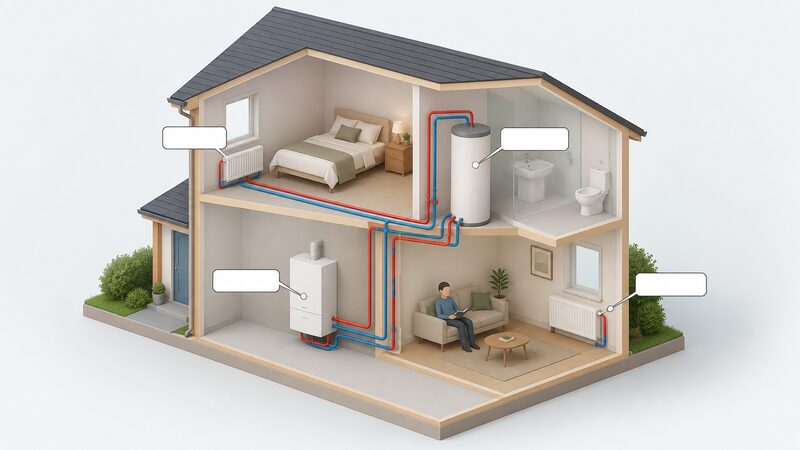
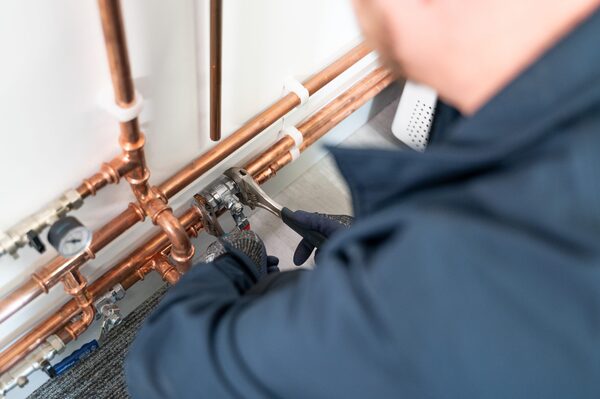
Installation can often be completed in just 1 to 2 days, and tepeo describes the ZEB as designed to be a relatively simple 1 to 2 day install in suitable homes8. The same timescale appears across the maker's pages, with the caveat that every property is different3. The process runs through an online Home Check, a quote from a tepeoPRO installer, and then installation typically taking 1 to 2 days using the existing heating system21.
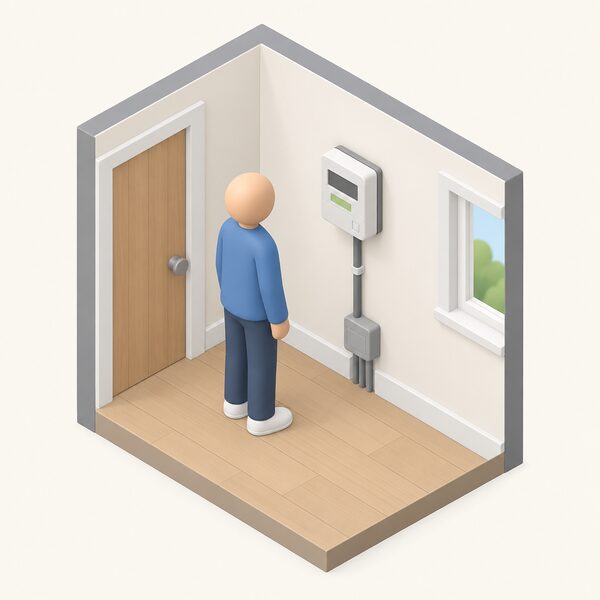
The unit needs a power supply, a connection to the central heating flow and return, and an internet connection9. It is installed inside the home and does not require an outdoor unit, and it needs no outside space3.
Siting has firm limits. The ZEB needs to be installed in a weatherproof, insulated environment, so it should be somewhere inside the home or in a suitable outbuilding, and it needs a clearance of 7.5cm above and 5cm on all sides, reducible in some situations15. It cannot go in a loft, a garage only if converted and heated, and a basement only where access is suitable15.
Smart charging, tariffs and the grid
The ZEB's Smart Charging works out when and how much to charge based on factors including heating needs, local weather and the electricity tariff3. Its state-of-charge algorithm helps estimate how much stored heat is available, while machine learning is used to predict heat need2. The algorithm takes in local weather, how much heat the home uses, the energy tariff and the carbon intensity of electricity15.
The tariff position is the practical constraint. A smart meter is recommended and is required for many modern time-of-use and dynamic tariffs, and access to a smart meter and a time-of-use tariff lets the ZEB make the most of cheaper off-peak electricity5. The ZEB can operate on a standard electricity tariff, but a time-of-use tariff gives Smart Charging the opportunity to move more charging into lower-cost periods6. Independent guidance makes the same point about flexible tariffs generally: a smart meter is needed to access the full benefits of flexible schemes and smart tariffs22.
The ZEB is recognised as a Works with Octopus smart technology partner and is designed to work with Octopus Energy's smart tariffs17. Its smart charging logic automatically targets the cheapest, greenest electricity tariffs and shifts demand away from peak times10. It also works with HIVE5.
On solar, the position is partial. Because the ZEB will use any available power in the home first when it goes into a charge cycle, it can naturally utilise generation from a home storage battery or daytime solar if it matches the charging schedule12. A ZEB can use electricity available within the home when it enters a charging cycle, which means solar generation or electricity stored in a home battery can contribute towards charging it6. But tepeo states that solar optimisation is currently under development, and that the ZEB does not currently offer a dedicated feature that charges it only from excess solar generation15.
Running costs and emissions compared with gas and heat pumps
tepeo states that the ZEB delivers comparable running costs to gas boilers, and that a home stays warm at a cost comparable to a gas boiler10. The maker also states that running costs can be similar to a heat pump with a seasonal coefficient of performance of 3, depending on the tariff and home2. Those are maker claims about its own product, and they turn on the tariff the household is on.
The independent evidence on heat pumps is mixed and worth setting out, because it is the comparison a household will make. Parliament's research service states that heat pumps currently have similar running costs to gas boilers24. The Energy Saving Trust states that heat pumps cost about the same to run as a gas boiler25. Nesta states that for a typical-sized home, a heat pump currently costs about the same to run as a gas boiler, with the unit price of electricity the deciding factor26. OFTEC, the oil heating body, states that heat pumps may be no cheaper to run than a conventional liquid fuel-fired or gas appliance27.
Other sources are less favourable. The Energy Saving Trust states that most heat pumps on a standard flat-rate tariff cost the same or even more to run than an efficient gas boiler28. Citizens Advice states that it is typically more expensive to run a heat pump than a gas boiler due to the relative price difference between electricity and gas29. Government guidance from 2023 stated that running costs for heat pumps are typically lower than traditional gas boilers, while noting that a poorly performing system changes the picture30.
On emissions, the Low Carbon Hub states that heat pump emissions can be cut by 60 to 70% compared with a gas boiler31. The ZEB's own position is that it produces no emissions at the point of use, with the indirect carbon impact depending on the charging electricity14. The comparison that matters for a household is the carbon intensity of the grid at the hours the ZEB charges, which is why the overnight charging window is central to the design.
The cost of the alternatives is also relevant. One independent figure puts heat pumps around £10,000 more expensive than a natural gas boiler32. The ZEB's £6,000 product price, or £3,500 after the Early Grant Match for eligible customers, sits below that, though installation is additional3.
Warranty, servicing and day to day ownership
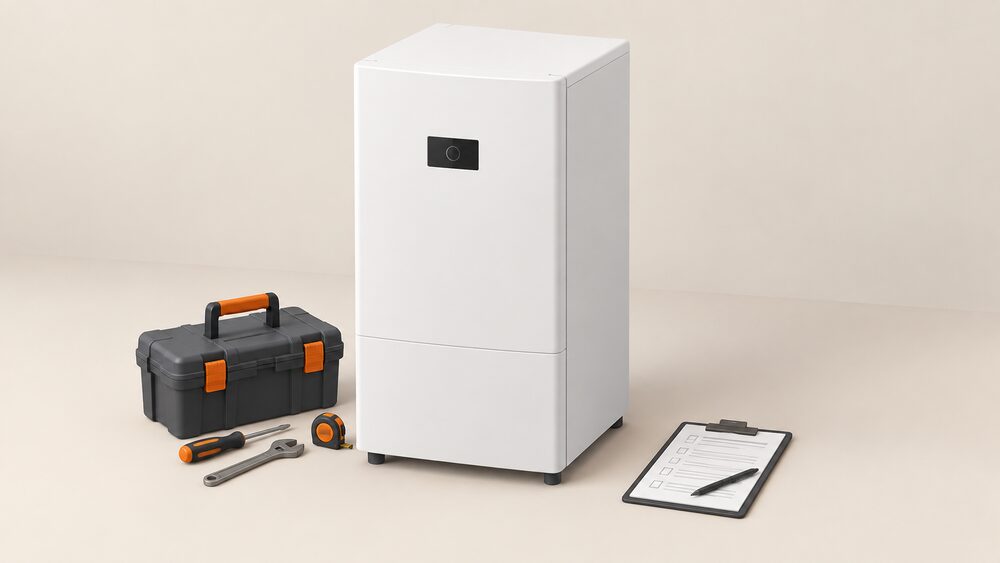
Every ZEB comes with up to a 10-year guarantee, provided it is maintained in line with tepeo's requirements7. The guarantee begins on the date the ZEB is installed, provided it was installed within six months of being dispatched by tepeo7. Regular servicing and maintenance requirements may apply to maintain the guarantee8.
The cover is tiered rather than uniform. The ZEB core, including the thermal core, insulation panelling, frame, chassis, electronics, cabling and user interface, carries 10 years. Heating elements carry 3 years, the fan motor and heat exchanger carry 5 years, and there is a minimum product and component cover of 2 years provided the guarantee conditions are met7.
"Every ZEB comes with up to a 10-year guarantee, provided it is maintained in line with our requirements."
Servicing is annual. The ZEB should have an annual Health Check covering water quality, filters, wear and tear, leaks, electrical safety and system performance, including any needed parts, with a yearly reminder provided15. One customer account describes maintenance as once a year, just like with an old gas or oil boiler11. The tepeo Care Plan includes everything in the Health Check plus routine ZEB maintenance, remote monitoring through tepeo's cloud platform, alerts if a fault or unusual behaviour is spotted, support to get issues sorted quickly, and discounts on repairs for other heating parts7.
Day to day, the ZEB runs on its own schedule. Away Mode uses minimal electricity to keep the unit in good condition and ignores any heating requests, so adjusting the thermostat is not essential while the property is empty15. tepeo advises against switching the ZEB off at the mains, because doing so prevents it from carrying out essential self-maintenance and could cause issues later on15.
Power cuts, independence and what remains dependent
The ZEB needs a power supply, a connection to the central heating flow and return, and an internet connection9. During a power cut it cannot circulate stored heat, even though the heat itself remains in the core. Power cuts are commonly caused by cables and equipment becoming damaged33. Where emergency rota disconnections apply, different block letters are timetabled to be without power for typically around three hours once or twice a day, and in Northern Ireland around three hours once a day, or once or twice a day depending on severity34. In the North West, a planned emergency power cut would affect at least 100,000 properties at once, spread across the region with around 10,000 properties in a particular area affected at the same time34.
The independence picture is therefore specific. The ZEB removes gas from the home, which ends the dependence on a gas supplier and on the gas grid for heating. It keeps the home on the electricity grid and on an electricity supplier, and it adds a dependence on a smart meter and a time-of-use tariff to deliver the running cost case5. The smart functions depend on a home broadband connection and on tepeo's cloud platform, which is also the route for remote monitoring under the Care Plan7.
The hot water position is the other dependence. A combi household moving to a ZEB must add a hot water solution, which is a separate appliance or cylinder with its own cost, space and maintenance1. Where a cylinder already exists, the ZEB can usually connect straight to it4.
For households off the gas grid, the comparison set is different again, and the alternatives are covered in heating a home off the gas grid. The wider question of what a heating system can and cannot deliver in terms of self-sufficiency is set out in home heating and energy independence, and the ZEB sits alongside other stored-heat approaches in heat batteries and zero emission boilers.
Sources35 cited
- tepeo ZEB product page, tepeo, 2026-09-03
- What is a heat battery boiler, tepeo, 2026-09-17
- Can a heat battery boiler replace a combi boiler, tepeo, 2026-09-17
- Hot water solutions, tepeo, 2026-08-28
- ZEB heat battery grant eligibility, tepeo, 2026-07-16
- Heat battery vs heat pump, tepeo, 2026-07-23
- tepeo Care Plan, tepeo, 2026-09-02
- Boiler replacement, tepeo, 2026-09-03
- Energy tariffs, tepeo, 2026-09-02
- Heat battery and electric car on an off-peak tariff, tepeo, 2026
- A ZEB install by tepeoPRO installer Brimstone Energy, tepeo, 2026-07-23
- Smart meters and getting the most from your ZEB, tepeo, 2026-07-16
- Switching to electric heating checklist, tepeo, 2026-09-07
- tepeo FAQs, tepeo, 2026-09-17
- Prepare your ZEB for spring and warmer weather, tepeo, 2026-09-17
- This summer feels different, tepeo, 2026-07-16
- tepeo home page, tepeo, 2026-09-17
- Boiler Upgrade Scheme, Ofgem, 2026-09-17
- Check if you are eligible for the Boiler Upgrade Scheme, GOV.UK, 2026-09-17
- Boiler Upgrade Scheme installers, Ofgem, 2026-09-17
- Electric heat battery boiler, tepeo, 2026-05-22
- How smart meters work with heat pumps, Smart Energy GB, 2026-04-24
- Social housing, tepeo, 2026-09-17
- Heat pumps for domestic heating, UK Parliament POST, 2026-09-19
- Our response to today's Budget announcement, Energy Saving Trust, 2025-12-09
- Domestic heating technology options, Nesta, 2025-02-03
- Off gas grid heating options, OFTEC, 2026-09-17
- Renewable technologies: what really cuts energy bills, Energy Saving Trust, 2026-08-12
- Balancing act: transferring policy levies from electricity to gas bills, Citizens Advice, 2023-10-05
- What impact can heat pumps have in domestic heating today, GOV.UK, 2023-11-21
- The real cost of a heat pump, Low Carbon Hub, 2025-10-30
- Savanta Cadent consumer choice, Cadent Gas, 2026
- Power cut reporting, Powercut105, 2026-09-17
- Emergency power cuts, Electricity North West, 2026-09-19
- Emergency power cuts, NIE Networks, 2026-09-19
 tepeoWho makes the ZEB heat battery boiler, and are they a company you can trust?
 Tepeo heat batteriesA tepeo heat battery stores cheap off-peak electricity as heat and warms your home later, with no gas boiler or outdoor unit.