In this guide
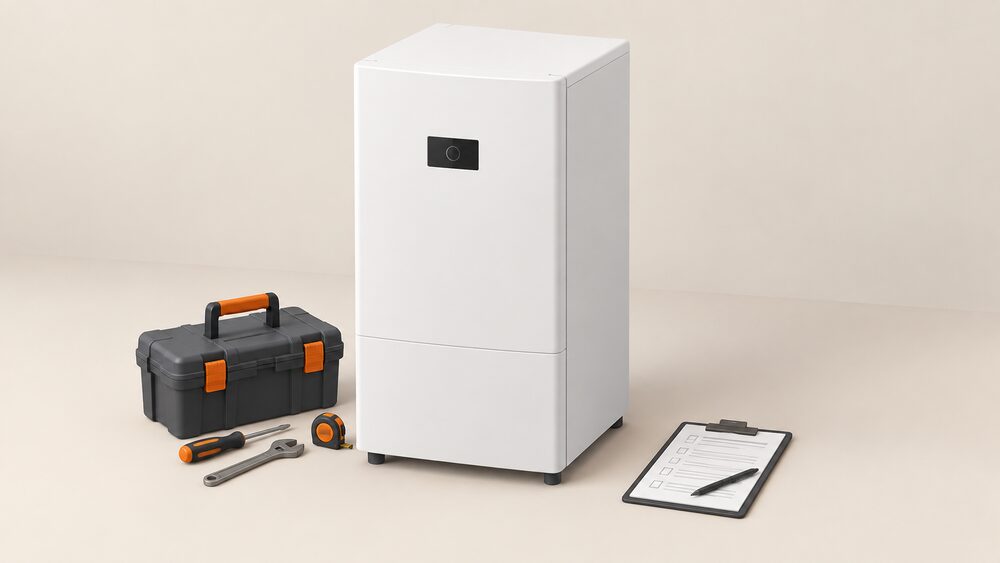
A tepeo heat battery is an indoor electric boiler that stores energy as heat rather than burning a fuel on demand. The company's product, the Zero Emission Boiler or ZEB, uses electricity to heat a high-density ceramic core, holds that heat, and releases it through an existing wet central heating system when the home calls for warmth1. It fits inside the home with no outdoor unit, and it produces no carbon emissions at the point of use because it does not burn gas, oil or LPG in the house1.
The commercial case turns on timing rather than on a fuel switch alone. The ZEB charges during cheaper off-peak windows and releases the stored heat later, so a suitable time-of-use tariff can make a significant difference to running costs4. tepeo describes a £3,500 upfront cost after its £2,500 Early Grant Match for eligible customers, with installation not included in that figure2. The Boiler Upgrade Scheme does not yet cover heat batteries, though a £2,500 grant is planned once legislation and product standards are in place3.
What the ZEB does for independence is real but partial. It removes gas from the home and the standing charge that goes with a gas connection, and it shifts consumption towards off-peak electricity. It does not remove the grid, the electricity supplier, or the need for a separate hot water cylinder or thermal store6.
What a tepeo heat battery is and how it works
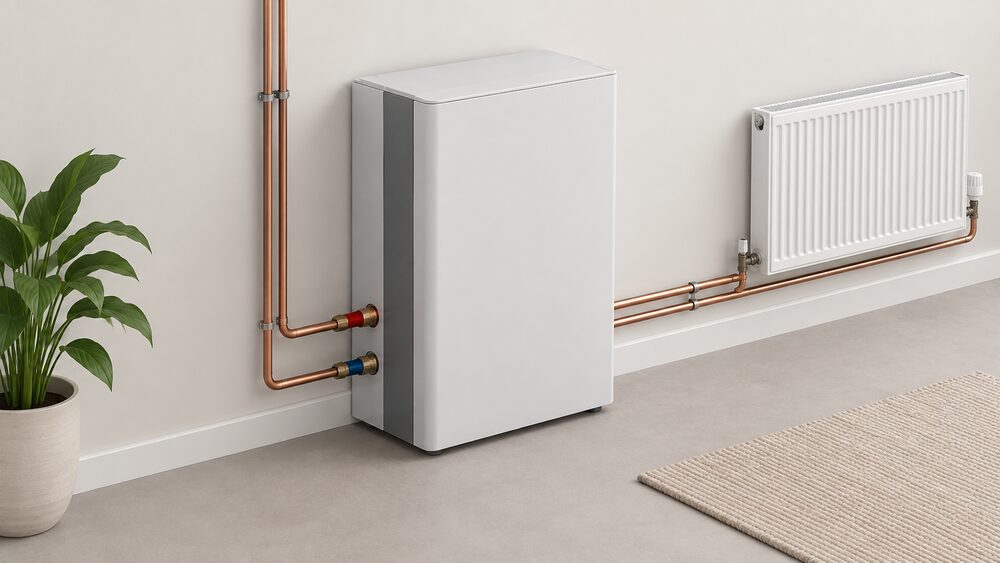
The ZEB is an entirely internal heat battery engineered to connect directly to the existing flow and return pipework of a wet central heating system8. Electric heating elements charge a core inside the unit, storing a lot of energy in a small footprint, and the stored heat is released through radiators or underfloor heating when the home needs warmth9. Because it connects to existing pipework, a household that already has radiators and a pump does not need a new distribution system, only the heat source changed9.
The operating pattern is the point of the design. The unit charges during cheaper off-peak windows, then uses that stored heat later to warm the home10. In practice this means the boiler runs hardest when electricity is cheapest or greenest, rather than when the house is coldest, and the core carries the heat across to the evening4. tepeo's own guidance notes that a suitable time-of-use tariff can make a significant difference to running costs because more charging can take place during lower-cost periods4.
There is a limit to how far that logic stretches. The ZEB produces no emissions at the point of use because it does not burn gas, oil or LPG in the home, but its indirect carbon impact depends on the electricity used to charge it3. A household on a standard variable tariff, charging at whatever time the thermostat calls, gets the fuel switch without the timing benefit. The independence gain is therefore conditional on the tariff and the charging pattern, not on the appliance alone.
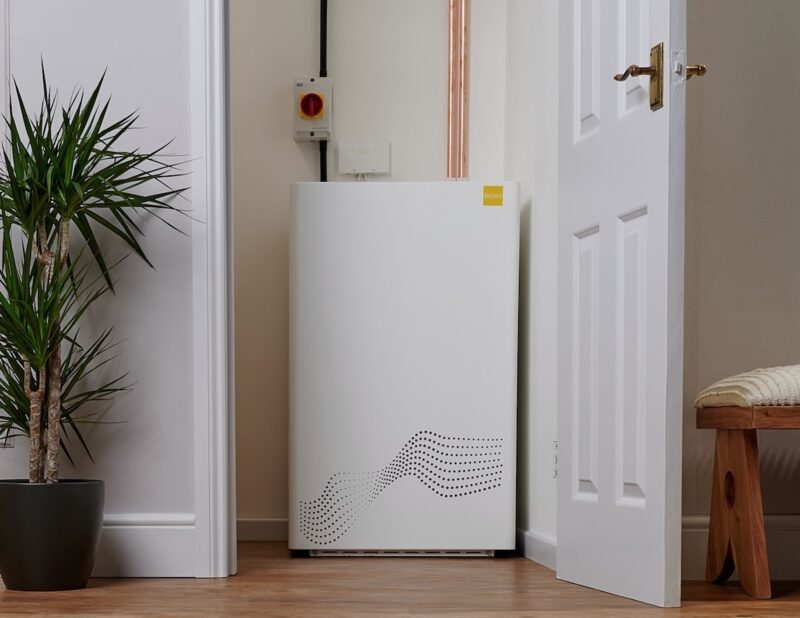
The ZEB: tepeo's Zero Emission Boiler
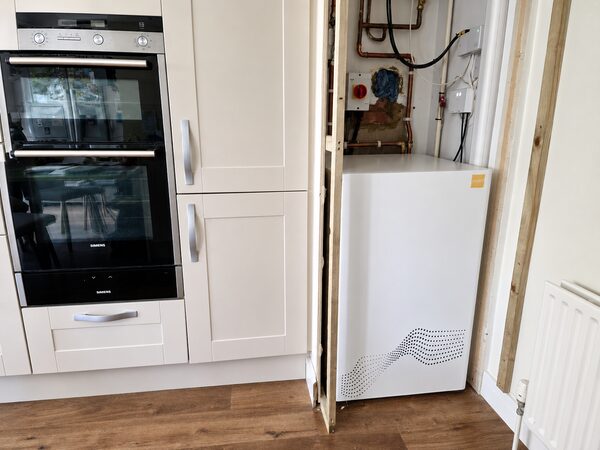
The ZEB is a heat-only boiler, so a separate solution is needed for domestic hot water6. tepeo states that it does not manufacture hot water systems, but that the ZEB is compatible with a variety of options that can be paired to it, including a traditional cylinder, a smart cylinder or a compact heat-storage solution6. One published case study pairs the ZEB with a Sunamp Thermino to provide compact, low-carbon heating and hot water in an apartment7.
That distinction matters when comparing the ZEB with a gas combi, which does both jobs in one box. A household replacing a combi with a ZEB needs somewhere to put a cylinder or thermal store, and the product page lists a hot water tank, small thermal store or space for one among the requirements1. Where that space does not exist, the installation is not straightforward.
| Feature | ZEB position |
|---|---|
| Fuel | Electricity, no combustion in the home1 |
| Storage medium | High-density ceramic core2 |
| Location | Indoors, no outdoor unit1 |
| Connection | Existing wet central heating pipework9 |
| Hot water | Separate cylinder, smart cylinder or compact store6 |
| Point-of-use emissions | None; indirect carbon depends on charging electricity3 |
The wider category is covered in heat batteries used with heat pumps, which explains how thermal storage works alongside a different heat source.
Who the ZEB suits: the home check comes first
tepeo is explicit that suitability is decided before price. The ZEB is designed for suitable homes with wet central heating, and typically works best where whole-home heat loss is 5kW or less1. The company's support material puts the same ceiling in context: it is typically best suited to flats, bungalows, semi-detached and detached homes with annual energy usage up to 14,000kWh and heat loss under 5kW3. A household also needs space for the unit indoors, a smart meter and a time-of-use tariff7.
Independent guidance reaches a similar conclusion from a different direction. Heat batteries are described as most suitable for smaller homes that do not have space for an outdoor heat pump unit12. That is a narrower recommendation than a general endorsement of the technology, and it points to the same constraint: the ZEB competes where an outdoor unit is difficult or impossible, not where a heat pump would fit easily.
The comparison with a heat pump is set out by tepeo itself, and the wider question of which homes suit which technology is covered in which homes suit a heat pump. For a household in a flat or a mid-terrace with limited external space, the absence of an outdoor unit is the decisive practical advantage. For a larger, leakier house, the 5kW heat loss ceiling is likely to rule the ZEB out before cost is discussed.
Cost, the £2,500 grant match and finance options

There is no published instalment plan in tepeo's material. What is published is a headline price and a discount. tepeo describes a £3,500 upfront cost after the £2,500 Early Grant Match for eligible customers2, and its product page states that a household can get £2,500 off a ZEB1. The company frames the match as a temporary measure: until the Boiler Upgrade Scheme covers heat batteries, tepeo is offering a £2,500 early grant match for eligible customers, with terms applying3.
Installation is not included in that price, because installation costs vary depending on the home, the heating system setup and other factors3. That means the £3,500 figure is a starting point for the appliance and the discount, not a supplied-and-fitted total. Any comparison with a heat pump should account for the same distinction, since the Boiler Upgrade Scheme grant for an air-to-water heat pump is £7,500 from 28 April 202613, a larger sum than the £2,500 planned for heat batteries.
| Item | Figure | Status |
|---|---|---|
| ZEB upfront cost after Early Grant Match | £3,500 | Eligible customers2 |
| tepeo Early Grant Match | £2,500 | Until BUS covers heat batteries, terms apply3 |
| Planned BUS grant for heat batteries | £2,500 | Once legislation and standards are in place5 |
| BUS grant, air-to-water heat pump | £7,500 | From 28 April 202613 |
| Installation | Not included | Varies by home and system3 |
Independent guidance confirms the direction of travel on the scheme. The Energy Saving Trust states that an eligible household can get £2,500 off the cost of installing a heat battery to work with a central heating system14, and the Association for Decentralised Energy refers to a £2,500 grant for heat batteries15. Government guidance states that a £2,500 grant for heat batteries will be available once the legislation and appropriate product standards are in place5. The documents agree on the amount and differ only on timing.
The company: tepeo's background, B Corp status and funding
tepeo was founded in 2018 by engineer Johan du Plessis, who is also its Chief Executive Officer, and the company describes its purpose as giving UK households more choice when moving away from fossil fuel heating7. It is a certified B Corporation and states that it is recognised as an Ethical Consumer Best Buy7. Both are the company's own statements about its own status.
The company has raised £10.5 million in Series A funding to fuel the next stage of growth17. The stated uses are the development of its Wokingham head office, growing production, research and development, assembly and commercial teams, and expanding sales across the UK17. In the same announcement tepeo reports having tripled the size of the business in the previous twelve months and having launched its first ZEB in that period17.
That funding position matters to a buyer weighing a relatively young manufacturer against an established boiler brand. A company that has raised institutional money and is scaling production is not in administration, and no failure is reported in the material here. The dependence it creates is different: parts, support and any future warranty claim run through tepeo, and the household's relationship is with a single manufacturer rather than a broad installer market.
tepeo has also set out policy positions, including a call to reform green levies and to embrace domestic energy flexibility by supporting all technologies that can contribute to a greener future18. It argues that heat batteries need to be treated equally under VAT and subsidies, like heat pumps18. Those are the company's recommendations, not settled policy.
Colour choice and what owning a ZEB is like
Ownership experience in the published case studies centres on the installation and the charging routine rather than on the appliance's appearance. One household reported choosing the ZEB over an air source heat pump on efficiency and running costs, and on how it could work with existing pipework9. Another had a heat battery boiler installed in May 2023, replacing a gas boiler installed in 2017, and can charge it when electricity is cheaper, storing that energy as heat ready to be used later in the day19.
The ZEB works with Octopus Energy, according to tepeo's social housing page8. That is a supplier compatibility statement rather than a tariff recommendation, and it sits alongside the general point that a suitable time-of-use tariff is what makes the charging pattern pay4. A household without such a tariff can still run a ZEB, but the off-peak benefit that the design is built around would not be captured.
Support, contact and UK availability
tepeo can be contacted by telephone on 020 7072 5462, the number published in its guidance for households considering a move away from gas, oil or LPG20. The ZEB is designed, developed and manufactured at the company's base in Wokingham, Berkshire, which tepeo describes as bringing together British engineering7. The technology is described as UK developed and manufactured, fitting around how homes already work16.
Availability is national in principle but gated by the home check. The company runs installer partnerships, and one published case study covers a ZEB installation by its tepeoPro installer Brimstone Energy9. The ZEB has also been installed in social housing contexts, and the company maintains a dedicated social housing page8. For a household, the practical route is a suitability assessment followed by an installer quote, since installation is priced separately from the appliance3.
The NeatHeat trial, run with UK Power Networks, sought to understand how the ZEB interacts with the electricity network, its charging pattern, and optimisation mechanisms providing flexibility to the local electricity network11. A related trial installed the ZEB in 30 homes across the South East and East of England21. These are network and flexibility trials rather than consumer offers, but they indicate where the technology sits in the wider system.
How heat batteries fit UK energy independence
A heat battery changes what a household depends on rather than removing dependence. It takes gas out of the home and off the standing charge, and it moves consumption towards off-peak electricity, which is the flexibility the grid needs. Independent guidance notes that heat batteries can help balance the electricity grid15, and the NeatHeat trial was designed around exactly that interaction11. For a household, the gain is a home that no longer needs a gas connection or a flue.
What remains is substantial. The ZEB runs on electricity from the grid and a supplier, so the household is still exposed to electricity prices, standing charges and the carbon intensity of the generation mix at the time it charges3. Remote scheduling and monitoring depend on a smart meter and a time-of-use tariff7. Hot water depends on a separate cylinder or thermal store, which is another component to buy, site and maintain6. And the appliance itself depends on one manufacturer for parts and support.
Independent analysis has argued that government should give credit for electric-powered heat batteries, solar thermal and other non-heat-pump systems that provide low-carbon heat22, which is a recognition that the technology delivers system benefits that current subsidy rules do not fully capture. The wider picture of how heating choices affect a household's exposure to fuel markets is set out in heat pumps and household energy independence, and the funding landscape across the four nations is covered in heat pump grants and funding across the UK.
"If you're eligible, you can get £2,500 off the cost of installing a heat battery to work with your central heating system"
Sources22 cited
- ZEB heat battery boiler, tepeo, 2026-09-03
- Can a heat battery boiler replace a combi boiler, tepeo, 2026-09-17
- FAQs, tepeo, 2026-09-17
- Switching to electric heating checklist, tepeo, 2026-09-07
- Carbon Budget and Growth Delivery Plan: heat and buildings factsheet, GOV.UK, 2026-06-23
- Hot water solutions, tepeo, 2026-08-28
- tepeo, tepeo, 2026-09-17
- Social housing, tepeo, 2026-09-17
- A ZEB install by our tepeoPro installer Brimstone Energy, tepeo, 2026-07-23
- Replacing an old boiler: check the cost and carbon first, tepeo, 2026-07-23
- New trial opens the door to low-carbon heating, UK Power Networks, 2026-09-17
- No home left behind: how to support lower-income homes in the heat transition, Association for Decentralised Energy, 2026-09-20
- Boiler Upgrade Scheme guidance for installers V5, Ofgem, 2026-04-28
- Storing energy, Energy Saving Trust, 2026-07-15
- Electric heating, Centre for Sustainable Energy, 2026-06
- Freddie van Mierlo MP visits Tetsworth home to see heat battery boiler in action, tepeo, 2026-09-17
- tepeo secures over £10 million investment, tepeo, 2026-09-17
- A new vision for fuel poverty and the electrification of heat, tepeo, 2026-07-16
- Transitioning to a low-carbon home with the ZEB, tepeo, 2026-07-23
- Heat battery vs heat pump, tepeo, 2026-07-23
- Batteries could revolutionise UK home heating and drive rapid decarbonisation, UK Power Networks, 2024-09-04
- Assessing the government plans to obligate boiler manufacturers to support heat pumps, Nesta, 2022-04-20
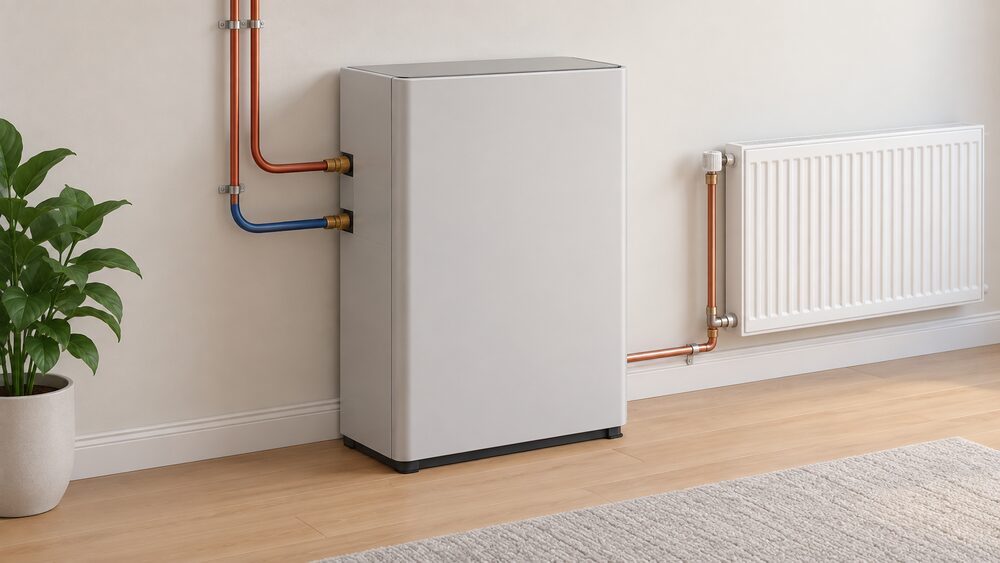 tepeoA tepeo boiler works like a battery for heat, warming up overnight on cheaper electricity and releasing it when you need it.
 tepeoWho makes the ZEB heat battery boiler, and are they a company you can trust?