
In this comparison
A tepeo ZEB and a night storage heater both run on electricity and both store heat for later, but they are not the same kind of product. A storage heater is a standalone appliance that heats the room it stands in, charged overnight on an Economy 7 or Economy 10 tariff. The ZEB is a heat battery boiler: it heats a high-density ceramic core and releases that heat into a wet central heating system, so it drives radiators or underfloor heating and replaces the central heating side of a conventional boiler1.
For a household already on storage heaters, that difference is the whole point. Storage heating means no wet system, no radiators in the usual sense, and heat that has to be planned a day ahead. A ZEB keeps the wet system and the radiators, charges when electricity is cheaper, and gives off no emissions at the point of use1. It is not a like-for-like swap, and it is not cheap: tepeo has offered £2,500 off its heat battery boilers while the government finalises plans to include heat batteries in a grant scheme, and installation is not included in that price2.
The comparison below sets out what each technology is, what it costs to buy and run, what grants and VAT treatment apply, and what either choice means for a household's energy independence.
What a tepeo ZEB is and what it replaces
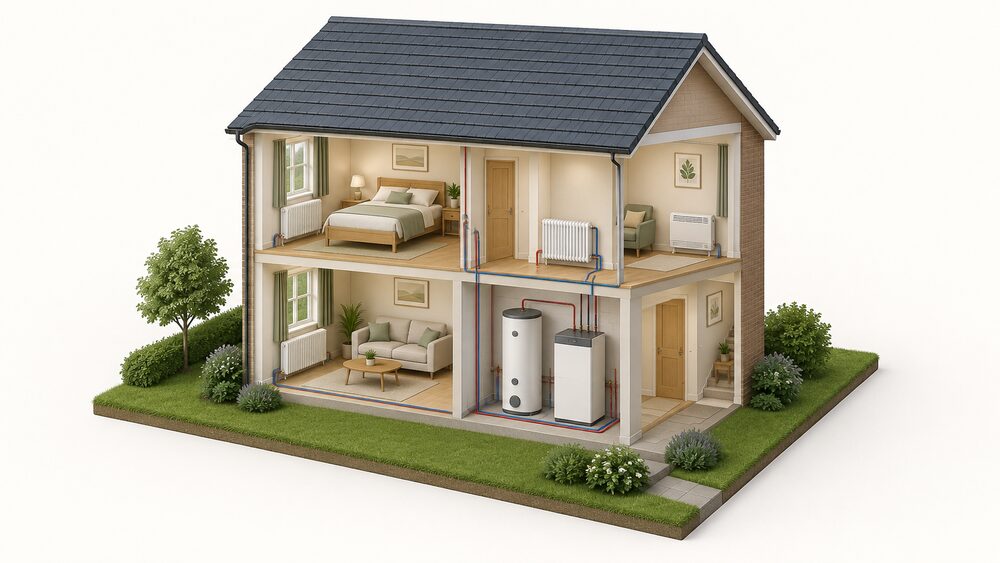
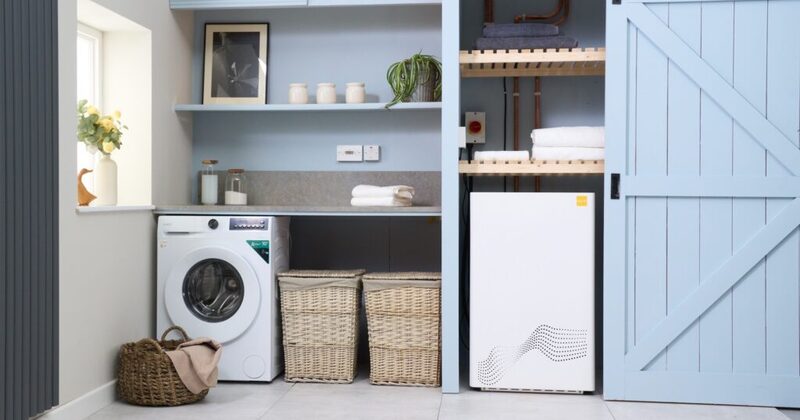
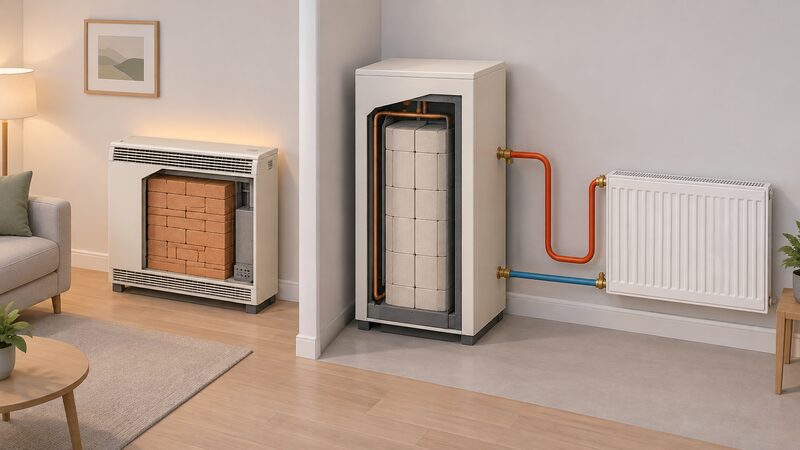
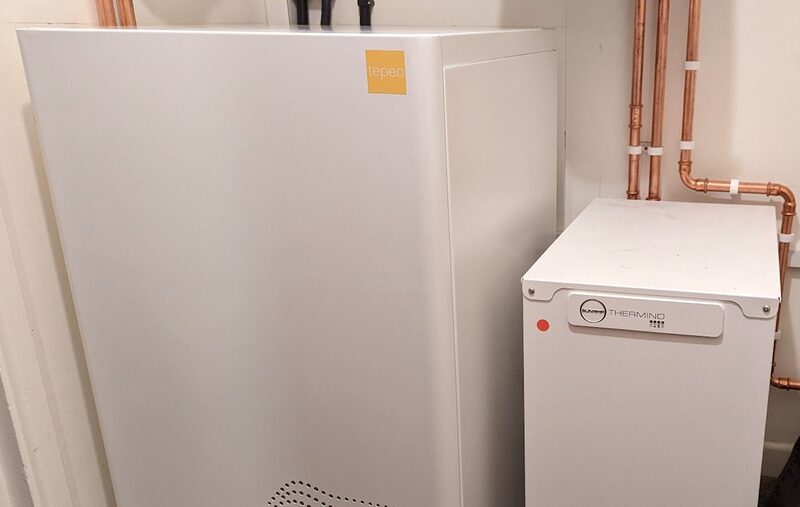
The ZEB is a heat battery boiler. It uses electricity to heat a high-density ceramic core inside the unit, stores that energy efficiently, and releases it into a wet central heating system through radiators or underfloor heating2. It is designed to replace the central heating side of a conventional boiler system while working with the radiators and existing pipework installed in many UK homes2. It does not burn fossil fuels in the home, and it fits indoors with no outdoor unit10.
The unit carries high-performance insulation to reduce local heat losses and learning algorithms that adapt to household heat demand1. Charging is managed by built-in smart controls that work out when and how much to charge based on heating needs, local weather and the electricity tariff1. In one documented installation, the household found that on milder days an hour of charging was sometimes enough for immediate heating needs11.
It is a heat-only boiler, not a combi. It works with a wet central heating system and a hot-water cylinder rather than producing instantaneous hot water1. Where a home currently has a combi, the installer will recommend a suitable hot water solution, which might be a traditional cylinder, a smart cylinder or a compact heat-storage unit12. For best overall system performance, tepeo often advises customers to use immersion heaters with a timer for hot water heating, particularly in summer4.
The ZEB is designed, developed and manufactured at tepeo's base in Wokingham, Berkshire13. That UK manufacturing base matters for spares and support, and it is covered in more detail on the tepeo company page.
What a storage heater is and how it works
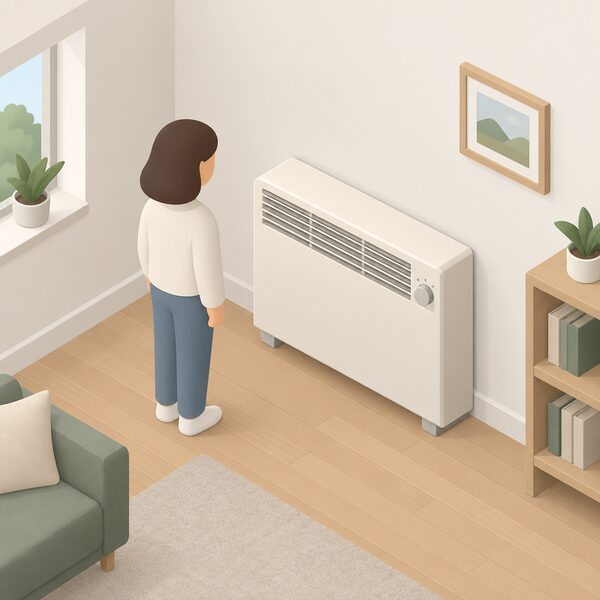
A storage heater is the most common form of electric heating in UK homes. It generates and stores heat when electricity is cheaper and releases it during the day14. The mechanism is straightforward: cheaper off-peak night-time electricity creates and stores heat for use the next day, which is why they are sometimes called Economy 7 heaters15. They are often used with special energy tariffs that offer lower rates during off-peak times, helping to lower heating costs16.
The critical limitation is timing. Storage heaters do not produce heat instantly like a regular electric heater. Instead, they rely on the heat stored overnight, so planning ahead is essential17. A household that comes home to a cold evening, or that has an unexpectedly cold day, has no instant response available. The heat that was charged the night before is the heat that is available.
Storage heaters use Economy 7 or Economy 10 tariffs for cheaper energy at night18. Economy 7 gives a cheaper rate for seven hours overnight, and Economy 10 gives ten hours, sometimes split between night and afternoon15. The tariff is not optional in practice: without an off-peak rate, the economics of storage heating deteriorate sharply, because every unit of heat is bought at the full daytime price.
Modern high heat retention storage heaters are a different proposition from the older models, with better insulation and controls, and they cost more. Basic models cost less than £400, but more advanced ones can cost upwards of £7005. Modern storage heaters can cost from around £400 each19. Installation of high heat retention units runs at £400 to £800 per heater7.
"Storage heaters don't produce heat instantly like a regular electric heater. Instead, they rely on the heat stored overnight, so planning ahead is essential."
ZEB vs storage heater: the core differences
The two products share a principle, storing electricity as heat when it is cheap, and diverge on almost everything else. A storage heater heats one room from a standalone box. A ZEB heats the whole home through a wet central heating system, using a high-density storage core that makes the most of off-peak tariffs to charge up overnight20. The ZEB is powered by electricity and works like a battery to store energy as heat until it is needed21.
| tepeo ZEB | Night storage heater | |
|---|---|---|
| What it heats | Wet central heating: radiators or underfloor heating1 | The room it stands in14 |
| Storage medium | High-density ceramic core1 | Heat stored overnight for daytime release15 |
| Hot water | Needs a separate cylinder or heat-storage unit1 | None |
| Outdoor unit | None; installed indoors1 | None |
| Charging control | Smart charging on weather, heat use, tariff and carbon intensity4 | Manual or basic controls; charged overnight17 |
| Tariff | Smart, flexible time-of-use tariffs10 | Economy 7 or Economy 1018 |
| Typical purchase price | £2,500 off heat battery boilers during the current offer; installation extra2 | Less than £400 basic, upwards of £700 advanced5 |
| Running cost | Around £1,770 a year, average home, off-peak tariff7 | £3,000 to £3,800 a year, three-bed semi, most expensive fuel type6 |
The running cost gap is the headline. Official statistics put electric storage heaters at £3,000 to £3,800 a year for a three-bed semi-detached house, making them the most expensive fuel type in the comparison6. Independent guidance puts a heat battery at around £1,770 a year for an average home on Economy 7 or an off-peak tariff7. Those figures are not a like-for-like model of the same house, and the storage heater figure covers Great Britain regions, so the gap should be read as indicative rather than as a guaranteed saving. Independent guidance also records no reliable data on annual savings from heat batteries22.
Running costs and tariffs: charging when electricity is cheap
Both technologies depend on buying electricity when it is cheap, and the difference lies in how well each can exploit the cheap windows. A ZEB charges when electricity is cheaper and cleaner, using built-in smart controls, and its smart charging works out when and how much to charge based on heating needs, local weather and the electricity tariff1. The algorithm also takes account of the carbon intensity of electricity4. It is designed to work with smart, flexible electricity tariffs offering cheaper off-peak electricity, and it optimises automatically for smart tariffs10.
Storage heaters are tied to a fixed overnight window. They use Economy 7 or Economy 10 tariffs for cheaper energy at night18. That is a blunt instrument: the household charges during the window whether or not the following day is cold, and cannot shift charging to a cheaper or greener half hour within it.
The practical consequence is that a ZEB can respond to price signals that a storage heater cannot. A suitable time-of-use tariff can make a significant difference to running costs, because more charging can take place during lower-cost periods12. In one household on an Octopus Energy tariff, the ZEB charged during suitable lower-cost off-peak periods, and on milder days an hour of charging was sometimes enough for immediate heating needs11. The ZEB works with Octopus Energy13.
There is a network dimension too. NeatHeat, a trial, set out to understand how the ZEB interacts with the electricity network, its charging pattern, and optimisation mechanisms providing flexibility to the local electricity network20. That is the direction of travel for domestic heating: appliances that can be shifted in time rather than drawing power whenever a thermostat calls.
Space, installation and compatibility with existing radiators
For a household on storage heaters, the compatibility question is really two questions: is there a wet system to connect to, and is there space indoors for the unit.
On the first, the ZEB is designed to work with suitable existing wet central heating, including radiators and underfloor heating, as well as microbore and Thermaskirt1. In a suitable home, the existing radiators and much of the existing pipework can often remain in place2. It can work with existing radiators and heating controls in homes with standard radiators or wet underfloor heating12. One installation retained the familiar wet heating system with minimal disruption23, and another household chose the ZEB partly because it could work with their existing pipework21.
The condition attached is important. Existing radiators still need to be suitable for the amount of heat the property requires, and the home's heat demand and radiator sizes should be checked before installation1. A home coming off storage heaters may have no radiators at all, in which case a wet system has to be created, and that is a different and larger project.
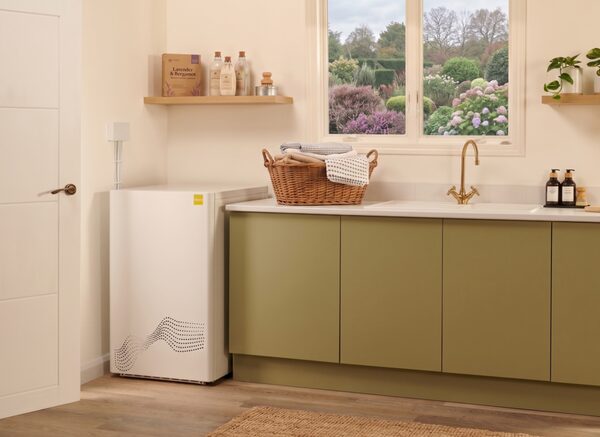
On the second, there is no outdoor unit. A heat battery boiler such as the ZEB is installed inside the home and does not require an outdoor unit1. That can make it easier for homes with limited external space12, and it suits properties where heat pumps will not fit23. The ZEB needs to be installed in a weatherproof, insulated environment, so it should be somewhere inside the home, not a loft, with a garage acceptable only if converted and heated, and a basement only if access is suitable4. In one installation it slotted into the footprint of the previous system23.
Heat batteries connect to an existing wet central heating system via a heat exchanger and run at 55 to 60°C, with a maximum output of around 12,000 kWh a year, similar to the average UK home's heating demand7. Independent guidance describes heat batteries as most suitable for smaller homes that do not have space for an outdoor heat pump unit7. The suitability of clean heating options for challenging dwelling types is examined in the ClimateXChange work on hard-to-treat homes9.
Cost, grants and VAT: what you can and cannot claim
The purchase prices of the two technologies sit at opposite ends of the scale, and so does the grant treatment.
Storage heaters are cheap to buy and expensive to run. Basic models cost less than £400, but more advanced ones can cost upwards of £7005. Modern storage heaters can cost from around £400 each19. Installation of high heat retention units runs at £400 to £800 per heater7, and electric storage heaters more generally are quoted at £900 to £1,400 per room16. A whole-house replacement across several rooms therefore adds up quickly, even at the low end of the unit price.
The ZEB is a higher-cost product. tepeo has offered £2,500 off its heat battery boilers while the government finalises plans to include heat batteries in a grant scheme2. Installation is not included in that price, because installation costs vary depending on the home, the heating system setup and the work required4. Prices are installer-quoted, so no single figure applies across the UK.
On grants, the position is unsettled and worth stating precisely. The ZEB is not currently supported by the Boiler Upgrade Scheme; heat batteries are expected to be included from winter 2026 with a £2,500 grant once standards and scheme rules are in place4. Independent guidance also records a £2,500 grant for heat batteries8. Until certification exists, the Warm Homes schemes will not accept them: heat batteries will not be eligible for the Warm Homes Local Grant until they can be MCS certified, and once certified, SAP-eligible heat batteries will be eligible24. The same applies to the Warm Homes Social Housing Fund, with MCS consulting on a Thermal Energy Storage System Standard in March 2025 and announcing a pilot in September 202525.
On VAT, heating equipment that is not funded through an energy efficiency grant carries 20% VAT26. Domestic energy storage is not eligible for a reduced VAT rate, unlike other technologies such as fossil fuel heating, and is not eligible for the Green Homes Grant or any dedicated government incentive scheme27. The industry has called for a domestic energy storage VAT cut27. The Boiler Upgrade Scheme eligibility page tracks the position as it develops.
What owning a ZEB means for energy independence
A ZEB changes where a household's heat comes from and when it is bought, but it does not remove dependence on the grid.
What it does remove is the gas connection for space heating. The ZEB produces no emissions at the point of use because it does not burn gas, oil or LPG in the home4. It is a zero-emission, smart heating system that charges up when electricity is cheaper or greener rather than using carbon intensive solutions such as gas or oil20. Its software creates a unique heating plan and a charging schedule to enable the most cost-efficient heating for the home20. An independent climate impact report found that a home with a heating demand of 12,000 kWh per year could save up to 2 tonnes of CO2 equivalent per year by 2030 versus a gas boiler4.
What remains is electricity. The indirect carbon impact depends on the charging electricity4, and the running cost depends on the tariff. A household that adds solar panels and a smart tariff shifts more of its heating cost onto its own generation, and the ZEB is designed to integrate with solar panels and smart electricity tariffs28. Heat batteries store energy as heat provided by electricity, for example from the grid or a household's own renewable source, and can also take surplus heat from a boiler, heat pump or another heating system29. Some heat batteries can be used as a thermal store within a central heating system, typically alongside a heat pump29. Heat batteries may have a longer lifespan than electrical batteries29.
The dependence that remains is real: a grid connection, a supplier, a smart meter and a time-of-use tariff, plus a manufacturer in Wokingham for parts and support. A storage heater household has the same grid and supplier dependence, with less control over when it buys and no route to solar self-consumption through the heating system. The wider picture is set out in emerging technology and household energy independence, and the technology's readiness is assessed in technology readiness and energy product claims.
Sources29 cited
- Can a heat battery boiler replace a combi boiler, tepeo, 2026-09-17
- What makes the tepeo ZEB the ideal GEC Nightstor replacement, tepeo, 2026-07-30
- Top 7 reasons why UK homes are choosing heat battery boilers, tepeo, 2026-07-30
- tepeo FAQs, tepeo, 2026-09-17
- Storage heaters, Which?, 2026-06-01
- Research briefing CBP-9838, House of Commons Library, 2026
- Electric heating, Centre for Sustainable Energy, 2026-06
- No home left behind: how to support lower income homes in the heat transition, Association for Decentralised Energy, 2026-09-20
- The suitability of clean heating options for challenging dwelling types, ClimateXChange, 2024-09-20
- Replacing an old boiler: check the cost and carbon first, tepeo, 2026-07-23
- Anna and Gary, ZEB, Thame, tepeo, 2026-07-23
- Switching to electric heating checklist, tepeo, 2026-09-07
- tepeo, tepeo, 2026-09-17
- How to save energy when you've got electric storage heaters, Home Energy Scotland, 2025-01
- What is Economy 7, Smart Energy GB, 2026-04-07
- Electric heating, Energy Saving Trust, 2026-07-01
- A guide to using electric storage heater controls, Energy Saving Trust, 2026-05-21
- Getting the most from Economy 7, National Energy Action, 2026-09-10
- Electric central heating, Which?, 2025-09-22
- New trial opens the door to low carbon heating, UK Power Networks, 2026-09-17
- A ZEB install by our tepeoPro installer Brimstone Energy, tepeo, 2026-07-23
- Clean heat: supporting low income households, Energy UK, 2026-06-11
- Making low carbon heating work in a converted apartment, tepeo, 2026-07-23
- Warm Homes Local Grant policy guidance, Department for Energy Security and Net Zero, 2026-07
- Warm Homes Social Housing Fund wave 3 scheme guidance addendum, Department for Energy Security and Net Zero, 2026-06
- Tax on shopping: energy saving products, GOV.UK, 2026-09-17
- REA and industry call for domestic energy storage VAT cut, REA, 2020-12-22
- A smarter gas boiler replacement: total tranquility in a Hampshire village, tepeo, 2026-07-23
- Storing energy, Energy Saving Trust, 2026-07-15
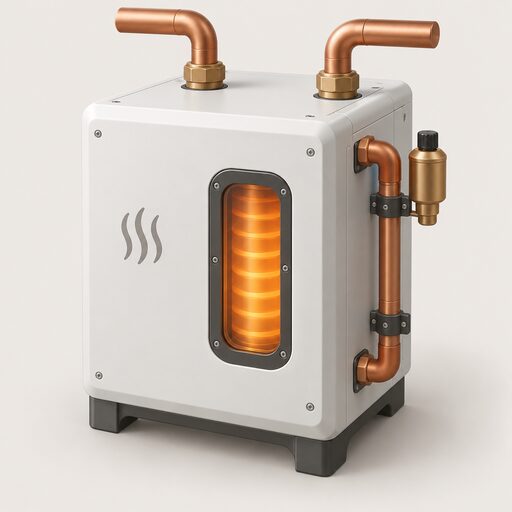 Heat Batteries and Zero EmissionA heat battery stores cheap overnight electricity as heat, then releases it to warm your home or your hot water.
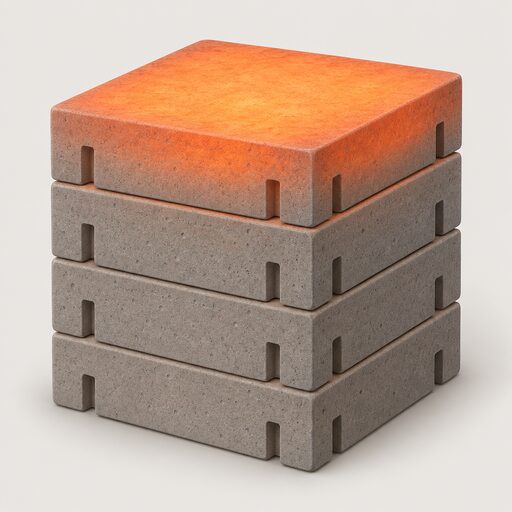 Storage Heaters GuideHow night storage heaters charge on off-peak electricity and release heat through the day, and how high heat retention models with fans and controls differ from older bricks.
 Heating Schedules and SetbackIs it cheaper to leave the heating on low all day, or set it to come on only when you need it?
 Controls and Time-of-Use TariffsCheaper electricity at night only saves money if your heating actually uses it then.
 Electric Radiators and PanelsDo electric radiators cost more to run than gas heating, and are they worth it for one room or a whole house?
 Electric Heating CostsHow to work out what electric radiators, panel heaters, infrared and storage heaters cost to run per hour and per season.