
In this comparison
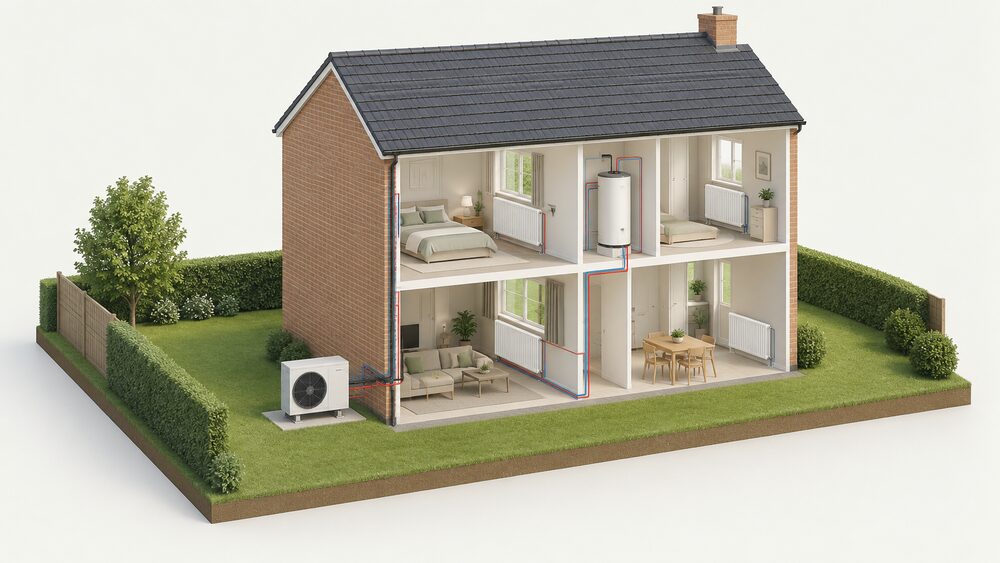
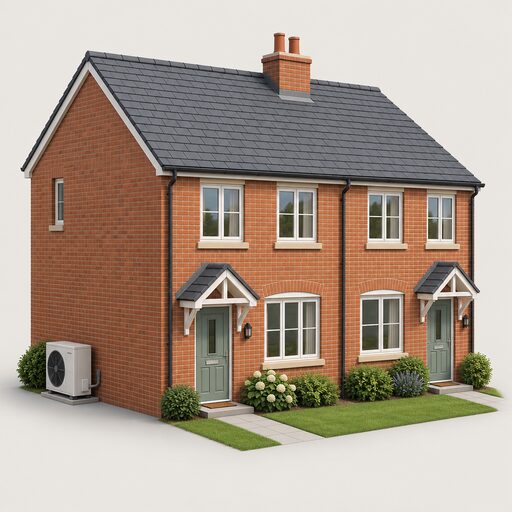
A heat battery stores heat; a heat pump gathers it. That difference decides which one a household is actually choosing between. For most UK homes the realistic alternative to a heat battery is not a cylinder but an air source heat pump, which independent guidance describes as the most common type of domestic heat pump in the UK and suitable for most types of homes1. Parliamentary research goes further: heat pumps are technically suitable for most UK homes if installed appropriately2.
The money is the first thing most households look at. Independent guidance puts air-to-water heat pump installation at around £11,000, with a Boiler Upgrade Scheme grant of £7,500 against it3. The wider range quoted for air source installation is £7,000 to £13,000, while another source gives around £14,000 as a typical cost, so the two figures for the upper end do not agree1. Heat batteries attract a smaller grant of £2,500, and that grant becomes available only once legislation and product standards are in place4.
The efficiency case is not close. Official guidance states that heat pumps are three times more energy efficient than traditional boilers6, and the Climate Change Committee puts them at around three to four times more efficient than gas boilers7. What a heat pump does not do is remove dependence on electricity, a supplier and a tariff. What it does do is cut the gas connection out of the heating and hot water load, which is the largest single step most homes can take.
The short answer: an air source heat pump for most homes
Air source heat pumps are the most common type of domestic heat pump in the UK and are suitable for most types of homes1. The same wording appears in the Energy Saving Trust's in-depth guide10, and its heat pump overview states plainly that heat pumps are suitable for most houses in the UK11. Parliamentary briefing material agrees that they are technically suitable for most UK homes if installed appropriately2.
Two types dominate the UK market: air source and ground source11. Ground source is less commonly used in homes because it usually requires lots of outdoor space and carries higher installation costs than air source12. Which of the two suits a given property depends largely on budget and how much outdoor space is available11. That is the same trade-off a heat battery presents, in a different form: a heat battery is most suitable for smaller homes that do not have space for an outdoor heat pump unit3.
So the comparison is not really heat battery against heat pump as rivals on equal footing. It is a choice between a store that needs no outdoor unit and a generator of heat that needs one, with the outdoor unit being the price of the higher efficiency. Where a household has the wall, the garden or the roof space for an outdoor unit, the heat pump is the mainstream option. Where it does not, the heat battery is the alternative that the grant system now recognises, at a lower level of support.
How an air source heat pump works: heat moved, not generated
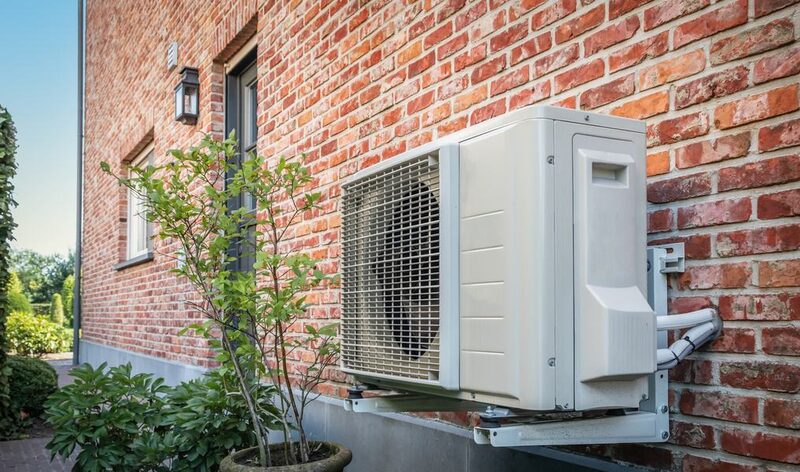
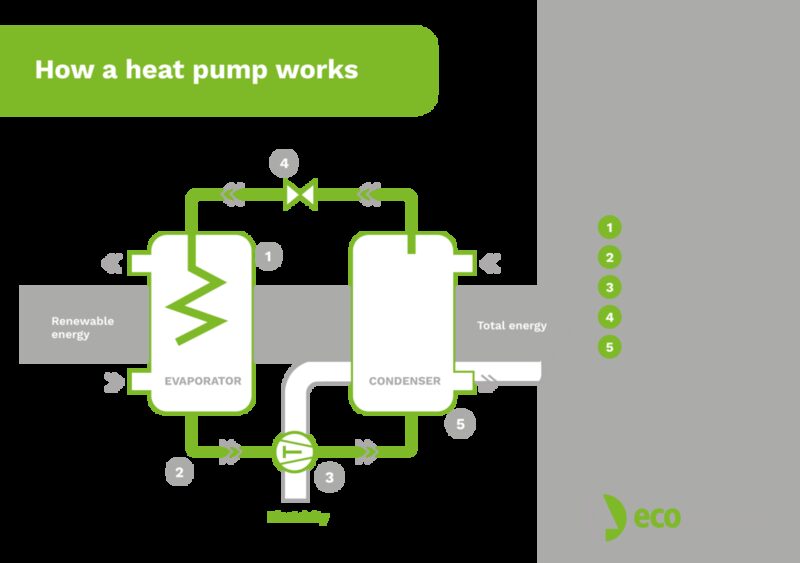
An air source heat pump is a device that transfers heat from outside your home into your home using electricity, rather than generating the heat itself8. It works like a fridge in reverse: it absorbs heat from the outside atmosphere and transfers it at low temperature to the pump compressor8. Official guidance describes the same principle as absorbing heat from outside air to provide heating13, and as moving heat from the air to a hot water supply14.
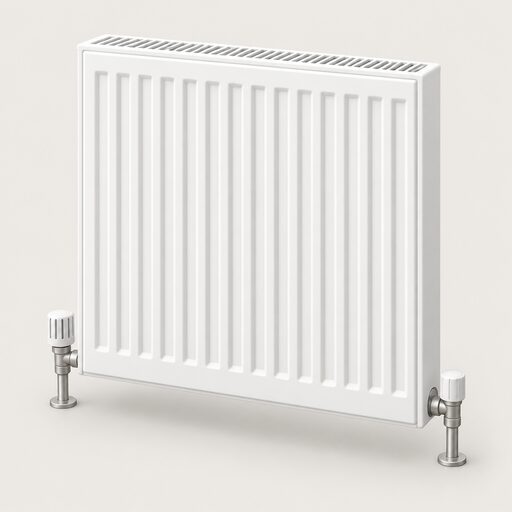
The consequence is that the amount of heat produced by the system is more than the electricity needed to power it8. That is the whole basis of the efficiency claim, and it is why a heat pump is not simply an electric heater with a fan. An air-to-water system transfers heat drawn from surrounding air to water in a wet central heating system, which is what allows it to serve radiators and a hot water store15.
Air source heat pumps heat homes by taking warmth from the outside air and using it for heating and hot water1. They can also heat your water as well as your home8. That matters to the heat battery question directly: a heat pump and a heat battery are not mutually exclusive, because the pump can charge the store. The household that installs both is using the pump for efficiency and the battery for timing.
"They can also heat your water, as well as your home."
Efficiency: three to four times a gas boiler
Official guidance states that heat pumps are three times more energy efficient than traditional boilers6, and the clean energy campaign repeats the figure as 3x more energy efficient than traditional boilers16. The Climate Change Committee gives a range of around three to four times more efficient than gas boilers, and notes that this should lead to lower household energy bills7. Bristol's warm homes plan puts heat pumps at typically over three times more efficient than the most efficient gas boilers or electric heaters17.
The highest figure in the official statistics is wider still: current available heat pump technologies can be up to 3 to 5 times more efficient than a natural gas boiler18. Welsh Government guidance settles on up to 3 times more efficient than other heating systems19. The spread between three and five reflects different measurement conditions and different system designs rather than a disagreement about the principle.
Two documents give coefficient of performance figures of 4.3 and 3.9 for air source heat pumps, and that conflict is not ruled on1. A household comparing quotes should treat any single efficiency number as conditional on the design of the specific system, the flow temperature it runs at, and the condition of the radiators and pipework it feeds.
Efficiency is also where the insulation question bites. Heat pumps are more efficient in well-insulated homes, and draughts or poor roof insulation can cause substantial heat loss and wasted energy12. Official guidance states that heat pumps are best suited to buildings with good insulation levels, and that insulation may need to be added internally or externally where homes do not already have good levels20. That is not a reason to rule a heat pump out; it is a reason to expect the installer's survey to include the fabric of the building.
Cost: £7,000 to £13,000 installed, with £5,000 of Boiler Upgrade Scheme support
The headline range for an installed air source heat pump is £7,000 to £13,0001. Independent guidance gives around £11,000 for an air-to-water system, with the Boiler Upgrade Scheme providing £7,500 against it3. A separate source gives around £12,000 for the same category, and that conflict is not ruled on1. One further figure of around £14,000 as a typical cost appears in the documents and is also unresolved against the £7,000 to £13,000 range1.
The grant structure is where the heat battery comparison becomes concrete. Official scheme rules give £7,500 for air-to-water heat pumps and ground source heat pumps, and £2,500 for air-to-air heat pumps and heat batteries5. Ofgem's guidance for property owners states £7,500 for air-to-water and ground source heat pumps4. The £2,500 heat battery grant will be available once the legislation and appropriate product standards are in place4.
| Measure | Grant | Voucher validity |
|---|---|---|
| Air-to-water heat pump | £7,500 | 3 months21 |
| Ground source heat pump | £7,500 | 6 months21 |
| Air-to-air heat pump | £2,500 | Not stated in the scheme rules5 |
| Heat battery | £2,500, once legislation and standards are in place | Not stated in the scheme rules4 |
The £5,000 difference between the two grant levels is the single largest financial fact in this comparison. It means the net cost gap between a heat pump and a heat battery is narrower than the headline installation figures suggest, and it means the heat battery route is supported at a level that reflects its smaller contribution to the home's heating load.
Running costs: more than gas on a standard tariff, less on a time-of-use tariff

On standard electricity tariffs, where electricity is nearly four times more expensive than gas, heat pumps can cost slightly more to run than new gas or oil boilers1. That is the honest position and it is the one most often left out of sales material. The efficiency advantage does not automatically translate into a lower bill when the price of a unit of electricity is several times the price of a unit of gas.
The picture changes with the tariff. Independent research shows that by switching to a heat pump time-of-use tariff, running costs fall significantly1. The in-depth guidance states that switching to a heat pump time-of-use tariff should reduce the cost of running the heat pump, making it more likely that a household will save money10. The fact-check page puts it as saving money on bills when switching to a heat pump time-of-use tariff22.
This is where a heat battery and a heat pump stop competing and start combining. A store lets a household buy electricity in a cheap window and release the heat later, which is exactly what a time-of-use tariff rewards. A heat pump on its own can be run flexibly to some degree, but a thermal store gives the flexibility somewhere to sit.
The risk case is a poorly insulated home. Official guidance warns that installing a heat pump in a home that is not well insulated may increase energy bills instead, because electricity is more expensive than gas9. That is a firm limit, not a caveat, and it applies regardless of how good the tariff is.
Space, noise and siting: the outdoor unit and the 42 decibel rule
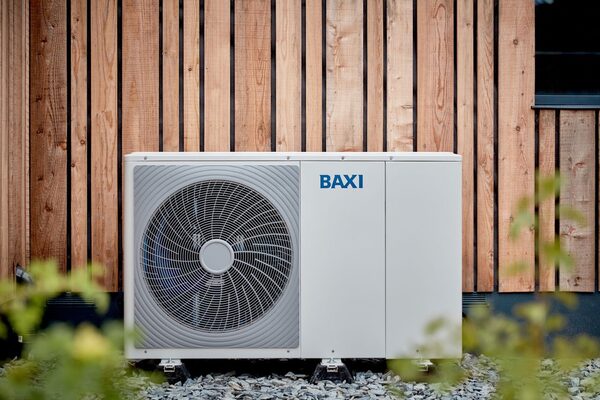
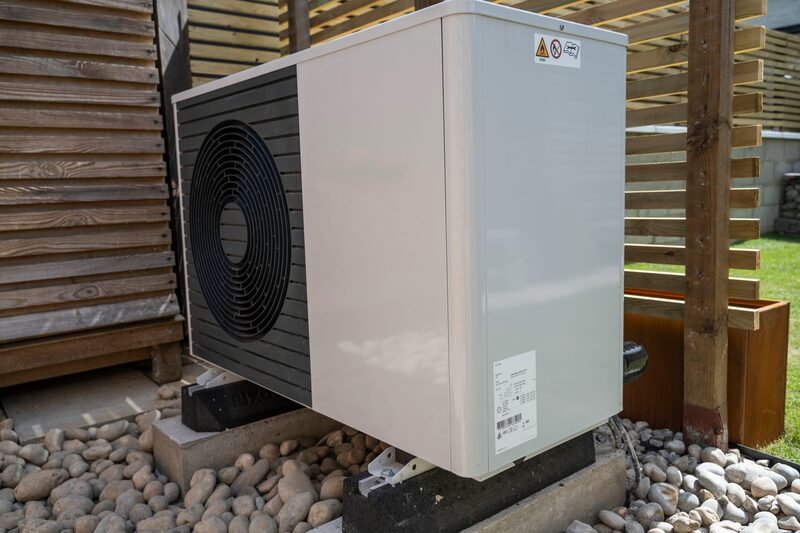
An air source heat pump needs an outdoor unit23. Ground source heat pumps do not need an outdoor unit, but they do need a large indoor unit, and they need outside space for trenches or boreholes plus enough room inside for a heat unit23. So the space question does not disappear by choosing ground source; it moves indoors and underground.
Noise is governed by a fixed limit. Official guidance states that noise levels for an air source heat pump on its own must stay at or below 42 decibels, measured a metre from any habitable room9. Croydon's guidance states that in the UK the legal noise limit for heat pumps is 42 decibels24. The typical range of a heat pump when it is on is between 40 and 60 decibels22, which puts the legal limit at the quiet end of the equipment's normal operating band.
Two official documents describe the 42 decibel rule differently: one frames it as measured a metre from any habitable room, the other as not exceeding 42dB at a distance of 1 metre from the centre of a neighbour's habitable room window, known as the assessment point9. That conflict is not ruled on, and the practical effect is that the assessment point matters as much as the number.
Permitted development: what can be installed without planning permission
Domestic heat pumps benefit from permitted development rights, which means that in most cases planning permission is not required, subject to certain limitations and conditions25. Independent guidance agrees that in general planning permission should not be needed because most heat pump installations are a permitted development10. Ground source and water source heat pumps on domestic premises are usually considered permitted development, not needing a planning application26.
The conditions are where the detail sits. Permitted development rights allow air source heat pumps to be installed on detached houses or blocks of flats without an application14. The rights apply to the installation, alteration or replacement of an air source heat pump on a house or block of flats, or within the curtilage, including on a building within that curtilage27. Development is permitted only if the installation complies with the Microgeneration Certification Scheme Planning Standards, MCS 020a27.
The volume of the outdoor compressor unit, including housing, must not exceed 1.5 cubic metres on a house or 0.6 cubic metres for a block of flats27. Only the first installation is permitted development on a house that is not detached or on a block of flats, while for detached houses the first two air source heat pumps are considered permitted development27.
All parts of the air source heat pump must be at least one metre from the property boundary9. Cotswold's guidance states that no part of the unit will be installed within 1 metre of the boundary, for dwellings excluding those that have had permitted development rights removed or that sit within an area of outstanding natural beauty or a conservation area28. Northern Ireland has its own rule: no part may be installed within 1 metre of the boundary of the curtilage of another dwelling house, and no part may be less than 30 metres from another dwellinghouse29.
Where a heat pump fits, and where it may not save money
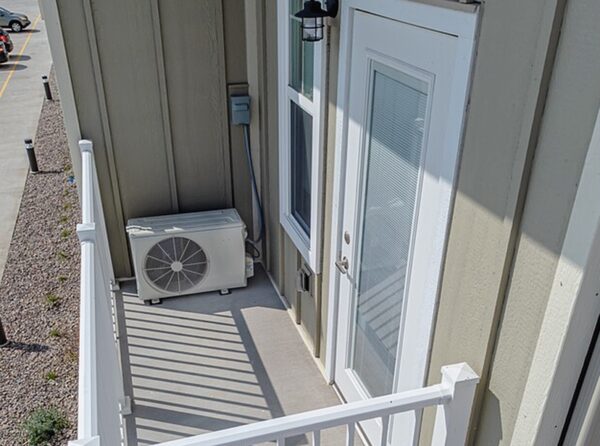
The decision between an air source and a ground source heat pump comes down to space, budget and efficiency23. Air source is the mainstream choice for most homes; ground source is less common because of the outdoor space and the higher installation cost12. A heat battery sits outside that pair entirely, and is most suitable for smaller homes that do not have space for an outdoor heat pump unit3.
The limit case is insulation. Official guidance is direct: if a home is not well insulated, installing a heat pump may increase energy bills instead, because electricity is more expensive than gas9. Heat pumps are more efficient in well-insulated homes, and draughts or poor roof insulation cause substantial heat loss and wasted energy12. A household in a hard-to-treat property should expect the survey to raise fabric measures before or alongside the heat pump.
Cold weather is less often the binding constraint than insulation. The greater risk is economic: official guidance notes that in a home that is not well insulated, a heat pump may increase energy bills instead of cutting them, because electricity is currently more expensive than gas19. Independent guidance makes the same point, that heat pumps may be no cheaper to run than a conventional gas or liquid fuel appliance, and are best suited to homes that already have plenty of insulation22.
On lifespan, an air source heat pump lasts up to 20 years on average8. On procurement, quotes should come from at least three different installers, both for air source specifically and for heat pumps generally1. On independence, the honest summary is this: a heat pump cuts the gas connection from the heating and hot water load, which is the largest single reduction in fossil dependence available to most homes, but it leaves the household dependent on electricity, a supplier and a tariff. A heat battery does the same, at a smaller scale and with a smaller grant. Neither removes the grid.
Sources33 cited
- Air source heat pumps, Energy Saving Trust, 2026-07-16
- Heat pumps and UK homes, UK Parliament POST, 2026-09-19
- Electric heating advice, Centre for Sustainable Energy, 2026-06
- Carbon Budget and Growth Delivery Plan: heat and buildings factsheet, UK Government, 2026-06-23
- Notice of approved grant categories and values for the Boiler Upgrade Scheme, UK Government, 2026-07-21
- Heat pumps, Welsh Government, 2025-11-17
- The Seventh Carbon Budget, Climate Change Committee, 2025-02-26
- Air source heat pump, MCS Certified, 2026-07-24
- Building regulations and renewables guidance, Bedford Borough Council, 2026-09-17
- In-depth guide to heat pumps, Energy Saving Trust, 2026-07-16
- Heating your home: heat pumps, Energy Saving Trust, 2026-06-11
- How do heat pumps work, Smart Energy GB, 2026-03-16
- Air source heat pumps, London Borough of Hammersmith and Fulham, 2026-09-17
- Air source heat pumps fact sheet, Pendle Borough Council, 2026-09-17
- ECO4 new measures and products guidance, Ofgem, 2026-03-26
- Heat pump, UK Government clean energy campaign, 2026-09-10
- Bristol warm homes plan, Bristol City Council, 2025-04
- Energy innovation needs assessment 2025: heat and buildings, Department for Energy Security and Net Zero, 2025-06
- Your essential guide to heat pumps, Welsh Government, 2025-02-20
- Heat pumps, New Forest District Council, 2026-09-17
- Boiler Upgrade Scheme guidance for installers, Ofgem, 2026-07-21
- Heat pump fact check, Energy Saving Trust, 2026-07-01
- Air source heat pumps vs ground source heat pumps, Energy Saving Trust, 2026-07-16
- Air and ground source heat pumps, Croydon Council, 2026-09-17
- Planning permission for heat pumps, Welsh Government, 2026-09-17
- Heat pumps, Planning Portal, 2026-09-17
- Planning permission: air source heat pump, Planning Portal, 2026-09-17
- Permitted development, Cotswold District Council, 2026-09-17
- The Planning (General Permitted Development) Order (Northern Ireland) 2015, Schedule Part 2, legislation.gov.uk, 2026-09-17
- The Planning (General Permitted Development) Order (Northern Ireland) 2015, Schedules, legislation.gov.uk, 2026-09-17
- The Planning (General Permitted Development) Order (Northern Ireland) 2015, legislation.gov.uk, 2026-09-17
- Air source heat pumps, Cornwall Council, 2026-09-17
- Planning guidance for heat pumps, Richmond upon Thames Council, 2026-09-17
 How Much Does a Heat Pump CostA heat pump usually costs around eleven thousand pounds installed, though quotes vary a lot depending on your home.
 Which Homes Suit a Heat PumpMost UK homes can have a heat pump fitted, so the real question is whether yours makes it easy or expensive.
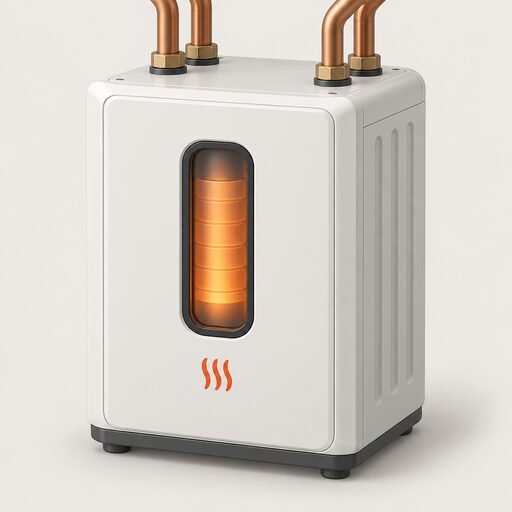 Heat Batteries with Heat PumpsCan a heat battery replace a hot water cylinder if you have no space for one?
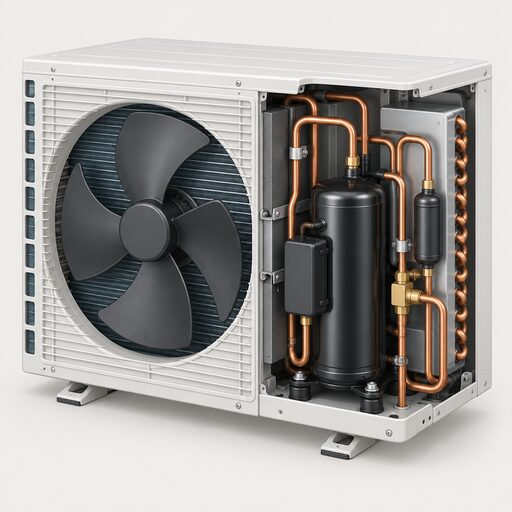 Air Source Heat PumpsHow an air source heat pump takes heat from outdoor air, the difference between air-to-air and air-to-water systems, typical efficiency, the £7,500 Boiler Upgrade Scheme grant, noise and planning limits, and what ownership means for a household's energy independence.
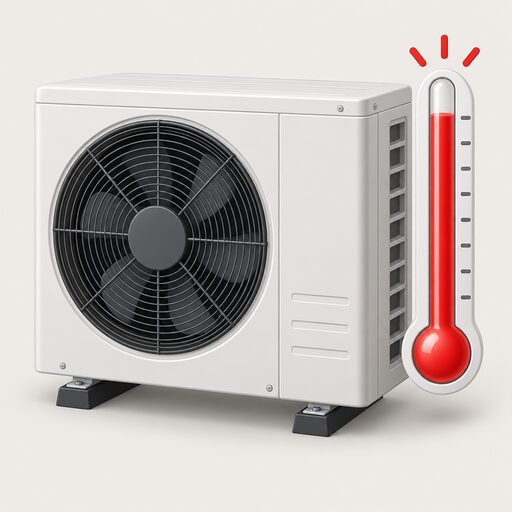 High Temperature Heat PumpsHigh-temperature heat pumps deliver flow temperatures of roughly 65 to 80°C, close to boiler levels, so existing radiators can often stay in place.
 Replacing a Gas or Oil BoilerSwapping a gas, oil or LPG boiler for a heat pump changes how your home is heated and how much it costs.