In this guide
Zapmap is the map most UK electric car drivers open when they need to charge away from home. It lists over 123,000 public chargers across the UK, shows live availability for more than 95% of the chargepoints on its map, and lets you pay at dozens of networks from a single account rather than signing up to each one separately1.
The app has been downloaded over two million times and has over one million registered users, and Zapmap has been mapping chargepoints since 20141. It is also the sole official data provider to the Department for Transport for public EV charging infrastructure statistics, which is why the government's own published figures carry its name3.
What that means for a household is straightforward. Zapmap reduces the friction of public charging: finding a working charger, knowing whether it is free before you drive there, and paying without a wallet full of apps. It does not remove the dependence on public networks, on a mobile data connection, or on the manufacturers and operators behind each chargepoint. This page sets out what the app covers, what it costs, and where it still leaves gaps.
What Zapmap does: find and pay at public chargepoints
Zapmap began as a map and has become a payment layer as well. The map side is the part most drivers know: a searchable, filterable view of public chargepoints across the UK, with live status where the network supplies it. The payment side is Zap-Pay, a single-app payment solution that uses a credit or debit card to pay for charging, so a driver does not need a separate account with every operator7.
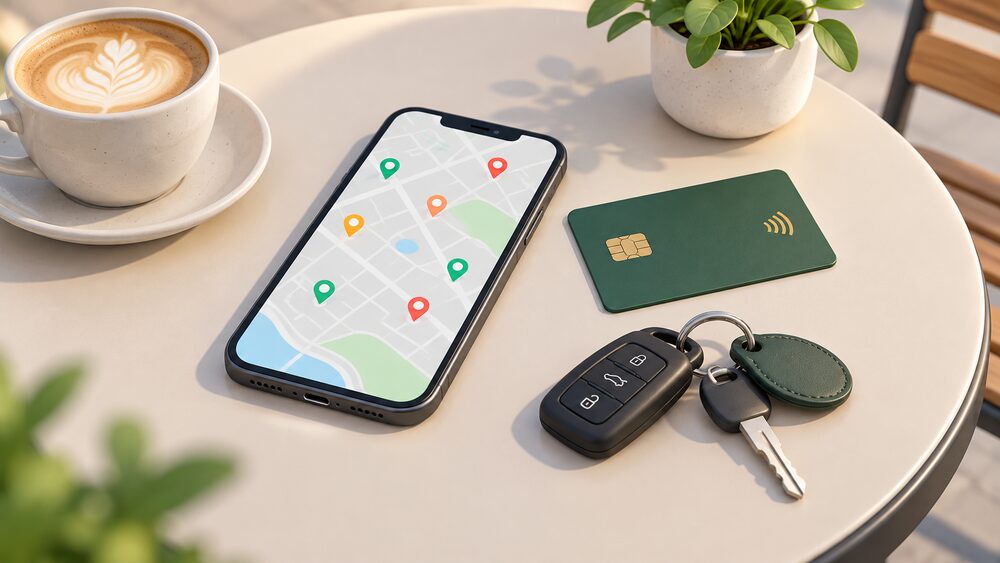
There are two ways to pay. The first is through the app itself, using a credit or debit card, Apple Pay or Google Pay8. The second is the Zapmap charging card, which allows drivers to start a charge with a quick tap at compatible chargepoints7. Both methods let you view your charging history within the app, receive live status updates while away from your vehicle, and download receipts7.
The practical benefit is administrative rather than financial. Public charging in the UK grew up network by network, each with its own app, its own account and its own payment card. Zapmap's proposition is that one account covers many of them. Zapmap states you can pay in seconds across over 40 charging networks, and elsewhere that over 50 networks are compatible with Zapmap1. The two figures come from different pages and different dates, so treat the count as approximate and growing.
Named networks include Alfa Power, Mer and GeniePoint for destination charging, Fastned, MFG EV Power and Osprey en route, and Connected Kerb, Urban Fox and char.gy for on-street charging9. That spread matters because the networks a driver actually meets depend on where they park: a supermarket car park, a motorway services, or a lamp post outside their house. Zapmap is the sole official data provider to the UK Government's Department for Transport for public EV charging infrastructure statistics, so the network list it carries is the one the statistics are built from [S78].
Coverage: over 123,000 chargers and 95% of UK public points
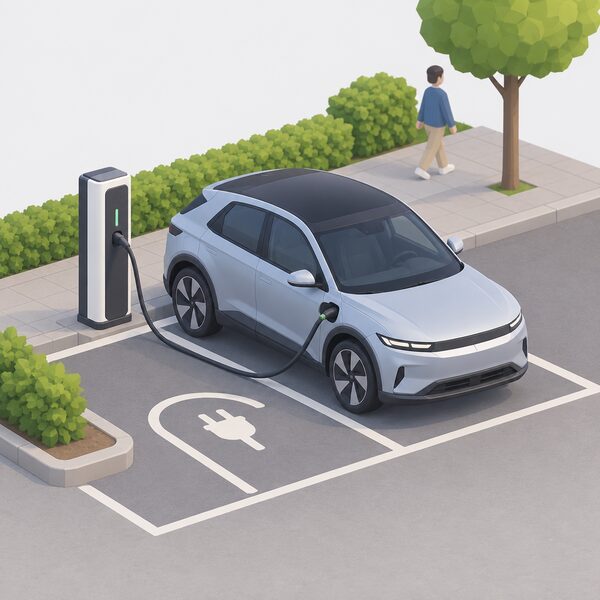
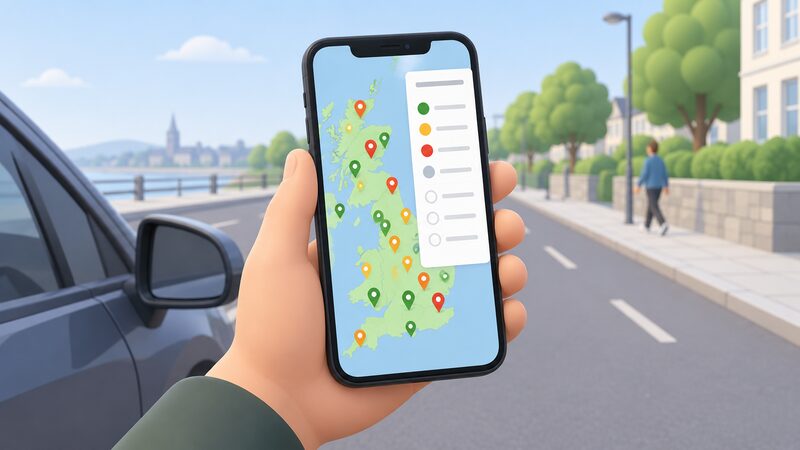
Zapmap lists over 123,000 public EV chargers across the UK1. It states that it shows more than 95% of the UK's public chargers on the app and desktop map, a figure repeated across its own pages and press releases from 2024 onwards2. The map extends beyond the UK: Zapmap says it enables you to find available chargepoints wherever you go in the UK or mainland Europe2.
The scale is easier to grasp against the wider network. When the UK passed 70,000 public chargers in October 2024, those were spread across 35,810 locations, and Zapmap had around 900,000 registered users at that point10. The registered user count has since passed one million1. The platform also carries over 14,000 rapid chargers11.
| Measure | Figure | Date |
|---|---|---|
| Public chargers listed | over 123,000 | September 20261 |
| Share of UK public chargepoints | more than 95% | 20262 |
| Chargepoints with live availability | more than 95% | 20262 |
| Chargepoints with colour-coded live status | over 80% | September 20261 |
| Rapid chargers on the platform | over 14,000 | August 202611 |
| App downloads | over two million | September 20261 |
| Registered users | over one million | September 20261 |
The coverage figure is a claim by the platform about its own map, and it is consistent across several of its publications. The independent check is the government's own statistics, which name Zapmap as the data provider, so the official count of UK public charging devices and Zapmap's map are drawn from the same underlying dataset3. That is a strong signal of completeness, though it also means the two are not independent confirmations of each other.
Live status and filtering: knowing a charger works before you drive
The reason drivers open Zapmap rather than a static map is live status. Zapmap shows whether a chargepoint is available, in use, out of service, or whether its status is unknown2. Over 80% of chargepoints on the platform display a colour-coded icon to indicate live status, and more than 95% show live availability1.
The distinction between those two figures is worth holding on to. Live availability means the app can tell you whether the point is free at that moment. A colour-coded status icon is the visual shorthand for the same information. Where a network does not pass data through, the status shows as unknown, and the driver is back to arriving and hoping.
Filtering is what turns a national map into a usable one. Zapmap's route planner offers three modes: Autoroute, Suggest chargers and Show all chargers4. There is a filter that allows you to search for a minimum number of charging devices in a given location, and Zapmap recommends searching for groups of at least six devices to help avoid potential queues8. For a driver planning a long trip, that is the difference between a confident stop and a gamble.
The userbase is part of the accuracy story. Zapmap describes up to date and unbiased information coming from a userbase of over a million EV drivers, and the app supports check-ins and reports1. Community reporting does not replace network data, but it fills some of the gaps where a charger has failed and the operator has not yet updated its own systems.
Paying through the app: Zap-Pay and the pre-authorisation hold
Paying through Zapmap is designed to be a single account across many networks, but the mechanics include a hold on your card that is worth understanding before the first charge. When paying with Zapmap, you see a pre-authorisation fee of either £30 for registered users or £60 for non-registered users4. It is a hold, not a charge, and it is not taken from your account. Zapmap states it is released back to you within three to five days5.
That structure explains why registering is worth doing even though payment works without an account. The non-registered hold is double the registered one, and registering keeps your charging history and receipts in the app7. Payment options are a credit or debit card, Apple Pay or Google Pay, plus the Zapmap charging card6.
The charging card is ordered inside the app. You can order a Zapmap charging card in the app in a couple of minutes, through the settings menu and the Charging card option, and it starts a charge with a quick tap at compatible chargepoints7. It is a physical fallback for anyone who would rather not open an app at a rainy motorway services.
Zapmap Premium subscribers get a 5% charging discount when they pay within the Zapmap app or with the Zapmap charging card12. Premium is usually £29.99 a year or £2.99 a month, and a one-week free trial is available6. Whether the discount repays the subscription depends on how much public charging a household does, which is a calculation each driver makes for themselves.
Route planning and free versus paid features
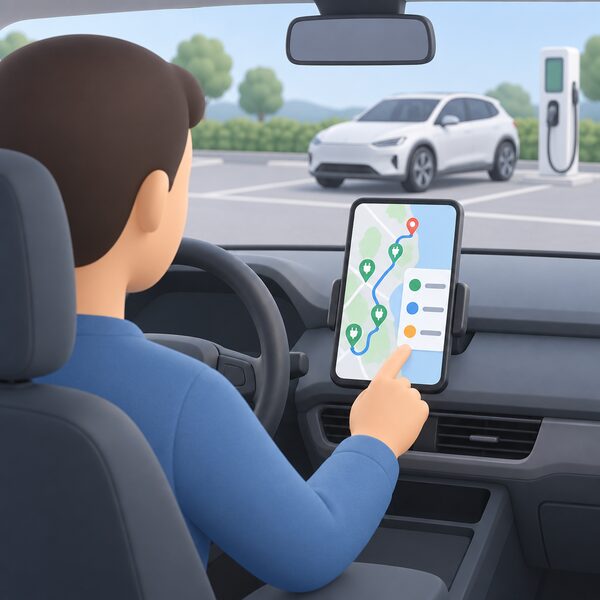
Route planning is where Zapmap moves from a map to a journey tool. The planner has three routing modes: Autoroute, Suggest chargers and Show all chargers, and you can save and retrieve routes within the mobile app or in-car system4. The app also lets you filter chargers by speed, connector type, network, and payment method, and Zapmap recommends searching for groups of at least six devices to help avoid any potential queues [S22][S6].
The free version covers the map, live status and route planning. Zapmap Premium adds the in-car experience via Apple CarPlay and Android Auto, which includes access to live availability status on your car's infotainment display1. For a driver who wants the map on the car screen rather than a phone mount, that is the main draw.
Premium has also been bundled with energy tariffs. A fixed EV tariff from Good Energy came with a free Premium subscription to Zapmap, at a time when Premium was usually costing £29.99 per year or £2.99 per month6. Bundling is a commercial arrangement between the supplier and the platform rather than a feature of the app itself, and it depends on the tariff still being offered.
Zapmap also runs a home charging trial. Zapmap Smart Charging is described as a trial optimising your home charge for the cheapest, greenest time of day, with no need to change your energy provider, and participants get rewarded £10 each month13. Eligibility is checked using your address details, and you register interest by filling out a form13. It is separate from the public charging map, but it shows the direction the platform is moving: from finding public chargers to managing when a car charges at home.
Zapmap's role as official data provider to the DfT
Zapmap is the sole official data provider to the UK Government's Department for Transport for public EV charging infrastructure statistics11. The government's own statistical release states that data is provided by the electric vehicle and charging point platform Zapmap and is correct as at the date of publication3.
That role matters for two reasons. First, it means the official count of UK public charging devices and the Zapmap map are not two independent sources: they share a foundation. When a household reads a government figure for public chargepoints, that figure has passed through Zapmap's data collection. Second, it gives the platform a formal accountability that a purely commercial map would not have, since the statistics are published under the DfT's name.
The platform also publishes its own statistics pages, including a monthly price index tracking changes in the price to charge on the public network based on Zapmap's usage data, updated monthly12. Those pages are the platform's own analysis rather than official statistics, and they should be read as such.
For a household, the practical consequence is that Zapmap's coverage claim is unusually well grounded. A map that supplies the government's own numbers has an incentive to be complete, and the 95% coverage figure is consistent with that role2.
Where coverage is thin: Wales and the North West
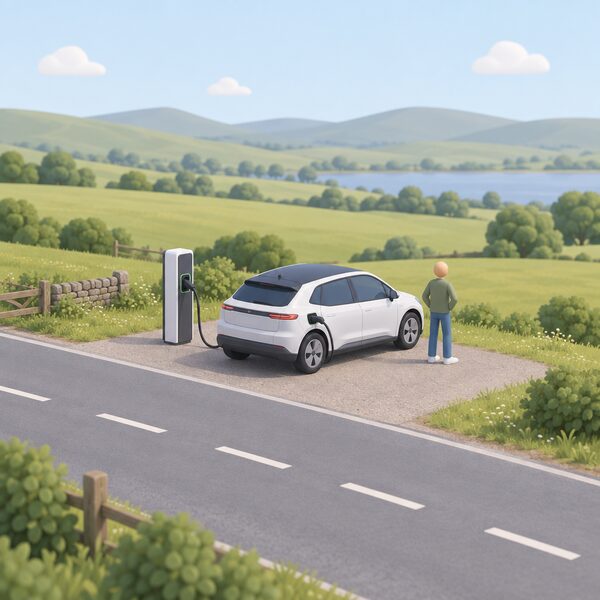
Zapmap's coverage is national, but the underlying charging network is not evenly spread, and the app can only show what has been built. The pattern of thin coverage is visible in official statistics for related small-scale energy installations: the highest proportion of micro installations and total capacity was focused around the South West, South East and East of England, with the lowest around Wales, the North East and London14.
That is a pattern from a different scheme, so it is an indicator rather than a direct measure of chargepoint density. It does, however, match what the charging map shows: rural and peripheral areas have fewer public points, and a driver in those areas has less choice about where to stop. Zapmap's own guidance on avoiding queues, recommending groups of at least six devices, is harder to follow where a location has one or two8.
The app's answer to thin coverage is planning rather than infrastructure. Route planning with the minimum-devices filter lets a driver identify the larger sites and route between them, and live status reduces the risk of arriving at a single charger that is out of service8. That is a real improvement on arriving blind, but it does not create a charger where none exists.
What using Zapmap means for household independence
Zapmap is a tool for using public charging, and public charging is by definition a dependence. A household that charges at home draws on its own supply and, if it has solar or a battery, on its own generation. A household that charges on the public network depends on an operator, a payment system, a mobile data connection and a chargepoint that someone else maintains.
The app reduces the friction within that dependence. One account across dozens of networks, live status before you drive, and receipts in one place make public charging less administratively painful than it was when every network had its own card1. The pre-authorisation hold, £30 registered and £60 non-registered, is a reminder that the payment relationship runs through Zapmap's systems and your bank, not through the chargepoint alone4.
There is also a data dependence. Live status, route planning and payment all rely on Zapmap's platform and on the networks feeding it information. Where a network does not supply data, the status shows as unknown2. The app is a layer over the charging network, not a replacement for it.
For a household weighing up home charging against public charging, the comparison is covered in home vs public charging costs, and the wider picture of what home charging requires is in the EV charging at home guide. Zapmap's role is to make the public side of that mix workable, and to show honestly where it is not.
Sources14 cited
- Five ways Zapmap can help you find and pay for EV charging, Zapmap, 2026-09-04
- What is live data, Zapmap, 2026-02-26
- Electric vehicle public charging infrastructure statistics: July 2025, Department for Transport, 2025-07-01
- Quick tips to charge an electric car, Zapmap, 2026-06-11
- Quick tips to charge an electric car, Zapmap, 2026-06-11
- New fixed EV tariff from Good Energy comes with Zapmap Premium, Zapmap, 2024-06-25
- How to pay for public EV charging, Zapmap, 2025-09-04
- En route charging, Zapmap, 2026-02-26
- Destination charging, Zapmap, 2026-02-26
- UK hits 70,000 public electric vehicle charge points milestone, Zapmap, 2024-10-03
- EV charging statistics, Zapmap, 2026-09-03
- Electric car charging costs: all you need to know, Zapmap, 2026-09-04
- Smart charging, Zapmap, 2026
- Electric car charging costs: all you need to know, Zapmap, 2026-09-04