In this guide
The Hive EV charger is a home charge point sold under one of the best-known names in British household energy, and it sits in an awkward position: still listed for sale on Hive's own electric vehicle shop page, but part of a product line that has been visibly shrinking. Hive's security cameras and Homeshield devices are being discontinued, while its smart thermostats and radiator valves continue to be supported into 20261.
Anyone searching for the charger today is usually trying to work out one of three things: whether it can still be bought, whether an existing unit is still supported, and what the £20 Zapmap credit and Hive Charging Card that came with it are actually worth. The headline commercial facts are these. The Hive Sync Energy Wall Charger 2 is listed from £999 fully installed for the untethered unit, excluding accessories and optional extras, with Hive stating that prices shown are estimated for a standard installation and that final costs vary with charger type, cable length, home layout and any additional electrical work1. The charger connects over WiFi and a GPRS mobile network, and scheduling runs through the Hive app, including a Power+ mode1. Buyers received £20 of Zapmap charging credit, described as equivalent to about 100 miles, and a Hive Charging Card usable at over 25,000 public charge points across the UK1.
What follows sets out the status of the product, what it was under the Hive badge, how the app and the charging card work, what the installation paperwork covered, and where the whole arrangement leaves a household's energy independence.
Withdrawn from sale: what the status means for owners and buyers
The phrase "withdrawn" needs care here, because the evidence points in two directions at once. Hive's electric vehicle shop page still carries the Hive Sync Energy Wall Charger 2 at a listed price, alongside a note that the product is selling fast and that installation times are a little longer than normal1. At the same time, the wider Hive hardware line is contracting: Hive security cameras and Homeshield devices are being discontinued, and the company's smart thermostats and radiator valves are the products it has committed to supporting into 20261.
For a buyer, that combination matters more than the label. A charger that is still sold but sits inside a shrinking product family carries a support question rather than a supply question. The warranty position is that Hive is the first point of contact and coordinates with the original installer to support a claim, and that the warranty is subject to terms, conditions and proper use of the product1. That is a normal arrangement, but it depends on Hive continuing to operate the support function.
For an owner, the practical position is that the hardware keeps working regardless of whether the model is still sold. A Type 2 charge point is a passive piece of infrastructure: it delivers AC power to the car's onboard charger, and the car decides how fast to accept it2. Nothing about a product being withdrawn stops a wallbox from charging a car. What changes is the availability of spares, the length of any extended warranty, and whether the app that schedules sessions stays online.
What the Hive EV charger was: the Alfen Eve S-Line under the Hive brand
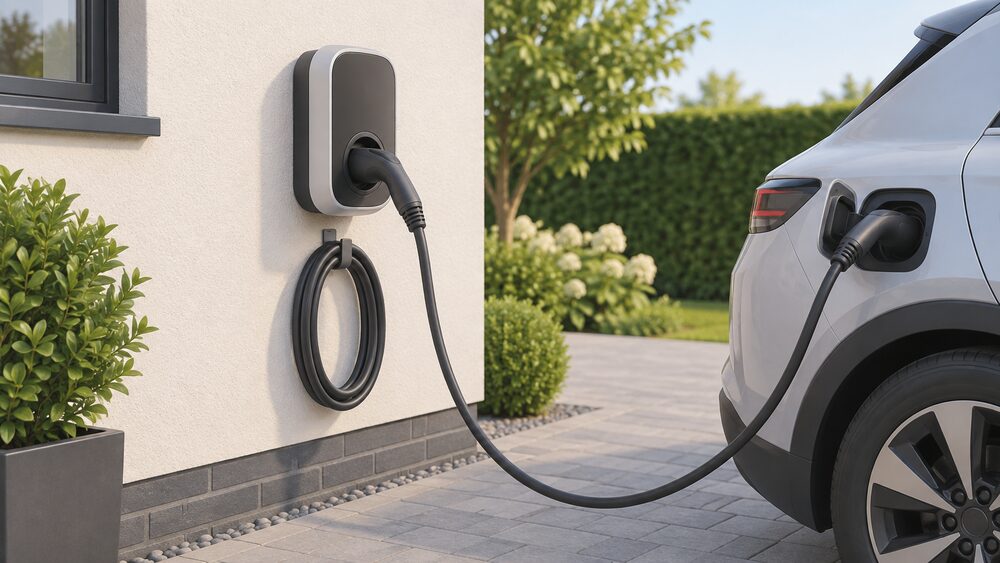
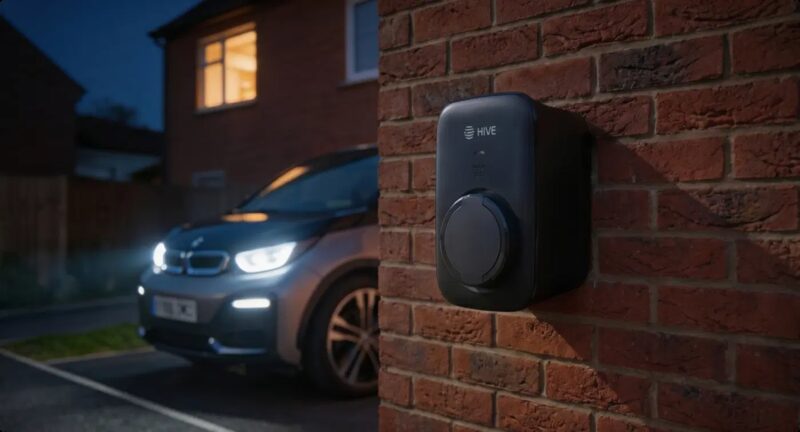
The Hive EV charger was a rebadged unit rather than a Hive-designed one. The hardware is the Alfen Eve S-Line, sold under the Hive name, with a 7.4 kW output and smart features, reviewed under that name in August 20251. This is a common arrangement in the UK market: an energy brand with a large customer base partners with an established charge point manufacturer, and the product reaches households through the brand's installation network rather than through electrical wholesalers.
The connector standard is Type 2, which Hive describes as the standard most of its EV chargers are built around2. Type 2 is the European AC charging connector and the one used for home charging in the UK. The Alfen Eve Single S-line is available as a charging contact, or connected by a cable including cable storage3, and the Pro-line adds active load balancing when connected to a smart meter, Plug & Charge or RFID authorisation, and an MID-certified energy meter for accurate power consumption registration4.
| Feature | Hive EV charger |
|---|---|
| Underlying unit | Alfen Eve S-Line1 |
| Output | 7.4 kW1 |
| Connector | Type 22 |
| Connectivity | WiFi and GPRS mobile network1 |
| Scheduling | Hive app, including Power+ mode2 |
| Listed price | from £999 fully installed, untethered1 |
The charger connects over WiFi and a GPRS mobile network1. That dual path is worth noting: GPRS is a mobile data standard, so the unit can reach Hive's systems over the cellular network where a home WiFi signal does not reach the installation point. It also means the charger has its own data connection independent of the household's broadband, which is unusual among domestic wallboxes and relevant to how much of the smart functionality survives a broadband outage.
Smart charging through the Hive app: how it scheduled cheaper, greener sessions
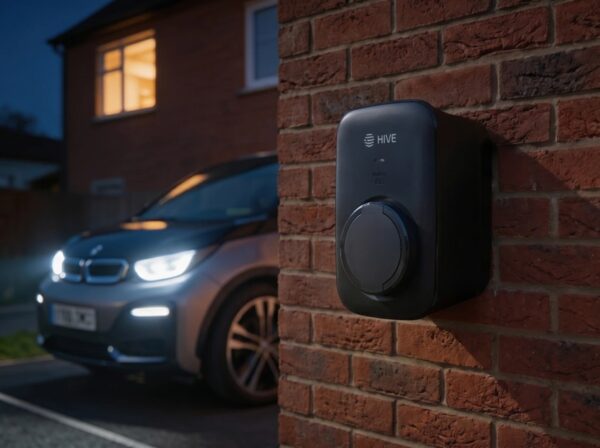
Hive states that a charger bought through the company can be scheduled and optimised in the Hive app, including a Power+ mode2. That places the Hive charger in the same category as other smart wallboxes: the scheduling logic lives in software rather than in the hardware, and the point of it is to move charging into cheaper and lower-carbon hours without the driver having to think about it.
The general principle is set out by FlexAssure, which describes smart EV charging as letting a car charge when electricity is cheapest and greenest, often overnight, without changing your routine5. That is the whole proposition. A household on a time-of-use tariff sets the car to charge in the cheap window, and the charger and app handle the timing. The saving comes from the tariff, not from the charger, which is why the value of any smart wallbox depends on what tariff it is paired with.
The dependence this creates is the clearest one in the whole arrangement. Local control at the charger and at a wired programmer continues without an internet connection, but scheduling from away, energy monitoring and remote diagnostics depend on a home broadband connection, Hive's servers and the manufacturer's app. A charger whose app is withdrawn does not stop charging a car, but it does stop being a smart charger in any meaningful sense: the scheduling reverts to whatever the car itself can do, or to a manual routine.
That is the trade a household makes with any app-controlled wallbox, and it is worth weighing against a charger that keeps its scheduling logic on the device. More on how these systems are built is at smart EV chargers and EV charger apps and connectivity.
The Zapmap partnership: £20 credit and the Hive Charging Card
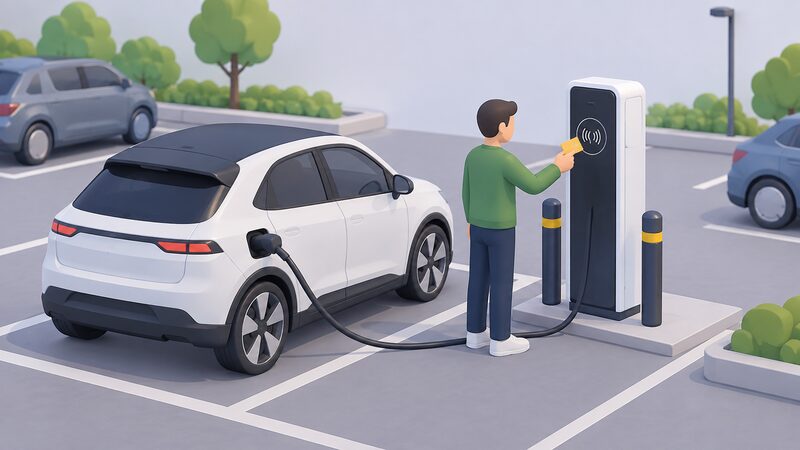
In June 2025 Zapmap announced a partnership with Hive giving buyers of a Hive EV charger a £20 credit and a Hive Charging Card for use at over 25,000 public charge points3. Hive's own page describes the credit as spendable at over 25,000 Zapmap chargepoints across the UK and equivalent to 100 miles1. The card itself allows drivers to start a charge with a quick tap at compatible charge points6.
The offer had a second layer. New Hive customers could combine the £20 Zapmap charging credit with Hive's FreeCharge offer to enjoy free charging at home and on the road3. That combination is the part that speaks most directly to running costs: a home charging offer plus a public network credit covers both halves of an electric car's energy needs, at least for the introductory period.
The public charging landscape the card plugs into is large. Public charge points are found at public car parks, on-street, coffee shops, supermarkets, hotels, workplaces and service stations7. A network of 120,000 public EV chargers now extends across the UK, and 27% of them were rated standard plus, meaning 8kW to less than 50kW, as of 1 July 20268. The Hive Charging Card is a payment route into that network rather than a network of its own, so its usefulness depends on Zapmap's roaming arrangements continuing.
Charging in winter: why sessions can take longer
Cold weather slows charging, and the reason is straightforward. Extra power is needed to heat both the inside of the car and the battery, so it can take longer to charge10. The battery chemistry itself is less willing to accept current at low temperatures, and the car diverts some of the incoming energy to thermal management rather than to the cells.
The charging curve compounds this. Charging tends to slow down as the battery fills up to help protect long-term performance, usually when it reaches 80%2. Independent guidance puts the taper in more detail: the rate of charge slows as it approaches 100%, as well as at lower states of charge, for example when below 10%11. Charging slows significantly after about 80% to protect the battery and prolong its lifespan, so charging up to 80% is generally quicker12.
Heat works the other way, up to a point. Warmer weather tends to reduce charging times, but if the battery overheats the charging speed could decrease or stop altogether as a safety measure13. So the fastest sessions sit in a moderate temperature band, and both extremes cost time.
There is a seasonal dimension specific to solar. In summer a reasonably sized solar system can cover a significant portion of a typical household's EV charging needs; in winter output drops considerably and grid top-ups become more necessary14. A household charging from its own roof therefore sees the winter slowdown twice over: the car accepts less, and the panels produce less. More on the seasonal pattern is at EV charging speeds and times and charging an EV from solar panels.
Installation terms and conditions: what the paperwork covered
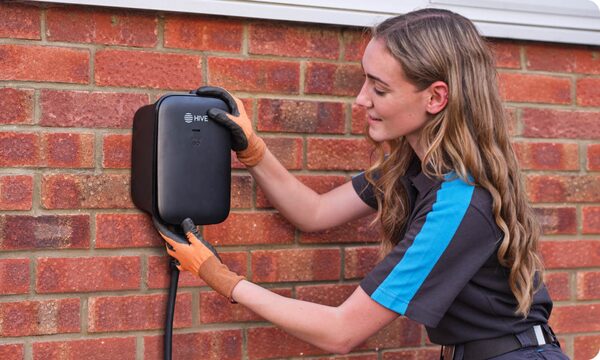
The standard installation package is set out in some detail. It included:
- a remote home check where required, plus EV charger installation by a certified approved engineer
- the charger attached to an accessible external wall
- 10 metres of charger supply cabling (Tuffex) connected, with a maximum of 5 metres internal
- one external wall breakthrough
- a Matt:e O:Pen and load management or curtailment device fitted where appropriate
- a 3-year warranty on the charger and installation1
The documents that must be handed over are specified too. A BS7671 Electrical Installation Certificate and DNO approval or acknowledgement must be provided to the user or property developer after the installation1. Installers must work to any applicable laws or regulations including the IET Wiring Regulations (BS 7671) and the IET Code of Practice for Electric Vehicle Charging Equipment Installations, plus Distribution Network Operator requirements1.
Building regulations approval is always required when installing an EV home charger, and the compliance certificate exists to prove the work complies with building regulations15. Planning is a separate matter: installing a home charger is classified as development, so it is up to the householder to ensure the correct permissions are in place11. Permission is usually required for on-street parking, conservation areas, listed buildings, areas where the installation is restricted through article 4 directives, and more than one upstand per parking space11. Usually no planning permission is needed because the installation falls within permitted development rights, with exceptions for listed buildings, conservation areas or cross-pavement solutions13.
In Northern Ireland the network connection is handled differently. Homes sharing a looped electricity cable with a neighbour need their own dedicated cable installed before an EV charger can go ahead16. Guidance there puts an EV charger at up to £1,00017. The full process is covered at home EV charge point installation and planning permission for a home EV charge point.
Hive the brand: British Gas origins, scale and Trustpilot rating
Hive is the smart products arm of British Gas, which sells smart thermostats, smart plugs and smart light bulbs under the Hive brands18. That parentage explains both the reach and the risk: Hive products are sold to an existing energy customer base, and the brand's fortunes move with the parent company's product strategy rather than with the charger market alone.
The ratings picture is mixed and worth reading carefully. Hive carries a Trustpilot score of 4.1 out of 51. British Gas is separately rated 4.1 out of 5 on Trustpilot19, and a boiler review page records a TrustScore of 4.8 out of 5 from 10,254 reviews20. These are brand-level service ratings, not assessments of the charger.
British Gas has a longer record in home energy hardware. It completed its first air source heat pump installation at a home in Ivybridge, Devon in March 2022 as part of a new service21. Its energy supply arm has been reviewed by Ofgem, which placed it in a group of suppliers with minor weaknesses in how they support customers in vulnerable situations22. In a 2021 Which? customer survey it came joint 18th with Boost23. The British Gas Energy Trust operates as an independent charitable trust of British Gas, and its research found nearly four in 10 adults still do not seek support when struggling with energy bills24.
For a household, the brand question is whether a large energy supplier is a safer or a riskier custodian of a home charger than a specialist manufacturer. The evidence supports neither answer cleanly. A large parent brings scale and an existing support operation; it also brings exposure to product-line decisions made well above the charger.
Where the charger fits in a household energy independence setup
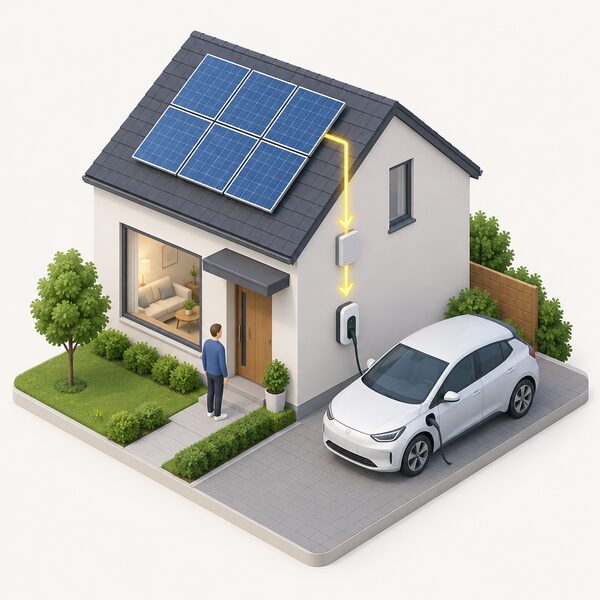
A home charger of this kind does one thing for independence and leaves several dependencies in place. On the positive side, charging at home means the energy comes through the household's own electricity supply rather than a public network, at domestic rather than public rates, and on whatever tariff the household has chosen. Smart scheduling through the app lets that charging move into cheaper and greener hours, which is the mechanism FlexAssure describes5. Paired with solar, a home charger can absorb surplus generation that would otherwise be exported.
The dependencies are the other half of the picture. The charger keeps the household on the grid and on an electricity supplier; there is no way for a wallbox to charge a car without a supply. The smart layer adds a dependence on broadband, on Hive's servers and on the manufacturer's app. The public charging credit ties part of the running cost to Zapmap's network and its roaming agreements. And the longest support terms depend on a continuing relationship with Hive and the original installer, since Hive coordinates warranty claims with that installer rather than handling them alone1.
The charger also sits inside a wider regulatory frame. Home charging equipment is tested and certified for both home and commercial use, and the BSI Kitemark scheme exists to certify charge points25. ChargeUK, which describes itself as the voice of the UK's EV charging industry, has published research on accelerating the rollout of charge points26. The grant landscape has shifted too: the Electric Vehicle Homecharge Scheme is closed to new applications, having provided funding from 2014 to 2022 before being replaced by the EVCG, and 340,222 domestic charging device installations received funding under it in the United Kingdom27. The LEVI Fund has funded 643 EV charger installations in England27.
For a household weighing a Hive charger against alternatives, the honest summary is that the hardware is a competent 7.4 kW Type 2 unit with a mobile data connection, the smart features are app-dependent, and the brand's product line is contracting. The wider context on how home charging fits into a household's energy position is at EV charging and household energy independence and EV charging at home in the UK.
Sources27 cited
- Hive electric vehicles shop, Hive, 2026
- Types of EV chargers, Hive, 2026
- Home charging guide, Zapmap, 2025
- Home charging guide, Zapmap, 2025
- What is flexibility, FlexAssure, 2026
- How to pay for public EV charging, Zapmap, 2025
- Electric vehicles for home charging, Electricity North West, 2026
- Public electric vehicle charging infrastructure statistics, Department for Transport, 2026
- EV charger installation and maintenance, NICEIC, 2025
- How long to charge an electric car, Uswitch, 2024
- Planning permission for EV charging, Planning Portal, 2026
- Electric car charging guide, Carwow, 2025
- EV charger regulations in England, NICEIC, 2026
- Can solar panels charge electric cars, CPA, 2026
- Building regulations for EV charging, Planning Portal, 2026
- EVs and heat pumps, NIE Networks, 2026
- Electric vehicles, nidirect, 2026
- How to choose the best energy company, Which?, 2026
- British Gas, Energy Helpline, 2026
- New boiler, Uswitch, 2025
- British Gas completes first heat pump installation in Devon, Flexi-Orb, 2022
- Ofgem completes review of how suppliers support customers in vulnerable situations, Ofgem, 2022
- Best and worst energy companies for 2021 revealed, Which?, 2021
- Nearly four in 10 adults still don't seek support when struggling with energy bills, British Gas Energy Trust, 2025
- Powering trust in electric vehicle charging with BSI Kitemark certification, BSI, 2026
- ChargeUK publishes new research on accelerating the rollout of charge points, ChargeUK, 2026
- Grant schemes for electric vehicle charging infrastructure statistics, Department for Transport, 2026
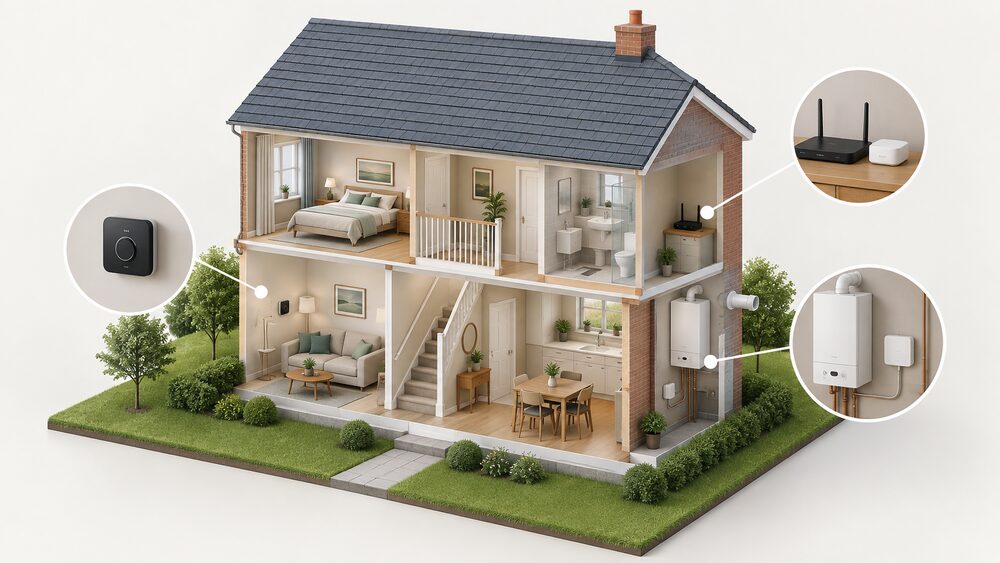 Hive ThermostatThe Hive Thermostat in the UK: what it controls, which boilers it suits, what is in the box, Hive+ membership, installation, warranty and returns.
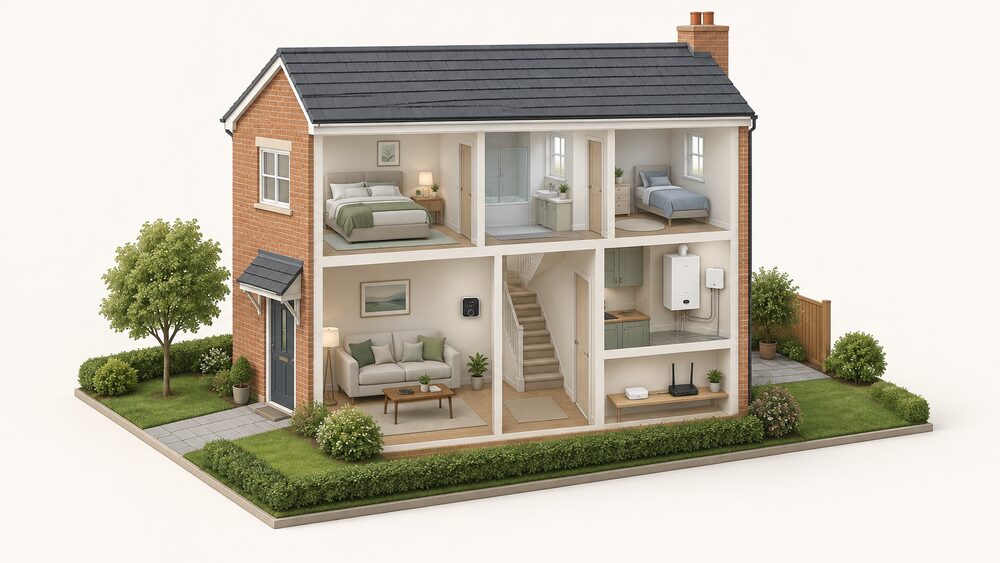 Hive Thermostats and Heating ControlsHive is a smart thermostat brand owned by Centrica and sold through British Gas.
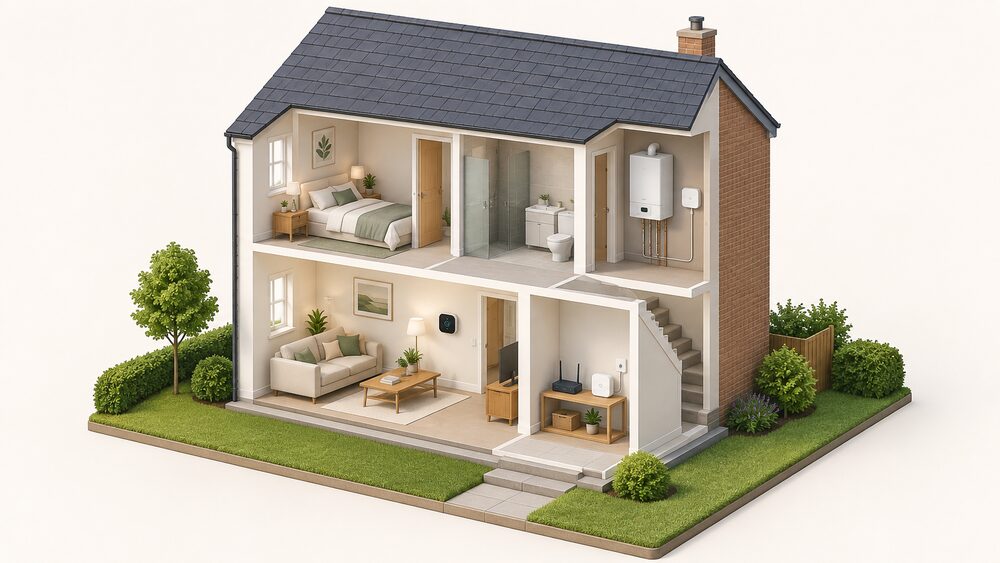 Hive Smart HomeHive is a widely installed UK smart-home brand covering heating, plugs, sensors and security through one app, with a hub at the centre and a paid Hive+ tier on top.