

In this answer
Short answer
A home EV charger is widely reported to add value to a property, but the figures are estimates rather than recorded sale prices, and they range from £3,000 to £7,400 depending on who is counting. The most substantial study, covering over five million existing homes, put the uplift from EV charging points at £5,400 to £7,400, or 2.0 to 2.75%1. The National Association of Property Buyers put it lower, at £3,000 to £5,000, and tied that range to location, charger type and how much public charging is nearby2.
Against that, a charger costs £500 to £1,200 to buy and install for most homes, with 7kW units around £9003. Official guidance gives a wider spread of £450 for a basic model rising to around £1,200 as power and capability increase4. So the reported uplift is several times the installation cost, which is why the question attracts so much attention.
The honest answer is that a charger adds value where a buyer wants one, and the evidence for a general premium is modelled rather than measured. There is no official register of home charge devices in the UK, so no valuation body can verify an individual installation5. What follows sets out the estimates, where they come from, what drives the size of the uplift, and the circumstances in which the answer is no.
What the evidence says: estimates from £3,000 to £7,400
The headline range runs from £3,000 to £7,400, and the gap between the ends of it is not a disagreement about the same measurement. The two figures come from different methods and different populations.
The larger figure comes from a study analysing over five million existing homes, which put EV charging points at £5,400 to £7,400, a 2.0 to 2.75% increase in home value1. The same study put solar PV at £1,350 to £5,400, or 0.5% to 2.0%, which is a useful comparison: the charger figure sits above the solar figure at both ends of the range, in a study that measured both the same way1.
The smaller figure is an estimate from the National Association of Property Buyers, reported at £3,000 to £5,000, and explicitly conditional on location, charger type and local public charging availability2. That conditionality is the important part. It is not a national average but a range for the circumstances in which a charger is most likely to be valued.
A third figure, up to £7,400, comes from a charger maker's own product page8. It sits at the top of the modelled range and should be read as a maker's claim about its own category rather than an independent measurement.
"EV charging points: £5,400 to £7,400 (2.0 to 2.75%)"
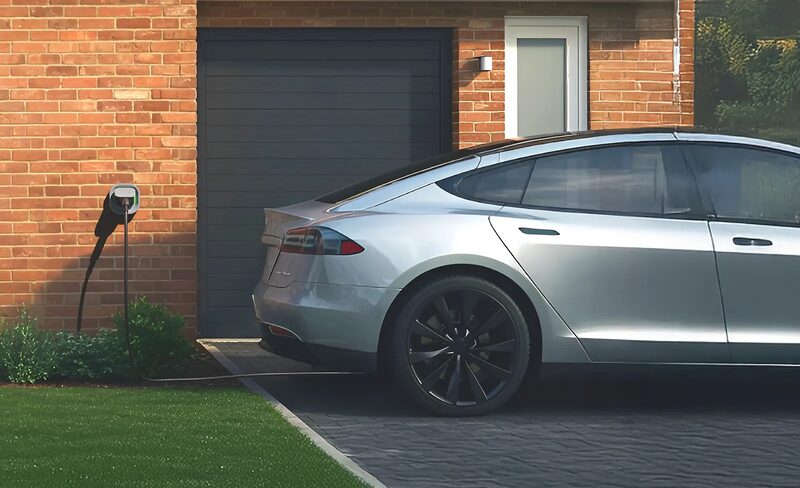
Where the figures come from and how much to trust them
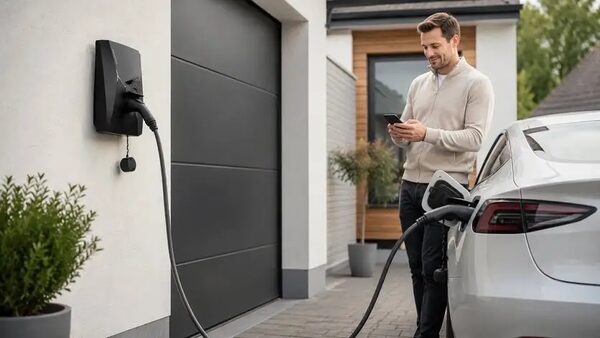
None of the charger figures is a record of what buyers actually paid. They are modelled or estimated, and the difference matters when a household is weighing an installation against a possible sale.
The £5,400 to £7,400 range comes from analysis of over five million existing homes, which is a large sample and a defensible method, but it produces a modelled uplift rather than a comparison of sale prices with and without a charger1. The £3,000 to £5,000 range is an estimate from a property buyers' body, which is a professional view rather than a measurement2.
For scale, the same body of work on energy performance certificates gives much larger figures. Improving an EPC from E to C typically increases a property's value by just over £26,000, and improving from F to C by nearly £56,000, or 15%9. Improving from D to C represents a rise of 3% of the typical UK home value, and from E to C a 7% rise on the average home9. Those are far bigger numbers than any charger estimate, and they point to the same conclusion: what a buyer pays a premium for is the whole energy performance of the property, not one device on the wall.
Older government research on energy ratings and dwelling prices found uplifts of 38% for EPC A/B, 26% for C, 23% for D, 20% for E and 15% for F, based on properties moving from EPC G10. A second set of figures in the same research gives 27%, 21%, 18%, 16% and 12% for the same bands, and the two sets are not reconciled10. A separate summary of the 2013 report gives a 20% increase in property value in the North East from improving an EPC from grade G to EPC E11. These are old figures from 2013 and should be treated as historical context, not current expectations.
The practical reading is that a charger is a modest, conditional contributor to value, sitting inside a much larger energy performance story that buyers and lenders already price.
What drives the size of the uplift: location, charger type and public charging nearby
The National Association of Property Buyers range is conditional on three things: location, charger type and local public charging availability2. Each of those has evidence behind it.
Location matters most through planning constraint. In a conservation area or another designated area, there are increased chances that an application will attract conditions affecting the size, appearance and placement of the charger12. Planning permission is usually required for on-street parking, conservation areas, listed buildings, areas where installation is restricted, and more than one upstand per parking space12. Where a charger can only be sited awkwardly, or disguised, the installation is less straightforward and the value case is weaker.
Charger type matters through cost and capability. A 22kW unit is the most expensive option and requires a three-phase connection3. On the maker side, design, amp capacity, speed and the extent of built-in smart technology all drive up cost, and extensive work due to a challenging location raises installation costs further13. A more capable charger costs more to fit, which raises the bar the uplift has to clear.
Public charging nearby matters because it determines how much a household needs its own. Only 16.7% of public EV chargers in England and Wales are in rural areas, against 17.5% of the population living there6. In one Scottish survey, 83% of rural EV drivers mostly charged at home, against 74% and 69% for urban areas15. Where public charging is thin, home charging is closer to a necessity, and a charger is more likely to be treated as part of the property's basic equipment.
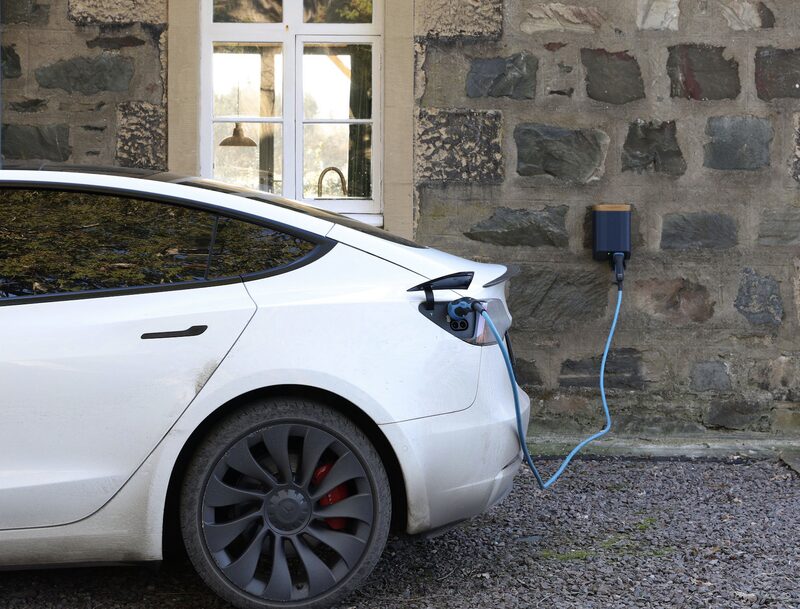
A dedicated charger versus a three-pin socket: what buyers actually value
A three-pin socket will charge a car, but the guidance is consistent that it is not the right long-term arrangement, and that is what separates a socket from a charge point in a buyer's mind.
Independent guidance states that slow charging at home can be carried out using a standard 3-pin socket, but that a dedicated unit is strongly recommended for regular charging16. Network operators put it more plainly: to achieve faster charging speeds, a dedicated EV charge point over a standard household socket (13A) is recommended17. The reason is current demand over long periods, which a domestic socket was not designed for.
A dedicated charge point also brings things a socket cannot. It can be certified: testing and certification for charge points covers both home and commercial use18. It can be grant-funded in some circumstances: the electric vehicle chargepoint grant helps towards the cost of installing an electric vehicle chargepoint socket at a property, for renters and flat owners19. And it can be controlled, which is what makes it useful on a time of use tariff.
What buyers value, on the evidence available, is a fixed, certified, controllable installation rather than a cable run to a domestic socket. That is also what a surveyor or lender can see and record.
Cost of installation against the likely value gain
The cost side is better evidenced than the value side, and the figures are consistent enough to plan around.
| Cost element | Figure | Source |
|---|---|---|
| Home EV charger, buy and install | £500 to £1,200 | 3 |
| 7kW charger, buy and install | around £900 | 3 |
| Basic model, installation | £450 | 4 |
| Higher power and capability, installation | around £1,200 | 4 |
| Average installation, parts and labour | £1,000 | 20 |
| Electrical work only, excluding the unit | £800 to £1,500 | 21 |
| Grant for landlords, flat residents and renters | up to £350 per socket | 7 |
Against a reported uplift starting at £3,0002, the arithmetic looks favourable, and one maker states the value gain is more than five times the upfront cost of some smart chargers22. That claim is a maker's, and it depends on the uplift being realised at all.
Two costs can sit outside the headline figures. If a supply upgrade is needed, the picture changes: EV chargers and other low-carbon technologies can push a home's electricity demand above the available supply, which may require an upgrade23. Where installers can complete their work without upgrading the supply, there are no costs to pay to UK Power Networks24. A load check is required when the total demand of the property is more than 60 amps or does not qualify for Connect and Notify, and the installer must apply and wait for permission before installing25.
There is also a running cost to be honest about. A home energy expense will increase when a household switches to EV charging26. That is a change in the household's bills, not the property's value, but a buyer will see it.

Does an EV charger add value in every market? Where the answer is no
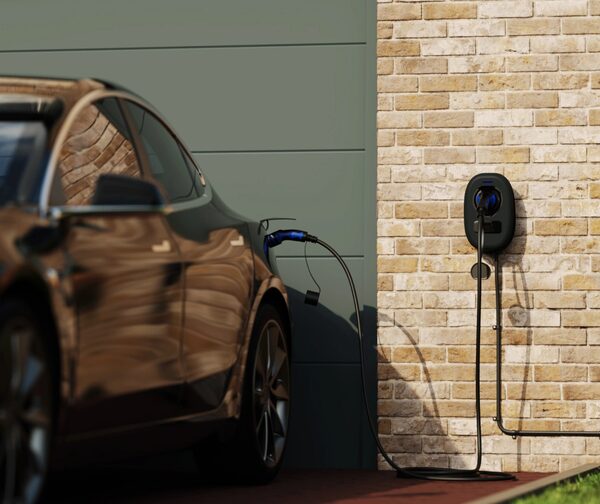
No. The uplift is conditional, and there are identifiable circumstances in which it does not appear.
The first is where public charging is already good. The National Association of Property Buyers range depends on local public charging availability2, and the logic runs both ways: where a household can charge cheaply and conveniently nearby, the private charger is a convenience rather than a necessity, and a buyer may not pay a premium for it.
The second is where the buyer has no electric car. None of the estimates distinguishes between buyers who drive electric and those who do not, and a charger is only useful to the former.
The third is where the installation is constrained. Planning permission is usually required for on-street parking, conservation areas, listed buildings, restricted areas and more than one upstand per parking space12. In a designated area, conditions may affect the size, appearance and placement of the charger12. A restricted installation is a weaker asset.
The fourth is where the charger is not controllable. Standard EV chargers draw electricity from the home supply without distinguishing between solar-generated power and grid electricity27. A household with solar and a standard charger gets less from both. Independent guidance is clear that EV chargepoints able to export to the grid or allow in-home demand flexibility can save households significant amounts of money while reducing strain on the grid at peak times28. That capability is what a future buyer on a time of use tariff would value.
Smart chargers, tariffs and what a buyer inherits
Smart capability does not have a measured price premium attached to it in any of the figures here. What it does is open access to tariffs, and that is where the household economics sit.
Independent guidance says an EV charger, heat pump or home battery makes smart tariffs much more valuable30. A household does not need a smart meter simply to charge an EV, but without one it may not be able to access some EV-specific tariffs31. One customer reports that a smart meter helped access cheaper energy rates, allowing the car and the washing machine to run for less32.
There is a condition on the tariff side that bears on the value question. An EV tariff requires a home EV charger, because there is no point having an EV tariff if the car cannot be charged at home33. One supplier's EV charging product is not technically a tariff but an add-on to existing tariffs34. So the charger is the enabling device for the cheaper running costs, and those running costs are what a buyer would inherit.
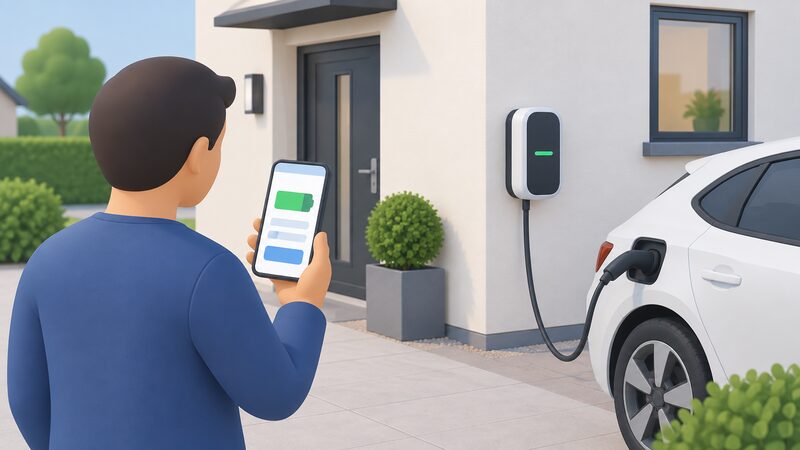
What a buyer inherits is not just the hardware. The app account, the tariff arrangements and any remaining warranty transfer with the property in practice, and the charger's certification is what makes it a known quantity: testing and certification for charge points covers both home and commercial use18.
Planning, grants and the paperwork a sale needs
Two administrative points affect whether a charger can be counted as an asset at all.
The first is planning. Permission is usually required for on-street parking, conservation areas, listed buildings, areas where installation is restricted, and more than one upstand per parking space12. Where an application is needed in a designated area, there are increased chances of conditions affecting size, appearance and placement12. Official guidance suggests minimising impact on the visual context of the local area, for example placing the charge point around the side of the house, on a porch, or disguising it with bushes and plants12.
The second is the grant. The electric vehicle chargepoint grant offers up to £350 per socket for residential landlords, people living in flats and people who rent their homes7. There are exclusions: a landlord cannot apply if they live in the property, if the property is not a residential property, if a chargepoint was already installed before eligibility was confirmed, if the property is only used for holiday accommodation, if there is no company registration number or VAT registration number, or if the installation is because of a mandatory requirement26.
On the electrical side, the installer should assess the maximum load of the property, and if charging would exceed the circuit breaker rating or service cable capacity, the energy network operator will need to upgrade the supply if it cannot cope3. A load check is required when total demand exceeds 60 amps or does not qualify for Connect and Notify, and permission must be granted before installation25. Where no upgrade is needed, there are no costs to pay to UK Power Networks24.
Sources34 cited
- Watt a Save: The real cost of home energy, Home Builders Federation, 2026
- Electric vehicle charger installation and maintenance, NICEIC, 2025
- Electric car charging at home, Which?, 2026
- Electric vehicle chargers, Planning Portal, 2026
- Home and community charging statistics, Zapmap, 2026
- Public electric vehicle charging infrastructure statistics, 1 July 2026, Department for Transport, 2026
- Charging electric vehicles, Energy Saving Trust, 2026
- Costs and savings, Aira, 2026
- Smart search: electric vehicle charging, Planning Portal, 2026
- Green home statistics, Uswitch, 2024
- Energy saving measures boost house prices, Department for Energy Security and Net Zero, 2013
- Electric vehicle charging: planning permission, Planning Portal, 2026
- Everything you need to know about the costs of a home EV charging station, Alfen, 2026
- Everything you need to know about the costs of a home EV charging station, Alfen, 2026
- Consumer experience of electric vehicles in Scotland, Consumer Scotland, 2024
- EV buying guide, Zapmap, 2024
- Low carbon technology strategy, Energy Networks Association, 2026
- Powering trust in electric vehicle charging with BSI Kitemark certification, BSI, 2026
- Electric vehicle chargepoint grant, GOV.UK, 2026
- EV charging statistics, Uswitch, 2025
- Section 722 EV charging: complete guide, Elec-Mate, 2026
- Upgrading to a smart EV charger, OVO Energy, 2025
- If your electricity supply can't cope with the new equipment, NIE Networks, 2026
- Electric vehicles: cost, time and what's involved, UK Power Networks, 2026
- EV connections, SSEN Distribution, 2026
- Electric vehicle chargepoint and infrastructure grants for landlords, Find a Grant, 2026
- Can solar panels charge electric cars?, The CPA, 2026
- Electric vehicles, nidirect, 2026
- Making home energy management work for consumers, Energy Systems Catapult, 2026
- Should I switch to a time of use tariff?, Energy Saving Trust, 2026
- EV tariffs and home charging: what consumers need to know, Energy Ombudsman, 2026
- Benefits of smart meters, Smart Energy GB, 2026
- EV energy tariffs, Uswitch, 2025
- OVO EV energy tariffs, Uswitch, 2025
 Charging With a Home BatteryHow a home battery and an EV charger share one supply, whether a battery can usefully charge a car, and how combined systems are controlled so the battery is not discharged into the vehicle at a loss.
 Home EV Charger ManufacturersWhich home EV charger brands are worth considering, and how do you choose between them?
 Charging and Energy IndependenceCharging an electric car at home can cut your fuel costs, but how much does it really free you from the grid?
 Home Charger InstallationWho can fit a home EV charger, and does it need building regulations approval?
 Cost to Charge an EV at HomeHow home charging cost is worked out from battery size, efficiency, the unit rate paid and the tariff behind it, with full-charge costs of about £8 to £17, cost per mile, annual running costs and what changes for EV owners from April 2028.
 Charging by Home TypeHow the practical and legal position for home EV charging changes by property type: flats and leasehold consent, terraced homes without frontage, shared car parks and metering, rural properties with long cable runs, and listed or conservation area homes.