
In this guide
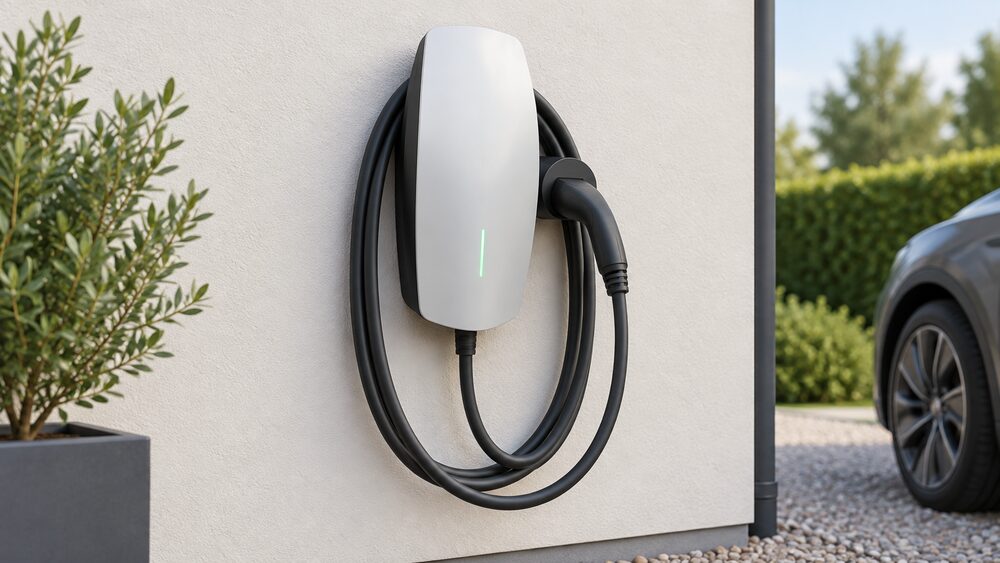
The Tesla Wall Connector is Tesla's home charge point, sold in the UK as a wall-mounted unit with a tethered Type 2 cable. It is bought directly from Tesla rather than through a wholesaler, priced at around £425 for the hardware alone, with installation quoted separately1. The cable is 7.3 metres long and the unit carries a four-year warranty1.
It is not a Tesla-only product. The connector is Type 2, the standard AC connector used across the UK and Europe, so any car with a Type 2 inlet can use it2. Households that also own a Tesla Powerwall gain a further link, since the Wall Connector integrates with the Powerwall through the Tesla app, an integration that depends on owning that battery.
What the Wall Connector does not do is manage solar diversion on its own. It integrates directly with the Powerwall through the Tesla app, and it relies on the Powerwall to handle energy flow rather than steering surplus generation into the car itself1. That distinction shapes both the cost of a solar-linked setup and the household's dependence on Tesla's own ecosystem.
Specifications: 7 kW or 22 kW, Type 2 tethered cable
The Wall Connector sits in the same electrical class as other UK home wallboxes. Type 2 charging covers 7 to 22 kW on AC, using a seven-pin connector2. Tesla's own Type 2 connector supports AC charging at home or destination points up to 11kW or 22kW on older Model S and Model X vehicles2. For most UK homes the practical ceiling is 7 kW single-phase, because 22 kW requires a three-phase supply, which domestic properties rarely have.
The cable arrangement is the main physical difference between wallbox designs. The Wall Connector is tethered: the 7.3-metre cable is fixed to the unit and stays there1. Untethered alternatives use a socket, and the driver supplies the cable. Both approaches exist across the market. The EV Wall Charger 2 is offered in tethered form with a built-in 7.5m Type 2 cable, and in socketed form with a choice of 7.4kW or 22kW models4. The Home Series Wall Mount V3 offers a Type 2 socket on its integrated socket version, or a 6.8m or 9.6m Type 2 charge cable on its integrated cable version5.
| Feature | Tesla Wall Connector | Typical UK alternative |
|---|---|---|
| Connector | Type 2, tethered2 | Type 2 socket or tethered5 |
| Cable length | 7.3 m1 | 6.8 m or 9.6 m5 |
| Power class | 7 to 22 kW AC2 | 7.4 kW or 22 kW4 |
| Warranty | 4 years1 | Varies by maker |
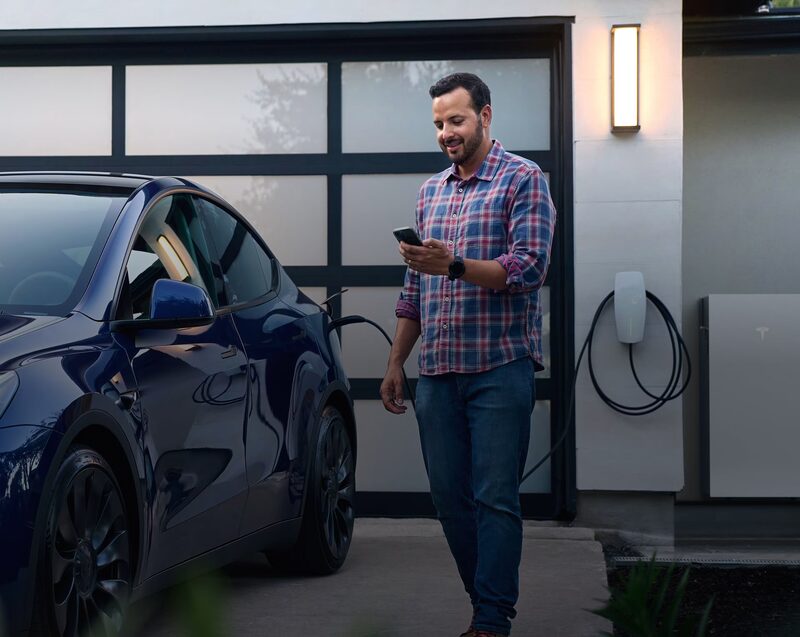
Charging speed: several hours on a home supply
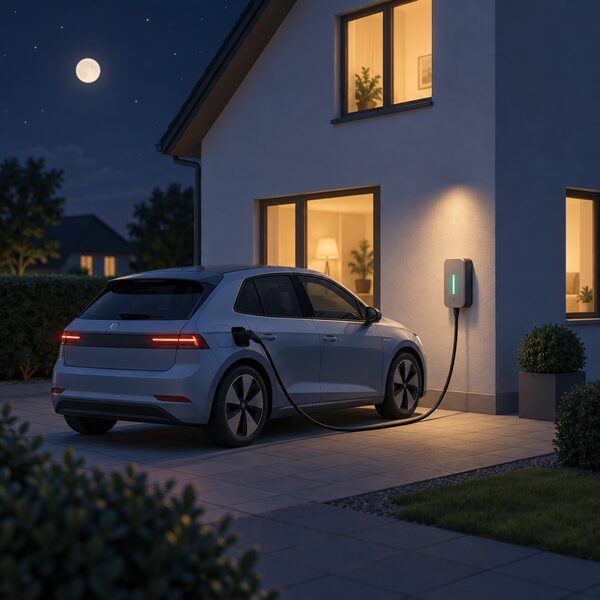
Home charging is slow charging, and the figures reflect that. At the lower end of the home range, a car can take anywhere from six to 18 hours to reach 80%6. A Nissan LEAF on a standard 7 kW AC home charger takes approximately seven hours to go from 0% to full7. That pattern, an overnight rather than a quick top-up, is what shapes how a home unit is used and why cheap off-peak hours matter more than headline power.
The variation between those numbers is not a contradiction: it reflects battery size, the car's onboard charger limit and the state of charge at the start. A larger battery takes longer at the same power. The 0 to 80% band is used because charging slows markedly above that point on most cars, so the last 20% takes disproportionately long.
For context, the same car charged on a rapid DC unit reaches 80% in 20 to 60 minutes8, and many vehicles can be charged to 80% in as little as 20 to 30 minutes to an hour9. A Vauxhall Corsa-e manages a charge to 80% in as little as half an hour on DC10. Those speeds are not available from any home wallbox, because domestic AC supply cannot deliver that power.
The practical consequence for a household is that home charging is an overnight activity. A 7 kW wallbox adds roughly the energy a typical commute uses in an hour or two, and fills most cars across a night. That is the point of home charging: it moves the energy purchase to the cheapest hours and removes the routine trip to a public charger. More on the trade-offs between power levels is at 7kW vs 22kW home EV charger, and the full picture of speeds is at EV charging speeds and times.
Price: around £425, and buying through the Tesla Portal
The Wall Connector is priced at around £425, excluding installation cost1. That places it at the affordable end of the wallbox market on hardware alone, though the installed cost depends on the cable run, the consumer unit, whether a supply upgrade is needed and the electrician's rate.
There is no published installed price for the Wall Connector in the same way there is for Tesla's battery products. For comparison, Tesla Powerwall 3 is offered at £7,495 with 0% VAT, described as an installed price including the unit and basic installation11. Powerwall 2 was priced at £7500 when installed with or without solar12. Those are battery figures, not charger figures, and they show how much of a Tesla home energy setup sits outside the wallbox itself.
Where a household needs a new or upgraded supply, the network operator's own connection times apply. For two to four domestic connections in the 60kVA to 300kVA band, the average time to connect from payment is 7 weeks13. That is a separate process from the charger installation and can sit on the critical path.
VAT treatment is not stated in the £425 figure, so it should be read as a quoted hardware price rather than a confirmed VAT-inclusive one. Prices for the installed job are installer-quoted. Cost context across the market is at home EV charger cost, and the running cost side is at EV charging running costs.
Warranty: four years of cover
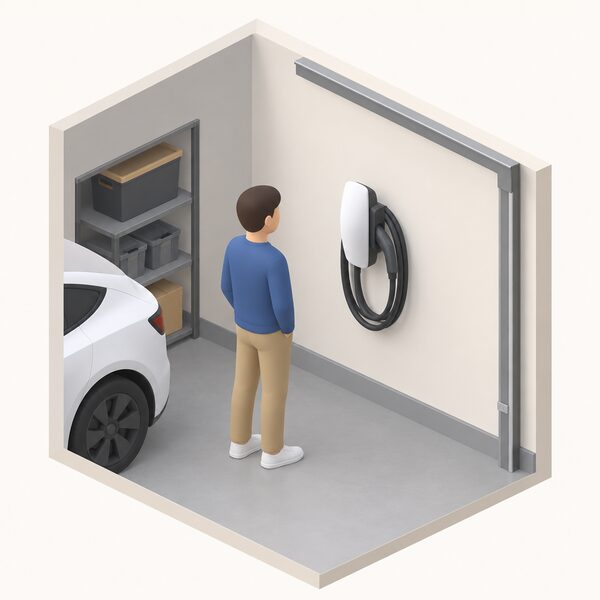
The Wall Connector comes with a four-year warranty1. That is the manufacturer's term on the hardware, and it sits alongside the installer's own workmanship guarantee, which is a separate matter and varies by installer.
Tesla's warranty terms elsewhere in its home energy range show how conditions can attach. On Powerwall 3, the warranty may be limited to 4 years if an Internet connection is not established or is interrupted for an extended period and Tesla is unable to contact the owner14. The Powerwall warranty states that if the unit is not connected to the internet for an extended period or has not been registered with Tesla, Tesla may not be able to honour the full ten year warranty, but will always honour the warranty for at least four years following the date the Powerwall was installed for the first time15.
For a household, the warranty question is about who honours it and how. A four-year term on a wallbox is a manufacturer's commitment, and claims run through Tesla rather than through a distributor. The general landscape of charger warranties is covered at EV charge point warranties.
Solar and Powerwall integration: what it does and does not manage
This is the section that decides whether the Wall Connector suits a solar household. The unit integrates directly with the Powerwall through the Tesla app1. It does not manage solar diversion independently the way some standalone chargers do: it relies on the Powerwall to handle energy flow1.
That means the Wall Connector's solar behaviour is a function of the battery, not the wallbox. Powerwall 3 works with or without solar panels, comes with a built-in solar inverter, and allows solar to be added later16. Powerwall 3 also features an integrated hybrid solar inverter12. Powerwall 2 has no solar inverter, listed as N/A on that specification12. Powerwall 2 and Powerwall 3 are not compatible with one another and cannot be combined in the same system11.
By contrast, several standalone chargers do the diversion themselves. The Andersen A2 and the Hypervolt Home 3 Pro can divert surplus solar generation into a car via a CT clamp1. The Home Series Wall Mount V3 can automatically divert unused solar energy to charge a vehicle5.
"The Wall Connector does not manage solar diversion independently the way some standalone chargers do: it relies on the Powerwall to handle the energy flow."
For a household without a Powerwall, that is the central limitation: the Wall Connector will charge the car, but it will not by itself soak up surplus generation. The wider comparison is at Charging an EV from solar panels and Tesla Wall Connector vs Zappi.
Compatibility with non-Tesla EVs and the OZEV grant limit
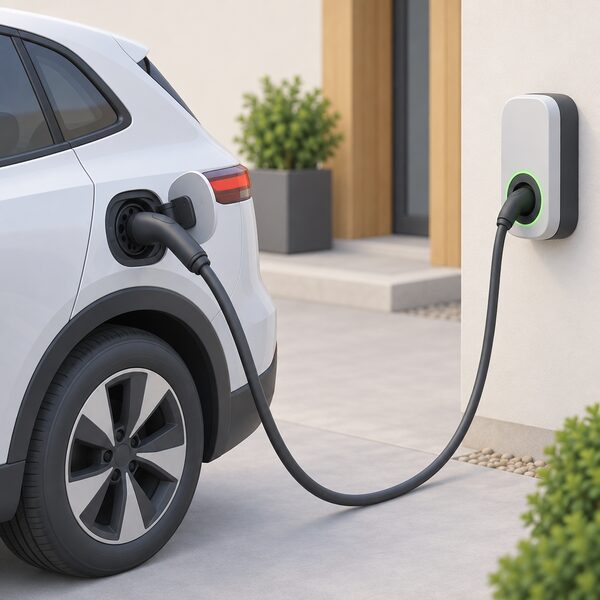
The Wall Connector is a Type 2 device, and Type 2 is the UK's standard AC connector, so compatibility is broad. A Type 2 to Type 2 cable is required to connect to Tesla home and public AC chargers, while Tesla Superchargers use tethered cables so no additional cable is required2. Away from home, Tesla's Supercharger membership allows drivers of non-Tesla EVs to access some of the Tesla Supercharger network paying the same charging rates as Tesla owners, though not all Tesla Superchargers are available to owners of other EVs, even if you have a subscription.
Public Tesla charging is a separate question from home charging, and the rules differ. Some Superchargers are now open to other brands of electric car, having previously been available only to Tesla cars17. A Tesla Supercharger membership allows drivers of non-Tesla EVs to access some of the Tesla Supercharger network, paying the same charging rates as Tesla owners, but not all Tesla Superchargers are available to owners of other EVs even with a subscription18. To use a Supercharger, a non-Tesla car needs to be CCS-enabled for fast charging19. A Tesla Model 3 uses a Tesla-specific CCS inlet and can use the Supercharger and Destination charger networks, with a tethered CCS adaptor required at Superchargers20.
On grants, the charger brand is not the test. The £350 per socket figure was the rate before 1 April 2026, when financial support for EV charge points increased from £350 to up to £500 per socket3. The grant is only for people who have vehicles on the list of OZEV-approved electric vehicles, and the chargepoint must not already have been installed, because the grant cannot be backdated21. The equivalent grant for renters or flat owners is likewise restricted to vehicles on the OZEV-approved list22. The published statistics note that the figures are not a complete list of all grant schemes for the installation of electric vehicle charging devices funded by OZEV23. The grant closes in March 20273. Eligibility detail is at The Electric Vehicle Chargepoint Grant for Renters and Flat Owners.
Indoor or outdoor placement and installation considerations
Outdoor installation is routine for Tesla's home hardware: the Powerwall 2 is specified for indoor or outdoor installation, and the Powerwall 3 for internal or external installation, wall-mounted or floor-mounted. The Wall Connector is a wall unit in the same mould, and the choice between an indoor garage wall and an outdoor wall is a siting decision, driven by cable runs and parking position, rather than a product limitation.
What drives the installation is the electrical work behind the unit. A home charge point needs a dedicated circuit from the consumer unit, and the route of that cable, the distance from the board and the capacity of the existing supply determine the cost and complexity. Where the supply needs upgrading, the network operator's connection timeline applies: for two to four domestic connections in the 60kVA to 300kVA band, the average time to connect from payment is 7 weeks13.
Placement also affects how the cable reaches the car. A 7.3-metre tethered cable1 is generous enough for most driveways if the unit is sited sensibly, but a car parked nose-in at an awkward angle can leave the cable short. Siting the unit between two parking positions, or on the wall nearest the charge port, is the usual approach.
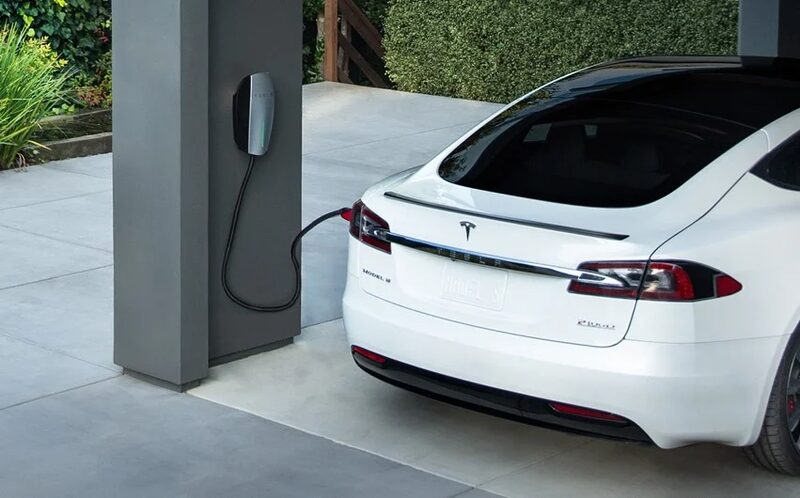
The electrical requirements, including protection and earthing, are set out at Electrical requirements for a home EV charge point, the notification step at Telling the network operator about a home EV charger, and the process at Home EV charge point installation.
What the Wall Connector means for household energy independence
The Wall Connector moves the energy purchase for the car to the home, which is the main independence gain. Charging at home on a domestic tariff replaces routine public charging, and public rapid charging prices in August 2026 ranged from 59p/kWh to 92p/kWh across the top ten networks, with InstaVolt highest at 92p/kWh and Tesla cheapest at 63p/kWh24. Home electricity is bought on a domestic tariff rather than at those rates.
The dependence that remains is layered. The household stays on the grid and on an electricity supplier for the energy itself. The Wall Connector's smart functions and its integration with the Powerwall run through the Tesla app, so remote control and solar-linked behaviour depend on Tesla's software and, for the battery side, on an internet connection1. Where solar diversion matters, the household depends on a Powerwall rather than on the wallbox, which is a considerably larger purchase: Powerwall 3 is offered at £7,495 with 0% VAT as an installed price including the unit and basic installation11, and Powerwall 2 was priced at £7500 installed with or without solar12. Independent guidance puts a Tesla Powerwall at £6,200 excluding installation16, and the unit's capacity is 13.5kWh with a 10-year warranty16.
So the Wall Connector is a low-cost entry point to home charging, and a poor standalone answer to solar self-consumption. A household wanting the car to absorb surplus generation either adds a Powerwall or chooses a charger that diverts via a CT clamp1. The broader picture of what home charging does and does not deliver for independence is at EV charging and household energy independence, and the battery side at EV charging alongside a home battery.
Sources24 cited
- Best EV charger for solar panels, Spirit Energy, 2026-06
- EV connector types, Zapmap, 2026-05-20
- Solar panels for EV charging, Fuse Energy, 2026-04-18
- Home installations, Sync Energy, 2026-09-17
- Home Series Wall Mount, Simpson & Partners, 2026-09-17
- Guide to EV charging, Zapmap, 2026-09-04
- How long does it take to charge an electric car, Zapmap, 2026-04-15
- Electric vehicle charging, SMMT, 2025-06-25
- EV connector types, Uswitch, 2022-02-03
- Vauxhall Corsa-e review, Zapmap, 2024-05-14
- Tesla Powerwall, Tesla Powerwall UK, 2026-09-14
- How much does it cost to install a Tesla Powerwall, Tesla Powerwall UK, 2024-06-18
- Indicative costs for new connections, Electricity North West, 2026-09-19
- Powerwall 3 owner manual, Tesla, 2026-09-17
- Tesla Powerwall 3 warranty, Infinity Energy, 2025-01-27
- Solar panel battery storage, Which?, 2026-05-14
- How to use electric car charging points, Which?, 2026-05-20
- Best electric car charging subscriptions, Carwow, 2025-11-21
- Can non-Tesla cars use Tesla Superchargers, Carwow, 2025-07-31
- Tesla Model 3 charging, Zapmap, 2026
- Electric Vehicle Chargepoint Grant for Households with On-Street Parking, Find government grants, 2026-09-17
- Electric vehicle chargepoint grant for renters or flat owners, GOV.UK, 2026-09-17
- Electric vehicle charging device grant scheme statistics: October 2025, GOV.UK, 2025-11-26
- How long does it take to charge an electric car, Zapmap, 2026-08
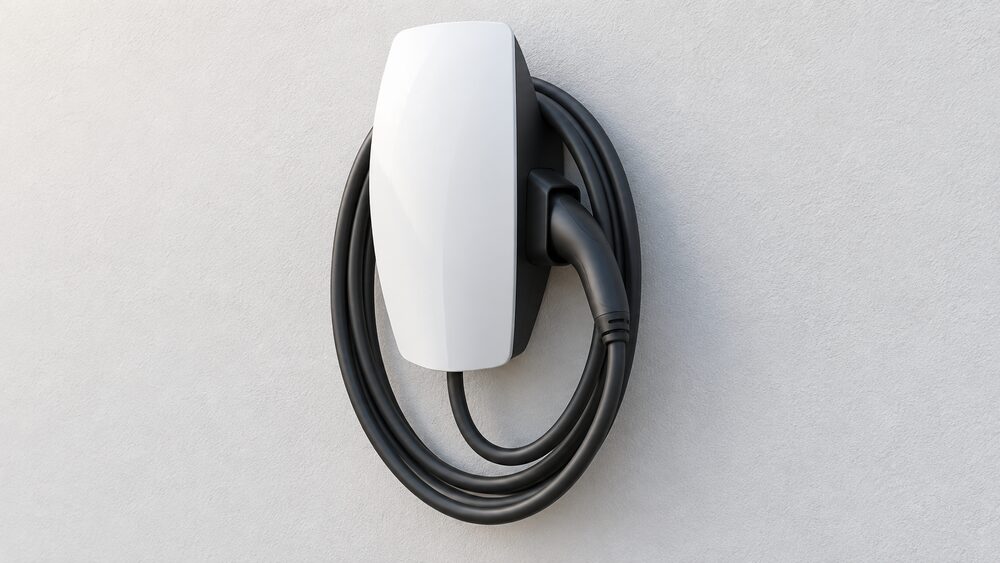 Tesla Gen 3 Wall ConnectorHow fast will a Tesla Gen 3 Wall Connector charge your car at home, and will it work with a non-Tesla electric car?
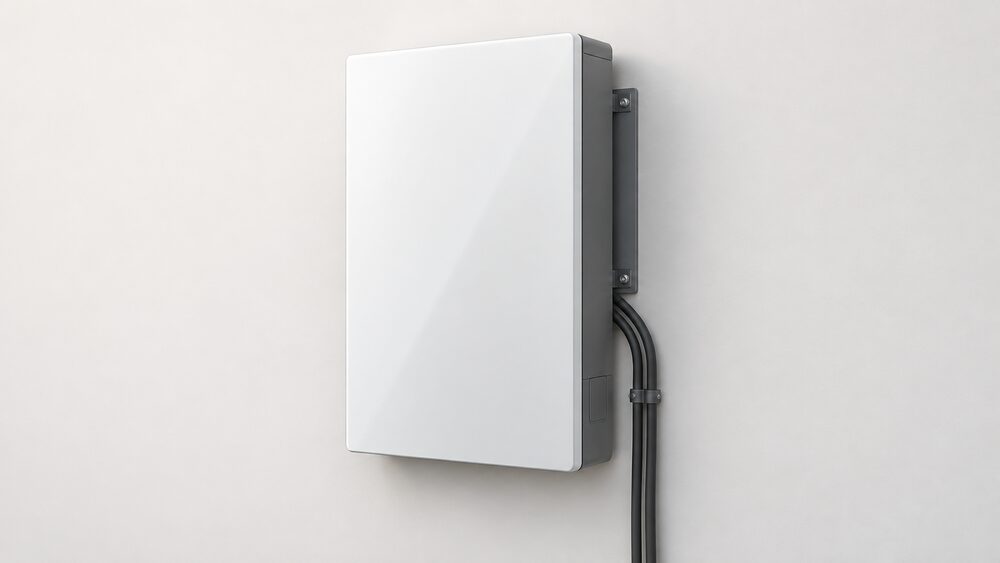 Tesla Home BatteriesHow much does a Tesla Powerwall cost to buy and install in the UK, and what does the warranty actually cover?
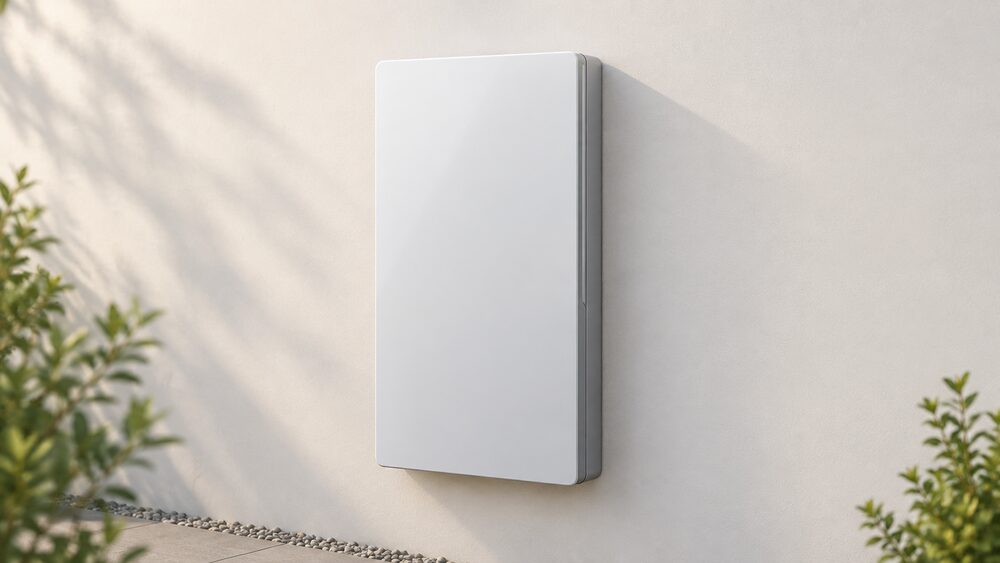 Tesla Powerwall 3How much does a Tesla Powerwall 3 cost installed in the UK, and what does it actually power in a blackout?
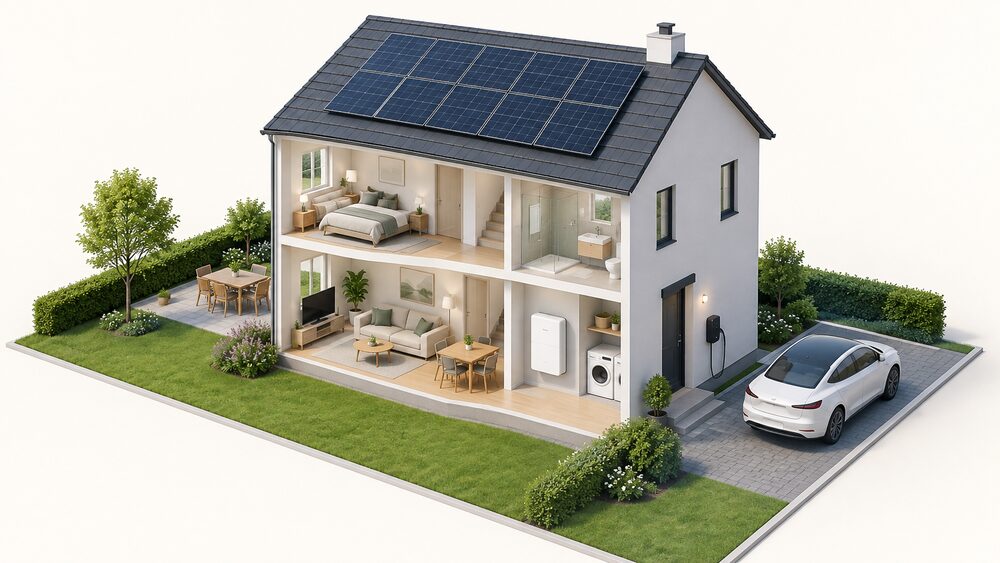 Tesla home energy productsA Tesla Powerwall stores cheap or solar electricity for use when you need it, and the Wall Connector charges your car at home.
 The Tesla Energy PlanCan you still get the Tesla Energy Plan with a Powerwall, and what does it pay for power you send back?