
In this answer
Short answer
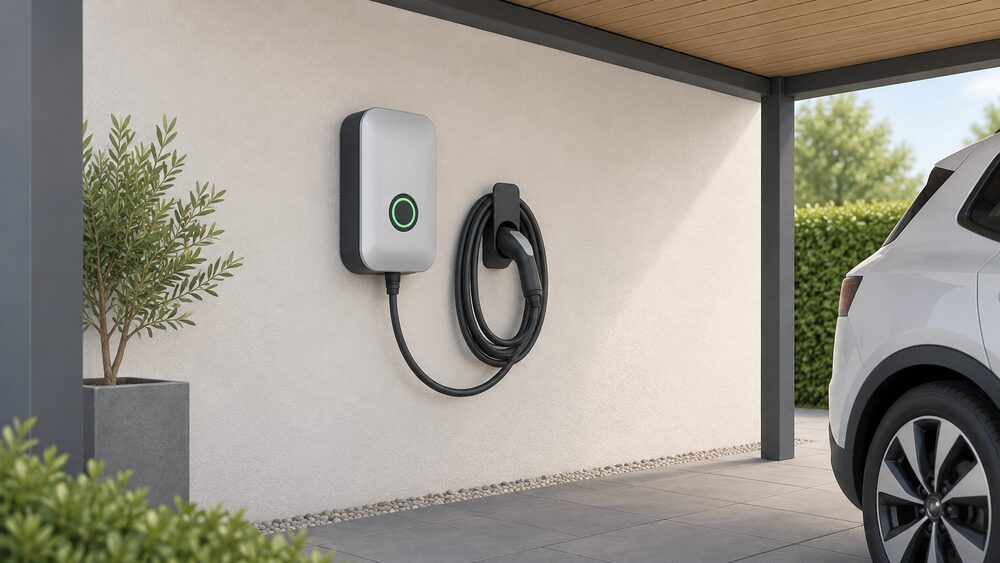
An IP54 rating on an EV charger means the enclosure is dust-protected and protected against splashing water. The first digit, 5, is the solids rating: dust can enter but not in a quantity that interferes with operation. The second digit, 4, is the water rating: splashing water from any direction will not cause harm. Independent guidance states that outdoor EV chargers must be rated at least IP54, so an IP54 unit meets the minimum for mounting outside1.
That minimum matters because most charging does not happen in a garage. The UK public charging network includes 41,054 on-street chargers, a figure that reflects how many households have no off-street parking at all2. For a home charge point on an exposed wall, the rating is the difference between equipment specified for the British weather and equipment that merely tolerates it.
IP54 is not the top of the scale, and it is not the only rating in the UK market. Maker specifications for home chargers span IP54, IP55 and IP65, and some products carry different ratings for different versions of the same model1. The rating describes the enclosure as tested, not the installation as built, which is why mounting position and cable management matter as much as the number on the datasheet.
What the IP code's two digits tell you
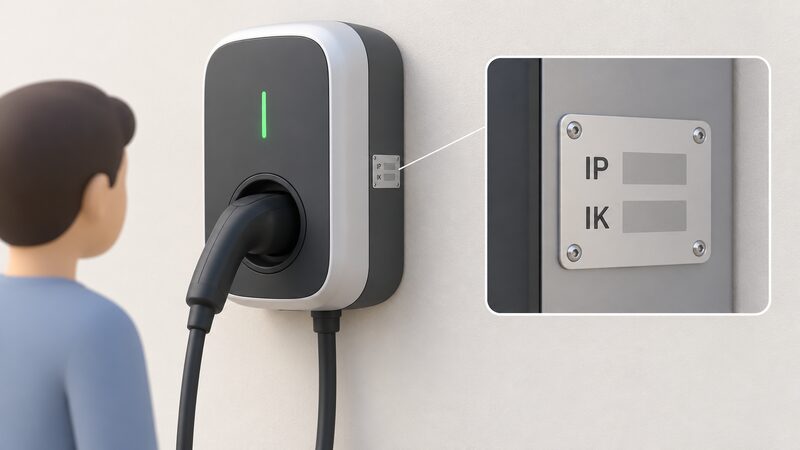
The IP code is two numbers doing two different jobs. The first digit rates solids, the second rates liquids. A 5 in the first position means dust-protected: ingress is limited, but not eliminated. A 6 would mean dust-tight. A 4 in the second position means protection against splashing water; a 5 would mean protection against water jets, and a 6 protection against powerful jets or heavy seas.
Reading the two digits together is what makes IP54 legible. It is a mid-scale rating on both axes, not a weak one. It is the standard for outdoor unit control boxes in maker guidance, described as dust protection and splash-proof9. It is also the rating on several UK home chargers, including the Easee Charge Pro, which lists IP54 for dust and water10, and the Smappee EV Dual Wall and EV Dual Base, both listed at IP54 with an IK10 impact rating11.
The impact rating is a separate scale and is often quoted alongside. IK08 and IK10 describe resistance to mechanical impact rather than to dust or water. A charger can be IP54 and IK10, which is a common combination: modest ingress protection with high resistance to being struck. The two numbers answer different questions and neither substitutes for the other.
IP54 vs IP65 and IP55: how much protection differs
The gap between IP54 and IP65 is real but narrower than the numbers suggest. Moving from 4 to 5 on the water digit adds protection against jets rather than splashes. Moving from 5 to 6 on the solids digit adds dust-tightness rather than dust protection. IP65 is therefore the stronger rating on both axes, and it is the one maker guidance asks for where equipment is fully exposed to rain, snow and dust: an inverter at IP65 or IP66, and a battery at a minimum of IP654.
IP55 sits between the two. It keeps the dust-protected first digit of IP54 and raises the water digit to jet resistance. Several UK products specify it. The Fox ESS C Series is listed at IP55 with IK10 protection, and the L Series at IP55 with IK085. The Battery-Max Lite enclosure is rated IP5513. Wallbox's consumer guidance for choosing a home charger points buyers towards IP55 and IK10 labels14.
At the top of the domestic range, IP65 appears on the Sungrow DC charger range, described as IP65 with C5 protection6, on the Sigen EV AC charger7, and on the go-e Charger Gemini, Gemini flex and PRO, which the maker states are protected with IP65 or IP66 against dust and water15. The Dura5 unit is listed at IP6516.
| Rating | Solids digit | Water digit | Typical UK examples |
|---|---|---|---|
| IP54 | 5, dust-protected | 4, splash-resistant | Easee Charge Pro10; Smappee EV Dual Wall and Base11; Evec DC BASE17; Salus EVT series, also IK088 |
| IP55 | 5, dust-protected | 5, jet-resistant | Fox ESS C Series, IK105; Fox ESS L Series, IK085; Battery-Max Lite13; Anker SOLIX V1 socket version3 |
| IP65 | 6, dust-tight | 5, jet-resistant | Sungrow DC range6; Sigen EV AC charger7; go-e Gemini, Gemini flex and PRO15; Dura516; Anker SOLIX V1 cable version3 |
One maker's range shows how much the variant matters. The Anker SOLIX V1 Smart EV Charger is rated IP65 in its cable version and IP55 in its socket version, a difference the maker states explicitly3. The same product name therefore carries two different ratings depending on which version is bought and fitted.
Where IP54 chargers can and cannot be mounted
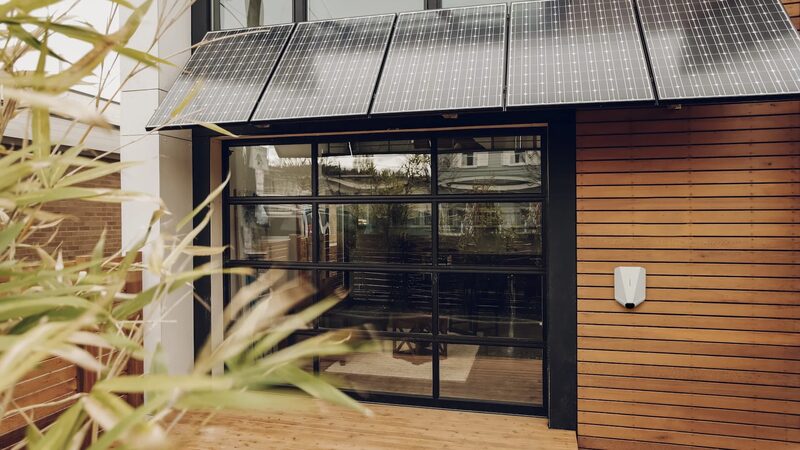
IP54 is acceptable outdoors, but the phrase "outdoors" covers a wide range of exposure. Maker guidance draws the line at shelter: IP54 works in sheltered environments but should not be exposed to direct heavy rain4. A carport, a wall under an eave, or a covered balcony is sheltered. An exposed post at the end of a driveway in a wet, windy location is not, and the same guidance asks for IP65 or IP66 on equipment in fully outdoor positions4.
The mounting position also has to satisfy rules that have nothing to do with the IP code. It is not permitted to run charging cables across public footpaths, so on-street charge points are normally located at the kerbside instead18. Planning permission is usually required for on-street parking, conservation areas, listed buildings, areas restricted through article 4 directives, and more than one upstand per parking space20. In England, home EV chargers, public charging points and business installations now fall under permitted development rights, but exceptions include listed buildings, conservation areas and world heritage sites, and limitations apply to the size and height of equipment installed under those rights21.
For a household, the practical question is where the unit will sit and what will hit it. A charger under a carport at IP54 and a charger on an exposed gable at IP65 may both be correctly specified. The rating is one input into that decision, alongside the planning position and the cable route.
Which chargers carry which rating: what makers specify
The UK market does not settle on a single rating. Independent guidance states that most commercial EV chargers are rated IP54 or IP65 as standard, which is the range a buyer should expect to see1. Within that range, the maker specifications divide roughly into three groups.
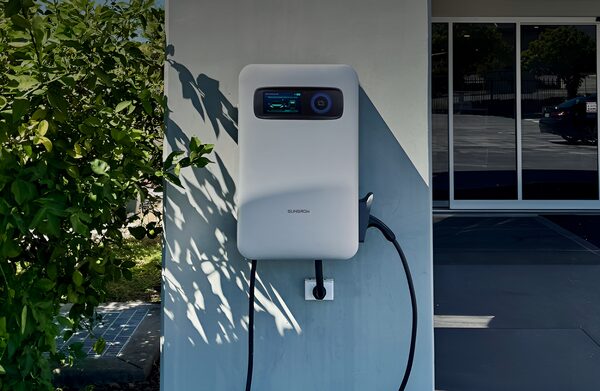
At IP54, the Easee Charge Pro lists IP54 for dust and water10, the Smappee EV Dual Wall and EV Dual Base are both rated IP54 with IK1011, the Evec DC BASE is IP5417, the Salus EVT Charger Series is IP54 and IK08 rated for indoor and outdoor use8, and the Eaton EVXI-A7000B Business AC charger is IP5422. The Haier EV charger lists IP54 for the vehicle connector23.
At IP55, the Fox ESS C Series and L Series are both IP55, with IK10 and IK08 respectively5, the Battery-Max Lite is IP5513, and the Anker SOLIX V1 socket version is IP553.
At IP65, the Sungrow DC charger range is IP65 with C5 protection6, the Sigen EV AC charger is IP657, the go-e Gemini, Gemini flex and PRO are IP65 or IP6615, the Dura5 is IP6516, the Anker SOLIX V1 cable version is IP653, and the Livoltek BHF high-voltage battery system is IP65, which the maker states allows direct outdoor installation with resistance to rain, dust and harsh conditions24.
Some makers describe weatherproofing without quoting a single IP number. Simpson & Partners states that all its chargers, freestanding and wall mounted, are IP-rated, weatherproof and designed for outdoor use in rain, snow or extreme temperatures25. Enphase describes the IQ EV Charger 2 as having a NEMA 4-rated enclosure, fully weather-sealed for indoor or outdoor installation26, and the IQ 50 EV Charger with NACS connector as NEMA Type 4, watertight27. NEMA is a North American enclosure scale rather than the IEC IP code, so the two are not directly interchangeable.
What the rating means for outdoor installation and weather
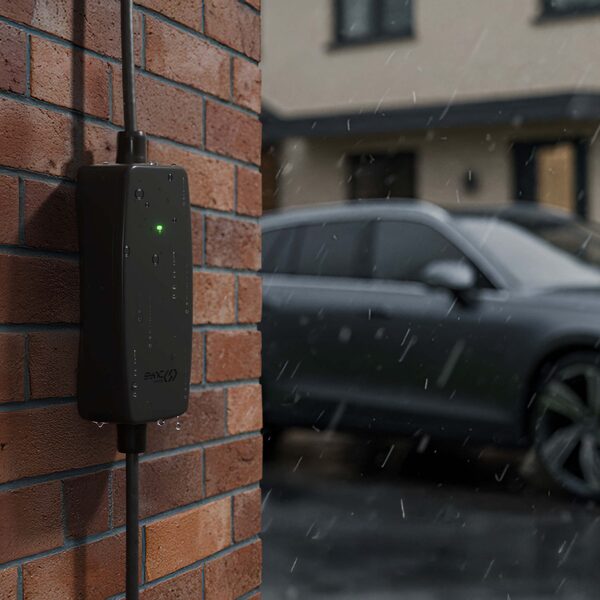
The IP rating is a statement about the enclosure under test conditions. It is not a warranty that the installation will stay dry, and it does not cover the connector, the cable or the mounting hardware. That distinction explains why guidance for other outdoor electrical equipment is stricter than the charger minimum. The Renewable Energy Assurance scheme states that an outdoor socket with an IP66 rating or above is designed to be dust-tight and protected against powerful jets of water28, a higher bar than the IP54 minimum for a charger.
The same pattern appears in solar and battery guidance, where the required rating rises with exposure. For semi-outdoor installation under eaves, a carport or a covered balcony, maker guidance asks for an inverter at IP65 and a battery at IP54 or higher. For fully outdoor installation exposed to rain, snow and dust, it asks for an inverter at IP65 or IP66 and a battery at a minimum of IP654. The charger and the equipment it sits beside are therefore often specified to different ratings, and the higher figure usually belongs to the more exposed item.
Impact protection is the other half of the durability picture. E.ON Next states that its chargers are IK10 rated, described as the highest impact rating available for EV chargers, surviving a 5kg weight dropped from 40cm29. That is a physical robustness claim, separate from the water and dust digits, and it matters in a driveway where a door, a bin or a bike may make contact.
"IP54 works in sheltered environments but should not be exposed to direct heavy rain."
For household energy independence, the IP rating is a small but load-bearing specification. A charger that fails on water ingress takes the household's cheapest and most controllable refuelling route offline with it, and the fallback is the public network, where 41,054 on-street chargers serve the households that have no driveway at all2. The dependence that remains is on the grid and on the maker's warranty terms, which are covered in EV charge point warranties and aftercare. The rating itself is simply the evidence that the enclosure was built for the position it will occupy.
Sources29 cited
- Section 722 EV charging complete guide, Elec-Mate, 2026-07-02
- EV charging statistics, Zapmap, 2026-08
- Anker SOLIX V1 Smart EV Charger, Anker SOLIX, 2026-09-19
- Ingress protection rating inverter and battery guide, SolaX Power, 2026-06-15
- Fox ESS EV charger, Fox ESS, 2026-09-17
- Sungrow IDC30E DC charger, Sungrow, 2026-09-19
- Sigen EV AC charger, Sigenergy, 2026-09-19
- EVT Charger Series, Salus Controls, 2026-09-20
- Inverter control, IDM Energie, 2026-07-07
- Easee Charge Pro, Easee, 2026-09-10
- Smappee EV Dual Wall technical specifications, Smappee, 2026-09-17
- Smappee EV Dual Base technical specifications, Smappee, 2026-09-17
- Battery-Max Lite datasheet, BYD Battery-Box, 2026-09-17
- EV charging 101, Wallbox, 2026-09-20
- go-e support FAQs, go-e, 2026-09-17
- Dura5 datasheet, ENF Solar, 2026-09-17
- Evec DC BASE, Evec, 2026-09-17
- Electric vehicles and connections, Electricity North West, 2026-09-19
- Single EV connection, Electricity North West, 2026-09-20
- Electric vehicle charging planning permission, Planning Portal, 2026
- EV charger regulations in England: what's changed, NICEIC, 2026-08-19
- Eaton EVCI product portfolio, Eaton, 2026-09-17
- Haier EV charger, Haier HVAC, 2026-09-17
- BHF-E10 to E60 high-voltage battery system, Livoltek, 2026-09-18
- Home Series freestanding charger, Simpson & Partners, 2026-09-17
- IQ EV Charger 2, Enphase, 2026-09-17
- IQ 50 EV Charger with NACS connector datasheet, Enphase, 2024-09-03
- Plug-in solar panels: five top tips to save money and stay safe, Renewable Energy Assurance, 2026-08-04
- EV charger safety tips, E.ON Next, 2026-09-17
 Accessible Charging and PAS 1899You are disabled or find charge points hard to use.
 Public EV Charging PricesCovers the published price series for public charging, how per-kWh rates differ by network and speed, and how they have moved over the past year.
 EV Charger Safety and StandardsHow do you know a home charge point is safe to use?
 Charging With a Home BatteryHow a home battery and an EV charger share one supply, whether a battery can usefully charge a car, and how combined systems are controlled so the battery is not discharged into the vehicle at a loss.
 EV Charge Point Faults and FixesDescribes the common failure patterns on domestic charge points: tripped protective devices, lost connectivity, stuck cables and locks, error indications and charging that stops early.
 What Is a Smart Charger?A smart EV charger is an internet-connected home charge point that schedules charging around tariff prices, grid demand and household load.