
In this answer
Short answer
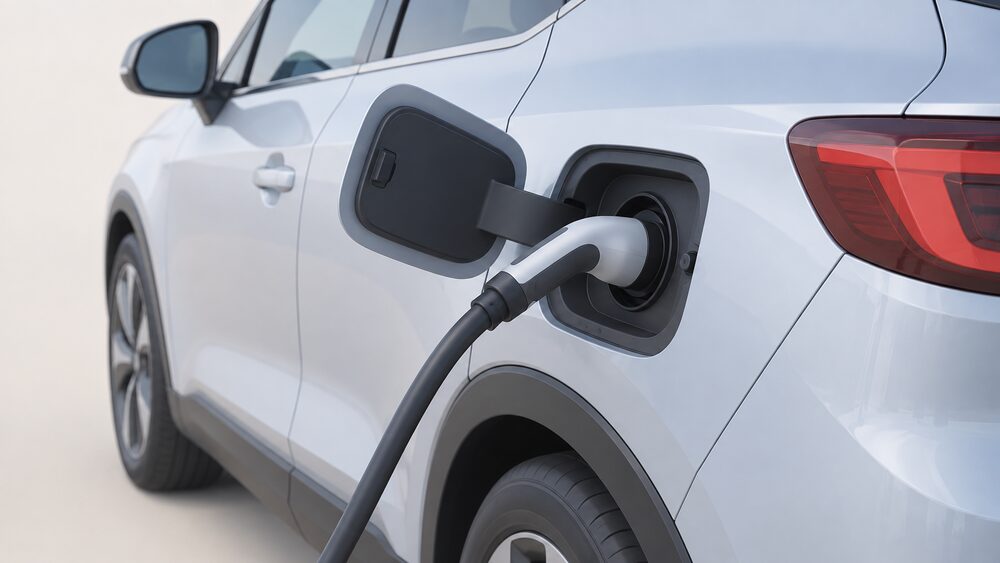
A cable that will not come out of the car is, in most cases, doing exactly what it was designed to do. The vehicle locks the connector inside the charge port while charging is taking place, and the lock has to be released before the plug can be withdrawn1. The lock is not a fault; it is the mechanism that stops a live connector being pulled out under load, and it is controlled by the car rather than by the charge point2.
The second lock is at the charger end. Many home charge points have a motor-driven locking pin that holds the plug in the socket, described by one maker as ensuring safety by preventing the cable from being removed while the car is charging3. Chargers often include this cable or plug locking feature, sometimes called a hatch lock, to prevent cable theft4. So a cable can be held at either end, or both, and the release route differs depending on which end has it.
The practical answer is to end the charging session formally, then release the lock at the car, then check the charger app, and only then withdraw the cable. Where the cable still will not move, the fault is usually a session that was never terminated, an app set to lock permanently, or a charger that has stopped on a voltage error. Forcing the plug out is the one thing that turns a temporary lock into a repair4.
Why the cable locks while charging
The lock is a safety and security device with two jobs. The first is electrical: a Type 2 connector carries current, and the vehicle will not let it be separated while that current is flowing. The second is theft prevention. Mode 3 AC cables are the most common type of electric car charging cable in use, connecting the car to a dedicated charging station at home, at the office or in car parks6, and a cable left in an unattended socket is a target. Theft of charging cables for the copper is a documented problem7.
The mechanism itself is simple. On a socketed charger, a motor-driven locking pin holds the plug in place3. On the car side, the vehicle locks the connector inside the charge port for the duration of the session1. Some chargers go further and offer a permanent lock: the Easee Charging Cable can be locked permanently to the EV charger8, and Project EV sells a cable lock system that secures an untethered cable to both the charge point and the vehicle9.
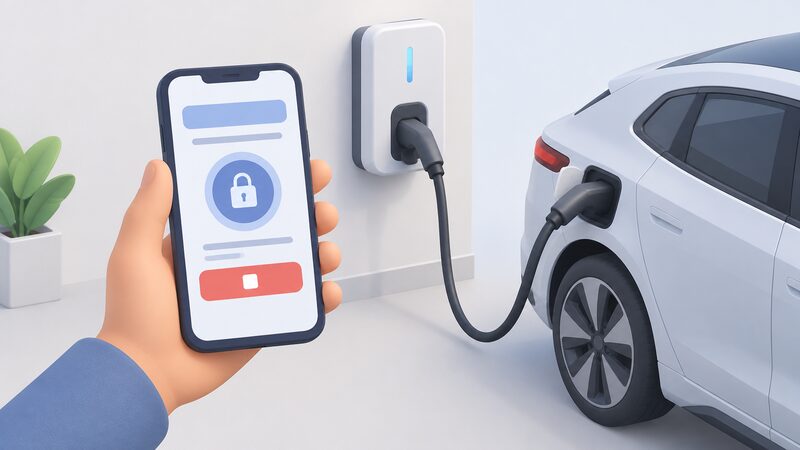
There is a third layer that catches people out. Charger apps frequently include a lock setting that has nothing to do with the physical session. One maker's troubleshooting guidance notes that it is a common feature within charging apps to permanently lock the cable in place for anti-theft purposes, and that this should be checked before anything else4. ev.energy's Charger Lock has two such modes: Smart Lock allows power to be dispensed only during smart charge times, and Holiday Lock prevents the charger dispensing any power at all until the setting is turned off through the app10. Both require Smart Charging to be switched on for the lock feature to work10.
How the lock releases when charging stops

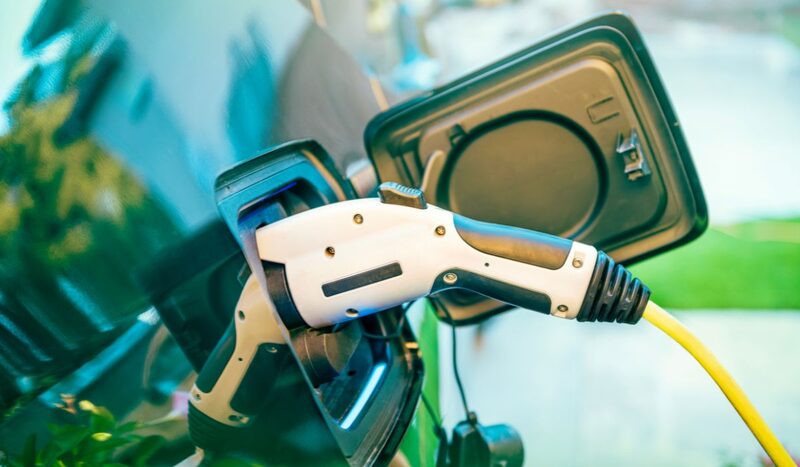
The normal release is automatic. The lock is engaged when a charging session starts and disengaged when the session is terminated4. That means the cable comes out freely once the car and the charger agree the session has ended, and the difficulty almost always traces back to a session that has not been formally closed.
What counts as termination varies. On some cars it is the act of unlocking the vehicle or pressing a release control on the charging screen. On others the session ends when the charge completes or when the app is used to stop it. Ohme's guidance is that if the cable cannot be removed, the charging session should be ended from the vehicle itself before removing the cable, checking the vehicle user guide for the make and model1. That is the sequence to follow: car first, then cable.
Two conditions override the automatic release. The first is a power failure. During a power failure the cable remains locked and can only be unlocked by powering up the station again, because the lock needs power to move; an auto-unlock setting uses reserve power and disables theft protection5. The second is a voltage event. If the supply voltage goes outside the acceptable range the charger will stop working and show an error, a safety feature protecting the charger and the vehicle11. A charger that has tripped out this way may leave the lock engaged until it is reset.
Unlocking from the car or the charger: which end holds the cable
Which end is holding the cable determines where to look. If the cable is locked in the car, that is controlled by the vehicle and not the charger, and the car's charge flap or user manual is the place to find the unlock control2. If the cable is held at the charger, the release is at the charger or in its app.
The distinction matters most for untethered setups. Home chargers come in two main types: tethered, where a cable and connector are installed on the unit, and untethered, where the unit has only a socket and the householder uses their own cable or the one supplied with the car12. Almost all electric cars come from the manufacturer with a cable with a charger-side Type 2 connector14, so an untethered charger is normally used with the car's own cable. That cable is locked at the charger end by the unit's pin, and at the car end by the vehicle.
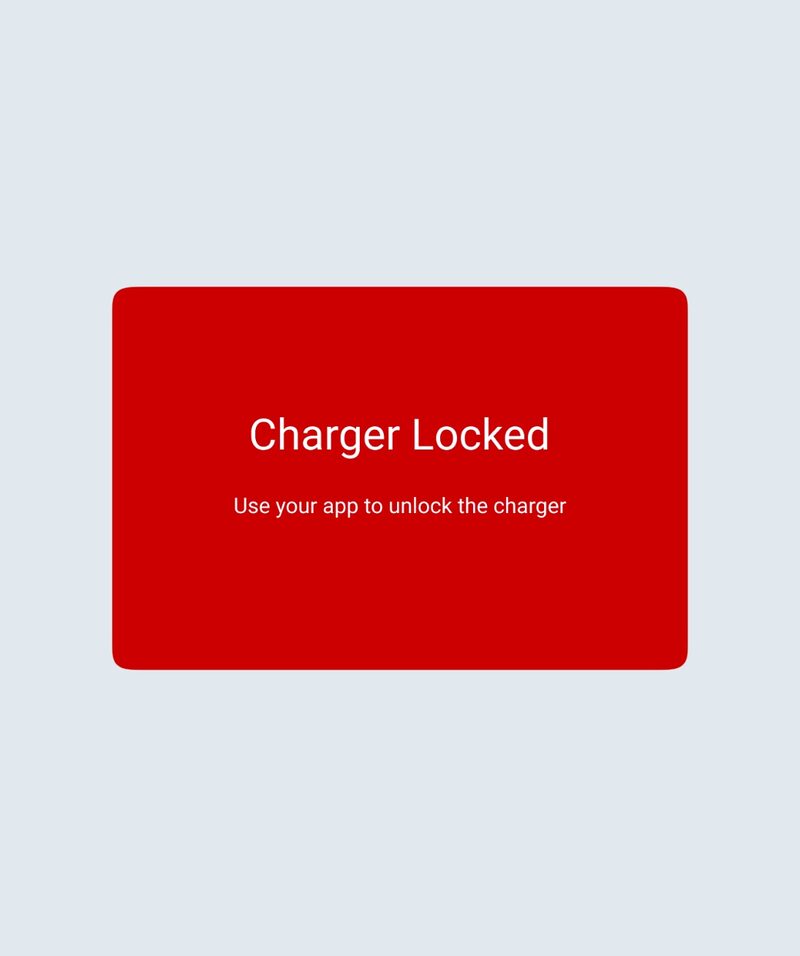
App-based release is now common on the charger side. The Easee One can be set as tethered or untethered by locking the cable using the Easee app8. The EO Smart Home app shows a padlock on the home screen; pressing it closes the lock so the charger is unable to be used, and without the app the only way to disable the charger is to isolate the power13. On the EO Basic, locking when not charging is possible only if the charger was ordered with the key lock system; otherwise the power must be isolated15.
| Where the cable is held | Who controls it | Release route |
|---|---|---|
| Inside the car's charge port | The vehicle2 | Car charging screen, key fob unlock, or the car maker's app1 |
| In the charger socket | The charge point3 | Charger app lock control, or the unit's own release8 |
| By an app lock setting | The charger app4 | Turn off the lock setting in the app10 |
| After a power failure | The charge point5 | Power the station up again5 |
Stopping a charge properly before unplugging
The reliable sequence is to end the session, confirm the lock has released, and then withdraw the cable. Ending the session can be done at the car, at the charger, or remotely.
Remote stopping is where apps earn their place. The EO Smart Home app's padlock control disables the charger from the home screen13. ev.energy's Charger Lock settings can stop power being dispensed, either outside smart charge times or entirely while Holiday Lock is on10. Where a charge was started at the wrong unit, the guidance is to stop the charge using the slide to stop toolbar, and if it is stopped quickly it is unlikely a charge will be applied16.
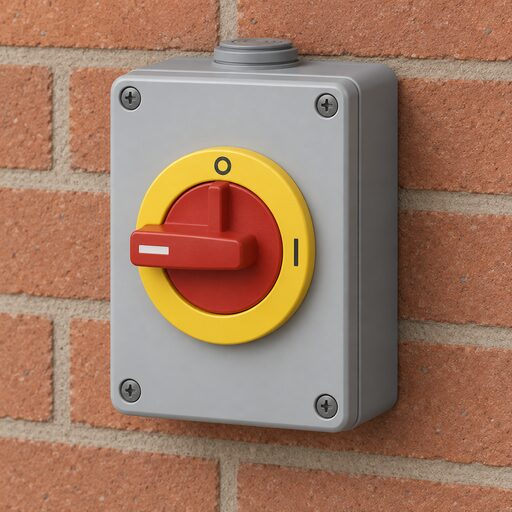
If the app will not respond, the charger itself can be cycled. Where a charger has stopped on a voltage problem, switching the charger off and on at the isolator switch is the documented recovery step17. That is a reset of the unit, not a repair, and it should be done at the isolator rather than at the consumer unit.
There is also a charging-habit point that bears on lock behaviour. Independent guidance is that it is best to end charging sessions once 80% is reached18. Sessions that are left running to completion, or left plugged in after completion, are the ones most likely to be found in an ambiguous state where the lock has not released.
What to do when the cable still will not release
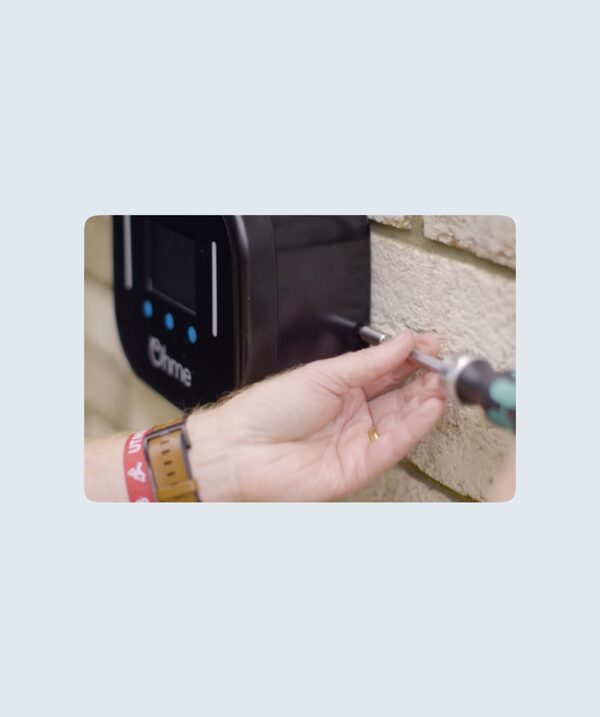
Work through the ends in order. End the session at the car1. Check the charger app for a lock setting4. If the charger has an error indication, reset it at the isolator17. If the cable is still held, the next step depends on the equipment.
Some chargers have a manual release. On the EO Genius 1, a stuck cable can be manually released by unscrewing a rubber bung on the right hand side, unscrewing and pulling out a metal rod with a flexible wire attached, then pulling the cable out; the rod and bung must be replaced afterwards15. That is a maker-documented procedure for one model, not a general technique, and it should not be improvised on equipment that does not provide for it.
Where there is no manual release, the route is support. If the cable still will not disconnect, contact the charge point operator using the support details in the information tab in the drawer16. For a home charger, the equivalent is the installer or the manufacturer.
When a locked cable signals a fault
A cable that stays locked after a properly ended session is a symptom, and the symptom points at one of a small number of causes.
The first is a supply problem. If the voltage goes beyond the acceptable range the charger will not function and will display a red ring or an error17. Under the wiring regulations, a single-phase charging point protective device operating under method (iv) must disconnect within 5 s where the utilisation voltage at the charging point, between line and neutral, is greater than 253 V rms or less than 207 V rms19. A charger that has disconnected for this reason may hold the cable until it is reset.
The second is a network-wide event rather than a household one. When neighbouring homes all export solar energy simultaneously, local network voltage rises, and some EV chargers respond by shutting down20. A cable locked after a sunny midday is not necessarily a charger fault.
The third is physical damage or tampering. Cable alarms exist that detect when a charger cable has been cut or removed7, which is a reminder that a cable that will not release may have been interfered with. Theft of charging cables for the copper is the documented motive7.
The fourth is the cable itself. Two UK product recalls are relevant to anyone charging at home. The WAI EVCUK216WC Type 2 Female to UK Plug cable carries a fire risk, and the advice is to stop using it until it has been checked by the manufacturer21. The SEVA-24016P cable carries a risk of electric shock and burns, and the advice is to stop using it immediately and contact the retailer for further advice22. Electrical Safety First strongly recommends that anyone who discovers they have an electrical item that has been recalled stops using it until it has been checked by the manufacturer22.
There is also a charger-level safety matter worth knowing about. For Easee One backplate units confirmed to be mislabelled, incorrectly wired and without external PEN protection, charging is temporarily paused until remediation is completed19.
What this means for a household's energy independence
A home charge point gives a household control over when and how the car is charged, and the cable lock is part of what makes that safe and secure. But the lock also shows where the dependence sits. The release depends on the car's software, the charger's app, and in some cases a cloud service: the Easee One's cable mode is set through the Easee app8, the EO Smart Home app's padlock is the only way to disable that charger without isolating the power13, and ev.energy's lock modes are app settings10. A household that cannot reach the app, or whose charger has lost its connection, is left with the isolator switch as the fallback.
The physical dependence is smaller but real. An untethered charger relies on the cable that came with the car14, so a damaged or recalled cable takes the household's home charging with it until it is replaced. A tethered unit removes that dependency but fixes the cable to the wall.
The grid dependence is the one that shows up in the fault behaviour. Voltage excursions outside the 207 to 253 V band will stop a charger19, and local voltage rise from neighbouring solar exports can shut some chargers down20. A locked cable after such an event is the charger protecting itself and the car, not a failure of the household's setup. Where a home shares one electricity cable with a neighbour, the supply may not be strong enough for an EV charger, and a dedicated cable is needed before the charger can go ahead23. For anyone charging away from home, the alternative options are public or work charge points25.
Sources25 cited
- I can't unplug my charger, Ohme
- Car troubleshooting, Simpson & Partners
- My cable is stuck in my charger, Simpson & Partners
- My charging cable is stuck, Rolec
- Charging safely with the go-e Charger, go-e, 2024
- Electric vehicle charging, SMMT, 2025
- EV charger vandalism, Energy Saving Trust, 2026
- Easee One, Easee
- Project EV, Project EV
- Charger Lock feature, ev.energy, 2021
- Managing voltage changes in your property, Electricity North West
- EV charger installation and maintenance, NICEIC
- EO Smart Home app FAQs, EO Charging
- Tethered vs untethered EV charging, Zapmap
- EO Basic FAQs, EO Charging
- How to charge your car from your phone, Octopus Electroverse, 2022
- Voltage changes in your home or business, UK Power Networks
- Guide to EV charging, Zapmap, 2026
- Product safety report: Easee One EV charger backplate, OPSS, 2026
- Making home energy management work for consumers, Energy Systems Catapult
- WAI EVCUK216WC Type 2 charging cable recall, Electrical Safety First
- SEVA-24016P charging cable recall, Electrical Safety First
- If your electricity supply can't cope with the new equipment, NIE Networks
- EVs and heat pumps, NIE Networks
- Approved pavement crossings, Planning Portal
 EV Charge Point Faults and FixesDescribes the common failure patterns on domestic charge points: tripped protective devices, lost connectivity, stuck cables and locks, error indications and charging that stops early.
 Charging Without a DrivewayParking on the street makes charging an electric car at home tricky.
 Charging With a Home BatteryHow a home battery and an EV charger share one supply, whether a battery can usefully charge a car, and how combined systems are controlled so the battery is not discharged into the vehicle at a loss.
 Public EV ChargingWhat does public charging really cost when you cannot plug in at home, and how do you pay for it?
 EV Tariffs and Home ChargingHow EV-specific import tariffs and charging bolt-ons work, including supplier-controlled charging where the energy company decides when the car draws power, which charge points each scheme supports, and what a household needs in place.
 What Is a Smart Charger?A smart EV charger is an internet-connected home charge point that schedules charging around tariff prices, grid demand and household load.