
In this guide
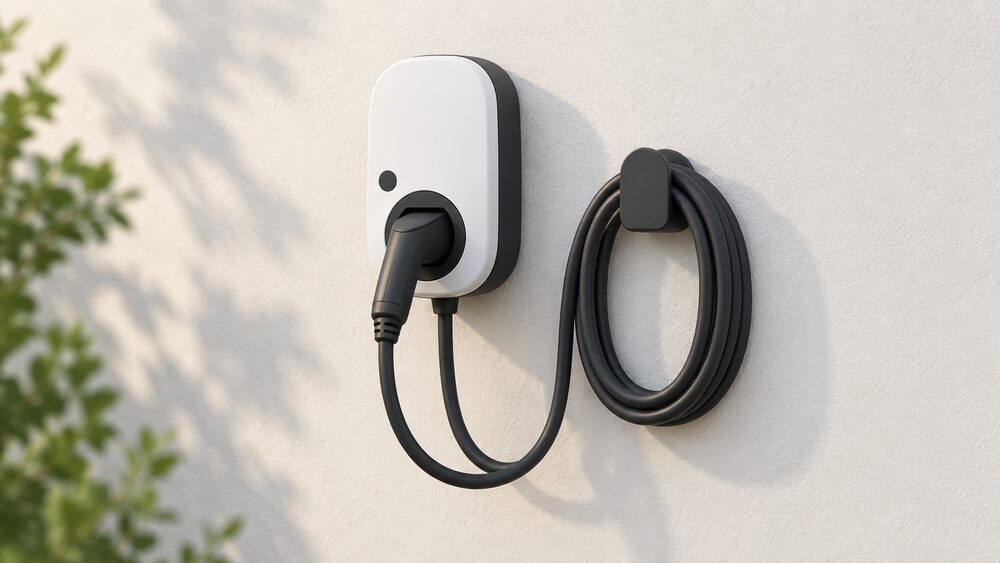
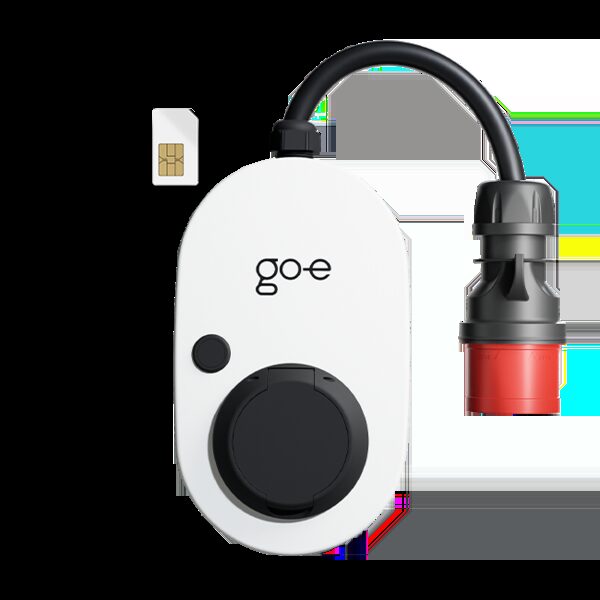
A go-e Charger is an Austrian-made AC wallbox sold in the UK in four families: Gemini, Gemini flex, CORE and PRO. Every model charges from 1.4 kW to 11 or 22 kW depending on the number of phases, and every one carries a 36 month manufacturer's guarantee1. The Gemini flex is the mobile variant, supplied with a 16 A CEE red plug and a wall bracket, so it can be used stationary or carried to another three-phase socket6.
What separates go-e from most UK wallboxes is openness. The chargers publish a local and cloud HTTP API, MQTT, Modbus TCP and OCPP 1.6, which is why a third of the surveyed go-e community runs them through Home Assistant, ioBroker or openHAB7. The trade-off is that the smartest behaviour, including flexible tariffs and load balancing, depends on a live internet connection, and the longest guarantees depend on the maker's own registration and support chain.
go-e at a glance: an Austrian maker of AC smart wallboxes
go-e builds AC wallboxes rather than DC equipment, and the Gemini flex 22 kW is listed with Austria as its country of origin6. The company's own guidance describes the smart wallbox as a device on which a household can set the time by which the car should be fully charged, which is the core of what a smart charger does beyond simply delivering current9.
The range has picked up independent recognition. The Gemini 2.0 placed in the top three of the 2025 P3 Wallbox Test, scoring 1.5 for easy installation, reliable LTE and a user-friendly app, and the Gemini flex 2.0 was named Price Champion 2025, with go-e voted the number one mobile wallbox brand by readers of electricar magazine5. Those are the maker's own reports of third-party results.
For a household, the significance is that go-e sits in the smart wallbox category rather than the basic one. A smart charger can schedule charging, respond to tariff signals and, with the right add-on, follow solar output. That is a different proposition from a dumb 7 kW box, and it is the reason the integration story below matters as much as the power rating. The wider category is explained in what a smart EV charger is and how it works.
The range: Gemini, Gemini flex, CORE and PRO compared
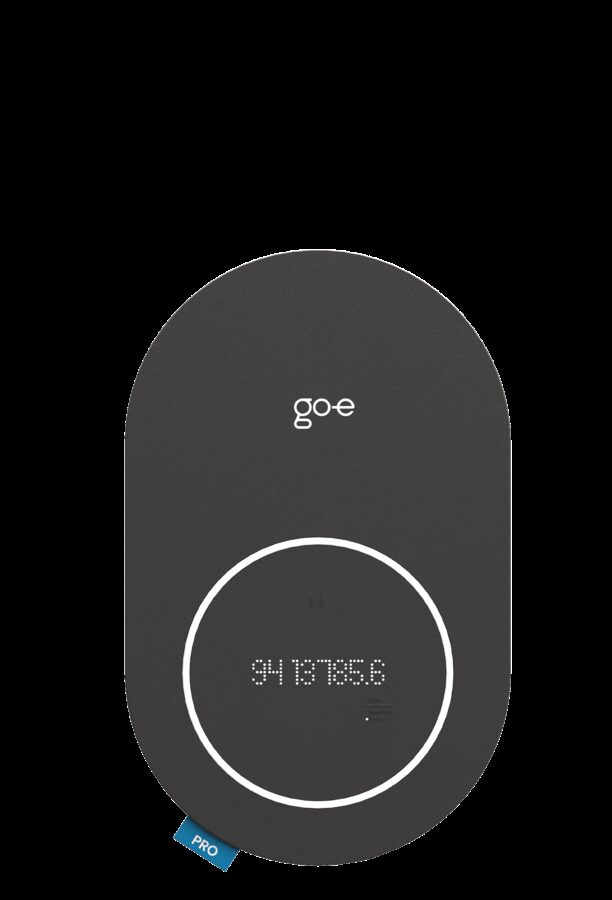
The four families share a common base. The CORE is described by the maker as identical to the Gemini series with additional features: V2X ready in accordance with ISO 15118, Plug and Charge ready in accordance with ISO 15118, and an LED display for showing charged kWh3. The PRO carries the same description and the same additions4.
The Gemini flex is the flexible one. It comes in two variants, 11 kW or 22 kW maximum charging power, with configurable current from 6 A to 32 A on the 22 kW version and 6 A to 16 A on the 11 kW version2. Its mains connection is a 30 cm cable with a CEE red plug, 5 x 6 mm² on the 22 kW variant and 5 x 2.5 mm² on the 11 kW2. Original go-e adapters, sold as accessories, allow connection to a CEE red 16 A three-phase socket, a CEE blue 16 A single-phase socket or a 16 A household safety plug6.
| Family | Form | Power | Notable features |
|---|---|---|---|
| Gemini | Stationary wallbox | 1.4 to 22 kW | RFID or app authentication, one taught-in RFID chip included7 |
| Gemini flex | Mobile or stationary | 11 kW or 22 kW variants | CEE red plug, wall bracket, anti-theft U-piece2 |
| CORE | Stationary, tethered | 1.4 to 11/22 kW | V2X and Plug and Charge ready, LED kWh display3 |
| PRO | Stationary | 1.4 to 11/22 kW | V2X and Plug and Charge ready, MID meter options for billing4 |
The PRO is the one aimed at shared and commercial use. The maker states that a household planning to bill all or some wallbox users needs the PRO with an MID meter for precise measurement, and that the PRO CABLE ME, required in Germany, meets the requirements for accurate kWh measurement5. For a single home, the Gemini, Gemini flex and CORE are the relevant models, and the maker describes the Gemini 2.0, Gemini flex 2.0 and CORE as ideal for single-user wallboxes connected to an apartment meter, with RFID management and simple metering5.
Power and specifications: 11 or 22 kW, IP65 and three-phase only
The headline figure is a charging range rather than a single rating. The CORE delivers from 1.4 kW to 11/22 kW depending on the number of phases, and the same wording appears for the PRO and PRO CABLE1. The Gemini flex 22 kW is listed at 1.4 kW to 22 kW, with single-phase or three-phase connection1.
The variants matter because they set the ceiling. The CORE datasheet gives the 22 kW variant as 22 kW (32 A, three-phase) or 7.4 kW (32 A, single-phase), and the 11 kW variant as 11 kW (16 A, three-phase) or 3.7 kW (16 A, single-phase)8. A three-phase charging car on the Gemini flex 22 kW draws 4.2 kW to 22 kW, with the charger switching through the power available at the connection6.
Two practical points follow. First, 22 kW is only reachable on a three-phase supply, and the independent guidance on Mode 3 charging puts three-phase at 22 kW11. Second, the maker's published range for the Gemini is expressed in two ways: the Gemini flex 22 kW is given as 1.4 kW to 22 kW, and separately as 4.2 kW to 22 kW for a three-phase charging car, where the charger switches through the power available at the connection4. The maker's product pages give the range as 1.4 kW to 22 kW while also listing 11 kW and 22 kW variants, which is a difference of framing rather than of hardware.
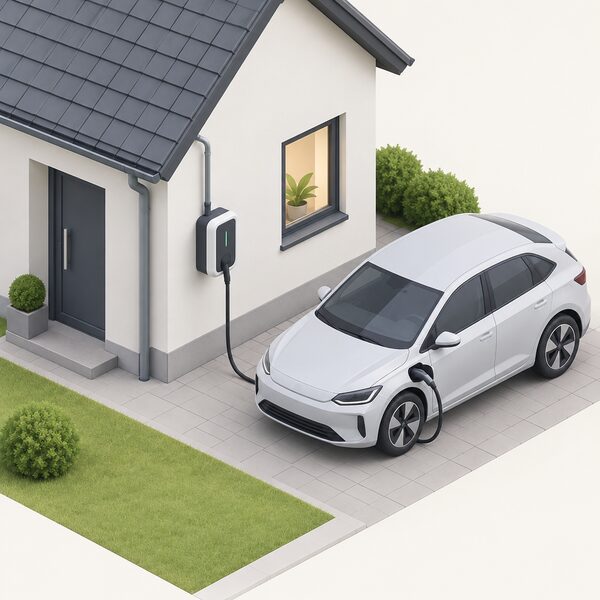
Installation is indoor and outdoor on the Gemini, Gemini flex 2.0 and CORE, and the Gemini carries pollution degree II7. The Gemini series also has a charging cable locking device as an anti-theft measure7. For a household, the practical ceiling is usually the car rather than the wallbox: many UK homes have a single-phase supply, where the realistic maximum is 7.4 kW. The differences between ratings are set out in 7kW vs 22kW home EV charger.
Safety built in: 6 mA DC protection and what your installer must supply
Every go-e Charger carries an integrated DC protection module that protects the building installation from DC faults above 6 mA, such as faults caused by the car, and AC faults above 20 mA5. The Gemini datasheet gives the same figures, 6 mA DC and 20 mA AC, and states that an RCD type A must be installed on the building side with a miniature circuit breaker connected up7. The Gemini flex 2.0 datasheet repeats it9.
That combination is what allows a Type A device upstream rather than a Type B. Independent guidance states that if the EV charger has built-in DC fault current detection to 6 mA, a Type A RCD at 30 mA is sufficient13. The Gemini flex 22 kW product page sets out the same arrangement: a built-in residual current protection module with residual current detection at 20 mA AC and 6 mA DC, with a separate residual current circuit breaker of at least type A at 30 mA AC connected upstream6.
Two further conditions sit with the installer. Where a property is supplied by a PME (TN-C-S) earthing arrangement, independent guidance states that a dedicated EV charger with PEN fault protection must be installed14. And repair is not a householder task: independent guidance is explicit that a broken EV charger is a job for a professional electrician with the qualifications and certifications, not a DIY repair15. The maker adds that an allegedly defective, stationary-installed go-e Charger may only be dismantled by a qualified electrician, and that support should be contacted before disassembly5. The standards behind these rules are covered in EV charge point safety, standards and certification.
Smart charging: PV surplus, flexible tariffs and load balancing
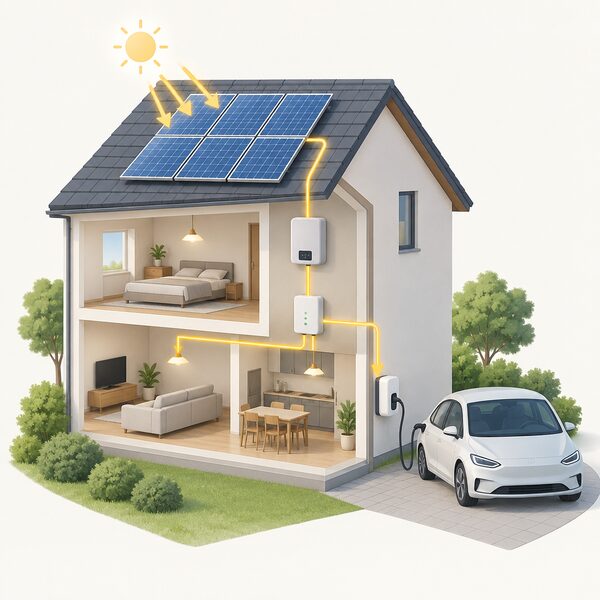
PV surplus charging is possible with the go-e Charger, and the maker states it supports this in combination with photovoltaic systems from various energy management and inverter suppliers, such as SMA or E3DC5. Partner integrations such as Clever-PV and Solar Manager can be used, some working through the OCPP protocol rather than go-e's own API5. The PRO lists photovoltaic connection via API, OCPP, the go-e Controller or an alternative energy management system4.
The go-e Controller is the device that unlocks the fuller set. It provides PV surplus charging for self-consumption optimisation, dynamic load management, energy monitoring and peak shaving, with an open API and an interface to the charger5. It is compatible with every go-e Charger across the CORE, PRO, Gemini and HOME series10. The Gemini flex, by contrast, lists static load balancing rather than dynamic2.
On tariffs, the PRO lists flexible electricity tariffs, and the Gemini flex does too2. The app's ECO mode automatically checks real-time prices from an energy provider and only charges when the cost meets the household's settings5. The maker gives smartENERGY and Energie Steiermark as example integrated providers in Austria, which is a reminder that tariff integration is market-specific and the UK picture is not set out in the same material5.
There is one battery interaction worth knowing. To prevent a DC-coupled home battery discharging while the car charges, the maker's instruction is to enter -200 under "Target value grid" and select "Prefer power to the grid" under "Power preference", a setting that does not apply with HOME V25. The wider subject is covered in charging an EV alongside a home battery.
Access control and RFID: open, local or cloud authentication
The go-e Charger offers three authentication modes: Open, where no authentication is required; Authentication Required, using local RFIDs; and Cloud authentication, using cloud RFIDs5. The Gemini, Gemini flex, Gemini flex 2.0, CORE and PRO all list RFID access control2. The Gemini datasheet adds that authentication can be by RFID or app, and that one taught-in RFID chip is already included10.
The modes are mutually exclusive in one respect. The maker states that only cloud or local RFIDs can be used at one time, not both, with the mode chosen when configuring the authentication settings5. The Gemini series manages up to 10 users per charger through RFID chip and card management7. The Gemini flex 22 kW lists the same limit of up to 10 users6.
On what can serve as a key, the CORE datasheet states that ordinary credit cards or RFID cards already in use in businesses can also be used if they transmit on a frequency of 13.56 MHz8. The Gemini datasheet gives the RFID frequency as 13.56 MHz7. The CORE also lists RFID chip or card, app, and Plug and Charge ready in accordance with ISO 15118 as authorisation methods8.
"Access control through RFID ensures that only you and authorised users can access it."
For a household, the practical value is straightforward: RFID access control keeps a driveway charger from being used by anyone else, and the open mode suits a private garage where convenience matters more than restriction. The cloud mode adds a dependence on the maker's servers, while local RFIDs keep authentication inside the device. The general subject is covered in EV charger cybersecurity, data and remote control.
Smart home and integration: Home Assistant, OCPP, MQTT and the HTTP API
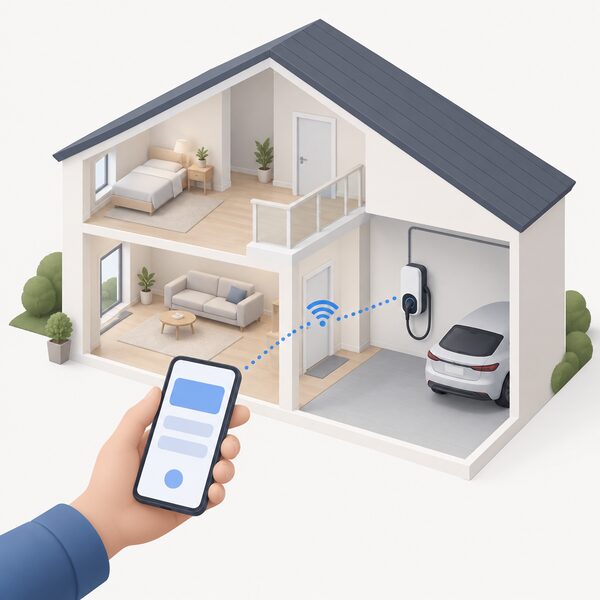
This is where go-e differs most from mainstream UK wallboxes. The charger has an HTTP API in both cloud and local versions, described by the maker as an open interface that enables other smart devices to communicate with it, alongside OCPP, a Modbus TCP API and MQTT5. The CORE and PRO list HTTP API (Local + Cloud), MQTT, OCPP 1.6 (Json) and Modbus TCP3. The Gemini flex 2.0 adds Wi-Fi and an integrated SIM card for cellular connection11.
The maker's own survey of its YouTube community gives a picture of how owners actually use this: 33% use platforms like Home Assistant, ioBroker or openHAB, 13% rely on their own API scripts or MQTT, and 6% control it via Alexa or Apple HomeKit, while nearly half use no smart home integration at all11. The charger can also be integrated into smart home systems with control through voice assistants such as Alexa and Google Assistant5.
Cellular connectivity is offered on the Gemini 2.0, Gemini flex 2.0, CORE and PRO, with 4G LTE Cat-1 and fallback via 2G or Edge, and all go-e Chargers can also be connected by other means5. The app connects to the charger via Wi-Fi or LTE, or through the access point built into the charger17. The app itself is a free download1.
The independence question here is real. A local HTTP API and MQTT mean a household can keep control inside its own network and integrate with a home energy management system without going through a manufacturer's cloud. But the app, the Portal and remote diagnostics all run through go-e's infrastructure, and the firmware update route requires an active internet connection. The protocols are compared in EV charger apps, Wi-Fi, 4G and firmware.
Owning a go-e charger: installation, maintenance and day-to-day use
Once a go-e Charger has been mounted or installed, the first charging process can start immediately, and with a portable charger no electrician is needed for that step5. The Gemini flex 22 kW can be used both stationary in the wall bracket and mobile, and the scope of delivery includes the wallbox with a 16 A CEE red plug, a wall bracket with screws and dowels, an optionally mountable anti-theft U-piece, one reset card, one already taught-in RFID chip and brief instructions6.
Maintenance is minimal. The maker's instruction is to wipe the wallbox with a cloth moistened with water, and not to clean it with a high-pressure cleaner or under running water5. For a tethered cable, general EV cable guidance is to ensure the cable is completely unplugged from the car and the charger powered off, then use a dry cloth or a cotton bud to gently remove debris from the connector pins18.
The cable lock is worth understanding. The charging cable connecting wallbox and vehicle is locked during the charging process and, in default mode, after charging finishes, with the settings changeable in the app5. During a power failure the cable remains locked and can only be unlocked by powering up the station; an auto-unlock setting uses reserve power and disables theft protection12. That is a deliberate trade between convenience and security, and it means a power cut can leave a cable physically stuck until supply returns.
Firmware updates take approximately 2 to 5 minutes and require the charger to be actively connected to the internet, initialised through the app5. The warranty is 36 months on the Gemini and Gemini 2.0 series, the PRO series and the Controller5. The go-e Portal lets a private EV owner add a charger, monitor all charging sessions, set energy limits and manage the device, and it also serves companies, installers, property managers and hotel operators10. For a household, the residual dependencies are the internet connection for the smartest features, the maker's cloud for the app and Portal, and the electricity supply itself. The wider picture is set out in EV charging and household energy independence.
Sources18 cited
- go-e Charger product range, go-e, 2026
- go-e Charger Gemini flex, go-e, 2026
- go-e Charger CORE, go-e, 2026
- go-e Charger PRO, go-e, 2026
- go-e Charger FAQs and support, go-e, 2026
- go-e Charger Gemini flex 22 kW, go-e, 2026
- go-e Gemini datasheet, go-e, 2026
- go-e Charger CORE datasheet, go-e, 2026
- go-e Charger Gemini flex 2.0 datasheet, go-e, 2026
- go-e Controller, go-e, 2026
- EV charger smart home integration, go-e, 2026-03-19
- Charging safely with the go-e Charger, go-e, 2024-02-01
- RCDs for electric vehicle supply equipment, IET, 2024-05
- Section 722 EV charging guide, Elec-Mate, 2026-07-02
- EV charger installation and maintenance, NICEIC, 2025-08
- go-e Charger Gemini flex 2.0, go-e, 2026
- go-e Charger Gemini 11/22 kW datasheet, go-e, 2026
- EV cable care and maintenance, Simpson & Partners, 2026