
In this guide
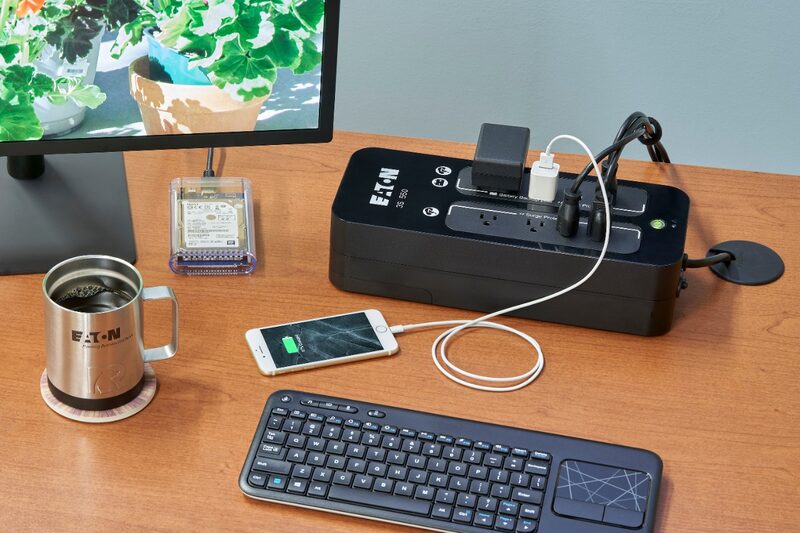
Eaton is a power management manufacturer whose UK catalogue includes small uninterruptible power supplies aimed squarely at the home. The units a householder is most likely to meet are the Eaton 3S Gen2 UPS and the Eaton 3S Mini UPS, both sold through Eaton's UK backup power pages1. Eaton recommends the 3S Gen2 for home office equipment, NAS systems, aquariums and terrariums, cryptominers, household appliances and automatic feeder systems, and the 3S Mini for security systems as additional protection alongside integrated batteries1.
The 3S Gen2 is an alternating current model with multiple outlets, listed across a 450 to 850 kVA capacity range1. That is a maker's figure for the range as a whole, not a runtime promise for any one load. Above the 3S units sit Eaton's energy storage products: the xStorage Hybrid, designed for residential and light commercial buildings, and the xStorage Compact, developed for small and medium commercial and industrial buildings and based on double conversion technology2.
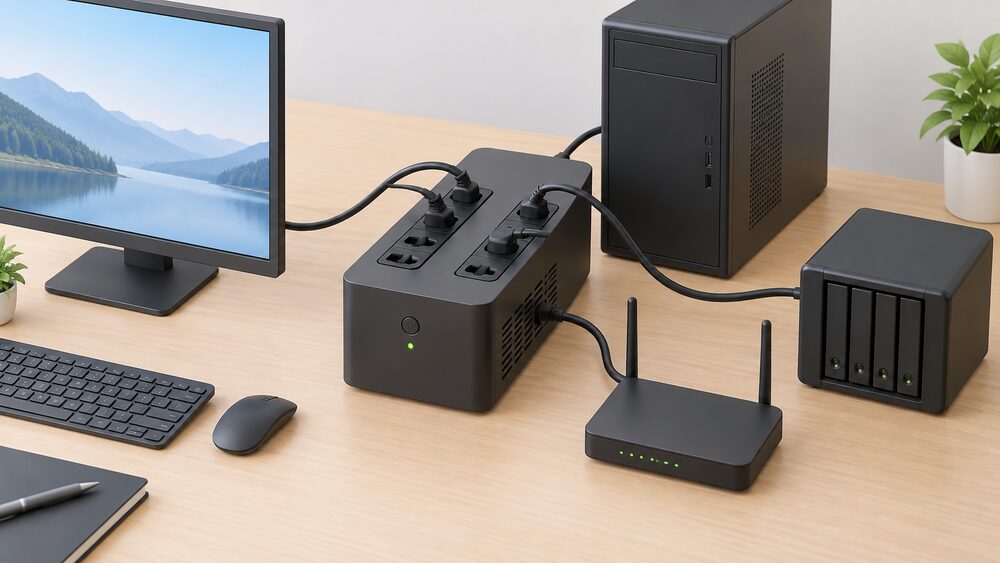
For a household, the honest framing is this. A 3S unit keeps a desktop, a router, a NAS drive or a small security system alive through a short interruption, and it does nothing for heating, cooking or a fridge. It reduces dependence on the grid for a handful of low-power devices and leaves everything else exactly where it was. The larger xStorage products move further, but they are aimed at buildings rather than at a single home's essential circuits.
Eaton: a power management company and what it makes for homes
Eaton's UK product pages group backup power, surge protection and IT power distribution together, and the home applications page is the entry point for domestic buyers1. The company's residential work is not new. Eaton previewed residential solutions ahead of the International Builders' Show in January 2017, including the EMCB smart breaker and a Halo SMD LED downlight, and returned to the same territory at the PCBC show in San Diego in June 2017 with the EMCB, a Halo RL56 downlight and an MS180BT motion sensor5. Those are lighting and circuit protection products rather than UPS units, but they show the residential line Eaton has built alongside its commercial range.
On the storage side, Eaton's energy storage inverters, the Power Xpert 1.5 and 2.0 megawatt units, achieved UL 1741 listing certified by Intertek in April 20177. That is commercial-scale equipment, and it sits well above anything a household would install, but it is the engineering lineage behind the xStorage family.
What Eaton does not publish for the UK home is a list price. The 3S units are sold through distributors and retailers, and prices are quoted rather than listed on the manufacturer's pages. A household comparing options should treat the Eaton range as one of several small UPS lines available in the UK, and should read the capacity figure as the maker's range for the product family rather than as a guarantee for a particular load.
What a UPS does in a home backup setup
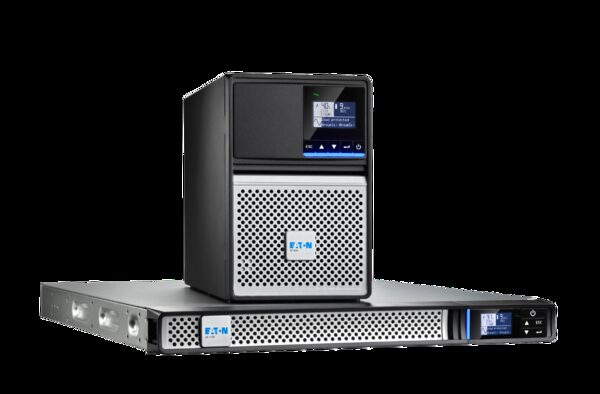
An uninterruptible power supply sits between the mains and the equipment it protects. UK Power Networks describes the function plainly: UPS systems will provide backup power to your computer until your electricity supply is restored8. The same guidance points at who tends to need one: if you work from home or a small business and use your computer, a UPS is worth considering8.
That is a narrower job than a home battery or a generator does. A UPS carries a small load across a short outage, typically long enough to save work, finish a call or shut a system down cleanly. It does not run a heating system, a cooker or a fridge, and it does not cover a whole house. The distinction matters because the two categories are often confused. A UPS is a bridge; a battery or generator is a supply. The site's UPS versus portable power station comparison sets out where the line falls, and UPS sizing explains how VA and watts relate to what a unit will actually carry.
For a household's energy independence, a UPS changes very little. The home remains on the grid and on a supplier for everything except the handful of devices plugged into the unit. What it does change is the consequence of a short cut: a desktop that would have lost unsaved work, a NAS that would have dropped a volume, or a broadband router that would have taken the connection down with it. That is continuity, not independence.
The 3S range: Gen2 and Mini, and what each is for
Eaton's home-facing range is two products. The 3S Gen2 UPS is described as an alternating current model featuring a sleek design and multiple outlets, listed across a 450 to 850 kVA capacity range1. The 3S Mini UPS is the smaller unit, and Eaton describes it as an affordable device that protects the technology managing your intelligent home against power surges and spikes1.
The two are aimed at different jobs. The Gen2 is the unit for a desk: a PC, a monitor, a router, a NAS enclosure, or the pump and heater on an aquarium or terrarium. The Mini is the unit for a device that needs to stay alive quietly in the background, and Eaton positions it for security systems as additional protection alongside integrated batteries1. That wording is worth reading carefully. The Mini supplements a system that already has its own battery rather than replacing it.
| Unit | Type | Eaton's recommended applications | Capacity |
|---|---|---|---|
| Eaton 3S Gen2 UPS | AC model, multiple outlets | Home office equipment, NAS systems, aquariums and terrariums, cryptominers, household appliances, automatic feeder systems1 | 450 to 850 kVA range1 |
| Eaton 3S Mini UPS | Compact surge and spike protection | Security systems, as additional protection alongside integrated batteries1 | Not stated1 |
Neither unit is described by Eaton as a whole-home solution, and no runtime figure is published for either. Runtime depends on the load connected and the capacity of the model chosen, so a household sizing a unit should work from the wattage of the devices it intends to carry rather than from the range figure.
Where the 3S units fit in a home

The applications Eaton lists are specific, and they map onto a recognisable set of household jobs. A home office with a desktop, a monitor and a router is the core case. A NAS drive is the second: an unplanned shutdown can interrupt a write and, on some systems, leave a volume needing repair. Aquariums and terrariums appear because a filter or heater that stops for an hour can do real damage to livestock, and automatic feeder systems appear for the same reason1.
Security systems are handled by the Mini rather than the Gen2, and Eaton's phrasing places it alongside integrated batteries rather than in place of them1. A camera or alarm panel with its own battery already has a short bridge; the Mini adds surge and spike protection to the technology managing the home, which is a different job from extending runtime.
What none of this covers is the rest of the house. A 3S unit will not keep a boiler, a heat pump, a fridge or a freezer running. Households that need those loads covered are looking at a different class of equipment, and the site's guide to essential loads and backup circuits explains how that decision is usually made. For a home office or a small rack, the 3S range is the right shape of product. For a whole house, it is not.
UK availability: UPS units, storage and management software
Eaton sells the 3S units through its UK catalogue, and the home applications page is the route into the range1. Above the UPS line, the xStorage family is the storage product set. The xStorage Hybrid is designed for residential and light commercial buildings and uses a modular design, with remote firmware updates and remote battery management offered to fix issues quickly and easily3. The xStorage Compact was launched in June 2020 as a single rack modular energy storage system for small and medium commercial and industrial buildings, and is based on double conversion technology2.
The Compact supports a wide range of applications including seamless backup power, peak shaving, energy storage, load shifting and frequency regulation, plus EV charging infrastructure integration2. Its user manual, reference MN701002EN, is dated August 2024 and covers operation, control, back-up and communication instructions4. A UL 9540A test report for the larger xStorage 400 was issued by UL LLC in May 2021, and Eaton published a lithium-ion battery playbook for UPS applications in July 202110.
On cost direction, Eaton reports that capital expenditure for lithium-ion battery energy storage systems fell in 2024, with DC block prices down since 2023, and anticipates European delivery costs falling further in 20252. Those are figures for commercial storage, not UK household prices, and they are the maker's own projections.
Beyond backup: Buildings as a Grid, xStorage and vehicle-to-home
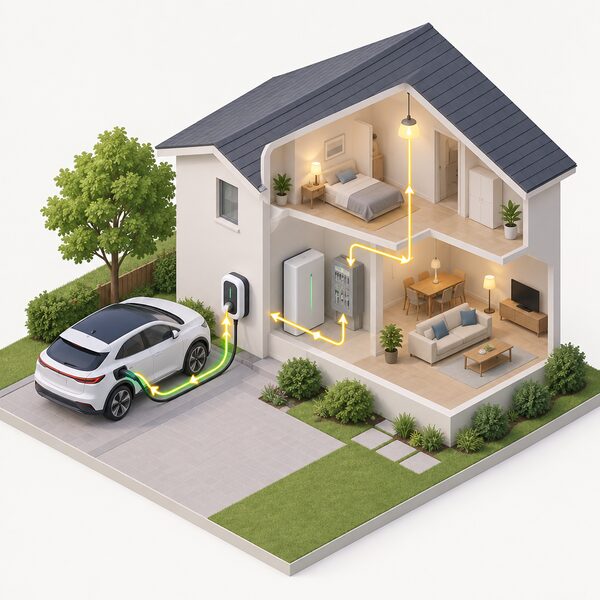
Eaton's storage work extends past the UPS line into building-scale systems and, indirectly, into the vehicle-to-home conversation. The xStorage Hybrid is the residential and light commercial product, and its remote services are the clearest example of the dependence these systems create: firmware updates and battery management run through the manufacturer rather than through the household3.
Vehicle-to-grid sits alongside this. The Energy Saving Trust states that having electric vehicles as battery storage will allow us to better manage the UK's energy, and describes how a vehicle-to-grid system could potentially offer a two-way movement of energy, with energy stored in the car battery used in the home or sold back to the grid at times of peak demand12. The Climate Change Committee's adaptation work notes that at household level, further innovation in home battery technology, vehicle-to-everything and solar can provide households with additional backup options during power outages14.
Demand flexibility schemes are the commercial counterpart, and the material available lists Grid Beyond as a non-domestic participant15. Eaton's own recorded webinar on flexible power solutions covered SF6-free medium voltage switchgear, battery storage and Energy Aware UPS, and its Energy Aware UPS work with Microsoft won the Mission Critical Data Centre Innovation award at the 2018 Data Centre Dynamics awards16. That is data centre territory, and it is where Eaton's engineering depth sits, well above the domestic 3S units.
Support, documentation and contacting Eaton in the UK
Eaton publishes a UK technical support line on +44 (0) 1753 608 700, with Option 3 then 6 for technical support3. That is the route for questions about a 3S unit, an xStorage system or a warranty matter, and it is worth having the model and serial number ready before calling.
Documentation is handled through Eaton's own library. The xStorage Compact user manual, MN701002EN, is dated August 2024 and covers operation, control, back-up and communication4. The xStorage 400 user guide references a UL 9540A test report issued in May 202110. Eaton Electrical Products Ltd issues UK declarations of conformity for its product families, including one dated April 2025 for high-speed battery storage fuses18. A webinar on specifying high voltage fuses for EV applications ran in May 202519.
Where the Eaton range has limits

The limits are worth stating as plainly as the benefits. A 3S unit carries a small load for a short time and nothing more. Eaton publishes no runtime figure for either 3S model, so a household cannot compare units on runtime from the maker's pages alone1. The capacity range of 450 to 850 kVA is a family figure, and the actual load a unit will carry depends on the model chosen1.
The xStorage products move up a class, but they are aimed at buildings. The Hybrid is designed for residential and light commercial buildings, and the Compact for small and medium commercial and industrial buildings2. Neither is described as a domestic essential-circuits product, and both introduce a dependence on the manufacturer for remote firmware updates and battery management3.
There is also a gap in the material on two points a buyer might ask about. No integration between Eaton UPS units and smart home platforms is documented, and no carbon neutrality target for Eaton appears in the sources available. The climate targets that are documented belong to other bodies: the UK Government's target to reduce net emissions by 100% by 2050 against 1990 levels, Edinburgh's 2030 net zero city strategy, and Nesta's mission to reduce UK home carbon emissions by 30% by 203020. For a household weighing a small UPS, none of that changes the practical picture: the unit protects a few devices, the grid still supplies the rest, and the household remains on a supplier for everything the UPS does not cover.
Sources22 cited
- UPS applications for the home, Eaton, 2026-09-17
- Energy storage FAQ, Eaton, 2026-09-17
- xStorage Hybrid, Eaton, 2026-09-17
- xStorage Compact user manual MN701002EN, Eaton, 2024-08
- Eaton highlights residential building solutions for modern lifestyles, Eaton, 2017-01-09
- Eaton showcases residential solutions at PCBC 2017, Eaton, 2017-06-28
- Eaton energy storage inverters achieve UL 1741 listing, Eaton, 2017-04-19
- Compensation: a power cut damaged something in my home, UK Power Networks, 2026-09-17
- Eaton introduces xStorage Compact, Eaton, 2020-06-29
- xStorage 400 user guide, Eaton, 2021-05-06
- An Eaton playbook on lithium-ion batteries for UPS applications, Eaton, 2021-07
- Vehicle-to-grid best practice guide, Energy Saving Trust, 2026-05-05
- Smart homes and a lower carbon footprint, Energy Saving Trust, 2026-01-21
- Well-adapted energy system, Climate Change Committee, 2026-09-19
- How does the Demand Flexibility Service work?, Uswitch, 2025-09-04
- Flexible, environmentally friendly power solutions, Eaton, 2020-06-03
- Energy Aware UPS, Eaton, 2018
- UK Declaration of Conformity: high-speed battery storage fuses BSF, Eaton, 2025-04-02
- Specifying high voltage fuses for EV applications, Eaton, 2025-05
- Updating standards for local space heating products, UK Government, 2026-03-25
- High rise retrofit and upgrade programme phase 1, City of Edinburgh Council, 2026-04-20
- A networked approach to low carbon heat, Nesta, 2026-09-20
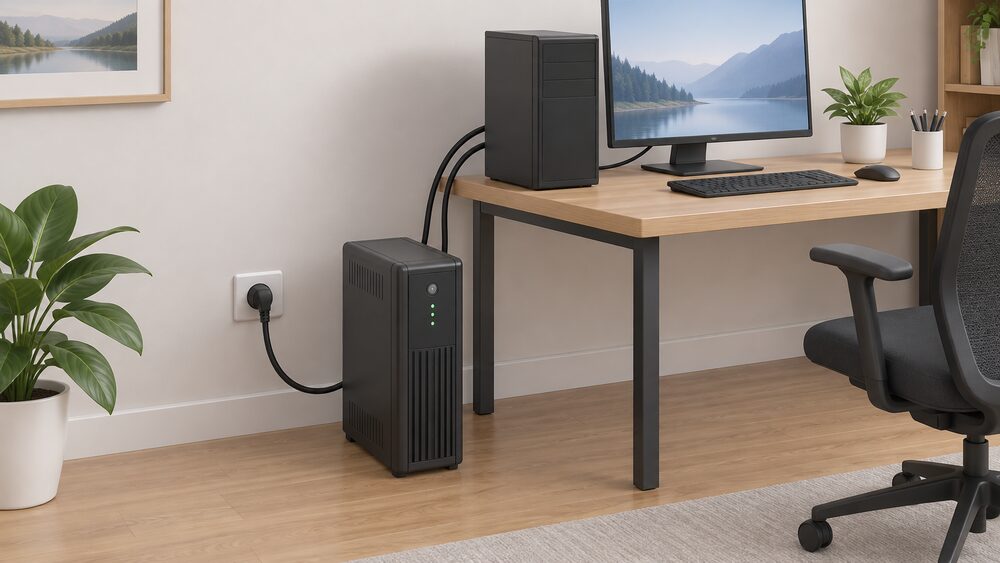 Eaton 9PX UPSIf the mains cuts out, will everything plugged into an Eaton 9PX keep running without a flicker?
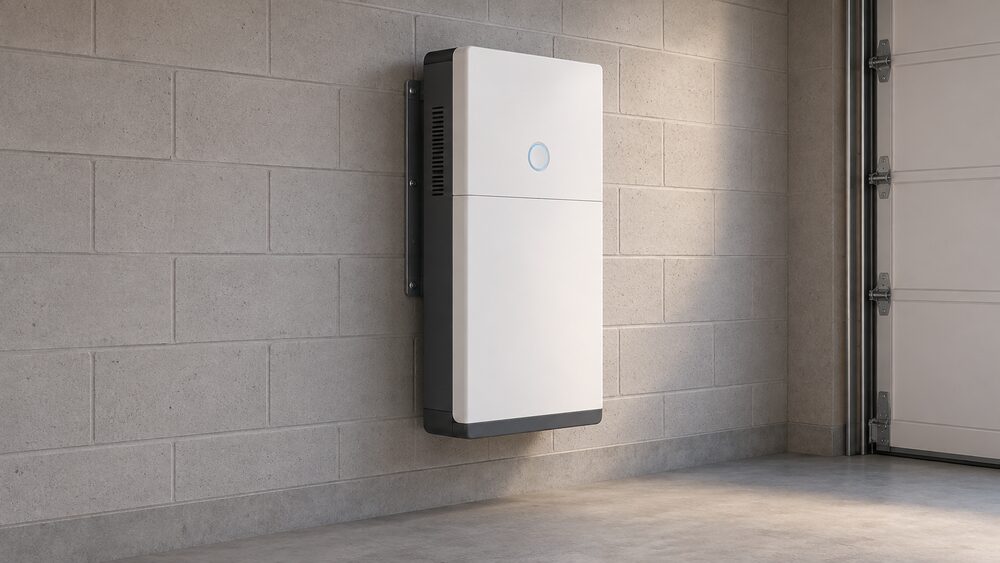 Eaton xStorage Home Battery RangeWhat happens to your Eaton xStorage Home now the cloud platform has closed, and can you still monitor it?
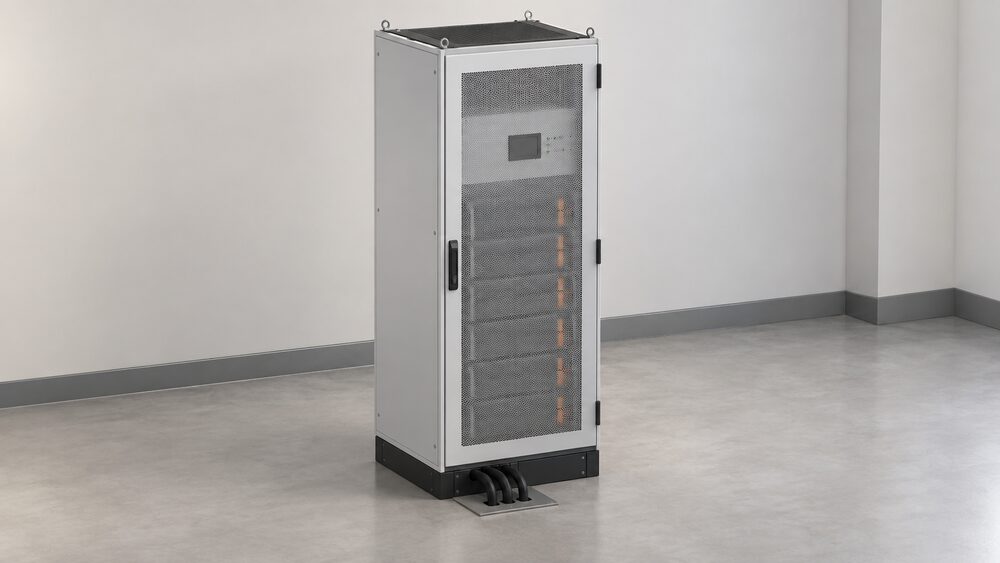 Eaton xStorage CompactThe Eaton xStorage Compact is built for businesses, not homes, so it holds far more power than a typical house battery.