
In this guide
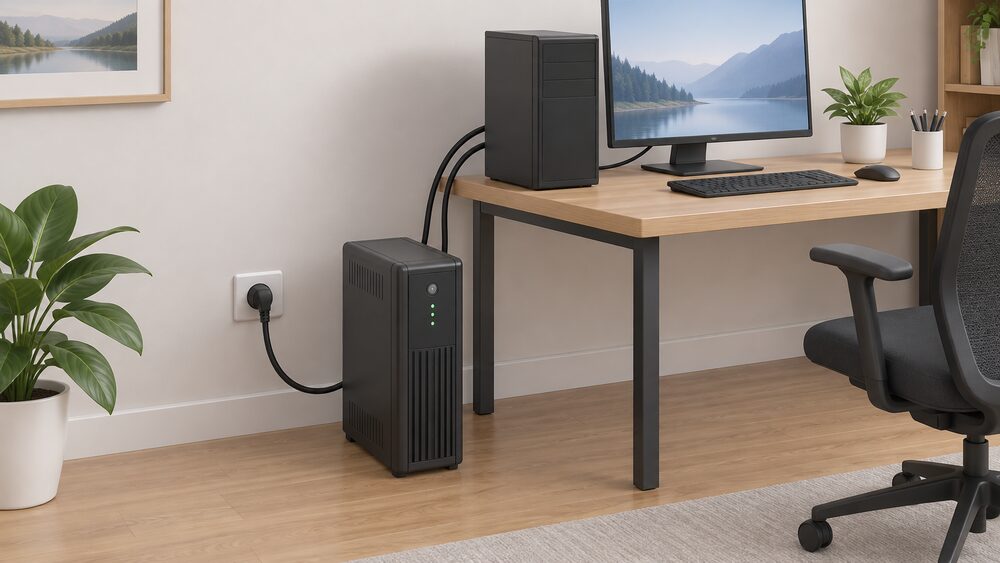
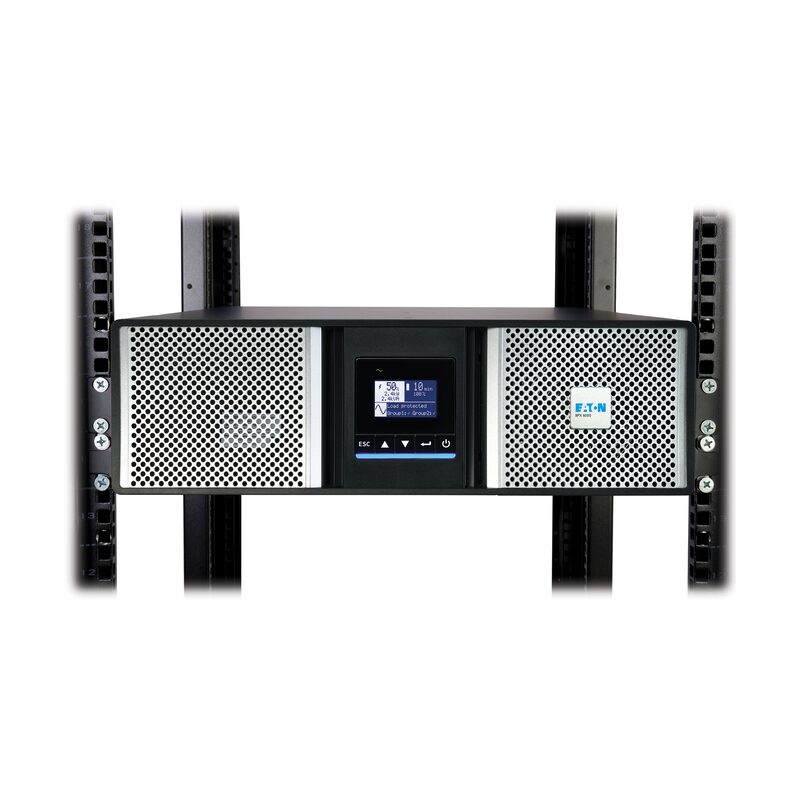
The Eaton 9PX is Eaton's flagship line of uninterruptible power supplies, sold into homes, home offices and small commercial premises. It sits in the online double conversion class, which means the connected load runs continuously from the inverter rather than switching over when the mains fails. That is the defining feature of the range and the reason it is searched by name: it is the tier of UPS where a household stops asking whether the power will hold and starts asking how clean and how continuous the supply is.
Eaton itself is a long-established electrical manufacturer. It traces its history to 1911 and is listed on the New York Stock Exchange, with legal domicile in Ireland since the 2012 acquisition of Cooper Industries. Its UK electrical arm, Eaton Electrical Products Ltd, is the entity that issues UK declarations of conformity for products such as its high-speed battery storage fuse families1. The company operates across electrical, aerospace and vehicle segments, and the electrical division is the one that supplies UPS units and energy storage into UK buildings.
For a household, the 9PX is a grid-tied device. It protects equipment against interruption and poor power quality, and it does nothing to reduce reliance on the grid, a supplier or the gas network. What it changes is the consequence of a cut: the load stays up for as long as the battery holds. Everything below sets out what Eaton makes for UK buildings, how its storage products are specified, and where the dependencies remain.
Eaton: the company behind the 9PX
Eaton is an Irish-domiciled, US-listed industrial manufacturer whose electrical division supplies circuit protection, power distribution and backup power equipment worldwide. Its UK presence is formalised through Eaton Electrical Products Ltd, which in April 2025 declared that its High-speed battery storage fuses BSF product family complies with UK statutory provisions1. That declaration matters for households only indirectly, but it shows the structure: UK-market products are placed on the market by a UK legal entity that carries the conformity paperwork.
The company's residential work is not new. In January 2017 Eaton previewed residential solutions ahead of the International Builders' Show in Orlando, including the EMCB smart breaker and Halo SMD LED downlight, and in June 2017 it showcased the same residential portfolio, including the EMCB, Halo RL56 downlight and MS180BT motion sensor, at PCBC in San Diego7. Those are North American trade shows and North American products, and they are not the 9PX. They are useful context for one reason: they show that Eaton's residential line has historically been built around circuit protection and lighting rather than around a domestic battery.
On the UPS side, Eaton's engineering reputation rests on larger installations. Its Power Xpert 1.5 and 2.0 megawatt energy storage inverters were certified to UL 1741 by Intertek in April 2017, and in 2018 an Eaton and Microsoft UPS technology project received the Mission Critical Data Centre Innovation award at the Data Centre Dynamics awards2. The 9PX inherits topology and control philosophy from that commercial work rather than from the residential lighting range.
What Eaton offers UK households and buildings
Eaton's UK-facing residential and small-building offer is narrower than its global catalogue. The company supplies UPS units, circuit protection, surge devices and energy storage, and it runs a virtual knowledge hub with recorded technical sessions, including a June 2020 webinar on flexible power solutions covering SF6-free medium voltage switchgear, battery storage and Energy Aware UPS9. That session is aimed at specifiers rather than householders, and it is a fair guide to who Eaton actually sells to in the UK: installers, facilities managers and small businesses.
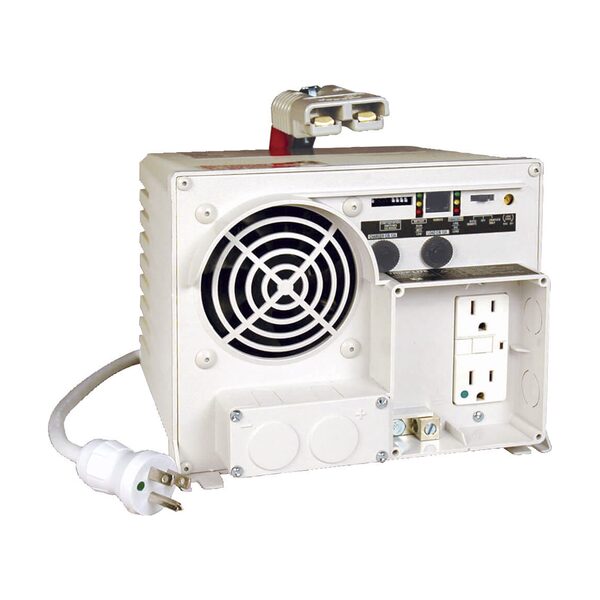
For a household, the practical question is what a UPS does and does not cover. A UPS keeps a defined set of loads running through a cut, and the runtime depends on the load and the battery capacity. It does not heat a home, run a shower or keep an electric cooker going. Households that need those loads covered are looking at a different class of equipment, and the options are set out in UPS types explained and UPS sizing.
There is also a UK policy layer that Eaton equipment sits inside but does not replace. Government and devolved guidance consistently points households towards fabric measures first: the Boiler Upgrade Scheme property owner guidance describes energy efficiency measures such as insulation as part of the process, and Energy Performance Certificates carry information on measures which could be made to improve the energy efficiency of a building10. Local authority schemes such as Action on Energy provide communities with advice and support for improving home energy efficiency12. None of that is Eaton's business, but it is the context in which a household decides whether a UPS is the right spend.
Buildings as a Grid: Eaton's approach to energy management
Eaton frames its building energy work around the idea of buildings as active participants in the grid rather than passive consumers. The technical expression of that is the xStorage range, which the maker's datasheet describes as "designed to enable a wide range of energy storage applications in residential, commercial, and light industrial building"4. The phrasing is broad, and the specification underneath it is not domestic: the xStorage Compact is a rack-mounted system built for small and medium commercial and industrial sites.
The regulatory backdrop Eaton works within is largely European and UK building law. The Energy Performance of Buildings Directive requires that larger air-conditioning systems in buildings are inspected from an energy efficiency point of view, and the UK's own building standards run to detailed technical handbooks in Scotland and separate regulations in England and Wales13. Eaton's storage and UPS products are specified into those buildings, but they are not themselves a compliance route.
The maintenance side is worth noting because it is where storage systems live or die. Official adaptation guidance for the energy system lists operation and maintenance as regular inspections and preventative maintenance, and vegetation management15. A battery system in a building is a maintained asset, not a fit-and-forget one, and that is as true of a small commercial rack as of a domestic battery.
Energy storage and the xStorage range
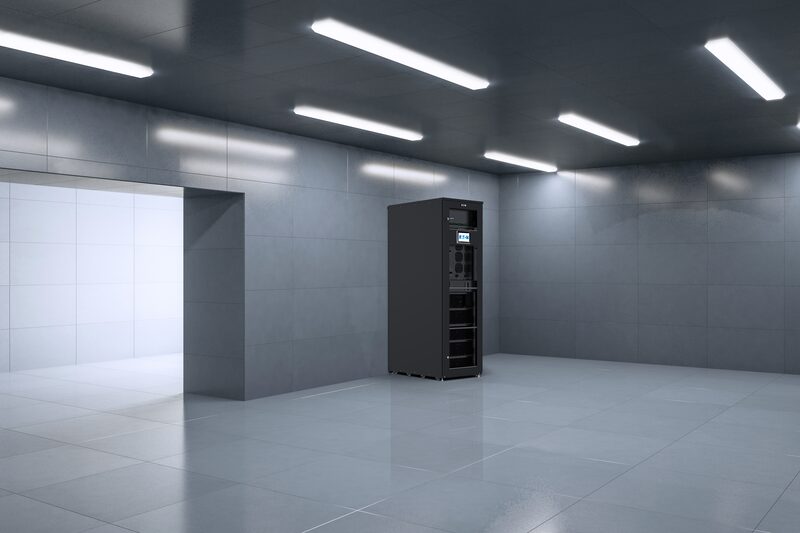
The xStorage Compact is the product that carries Eaton's storage specification into UK buildings. Eaton announced its launch in June 2020 as a single rack modular energy storage system for small and medium commercial and industrial buildings3. The technical datasheet gives the numbers that matter for sizing: each unit can support up to three strings, with a maximum of 150 kWh per unit, built from battery packs of 10 kWh nominal energy capacity each4.
| Specification | Figure | Source |
|---|---|---|
| Nominal capacity per unit | up to 150 kWh (3 strings) | 4 |
| Battery pack nominal capacity | 10 kWh | 4 |
| Usable capacity | 95% of nominal at C/5 | 4 |
| Inverter overload, 10 minutes | 110% load | 4 |
| Inverter overload, 60 seconds | 125% load | 4 |
| Inverter overload, 10 seconds | 150% load | 4 |
| Inverter overload, 300 milliseconds | above 150% load | 4 |
| Protection co-ordination | pre-arc i2t 1900 A²s, total clearing i2t 7100 A²s bypass | 4 |
| Environmental compliance | RoHS and WEEE compliant | 4 |
The overload figures are the ones that tell a household what the system is for. A unit that holds 110% of rated load for ten minutes and 150% for ten seconds is designed to ride through motor starts and inrush, not to run a house16. The usable capacity figure of 95% at C/5 is a discharge-rate-dependent number: at a slower discharge the battery gives up more of its nominal energy, and at a faster one it gives up less16.
Eaton published the xStorage Compact user manual, reference MN701002EN, in August 2024, covering operation, control, back-up and communication instructions17. A separate UL 9540A test report for the larger xStorage 400 was issued by UL LLC in May 2021, which is the fire-safety test standard for stationary battery installations18. Eaton also published a playbook on lithium-ion batteries for UPS applications in July 202119.
On cost direction, Eaton reports that capital expenditure for lithium-ion battery energy storage systems fell in 2024, with DC block prices down since 2023, and anticipates European delivery costs falling in 2025, down from 2022 levels16. Those are global figures, not UK installed prices, and no UK installed price for the xStorage Compact is published.
Partnerships and smart home integration
Eaton's documented partnerships sit in commercial and data centre work rather than in the domestic smart home. The Microsoft UPS technology project that won the 2018 Data Centre Dynamics award is the clearest example2. On the customer side, Grandeur Housing deployed Eaton IPM and PDU equipment in May 2019 to trigger a daily air gap for cybersecurity, which is an illustration of how Eaton's power management software is used in practice: as an operational control layer, not a consumer app20.
That distinction matters for a household. Eaton's UPS management software is built for estates of equipment, with monitoring and shutdown orchestration. It is not a smart home platform, and it does not integrate with consumer energy tariffs or with the kind of appliance-level control that domestic flexibility schemes rely on.
The UK's own definition of that domestic layer is set out in Parliament's research on energy smart appliances. An energy smart appliance is defined as an appliance, such as an electric vehicle charging point or a heat pump, that is capable of increasing or reducing its electricity demand in response to signals received remotely from a third party21. A separate briefing describes an energy smart appliance as an internet-connected appliance that can adjust its electricity usage automatically based on signals received remotely22. Eaton's building-scale products can participate in that kind of control at site level, but the consumer-facing smart home integrations that households encounter are generally built by other firms.
Vehicle-to-grid and emerging technology work
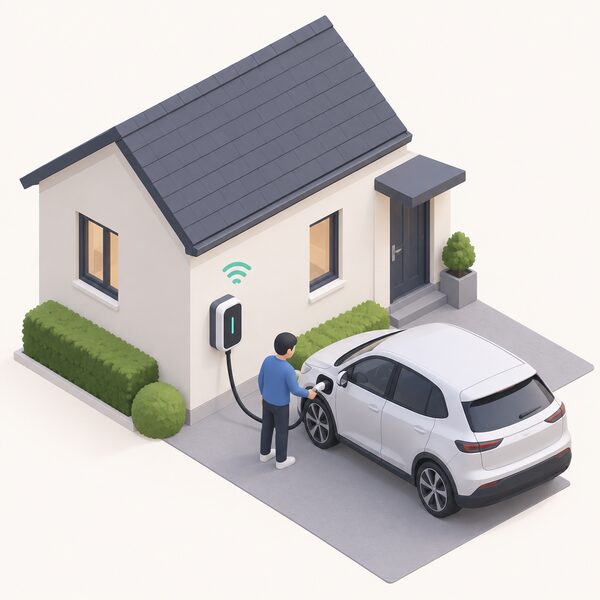
Eaton's emerging technology work in the UK touches vehicle charging at the component level rather than at the charger level. The company supplies high voltage fuses for EV applications and ran a webinar session titled "Specifying high voltage fuses for EV applications" in May 202523. That is a supplier position to charger manufacturers and installers, not a domestic charger product line.
The regulatory framework around home charging is developing quickly. The Building Regulations 2010 include Part 9B, Infrastructure for the charging of electric vehicles, and the Scottish Building Standards technical handbook covers charge point provision to new dwellings, provision to domestic buildings undergoing major renovation works, mixed development, location, specification, enabling infrastructure and information on installation and operation24. Those rules shape what gets installed in new and renovated homes, and they are the reason domestic charging infrastructure is now a building standards question rather than a purely electrical one.
Vehicle-to-grid is the technology that would let a home use a car battery as a house battery. One manufacturer describes V2G integration as a function that will allow EVs to not only draw energy from the grid but also return it when needed, and states that it plans to expand its energy collaborations to additional countries and introduce more advanced solutions, including V2G25. That is a statement of intent from a vehicle maker, not a live UK domestic product, and no V2G service is described here as available to UK households.
For households considering home charging, the relevant UK support is the electric vehicle chargepoint grant, which offers up to £350 per socket for residential landlords, people living in flats and people who rent their homes, and funds the installation of home EV chargers26. The grant does not apply to owner-occupiers of houses with off-street parking. Guidance on charging costs and infrastructure is published by government, and vehicle tax rates were updated in April 202527.
UK availability and support

Eaton equipment reaches UK households through electrical distributors and specialist resellers rather than through a consumer retail channel. The company's UK legal entity, Eaton Electrical Products Ltd, handles conformity and market placement, and its service organisation covers warranty and repair work on registered products1.
Support routes are structured by product family. Eaton publishes technical documentation, datasheets and user manuals directly, including the xStorage Compact manual MN701002EN issued in August 202417. For UPS units, the relevant documentation set includes the power infrastructure catalogue covering UPS and PDU products, which is where installation and configuration guidance for the commercial ranges sits20.
Households buying through a distributor should treat the seller as the first point of contact for faults, because the sale contract sits with the distributor. Eaton's own service channels handle the manufacturer-side warranty work. There is no published UK consumer price list for the 9PX or for the xStorage Compact, so prices are quoted by the distributor or installer at the point of sale.
On the wider energy picture, UK households have access to a range of official information and support. The Northern Ireland guidance on support to generate your own electricity notes that those technologies may offer an attractive payback to homeowners without grant support28. The VAT energy-saving materials relief applies in residential accommodation and certain charity buildings in the United Kingdom29. Feed-in Tariff licensee contact details are published by Ofgem for legacy scheme administration30.
What owning Eaton equipment means for energy independence
A UPS is a continuity device, not an independence device. The Eaton 9PX keeps a defined set of loads running through a cut, and the runtime is a function of load and battery capacity. It does not generate electricity, does not reduce the amount drawn from the grid in normal operation beyond its own efficiency losses, and does not change the household's relationship with its supplier. What it changes is the consequence of an interruption for the equipment plugged into it.
The dependencies that remain are worth stating plainly. The 9PX depends on the grid for its normal charging, on a supplier for the electricity that charges it, and on a battery that ages and eventually needs replacement. Eaton's larger storage products add a dependence on a manufacturer's service organisation and, for monitored installations, on network connectivity and Eaton's own management software. The xStorage Compact is a commercial product with a commercial support model, and it is not sold or supported as a domestic appliance.
For households weighing the options, the useful comparison is between device classes rather than between brands. A UPS protects equipment; a portable power station moves power to where it is needed; a standby generator or a home battery changes how long a home can run without the grid. Those trade-offs are set out in UPS vs portable power station and in home battery vs portable power station. Eaton's position in that landscape is at the continuity end, with a commercial storage line sitting above it.
The wider policy direction is towards a more flexible grid, in which appliances respond to remote signals. That direction increases the value of controllable equipment and also increases the number of parties a household depends on. Eaton's building-scale products are built for that world; a domestic 9PX is not, and it should be understood as what it is: a well-specified uninterruptible power supply for the equipment a household cannot afford to have drop.
Sources30 cited
- UK Declaration of Conformity, High-speed battery storage fuses BSF, Eaton Electrical Products Ltd, 2025-04-02
- Energy Aware UPS, Eaton, 2018
- Eaton introduces xStorage Compact, Eaton, 2020-06-29
- Eaton xStorage Compact technical datasheet, Eaton, 2025-12
- UK climate target and net zero, House of Commons Library, 2026-09-20
- High rise retrofit and upgrade programme phase 1, City of Edinburgh Council, 2026-04-20
- Eaton highlights residential building solutions for modern lifestyles, Eaton, 2017-01-09
- Eaton highlights residential building solutions at PCBC 2017, Eaton, 2017-06-28
- Flexible, environmentally friendly power solutions webinar, Eaton, 2020-06-03
- Boiler Upgrade Scheme Property Owner Guidance V5, Ofgem, 2026-03
- Energy incentives and schemes, South Cambridgeshire District Council, 2026-09-17
- Home energy information, advice and guidance, GOV.UK, 2026-03-11
- Energy Performance of Buildings Directive air-conditioning inspection, legislation.gov.uk, 2026-09-17
- Building Standards Technical Handbook, Domestic (April 2026), Scottish Government, 2026-03
- Well-adapted energy system, Climate Change Committee, 2026-09-19
- Energy storage FAQ, Eaton, 2025
- Eaton xStorage Compact user manual MN701002EN, Eaton, 2024-08
- Eaton xStorage 400 user guide, Eaton, 2021-05-06
- An Eaton playbook on lithium-ion batteries for UPS applications, Eaton, 2021-07
- Eaton power infrastructure UPS and PDU catalogue, Eaton, 2020-05
- Energy smart appliances and load control, House of Commons Library, 2026-09-20
- Electric vehicles: costs, charging and infrastructure, GOV.UK, 2025-04-10
- EV fuse selection guide, Eaton, 2025-05
- The Building Regulations 2010, legislation.gov.uk, 2026-09-17
- Toyota to expand EV charging ecosystem across the UK, SMMT, 2025-12-04
- Charging electric vehicles, Energy Saving Trust, 2026-04-23
- Energy smart appliances briefing, House of Commons Library, 2026-09-20
- Support to generate your own electricity, nidirect, 2025-09-22
- Extension of VAT energy-saving materials relief, GOV.UK, 2024-01-11
- Feed-in Tariff licensee contact details, Ofgem, 2026-09-17
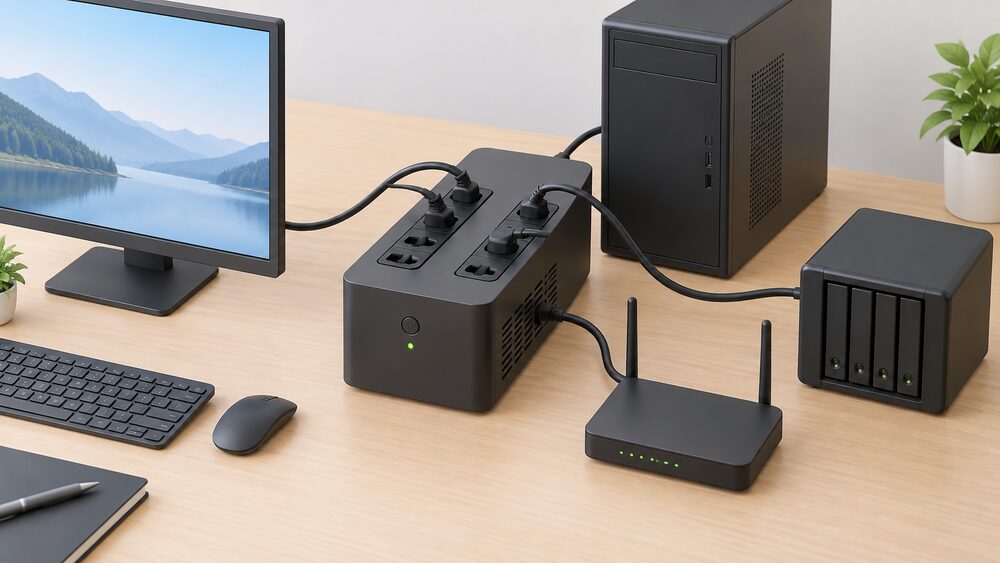 Eaton UPS units for home backup powerWhich Eaton backup unit suits a home office, and how long will it keep things running in a power cut?
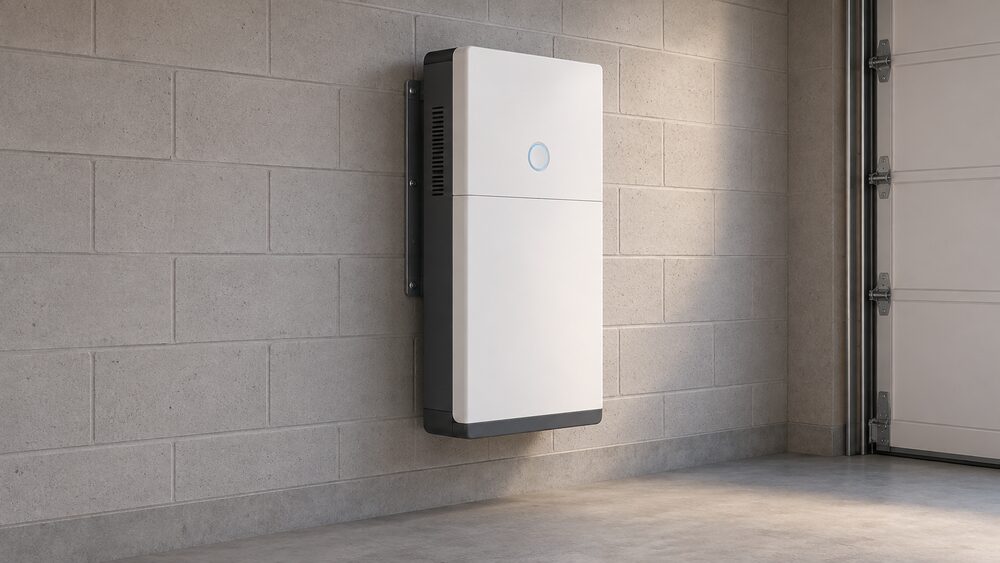 Eaton xStorage Home Battery RangeWhat happens to your Eaton xStorage Home now the cloud platform has closed, and can you still monitor it?
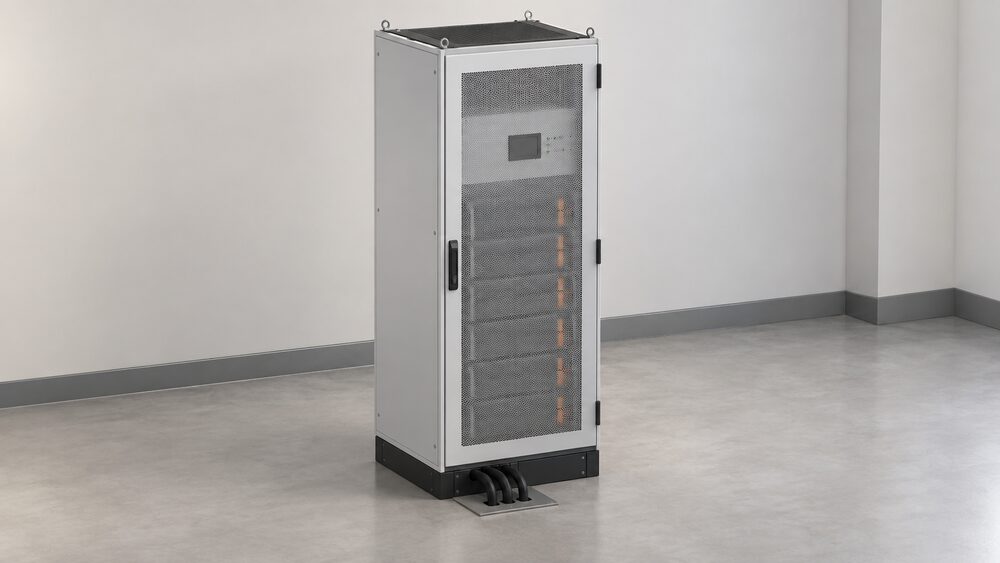 Eaton xStorage CompactThe Eaton xStorage Compact is built for businesses, not homes, so it holds far more power than a typical house battery.