
In this guide
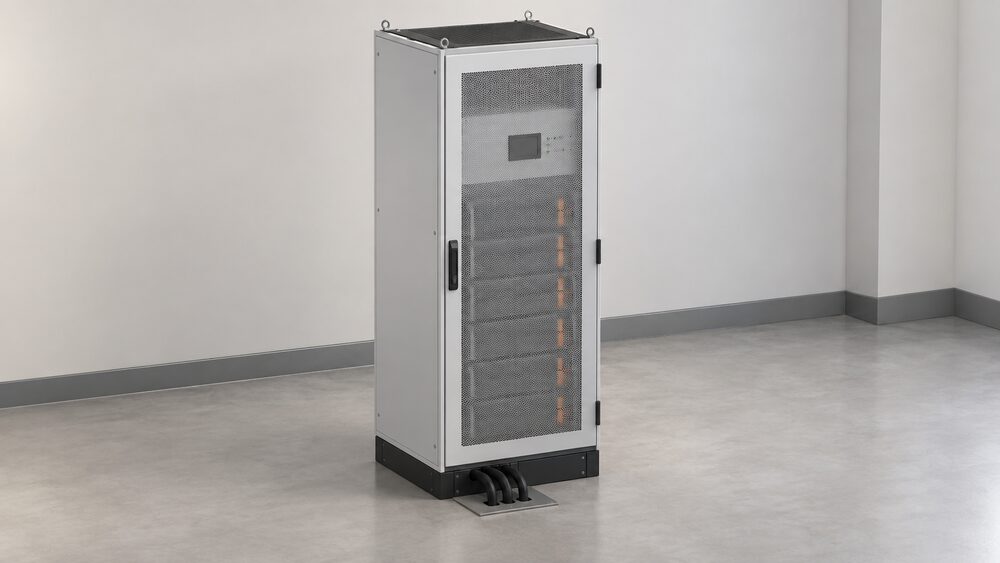
The Eaton xStorage Compact is an all-in-one single-rack battery energy storage system, described by Eaton as fitting into limited spaces while offering a wide range of energy storage applications1. It is a commercial and light industrial product, not a domestic one: the datasheet lists a 50 kWh internal battery string and a nominal 150 kWh per unit when the external strings are filled, with a 40 kW power conversion rack2.
That scale is the first thing a UK householder needs to understand. A single xStorage Compact unit holds roughly ten times the capacity of a typical domestic battery, and its power conversion rack alone is rated at 40 kW nominal active power, against the few kilowatts a home inverter usually delivers2. Eaton's residential line is the xStorage Home range, and the xStorage Hybrid is the product Eaton describes as designed for residential and light commercial buildings3.
The Compact's backup is built on double conversion technology, which keeps the load on the inverter rather than switching it after the grid fails1. It communicates over Modbus TCP/IP as standard, holds a published set of IEC and grid-compliance certifications, and can be paralleled up to five units for a maximum of 200 kW2.
What the xStorage Compact is: an all-in-one single-rack system
Eaton positions the xStorage Compact as a battery energy storage system that fits into limited spaces, aimed at small and medium commercial and industrial sites1. The datasheet describes it as designed to enable a wide range of energy storage applications in residential, commercial and light industrial buildings, though the hardware specification makes the residential part of that description theoretical rather than practical2.
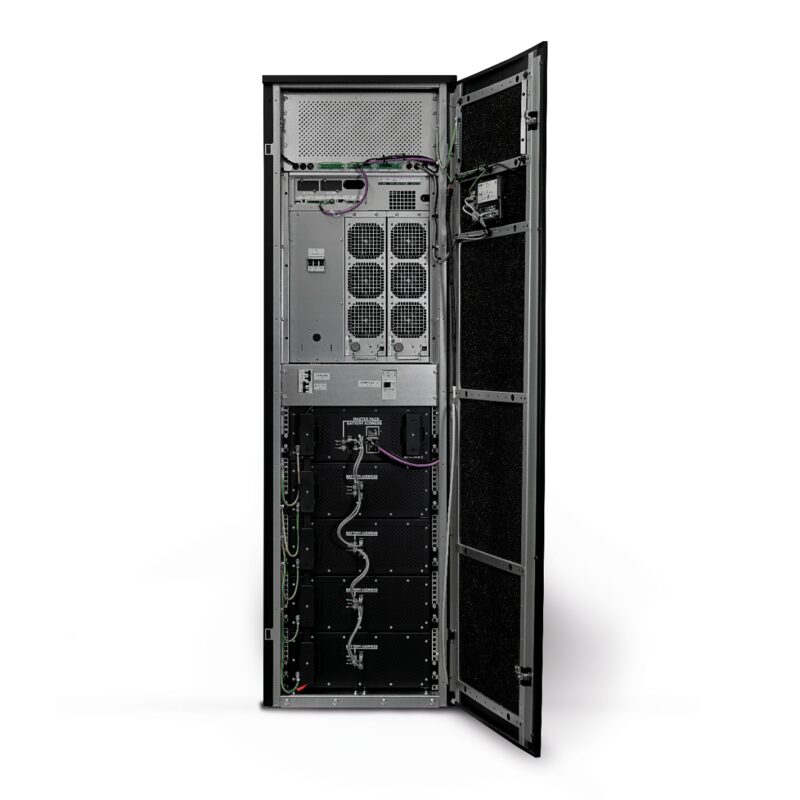
The architecture is a single rack holding both the power conversion system and the battery. The rack comes in two power ratings: a 20 kW version with one power module, and a 40 kW version with two2. The 20 kW rack can be upgraded to a 40 kW system, while the 40 kW rack is listed as not upgradable, so the choice of rack at order stage fixes the ceiling for that unit2.
Battery packs sit inside the same rack. Each pack has a nominal energy capacity of 10 kWh and a usable capacity of 95% of nominal at C/5, and packs are used in strings of five in series, sold for use with an Eaton grid converter only2. The internal string is therefore five packs, which is where the 50 kWh internal figure comes from2.
This is a different proposition from the all-in-one domestic units sold for UK houses, where the battery, inverter and backup interface arrive as one wall-mounted box. The Compact is an all-in-one in the sense that the rack contains the conversion and storage, but it is a plant-room product with three-phase input and output, not a cupboard unit. For the domestic equivalents, see all-in-one home battery systems.
Capacity: 50 kWh internal, 150 kWh nominal per unit
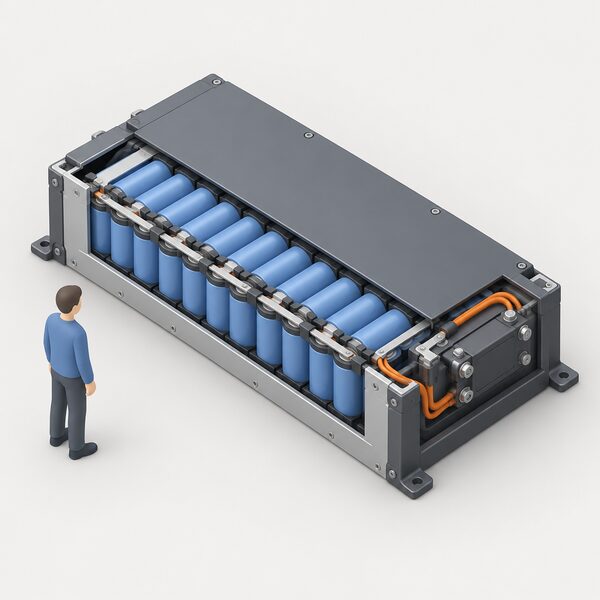
The capacity figures come in two layers. The internal battery is one string of five packs, or 50 kWh2. Each pack is 10 kWh nominal, with 95% usable at C/52. Beyond that, the unit accepts one or two external battery strings, and Eaton states each unit can support up to three strings, a maximum of 150 kWh per unit2.
| Item | Figure |
|---|---|
| Battery pack nominal energy | 10 kWh2 |
| Battery pack usable capacity | 95% of nominal at C/52 |
| Packs per string | 5 in series2 |
| Internal battery | 1 string, 50 kWh2 |
| External battery | 1 or 2 strings2 |
| Maximum per unit | 3 strings, 150 kWh2 |
| Capacity at end of warranty | 65% relative to new state2 |
The warranty condition of discharge is stated as 313 000 Ah on a daily cycle at 90% depth of discharge and 1C2. That is a throughput condition rather than a calendar term, and the calendar life is given as more than 10 years2. The retained capacity figure at end of warranty, 65% relative to new state, is the floor the maker commits to rather than a prediction of typical behaviour2.
For a household, the useful comparison is scale. A 150 kWh unit is far beyond the 5 to 30 kWh range that domestic storage occupies, and the usable capacity convention matters just as much at this size as at domestic size: reserving capacity for backup reduces what is available for self-consumption, a point set out in battery capacity and usable capacity.
Double conversion backup: how the power stays on
Eaton states that the xStorage Compact's backup is based on double conversion technology1. In a double conversion arrangement the incoming AC supply is rectified to DC and then inverted back to AC for the load, so the load runs on the inverter continuously rather than being transferred to it when the grid fails. That removes the changeover step and the brief interruption that comes with it.
The overload figures show how much the rack can carry momentarily. In inverter mode and stored energy mode the rack holds 110% load for 10 minutes, 125% for 60 seconds, 150% for 10 seconds, and above 150% for 300 milliseconds2. In bypass the rack carries continuous load below 110% on the 40 kW rating, and below 125% on the general listing2.
The rack's fault-clearing capability is specified per configuration: the 20 kW rack with one power module gives 72 A for 300 ms, and the 40 kW rack with two modules gives 144 A for 300 ms2. Input protective devices are a 40 A fuse on the 20 kW rack and an 80 A fuse on the 40 kW rack, with a minimum required short-circuit current of 1000 A on the 40 kW unit2. These are the numbers an electrical designer needs when the unit is specified into a building's protection scheme.
For a household reading this in the context of domestic backup, the relevant distinction is that double conversion is a commercial UPS architecture. Domestic batteries typically use a transfer arrangement with a changeover time measured in fractions of a second, and the conditions under which a home battery keeps circuits live are covered in battery backup in a power cut.
Applications: backup, peak shaving, load shifting and EV charging
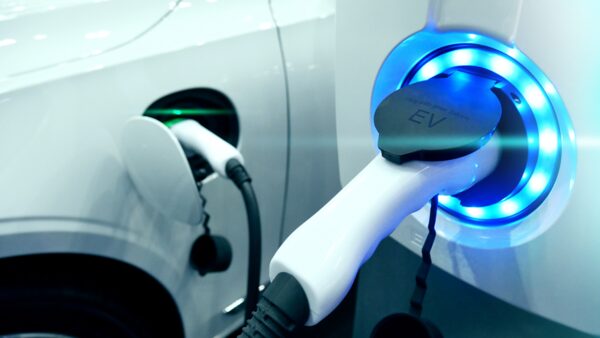
Eaton lists the Compact's applications as seamless backup power, peak shaving, energy storage, load shifting and frequency regulation, plus integration with EV charging infrastructure1. Those are the standard commercial storage use cases: shifting consumption away from expensive periods, trimming the site's peak demand, and providing a bridge when the supply fails.
Peak shaving is the application with the clearest commercial logic, and Eaton describes the same principle in its residential line, where the peak shaving model of the xStorage Home 3P allows storing energy and using it at peak time to reduce overall electricity costs4. On a commercial site the saving comes from the maximum demand charge rather than the unit rate, which is why the Compact's 40 kW rack matters more than its kWh.
On EV charging, Eaton's charging range covers AC and DC chargers, power management systems and advanced software, from those suited to residential buildings up to commercial buildings and public parking5. Eaton states that its charging solutions enable the integration of energy storage systems and the optimisation of vehicle to grid functionality6. DC chargers are listed for public and private parking facilities and motorways6.
The pairing of storage with charging is what keeps a site's import within its connection capacity: the battery buffers the demand spike a charger creates rather than the site paying for a larger supply. For the domestic version of that question, see can a home battery run a heat pump or charge an EV.
Scalability: paralleling up to 5 units to 200 kW
The application controller supports paralleling up to five units, a maximum of 200 kW2. Five 40 kW racks give that figure, and the arithmetic is Eaton's own: the datasheet states the 200 kW maximum alongside the five-unit limit2.
Within a single unit the upgrade path is limited. The 20 kW rack is listed as upgradable to a 40 kW system, and the 40 kW rack is listed as not upgradable2. A site that starts with a 20 kW rack can therefore add a second power module later, but a site that starts at 40 kW has reached that unit's ceiling and must add another unit to grow.
The battery side scales in strings rather than modules. One or two external strings can be added to the internal string, up to three strings and 150 kWh per unit2. Because each string is five packs in series, capacity grows in 50 kWh steps, which is a coarse increment for a site with a small load and a reasonable one for a site with a large one.
For a household, the parallel-unit architecture is a reminder that modular expansion is a design decision rather than a given. Domestic systems vary in whether capacity can be added later, and the options are set out in modular and stackable home batteries.
Battery technology and operating voltage range
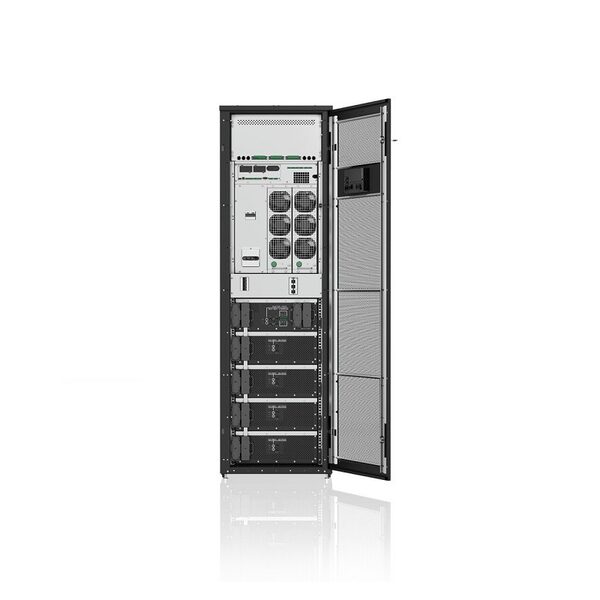
The packs are lithium-ion, and the GEN4 designation is the current generation in the datasheet.
The voltage figures operate at three levels. The system's DC connection and battery interface is rated at 370 to 503.7 VDC2. At pack level the DC battery input voltage runs from 74.4 V to 100.7 V, with a nominal voltage of 90 V DC2. Each pack is 111.4 Ah, and the charge and discharge current at 1C is 111.4 A, with a maximum C-rate of 1.202.
| Parameter | Figure |
|---|---|
| Battery technology | Eaton / Nissan Li-Ion and GEN42 |
| System operating voltage range | 370 to 503.7 VDC2 |
| Pack DC input voltage | 74.4 V to 100.7 V2 |
| Pack nominal voltage | 90 V DC2 |
| Pack capacity | 111.4 Ah, 10 kWh2 |
| Maximum C-rate | 1.202 |
| Charge/discharge current at 1C | 111.4 A2 |
| Initial state of health | 100%2 |
The rack's AC side is configurable across 220 V / 380 V, 230 V / 400 V and 240 V / 415 V, with an input tolerance of 187 V to 276 V2. The AC power distribution system supports TN-S, TN-C-S, TN-C and TT grid connections2. Operating temperature is 0 °C to +35 °C without output power derating on GEN4 batteries2.
The C-rate is the figure that governs how hard the packs can be worked, and the relationship between power rating and capacity is explained in battery power ratings and C-rate.
Communications and monitoring: Modbus TCP/IP
The standard connectivity port is Modbus TCP/IP2. That is the protocol most building management systems use to read and control plant, so the Compact can be integrated into a site's existing monitoring rather than requiring a separate platform. Eaton released the initial documentation for the xStorage Compact customer Modbus TCP mapping in April 2023, so the register set is published for integrators7.
At pack level the battery communicates over CAN bus2. The two layers serve different purposes: Modbus TCP/IP carries the system-level data a building management system wants, while CAN bus handles the internal conversation between the battery packs and the conversion equipment.
The rack's power quality figures matter to that integration. Total voltage harmonic distortion is below 1.5% at 100% linear load, and input current distortion is below 3% on a resistive load at rated input current, with a rated load power factor of 1.02. Those are the numbers a designer checks before adding the unit to a site with sensitive loads.
For a household, the communications question is usually about apps and local access rather than Modbus. Domestic batteries increasingly offer local monitoring as well as cloud services, and the trade-offs are covered in monitoring a home battery. Eaton's own residential cloud platform for the xStorage Home was shut down on 1 September 2025, with local mode monitoring given as the alternative, which is a reminder that a manufacturer's cloud service has a life of its own8.
Certifications and compliance: IEC standards, RoHS and WEEE
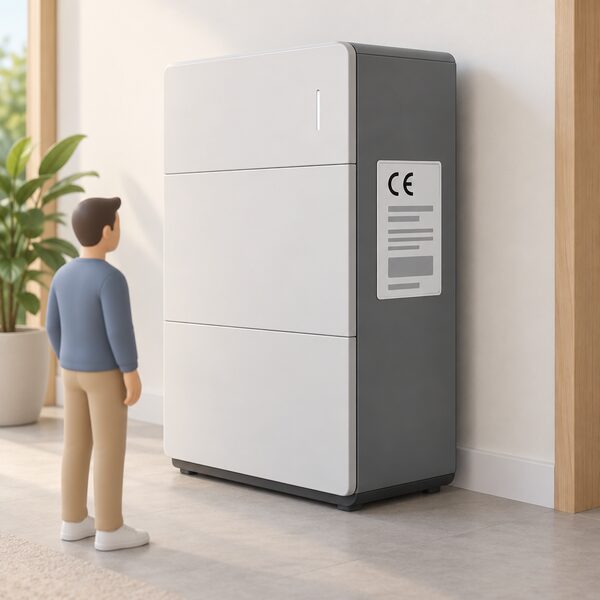
The battery pack carries IEC 62477-1, IEC 62619, UN 38.3 and CE2. IEC 62619 is the cell and battery safety standard for industrial applications, and UN 38.3 is the transport testing requirement for lithium cells and batteries.
The wider system's compliance listing is longer. Safety is IEC 62477-1. Electromagnetic compatibility covers immunity to IEC 61000-6-2 and emissions to CISPR 11 Level A, with IEC 61000-2-2 for low-frequency conducted disturbances2. The immunity set runs through IEC 61000-4-3, IEC 61000-4-2, IEC 61000-4-4, IEC 61000-4-5, IEC 61000-4-6, IEC 61000-4-8 and IEC 61000-4-11, with IEC 61000-3-12 and IEC 61000-3-11 on the harmonic and flicker side2.
Grid connection compliance is listed as EN 50549-1 (EN 50549-10), VDE AR-N 4105, G99/G100, C10-11, CEI-016 and TOR Type A2. The presence of G99/G100 matters in the UK context, since those are the engineering recommendations governing connection of generation and storage to the distribution network. The process for notifying a network operator about a domestic battery is set out in G98 and G99.
RoHS/WEEE compliancy is stated as yes2. That covers both the restriction of hazardous substances in the equipment and the waste electrical and electronic equipment obligations at end of life. For domestic systems the disposal routes differ, and they are covered in home battery recycling and disposal.
"RoHS/WEEE compliancy Yes"
Where the Compact sits against the xStorage Home range
The xStorage Home is Eaton's residential battery storage system, described as optimising self-consumption of solar PV energy and storing off-peak electricity9. It is an integrated energy storage unit in a single box, and Eaton states it has been developed and tested to meet the highest electrical safety standards at EU and national levels9.
The xStorage Home 3P is the three-phase residential model. It offers backup and off-grid mode operation, with a switching time lower than 3 seconds, and a built-in battery automatic switch10. Its battery voltage range is 170 V to 500 V, with nominal battery voltages of 240 V, 320 V or 400 V depending on model, and a minimum input voltage of 200 V4. PV MPPT voltage range is 150 V to 950 V, and communication interfaces are USB, CAN bus, RS485, Ethernet and WiFi4. It is accessible through an LCD touch screen and through the web, which Eaton states allows predictive maintenance and remote access4.
The xStorage Hybrid is the newer residential and light commercial product, launched at Intersolar Europe in June 202411. Eaton describes it as a system that combines two or more different energy storage technologies and can manage different sources of energy at the same time, including DC current from PV panels and AC current from micro inverters, central inverters or an electrical generator1. It has a modular, plug-and-play design intended to reduce commissioning time, is suitable for both new installation and retrofit, and Eaton states it is engineered to be cybersecure and to comply with stringent safety standards3. It can be combined with Eaton's pre-wired distribution boards and power protection boxes, provides the building with a back-up power source, and allows firmware updates and battery management to be handled remotely11.
| Product | Target | Form |
|---|---|---|
| xStorage Compact | Commercial and light industrial1 | Single rack, 40 kW, up to 150 kWh2 |
| xStorage Home | Residential9 | Integrated unit in a single box9 |
| xStorage Home 3P | Residential, three-phase4 | Backup switching under 3 seconds10 |
| xStorage Hybrid | Residential and light commercial3 | Modular, plug-and-play3 |
For the household end of the range, see Eaton xStorage home batteries.
What the Compact means for household energy independence
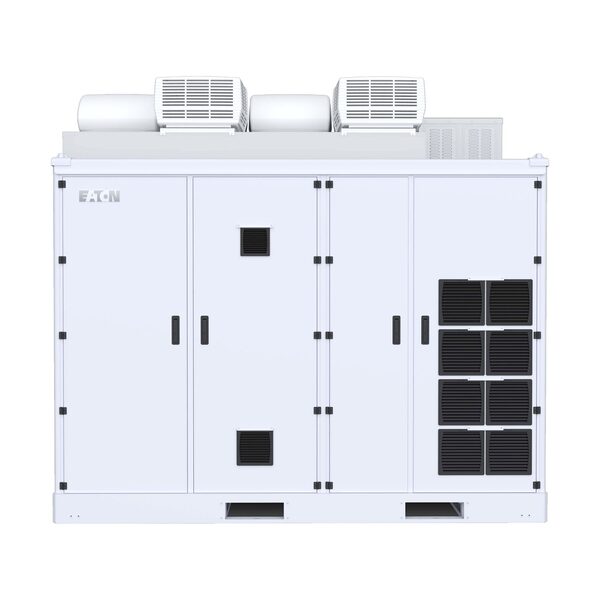
The honest answer is that the xStorage Compact does very little for a household's energy independence, because it is not a household product. Its 40 kW rack and 50 kWh internal string are sized for a commercial site with a three-phase supply and a maximum demand charge worth managing2. A home that installed one would be buying capacity it cannot cycle usefully and paying for power electronics it cannot use.
What the Compact does show is the direction of the commercial market. Eaton reports that capital expenditure for lithium-ion battery energy storage systems fell in 2024, with DC block prices down since 2023, and anticipates European delivery costs falling in 2025, down from the levels seen in 20221. Falling cell costs are what make both commercial and domestic storage more affordable, and the domestic cost picture is set out in how much does a home battery cost.
For a household, the dependence that remains with any battery is the same whether the unit is commercial or domestic. The system stays connected to the grid for import and export, it depends on a manufacturer for firmware and, where a cloud service is involved, for remote access, and it depends on an installer for commissioning and on the maker for spares. Eaton's shutdown of the xStorage Home cloud platform on 1 September 2025, with local mode monitoring as the alternative, is the clearest illustration of that last point8.
The wider question of what a battery can and cannot do for a household's independence is covered in home batteries and household energy independence.
Sources11 cited
- Energy storage FAQ, Eaton, 2026-09-17
- Eaton xStorage Compact technical datasheet, Eaton, 2025-12
- xStorage Hybrid, Eaton, 2026-09-17
- xStorage Home 3P, Eaton, 2026-09-17
- EV charging products, Eaton, 2026-09-17
- EV charging, Eaton, 2026-09-17
- xStorage Compact Modbus table, Eaton, 2023-04
- xStorage Home cloud shutdown, Eaton, 2025-09-01
- Home energy storage, Eaton, 2026-09-17
- xStorage Home 3P brochure, Eaton, 2022-05
- xStorage Hybrid launch at Intersolar, Eaton, 2024-06
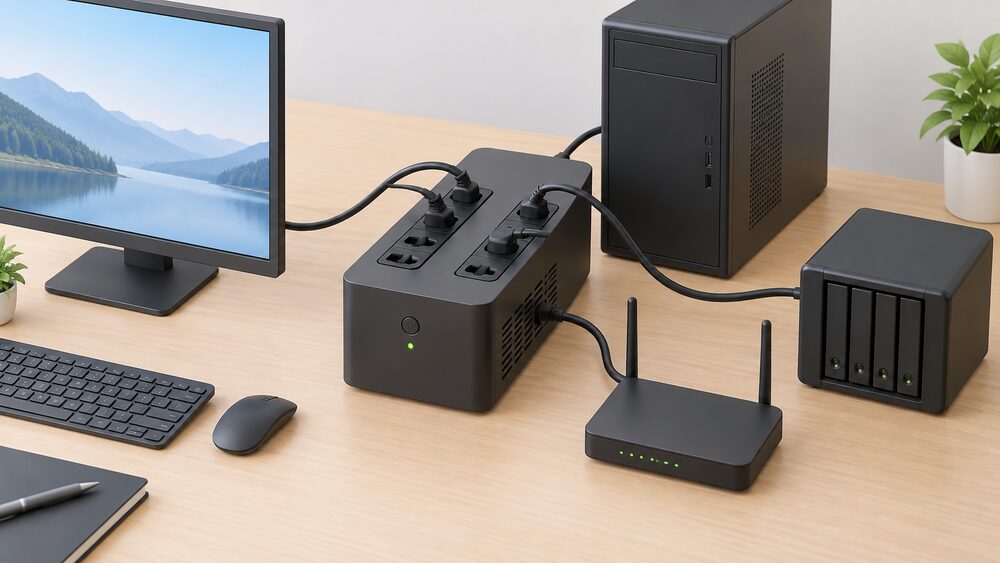 Eaton UPS units for home backup powerWhich Eaton backup unit suits a home office, and how long will it keep things running in a power cut?
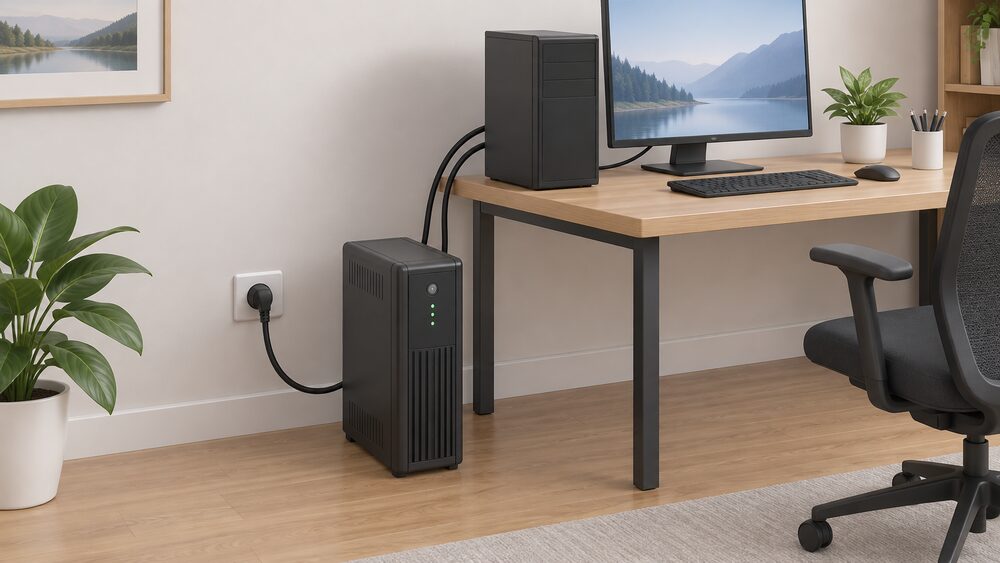 Eaton 9PX UPSIf the mains cuts out, will everything plugged into an Eaton 9PX keep running without a flicker?
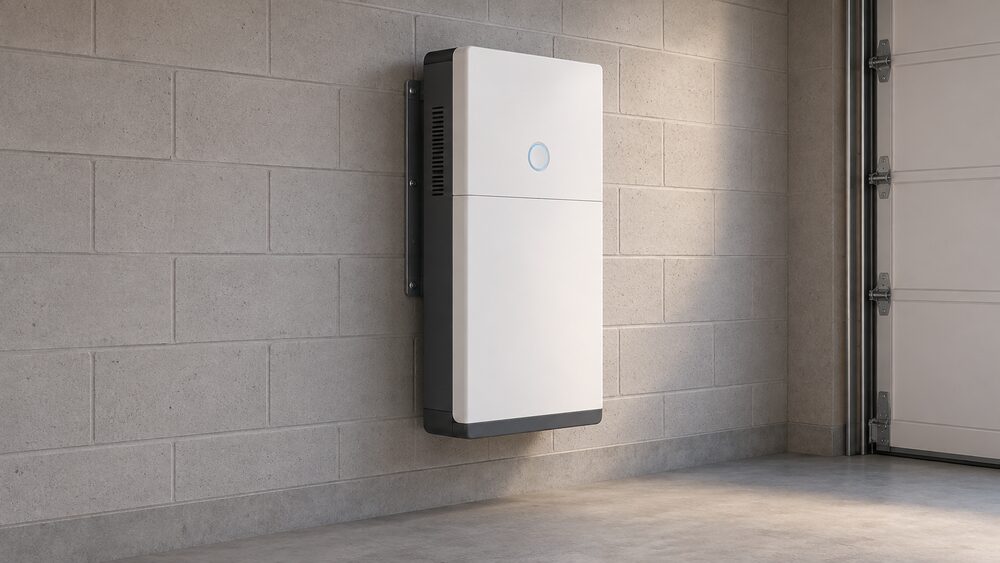 Eaton xStorage Home Battery RangeWhat happens to your Eaton xStorage Home now the cloud platform has closed, and can you still monitor it?