
In this answer
Short answer
When an energy supplier goes out of business, the lights stay on. Ofgem's safety net ensures you always have an energy supply, and the regulator automatically moves you to a new supplier1. You do not need to do anything: Ofgem states plainly that "you do not need to do anything if your current supplier goes out of business. We'll automatically move you to a new supplier, and make sure your energy supply is not interrupted"2.
The practical consequences are narrower than most households expect. Your credit balance is protected, your fixed tariff ends, and you are placed on the new supplier's standard variable tariff. Your gas and electricity supply is not cut off at any point3. The main thing that changes is price: the tariff you land on is generally more expensive than the deal you were on.
What happens the moment your supplier fails
The failure of an energy supplier is an administrative event for the household, not a physical one. Ofgem states that if your supplier goes out of business because of financial problems, you will still have electricity and gas supplied to your home or business, and your energy supply will not be cut off1. The same point is made by Which?, which notes that if a supplier goes under or is bought by another firm, gas and electricity will not be cut off5.
What actually happens behind the scenes is that the supplier enters administration or ceases trading, and Ofgem begins the process of appointing a replacement. The National Energy Action charity publishes guidance on what to do if an energy supplier goes out of business, which reflects how routine the process has become4. If you have a case open with the Energy Ombudsman at the time of the failure, the Ombudsman will contact you to discuss next steps1.
For the household, the first visible sign is usually a message from the administrator or from Ofgem confirming the failure, followed within days by contact from the new supplier. Nothing needs to be done in the interim. The supply continues, the meter keeps recording, and the account is transferred.
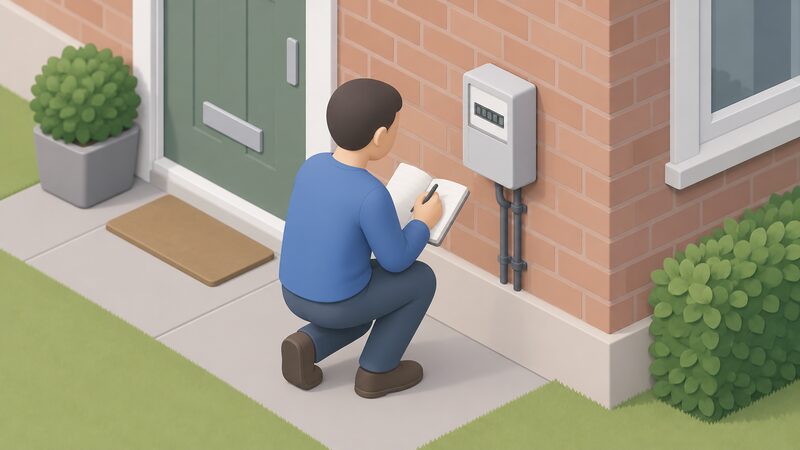
The Ofgem safety net: supply continues under a new supplier
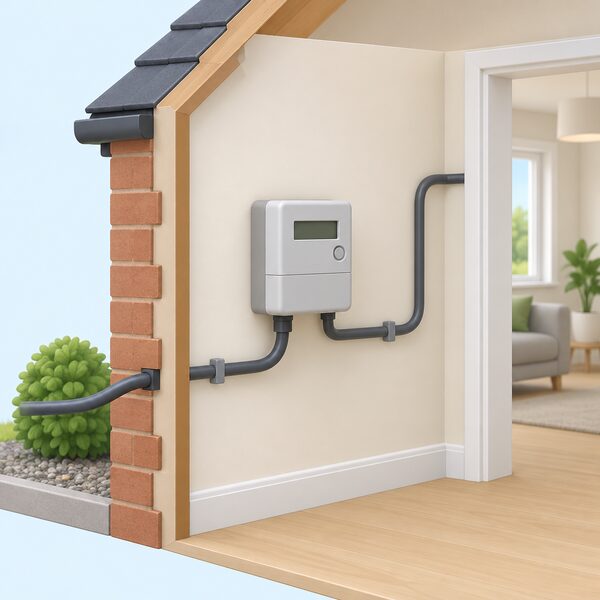
The mechanism that keeps the lights on is the Supplier of Last Resort process. When an energy supplier ceases trading, Ofgem will appoint another supplier to provide their energy supply, to prevent a drop in service to customers6. The appointment is automatic from the customer's point of view: you are switched to a new supplier and your supply continues uninterrupted7.
The same protection applies to gas. Ofgem's safety net means you are automatically switched to a new supplier and your supply continues uninterrupted8. Independent guidance confirms that energy supply will not be cut off at any point when a supplier goes out of business3. The regulator moves customers to a new supplier within a few weeks of the failure4.
The formal switching timescale, once a switch is under way, is five working days: suppliers must switch your electricity or gas supply from your old supplier to your new supplier within 5 working days2. That figure applies to ordinary switches between suppliers; the Supplier of Last Resort appointment itself is a separate process that runs on Ofgem's timetable.
For a household's energy independence, this is the clearest example of how little control a customer has over the supply relationship. The supplier is a commercial intermediary, not the source of the energy. The wires and pipes, the network operators, and the physical supply are unaffected by a retailer's collapse. What the household loses is choice of tariff, temporarily, and what it retains is the physical supply.
What happens to your tariff and prices
The tariff is where a supplier failure bites. The fixed rate contract you were on ends at the time you are moved onto the Supplier of Last Resort, and you are placed on a standard variable tariff with no early exit fee3. Independent guidance describes the same outcome as being put on a "deemed" tariff, which could be more expensive than the tariff you were on7.
The reason is structural. When a supplier opens your account, it automatically places you on its default tariff, which is generally the most expensive type of energy deal9. A standard variable tariff is the fallback position, and after a fixed deal ends a customer is rolled onto it, which would probably cost more10.
There is a counterweight. An energy supplier must tell a customer if it has a lower tariff, and that information appears on the energy bill or in the online account11. A supplier must also tell the customer what the cheapest, most suitable tariff for them should be, based on their energy use12. Those obligations survive the transfer, because they attach to whichever supplier holds the account.
| Position | Before failure | After transfer |
|---|---|---|
| Tariff type | Fixed rate contract | Standard variable tariff3 |
| Early exit fee | Applies to the fixed deal | None on the move to the SoLR3 |
| Cost position | The deal you chose | Generally the most expensive type of deal9 |
| Switching | Free to switch | Free to switch once the transfer completes2 |
The practical consequence is that a household moved to a Supplier of Last Resort should expect to pay more until it switches again. The transfer itself carries no penalty, and the new supplier must tell the customer about cheaper options.
Credit balances and debts: how they are handled
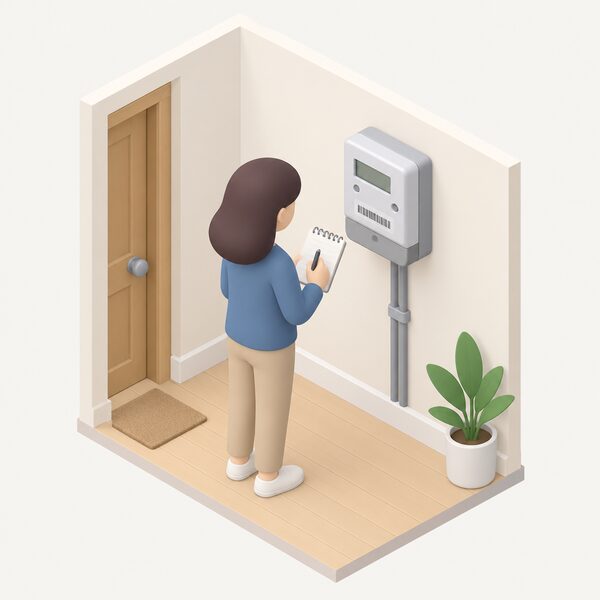
Credit is protected. Ofgem states that if your supplier goes out of business, your credit balance is still protected by the rules it sets, and the new supplier will contact you about a refund1. In the ordinary switching process, the supplier applies any credit you have to the final charge, and either sends a bill for any outstanding amount or refunds the leftover credit to your bank account13.
Debt is handled differently. If you owe money to your old supplier and have been in debt to them for less than 28 days, any money you owe should be added to your final bill2. That rule prevents a small arrears position from being treated as a separate debt collection matter.
Where the household is struggling, suppliers have duties. If you are in debt with your energy supplier, they are required to help you set up an affordable repayment plan14. Suppliers can agree a payment plan, payment break or reduction, review your current payments and debt repayments, and give access to hardship funds15. For domestic customers in financial trouble, suppliers can reassess or cut debt repayment and bill payments16. Support schemes funded by suppliers include paying off energy debt17.
Smart meters, prepayment meters and your meter readings
A smart meter does not stop working when the supplier fails, but the level of function depends on the meter type. SMETS2 meters keep their smart functions across all energy suppliers because they use the purpose-built national network, and they are now the meter type used for any new smart meter installation18. With a SMETS2 meter, a household should be able to switch energy suppliers without any interruption to energy readings or bill payments19.
Older SMETS1 meters are a weaker position. A household can switch suppliers with a smart meter, but the new supplier might not offer all smart meter services such as remote meter readings, and the meter may need replacing20. That is a real limit on the independence a smart meter provides: the hardware is only as useful as the supplier's systems behind it.
For prepayment customers, a smart prepayment meter can send readings automatically to the supplier21. Once a smart meter is installed, meter readings are automatically sent to the energy supplier, meaning bills are accurate rather than estimated22. That matters after a failure, because estimated bills are the most common source of dispute over a final balance.
Suppliers also have obligations on meter faults. If you suspect an issue with your smart meter, or your energy supplier identifies an issue, they should promptly investigate it, resolving it themselves or with third parties and keeping the consumer informed23. Where a smart meter installation fails due to a fault within the energy supplier's control, the consumer will receive compensation24.
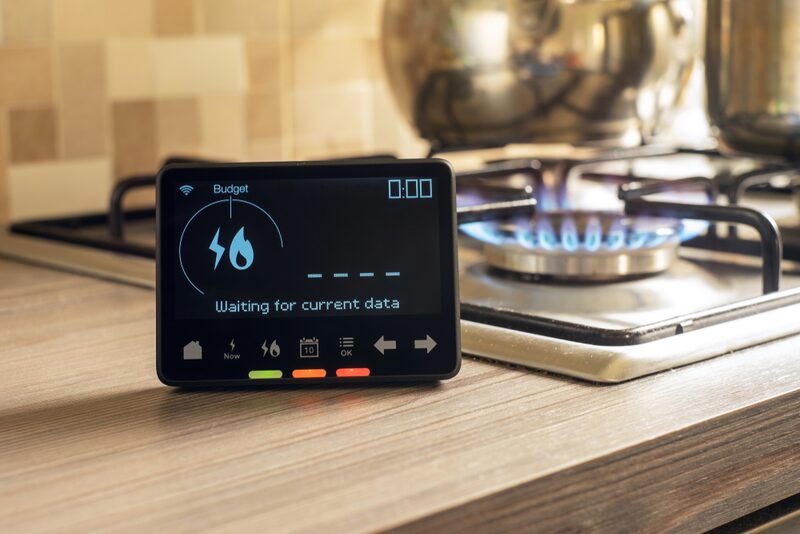
What happens during the transfer, and what switching would do to it
The single most important instruction is to wait. Do not attempt to switch before the automatic transfer process is complete5. Attempting a switch during the transfer can create an erroneous transfer, and all energy suppliers must follow the Erroneous Transfer Customer Charter, under which you could get compensation if this happens to you25.
On payment, the sequence matters. When you switch supplier, you will be asked to set up your direct debit ahead of the date the new supplier takes over, and the old direct debit should be cancelled after paying final bills26. Cancelling the old direct debit before the final bill is settled risks leaving an unpaid balance that complicates the credit refund.
If you are moving home at the same time, give your supplier at least 48 hours' notice, which gives it time to transfer your account to your new house if offered, or to close your account27. A new home owner should find out who the supplier is, find the meter and get a reading, and look into whether to switch energy suppliers28. Where the account holder has died, a spouse can take over a Feed-in Tariff generator account and continue receiving payments by submitting meter readings, relevant evidence and the transfer of ownership form completed in full29.
"You do not need to do anything if your current supplier goes out of business. We'll automatically move you to a new supplier, and make sure your energy supply is not interrupted."
The limits of the safety net are worth stating plainly. It protects supply and credit, not price. It does not preserve a fixed tariff, and it does not give the household a choice of replacement supplier. The independence a household retains is the ability to switch again once the transfer completes, and the physical supply that no retailer failure can interrupt.
Sources29 cited
- What happens if your energy supplier goes out of business, Ofgem, 2026
- Switch your home energy supplier, Ofgem, 2026
- Energy supplier out of business, Uswitch, 2026-05-29
- Get prepared, National Energy Action, 2026-06-02
- Which? energy survey results, Which?, 2026-01-19
- Energy Ombudsman FAQs, Energy Ombudsman, 2026-09-19
- Electricity only, Confused.com, 2026
- Gas only, Confused.com, 2026
- Setting up gas and electricity in a new home, Energy Helpline, 2026-09-20
- How do I read my OVO Energy bill, Uswitch, 2025-09-10
- Save money on energy bills, Energy Saving Trust, 2026-07-01
- How to prepare your home for winter, Home Energy Scotland, 2026-08
- What happens to credit if I switch, Uswitch, 2026-05-29
- Your home energy checklist, National Energy Action, 2026-09-10
- Get help with your energy bills, Ofgem, 2026-09-17
- Advice if you're struggling to pay your energy bills, nidirect, 2026-09-17
- Get help with your home or business energy bills, Ofgem, 2026-09-17
- Smart meters, Energy Ombudsman, 2026-09-20
- Do I already have one, Smart Energy GB, 2026-03-16
- Problems with services, Isle of Anglesey County Council, 2025-10
- Benefits for prepay customers, Smart Energy GB, 2026-08-19
- The installation process, Smart Energy GB, 2026-04-01
- Smart meters: your rights and expectations, GOV.UK, 2025-08-08
- Final decision: smart meter GSOPs, Ofgem, 2026-01-30
- Energy terms explained, Ofgem, 2026
- Direct debit, Uswitch, 2025-10-22
- Moving house energy checklist, Energy Saving Trust, 2026-05-01
- Energy saving house viewing tips, Energy Saving Trust, 2026-05-20
- Feed-in tariffs, Energy Ombudsman, 2026-09-20
 Supplier Licensing and FailureWhat happens when your energy supplier goes bust?
 Financial Resilience RulesYour supplier going bust raises two questions: who takes over and what happens to your credit balance?
 Challenger and Small SuppliersSmall energy suppliers can be cheaper, but are they safe to switch to?
 OfgemOfgem sets the rules energy suppliers and network companies must follow, including the price cap on standard tariffs.
 When a Manufacturer FailsWhat happens to warranties, spare parts, monitoring apps and cloud services when a manufacturer enters administration, exits the UK or discontinues a platform, and the practical options for owners left without support.
 The Full Energy Suppliers GuideWho the UK's domestic gas and electricity suppliers are, how the market is structured across Great Britain and Northern Ireland, what a supplier is licensed and obliged to do, how the price cap limits bills, what happens when a supplier fails, and who regulates it all.