

In this comparison
EDF Energy and British Gas are the two names most UK households meet first when they look at a bill, and the comparison between them is less about who is cheaper on any given day than about what each offers beyond the unit rate. EDF Energy supplies over 3.7 million buildings and advertises 24/7 support1. British Gas ranked 13th in the supplier comparison table for January to March 2026, with 68.7 complaints per 10,000 customers to Citizens Advice Consumer Service, the Extra Help Unit, Advice Direct Scotland and the Energy Ombudsman over the same period2.
The practical differences sit in three places: the shape of each supplier's tariff range, the loyalty and referral schemes each runs, and the support each provides through the Warm Home Discount and its own hardship funds. EDF has won the most recent collective switches recorded, including USWCSS-AUG26-01 in August 20261. British Gas offers a standard fix alongside electric vehicle and Dimplex Quantum storage heater tariffs3.
Both are large incumbents selling gas and electricity on the same grid, under the same price cap, to homes that remain dependent on that grid for every unit they use. Neither supplier changes that. What they change is the terms, the service record and the support available when a household struggles to pay.
EDF vs British Gas at a glance
The two suppliers are both large, both long-established and both sell the same physical product. The differences that matter to a household are in service record, payment methods and the breadth of the tariff range.
British Gas accepts both cash or cheque and direct debit, and publishes a telephone number of 0330 808 3880. It does not offer a mobile hotline2. Its fuel mix disclosure shows 76% renewables and 57% nuclear in one independent listing, with 20% renewables in the Citizens Advice figures, and 0% coal, 0% natural gas and 0% other fuels in the energyhelpline listing3. The two renewables figures differ because the documents measure different things and are not reconciled here.
EDF Energy is included in the quarterly smart meter statistics release among the larger energy suppliers, alongside British Gas, E.ON, Npower, Scottish Power and SSE1. That grouping is the origin of the "big six" framing that still shapes how households read the market, even though the number of active domestic gas or electricity suppliers more than doubled between December 2012 and September 2016 to 48 suppliers5.
| EDF Energy | British Gas | |
|---|---|---|
| Scale | Over 3.7 million buildings supplied1 | Ranked 13th in the supplier comparison table, January to March 20262 |
| Complaints | Not stated in the figures used here | 68.7 per 10,000 customers, January to March 20262 |
| Payment methods | Not stated in the figures used here | Cash or cheque: yes; direct debit: yes2 |
| Telephone | 24/7 support advertised1 | 0330 808 3880; no mobile hotline2 |
| Tariff range | Heat pump and electric vehicle tariffs1 | Standard fix, electric vehicle, Dimplex Quantum storage heaters3 |
| Loyalty scheme | Flextras, launched 7 September 20261 | Not stated in the figures used here |
The comparison table ranking is a customer service measure, not a price measure, and it sits alongside the complaints figure rather than replacing it. A household weighing the two should read the ranking as one input among several.
Tariffs and pricing: what each supplier offers
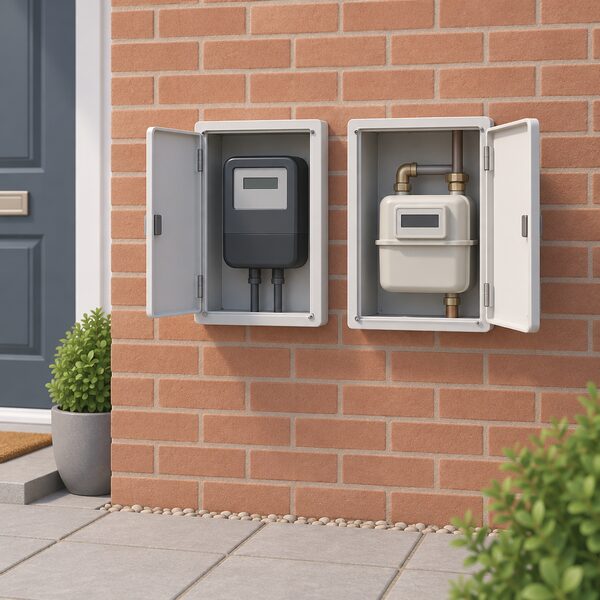
British Gas offers two types of variable rate tariff: a standard variable and a pay-as-you-go tariff. Its fixed rate range includes a standard fix, an electric vehicle tariff and a Dimplex Quantum tariff for storage heaters3. EDF Energy's range includes other tariffs for heat pumps and electric vehicles alongside its standard offerings1.
Neither supplier sets its own price for the default tariff. The cap is set with reference to the Domestic Gas and Electricity (Tariff Cap) Act 2018, which requires licence conditions giving effect to the cap6. That means the headline unit rate for a household on a default tariff is set by Ofgem, not by the supplier, and the difference between the two on that tariff is limited to standing charges and any discount structure.
The cap itself moves. The 1 April 2024 cap represented a decrease of £238 (12%) compared to the previous level of 1 January to 30 April 20247. The cap for 1 October to 31 December 2025 was 2.2% per year higher than the cap set for the same period the previous year, from 1 October to 31 December 2024 (£1,717)8. For a prepayment household in the Eastern region, the cap stood at £767.79 for gas at 12,000 kWh per annum for 1 April to 30 June 20249.
The Energy Price Guarantee, which preceded the current cap arrangements, averaged electricity at 34p/kWh and gas at 10.3p/kWh for direct debit customers in Great Britain with typical consumption10. Those figures are historical and are given here because they still appear in comparisons.
Where the two suppliers genuinely differ is in the cost of serving a customer. Ofgem's consultation on the default tariff cap found that the range between the highest and lowest cost supplier was over £50 per customer per year for gas and over £40 per customer per year for electricity, averaged across 2015 to 2017 for suppliers with more than 250,000 customers11. That spread is the room within which a supplier can compete on price without changing the product.
Collective switch results: where EDF has been winning
Collective switching is the mechanism by which a group of households negotiates a tariff together, and the recent record favours EDF Energy. The USWCSS-JUL26-01 scheme ran from 13 to 20 July 2026 with winning tariffs from EDF Energy and Fuse Energy. USWCSS-JUL26-02 ran from 24 to 29 July 2026 with two winning EDF Energy tariffs. USWCSS-AUG26-01 ran from 11 to 17 August 2026 with EDF Energy's Collective Switch Aug28v3 as the winning tariff1.
That is three consecutive schemes in which EDF Energy took at least one winning position, and two in which it took both. The pattern is worth reading carefully: a collective switch winner is the tariff that beat the others in that auction, on that date, for that group. It is not a statement that EDF is cheaper than British Gas for every household, and it does not bind either supplier to the same price in the next scheme.
For a household, the practical value of a collective switch is that the negotiation has been done and the tariff is published. The collective energy switching schemes page sets out how the auctions work and what a household commits to by registering. The energy comparison sites and brokers page covers the intermediaries that run them.
The wider market context matters here. Ofgem's research into consumer tariff choices surveyed 3,235 energy bill paying adults from across Great Britain (England, Scotland and Wales) between 29 March and 9 April 202412. That sample is the basis for what is known about how households actually choose, as opposed to how the market assumes they choose.
Loyalty and referral schemes: Flextras and Refer a Friend
EDF launched Flextras on 7 September 2026, a loyalty scheme rewarding customers for flexible electricity use1. The scheme is aimed at households whose consumption can be moved, which in practice means those with a smart meter and an appliance or vehicle that can be charged or run at a chosen time. EDF Energy advertises 24/7 support alongside its tariff range1.
The Refer a Friend promotion is separate and time-limited. It opened on 14 September 2026 and closes on 6 October 2026. Successful referrals earn £100 for the referrer and £75 for the referred friend1. Both figures are stated by EDF, and both are conditional on the referral completing within the promotion window.
"gives £50 loyalty credit to dual fuel customers who stay with it for a year"
That quotation is included because loyalty credit is a common shape for these schemes across the market, not because it describes EDF or British Gas. The energy supplier rewards and referral schemes page covers the wider pattern.
EDF also runs a Customer Support Fund, which offers debt support and energy efficient appliances such as cookers, fridges and washing machines, plus smaller products to keep customers warmer during colder months14. That fund is a hardship measure rather than a loyalty scheme, and it sits alongside the Priority Services Register and third-party organisations supporting money management, increasing income through financial benefits and help with energy debts15.
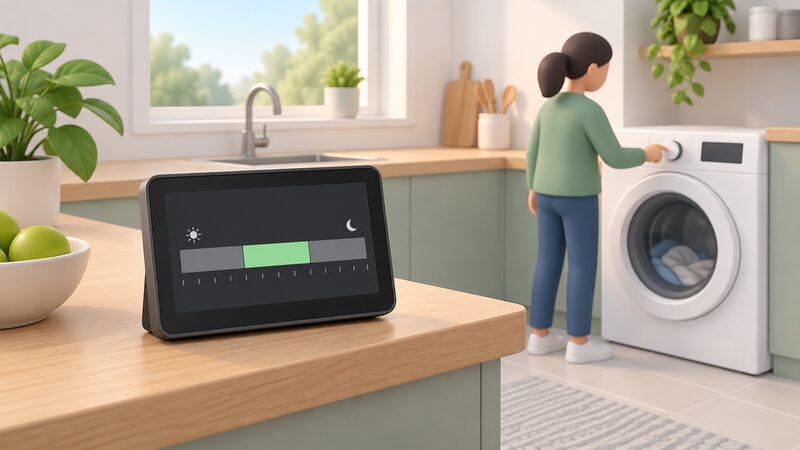
Warm Home Discount and support for vulnerable customers

The Warm Home Discount is a fuel poverty reduction scheme, reducing the energy costs of low-income and vulnerable households across Great Britain since its inception in 2011. It is funded through a levy on all domestic gas and electricity customers4. Pension Credit is one of the qualifying benefits16.
The scheme's territorial extent is stated differently across documents. Ofgem describes it as covering Great Britain17, the government's evaluation describes it as applying to England and Wales18, and the 2026 to 2027 eligibility statement likewise says England and Wales19. The scheme years 17, 18, 19 and 20 will each run from 1 April to 31 March of the following year for England, Wales and Scotland4. The scheme covers England, Scotland and Wales and will run until 31 March 20314, with a continuation confirmed until 2030-3120. Northern Ireland has a separate market and the scheme does not apply there in the same form.
The evaluation period for the 2022 to 2024 scheme ran from August 2023 to November 2026 in England and Wales18. The current scheme was originally due to end in March 2026, and the government consulted on continuing it once that point was reached21.
Beyond the statutory scheme, British Gas Energy Trust can be reached on 01733 421 021 or through the British Energy Trust website22. EDF's support includes the Priority Services Register and third-party organisations helping with money management, income and energy debts15. The supplier support for vulnerable customers page sets out what suppliers must do, and the Warm Home Discount and suppliers page covers which suppliers take part and how payment is made.
Tariff terms and conditions: what changed and when
EDF published its latest update to its tariff terms and conditions on 1 September 20261. Terms and conditions are where the fixed-rate period, the exit fee position and the conditions attached to a loyalty or referral scheme are actually set, and they change more often than the headline tariff names do.
The regulatory backdrop to those terms has moved repeatedly. The default tariff cap was introduced under the Domestic Gas and Electricity (Tariff Cap) Act 2018, which requires licence conditions giving effect to the cap6. The cap for 1 April 2024 fell by £238 (12%) against the previous period7, and the cap for 1 October to 31 December 2025 was 2.2% per year higher than the equivalent period a year earlier8.
For a household, the terms that matter most are the length of any fixed period, what happens at the end of it, and whether switching away early carries a charge. The exit fees when switching page covers when a switch can be made without paying one, and the cooling off period when switching energy supplier page covers the cancellation window.
Complaints about terms are handled through the supplier first and the Energy Ombudsman second. The Ombudsman's eligibility rule is that British Gas matches the company name written on the account holder's bill, and British Gas Evolve customers should continue their dispute with British Gas23. The complaining about an energy supplier page sets out the process, and the Energy Ombudsman page covers what it can decide.
Beyond the tariff: batteries, heat and household independence

Neither EDF nor British Gas sells a home battery as part of its supply offer, but both sell tariffs shaped around the appliances a household might pair with one. EDF Energy offers tariffs for heat pumps and electric vehicles1, and Flextras rewards flexible electricity use1. British Gas offers an electric vehicle tariff and a Dimplex Quantum storage heater tariff within its fixed rate range3.
The case for moving household demand onto electricity is set out by the Climate Change Committee. Since the start of the Iran war, households with gas boilers and petrol cars have seen energy bills rise almost four times more than those with heat pumps and electric vehicles24. The same body cautions that the ratio of electricity-to-gas prices is still too high for households who switch to heat pumps to see the full benefit of their greater efficiency25. Both statements are from the Committee, and they point in the same direction: the appliance matters, but so does the price ratio between the two fuels.
What this means for independence is limited and worth stating plainly. A household on an EDF or British Gas tariff remains connected to the gas and electricity grid, supplied by a company it did not choose to own, at a price largely set by Ofgem for the default tariff. A battery, a heat pump or an electric vehicle changes how much of the household's energy is bought and when, and a flexible tariff changes what it costs. None of it removes the supplier, the grid or the standing charge.
The energy suppliers and household energy independence page develops what a household can and cannot control. The green energy tariffs page covers what suppliers are actually selling when they describe a tariff as renewable, and the fuel mix disclosure page covers what each supplier must publish.
Which supplier fits which household
The honest answer is that the fit depends on the household's circumstances rather than on a ranking of the two companies. The facts that bear on the choice are these.
A household that wants a loyalty scheme tied to flexible electricity use has one option in EDF's Flextras, launched 7 September 20261. A household that wants a storage heater tariff has one in British Gas's Dimplex Quantum tariff3. A household that values a published complaints record can read British Gas's 68.7 complaints per 10,000 customers for January to March 2026 and its 13th place in the comparison table2. A household that wants to switch through a collective auction has the recent record of EDF winning three consecutive schemes1.
A household in Northern Ireland is in a different market entirely, and neither the Warm Home Discount nor the price cap arrangements described here apply in the same way. The energy suppliers in Northern Ireland page covers that separate market, and the Warm Home Discount in Northern Ireland page explains why the scheme does not apply there.
For households in Great Britain, the UK energy suppliers guide covers the full market, the big six energy suppliers page covers how the incumbent group formed and what became of it, and the energy supplier market share page shows where each sits by customer numbers. The British Gas and EDF profiles cover each company in more detail, and the energy supplier customer service ratings page sets out the complaints data behind the rankings.
Sources26 cited
- EDF Energy supplier guide, Energy Helpline, 2026
- British Gas supplier details, Citizens Advice, 2026
- British Gas supplier guide, Energy Helpline, 2026
- Warm Home Discount, Ofgem, 2026
- Future insights series 4, Ofgem, 2017
- Energy price cap wholesale adjustment decision, Ofgem, 2024
- Default Tariff Cap letter, 1 April 2024, Ofgem, 2024
- Changes to the energy price cap between 1 October and 31 December 2025, Ofgem, 2025
- Default tariff cap level, 1 April 2024 to 30 June 2024, Ofgem, 2024
- Energy Price Guarantee up until 30 June 2023, GOV.UK, 2026
- Default tariff cap: policy consultation overview, Ofgem, 2018
- Understanding consumers' energy tariff choices, Ofgem, 2024
- Is a prepayment energy meter right for you?, Which?, 2026
- EDF Customer Support Fund, Charis Grants, 2026
- Informal carers and energy bills, Uswitch, 2025
- The Warm Home Discount Scheme: if you live in England and Wales, GOV.UK, 2026
- Energy terms explained, Ofgem, 2026
- Evaluation of the Warm Home Discount Scheme 2022 to 2024, GOV.UK, 2026
- Warm Home Discount eligibility statement, England and Wales, 2026 to 2027, GOV.UK, 2026
- DESNZ annual report and accounts 2025 to 2026: performance report, GOV.UK, 2026
- Energy Company Obligation: contacts, guidance and resources, Ofgem, 2026
- Help with household costs, Isle of Anglesey County Council, 2026
- Raise a dispute: British Gas, Energy Ombudsman, 2026
- Faster electrification would cut UK household bills, say climate advisers, Climate Change Committee, 2026
- Progress in reducing emissions: 2025 report to Parliament, Climate Change Committee, 2025
- Tackling fuel poverty in Scotland: periodic report 2021 to 2024, Scottish Government, 2025
 Dual Fuel TariffsExplains what a dual fuel tariff is, how discounts and single billing work, and where separate gas and electricity contracts remain available.
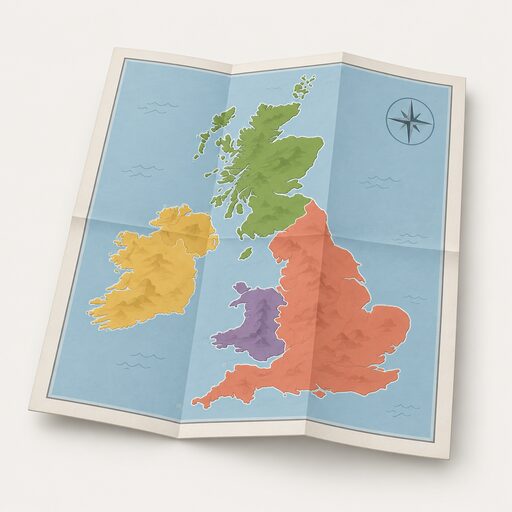 The Full Scotland, Wales and Northern Ireland GuideWhy a householder in Glasgow, Cardiff or Belfast faces different schemes, standards, targets and markets from one in England.
 The Full Tariffs GuideWhich energy tariff suits how you live, and will switching really save you money?
 UK Energy Prices vs EuropeWhy does the UK pay so much for electricity when our gas is cheaper than most of Europe?
 Supplier Market ShareWho supplies most homes in Britain, and does the answer change for gas and electricity?
 Fixed and Variable TariffsCompares capped standard variable tariffs with fixed deals, including exit fees, contract end and rollover.