
In this comparison
E.ON Next and British Gas are the two largest incumbent supply books in Great Britain, and they are not the same kind of company. British Gas is the largest gas supplier and the number two overall behind Octopus Energy, majority owned by Centrica, and supplies more than 8 million homes and businesses1. E.ON Next is the household supply arm of E.ON SE of Germany, sitting alongside E.ON Energy Solutions, E.ON UK plc and Npower Commercial Gas in the group's licence structure3.
The published service data separates them more sharply than price does. Ofgem's satisfaction research for July to August 2025 found a significantly lower proportion of E.ON and E.ON Next customers were satisfied with customer service than the GB average, and the January 2026 wave repeated that finding4. British Gas drew a significantly higher proportion of dissatisfied customers in the same July to August 2025 wave, but was the only supplier in the January 2025 survey to record a statistically significant improvement in overall satisfaction4. Citizens Advice rated E.ON Next 3.71 out of 5 and British Gas 2.61 out of 5 for January to March 20267.
Both are bound by the same guaranteed standards, which pay £40 automatically when a supplier misses a defined service standard8. Both sell electricity and gas on standard variable and fixed terms, and both are named in Ofgem's one-year lower standing charge trial that began in June 20262.
E.ON Next and British Gas at a glance
The two suppliers sit in different places in the market. British Gas remains the largest gas supplier and the second largest overall, behind Octopus Energy, which is now the number one electricity supplier and the second biggest gas supplier1. Four of the original six suppliers still serve more than half of energy customers: British Gas, EDF Energy, E.ON Next and ScottishPower1. Ofgem's retail market research puts six large companies at 91% of the domestic market14.
Ownership matters for how each behaves. British Gas is majority owned by Centrica, a UK-listed group, and E.ON Next by E.ON SE of Germany1. The E.ON licence structure covers E.ON Next Energy Limited, E.ON Energy Solutions Limited, E.ON UK plc and Npower Commercial Gas Limited, so a household's contract may sit with a named entity inside that group rather than with the brand on the bill3.
| E.ON Next | British Gas | |
|---|---|---|
| Majority owner | E.ON SE (Germany)1 | Centrica (UK)1 |
| Market position | Part of the four original suppliers still serving over half of customers1 | Largest gas supplier, number two overall behind Octopus Energy1 |
| Citizens Advice rating, Jan to Mar 2026 | 3.71 out of 57 | 2.61 out of 5, ranked 13th10 |
| Complaints per 10,000 customers | Not published in the same table | 68.7, January to March 202610 |
| Customer service satisfaction | 71% satisfied or very satisfied, below average4 | Significantly more dissatisfied than average, July to August 20254 |
| Smart meter billing accuracy | Not published in the same table | 88.12%10 |
| Lower standing charge trial | Named in the Ofgem trial from June 20262 | Named in the Ofgem trial from June 20262 |
Tariffs and prices: fixed deals, variable rates and the price cap
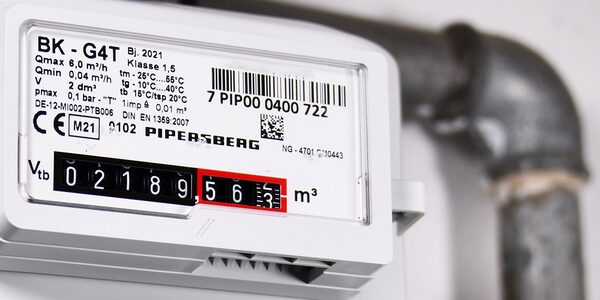
E.ON Next's standard variable product is Next Flex, where electricity and gas prices can go up or down with the wholesale market13. It is also the default tariff for new residential gas connections while an account is set up, and it carries no exit fees15. British Gas sells fixed rate tariffs on the same principle as every large supplier: the price cap set each quarter by Ofgem does not apply to fixed-rate tariffs, so a fixed deal is a bet on where the cap goes next2.
The cap itself is a benchmark, not a price. Ofgem's cap levels for 1 July to 30 September 2026 set a gas benchmark maximum of £99.78 standing charge and £756.61 annual bill at 9,500 kWh for Eastern, other payment method16. The equivalent figures for Charge Restriction Period 14a show £113.80 standing charge and £906.74 annual bill in Northern, other payment method, and £112.75 with £903.08 in the South East17. The earlier period 13a set £109.27 and £813.37 for Eastern gas on other payment method18. These are benchmark maxima for a defined usage level, not a household's actual bill.
The daily standing charge on the gas default tariff averaged 35.09 pence per day across England, Scotland and Wales, including VAT at 5%, as announced for the period from 1 January 202619. From June 2026 some suppliers, including British Gas, EDF, E.ON and Octopus, offer tariffs with a lower standing charge as part of a one-year Ofgem trial2. That trial is the clearest structural difference on offer between the two books at present, and it is a trial rather than a permanent tariff design.
E.ON Next has repeatedly won collective switch auctions, including the April 2026 round with its Next Fixed 14m Collective v1 tariff, and further rounds in May, June and September 20262. Winning a collective switch is a route to a fixed price, not a guarantee of the cheapest deal for a given household.
Customer service and complaints: what the published data shows
The independent data is unflattering to both, in different ways. Ofgem's July to August 2025 wave found a significantly lower proportion of EDF Energy, E.ON / E.ON Next, OVO Energy and Scottish Power customers were satisfied or very satisfied with customer service than the average, with E.ON and E.ON Next at 71%4. The January 2026 wave repeated the finding for EDF Energy, E.ON / E.ON Next and OVO Energy5. In the same July to August 2025 wave, a significantly higher proportion of British Gas customers said they were dissatisfied or very dissatisfied with customer service than the average4.
Citizens Advice's comparison table for January to March 2026 places British Gas 13th with an overall rating of 2.61 out of 5, and E.ON Next 3rd with 3.71 out of 57. British Gas recorded 68.7 complaints per 10,000 customers to Citizens Advice Consumer Service, the Extra Help Unit, Advice Direct Scotland and the Energy Ombudsman over the same period10.
There is a countervailing trend for British Gas. In the January 2025 survey it was the only supplier to see a statistically significant increase in the proportion of customers satisfied overall since the previous wave in July 20246. The July 2024 wave used sample bases of 1,015 British Gas customers and 556 E.ON / E.ON Next customers, so the two are measured on different sample sizes20.
"a significantly lower proportion of EDF Energy, E.ON / E.ON Next, OVO Energy and Scottish Power customers reported they were satisfied or very satisfied with customer service than the average"
E.ON Next's own quarterly performance reporting shows 59,276 complaints opened and 59,138 resolved in Q2 2026, with customer service the top complaint reason at 32.28%15. Its gas appointment performance recorded 7,185 guaranteed standard breaches in Q4 2025 and £195,840 of customer payouts in Q2 202611. Those are the supplier's own figures, published as part of its standards reporting.
Smart meters, billing and switching timescales
Smart meters are replacing analogue gas and electricity meters as part of the national infrastructure upgrade to improve and modernise Great Britain's energy system21. The policy framework applies to the gas and electricity markets in Great Britain, so Northern Ireland sits outside it22.
British Gas recorded 88.12% bills accuracy on smart meters for January to March 2026, and no figure for smart meters working correctly in the same table10. British Gas and EDF were added to the supplier list under the Smart meter In-Home Display voluntary replacement principles on 20 May 202423. E.ON Next scored 8 out of 10 on Which?'s smart meter assessment24.
Switching is a defined process. E.ON Next states the whole process takes around five working days, with a 14 day cooling off period, and that supply moves over within five working days once the switch is ready13. Signing up online takes about five minutes15. The cooling off period applies to domestic customers only and not to business customers13. Ofgem's switching guidance sets out the supplier's obligations, including the extra £40 payable if a switch is not completed on time25.
Where no meter reading is submitted, E.ON Next states that customers who pay when they get their bill receive an estimated bill every month, that accounts are billed whenever a reading is submitted, and that customers without a smart meter are emailed monthly to remind them to send one26. Estimated bills are reconciled against an actual reading later, which can produce a catch-up charge or a credit.
Solar, heat pumps and EV charging: where each supplier fits
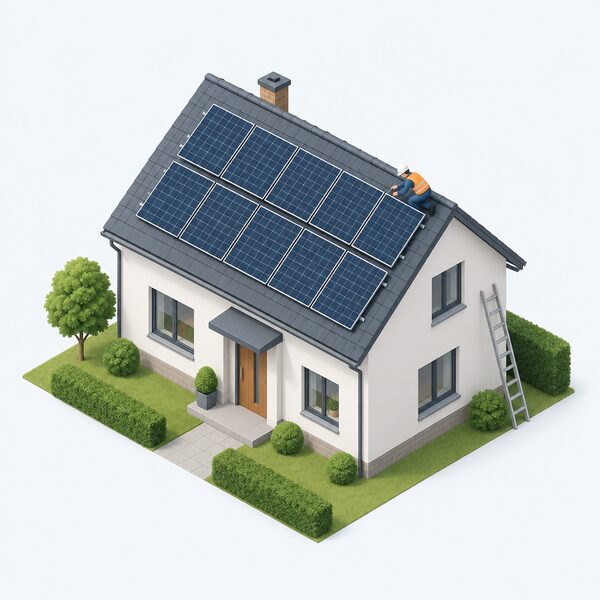
E.ON Next publishes illustrative export earnings for solar systems, which is the clearest product-side difference between the two books in the available data. An 8 panel system with no battery is modelled at £421 a year, a 16 panel system with no battery at £937 a year, and a 16 panel system with a battery at £599 a year27. Smaller and mid-sized battery systems show £92 a year for 6 panels, £316 for 10 panels and £524 for 14 panels27. The pattern is consistent: adding a battery lowers export volume because more generation is used on site, so the export line falls while the self-consumption benefit rises.
These are the supplier's own modelled figures, not a guaranteed rate, and they depend on the tariff and metering in place. Export payments in Great Britain sit under the Smart Export Guarantee framework, and the Feed-in Tariff licensee contact list names British Gas Trading at its own FIT address and lists E.ON's encompassing licences, which is where legacy FIT administration sits for each group3.
Neither supplier's published material in this comparison sets out a heat pump or EV charging specification in the same detail as the solar modelling. What can be said from the market data is that the low-carbon product push sits alongside a supply business that remains overwhelmingly gas and electricity retail: British Gas is still the largest gas supplier, and Octopus is the largest electricity supplier1. For a household, the practical point is that a solar or battery purchase from a supplier ties the hardware to that supplier's export tariff and app, which is a form of dependence even where the generation itself is on the roof.
Standing charges, payment methods and Direct Debit rules
Standing charges are the fixed daily cost of being connected, and they vary by region and payment method. The gas benchmark maximum for Northern on other payment method in Charge Restriction Period 14a was £113.80, against £130.62 for Northern on standard credit, a difference of £16.82 for the same region and period17. The South East on other payment method was £112.7517. The Eastern figure for period 13a was £109.2718. The average gas default tariff standing charge across England, Scotland and Wales was 35.09 pence per day including VAT at 5%19.
Payment method drives the difference. Paying by monthly Direct Debit is the cheapest route on the cap benchmarks, standard credit the most expensive, and prepayment sits separately. E.ON Next accepts monthly Direct Debit, card payments through the online account or by phone, bank transfer, and cash at Post Office, Payzone and PayPoint using the barcode on the bill26. British Gas accepts Direct Debit10.
For a household's independence, the standing charge is the part of the bill that cannot be reduced by using less. It is the cost of remaining connected to the grid, and it is set by region and payment method rather than by behaviour. The lower standing charge trial that began in June 2026 is the first structural attempt to give households a choice on that fixed element2.
Guaranteed Standards of Performance: £40 compensation when service slips
Both suppliers are bound by the same statutory scheme. Under the Electricity and Gas (Standards of Performance) (Suppliers) Regulations 2015, a supplier that fails a defined standard must make a payment of £40, described in the regulations as an additional standard payment, to the customer affected12. Ofgem's summary of the scheme confirms minimum standards that all suppliers must meet for specific services, or pay £40 automatic compensation if they do not8. The consultation on the Energy Consumer Outcomes framework repeats the £40 automatic compensation per breach as the payment level9.
E.ON Next states it pays £40 within 10 working days where it breaks any of its published promises, for domestic and Microbusiness customers11. Ofgem's smart meter guaranteed standards set out that an extra £40 is required if the original compensation is not issued within 10 working days, or if a supplier fails to forward a payment due from a gas transporter or electricity distributor21.
Separately, the network side of a power cut carries its own payments: £100 for homes or £195 for businesses where fewer than 5,000 properties are affected for more than 12 hours, or more than 5,000 properties for more than 24 hours28. A power cut lasting more than 24 hours and interrupted for 72 hours could attract four additional £45 payments, adding up to £180, and one lasting more than 12 hours and interrupted for 36 hours could attract two additional £45 payments, adding up to £9028. Those are network operator payments, not supplier payments, and they are separate from the £40 supplier standard.
E.ON Next's own standards page records 7,185 guaranteed standard breaches on gas appointments in Q4 2025 and £195,840 of customer payouts in Q2 202611. It also commits to telling a customer who they should be supplied by within 20 working days if the customer contacted E.ON Next instead of the other supplier in an erroneous transfer case11.

Which supplier suits which household?
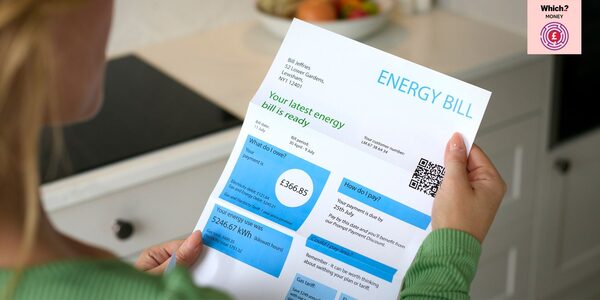
The honest answer is that neither is a service leader on the published data, and the choice turns on which weakness a household can live with. E.ON Next scores better on the Citizens Advice comparison table, 3.71 against 2.61, and better on Which?'s smart meter assessment at 8 out of 107. British Gas carries the larger complaint volume per customer at 68.7 per 10,000, but recorded the only statistically significant improvement in overall satisfaction in the January 2025 wave10.
A household that wants a fixed price and a defined end date is choosing between two suppliers that both sell fixed deals, with the price cap irrelevant to those deals2. A household that wants a lower fixed daily cost has the Ofgem trial tariffs from June 2026 as an option with both suppliers named2. A household with solar has E.ON Next's published export modelling as the more developed product material in this comparison27.
What neither supplier changes is the underlying dependence. Both are retail books buying wholesale gas and electricity, both rely on the same grid and network operators, both bill through an account and an app, and both are ultimately owned outside the household's control, Centrica in the UK and E.ON SE in Germany1. Switching between them changes the price, the service and the product bundle. It does not change where the energy comes from or who owns the relationship. For the wider picture of how supplier choice fits into household energy independence, see Energy Suppliers and Household Energy Independence, and for the full market context, UK Energy Suppliers.
Sources28 cited
- Which energy suppliers are British?, Uswitch, 2026-06-26
- British Gas supplier guide, Energy Helpline, 2026-09-20
- Feed-in Tariff licensee contact details, Ofgem, 2026-09-17
- Customers' satisfaction with their supplier: July to August 2025, Ofgem, 2025-12
- Customers' satisfaction with their supplier: January 2026, Ofgem, 2026-05
- Customers' satisfaction with their supplier: January 2025, Ofgem, 2025-05
- Compare domestic energy suppliers: customer service, Citizens Advice, 2026
- Ofgem transformed to strengthen protections for energy consumers, GOV.UK, 2026-04-22
- Energy Consumer Outcomes: proposed implementation, Ofgem, 2026-06-23
- British Gas customer service details, Citizens Advice, 2026
- Standards of service, E.ON Next, 2026-09-17
- The Electricity and Gas (Standards of Performance) (Suppliers) Regulations 2015, legislation.gov.uk, 2025-01-02
- New home tariff, E.ON Next, 2026-09-17
- State of the energy market report: retail, Ofgem, 2025-04-15
- Gas supply, E.ON Next, 2026-09-17
- Energy price cap levels, 1 July to 30 September 2026, Ofgem, 2026-05
- Benchmark maximum charges for Charge Restriction Period 14a, Ofgem, 2025-02
- Benchmark maximum charges for Charge Restriction Period 13a, Ofgem, 2024-08
- Changes to the energy price cap between 1 January and 31 March 2026, Ofgem, 2025-11-21
- Customers' satisfaction with their supplier: July 2024, Ofgem, 2024-11
- Smart Meter Guaranteed Standards of Performance, Ofgem, 2025-03-28
- Smart meters: your rights and expectations, GOV.UK, 2025-08-08
- Smart meter in-home display voluntary replacement principles, GOV.UK, 2024-05-20
- Which? energy survey results, Which?, 2026-01-19
- Switch your home energy supplier, Ofgem, 2026
- Fixed Direct Debits, E.ON Next, 2026-09-17
- Solar panel buying guide, E.ON Next, 2026-09-17
- Check if you can get a payment for a power cut, Ofgem, 2026
 Supplier Market ShareWho supplies most homes in Britain, and does the answer change for gas and electricity?
 The Full Energy Suppliers GuideWho the UK's domestic gas and electricity suppliers are, how the market is structured across Great Britain and Northern Ireland, what a supplier is licensed and obliged to do, how the price cap limits bills, what happens when a supplier fails, and who regulates it all.
 UK Energy Prices vs EuropeWhy does the UK pay so much for electricity when our gas is cheaper than most of Europe?
 Challenger and Small SuppliersSmall energy suppliers can be cheaper, but are they safe to switch to?
 The Big Six Energy SuppliersWho were the Big Six energy suppliers, and do they still exist?
 Who Owns Which Energy SupplierWho is actually behind the company that sends your energy bill?