
In this answer
Short answer
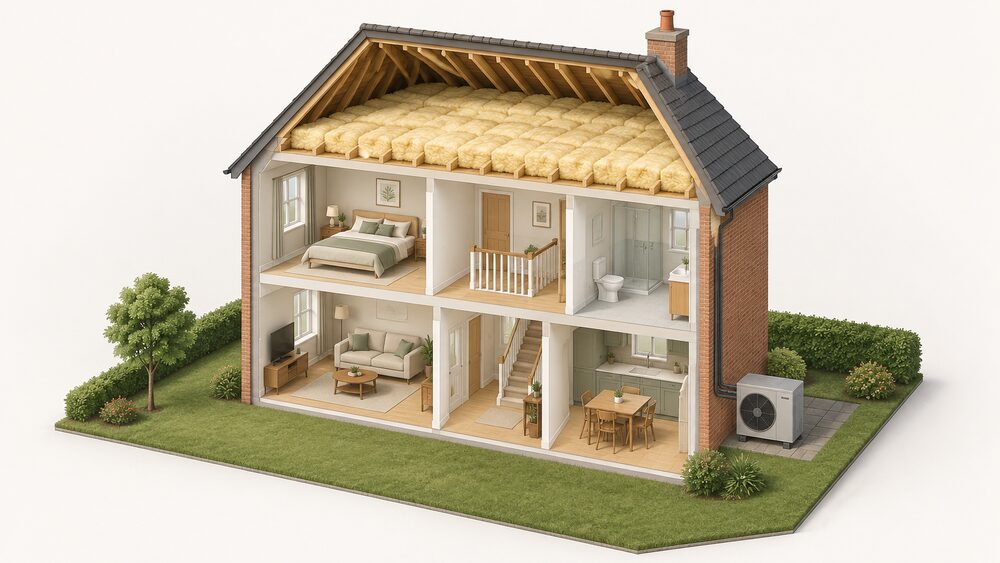
No law requires a household to insulate before a heat pump is installed, and domestic heat pumps usually have permitted development rights, so planning permission is not normally part of the question either1. What does bind the installation is the heat loss calculation. Approved Document L Volume 1, which applies in Wales, states that a primary heating system containing heat pumps should be selected to meet the full space heating requirement at the design condition chosen for heat loss calculations, and that it should not be assumed any heat will come from secondary heaters3. The building's fabric therefore sets the size of the unit, not the other way round.
That is why the practical answer is more conditional than the legal one. The Renewable Energy Association's guidance is blunt that a good standard of building insulation is also necessary1, and Northern Ireland's official advice says proper insulation is needed for the best performance2. Independent guidance from the Centre for Sustainable Energy goes further on sequencing: if a new heating system and significant new insulation measures are both being considered, the insulation should be done first4.
The consequence of skipping that step is a system sized larger, running harder and, in the wrong circumstances, costing more than the boiler it replaced. Official guidance warns that in a poorly insulated home a heat pump may increase energy bills, because electricity is more expensive per unit than gas5. Insulation is not a gate to installation. It is the main lever on what the installation costs to run.
Why insulation matters more for a heat pump than for a boiler
A boiler is sized to a peak load and then runs hot, so a leaky building mostly means a bigger gas bill. A heat pump is judged on its coefficient of performance, the ratio of heat delivered to electricity consumed, and that ratio falls as the flow temperature rises. Independent analysis puts heat pumps at using 3 to 4 times less energy to provide the same heat as a boiler7, but that advantage is delivered at low flow temperatures, which is exactly what a poorly insulated building makes difficult to sustain.
The UK and Ireland Fuel Distributors Association sets out the trade-off plainly: because heat pumps are most efficient when producing heat at lower temperatures than conventional boilers, more radiators are often needed or improved building insulation is required when one replaces a liquid fuel or gas heating system8. Emitter upgrades and fabric upgrades are two ways of solving the same problem, and the radiator and emitter guide covers the first.
It is worth being precise about what insulation does not change. Nesta's work on rural homes concludes that a heat pump will be much more efficient than a boiler however well insulated the home is9. The comparison with a boiler holds either way. What insulation changes is the absolute running cost, and therefore whether the household sees a saving.
Hybrid systems show the same mechanism from the other direction. Guidance on hybrid heat pumps states the heat pump should provide the majority of the home's heating demand, switching to the gas boiler only when outdoor temperatures are very low or electricity prices are high10. But where the property is poorly insulated or the radiators are inefficient, the system relies more heavily on the traditional boiler and burns more fuel than anticipated11. The heat pump element is more efficient in a well-insulated building with efficient underfloor heating or radiators11. Poor fabric pushes a hybrid back towards gas, which is the dependence the household was trying to reduce.
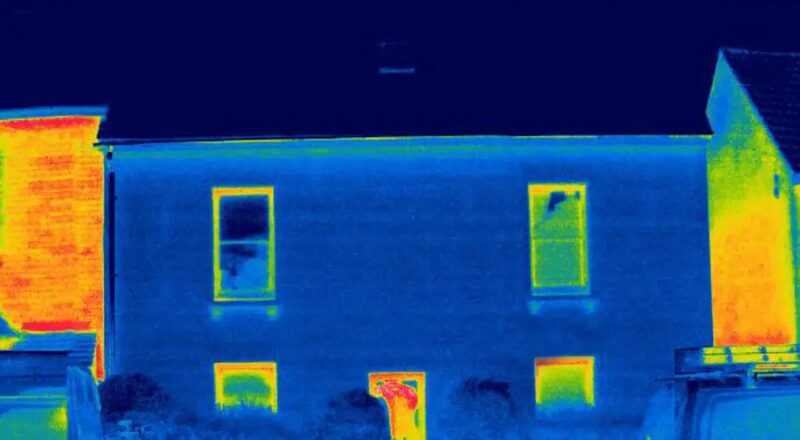
What poor insulation means for heat pump sizing and running costs
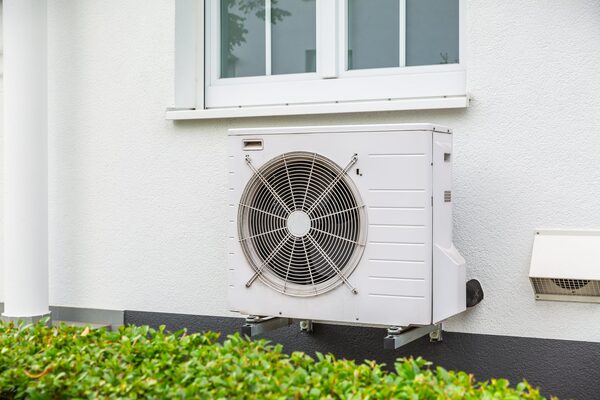
Sizing follows the heat loss calculation, and the calculation follows the fabric. The National Insulation Association frames the issue in terms of performance: a heat pump operating at a low coefficient of performance can end up costing more to run than a gas boiler12. That is a statement about running cost, not about whether the unit functions.
Croydon Council's retrofit guidance is more direct for householders: if a home is not well insulated, installing a heat pump may increase energy bills instead, because electricity is more expensive than gas5. The Chartered Institution of Building Services Engineers has highlighted the importance of informed decision making in the heat pump transition, and independent reporting on that position notes that without proper design, households risk inefficient performance, higher running costs, and potential comfort or moisture issues13.
There is a modelling caveat worth knowing. In one official consultation, retrofit costs do not include the cost of home insulation14. Cost comparisons that put a heat pump against a boiler on capital alone are therefore comparing a system that assumes a certain fabric with one that does not.
| What the household does | Effect on the heat pump |
|---|---|
| Insulates first, then sizes the unit | Lower design heat loss, smaller unit, lower flow temperature4 |
| Sizes the unit to the existing fabric | Larger unit, higher flow temperature, lower coefficient of performance12 |
| Fits a hybrid and leaves the fabric alone | More running hours on the gas boiler than planned11 |
| Upgrades emitters instead of fabric | Same low-temperature goal, different route8 |
The independence question sits underneath all of this. A heat pump moves a home off gas, oil or LPG for space heating, but it does not move it off the electricity grid or off a supplier. What insulation does is reduce the number of kilowatt hours that grid has to supply, which is the part of the bill a household can actually control. The energy independence page sets out where that boundary falls.
Retrofit sequencing: doing improvements in an order that works
The principle is not controversial. Independent guidance describes retrofit as understanding what a home needs most, and doing things in an order so one improvement does not undermine the next, making improvements that work together rather than fixing one problem and accidentally creating another15. The Centre for Sustainable Energy's rule is the operative one for this page: if a new heating system and significant new insulation measures are both being considered, do the latter first4.
Grant-funded programmes build that order into their rules. The Warm Homes: Local Grant offers improvements in the order recommended by the retrofit assessment16, and its eligible measures span loft, cavity wall, external wall, park home, underfloor and internal wall insulation, window and door upgrades, solar PV, solar thermal and battery storage, with low carbon heating covering air source heat pumps and high retention storage heaters17. Surrey County Council's version of the same scheme lists the same categories of work17.
Scotland takes a different approach in law for tenements. The order of priority must be repair, then maintenance, then energy efficiency, then zero direct emissions heat18. That is a stricter sequence than the rest of the UK applies, and it means fabric work and heat installation are not treated as interchangeable in that building type.
A practical sequence that follows from the sources:
- Establish what the building actually needs, through a retrofit assessment where one is available16.
- Complete repair and maintenance work first, particularly in tenement properties in Scotland18.
- Install significant insulation measures before the heating system4.
- Size and install the heat pump against the improved fabric, meeting the full space heating requirement at the design condition3.
- Address emitters and controls as part of the same design, since low flow temperatures are the point8.
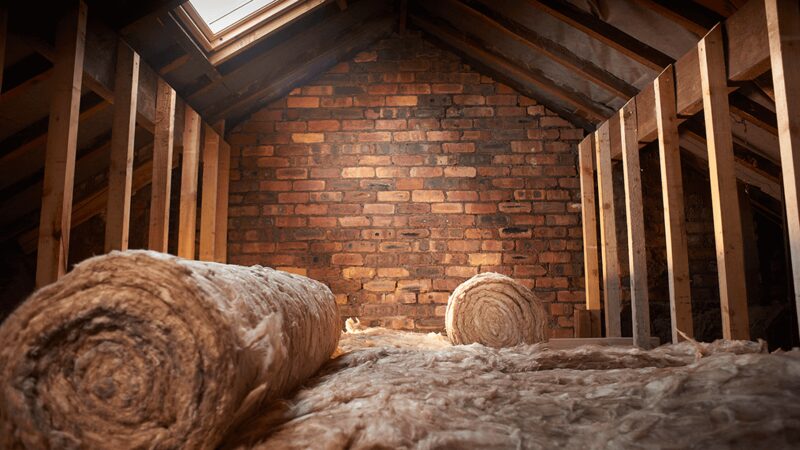
Ventilation, damp and mould: the risks of insulating badly
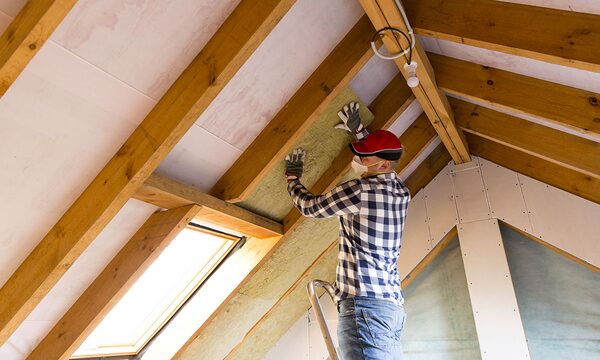
Insulation reduces heat loss, and airtightness work reduces draughts. Both change how moisture leaves a building, and the sources are clear that poor workmanship creates problems rather than solving them. Independent guidance on loft insulation states that insulation boards can cause damp and condensation if installed incorrectly19. Citizens Advice advises that faulty solid wall insulation can produce problems such as damp or mould20.
"If it's faulty you might get problems like damp or mould."
The same logic applies to the heat pump itself. Independent reporting on the CIBSE position lists potential comfort or moisture issues among the risks of installation without proper design13. Ventilation is not an optional extra bolted onto a retrofit; it is part of the specification, and it is one reason the sequencing rules exist.
There is a separate safety point that has nothing to do with insulation. A product safety report on the Joule Hot Water Systems ModulAir heat pump states it may present a risk of burns or fire if contact is made with flammable materials inside or close to the unit21. Siting and clearances are covered in the outdoor unit siting guide.
Grants, VAT and schemes that can help pay for insulation
Support for insulation and support for heat pumps come through different doors, and the two are not always joined up. The Boiler Upgrade Scheme provides upfront capital grants to support the installation of heat pumps and biomass boilers in homes and non-domestic buildings22, and Ofgem can issue vouchers under it up to 31 December 202923. The scheme's installer guidance confirms the scope covers residential and non-residential properties23. The grants page covers the full landscape.
Wales runs the Nest scheme, which funds heat pumps, insulation and solar panels24. The Warm Homes: Local Grant covers insulation measures directly, alongside low carbon heating17. In Northern Ireland, official guidance points households to loft and cavity wall insulation as measures that lower heat escaping and could cut fuel bills25.
On VAT, insulation on walls, floors, ceilings and lofts qualifies for a lower rate6. Water source heat pumps, certain electrical batteries and certain smart diverters have been added to the list of energy-saving materials that can qualify for the reduced rate26. In Northern Ireland, installations of energy-saving materials including solar panels and heat pumps benefit from a zero rate27. The water source heat pump page covers that technology.
| Scheme or relief | What it covers | Where |
|---|---|---|
| Boiler Upgrade Scheme | Heat pumps and biomass boilers, upfront capital grants22 | Great Britain |
| Warm Homes: Local Grant | Insulation, glazing, solar, batteries, air source heat pumps17 | England |
| Nest | Heat pump, insulation, solar panels24 | Wales |
| Reduced rate VAT | Insulation on walls, floors, ceilings and lofts6 | UK |
| Zero rate VAT | Energy-saving materials including heat pumps and solar27 | Northern Ireland |
The Energy Saving Trust's payback figure is worth stating precisely because it is often quoted loosely: it is possible for a heat pump to pay for itself within two to four years with government grants, no gas standing charge and avoiding a replacement boiler28. That is a heat pump figure under specific conditions, not an insulation payback figure, and the sources give no separate payback period for insulation alone.
What remains dependent after all of this is the same as before: the grid, the supplier and the tariff. Smart tariffs can shift when a heat pump draws power, and independent work on integrating them with low carbon home technologies examines that flexibility29. Insulation reduces how much power is needed in the first place, which is the more durable saving of the two.
Sources29 cited
- Heat pumps, Renewable Energy Association, 2026
- Heat pumps, nidirect, 2025
- Building Regulations Approved Document L Volume 1, Welsh Government, 2026
- Home energy efficiency advice, Centre for Sustainable Energy, 2025
- Air and ground source heat pumps, Croydon Council, 2026
- Tax on shopping and services: energy-saving products, GOV.UK, 2026
- Domestic heating technology options, Nesta, 2025
- Future liquid fuels, UK and Ireland Fuel Distributors Association, 2026
- Do heat pumps work in rural areas, Nesta, 2023
- Hybrid heat pumps, Nesta, 2025
- Hybrid boilers, HIES, 2022
- The role of insulation in the Warm Homes Plan, National Insulation Association, 2026
- CIBSE highlights importance of informed decision making in heat pump transition, CIBSE, 2026
- HFC phasedown reform de minimis assessment, Defra, 2025
- When home improvements don't deliver comfort, Low Carbon Hub, 2026
- Warm Homes Local Grant, Greater Manchester Combined Authority, 2026
- Warm Homes Local Grant, Surrey County Council, 2026
- Tenements short life working group: energy efficiency and zero emissions heating, Scottish Government, 2023
- How to buy loft insulation, Which?, 2026
- Get help with faulty solid wall insulation, Citizens Advice, 2026
- Product safety report: Joule Hot Water Systems ModulAir heat pump, GOV.UK, 2024
- Boiler Upgrade Scheme quarterly report issue 17, Ofgem, 2026
- Boiler Upgrade Scheme guidance for installers, Ofgem, 2026
- Get free home energy efficiency improvements: Nest, Welsh Government, 2026
- Heating technologies to suit your home, nidirect, 2026
- The Ecodesign for Energy-Related Products and Energy Information (Amendment) Regulations 2024, legislation.gov.uk, 2024
- Support to generate your own electricity, nidirect, 2025
- Is now a good time to get a heat pump, Energy Saving Trust, 2025
- Flexible futures: integrating smart tariffs with low carbon home technologies, Energy Saving Trust, 2026
 Insulation a Heat Pump NeedsWill a heat pump still work if your home is not well insulated, and would you need to add loft, wall or floor insulation first?
 Fabric First ApproachWhy insulate before replacing the boiler or fitting a heat pump?
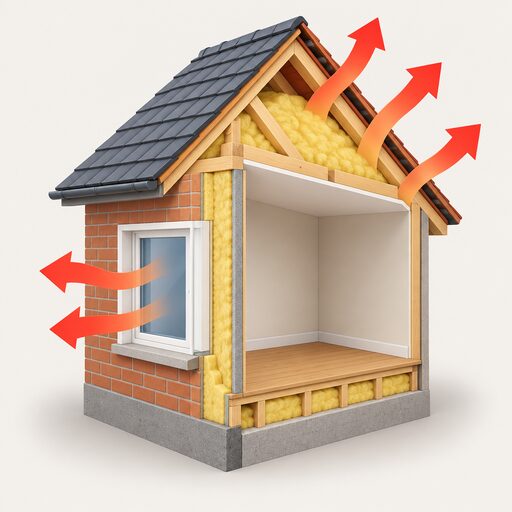 Sizing and Heat LossHow do installers work out what size heat pump your home needs, and why can a unit that is too big cost more to run than one that is slightly small?
 The Full Heat Pumps GuideWill a heat pump keep my house warm in winter, and what does one cost to buy and run?
 Which Homes Suit a Heat PumpMost UK homes can have a heat pump fitted, so the real question is whether yours makes it easy or expensive.
 Energy IndependenceA heat pump runs your heating on electricity instead of gas or oil, so how much does that really cut what you pay and how exposed you are when fuel prices jump?