
In this comparison
Yes, a ground source heat pump holds its efficiency better than an air source unit when the weather turns cold, and the reason is simple: it is not drawing heat from the air. A ground source heat pump takes constant low-level heat from the ground, where the soil should not go below 5°C in the year and mostly stays above 5°C throughout1. An air source heat pump draws from air that can sit at minus 10C or lower, and its efficiency falls as that gap widens3.
That does not mean an air source heat pump stops. Most models sold in the UK are designed to work at low temperatures, down to minus 10C, which is sufficient for most parts of the UK, and some are designed for minus 25 degrees4. An air source heat pump can get heat from the air even when the temperature is as low as minus 15°C5. The difference is how hard it has to work, and therefore what it costs to run through January.
The trade-off is cost and space. A ground source installation is around twice the cost of an air source heat pump installation1, and one case study put it at around four to five times more at the time of installation6. It also requires more outdoor work to install6. For a household weighing energy independence against capital outlay, that is the real decision.
Why the ground stays warmer than the air in winter
The ground holds a temperature that barely moves. Guidance states the soil should not go below 5°C in the year, and that mostly the soil temperature will stay above 5°C throughout the year1. That is not a claim about any particular garden: it is the behaviour of soil at depth, which lags the seasons and settles near the annual average air temperature. Official methodology for water source heat pumps makes the same assumption, that the source temperature is constant and equal to the annual average air temperature8.
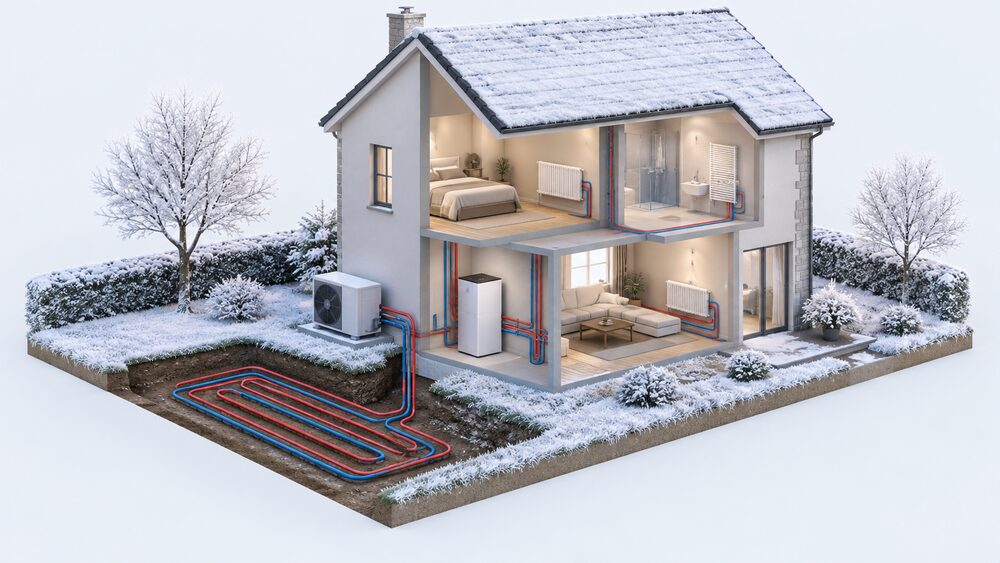
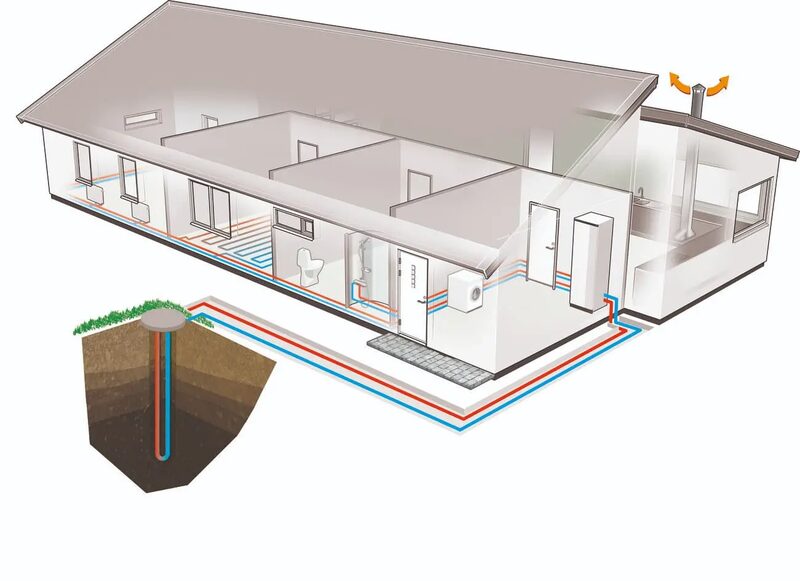
A ground source heat pump exploits that stability. It circulates a mixture of water and antifreeze around a loop of pipe; the liquid absorbs heat from the ground, which passes through a heat exchanger into the pump, warming the home9. The constant low-level heat in the ground warms the fluid in the pipes10. Because the source temperature is steady, the general consistency of temperature provides a reasonably constant efficiency of the heat pump cycle11.
Air is the opposite. During winter, the air temperature can drop by 5°C or more overnight, which reduces the heat pump's efficiency because it has to work harder to reach the same output12. An air source heat pump will be less efficient in the winter when the air temperature is colder3, and its efficiency can drop in extremely cold conditions13. The unit still runs; the coefficient of performance simply narrows.
For a household, this is the core of the independence argument. A ground source heat pump's output is decoupled from the weather above it, so a cold snap does not translate into a spike in electricity demand. An air source unit remains dependent on the same air that everyone else is heating against, and on the grid that supplies its compressor.

How much efficiency air source loses when temperatures drop

The loss is real but gradual, and it is worth being precise about what changes. An air source heat pump absorbs heat from the outside air and transfers it into usable heat in the home for space or water heating14. As the outdoor temperature falls, the temperature lift the compressor must achieve grows, and the efficiency of that cycle falls with it. Guidance is consistent that an air source heat pump will be less efficient in the winter when the air temperature is colder3.
What the sources do not give is a single percentage loss per degree, and no figure should be invented for it. What they give is the operating envelope. Air source heat pumps are designed to work at low temperatures, down to minus 10C, which is sufficient for most parts of the UK4. An air source heat pump can get heat from the air even when the temperature is as low as minus 15°C5, and can still draw heat from the air when temperatures drop as low as minus 15°C15. The majority of air source heat pumps in the UK market are capable of operating even when outdoor temperatures reach minus 15°C, with newer models to minus 28°C16.
So the practical picture for a UK winter is this: the unit runs throughout, the efficiency dips during the coldest hours, and it recovers as the air warms. The overnight drop of 5°C or more is the mechanism that matters most, because it coincides with the period when a home is calling for heat12. A well-sized system with weather compensation absorbs much of that, but it cannot remove the underlying physics.
Ground source units avoid the dip entirely. Because the ground temperature is stable, the efficiency of the heat pump cycle stays reasonably constant no matter the weather conditions11. That is the whole of the cold-weather advantage, and it is a genuine one.
Efficiency ranking: water source, ground source, then air source
Where the three main types sit relative to one another is well established. Ground source heat pumps are generally considered to be more energy-efficient than air source heat pumps17, and overall, ground source heat pumps tend to be more efficient across the year2. One analysis puts ground source units at providing 3 to 4 times the amount of heat than the electricity they use7.
Water source sits at the top of the ranking on the same logic. Even during winter, groundwater remains at a steady temperature, making water source heat pumps an efficient renewable heat source throughout the year10. Groundwater is buffered against air temperature even more effectively than soil, so the source temperature a water source heat pump sees is the most stable of the three.
Air source is not inefficient in absolute terms. Air source and ground source heat pumps are leading the way with electric heating due to their high efficiency levels18. The ranking is relative, not a verdict on whether air source is worth installing. It is the most common choice in UK homes for reasons of cost and space, not because it performs best in February.
| Type | Source temperature behaviour | Cold-weather effect |
|---|---|---|
| Water source | Steady groundwater temperature year round10 | Least affected by air temperature |
| Ground source | Soil should not go below 5°C in the year1 | Reasonably constant efficiency regardless of weather11 |
| Air source | Falls with outdoor air, down to minus 10C design range4 | Less efficient in winter when air is colder3 |
The independence reading of this table is straightforward. The more stable the source, the less a household's heating cost is exposed to the weather and to the demand peaks that come with it. Water source and ground source both insulate a home from that exposure; air source does not.
Flow temperatures and why underfloor heating suits ground source
Flow temperature is where ground source and air source converge more than people expect. A ground source heat pump can increase the temperature from the ground to more than 60°C if needed1, and ground source heat pumps typically reach temperatures of around 50°C19. Independent guidance notes they benefit from operating at flow temperatures below 55°C1. Air source units often run with low radiator flow temperatures, some as low as 35 degrees centigrade, or less20.
The reason lower flow temperatures matter is distribution. With underfloor heating, the flow temperature could be lower compared with radiators, and this should result in the heat pump running much more efficiently21. Water-based underfloor heating can be run at lower boiler or heat pump flow temperatures than radiators, saving money on energy bills, because it has a larger surface area than radiators21. Underfloor heating systems work particularly well with heat pumps because they provide consistent warmth at lower temperatures22.
Ground source heat pumps are most effective if you have underfloor or air heating systems17, and they tend to work better with underfloor heating rather than radiators as less heat is lost19. That is not a prohibition on radiators. Heat pumps can work in all types of homes, including those that have less insulation10, and existing radiators may need upgrading or resizing22. Ground or air source heat pumps can use existing heating pipework but are best suited to buildings that are well insulated23.
"Underfloor heating systems work particularly well with heat pumps because they provide consistent warmth at lower temperatures"
For a household, the emitter question is often the deciding cost. A ground source heat pump paired with underfloor heating runs at its best, but a retrofit that keeps radiators can still work if those radiators are sized for the lower flow temperature. The radiators and emitters guide covers sizing in detail.
Suitability: space, ground array and the homes that fit
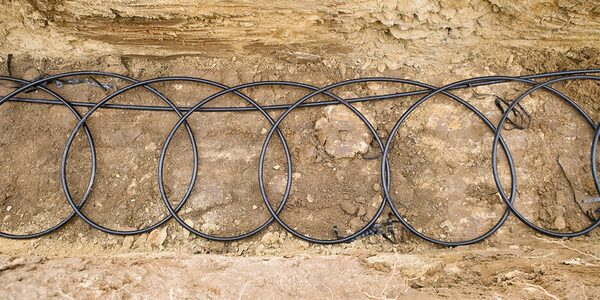
The decision between the two types comes down to space, budget and efficiency2. Which one is better suited largely depends on budget and how much outdoor space is available24. Ground source heat pumps are better suited to those who have a large garden or outdoor space to run a loop of underground pipes or sink boreholes25, and they are mostly suited to large homes with lots of outdoor space7.
There is a middle path. Networked ground source heat pumps using a shared ground array are considered a good option for flats, denser areas and some housing estates, though less applicable for low-density housing26. That matters for households without a garden, because it removes the outdoor space barrier that otherwise rules ground source out. The shared ground loop guide sets out how those arrangements work.
On the building itself, the evidence is more permissive than the reputation suggests. Homes rated C or above on their EPC typically adapt more easily to heat pumps, although lower-rated homes can still qualify with upgrades22. Air source and ground source heat pumps are suitable for some homes, particularly new-build and well-insulated properties27. Ground source heat pumps are better suited to well-insulated homes with thorough draft-proofing in place17.
| Factor | Ground source | Air source |
|---|---|---|
| Outdoor space | Large garden or boreholes needed25 | Budget and outdoor space are the main factors24 |
| Installation disruption | More outdoor work to install6 | Less disruptive to install and cheaper5 |
| Typical home | Large homes with lots of outdoor space7 | Suits most homes, including less insulated ones10 |
| Shared option | Shared ground arrays suit flats and denser areas26 | Not applicable |
The independence point here is about land. A ground source heat pump converts garden or shared land into a private heat source, which is a form of energy sovereignty an air source unit cannot offer in the same degree. The cost is that the household must have the land, or be part of a network that does.
What this means for running a heat pump through a UK winter
In practice, both types run through a UK winter. Heat pumps operate at lower temperatures over longer periods than gas boilers22, and an air source heat pump works at a lower, consistent temperature, more consistent throughout the house, without the feeling of one room being cold and another warm6. That steady operation is what makes a cold snap manageable: the system is not trying to reach a high flow temperature in a hurry.
Ground source heat pumps are less commonly used in homes as they usually require lots of outdoor space and higher installation costs than air source pumps28. That is the honest summary of the UK market. Air and ground source heat pumps are increasingly popular, as, instead of burning fossil fuels, they use naturally occurring heat in the air or ground, and need an electricity source to work29.
That last clause is the dependence that remains. Neither type is off-grid. Both need electricity, and a ground source heat pump's compressor draws it just as an air source unit's does. What ground source changes is the stability of the demand, not the fact of it. A household wanting to cut that dependence further would pair either type with on-site generation, which the heat pumps and energy independence guide covers.
On carbon, a heat pump with mid-range efficiency would save most carbon when used to replace an old electric heating system with storage heaters, or an oil-fired heating system1. That is a useful frame for a rural off-gas home weighing the two types, and the cold weather performance guide looks at how systems behave across a full heating season.
Sources30 cited
- What it's really like to have a heat pump, Which?, 2025-09-22
- Air source heat pumps vs ground source heat pumps, Energy Saving Trust, 2026-07-16
- Air source heat pumps fact sheet, Pendle Borough Council, 2026-09-17
- Air source heat pumps explained, Which?, 2026-04-14
- Air source heat pumps, Electricity North West, 2026-09-19
- Air source heat pump for rural off-gas home, Energy Saving Trust, 2026-01-05
- Ground source heat pumps (individual), Nesta, 2025-02-03
- Heat pump methodology, Department for Energy Security and Net Zero, 2026-01
- Four dull yet important energy solutions, Carbon Brief, 2013-05-31
- Ground and water source heat pumps, MCS Certified, 2026-06-09
- Research on electricity network constraints and the new build heat standard, Scottish Government, 2021-10-07
- How to ensure a heat pump runs efficiently, Energy Saving Trust, 2026-05-19
- Heat pumps vs boilers, The CPA, 2025-02-18
- VAT energy saving materials and grant funded heating supplies, HM Revenue and Customs, 2026-09-17
- Heat pump myths, Energy Saving Trust Green Heat Toolkit, 2025-09-02
- Reduce the cost of heat pumps, Nesta, 2022-03-02
- Ground source heat pumps, Uswitch, 2026-01-06
- Retrofit, Act on Energy, 2026
- Central heating systems, Uswitch, 2022-09-25
- Insulation and heat pumps: the perfect pairing, MIMA, 2026-09-20
- Underfloor heating, Energy Saving Trust, 2025-10-02
- Is your home suitable for a heat pump?, The CPA, 2026-02-18
- Clean energy boost, Low Carbon Hub, 2024-06-25
- Heat pumps, Energy Saving Trust, 2026-06-11
- In-depth guide to heat pumps, Energy Saving Trust, 2026-07-16
- Networked ground source heat pumps (shared ground array), Nesta, 2025-02-03
- NEA NI response on support for low carbon heat, National Energy Action, 2025-01-10
- How do heat pumps work, Smart Energy GB, 2026-03-16
- How to make your home more efficient, Quiet Mark, 2023-01-01
- HFC phasedown reform de minimis assessment, Department for Environment, Food and Rural Affairs, 2025-09-02
 Ground Source Heat PumpsA ground source heat pump takes warmth from the ground to heat your home and water.
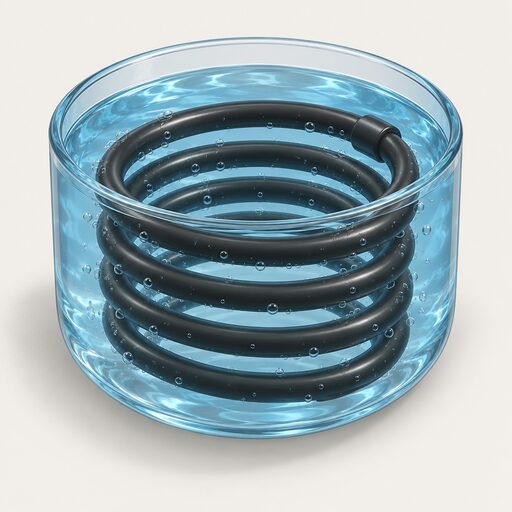 Water Source Heat PumpsYour home sits near a river, lake or the sea.
 How They Perform in UK HomesHow well do heat pumps really work in UK homes, and why do some run far better than others?
 Using a Heat Pump for CoolingCan a heat pump cool your home in summer as well as heat it in winter?
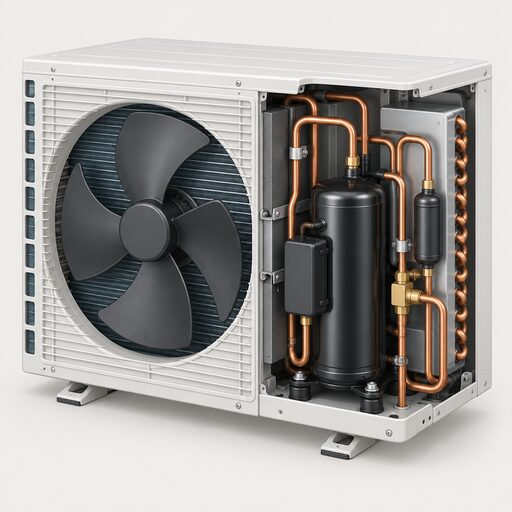 Air Source Heat PumpsHow an air source heat pump takes heat from outdoor air, the difference between air-to-air and air-to-water systems, typical efficiency, the £7,500 Boiler Upgrade Scheme grant, noise and planning limits, and what ownership means for a household's energy independence.
 Ground Source Heat Pump CostWhat a ground source heat pump costs in the UK, splitting groundworks and drilling from the heat pump and internal works, and how the £7,500 Boiler Upgrade Scheme grant and the £9,000 off-gas-grid uplift change the figure.