
In this guide
The Clean Heat Grant was the name given to the scheme that was to follow the Domestic Renewable Heat Incentive. It was consulted on in 2020 and 2021, given a £100m budget, and scheduled to open in April 2022 with upfront capital grants for low carbon heat systems, primarily heat pumps and in limited circumstances biomass boilers1. It never opened under that name. The scheme that launched instead was the Boiler Upgrade Scheme, which Ofgem's own decision record describes as "formerly known as the Clean Heat Grant"3.
That matters because the old name still pulls in searches from households trying to work out what replaced the Domestic RHI, and because the design has changed since the consultation. The Boiler Upgrade Scheme pays £7,500 off the cost and installation of air-to-water, ground source and water source heat pumps, £9,000 for air-to-water or ground source heat pumps in eligible off-gas grid properties, and £2,500 off air-to-air heat pumps for residential properties only4. The £9,000 uplift applies from 21 July 2026, when the standard grant rose by 20% from £7,500 to £9,000 to help rural households6.
The scheme is installer-led, runs in England and Wales, and is administered by Ofgem rather than by a supplier or a local authority4. What follows sets out what the Clean Heat Grant was meant to be, what replaced it, who qualifies, how the money is claimed, and what the grant does and does not do for a household's energy independence.
The Clean Heat Grant became the Boiler Upgrade Scheme
The Clean Heat Grant was designed as the Domestic RHI's successor. The 2020 consultation set out "proposals for two new schemes to incentivise the cost effective installation of low carbon heat technologies and the generation of renewable heat"9. By April 2021 the government was describing a scheme that would "provide upfront capital grants for the installation of low carbon heat systems, primarily heat pumps and in limited circumstances biomass boilers", launching in April 2022, with £100m behind it1. The stated purpose was to help domestic and small commercial properties install primarily heat pumps, and in limited circumstances biomass systems, replacing high carbon fossil fuel heating2.
The name changed, and so did parts of the design. Ofgem's decision on administering the scheme records the Boiler Upgrade Scheme as "formerly known as the Clean Heat Grant"3. The continuity is real: both are upfront capital grants rather than the RHI's seven-year tariff payments, and both target the same technologies. The difference is scale and mechanism. The Boiler Upgrade Scheme provides "upfront capital grants towards the cost of installing approved heat pumps"8, and it operates through a voucher that an MCS certified installer applies for and redeems on the property owner's behalf5.
For a household that searched for the Clean Heat Grant, the practical answer is that the scheme exists under a different name, with different amounts, and that the amounts have moved twice since launch. The government increased the grant by 50% for new heat pumps in November 202310, and by a further 20% from 21 July 2026, taking the standard award from £7,500 to £9,0006. The £100m Clean Heat Grant budget is not the Boiler Upgrade Scheme budget; the two figures belong to different schemes at different dates.
What the scheme does: upfront grants towards low carbon heating
The Boiler Upgrade Scheme provides a grant to help cover the costs of installing low carbon heating technologies, such as heat pumps11. It is a capital contribution, not a tariff, and it is paid to the installer rather than to the household. Ofgem's responsibilities are publishing guidance for installers and property owners, processing voucher applications and voucher redemption applications, making payments to installers following successful redemption, publishing reports on how the scheme is operating, monitoring and enforcing compliance with the regulations, carrying out audits and assurance activity, and investigating suspected fraud4.
That structure shapes what the grant is worth in practice. The installer submits the total quote amount including any VAT before the grant is deducted, the total cost of the heat pump unit or biomass boiler unit without the grant deducted, the quote reference number, and the date on the quote as part of the voucher application12. The grant is then deducted from the price the household pays, and Ofgem pays the installer once the installation is redeemed.
The scheme sits alongside other funding rather than on top of it. Ofgem's ECO4 delivery guidance states that "Funding from BUS and ECO cannot be blended for the same measure or be included within an ECO4 project"13. The same guidance says ECO4 and the Social Housing Decarbonisation Fund cannot be blended for the same measure, and that Home Upgrade Grant funding cannot be blended within the ECO4 package of measures13. A household weighing the Boiler Upgrade Scheme against a local authority scheme is choosing between routes, not stacking them.

Grant amounts: £7,500 standard, £9,000 off-gas grid, £2,500 for air-to-air
The published amounts are set out in Ofgem's scheme pages and in the installer guidance, and they differ by technology and by what the property was heated by before.
| Technology | Grant | Conditions |
|---|---|---|
| Air-to-water heat pump | £7,500 | Standard rate from 21 July 20267 |
| Air-to-water heat pump, off-gas grid | £9,000 | Replacing oil or LPG heating, from 21 July 20267 |
| Ground source heat pump | £7,500 standard, £9,000 off-gas grid | Off-gas grid uplift for eligible properties4 |
| Water source heat pump | £7,500 | Included in the standard rate4 |
| Air-to-air heat pump | £2,500 | Residential properties only4 |
| Biomass boiler | £5,000 | Limited circumstances14 |
The £9,000 figure is the one that has moved most recently. The government announced that from 21 July the grant was being increased by 20%, from £7,500 to £9,000, to help rural households6. Ofgem's installer guidance confirms that from 21 July 2026 eligible off-gas grid properties can apply for an uplifted grant of £9,000, and that the uplift applies to air-to-water or ground source heat pumps in properties replacing a heating system fuelled by oil or liquefied petroleum gas7. The scheme rules page gives the same £9,000 for air-to-water or ground source heat pumps in eligible off-gas grid properties5.
Two figures in the material do not agree and are worth flagging. One set of scheme rules describes the standard grant as up to £7,500, while another official guidance document gives £5,000 in a different context.
Who qualifies: property, previous heating system and technology rules
Eligibility turns on three things: the property, what it was heated by before, and the technology being installed. The scheme is installer-led, and installers who are MCS certified can apply for and redeem vouchers on behalf of property owners5. MCS certification is a requirement for heat pump installations made under the Domestic Renewable Heat Incentive, the Green Homes Grant and the Clean Heat Grant15, and it carries through to the Boiler Upgrade Scheme.
The previous heating system matters most for the off-gas grid uplift. The £9,000 rate is for air-to-water or ground source heat pumps in off-gas grid properties replacing a heating system fuelled by oil or liquefied petroleum gas7. Official statistics describe the same figure as £9,000 towards an air-to-water or ground source heat pump for eligible off-grid properties heated by LPG or oil16. A property already on mains gas does not attract the uplift.
The technology rules exclude some designs outright. Air source heat pumps designed to use exhaust heat, including air-to-air heat pumps, are not eligible for the standard grant route12. Air-to-air heat pumps have their own £2,500 grant, but only for residential properties4. Hybrid systems are excluded: the scheme rules state that "You cannot get a grant for a hybrid heat pump system (for example a combination of gas boiler and air source heat pump)"18. That rules out the hybrid heat pump route for grant purposes, even where a household might otherwise consider keeping a boiler as backup.
There is also a re-treatment rule elsewhere in the funding landscape that catches some properties. Under the Warm Homes: Social Housing Fund Wave 3, properties are not eligible for the installation of low carbon heating measures if that property has previously received funding under the Renewable Heat Incentive or the Boiler Upgrade Scheme19. A household that has already taken a grant for a heat pump at a property should not expect a second one for the same address.
Self-builds and new builds: where the line falls
Self-builds are eligible, and they are a larger part of the scheme than the headline figures suggest. Ofgem's quarterly report records 11,322 grants paid for heating systems in eligible self-build properties, accounting for 15.1% of total installations20. An earlier quarterly report recorded 1,090 grants paid for heating systems in eligible self-build properties where no heating system was replaced21. The scheme therefore covers some properties that had no previous heating system to replace, which is unusual among grant schemes.
New builds are a different matter, and the line falls at the building regulations rather than at the grant scheme. In Scotland, the New Build Heat Standard will prohibit the use of heating and cooling systems, located within the curtilage of any new building, which produce more than a negligible level of greenhouse gas emissions at the point of combustion, and the standard will be introduced through building regulations22. The Heat Networks Delivery Plan states the same policy in shorter form: new buildings consented from 2024 are required to install only zero direct emission heat sources23.
That means a new build in Scotland is directed towards a heat pump or another zero direct emission source by the building standards, not by a grant. The Boiler Upgrade Scheme operates in England and Wales8, so a Scottish self-build or new build sits outside it and inside a different set of rules. For a household in England or Wales, the practical question is whether the property had a heating system to replace, because that determines whether the standard or the uplifted grant applies.

Eligible technologies and their limits
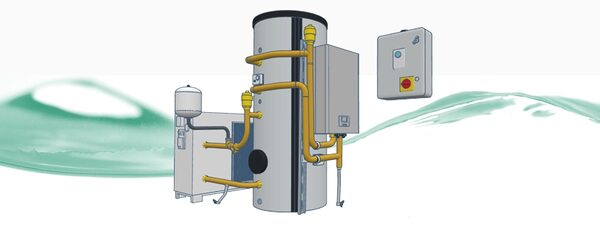
The scheme covers air-to-water heat pumps, ground source heat pumps, water source heat pumps, air-to-air heat pumps and, in limited circumstances, biomass boilers4. Each carries its own conditions, and the limits are as important as the inclusions.
- Air-to-water heat pumps are the main route, at £7,500 standard or £9,000 off-gas grid4. They supply both space heating and hot water through a wet system, and they are the technology most households picture when they read about a heat pump grant.
- Ground source heat pumps attract the same £7,500 standard rate and the same £9,000 off-gas grid uplift, and their vouchers are valid for six months rather than three7. The longer validity reflects the longer installation times for ground loops and boreholes.
- Water source heat pumps are included in the £7,500 standard rate4.
- Air-to-air heat pumps get £2,500 for residential properties only4. They are excluded from the standard grant route because air source heat pumps designed to use exhaust heat, including air-to-air units, are not eligible12.
- Biomass boilers get £5,000 in limited circumstances14. The Domestic RHI's metering and monitoring service package was available only for heat pumps, or biomass boilers that burn wood pellets, not biomass pellet stoves or any other biomass boilers24, and the same narrowing of what counts as eligible biomass carries through the funding landscape.
The exclusions are firm rather than negotiable. A hybrid system that keeps a fossil fuel boiler in place cannot be funded18. An exhaust air heat pump cannot be funded through the standard route12. A household considering air-to-air heat pumps is looking at a smaller grant and a different kind of system, one that heats air rather than water and does not supply a hot water cylinder.
"You cannot get a grant for a hybrid heat pump system (for example a combination of gas boiler and air source heat pump)."
How the installer-led application works, from voucher to redemption
The grant application is a two-stage process17. The installer applies for a voucher before the work is done, and then applies to redeem it once the installation is complete. The household does not apply directly, and the money does not pass through the household's hands.
- The installer quotes. The quote must state the total amount including any VAT before the grant is deducted, the total cost of the heat pump unit or biomass boiler unit without the grant deducted, the quote reference number, and the date of the quote12.
- The installer applies for a voucher. The application is made on the property owner's behalf by an MCS certified installer5.
- The voucher is issued and runs for its validity period. Three months for air-to-water, air-to-air and biomass; six months for ground source7.
- The installation is completed and commissioned within the voucher's life.
- The installer applies to redeem the voucher, and Ofgem makes payment to the installer following a successful redemption application4.
The voucher validity period is the constraint that catches households out. Ofgem's annual report gives the validity period as three months for air source heat pumps and biomass boilers, or six months for ground source heat pumps8. The installer guidance published in April 2026 gives the same split, with three months for air-to-water, air-to-air and biomass, and six months for ground source7. A household that delays a radiator upgrade or a cylinder change after the voucher is issued can find the voucher expiring before the installation is finished.
Budget, quarterly caps and the scheme's end date
The Boiler Upgrade Scheme's funding has been revised more than once, and the published figures do not all agree. One set of official statistics gives £295 million for 2025/26, with 2024/25 funding increased by £30 million, while another official guidance document gives £450 million.
The wider funding landscape around the scheme is clearer. The Heat Network Efficiency Scheme currently provides up to £15 million per year in capital grants until 2029/30, and the Green Heat Network Fund has £195 million a year available up to 2029/30, with a government review of its ongoing funding14. Those are separate programmes for heat networks rather than for individual homes, but they show the scale against which the domestic grant sits.
The scheme's end date is stated in the scheme rules as 31 March 2027 for the £9,000 off-gas grid rate5. Ofgem publishes quarterly and annual reports on how the scheme is operating, and the reporting cycle is part of how the budget is tracked4. The quarterly reports give the running totals of vouchers issued and redeemed, which is how a household can see whether applications are being processed at the expected pace.
Scotland and the scheme's territorial limits
The Boiler Upgrade Scheme provides upfront capital grants to support the installation of heat pumps and, in limited circumstances, biomass boilers in England and Wales8. Scotland and Northern Ireland are outside it, and Scotland runs its own route through Home Energy Scotland.
The Home Energy Scotland Grant and Loan Scheme supports the installation of clean heating systems and energy efficiency measures, and for clean heating systems such as heat pumps, grant funding of up to £7,500 is available13. That is a separate scheme with its own application process, delivered by the Scottish Government rather than by Ofgem, and it is the route a Scottish household would use instead of the Boiler Upgrade Scheme.
The Scottish policy context also differs. The New Build Heat Standard will prohibit heating and cooling systems within the curtilage of any new building that produce more than a negligible level of greenhouse gas emissions at the point of combustion, introduced through building regulations22. New buildings consented from 2024 are required to install only zero direct emission heat sources23. A Scottish household therefore faces a different combination of grant and regulation from a household in England or Wales, and the two should not be read across.
For a household in England or Wales, the territorial limit is straightforward: the scheme applies, and the grant amounts in the table above are the ones that apply. For a household in Scotland, the Home Energy Scotland route is the relevant one, and the £7,500 figure there is a grant ceiling rather than a fixed award13.
What a BUS grant means for household energy independence
A Boiler Upgrade Scheme grant changes what a household pays upfront for a heat pump. It does not change what the household depends on afterwards. A heat pump runs on electricity, so the household remains connected to the grid and to a supplier, and the grant does not alter that relationship. What it does change is the fuel: a property that replaces oil or LPG with a heat pump stops depending on deliveries, a tank in the garden and a market priced in a fuel the household cannot produce.
That shift is the substance of the off-gas grid uplift. The £9,000 rate exists specifically for properties replacing oil or liquefied petroleum gas7, which are the households with the least grid-connected heating and the most exposure to delivered fuel prices. Moving to a heat pump replaces a delivered fuel with mains electricity, which is a different kind of dependence rather than an end to dependence.
The grant also leaves the household dependent on the installer and on the manufacturer. The scheme is installer-led, so the household's route to the money runs through an MCS certified business5, and the equipment's performance and warranty sit with the maker. A grant does not make a household self-sufficient; it changes which systems and which companies the household relies on. For the wider picture, heat pumps and household energy independence sets out where the remaining dependencies lie, and heat pump grants and funding across the UK covers the schemes that sit alongside the Boiler Upgrade Scheme.
Sources24 cited
- The Clean Heat Grant and the Green Heat Network Fund, Public Accounts Committee, 2021
- Key green heat scheme closes and what comes next, Ofgem
- Decision on the administration of the Boiler Upgrade Scheme, Ofgem, 2022
- Boiler Upgrade Scheme, Ofgem
- Boiler Upgrade Scheme, Ofgem
- Thousands of homes will be eligible for £9,000 off a heat pump, GOV.UK, 2026
- Boiler Upgrade Scheme guidance for installers, version 5, Ofgem, 2026
- Boiler Upgrade Scheme annual report, April 2025 to March 2026, Ofgem, 2026
- Call for input: help design digital services for future low carbon heat schemes, Ofgem
- Heat pump applications surge after increase in government grant, GOV.UK, 2023
- Boiler Upgrade Scheme guidance for property owners, Ofgem
- Boiler Upgrade Scheme installer guidance, Ofgem, 2022
- ECO4 delivery guidance, version 3.2, Ofgem, 2025
- Carbon Budget and Growth Delivery Plan: heat and buildings investor factsheet, GOV.UK, 2026
- Microgeneration Certification Scheme and the Clean Heat Grant, Public Accounts Committee
- Boiler Upgrade Scheme statistics, July 2026, Department for Energy Security and Net Zero, 2026
- Boiler Upgrade Scheme guidance for installers, version 2.1, Ofgem, 2023
- Boiler Upgrade Scheme: what you can get, GOV.UK
- Warm Homes: Social Housing Fund Wave 3 scheme guidance addendum, GOV.UK, 2026
- Boiler Upgrade Scheme quarterly report, issue 15, Ofgem, 2026
- Boiler Upgrade Scheme quarterly report, issue 3, Ofgem, 2023
- New Build Heat Standard, part two consultation, Scottish Government
- Heat Networks Delivery Plan, Scottish Government, 2022
- Key terms explained: Domestic Renewable Heat Incentive, Ofgem
 Replacing a Gas or Oil BoilerSwapping a gas, oil or LPG boiler for a heat pump changes how your home is heated and how much it costs.
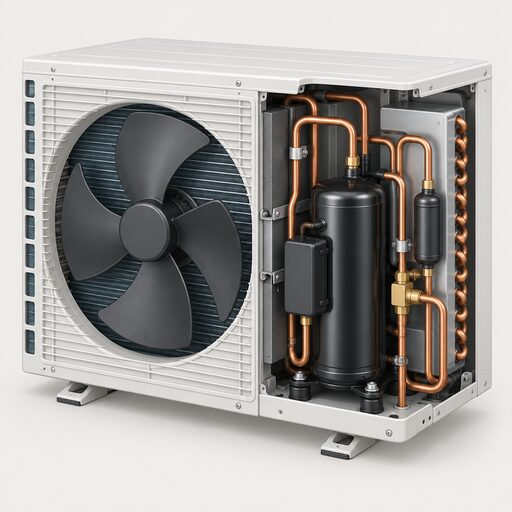 Air Source Heat PumpsHow an air source heat pump takes heat from outdoor air, the difference between air-to-air and air-to-water systems, typical efficiency, the £7,500 Boiler Upgrade Scheme grant, noise and planning limits, and what ownership means for a household's energy independence.
 Hybrid Heat PumpsHow hybrid systems pair a heat pump with a gas, oil or LPG boiler, what decides which appliance runs, what they cost, how much gas they displace, and why the Boiler Upgrade Scheme will not fund them.
 Air-to-Air Heating and CoolingAir-to-air heat pumps deliver warm air through indoor fan units rather than hot water to radiators.
 Policy, Targets and Coming RulesHeat pumps are central to the government's plans for greener home heating.
 Grants and Energy IndependenceCan you get a grant for solar panels or a battery?