
In this guide
A closed trial is a government-funded demonstration that has finished recruiting, finished installing and published what it learned. The two that UK householders most often run into are the Electrification of Heat Demonstration Project, which installed 742 heat pumps against a target of up to 750 across three areas of Great Britain, and Project Sciurus, a domestic vehicle-to-grid trial. Both are closed: no new households can join, and the equipment in them was installed under research conditions rather than sold at retail1.
They still matter because the results are the closest thing the UK has to evidence about how these technologies behave in ordinary homes. The Electrification of Heat project was designed to understand the technical and practical feasibility of a large-scale rollout of heat pumps, and it installed them across a broadly representative spectrum of housing types, socio-economic groups and on and off-gas grid locations1. That is a wider sample than any single installer's customer book.
What follows is a register of what these projects were, who took part, what they found, what they cost and where the reports sit. It also sets out the dependence that remains after a trial ends: the household keeps the equipment, but the grid connection, the supplier relationship and the manufacturer's continued existence are all outside its control.
What closed trials are and why households still find them
A demonstration project is funded to answer a question, not to serve customers. The Electrification of Heat Demonstration Project sat inside the government's Energy Innovation Programme, and its stated purpose was to understand the technical and practical feasibility of a large-scale rollout of heat pumps1. Once the installation target is met, the project moves into monitoring and optimisation, and the recruitment door shuts1.
Households encounter these projects in two ways. The first is search: a householder looking into a heat pump finds a government report with performance data and wants to know whether the offer is still open. It is not. The second is the equipment itself. Trial homes keep their heat pumps, heat batteries and chargers, and the products involved sometimes reach the retail market later, sometimes do not.
The reason the results carry weight is that the alternative evidence base is thin. Parliamentary research records that the public's interest in and understanding of heat pumps is low, and that a lack of qualified heat pump installers is a further potential barrier to rollout, as are constraints imposed by planning rules and the need for electricity infrastructure upgrades7. Consumer bodies have put a number on the confidence problem: the Chartered Trading Standards Institute estimated that as many as 5 million UK households are being deterred from installing energy-efficiency measures by unfamiliarity or a lack of a reliable installer8.
For a household thinking about energy independence, a closed trial is useful in a specific way. It shows what the technology did in homes that were not chosen for being easy, and it shows what the household still depends on afterwards: a distribution network, a supplier, a tariff and a manufacturer. The trial answers the performance question. It does not answer the continuity question.
The Electrification of Heat Demonstration Project: 742 heat pumps in real UK homes
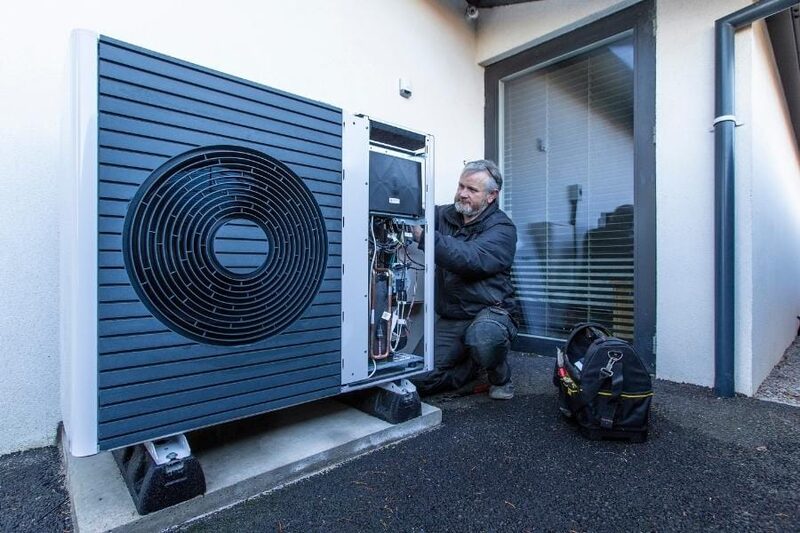
The project aimed to recruit enough participants to install and monitor up to 750 heat pumps across three areas of Great Britain, and it appointed three delivery contractors to do the work2. In the end 742 heat pumps were installed, making it the largest project of its kind in the UK1.
The sample was deliberately broad. Installations went into a broadly representative spectrum of housing types, socio-economic groups and on and off-gas grid locations1. The technologies were not uniform either: the project covered a range of different heat pump types, including hybrid heat pumps, and innovative technologies such as heat batteries1. That mix matters when reading the results, because a finding drawn from air source, ground source and hybrid systems together is a statement about heat pumps as a class rather than about one model.
Recruitment was heavily oversubscribed, so participation was allocated rather than open1. The project has since moved into its monitoring and optimisation phase, which is where the performance data continues to be gathered1.
"742 heat pumps have been installed, making it the largest project of its kind in the UK"
For a household, the practical reading is that the trial was not a shop. It was a research sample with monitoring equipment attached, and the households in it gave up some control over how their heating was configured in exchange for having it installed and observed. That is the trade a demonstration project offers, and it is why the results are more detailed than a normal installation record.
Who took part: the homes, the regions and the delivery contractors
Three delivery contractors were appointed to install the heat pumps across three regions of Great Britain2. The project reached on and off-gas grid locations, which matters because off-gas homes have historically had the fewest options and the highest running costs to replace.
The wider evidence on who struggles with heating is relevant to how the sample should be read. The Scottish House Condition Survey 2024 found that 12% of private renters considered it unaffordable to achieve the indoor temperatures they wanted, compared with other tenure groups9. Private renters are also the group least able to commission fabric improvements, because the building is not theirs. A demonstration project that recruits owner-occupiers will therefore under-represent exactly the households with the worst starting conditions.
Regional context differs too. Bristol's warm homes plan records that since 2005 gas use in the city has reduced by a third due to increased boiler efficiency and improved insulation, and that the carbon intensity of the electricity grid has fallen10. That is the backdrop against which any heat pump result should be read: the comparison is not against a 2005 boiler but against a modern condensing one.
The delivery contractor model also shaped the findings. Because three contractors worked in three regions, the installation methods, the emitter choices and the commissioning practices were not identical. A result that holds across all three is stronger than one that appears in a single region, and the published summary presents the suitability finding as a general one4.
| Element of the trial | What the record shows |
|---|---|
| Installation target | Up to 750 heat pumps2 |
| Installed | 742 heat pumps1 |
| Regions | Three areas of Great Britain2 |
| Delivery contractors | Three appointed2 |
| Housing mix | Broadly representative of types and socio-economic groups1 |
| Grid mix | On and off-gas grid locations1 |
| Technologies | Range of heat pump types, including hybrid heat pumps and heat batteries1 |
| Recruitment | Heavily oversubscribed, places allocated1 |
What the trial found: no property type is unsuitable
The headline suitability finding is unambiguous. Government-funded studies by the Energy Systems Catapult showed that there is no property type or age that is unsuitable for a heat pump4. The trial's own installation record supports it: 742 units went into a broad spectrum of housing types and socio-economic groups2.
That finding is about suitability, not about cost or disruption. A property can be suitable for a heat pump and still need radiator changes, pipework alterations or a hot water cylinder where none existed. The trial covered hybrid heat pumps and heat batteries alongside conventional systems, which is a recognition that some homes need a different configuration rather than a different technology1.
For older housing, the practical evidence is in the case records. One documented installation in a detached stone house built in the 1800s in Carmarthenshire took around three days11. That is a single case, not an average, but it shows that a solid-walled period property is not automatically excluded.
The independence question here is real. A heat pump moves a household off gas and onto electricity, which reduces dependence on a gas supplier and increases dependence on the electricity network and the tariff attached to it. The trial demonstrates that the switch is technically possible in almost any home. It does not demonstrate that the household becomes self-sufficient, because a heat pump without on-site generation still draws everything it uses from the grid.
Performance in practice: three times a gas boiler, even in cold weather
The efficiency comparison is the most repeated figure from this body of work, and it comes from several directions. The Public Accounts Committee recorded that heat pumps were three times as efficient as gas boilers3. A government press release on the Boiler Upgrade Scheme states that they are three times more efficient than gas boilers, reducing home emissions15. The clean energy campaign puts it as up to 3 times more efficient than other heating systems16, and the Welsh Government's heat pump guide uses the same formulation17.
The comparison point matters. Older boilers still in use in many UK homes can fall as low as 60% on the energy efficiency rating18. A heat pump at three times the efficiency of a gas boiler is being measured against combustion, not against a new condensing model, and the gap narrows if the boiler being replaced is recent.
Cold weather performance is where the scepticism usually sits. The published material does not give a single low-temperature figure for the trial, and no source in the available material states a temperature at which performance is claimed to hold. What is supported is the general efficiency finding and the suitability finding, both of which were established across a sample that included off-gas and older properties1.
For a household, the efficiency figure translates into a change in what it depends on rather than a change in how much it depends. A more efficient heating system lowers the energy needed to reach a given temperature. It does not remove the need for a supply, and it does not remove the standing charges, the network costs or the supplier's role in the bill.
Where installations fell short: the properties judged unfeasible
Not every property in the recruitment pool became an installation. The published summary does not give a percentage of properties judged unfeasible, and the figure of 12% that circulates in connection with this project belongs to a different finding: 12% of private renters in the Scottish House Condition Survey considered it unaffordable to achieve the indoor temperatures they wanted9. The two should not be conflated.
What the sources do record as barriers are structural rather than property-specific. Parliamentary research lists a lack of qualified heat pump installers, constraints imposed by planning rules and the need for electricity infrastructure upgrades as potential barriers to rollout7. Each of those can stop an installation that is technically suitable.
Planning is the most visible of the three. Permitted development for air source heat pumps carries conditions: the unit must not be used solely for the purpose of cooling, and there must be no existing wind turbine on the property or within its grounds12. Local authority guidance in Richmond and Cornwall sets out how those conditions are applied in practice13. The Planning Portal's sustainability guidance covers the same ground for householders18.
The installer shortage is the barrier that most directly affects a household's experience. A suitable property with no available qualified installer is, in practice, an unfeasible installation. That is a market constraint rather than a technical one, and it is the one most likely to have changed since the trial closed.
What it cost: about £14,800 per property
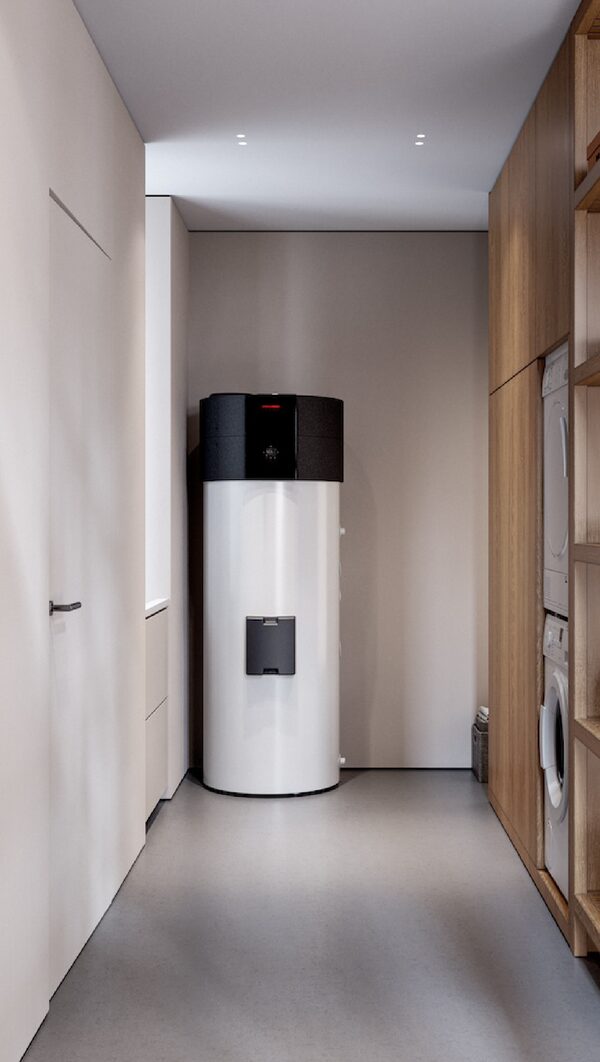
The published material does not give a per-property cost for the Electrification of Heat installations, and the figure of about £14,800 that is sometimes attached to the project is not supported by a cost breakdown in the available sources. Where a cost figure is needed, the honest position is that heat pump prices are installer-quoted and vary with the property, the emitters and whether a cylinder is added.
What can be stated is the running-cost context against which any installation is judged. Ofgem's cap tables for the charge restriction period 15b give a Northern electricity single-rate figure of £899.60 for 2,700 kWh and a Yorkshire figure of £893.84 for the same consumption19. For the July to September 2025 cap, the South East multi-register electricity figure at 4,200 kWh was £1,245.93 and the London single-rate figure at 3,100 kWh was £959.4120.
Gas benchmarks for the earlier charge restriction period show how narrow the regional spread can be: £790.25 per annum at 12,000 kWh for Midlands prepayment, £786.17 for Southern Scotland prepayment, £786.03 for Northern Scotland prepayment and £786.62 for South East prepayment, against £859.42 for East Midlands standard credit21. A Northern electricity multi-register figure at 4,200 kWh was £1,204.65 in the same set21.
| Benchmark | Region and payment method | Annual figure |
|---|---|---|
| Electricity, 2,700 kWh | Northern, single rate | £899.6019 |
| Electricity, 2,700 kWh | Yorkshire, single rate | £893.8419 |
| Electricity, 4,200 kWh | South East, multi-register | £1,245.9320 |
| Electricity, 3,100 kWh | London, single rate | £959.4120 |
| Electricity, 4,200 kWh | Northern, multi-register | £1,204.6521 |
| Gas, 12,000 kWh | Midlands, prepayment | £790.2521 |
| Gas, 12,000 kWh | Southern Scotland, prepayment | £786.1721 |
| Gas, 12,000 kWh | Northern Scotland, prepayment | £786.0321 |
| Gas, 12,000 kWh | South East, prepayment | £786.6221 |
| Gas, 12,000 kWh | East Midlands, standard credit | £859.4221 |
The point of these numbers is not to price a heat pump. It is to show that the running-cost comparison depends on the region, the payment method and the consumption assumed, and that a trial which reports efficiency does not thereby report a bill.
Project Sciurus: the largest domestic vehicle-to-grid trial
Project Sciurus was a domestic vehicle-to-grid trial with two recorded deliverables: engage, recruit and communicate with at least 300 trial participants and gather insights, and develop at least 300 6kWh bi-directional chargers capable of providing vehicle-to-grid services5. The two are recorded separately rather than as a single figure, and the available material does not resolve them into one number.
Vehicle-to-grid works by letting a car discharge to the grid as well as charge from it. The value depends on the car, the charger, the tariff and how long the vehicle is plugged in. The national picture is that the capacity is expected to grow: NESO's figures put total vehicle-to-grid capacity at 8 GW by 20505.
The dependence that remains after a V2G trial is heavier than for a heat pump. The household depends on the car manufacturer for battery warranty terms, on the charger maker for continued support, on the supplier for an export tariff, and on the network operator for connection permission. A trial can demonstrate the earnings. It cannot guarantee that any of those four parties stays in place.

What V2G was worth: £120 to £725 a year
Reported earnings from vehicle-to-grid run from £120 to £725 a year off electricity bills5. That is a wide range, and the spread reflects the variables rather than disagreement about a single number: the car's battery size, the charger's rating, the tariff's export rate and the number of hours the vehicle is available.
A separate and smaller figure applies to smart charging rather than export. An official consultation estimated that an EV driver could potentially save £330 annually by smart charging overnight6. Smart charging shifts when the car draws power; it does not send power back. The two should not be added together or treated as the same service.
For a household, the independence question is sharper here than anywhere else on this page. A car that can discharge to the grid is a genuine source of stored energy, but it is also the household's transport. Every kilowatt-hour exported is a kilowatt-hour not available for the next journey, and the warranty terms that govern how much cycling the battery will tolerate sit with the manufacturer, not the household.
Where the reports and datasets can be accessed

The Electrification of Heat material is published by the Energy Saving Trust, which describes the project's scope, its installation count and its move into monitoring and optimisation1. The Energy Systems Catapult published the suitability finding that no property type or age is unsuitable for a heat pump4.
For current deployment numbers rather than trial results, the government's heat pump deployment statistics cover hydronic heat pumps with a capacity up to 45kW installed in the United Kingdom22. Those statistics are the right place to check how the market has moved since the trial closed, because they are updated rather than fixed.
Regional consumption data sits with the Office for National Statistics, whose domestic electricity consumption indicator is sourced from the Department for Energy Security and Net Zero for Great Britain23. Ofgem publishes the cap tables that set the running-cost context19, and its consumer advice pages cover the help available with bills24.
For households in Scotland, Home Heating Advice Scotland answers practical questions about schemes and eligibility25. Birmingham City Council's energy bill help pages cover the same ground for one English local authority area26.
What became of the products and the households
A closed trial leaves two things behind: a report and a set of installed equipment. The report is public and permanent. The equipment is not, and its fate depends on the manufacturer, the installer and the household's willingness to keep maintaining a system that may never have had a retail support path.
That is the dependence a household should weigh before treating any trial result as a purchase recommendation. The performance evidence from the Electrification of Heat project is strong: 742 installations, a broad sample, a suitability finding that covers all property types and ages, and an efficiency comparison that several official sources repeat1. The continuity evidence is absent, because a demonstration project is not designed to provide it.
The same applies to vehicle-to-grid. Project Sciurus demonstrated that domestic V2G can be recruited and equipped at scale5. Whether a household can rely on the same service in five years depends on car warranties, charger support, export tariffs and connection rules, none of which the trial controlled.
For a household pursuing energy independence, the useful lesson from these projects is a division of questions. Technical feasibility is settled: heat pumps suit every property type and age, and domestic V2G works4. Commercial and regulatory continuity is not settled, and it is the part that determines whether the equipment still earns its keep after the trial's monitoring period ends.
Sources26 cited
- Electrification of Heat Demonstration Project, Energy Saving Trust, 2024-02-26
- Electrification of Heat trial finds heat pumps suitable for all housing types, Energy Systems Catapult, 2021-12-16
- Heat pumps: Government support for households, Public Accounts Committee, 2024-05-26
- Ditching costly gas and oil is cheaper thanks to heat pump scheme, GOV.UK, 2022-05-23
- NESO pathways to net zero, NESO, 2050
- Smart meter Guaranteed Standards of Performance: draft impact assessment, Ofgem, 2025-08
- Heat pumps (domestic), Parliamentary Office of Science and Technology, 2026-09-19
- Energy efficiency pledges undermined by lack of consumer confidence, Chartered Trading Standards Institute, 2024-06-18
- Scottish House Condition Survey 2024: key findings, Scottish Government, 2026-02
- Bristol warm homes plan, Bristol City Council, 2025-04
- Oil heating and the heat pump grant, Low Carbon Hub, 2026-08-11
- Class G: installation or alteration etc of air source heat pumps on domestic premises, legislation.gov.uk, 2026-09-17
- Planning guidance: heat pumps, Richmond Council, 2026-04-22
- Air source heat pumps, Cornwall Council, 2026-09-17
- Demand for heat pumps rises following increase in applications to the Boiler Upgrade Scheme, GOV.UK, 2024-05-23
- Heat pumps, Clean Energy Campaign, 2026-09-10
- Your essential guide to heat pumps, Welsh Government, 2025-02-20
- Boilers and heating: sustainability, Planning Portal, 2026
- Charge restriction period 15b cap tables, Ofgem, 2025-11
- Energy price cap levels 1 July to 30 September 2025, Ofgem, 2025-07-01
- Benchmark maximum charges for the charge restriction period 13a, Ofgem, 2025
- Heat pump deployment statistics: December 2025, GOV.UK, 2026-03-12
- Domestic electricity consumption indicator, Office for National Statistics, 2025-12-18
- Get help with your energy bills, Ofgem, 2026-09-17
- Home Heating Advice Scotland: FAQs, Home Heating Advice Scotland, 2026-09-17
- Getting help with your energy bills, Birmingham City Council, 2026-06-24
 Demonstration and Test HomesBefore new heating systems reach your home, they get tested in real houses with real people living in them.
 How They Perform in UK HomesHow well do heat pumps really work in UK homes, and why do some run far better than others?
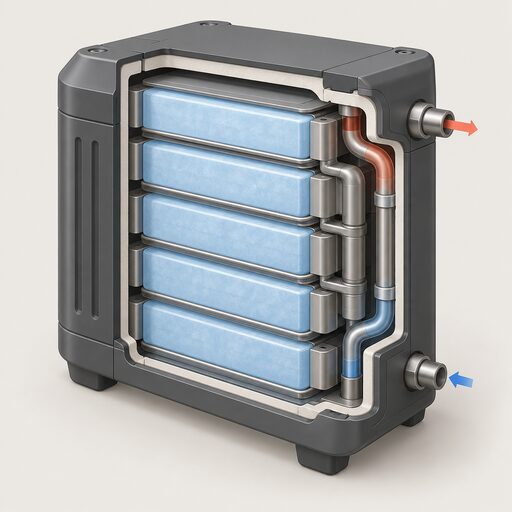 Heat Battery Trials and ResultsDo heat batteries actually work in real UK homes, and what did the trials find?
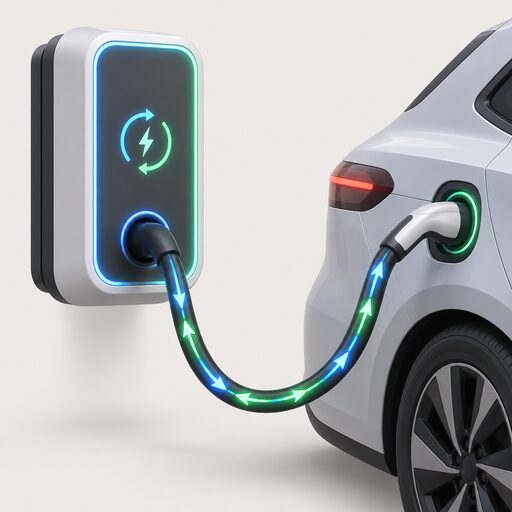 The Full New Technology GuideWhich new home energy ideas can you actually buy in the UK right now, and which are still stuck in trials?
 Which Homes Suit a Heat PumpMost UK homes can have a heat pump fitted, so the real question is whether yours makes it easy or expensive.
 Hydrogen Home Heating TrialsHydrogen home heating is still being tested, not sold.