
In this guide
Hydrotreated vegetable oil, usually shortened to HVO, is a renewable liquid fuel that can be burned in an oil boiler with a changed burner rather than a new heating system. It is not yet a fuel a UK household can order for general domestic heating. HVO is one of the options being considered in the government's Alternative Clean Heating consultation, and the fuel oil industry has proposed introducing it as a blend with kerosene so that existing oil boilers cut carbon without upfront cost or disruptive change1.
The case for it rests on carbon. The industry reports that boilers running on just HVO would reduce emissions by nearly 90%, and that a 20% blend of kerosene and HVO across oil heated homes would deliver the equivalent carbon savings of installing 347,000 heat pumps3. Around 150 oil heated properties made the transition to HVO as part of an industry demonstration project, and the industry puts a minor boiler modification at less than £5003.
The case against waiting for it rests on policy. Policymakers expect most homes on oil heating to switch to heat pumps, despite the consultation stating the cost could be £16,9004. Around 1.6 million homes across the UK use heating oil, and they are off the gas grid by definition5. HVO is therefore a live option with a real evidence base and no settled route to a domestic tank.

What HVO is and how it differs from heating oil
Heating oil is an alternative fuel used to heat homes and buildings that are not connected to the gas grid, and it is produced from crude oil1. That single sentence from the House of Commons Library carries the whole distinction. Kerosene is a fossil distillate; HVO is a renewable liquid fuel made from waste feedstocks, and it is designed to behave like kerosene in the equipment that already exists.
The difference that matters to a household is not chemistry but infrastructure. Because HVO is intended as a drop-in replacement, the fuel oil industry's proposal is to introduce these fuels as a blend with kerosene, enabling immediate carbon reductions in existing oil boilers without upfront cost or disruptive change6. The industry's later position is that an HVO blend would work seamlessly in the existing heating system, with no upfront cost or disruption4.
That is a different proposition from electrification. A heat pump replaces the heat source and usually the emitter system and the hot water arrangement with it. HVO, on the industry's account, replaces the contents of the tank and the burner that fires it. The household keeps its radiators, its cylinder if it has one, and its relationship with a fuel supplier.
The dependence that remains is worth stating plainly. HVO does not remove a household from bought fuel. It substitutes one delivered liquid for another, so the home remains tied to a supplier, a delivery schedule and a tank. What changes is the carbon content of what is burned, not the structure of the supply. For a household weighing energy independence, that is a smaller step than generating its own heat, and a larger one than changing nothing.
"an alternative fuel that is used to heat homes and buildings that aren't connected to the gas grid"
Carbon savings: around 88 to 90% compared with kerosene

The headline figure the industry uses is nearly 90%: it's possible for boilers to operate using just HVO, which would reduce emissions by nearly 90%3. That is a combustion-stage comparison against kerosene, and it is the number that makes HVO attractive to off-gas-grid homes that cannot easily electrify.
The blend route produces a smaller but immediate saving. The industry states that these homes could switch to a 20% blend of kerosene and HVO, which would deliver the equivalent carbon savings of installing 347,000 heat pumps3. The comparison is to heat pumps rather than to kerosene because it is meant to show scale: a partial blend across the oil heated housing stock is presented as doing the work of a very large electrification programme.
For context on what other technologies claim, the Boiler Upgrade Scheme's own launch material states that heat pump technology currently offers a carbon saving of up to 65% compared with a gas boiler7. That is a different baseline, gas rather than oil, so the two figures are not directly comparable, but it shows the order of magnitude that official schemes are willing to put in print.
A separate official figure from a high rise retrofit programme in Edinburgh reports carbon emission reductions between 67 and 85% when a renewable liquid fuel is coupled with electrification of the heating system8. That is a combined measure, not HVO alone, and it is included here because it is one of the few official documents that puts a number on a renewable liquid fuel in a real building programme.
What no source in this field provides is a per-home tonnage. The percentage figures are the published evidence; converting a household's annual litres into tonnes of carbon dioxide is not something the available documents do, and any figure of that kind would be an estimate rather than a citation.
| Measure | Figure | Baseline | Source |
|---|---|---|---|
| Boilers on 100% HVO | nearly 90% reduction | kerosene | Industry3 |
| 20% kerosene and HVO blend | equivalent of 347,000 heat pumps | oil heated homes | Industry3 |
| Heat pump carbon saving | up to 65% | gas boiler | Ofgem7 |
| Renewable liquid fuel plus electrification | 67 to 85% reduction | Edinburgh retrofit | City of Edinburgh Council8 |
Fuel specification: BS EN 15940 and what it covers
HVO used for domestic heating purposes should comply with BS EN 159402. That is the standard OFTEC names in its HVO Handbook, and it is the anchor for everything else: the burner, the tank labelling and the feedstock all hang off compliance with that specification.
The standard sits inside a wider framework of British Standards that govern liquid fuel installations. All domestic liquid fuel fired installations for heating, hot water and cooking purposes should satisfy the guidance contained in BS 5410-12. That is the installation code, and it applies to the pipework, the tank siting and the appliance regardless of which liquid is in the tank.
Labelling is a specific requirement rather than a courtesy. All equipment, especially storage tanks and combustion appliances, will be required to be clearly and permanently identifiable as only being suitable for HVO to BS EN 15940 equipment labelling2. The purpose is to prevent a tank or appliance that has not been converted from being filled with a fuel it is not set up for.
For comparison, other heating technologies are held to their own standards. The Boiler Upgrade Scheme regulations list BS EN 303-5:2021 for solid fuel boilers up to 500 kW nominal heat output9. Heat pumps providing space heating are tested to EN 14825:2018, with the EN 14825 test data used in combination with calculations from BS EN 15316-4-2:2017 to calculate performance10. Domestic hot water systems are sized based on BS EN 12831-311. Each technology has its own specification, and BS EN 15940 is HVO's.
Calorific value and energy content: 9.21 kW per litre

The energy content OFTEC gives for HVO is 9.21 kW per litre at 40ºC2. The same table in the handbook gives kerosene a higher figure, 12.08, which means a litre of HVO carries less energy than a litre of kerosene. A household should expect to burn more litres for the same heat output, and the handbook's throughput charts exist precisely because the nozzle has to be matched to the fuel's flow characteristics.
That is why the conversion is not simply a matter of pouring a different liquid into the tank. The burner has to be set up for the fuel it is actually burning, and the handbook supplies the tables that let an installer do that.
The efficiency finding is more reassuring than the calorific value alone would suggest. Within test regime and apparatus tolerances, the boiler efficiency was unchanged and the measured NOx (ppm) was very similar, tested on the same oil boiler set to the same thermal output, CO2 concentration and flue gas temperature2. In other words, the boiler converts the fuel at the same efficiency; it simply consumes more of it per unit of heat.
For a household, the practical consequence is that running costs track fuel price per litre adjusted for energy content, not price per litre alone. A litre of HVO at the same pump price as kerosene delivers less heat, so the comparison has to be made on a per kWh basis. No published UK domestic price for HVO exists in the available documents, so the price relationship cannot be stated as a figure.
| Property | HVO | Kerosene |
|---|---|---|
| Energy content | 9.21 kW per litre at 40ºC2 | 12.08 kW per litre at 40ºC2 |
| Boiler efficiency | unchanged within test tolerances2 | reference |
| Measured NOx | very similar2 | reference |
Converting an existing oil boiler: cost and compatibility
The conversion route depends on the boiler. For older yellow flame burners on standard efficiency boilers, it is recommended that HVO conversion is achieved by the replacement of the existing Kerosene burner with a new HVO tested and approved burner2. The boiler body stays; the burner is swapped.
The cost figure the industry publishes is a minor modification to the boiler, expected to cost less than £500 and completable during a service visit3. That is the only conversion cost in the available evidence, and it is an industry expectation rather than a quoted market price.
The alternative cost is the one the consultation itself states. Policymakers expect most homes on oil heating to switch to heat pumps, despite the consultation stating the cost could be £16,9004. The gap between less than £500 and £16,900 is the whole argument for a renewable liquid fuel, and it is why the industry has pressed for the blend route.
The demonstration evidence is small but real. Around 150 oil heated properties made the transition to HVO as part of an industry demonstration project which lasted the course of the trial3. That is a demonstration scale, not a market, and it is the honest description of where the technology sits.
Materials and additives: what HVO can and cannot touch

The conversion components OFTEC lists for its pilot demonstrator sites are specific, and each exists because the fuel behaves differently from kerosene somewhere in the system:
- HVO calibrated atomising nozzles and throughput charts2
- HVO flexible oil lines2
- An HVO de-aerator with HVO suction line tables2
- Tank and appliance HVO conversion stickers2
The nozzle is the most obvious. Atomising nozzles are calibrated by flow rate, and the throughput charts let an installer select the right one for the heat output required from a fuel with a different calorific value. Flexible oil lines and the de-aerator address the fuel's behaviour in the suction side of the system.
The labelling requirement is the boundary marker. Equipment, especially storage tanks and combustion appliances, must be clearly and permanently identifiable as only being suitable for HVO to BS EN 159402. A tank that has not been converted and labelled is not an HVO tank, whatever is poured into it.
Automotive additives and performance-enhanced HVO products sit outside this specification. The heating standard is BS EN 15940, the feedstock must be verifiable and sustainable waste sources, and the components are the heating-specific ones OFTEC lists2. Road fuel products and their additive packages are not part of the domestic heating specification, and the handbook does not treat them as interchangeable.
Water treatment in the wider system follows its own standard. The relevant standard for water treatment is BS 7593:2006, the code of practice for treatment of water in domestic hot water central heating systems12. That applies to the wet side of the system, not the fuel side, but it is part of what a properly commissioned oil fired installation covers.
Sustainability certification and feedstock sourcing
The feedstock condition is the foundation of the carbon claim. HVO for domestic heating purposes must be derived from verifiable and sustainable waste sources2. Without that, the near 90% reduction figure does not hold, because the saving depends on the carbon in the fuel having come from material that would otherwise have decayed or been wasted rather than from freshly grown crops.
Certification is what makes the claim auditable. The ISCC is the sustainability certification scheme that verifies biomass and renewable feedstocks against those criteria, and its role is to keep genuinely low carbon material separate from material that would not qualify. A household cannot verify a delivery itself; it relies on the certification chain behind the supplier.
The same principle appears in UK subsidy rules for renewable heating. To be eligible under the Domestic Renewable Heat Incentive, a renewable heating system must be issued with an MCS certificate by the installer, and certificates can only be issued for systems using an MCS certified product13. Certification is the mechanism by which a claim about a heating system becomes something a scheme administrator can check.
For HVO, the equivalent check is the fuel's chain of custody rather than the appliance's certificate. That is a different kind of assurance from the one a heat pump owner receives, and it means the household's confidence rests on the supplier and the certification body rather than on an installer's paperwork.
Price stability compared with kerosene
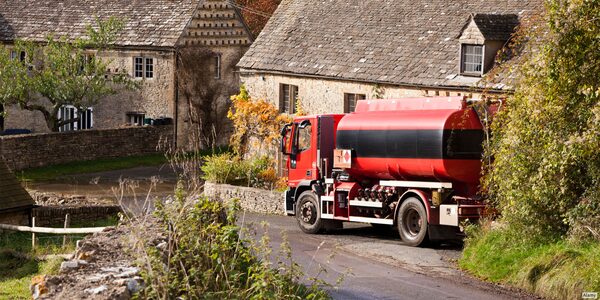
No published UK domestic price for HVO appears in the available documents, so the price relationship with kerosene cannot be stated as a figure. What can be said is that the industry's proposal includes a duty measure: equalising the duty on these fuels with that of kerosene when they are used for home heating3. Duty equalisation is the mechanism by which a renewable liquid fuel would compete on price with the fossil one it replaces.
The wider context on heating fuel prices is that they move. In 2024 the weighted average index price of heating fuels fell by approximately 23.3% compared to 2023, driven primarily by movements in the underlying markets14. That is a Scottish official statistic covering heating fuels generally, and it illustrates how exposed any liquid fuel household is to price movement, whichever liquid is in the tank.
The structural point is that HVO would be a bought fuel like kerosene. It would not insulate a household from price movement; it would change the carbon content of what is bought. A household seeking price stability would be looking at a different kind of intervention, and the available evidence does not support a claim that HVO delivers it.
Where a household's exposure sits depends on the fuel. Resistance heating has low capital costs due to cheap parts and simple installation, but it is a different proposition again, and it is included here only to show that the price stability question is not unique to liquid fuels15.
Trials and OFTEC guidance: the HVO Handbook
OFTEC published issue 1.5 of its HVO Handbook in July 2023, and it is the technical reference for the conversion2. It sets out the fuel standard, the calorific value, the conversion components, the labelling requirement and the efficiency finding from the test work.
The demonstration project behind the industry's figures ran across around 150 oil heated properties3. That is the field evidence: a set of real homes, converted and run, rather than a laboratory result alone. The handbook's component list reads as the distilled output of that work.
The commissioning side is covered by existing oil industry documents. The Oil Controlled Document System, as produced and managed by OFTEC, can be used to show that oil-fired appliances and installations comply, with forms CD/10 and CD/11 used by OFTEC Registered installers and others12. A converted installation would be commissioned through the same route as any other oil fired system.
The handbook's efficiency finding is the one that matters most for a household deciding whether the conversion is worth it: within test regime and apparatus tolerances, the boiler efficiency was unchanged and the measured NOx was very similar2. The boiler does not become less efficient; it burns more litres for the same heat.
"within test regime and apparatus tolerances, the boiler efficiency was unchanged and the measured NOx (ppm) was very similar"

Availability in the UK: where HVO stands today
HVO is not currently available as a general domestic heating fuel in the UK. It is one of the options being considered in the Alternative Clean Heating consultation, and the government has, for the first time, acknowledged that other solutions may be technically required, including the potential use of renewable liquid fuels such as Hydrotreated Vegetable Oil6. That acknowledgement is the policy opening, not a supply chain.
The industry's proposed route is a blend. The fuel oil industry has proposed introducing these fuels as a blend with kerosene, enabling immediate carbon reduction6, and it has outlined how these fuels could initially be introduced as a blend with kerosene4. A blend can use existing infrastructure and existing boilers, which is why it is the industry's preferred first step.
The scale of the affected housing stock is the reason the question matters. The latest data suggest around 1.6 million homes across the UK use heating oil5. Those homes are off the gas grid, and their alternatives are electrification, a renewable liquid fuel, or continuing on kerosene.
For comparison on where other emerging heating technologies stand, the government's public attitudes tracker states plainly of hydrogen boilers that this technology is not currently available in the UK16. HVO sits in a similar position: technically demonstrated, policy dependent, and not yet a product a household can order.
What HVO means for a household's energy independence

HVO's contribution to independence is narrow and worth describing precisely. It keeps an off-gas-grid home on a liquid fuel it can store on site, which is a form of resilience: a full tank is heat that does not depend on the electricity network at the moment of use. It reduces the carbon content of that stored fuel by nearly 90% on the industry's figure3.
What it does not do is remove the household from bought fuel. The home remains dependent on a supplier, a delivery, a tank and a price it does not control. The duty position on renewable liquid fuels for home heating is still a proposal to equalise with kerosene, not a settled regime3. Until supply exists at domestic scale, the independence is theoretical.
The comparison with electrification is the honest one. A heat pump moves a household from a delivered fuel to the electricity network, which trades one dependence for another, and the consultation's own cost figure of £16,900 shows why that trade is contested4. HVO keeps the delivered fuel and changes its carbon content, at an industry-expected modification cost of less than £5003.
For a household weighing the two, the evidence supports a clear statement of what each does. HVO is demonstrated, cheap to convert and not yet available. Heat pumps are available, subsidised through schemes such as the Boiler Upgrade Scheme, and expensive to install in oil heated homes. The policy decision between them has not been made.
The brands and products in this field
The HVO conversion market is not a consumer product market in the way that boilers or heat pumps are. The components OFTEC lists for its pilot demonstrator sites are supplied by named manufacturers: HVO calibrated atomising nozzles and throughput charts from Danfoss Ltd., and HVO flexible oil lines from EOGB Energy Products2. These are trade components fitted by an installer, not products a household buys directly.
That structure matters for how a household should read any HVO claim. There is no domestic HVO boiler brand to compare, because the conversion is a burner and component change on an existing appliance rather than a new appliance category. The relevant certification is the fuel's, under BS EN 15940, and the installer's competence in matching nozzle and throughput to the boiler.
The wider renewable heating market does have a product certification structure, and it is worth knowing what it looks like for comparison. Under the Domestic Renewable Heat Incentive, certificates can only be issued for systems using an MCS certified product13. Under the Warm Homes: Local Grant, MCS certification is required for low carbon heating measures with the exception of high heat retention storage heaters covered by PAS 203018. Those are the assurance mechanisms a household would recognise from other technologies.
For HVO, the equivalent assurance is the fuel specification and the certification chain behind the feedstock. A household cannot inspect a delivery, so it depends on the supplier's certification and on the labelling of its own converted equipment.
Where HVO fits in the wider policy picture

The policy landscape around home heating is moving on several fronts at once, and HVO's position depends on decisions made elsewhere. The Energy Company Obligation funds low carbon heating, for example heat pumps, energy-efficient boilers, heating controls and electric storage heaters19. ECO4 Flex extends eligibility in some areas20. The Warm Homes: Local Grant has its own rules18. None of these currently funds an HVO conversion.
Building regulations set the standards that new and renovated homes must meet. Approved Document L covers limiting heat gains and losses, air permeability and pressure testing, insulation regulations, boiler productivity, lighting, and storage techniques for hot water21. In Wales, Approved Document L Volume 1 sets a primary energy factor for heating and hot water services in new dwellings of less than or equal to 1.969 kWhPE/kWh on the fuel limitation route22. Those are the terms in which a renewable liquid fuel would have to be assessed if it were to be recognised in new build.
Scotland has taken a different direction on new buildings. The New Build Heat Standard will prohibit the use of heating and cooling systems, located within the curtilage of any new building, which produce more than a negligible level of greenhouse gas emissions at the point of combustion23. The standard only extends to the provision of space heating, cooling and hot water23. A combustion-based liquid fuel would face that test in new Scottish buildings.
For existing homes, the question is whether a renewable liquid fuel is recognised as a legitimate decarbonisation route. The consultation acknowledged that other solutions may be technically required, including the potential use of renewable liquid fuels such as HVO6. That is the opening. Whether it becomes a policy is not yet decided.
Sources23 cited
- Research briefing CBP-10609: Heating oil and off-gas-grid homes, House of Commons Library, 2026
- OFTEC HVO Handbook, Issue 1.5, OFTEC, July 2023
- Labour's rural challenge: 16,000 oil heated households call for immediate step change, OFTEC, March 2026
- Last chance for oil heated homes as consultation responses hit 12,000, OFTEC, February 2026
- Research briefing CBP-9428: Heating oil and off-gas-grid homes, House of Commons Library, July 2024
- Government launches consultation on the future of heating for oil heated homes, UKIFDA, December 2025
- Boiler Upgrade Scheme launch, Ofgem, September 2026
- High rise retrofit and upgrade programme phase 1, City of Edinburgh Council, April 2026
- Boiler Upgrade Scheme regulations: approved standards, grant categories and grant levels, Department for Energy Security and Net Zero, July 2026
- Heat pump methodology HEM-TP-12, Department for Energy Security and Net Zero, January 2026
- Approved Document L Volume 1: Dwellings, Department for Levelling Up, Housing and Communities, 2026
- Domestic Building Services Compliance Guide 2022, Scottish Government, 2022
- Domestic Renewable Heat Incentive: eligible heating systems, Ofgem, September 2026
- Scottish House Condition Survey 2024: key findings, Scottish Government, February 2026
- Research on electricity network constraints 2024: new build heat standard, Scottish Government, 2024
- DESNZ public attitudes tracker: heat and energy use in the home, winter 2025, Department for Energy Security and Net Zero, March 2026
- Fund opens for Scots to claim £300 heating oil support, Advice Direct Scotland, April 2026
- Warm Homes: Local Grant policy guidance, Department for Energy Security and Net Zero, July 2026
- Energy Company Obligation (ECO), Ofgem, September 2026
- ECO4 Flex open, South Cambridgeshire District Council, 2026
- Approved Document L: Conservation of fuel and power, Planning Portal, 2021
- Building Regulations Approved Document L Volume 1, Welsh Government, April 2026
- New Build Heat Standard part two consultation, Scottish Government, September 2026
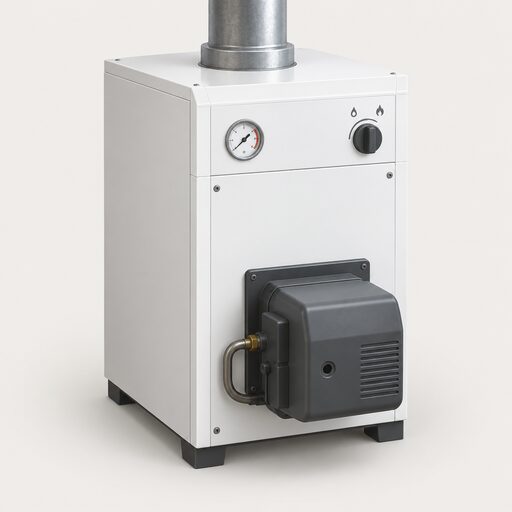 Oil Boilers and Heating OilHow oil-fired boilers work, the kerosene they burn, and the tanks, burners and servicing they need.
 Domestic Oil TanksWhere can you legally put a heating oil tank at home, and how close can it sit to your house, a door or a fence?
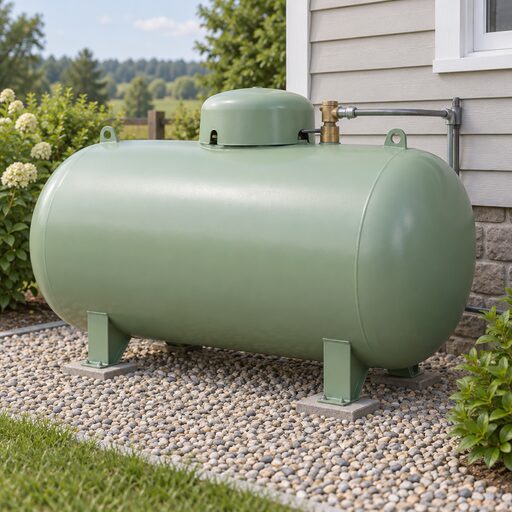 LPG and Heating Oil SuppliersWho owns the tank in your garden, and can you switch supplier if they do?
 Demonstration and Test HomesBefore new heating systems reach your home, they get tested in real houses with real people living in them.
 Replacing a Gas or Oil BoilerSwapping a gas, oil or LPG boiler for a heat pump changes how your home is heated and how much it costs.
 Running Costs by FuelHow the cost of heat compares across mains gas, heating oil, LPG, electricity, solid fuel and heat pumps once efficiency and the price cap are applied.