
In this guide
Paying a deposit or a crowdfunding pledge for an energy product that does not yet exist puts a household in a different position from buying a finished appliance. The money leaves before the product does, the delivery date is a target rather than a promise, and the safety and certification work that allows a device to be installed in a UK home may still be outstanding. The single most important limit is what happens if the company fails: the Energy Ombudsman will not consider disputes against a supplier that has ceased trading, because the supplier is not able to respond, and it is not able to progress cases already open on its systems1.
That limit is not a technicality. When Toto Energy collapsed, the Energy Ombudsman closed open complaints and stated that, due to the company's collapse, it could take no further action on complaints about Toto and had to close the cases2. The same pattern applies to any failed supplier: the dispute route ends with the company.
What remains is the ordinary consumer law position on the deposit, the payment method used, and any code the seller has signed up to. The Renewable Energy Consumer Code covers marketing, pre-contractual information, quotations, deposits, contracts, guarantees and after-sales service, which is the part of the transaction a deposit sits in3. Beyond that, the household is relying on the company surviving long enough to deliver.
If the company folds, the Energy Ombudsman cannot help
This is the first thing to understand about crowdfunded energy product risk, because it removes the remedy most households assume is available. The Energy Ombudsman will not consider disputes against a supplier that has ceased trading, as the supplier will not be able to respond, and for the same reasons it is not able to progress any cases currently open on its systems1. A case in progress does not survive the company.
The organisation has applied this consistently. It is not accepting any new disputes about Orbit Energy, Entice Energy, Yorkshire Energy and Tonik Energy following their ceasing to trade8. In the Toto Energy collapse it closed open complaints and took no further action2. The practical effect is that a household with a live complaint about a failed company has no route through the scheme, however strong the underlying claim.
There is a separate arrangement for the energy account itself. Supplier of last resort information exists precisely because a failed supplier's customers need their supply transferred, and that process is about keeping the lights on rather than about the product or the deposit1. A household can have its supply moved to a new supplier and still have no remedy at all for money paid towards a device that was never delivered.
The Energy Ombudsman is approved by Ofgem, which ensures it has the requirements to operate its schemes while remaining fully independent and impartial9. That approval does not extend its remit to companies that no longer exist. The Energy Ombudsman has also set out its view that joined-up data and insight is best achieved by having a single Energy Ombudsman whose remit is closely aligned to that of Ofgem, which is a position about future scope rather than a current power9.
What counts as a pre-production or crowdfunded energy product
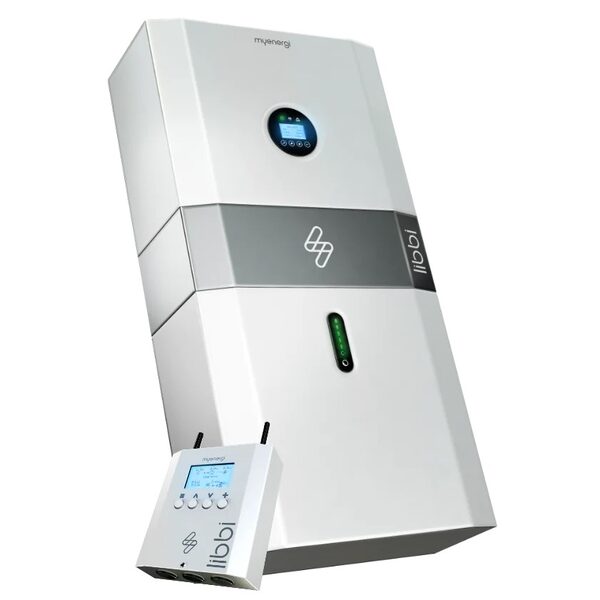
The category covers anything paid for before it exists in a deliverable form: a home battery or inverter at reservation stage, a charging device on pre-order, a heat storage unit funded through a pledge campaign, or a device whose maker is taking deposits ahead of a production run. The common feature is that the household is funding development or tooling, not buying stock.
The distinction matters because the protections that attach to a finished product attach to the sale, not to the promise. The Renewable Energy Consumer Code covers marketing, pre-contractual information, quotations, deposits, contracts, guarantees and after-sales service, so a seller signed up to it has commitments at the deposit stage as well as after installation3. A seller outside the code has no such commitments.
It is also worth separating a deposit from a grant or a funded scheme. Public money for home energy work moves through defined routes: Property Linked Finance can fund up to 100% of the upfront costs of projects that would reduce energy costs over the term of the contract10, the Northern Ireland Sustainable Energy Programme directs at least 80% of its funding to vulnerable or priority customers11, and the Energy Price Guarantee provided financial support to domestic energy consumers affected by recent price rises12. None of these is a crowdfunding pledge, and none of them protects a deposit paid to a private company.
A pre-production device is also, by definition, a device whose certification may be incomplete. That is the subject of the next section, and it is the reason a deposit carries a risk that a purchase from stock does not.
The risks: delivery, performance and safety
Delivery slippage is the visible risk. Performance is the quieter one: a specification quoted at reservation stage is a target, and the installed unit is what the household actually gets. Safety is the one that can matter most, because a device that has not completed the relevant approval work cannot lawfully be installed in a UK home, whatever the campaign page says.
The wider energy system context is a reminder that hardware is exposed to conditions it was not necessarily designed around. Flooding, high winds, heat, and drought impact the energy system, and those pressures reach domestic equipment as well as networks13. A device installed outdoors, or in a garage or outbuilding, sits in that environment.
There is also a measurement question. A primary energy metric would intend to take account of the upstream processes which go into producing and transporting fuels before final consumption, and that is a proposed metric rather than a settled one14. Where a pre-production product's efficiency or running cost claim rests on a metric still under consultation, the claim is provisional.
For the household, the honest summary is that a deposit buys an option on a product, not the product. The delivery date, the specification and the certification are all still moving. The next section deals with what happens when the safety side goes wrong after delivery.

Recalls: stop using the product until it has been checked
A recall is a safety instruction and it overrides everything else on this page. The product safety report for the ROMADA New Energy EV Charger and Cable carries a recall and alert date of 10 September 202615. Where a product is subject to a recall or alert, it should be taken out of use until it has been checked, and the instructions in the notice followed.
Recalls are not confined to crowdfunded hardware, but early-production units are more likely to be affected because the design is still settling and the installed base is small enough that a fault may not surface until units are in homes. The recall route runs through the product safety system rather than the energy dispute system, which means it operates even where the seller is still trading and responsive.
The energy dispute system can pick up some of the consequences. The Energy Ombudsman can consider complaints relating to Electric Vehicle (EV) charging at a consumer's home but is unable to consider complaints about charging away from the home16. That boundary matters for a recalled charger: a fault at the home charger is within scope, a fault at a public charge point is not.
Where a product is recalled and the seller has also failed, the household is left with the safety instruction and no commercial remedy. That combination is the worst case for a pre-production purchase, and it is the reason the certification status of a device is worth establishing before any money changes hands.
Where the Energy Ombudsman can and cannot help

The scheme's scope is wider than many households assume and narrower than the name suggests. The Energy Ombudsman provides an independent service, separate to Ofgem, for problems with an energy supplier, an energy broker, a network operator or a heat network supplier17. It can process complaints for both domestic and small business consumers in the energy sector6.
It cannot, however, do several things that a household might expect. It cannot punish companies, dictate how companies operate, or issue fines6. It does not issue fines or dictate how companies operate, which it describes as the responsibility of the companies' trade body or regulator7. Its power is to require the supplier to put things right where a mistake has been made or a consumer has been treated unfairly18.
There are membership limits that catch some sellers. UtilityCloudLive is not signed up to the Energy Ombudsman scheme, so disputes cannot be reviewed19. The Gas Company is not signed up to the scheme, so disputes against it cannot be reviewed20. A company outside the scheme is outside the remedy, regardless of what it sold.
Territorial extent is a further limit: the Energy Ombudsman only handles disputes involving suppliers trading in Britain7. Eligibility is restricted to domestic consumers, micro-businesses, and small businesses21. For a household buying a pre-production energy device, the practical question is whether the seller is a scheme member at all, and whether it is still trading when the problem arises.
Escalating a dispute: 8 weeks or a deadlock letter
The route to the Ombudsman has a fixed waiting period. If eight weeks pass without a resolution, or the supplier sends a deadlock letter sooner, the dispute can be brought to the Energy Ombudsman4. The consumer must have allowed the supplier 8 weeks to resolve the dispute or have received a deadlock letter allowing earlier escalation22.
A deadlock letter is the supplier's written statement that the problem cannot be fixed or that it believes there is no more it can do5. It allows the consumer to come to the Ombudsman sooner than 8 weeks23. After a deadlock letter, the dispute must be escalated within 12 months of receiving the letter7.
The same 8 week rule applies across the schemes. For heat network complaints, it must be at least 8 weeks since the issue was first raised with the supplier, or a deadlock letter received24. For domestic or micro business Feed-in Tariff generators, the referral waiting period is 8 weeks from the complaint being lodged where no mutually agreeable outcome has been reached26.
The sequence is therefore: raise the complaint with the seller, wait 8 weeks or obtain a deadlock letter, then escalate. Where the seller has ceased trading in the meantime, the route closes rather than opens.
Evidence, deadlines and how the process works

Once a dispute is escalated, the Energy Ombudsman asks for information and evidence relating to the complaint, reviews evidence from both the consumer and the energy company, informs the consumer of its decision within 6 weeks, and gives the energy company a set of actions to resolve the problem27. The consumer has up to 14 days to upload evidence to support the case7.
If the consumer accepts the decision, the supplier has 28 days to implement the remedy6. For Feed-in Tariff disputes, the licensee then has up to 28 days to action any recommendations by the Energy Ombudsman26. The decision binds the energy company but not the consumer, a position stated in Ofgem's guidance on the earlier Ombudsman Services: Energy scheme and repeated in the 2020 eight week and deadlock letter guidance28.
Registration is straightforward. A dispute can be registered via the website, telephone, email or post6, and the process starts by searching for the name of the energy supplier30. The service is free, and can be registered via the website, post, email or telephone23. The contact email is enquiry@energyombudsman.org29.
The Energy Ombudsman is funded by the suppliers signed up to its scheme, which pay a fee for each case reviewed regardless of the outcome or decision made7. That funding model is worth knowing when assessing independence, and it is disclosed by the organisation itself.
Awards and remedies: what the Ombudsman can require, and what it cannot
The remedy set is practical rather than punitive. The Energy Ombudsman can tell suppliers to take practical action, such as crediting or cancelling an account or changing a tariff, to make an apology, or to offer a financial award, or a combination of these, and it may make recommendations to prevent the issue happening again5. Financial awards are based on the cost of putting things right, such as ensuring the consumer has been charged accurately, clearing unfair charges or fixing faults5.
The typical figure is modest. The most common financial award is around £50, sometimes referred to as a Time and Trouble Award7, and the average award is around £506. Maximum awards run up to £10,000 for domestic energy disputes or up to £20,000 for small business disputes for heat networks and energy networks, and up to £10,000 for energy brokers5. The level of maximum financial award may vary depending on the type of energy company and the Terms of Reference that cover that scheme5.
The scale of the service is substantial: the Energy Ombudsman has helped resolve over one million consumers with their energy complaints31. In its one millionth case, it required the supplier to reimburse £240 for emergency call-out fees paid by Eva and apply a £350 goodwill credit to her account, and to provide a formal written apology31. That case shows the upper end of what a well-evidenced dispute can produce.
There is a reform in progress. The Energy Ombudsman has proposed the ability to issue a penalty fee that will end up as compensation for consumers, to enforce decisions and hold suppliers to account, and has also proposed compensation for consumers when remedies are not implemented on time31. Those are proposals, not current powers.
"However, we can't: - Punish companies - Dictate how companies operate - Issue fines"
How to protect yourself before backing a project
The protections available before money changes hands are mostly about information and payment method, and they are worth working through in order.
- Establish whether the seller is a member of the Energy Ombudsman scheme. A company outside it cannot be the subject of a dispute, as the UtilityCloudLive and Gas Company entries show19.
- Establish whether the seller is signed up to a code covering deposits. The Renewable Energy Consumer Code covers marketing, pre-contractual information, quotations, deposits, contracts, guarantees and after-sales service3.
- Establish the certification and approval status of the device itself, since a product that has not completed the relevant approval work cannot be installed in a UK home.
- Establish what happens to the deposit if the company fails, and whether any third party holds it.
- Keep the campaign page, the specification quoted at reservation stage, and all correspondence, because the specification is the benchmark against which a delivered unit is judged.
Where a dispute does arise and the seller is still trading, the escalation route is fixed: 8 weeks or a deadlock letter, then the Ombudsman, with a decision within 6 weeks and a 28 day implementation window4. Where the seller has failed, none of that applies.
Support exists for consumers who cannot pursue a complaint alone. In England and Wales, the Citizens Advice consumer service may refer a consumer to the Extra Help Unit where a complaint is difficult or urgent, where personal circumstances make dealing with the supplier difficult, where the consumer is considered vulnerable, or where there is a risk of disconnection29. Energy suppliers are also expected to identify vulnerable needs proactively and provide additional support wherever appropriate31.
The independence question is the one to hold on to. A pre-production purchase transfers money and risk to a company that may not exist when the product is due, and the dispute system is built around companies that do. That is the dependence a household takes on when it backs a project, and it is not removed by any scheme membership.
Sources31 cited
- Supplier of last resort information, Energy Ombudsman, 2026
- Toto Energy collapses: advice for affected customers, Energy Ombudsman, 2019
- Renewable Energy Consumer Code, Trading Standards, 2026
- Complain about your energy supplier, Ofgem, 2026
- What to expect, Energy Ombudsman, 2026
- We may be able to help resolve your energy dispute, Energy Ombudsman, 2026
- FAQs, Energy Ombudsman, 2026
- Scottish Power, Energy Ombudsman, 2026
- Review of Ofgem call for evidence, Energy Ombudsman, 2025
- Carbon Budget and Growth Delivery Plan: heat and buildings factsheet, GOV.UK, 2026
- Northern Ireland Sustainable Energy Programme list of schemes 2026-2027 published, Utility Regulator, 2026
- Energy Price Guarantee ministerial direction, GOV.UK, 2022
- Well-adapted energy system, Climate Change Committee, 2026
- Technical annex for chapter 2: what EPCs measure, GOV.UK, 2026
- Product Safety Report: ROMADA New Energy EV Charger and Cable, GOV.UK, 2026
- EV tariffs and home charging: what consumers need to know, Energy Ombudsman, 2026
- How we can help, Energy Ombudsman, 2026
- Understanding your rights, Energy Ombudsman, 2026
- UtilityCloudLive, Energy Ombudsman, 2026
- The Gas Company, Energy Ombudsman, 2026
- Creating a case with the Energy Ombudsman, Energy Ombudsman, 2026
- Information for disputes with flexibility service providers, Energy Ombudsman, 2026
- Raise a dispute, Energy Ombudsman, 2026
- Cynon Taf Community Housing 2007 Ltd, Energy Ombudsman, 2026
- Metropolitan Infrastructure Limited, Energy Ombudsman, 2026
- Dispute resolution, Ofgem, 2026
- Complain about your energy supplier or network operator, Ofgem, 2026
- Eight week and deadlock letter guidance, Ofgem, 2020
- How to leaflet, Ofgem, 2014
- One million consumers helped by Energy Ombudsman as service marks 20 years, Energy Ombudsman, 2026
- Energy Market Consumer Protection, Hansard, 2026
 When Your Installer Goes BustWhat happens to deposits, part-completed work, workmanship guarantees and complaints when a home energy installation company fails, and how to claim on deposit protection, an insurance-backed guarantee, card or finance cover, and who honours the manufacturer's warranty.
 Deposits and Staged PaymentsHow much deposit should you pay for solar panels or a heat pump, and what happens to your money if the installer goes bust?
 Energy Debt Repayment PlansOwe money to your energy supplier?
 When a Manufacturer FailsWhat happens to warranties, spare parts, monitoring apps and cloud services when a manufacturer enters administration, exits the UK or discontinues a platform, and the practical options for owners left without support.
 Prepayment Meters and DebtCan your energy supplier force you onto a prepayment meter because you owe them money?
 Prepayment Meter DebtHow debt repayment is set on a prepayment meter, the limits on the share of a top-up that can be taken, and how to have a rate reviewed.