In this guide
A UK home that installs solar and a battery does not stop importing electricity. It changes when and how much it imports, and the documented numbers show by how much. During the heatwave week of late June 2026, British households with solar panels exported an average of 4.6kWh a day back to the grid and earned 55p for it, while a low-usage household with five panels and 1,800kWh of annual consumption saved £12.24 on its week's bill against a total of £14.921. Those are real, measured outcomes rather than modelled ones.
The bigger picture is that self-consumption, not generation, is the binding constraint. Without storage, worked examples in the MCS guidance show a home using 29% of its own solar output when someone is in all day, and 39% when they are in half the day2. Adding a battery lifts that to 70 to 80%, according to Great British Energy figures cited in a parliamentary briefing3. That gap between roughly a third and roughly three quarters is where household energy independence is actually won or lost.
This page sets out what the case-study evidence measures, the specifications behind five documented UK installations, the generation and cost figures that surround them, and where the remaining imports still come from. It is a reference page for households weighing up what a system delivers in practice, not a recommendation of any product or installer.
What these case studies actually measure
Case-study evidence on home energy comes in several shapes, and they do not measure the same thing. Some studies measure physical performance: how much a system generated, how much the household used, how much was exported. Others measure the experience of the people living with the technology, or the administrative success of a scheme. Reading a self-sufficiency percentage without knowing which kind of study produced it is how households end up disappointed.
The strongest measured evidence comes from instrumented trials. Energy Systems Catapult runs a Living Lab of more than 5,000 UK homes trialling new technologies, which provides the sample base for much of the independent work on how households actually use heat pumps, batteries and solar8. Energy Saving Trust research draws on measured performance data from 546 homes11. The Metered Energy Savings project applied its methodologies to 42 UK homes12. These are small numbers relative to the housing stock, and they are the closest thing to observed behaviour rather than modelled behaviour.
Official evaluations tend to measure delivery rather than physics. The Home Upgrade Grant Phase 1 evaluation is based on findings from 10 case studies of local authority led projects13. Building for 2050 used 4 in-depth case studies of low carbon housing schemes across England and Wales14. The Social Housing Decarbonisation Fund Wave 1 evaluation includes a case study illustrating the extent to which local authorities not participating in the scheme delivered energy efficiency upgrades in their own housing stock15. Useful for policy, less useful for a household trying to size a battery.
Consumer surveys measure something else again: satisfaction, confidence and intention. Ofgem's Energy Consumer Satisfaction Survey for January 2025 surveyed 3,854 domestic energy bill payers across Great Britain, including face-to-face interviewing with digitally excluded respondents16. Earlier waves surveyed approximately 3,500 to 4,000 domestic energy consumers17, 3,742 in the fieldwork conducted between 30 August and 18 September 202318, and 4,037 energy consumers solely or jointly responsible for their bills in 202119. Nesta's consumption analysis is based on a sample of 5,994 households designed to represent Great Britain across regions and Index of Multiple Deprivation quintiles20. The Electrification of Heat Demonstration Project published case studies reflecting the first-hand experiences of 7 households taking part21.
The distinction matters for independence. A generation figure tells a household what a system can produce. A self-consumption figure tells it how much of that production replaces imported electricity. A satisfaction figure tells it nothing about either. The numbers on this page are drawn from the first two categories wherever possible.
The systems behind the numbers: five real UK installations
Five documented installations give a sense of the range of system designs in UK homes. They differ in heat source, array size, storage and ownership model, which is precisely why a single headline self-sufficiency figure is misleading.
The first is a household that installed an air source heat pump with radiators, a 3kWp solar PV array and a 10kWh battery22. This is the smallest array in the group paired with substantial storage, a design that prioritises using a modest amount of generation well over generating a large surplus.
The fourth is a shared-loop installation: a connection to a shared ground source heat pump loop, a 1.5kWp share of a larger PV array, and a 5kWh battery22. This is the only case in the group where the household does not own its own array outright. Its generation share is small, and its independence rests on the shared loop rather than on its own roof.
A large home of four to five bedrooms is documented with a 6kW solar panel system and 13 to 14kWh of battery storage, at a cost of £10,000 or more5. At the other end, a low-usage household, usually a small home with one or two people, is documented with five panels and 1,800kWh of annual consumption1. A high-usage household with ten panels and 4,100kWh of annual consumption appears in the same dataset1.
The scale of the wider population these sit within is large. There are over 1.5 million domestic solar installations in the UK7, and UK homes have 6.6GW of power installed23. Almost 150,000 certified installations were recorded in the first half of 202624. Installations smaller than 5MW account for 99.9% of total installations and 55% of installed capacity, which is a way of saying the domestic segment is numerous and individually small3.
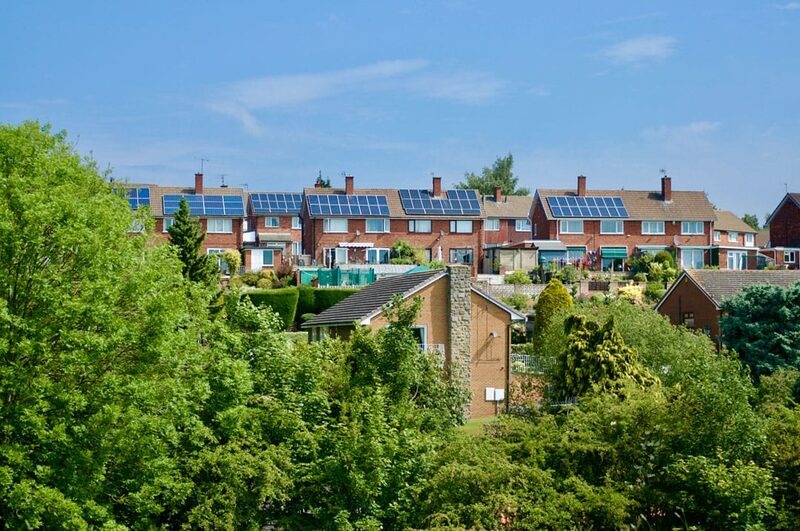
Simon's 5.16kWp array with 13.5kWh of storage
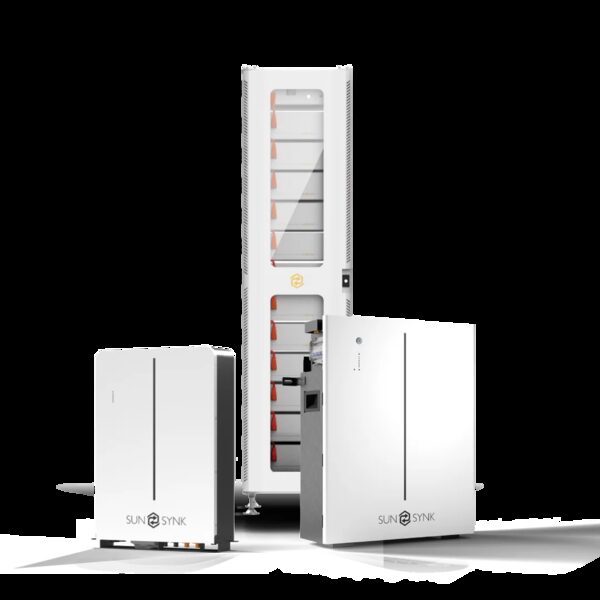
The combination of a mid-sized array with substantial battery capacity is the design most often described as the practical route to high self-consumption, and the documented figures support that. A 5.16kWp array paired with 13.5kWh of storage sits in the same territory as the large-home specification of a 6kW system with 13 to 14kWh of storage, which is put at £10,000 or more5.
What that ratio does is shift the household's relationship with the grid from continuous import to timed import. A 10kWh battery can power a typical three-bedroom house for about 12 hours, according to the maker guidance that covers this size class5. A 13.5kWh store therefore covers a full overnight period and part of a morning, provided it was filled the previous day. The array's job is to fill it; the battery's job is to defer the draw.
The limit is seasonal, and it is not a design fault. A 5kWp array in a UK summer produces far more than a household can use, which is why export earnings appear in the data at all: British households with solar sold 4.6kWh a day back to the grid during the heatwave week, earning 55p1. In winter the same array produces a fraction of that, the battery refills slowly, and imports rise. The system has not failed; the resource has changed. This is the pattern described in more detail on the page about the winter gap.
For a household, the honest reading of a 5.16kWp and 13.5kWh system is that it delivers high independence across the brighter half of the year and partial independence in the darker half. The annual self-sufficiency figure sits somewhere between those two states, and it depends more on how the household uses power than on the hardware. Shifting heavy loads into daylight hours, which is what a battery makes possible without behaviour change, is the mechanism. The self-consumption page sets out how that ratio is calculated.
The 5.4kWp solar and battery system: £12,364 invested
A 5.4kWp array with battery storage at an investment of £12,364 is a useful anchor because it sits between the published price points rather than at either end. The figures that exist for comparison are partial. A 2kW system without a battery averages £4,600 to £5,800 for a one or two person household6. A 5kWh battery is listed at £3,000 to £5,0005. A large home with a 6kW system and 13 to 14kWh of storage is put at £10,000 or more5.
Those figures do not add up to a single reliable price for a 5.4kWp system with storage, and the battery pricing figures conflict. One set of maker guidance gives a 5kW solar battery at £3,500 to £5,000 installed, another at £2,500 to £6,000 installed5. Both are maker figures, neither is ruled out, and the honest position is that a system of this size is installer-quoted. Households comparing quotes are comparing labour, scaffolding, mounting, inverter choice and commissioning as much as they are comparing hardware.
What the £12,364 figure buys in independence terms is a system that can absorb most of its own midday generation. The mechanism is set out in the MCS worked examples: a home using 29% of its own output without storage reaches 69% with 7.5kWh of usable storage capacity2. Scaling that logic to a 5.4kWp array with a larger battery is what produces the 70 to 80% range cited in the parliamentary briefing3.
The remaining imports are the point of the exercise. Even a well-sized system imports at night in winter, imports when the battery is depleted, and imports when a heavy load coincides with low generation. A household that expects zero import from a system of this size will be disappointed; a household that expects to buy most of its electricity at the cheapest hours, or not at all on good days, will not be. The cost of energy independence page covers how those figures are assembled across a whole system.
What a 5kWp system generates: around 5,500kWh a year
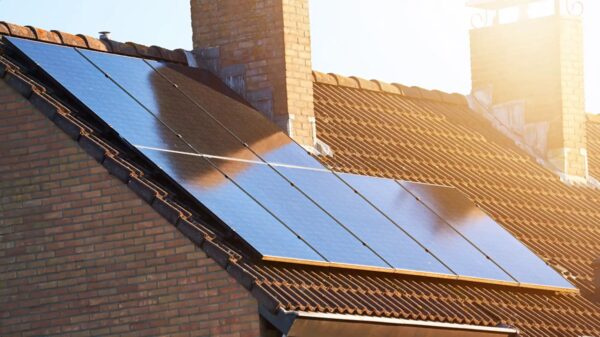
The generation figures that exist for UK rooftop solar are mostly daily rather than annual, and they are mostly from summer. During 21 and 22 June 2026, a typical UK rooftop solar installation generated 15kWh per day, equivalent to five hours of daily air conditioning use4. Across 1.88 million domestic-scale installations, the average was 15.2kWh per day, from a total of 28.5GWh produced per day4. Those are methodology estimates for the domestic fleet, not measurements of a single array, and they describe the best days of the year.
A household with a 5kWp array and a battery reports using around 3,000kWh of its output in a year25. That is a self-consumption figure rather than a generation figure, and the distinction is the whole story: the array may generate considerably more than 3,000kWh, and the household keeps 3,000kWh of it. The rest is exported, curtailed or lost to timing.
The seasonal spread is what makes an annual figure fragile. A 5kWp array in June and a 5kWp array in December are different machines. The heatwave data captures the top of the range; the bottom of the range is not represented in the same dataset, and no figure here should be read as a year-round average. Households planning around a 5,500kWh annual figure should treat it as a bright-year expectation rather than a guarantee, and should expect the winter months to deliver a small fraction of the summer daily output.
For independence, generation is the input and self-consumption is the outcome. A household that generates 5,500kWh and uses 3,000kWh of it has replaced roughly 3,000kWh of imported electricity, plus whatever it earns from exporting the remainder. The self-sufficiency ratio page explains how that proportion is expressed and why different studies report it differently.
Battery sizing: why 10kWh pairs with a 5kWp array
The pairing of a 10kWh battery with a 5kWp array recurs across the documented installations, and the reason is arithmetic rather than convention. A 10kWh battery can power a typical three-bedroom house for about 12 hours5. A 5kWp array on a good summer day generates enough to fill it and still have surplus. The two sizes meet in the middle.
The evidence for what storage does to self-consumption is consistent. Adding a battery to a solar installation increases self-consumption from 30 to 40% to 70 to 80%, according to Great British Energy figures cited in a parliamentary briefing3. Independent data records a 70% self-consumption rate for households with a 10kWh battery1. The MCS worked examples show the same effect at smaller scale: 29% without storage rising to 69% with 7.5kWh of usable capacity in a home that is in all day2.
| Household type | Array | Battery | Documented outcome |
|---|---|---|---|
| Home all day, 3,879kWh annual consumption | 4,059kWh annual generation | None | 29% self-consumption2 |
| Home all day, same consumption | 4,059kWh annual generation | 7.5kWh usable | 69% self-consumption2 |
| Home in half the day, 5,783kWh annual consumption | 2,456kWh annual generation | None | 39% self-consumption2 |
| Households with solar and battery | Not stated | 10kWh | 70% self-consumption1 |
| Large home, 4 to 5 bedrooms | 6kW | 13 to 14kWh | £10,000 or more5 |
The pattern in the table is that storage capacity matters up to the point where the battery can absorb the day's surplus, and then stops mattering much. A battery larger than the daily surplus simply sits part-full. A battery smaller than the surplus exports the difference. The oversizing question is therefore about the household's daily consumption and its array's daily output, not about a fixed ratio to array size.
There is a second sizing consideration that the self-consumption figures do not capture: backup. A battery that can run a house for 12 hours overnight is doing something different from a battery that can run a house through a power cut, and most home systems shut down in a power cut unless they are designed for islanding. The islanding and anti-islanding page explains why. For sizing purposes, the honest position is that 10kWh pairs with a 5kWp array because it captures most of the daily surplus in summer, and that a larger battery buys winter resilience only at the margin.
How much a 5kW solar system saves: £1,000 to £1,300 a year

Savings figures for solar are the least settled numbers on this page, and the published ranges conflict. One set of maker guidance gives a 5kW solar power system an annual saving of £1,000 to £1,300, another gives £650 to £850, and the conflict is not ruled5. Both are maker figures for the same system size, and a household should treat the range as genuinely uncertain rather than pick the higher number.
The official figure for a different configuration is lower and better evidenced. Solar photovoltaic panels save between £530 and £650 a year on electricity bills for a typical home without electrical heating or an electric vehicle26. That is the figure to hold against the maker claims, because it comes from official guidance and describes a defined household type.
The measured weekly figures give a sense of how savings behave in practice. During the heatwave week, a low-usage household with five panels and 1,800kWh of annual consumption saved £12.24 on a total bill of £14.92, and earned £2.69 from exporting1. A high-usage household with ten panels and 4,100kWh of annual consumption had a total of £29.84 for the week1. Those are single-week snapshots in exceptional weather, not annual averages, and they show both the scale of the opportunity and its dependence on conditions.
| Household | Panels | Annual consumption | Week total | Week saving | Export earnings |
|---|---|---|---|---|---|
| Low usage, small home, 1 to 2 people | Five | 1,800kWh | £14.92 | £12.24 | £2.691 |
| High usage | Ten | 4,100kWh | £29.84 | Not stated | £5.371 |
The gap between the official £530 to £650 and the maker £1,000 to £1,300 is explained partly by household type and partly by what is counted. The official figure excludes electrical heating and electric vehicles, which are the two loads that most increase a household's ability to use its own generation. A household with a heat pump and an EV has more scope to consume what it generates, and therefore more scope to save. The heat pump and EV import page covers that interaction.
For independence, savings are a proxy rather than the goal. A household that saves £650 a year has reduced its imports by roughly the amount that £650 would have bought. A household that saves £1,300 has reduced them further. Neither has eliminated them, and the difference between the two figures is the difference between a household that uses its generation and one that uses it well.
AC-coupled retrofit systems like the AlphaESS SMILE-G3
Retrofitting storage to an existing array is a distinct route to independence, and it avoids the cost of replacing a working inverter. AC-coupled batteries are designed for exactly this. The AlphaESS SMILE-G3 can be AC or hybrid-coupled and features VPP readiness, and the maker states it can work with third-party solar inverters27. The same guidance describes systems of this type as ideal for straightforward retrofitting due to their hybrid nature, and notes they can operate on-grid or off-grid27.
The practical attraction is that a household with an existing solar installation can add storage without touching the generation side. A council-run scheme in Norfolk invites households that already have solar panels to register to have battery storage added to maximise the benefits of their system28. That is a scheme rule rather than a technical specification, but it confirms that retrofit storage is a supported route rather than an edge case.
There is a separate and newer category that also avoids major installation work. Plug-in solar devices are intended for connection to an existing low-voltage electrical installation using a standard UK mains plug and socket, without requiring installation of a separate electrical circuit for export29. The government consultation describes connecting plug-in solar systems without batteries directly to a standard mains socket30. These are small-scale devices rather than whole-home systems, and they do not provide the storage that an AC-coupled battery does.
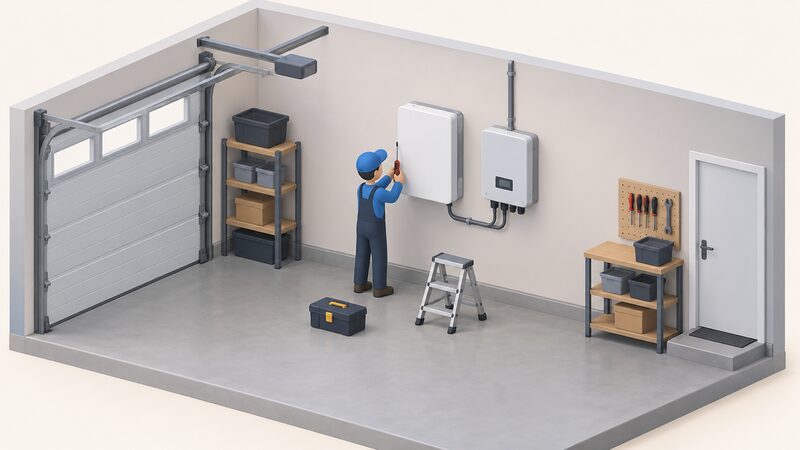
For a household weighing retrofit against a new system, the trade-off is between using existing hardware and starting fresh. An AC-coupled battery keeps the existing inverter and adds storage on the AC side, which is the cheaper intervention where the array is sound. A hybrid inverter replacement allows the battery and array to share one unit, which is the cleaner design where the inverter is due for replacement anyway. The hybrid inverter versus AC-coupled page sets out the comparison in full.
What the numbers mean for household energy independence
The case-study evidence supports a clear but bounded conclusion. Adding a well-sized battery to a domestic solar array raises the share of generation used in the home, cutting imports from the grid, but it does not end them3. Dependence on a supplier remains for winter evenings, for periods of low generation and for loads the battery cannot carry, and the household still relies on the grid connection, the manufacturer and, for tariff optimisation, an app.
The context for why this matters is in the affordability figures. Average required energy costs were 6.8% of household income across all households in England in 2025 provisional data31. In England, 36.4% of households, or 8.91 million, spent more than 10% of income on domestic energy after housing costs in 2023, up from 20.5%, or 4.93 million, in 202132. The regional delivery of support has differed too: Scotland recorded an average of 118 Energy Company Obligation measures per 1,000 households, compared with 81 in Wales and 77 in England33.
Demand for the measures is high and confidence is the constraint. Just under half, 43%, of homeowners are actively considering installing energy-efficiency measures34. The Chartered Trading Standards Institute estimates that as many as 5 million UK households are being deterred from installing energy-efficiency measures by unfamiliarity or a lack of reliable installers34. Three million households planned to get solar panels within five years, with two fifths citing energy price chaos as the reason23.
What remains dependent, even in the best-documented cases, is worth stating plainly. The household still relies on the grid for winter supply and for the hours the battery cannot cover. It still relies on a supplier for export payments and for the electricity it does buy. It relies on a manufacturer for the battery's controls, monitoring and warranty, and on that company's continued existence. It relies on an installer for commissioning and any remedial work. And it relies on the sun, which sets. The household import dependence page sets out where those residual imports come from, and the pillar guide places the case-study evidence in the wider picture of what a UK home can and cannot do for itself.
Sources34 cited
- Here comes the sums: Britain's homes with solar panels reap £40 million during the heatwave, Uswitch, 2026-06-28
- MCS 032: Solar PV self-consumption, MCS Certified, 2025-01-01
- POST note 771: solar and battery storage, Parliamentary Office of Science and Technology, 2026-06-25
- UK solar homes power equivalent of five hours of daily air con use during heatwave, Ember, 2026-06-21
- 10kW solar battery price UK, Jackery UK, 2026-06-04
- Solar panels, Uswitch, 2026-09-09
- UK solar roadmap, Department for Energy Security and Net Zero, 2025-06
- Making home energy management work for consumers, Energy Systems Catapult, 2026-02-12
- Grid impacts of heat pumps, EVs and solar revealed, Energy Systems Catapult, 2025-08-18
- What can the Living Lab tell us about home energy technology adoption, Energy Systems Catapult, 2026-03-16
- Renewable technologies: what really cuts energy bills, Energy Saving Trust, 2026-08-12
- Metered energy savings, Energy Systems Catapult, 2022-10-29
- Home Upgrade Grant Phase 1 evaluation, Department for Energy Security and Net Zero, 2024-12-19
- Building for 2050: low cost, low carbon homes, Department for Energy Security and Net Zero, 2022-12-05
- Social Housing Decarbonisation Fund Wave 1 impact evaluation, Department for Energy Security and Net Zero, 2026-08-27
- Energy Consumer Satisfaction Survey: January 2025, Ofgem, 2025
- Energy Satisfaction Survey Wave 19 interim, Ofgem, 2024-07
- Customers' satisfaction with their supplier: supplier level findings, Ofgem, 2023-08-30
- Consumer survey: electric vehicles summary, Ofgem, 2021-08-19
- Understanding GB energy consumption patterns, Nesta, 2023
- Mass rollout of heat pumps feasible but innovation needed, Energy Systems Catapult, 2022-12-20
- Clean heat: financing the transition, Energy UK, 2025-08
- Sunbelievable: three million households plan to get solar panels in the next five years, Uswitch, 2026-05
- Record number of UK households combining renewables to improve energy resilience, MCS Certified, 2026
- Russell and Kate's story: solar panels and heat pump, Energy Saving Trust, 2026-08-13
- Solar panels, London Borough of Hammersmith and Fulham, 2025-10
- Ask Alpha: your top questions answered about home energy storage, AlphaESS, 2024-10-18
- Solar Together Norfolk, South Norfolk and Broadland Council, 2026-09-17
- Plug-in solar interim product specification, Department for Energy Security and Net Zero, 2026-07
- Plug-in solar consultation, Department for Energy Security and Net Zero, 2026-06-16
- DESNZ annual report and accounts 2025 to 2026: performance report, Department for Energy Security and Net Zero, 2025
- Energy security and net zero committee report, House of Commons Energy Security and Net Zero Committee, 2023
- Tackling fuel poverty in Scotland: a strategic approach, Scottish Government, 2020-12
- Energy efficiency pledges undermined by lack of consumer confidence, Chartered Trading Standards Institute, 2024-06-18
 Data and Energy IndependenceHow many UK homes actually make their own power, and is that number really growing?
 The Full Statistics GuideHow many homes in the UK have solar panels, heat pumps or batteries?
 UK Electricity Generation MixBreaks down the shares of gas, wind, nuclear, solar, biomass, hydro and imports in UK electricity generation, how those shares move by hour and season, where the published figures come from, and what the mix means for a household's energy independence.
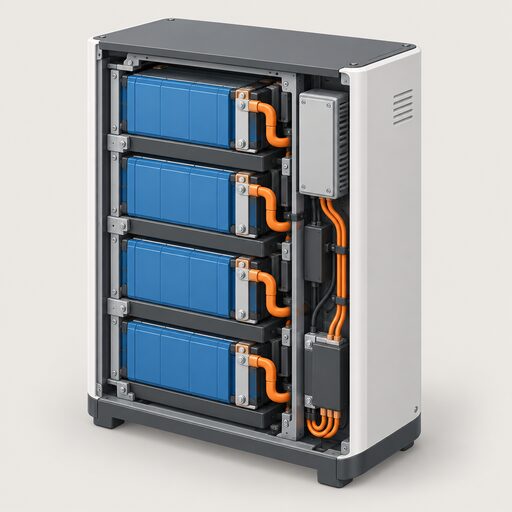 Batteries and IndependenceHow far home battery storage moves a UK household away from the grid and supplier pricing, covering self-sufficiency, winter limits, cost, lifespan, backup, export payments and flexibility earnings.
 The Full Energy Independence GuideCan you really run your home on your own power in the UK, and how far can that go before the grid still matters?
 Going Off-Grid in the UKA whole-picture account of an off-grid UK home: electricity, heat, hot water, cooking, water and waste, and the seasonal management it demands.