In this guide
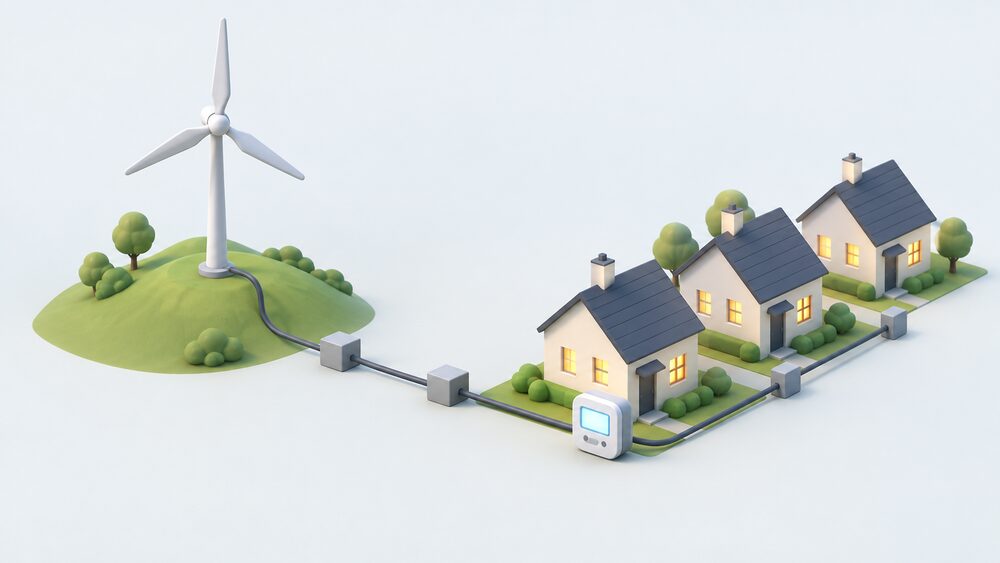
An Energy Local Club is an arrangement in which a group of households in one area buys electricity that is generated nearby, with the matching done through half-hourly smart meter data rather than through a single annual contract. The idea was trialled in the UK at Bethesda in north Wales, where 100 households were recruited to form an Energy Local Club as part of what the Welsh Government described as the first UK trial of a local energy market model1. Energy Local itself is a not for profit social enterprise promoting local ownership of renewable energy1.
The mechanism is simple in principle and constrained in law. Local generation and local demand are matched half hour by half hour, so that members are credited for the units they use while their own area's turbine or hydro scheme is producing. Everything outside that match is bought from the grid at the normal rate. Because supplying electricity to domestic consumers is a licensed activity, the club cannot sell power to its neighbours directly; it works through a licensed partner supplier that handles billing, metering and the regulated parts of the relationship.
What a household gets from this is a closer link between local generation and local consumption, and a share of the value of that match. What it does not get is independence from the grid or from a supplier. The club is a commercial and data arrangement layered on top of the national system, and it depends on a smart meter, a licensed supplier and a functioning distribution network. This page sets out how the model works, where the licensing barrier sits, what the evidence says about savings, and how clubs fit the wider community energy picture.
What an Energy Local Club is and how it works
The club model starts from a mismatch that every community generator knows: a local wind or hydro scheme produces at times that have nothing to do with when the houses around it are using power. Selling everything into the wholesale market and buying everything back at retail rates captures none of the local value. A club tries to capture it by matching the two sides of the meter.
The Bethesda trial, run with 100 households, was the first UK attempt at this local energy market model1. The Welsh Government's wider work on Local Area Energy Planning, which feeds into a National Energy Plan, sets out the changes needed to transition an area's energy system to net zero7. A club is one small, household-level expression of that same logic: generation, demand and the network considered together at the scale of a place rather than a country.
In practice a club needs four things. A generating asset, usually owned by the community or by a local landowner. A group of households willing to have their consumption measured in half-hour periods. A licensed supplier willing to act as the counterparty. And a settlement process that can value the matched units differently from the unmatched ones. The first two are local; the second two are national infrastructure the club borrows.
The benefit to a member is not that they stop buying from the grid. It is that a portion of their consumption is priced against local generation, and the surplus value can be retained locally rather than exported at wholesale prices. That is a modest but real shift in where the money goes, and it is the reason clubs are usually described as a route to local economic benefit rather than to household self-sufficiency.
Why local power is hard to sell: the licensed supplier barrier
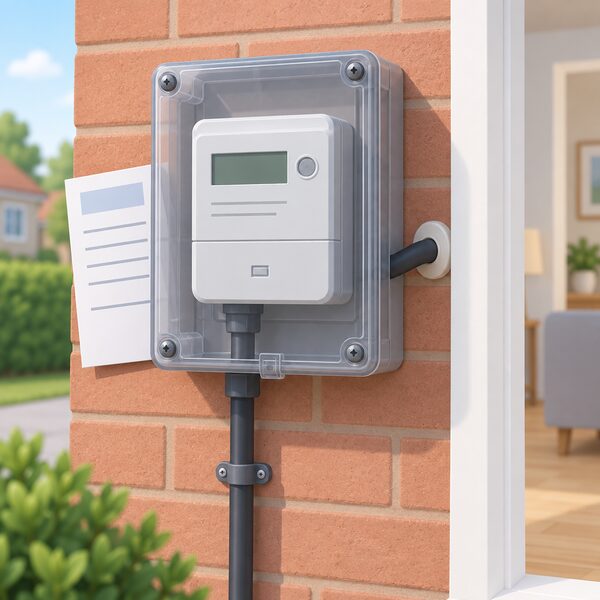
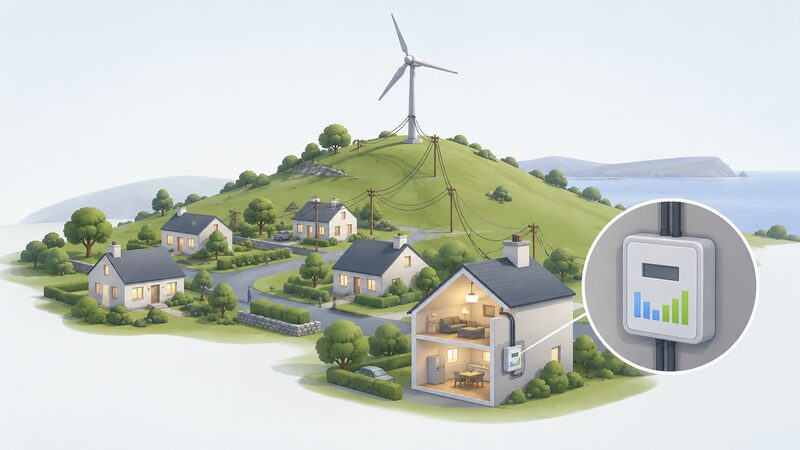
The central constraint on selling electricity to neighbours is that it is a licensed activity. A community group cannot simply run a cable to the next house and bill the occupant for units. In Great Britain, supplying electricity to domestic consumers requires a supply licence, and the licence conditions draw lines that matter to anyone thinking about a local scheme.
The thresholds are set out in the licence conditions themselves. A mandatory Smart Export Guarantee licensee is one that supplies electricity to at least 150,000 domestic customers, measured on 31 December before the start of each SEG Year4. A voluntary SEG licensee is a licensed electricity supplier with fewer than 150,000 domestic electricity customers that chooses to offer a SEG tariff5. The same structure appears in the Feed-in Tariff rules, where a small FIT licensee supplies electricity to fewer than 250,000 domestic customers9. These are the boundaries that separate a large supplier from a small one, and they exist because the obligations scale with the number of households served.
Licences are granted and can be granted to new entrants. Tesla Energy Ventures Limited was granted a licence authorising it to supply electricity to domestic and non-domestic consumers in Great Britain, announced on 12 March 202610. That shows the route exists, but it also shows what it takes: a corporate entity, capital, compliance and the full set of supplier obligations. It is not a route a village committee can take on a volunteer basis.
For a household, the practical consequence is that any local supply arrangement runs through a company that holds a licence. That company is the counterparty on the bill, the entity responsible for the meter, and the body a complaint would be raised against. Where a resident is supplied under a landlord's business contract rather than their own domestic contract, they may not have the right to choose their own energy supplier or switch suppliers themselves, and may not be able to make a complaint directly to the energy supplier if they do not have a contract with them11. Those are the same structural limits a club member sits inside.
"supplies electricity to at least 150,000 domestic customers"
How the club's partner supplier solves the licensing problem
The partner supplier arrangement is the workaround. The club does not hold a licence; the supplier does. The supplier bills the member for all their consumption, applies the local matching to the units that qualify, and passes the local value back through the tariff or through a separate payment to the club.
This is why the model is often described as a tariff rather than a supply business. The member's contract is with the licensed supplier. The club's role is to organise the members, hold or contract the generation, and manage the matching data. The supplier's role is to do everything a supplier must do: meter, bill, handle complaints, meet its licence obligations, and stand behind the supply when local generation is not available.
The arrangement also determines what happens if things go wrong. If a supplier goes out of business, there are established protections for domestic customers, and the supplier of last resort process exists precisely because supply is a regulated activity with continuity obligations12. A club whose partner supplier failed would not lose its generation, but it would lose its billing and settlement route until a new partner was found.
Complaints follow the same structure. The Energy Ombudsman handles issues with an energy supplier, energy broker, network operator, green deal or heat network supplier13. It is approved by Ofgem to deal with consumer complaints about energy bills, mis-selling, problems with energy supply and problems with switching supplier15. For a dispute to be accepted, the supplier name on the dispute must match the company name on the account holder's bill16. A club member's dispute is therefore with the licensed supplier, not with the club, which is a distinction worth understanding before joining.
Savings: what the evidence actually shows

The savings case for local energy clubs is thinner in the public record than the savings case for energy efficiency measures, and it is worth being precise about that. The Bethesda trial recruited 100 households to test the model1, but no savings percentage for that trial appears in the official material. Community energy projects more broadly are described as having the potential to reduce energy costs for those who have a stake in the project17. That is a statement of potential, not a measured outcome.
Where measured figures do exist, they come from retrofit rather than from supply. Improvements such as external wall insulation and heat pumps can reduce energy bills by approximately 25% or £350 per year, according to a council programme cited as evidence18. That is a different intervention with a different mechanism, and it should not be read across to club membership.
For comparison, the savings available from a fuel club, which is a buying group for heating oil rather than an electricity supply arrangement, are stated as as much as 8p per litre19. Fuel clubs are a distinct model: they aggregate purchasing power rather than matching generation to demand. They are mentioned here only because they are often confused with energy clubs in conversation, and because in Northern Ireland they sit alongside energy advice as a recognised form of local support20.
The honest position on club savings is that they depend on the size of the local generating asset, the shape of the members' demand, the wholesale price at the times of matching, and the terms the partner supplier offers. A club with a well-matched load and a decent generating asset will capture more value than one where generation and demand rarely coincide. Any figure quoted for a specific club is project-specific and should be treated as such.
What community energy projects can do for a local area
The case for community energy is usually made on more than bill savings, and the independent guidance is explicit about the wider effects. Community energy has huge potential to reduce the UK's carbon footprint17. It can boost the local economy by creating jobs and attracting investment17. It can inspire communities to tackle other local issues, such as improving transport connections17. And groups use wind energy to support and reduce energy costs in the local community17.
Those four effects are the standard justification for the model, and they explain why clubs are usually discussed as community development as much as energy supply. A club that matches local generation to local demand keeps a portion of the energy spend circulating in the area rather than leaving it entirely through a national supplier's books. The income from generation can fund more local projects that benefit the community17.
The scale of the sector is worth noting. In Scotland, the Community and Renewable Energy Scheme had offered advice to over 900 organisations by 31 October 202221. That is a measure of how many groups have at least explored the route, and it indicates that the advisory infrastructure is more developed than the supply infrastructure.
For a household, the independence question is where this lands. A club does not make a home self-sufficient. It does not reduce the number of units drawn from the grid, and it does not remove the need for a supplier. What it does is change who benefits from the local generation, and give the household a stake in an asset rather than only a bill. That is a different kind of independence from the kind measured by a self-sufficiency ratio, and it is worth being clear which one is being discussed. For the household-level version, see self-sufficiency ratio and community energy.
Why a smart meter is the foundation of a local energy club
A club cannot function without half-hourly consumption data, and that data comes from a smart meter. Smart meters enable accurate billing by automatically recording energy use in half-hour periods2. A smart meter automatically sends your electricity and gas meter readings to your supplier6. Readings are sent automatically via the DCC's secure network to your energy supplier23.
The installation route is straightforward in principle. Any household that pays for energy, whether owning or renting, should be able to book a smart meter installation where it is expected to work in the property2. Private renters can choose a smart meter if the energy bills are in their name or they prepay for energy, after checking the tenancy agreement and letting the landlord know24. The meter itself is free: contact your supplier to get a smart meter for free6.
What the meter changes for the household is the basis of billing and the range of tariffs available. Bills are based on accurate meter readings and not estimates22. You do not need to submit meter readings yourself22. You can access more flexible tariffs, including dual-rate tariffs22. In prepayment mode, credit can be added automatically or without having to visit a shop22. The in-home display shows how much energy you are using during the day25.
The limits are equally clear. Except by switching, you do not control the tariff your energy supplier sets, though you can change how much energy you use23. A smart meter may stop recording the energy you use, or may no longer send readings to your supplier22. Those failure modes matter to a club, because a member whose meter has dropped out of smart mode is not contributing usable half-hourly data until it is restored.
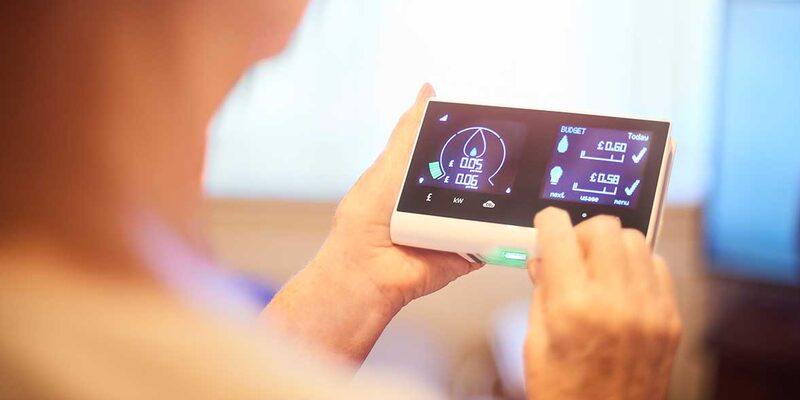
Half-hourly data and time-of-use tariffs: what the meter enables
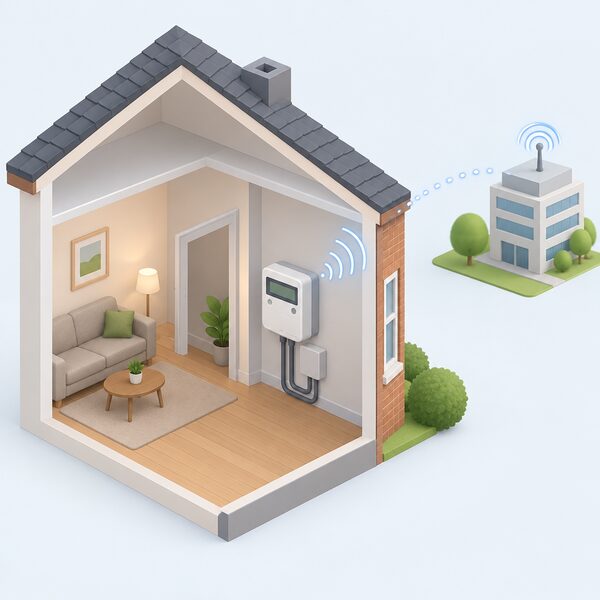
The half-hourly record is the raw material of a local energy market. Automatic meter readings can provide your supplier with monthly, weekly, daily, or even half-hourly readings3. The frequency is a setting, and the half-hourly option is the one that makes matching possible. Without it, a club would be matching an annual or quarterly total against a generation profile, which captures almost none of the temporal value.
Half-hourly data also opens the door to time-of-use tariffs, which price units differently depending on when they are used. A household on a dual-rate tariff is already using this principle in a simple form22. A club extends it by adding a local dimension: the cheap periods are the ones when the local asset is generating, not only the ones when national demand is low.
This is where the household's own behaviour starts to matter. Shifting a washing machine, a dishwasher or an electric vehicle charge into a period when the local turbine is producing increases the matched volume and therefore the value the club can capture. The meter makes that visible; the tariff makes it worth doing. The same logic underpins self-consumption for a home with its own panels, and the two approaches can be combined.
The constraint is that the household does not set the tariff. The supplier does, within the regulated framework, and the club negotiates the local element with that supplier. A member who wants a different structure has the same option as any other consumer: switch supplier, which may mean leaving the club. For the wider picture of how local systems are built, see microgrids and local energy systems and peer-to-peer energy trading.
Funding and support for community energy groups
Community energy groups draw on a patchwork of funding and advisory routes rather than a single scheme. Local councils may offer support with home or business energy bills27, and council schemes and grants fund making energy-saving improvements to your home27. In Northern Ireland, NI Energy Advice provides free advice on saving energy in your home, energy efficiency grants, and oil buying clubs20.
Grant programmes are typically administered through councils working with delivery partners. The Home Upgrade Grant programme run by the West Midlands Combined Authority works in partnership with local energy charities Act on Energy and Marches Energy Agency, along with Birmingham, Sandwell, Dudley and Rugby councils28. The Leeds version of the scheme is administered by Leeds City Council's Home Energy Help team working in partnership with energy services provider Everwarm Ltd29. In Scotland, Energy Efficient Scotland Area Based Schemes involve the council working with Registered Social Landlords to assist owners in mixed tenure blocks where the Housing Association are planning to deliver energy efficiency measures to blocks of flatted properties30.
There are conditions attached to some routes. ECO4 Flexible Eligibility in Ceredigion states that the Council does not accept referrals from lead generators or third parties31. That kind of rule matters to a community group hoping to act as an intermediary, because it closes one route to referring members into a funded scheme.
The advisory side is where most groups start. CARES had offered advice to over 900 organisations by October 202221. For the funding landscape in more detail, see funding for community energy projects and the Ofgem Energy Industry Voluntary Redress Scheme.
Where clubs stand in the wider push to community energy
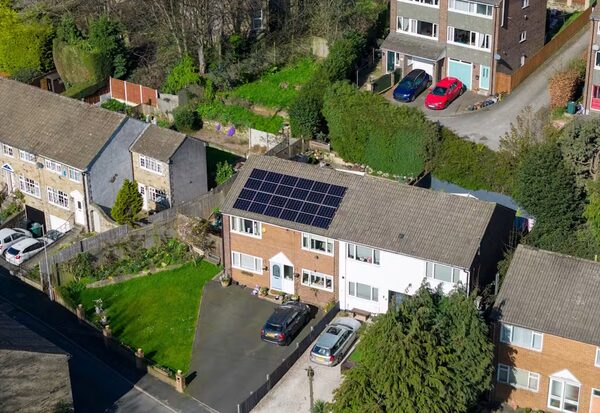
Clubs sit inside a much larger policy and delivery landscape, and their position in it is best understood as one model among several rather than as the leading edge. The community energy sector has national targets and national institutions behind it, and the club is a specific, local expression of the same ambition.
The scale of the ambition is set out in parliamentary work. The Energy Security and Net Zero Committee published its first report of Session 2026 to 27 on 17 June 2026, making recommendations to the Government on community energy34. That report states that the community energy target is 8 GW by 2030, and reports that GB Energy has committed to support at least 1000 local and community projects by 203034. Those are the numbers against which local schemes will be measured.
Funding access widened in 2026. On 23 July 2026, community energy organisations in England, Scotland and Wales became eligible for the Main Fund, around 75% of scheme funding, following Community Energy England lobbying35. That change matters to clubs because it opens a funding stream that was previously closed to them.
The flexibility market is also shifting in ways that affect local schemes. DFS is scheduled to launch constraint management procurement on 7 October 2026, while NESO will stop procuring those actions through the Local Constraint Market36. Local energy arrangements that rely on constraint management revenue need to track that transition.
For a household, the practical reading is that the policy environment is moving in favour of local energy, but the delivery model still runs through licensed suppliers and regulated markets. A club is a way to participate in that shift at the scale of a street or a village. It is not a way to leave the system. For the wider context, see the Local Power Plan and Great British Energy's community role and community energy in the UK.
Sources36 cited
- £90,000 to spark revolutionary local energy scheme, Welsh Government, 2016-09-15
- Smart meters: your rights and expectations, GOV.UK, 2025-08-08
- How to get a smart meter, Smart DCC, 2026
- Draft licence conditions, GOV.UK, 2026-09-17
- Smart Export Guarantee Annual Report Year 5, Ofgem, 2025-12
- Getting a smart meter, Ofgem, 2026
- Energy generation in Wales 2023, Welsh Government, 2025-03
- Publication of spring 2023 biannual update on renewable energy deep dive, Welsh Government, 2023-04-27
- Feed-in Tariffs determinations, year 16, GOV.UK, 2025-12-31
- Tesla Energy Ventures Limited granted electricity supply licence covering Great Britain, Ofgem, 2026-03-12
- If you live in a home with a business energy contract, Ofgem, 2026
- What happens if your energy supplier goes out of business, Ofgem, 2026
- We may be able to help resolve your energy dispute, Energy Ombudsman, 2026-09-20
- How we can help, Energy Ombudsman, 2026-09-19
- Problems with services, Isle of Anglesey County Council, 2025-10
- British Gas New Heating, Energy Ombudsman, 2026-09-19
- What are the benefits of community-owned wind power, Energy Saving Trust, 2026-09-17
- High Rise Retrofit and Upgrade Programme Phase 1, City of Edinburgh Council, 2026-04-20
- Fuel clubs, Carmarthenshire County Council, 2026-04-13
- Cost of living and winter support, Belfast City Council, 2026-09-20
- Heat in buildings strategy 2022 update: progress, Scottish Government, 2022-10-31
- Get help with your smart meter, Ofgem, 2026-09-17
- How do smart meters save energy?, Smart DCC, 2026
- Smart meters, Energy Ombudsman, 2026-09-20
- Get help with your smart meter, Ofgem, 2026
- Get help with your smart meter, Ofgem, 2026
- Get help with your energy bills, Ofgem, 2026-09-17
- £16m fund to help homeowners pay for energy efficiency improvements, West Midlands Combined Authority, 2024-01-16
- Council launches new scheme to help Leeds residents cut energy bills, Leeds City Council, 2024-01-03
- Area Based Schemes, Glasgow City Council, 2026-06-08
- ECO Flexibility Funding, Ceredigion County Council, 2026-09-17
- End of ECO announcement, Birmingham City Council, 2026-09-20
- Getting help with your energy bills, Birmingham City Council, 2026-04-15
- Community energy report, Energy Security and Net Zero Committee, 2026-06-17
- Energy Industry Voluntary Redress Scheme, Community Energy England, 2026-07-23
- Demand Flexibility Service, NESO, 2026-10-07
 Community Energy in the UKWhat community energy means in practice, the legal structures used, and the types of project householders can join or benefit from.
 Community Energy in EnglandCommunity energy lets neighbours own their own power together, often through solar panels, and share the money it makes.
 Community Energy in ScotlandCommunity energy in Scotland lets you join a local scheme for cheaper, greener heat and power, or get advice and funding to make your own home warmer and cheaper to run.
 Taking Part in a Home TrialJoining a home energy trial can mean getting new kit fitted for free or at a lower price, but places are limited and close quickly.
 Community Energy Share OffersHow community energy share offers work in community benefit societies and co-operatives, what returns and risks are stated, how withdrawal works, and how owning shares differs from owning generation on your own roof.
 Community Energy in NICan a community group in Northern Ireland sell power to its neighbours, and is there funding to get a project off the ground?