

In this answer
Short answer
An Energy Local club is an arrangement in which households in one area buy electricity directly from a local generator, with a licensed supplier providing top-up power when the local project is not generating enough to meet local needs and handling all billing1. Independent guidance estimates that participating households can save between 10% and 30% annually, a range that varies by location and by behaviour1.
That range is the headline answer, and it is an estimate rather than a promise. The saving is not a discount applied to a bill: it comes from matching a household's consumption to the hours when the local generator is producing, so the household buys local power instead of grid power at those times. A household that uses most of its electricity in the evening, after a hydro or wind scheme has stopped producing, captures much less of it.
The model exists because buying and selling electricity locally normally requires a supply licence. The club works with an existing supplier that provides the top-up power and the billing, which is how it overcomes the obligation to become a licensed supplier itself1. The household therefore keeps a supplier relationship, but the supply is arranged through the club.
What an Energy Local club is and how it cuts bills
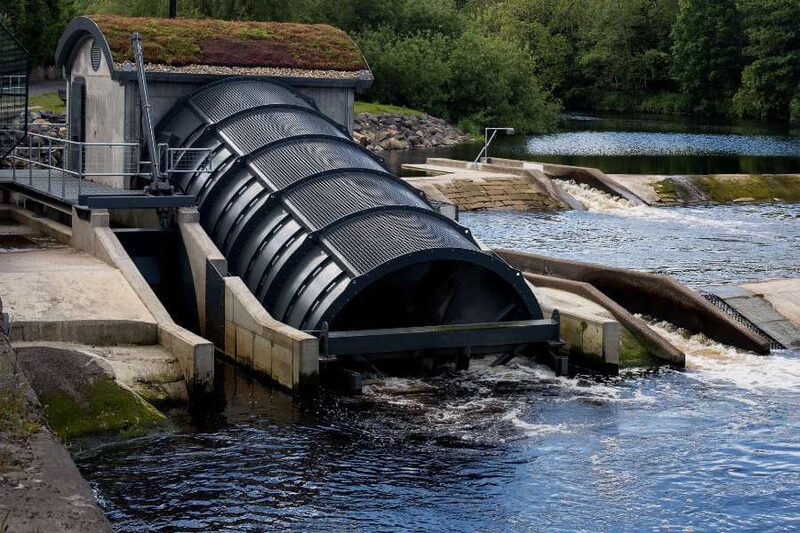
The mechanism is direct purchase. Under the Energy Local model, people effectively buy energy directly from local generators4. A hydro plant, a wind turbine or a solar array in the same area sells into the club, and member households consume that output rather than power drawn from the national wholesale market. The club is the intermediary that makes the match and settles the difference.
The bill reduction comes from two directions. First, local generation avoids some of the costs embedded in a standard supply arrangement. Second, and larger in practice, the household shifts consumption into the generating window, so more of what it uses is local power and less is bought at the standard rate. The Energy Company Obligation, a separate scheme, requires energy suppliers to achieve a total of £224.3 million in annual bill savings for domestic premises, which shows the scale at which bill-saving obligations operate nationally, though ECO is not the club mechanism5.
The club is not a generator itself and does not own the hydro plant or turbine. It is a buying and matching arrangement. That matters for what a household can expect: the saving depends on the local plant's output profile, the number of member households sharing it, and how much of each household's load can be moved into the producing hours.
"There's also the Energy Local model, where people effectively buy energy directly from local generators"
Savings: 10% to 30% off annual household bills
The published estimate is between 10% and 30% annually for participating households, and it varies by location and behaviour1. Both qualifiers carry weight. Location determines the generating technology and its output profile: a hydro scheme runs steadily through the year, a solar array produces nothing after dark and little in winter, and a wind turbine is intermittent. Behaviour determines how much of a household's consumption can be moved into the producing hours.
For context on what other measures deliver, the Welsh Government's advice service cites energy saving tips that can save up to £351 a year on energy bills6, and a home energy check is put at up to £250 a year on household energy bills7. Lighting alone accounts for 11 per cent of a typical household's energy bill8. These are separate routes to a lower bill and are not additive with a club saving.
The comparison with fuel clubs is instructive because the mechanism is similar: collective buying. A fuel club can save as much as 8p per litre on heating oil3, and the Oil Savings Network in Northern Ireland reports an average saving for members of between £10 and £30 on 200 litres of oil9. Those are oil-buying arrangements, not electricity clubs, but they show the shape of collective purchasing savings: modest per unit, meaningful over a year.
| Arrangement | Published saving | Basis |
|---|---|---|
| Energy Local club | 10% to 30% annually | Estimated, varies by location and behaviour1 |
| Fuel club (heating oil) | up to 8p per litre | Official guidance3 |
| Oil Savings Network | £10 to £30 on 200 litres | Average for members9 |
| Energy saving tips | up to £351 a year | Welsh Government advice6 |
How your savings depend on when you use electricity
Timing is the whole mechanism. A club's local generation is available in specific hours, and the household's saving is largest when consumption coincides with them. This is the same principle that underpins demand flexibility more broadly: if households were more flexible with how they used their electricity, it could lead to an average household saving of hundreds of pounds each year10.
The Demand Flexibility Service rewards households for cutting use during specified events, and rewards vary depending on the supplier, but the more electricity you save during each event the greater your rewards will be10. That is a separate scheme from a club, yet it demonstrates the same relationship between timing and money.
What a household pays also depends on factors beyond timing. The type of energy used, the type of meter installed, and how the bill is paid all affect the cost11. Ofgem's load control consumer protection guidance illustrates the scale of timing-based savings for electric heating in a large, high-usage house billed at around £300 per month: a 2% heating bill saving is £6 per month at low control, 4% is £12 per month at medium control, and 6% is £18 per month at high control12. Those figures are for load control rather than a club, but they show how a percentage saving translates into pounds at different levels of engagement.
For a club member, the practical question is how much load can be moved. A hot water cylinder on a timer, an EV charged overnight, a washing machine run in the afternoon: each shift moves consumption into or out of the local generating window. The household that can move the most captures the most.
What joining a club involves
Joining starts with the club's own recruitment in a defined area. The Broughton-in-Furness project began with about 50 households, recruited with Cumbria Action for Sustainability, and was set up to bring together households in the village to benefit from electricity generated at the Logan Gill hydro plant2. That gives a realistic picture of scale: a club is a village-sized arrangement, not a national tariff.
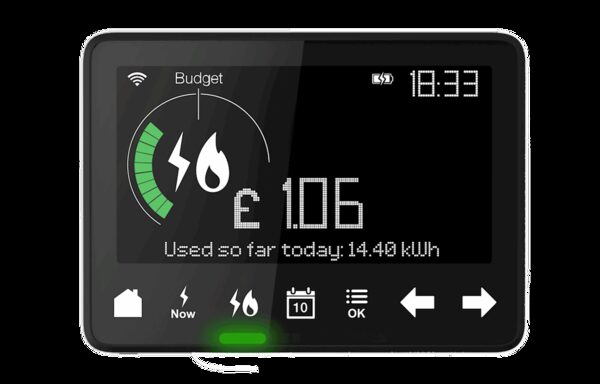
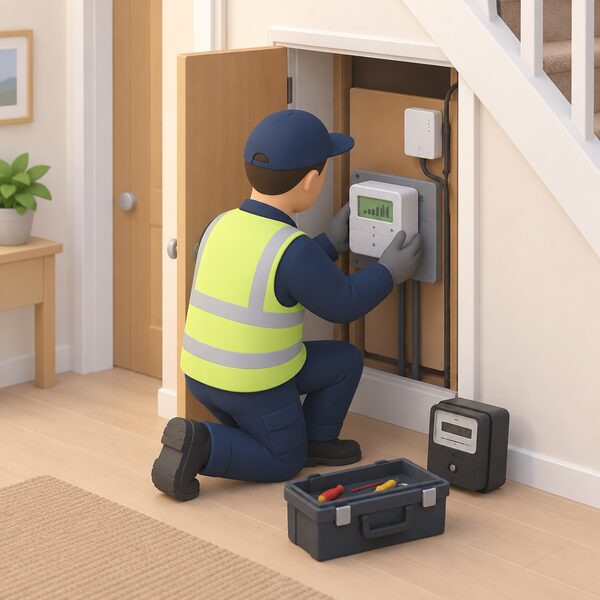
A smart meter is the practical prerequisite for the matching to work. Smart meters can show ways to save money using up-to-date information on energy use13, and any household that pays for energy, whether owning or renting, should be able to book an installation where it is expected to work in the property14. Half-hourly consumption data is what allows a club to attribute local generation to a household.
For households with existing solar, battery storage can be added to existing solar panels to maximise the benefits of the system15. That is relevant because a club member with panels is both a consumer of local generation and a generator in their own right, and the two interact.
Where clubs operate and how to find one
Energy Local clubs are place-based, so the first question is whether a generator and a club exist nearby. The Broughton-in-Furness club was described as the first Energy Local club in the North West, bringing together households in the Cumbria village to benefit from electricity generated at the Logan Gill hydro plant2. That framing indicates the model is established but not widespread.
Support for community-led energy varies across the four nations. In Wales, £10 million has been directed to support community-led energy projects across the country6. In Scotland, the Community and Renewable Energy Scheme, delivered by Local Energy Scotland, is the route for local and small-scale renewables16, and Glasgow City Council's area-based schemes work with Registered Social Landlords to assist owners in mixed tenure blocks where energy efficiency measures are planned17.
For advice on finding and joining local arrangements, the routes differ by nation. The Energy Savings Advice Service gives free impartial advice on energy and renewables in England and Wales5, and Simple Energy Advice covers energy efficiency and help with bills such as the Warm Home Discount for households in England or Wales5. In Northern Ireland, free advice covers saving energy in the home, energy efficiency grants, and oil buying clubs7. In England, local councils may also offer support with home or business energy bills18, and council cost of living support can cover energy and water bills19.
| Nation | Route to local energy advice |
|---|---|
| England and Wales | Energy Savings Advice Service; Simple Energy Advice5 |
| Scotland | Community and Renewable Energy Scheme, delivered by Local Energy Scotland16 |
| Northern Ireland | Free advice including oil buying clubs7 |
| All | Local council support with home energy bills18 |
What club membership means for energy independence
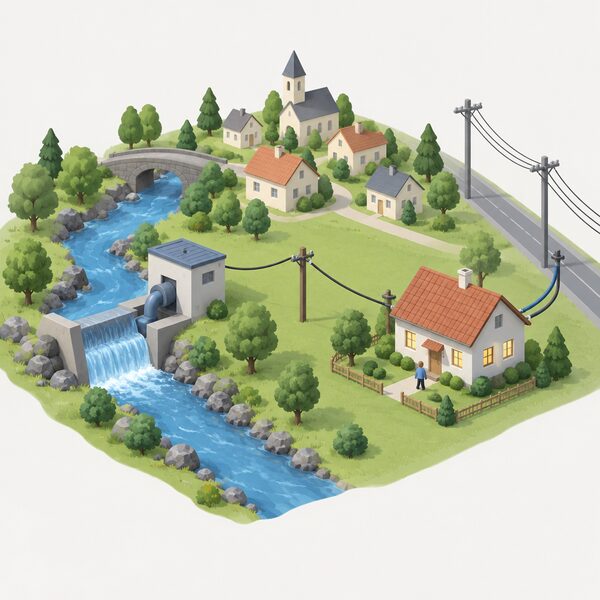
A club changes where a household's electricity comes from, not whether it depends on a network. The local generator supplies part of the load; the partner supplier provides top-up power when the project is not generating enough to meet local needs, and provides all billing1. So the household remains connected to the grid, remains a customer of a licensed supplier, and remains exposed to whatever the top-up power costs when local generation is short.
What it does change is the proportion of a household's consumption that is met locally and the degree of control over when that consumption happens. That is a real gain in independence, and it is bounded. The club cannot supply a household through a winter evening when the hydro plant is at low output and the wind is not blowing; the top-up supplier does that. The saving and the independence both scale with how much load the household can shift into the generating window.
The wider context is that local supply arrangements sit alongside other community energy structures, from share offers to peer-to-peer trading, and the club is one model among several. For a household weighing a club against generating its own power, the trade-off is between a share of a local generator's output and outright ownership of panels or a turbine on the property. The club requires no capital and no roof; it also delivers a smaller and less controllable share of the household's electricity than a well-sized own system would.
Sources19 cited
- Community energy delivers affordable power, Energy Saving Trust, 2025-09-22
- Community and local energy case studies, Electricity North West, 2026-09-20
- Fuel clubs, Carmarthenshire County Council, 2026-04-13
- Domestic wind power, Centre for Alternative Technology, 2023-10-01
- Energy Company Obligation: homeowners and tenants, Ofgem, 2026-09-17
- £10 million support for community-led energy projects across Wales, Welsh Government, 2026-03-04
- Cost of living and winter support, Belfast City Council, 2026-09-20
- Energy efficiency advice, Torridge District Council, 2026-09-17
- £100 home heating oil support scheme goes live, Department for Communities, 2026-09-08
- Demand Flexibility Service, Energy Saving Trust, 2026-05-21
- How your electricity or gas bill is calculated, Ofgem, 2026
- Load control consumer protection guidance, Ofgem, 2026-08-07
- Getting a smart meter, Ofgem, 2026
- Smart meters: your rights and expectations, GOV.UK, 2025-08-08
- Switch Together Birmingham, Birmingham City Council, 2026-01-27
- Local and small-scale renewables, Scottish Government, 2026-09-17
- Area Based Schemes, Glasgow City Council, 2026-06-08
- Get help with your energy bills, Ofgem, 2026-09-17
- Cost of living help from your local council, GOV.UK, 2026-09-17
 Local Energy Supply ClubsJoining a local energy club means your area's wind or hydro power is matched to your home's use, so you pay less for the electricity you use when it is being generated nearby.
 Do Smart Controls Save Money?Do smart heating controls really cut your bills, and by how much?
 Changing Habits SavingsWhat the evidence says behavioural change saves: around £90 to £120 a year for one degree off the thermostat, £100 to £110 a year for using a full set of heating controls, and £304 to £351 a year for a bundle of small changes.
 Cost to Charge an EV at HomeHow home charging cost is worked out from battery size, efficiency, the unit rate paid and the tariff behind it, with full-charge costs of about £8 to £17, cost per mile, annual running costs and what changes for EV owners from April 2028.
 Regional Energy ConsumptionHow much gas and electricity does your area use compared with the rest of the country?
 Insulation Savings and PaybackHow much can you really save by adding insulation, and does it depend on your home, your heating and how you use it?