
In this answer
Short answer
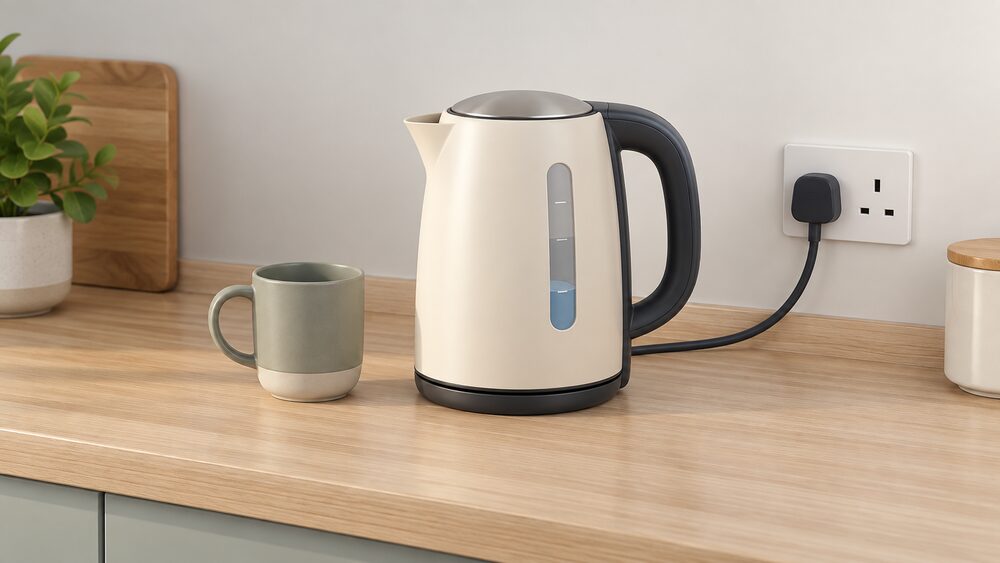
An eco kettle is a kettle designed to boil only the water that will actually be used. Independent guidance states that using one can use around 20% less energy than a standard electric kettle1. That is the headline energy figure, and it is the one most households are looking for.
The cash figure is smaller and more concrete. Only filling the kettle with as much as needed saves about £10 a year in Great Britain and £12 a year in Northern Ireland2. The same £10 figure appears across independent guidance, including the specific note that it assumes all over boiling can be avoided, or the use of an eco kettle3. So the appliance and the habit are being credited with the same saving.
That matters for how the purchase is judged. An eco kettle does not create a new saving; it builds the habit into the product. The energy case is real but modest, and the payback depends on a purchase price that is not published in the sources available here.
Eco kettles: what they are and how they work
An eco kettle is defined by its relationship to volume, not by its element. The independent description is of a kettle that only boils the amount of water required, and that behaviour is what the 20% figure is attached to2. There is no separate efficiency rating for kettles in the material available here, and no standard that a kettle must meet to be called eco.
In practice the category covers two approaches. One is a kettle with a smaller heating chamber or a measured fill, so that the water heated is the water poured. The other is a conventional kettle used with discipline, filling to the cup rather than to the maximum mark. Both produce the same result on the figures, because the saving comes from avoided over boiling rather than from the heating element.
That is worth stating plainly, because it shapes the whole question. If the saving is attributed to the volume boiled, then a household already filling to the cup has captured it and an eco kettle adds nothing further. If the household habitually fills a full kettle for one mug, the appliance enforces a change that the household has not made itself.
For energy independence, the effect is at the margin. A kettle draws from the grid through a normal socket, so an eco kettle reduces the amount imported but does not change where it comes from. It is a demand reduction, not a supply change. Households working through a plan of measures will find it sits alongside other small-appliance and habit measures rather than replacing anything structural. The wider context for that ordering is set out in quick wins and no-cost measures and behaviour change and household habits.
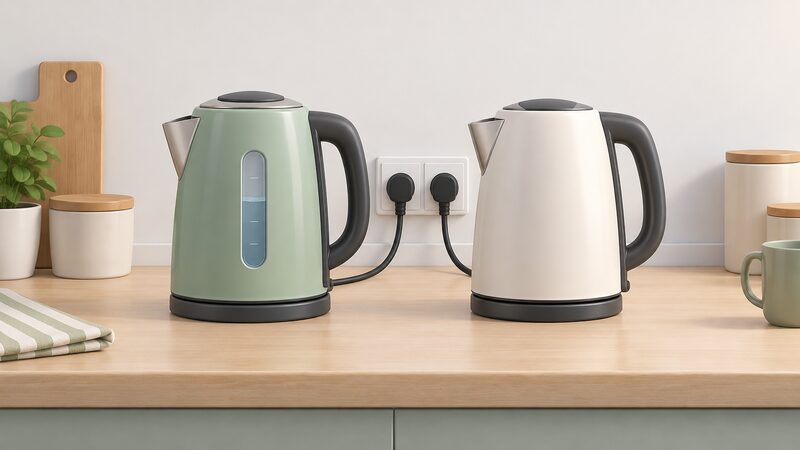
Savings: around 20% less energy than a standard electric kettle
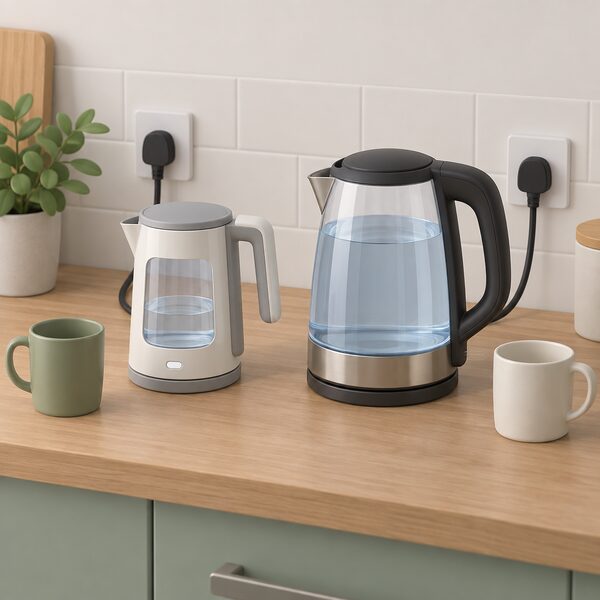
The 20% figure is the core claim and it comes from independent guidance, not from a manufacturer. Buying an eco kettle that only boils the amount of water required can use 20% less energy than a conventional electric kettle2. The same 20% reduction is quoted for the eco setting on a dishwasher, which takes longer to heat the water but reduces energy usage by up to 20%5. The two are separate appliances, but the pattern is the same: less water and less heat, less energy.
To put 20% in context, an electric kettle is given as using 0.1 kWh per use in an example of appliance running costs4. A kettle is a short, high-power draw rather than a long, low one, which is why its annual cost is small even though its instantaneous power is high. A modern electric kettle only needs a couple of minutes to boil water1.
The range across the sources is narrow on energy and slightly wider on cash. The £10 figure is repeated by independent guidance for Great Britain, with £12 for Northern Ireland2. One source gives £10 a year assuming all over boiling can be avoided, or the use of an eco kettle3. Another gives around £10 a year from avoiding overfilling6. A further source gives around £10 per year in England, Scotland and Wales, with £11 in Northern Ireland7. The Northern Ireland figure therefore appears as both £11 and £12, and the two figures stand unresolved at that level of detail. The Great Britain figure is consistently £10.
| Measure | Figure | Applies to | Source |
|---|---|---|---|
| Energy reduction | around 20% less than a standard electric kettle | Eco kettle | 1 |
| Annual saving | about £10 | Great Britain | 2 |
| Annual saving | £12 | Northern Ireland | 2 |
| Annual saving | around £10 | England, Scotland and Wales | 7 |
| Annual saving | £11 | Northern Ireland | 7 |
| Example energy use | 0.1 kWh per use | Electric kettle | 4 |
How an eco kettle achieves the saving
The mechanism is avoided over boiling. Water that is heated and not poured is energy spent for nothing, and it then cools in the kettle, so the heat is lost to the room. An eco kettle removes that step by limiting the volume heated to the volume required2. The saving is therefore a behavioural saving built into the hardware, not a thermodynamic one.
This is why the same £10 appears in guidance that has nothing to do with eco kettles. Filling the kettle with just the amount of water you intend to use could save £10 each year8. Only fill the kettle with the water you need and you can save £10 a year in Great Britain and £12 in Northern Ireland9. Only boiling the amount of water you need at any given time can save £10 per year5. Avoiding overfilling the kettle saves around £10 a year6. The habit and the appliance are interchangeable on the evidence.
The wider principle is that the cheapest energy is the energy not used, and it applies across the kitchen. Slow cookers are more energy efficient than hob or oven cooking10. A dishwasher eco programme uses a lower temperature, usually around 50C, and up to three litres less water than the standard cycle11. These are the same kind of measure: a small change in how an appliance is used, producing a small but repeatable reduction.
For a household, the practical point is that the eco kettle saving is available immediately and at no cost, by filling to the cup. The appliance is one way to lock that in. It is not the only way, and it is not a substitute for the measures that carry larger figures. Households weighing small appliances against each other will find the comparison in air fryer vs oven and kettle or electric hob.
"You can save £10 a year by only filling the kettle with as much as you need"
Where the saving is biggest and where it is small
The saving is biggest where electricity is dearest and where overfilling is habitual. Northern Ireland carries the higher figure, £12 a year rather than £10, and one source gives £11 for Northern Ireland against £10 for England, Scotland and Wales7. The direction is consistent even where the exact number differs: the same behaviour is worth more where the unit price is higher.
The saving is small in absolute terms wherever it is measured. Ten pounds a year is a rounding error against a household energy bill, and it is dwarfed by the figures attached to heating. For scale, low carbon heating systems such as heat pumps are more efficient than traditional heaters like gas boilers and electric radiators12. Electric heat pumps use about three to four times less energy than gas boilers to produce the same heat13. Those are the measures that move a bill; a kettle moves a line on it.
There is also a distributional point. Households with electricity as their primary heating fuel were modelled as seeing a mean fuel bill reduction of £530 per year after the renewables obligation levy and the ECO scheme were removed, in the January to March 2026 period14. That is the scale at which energy policy operates. A kettle saving of £10 sits at the opposite end, which is precisely why it is treated as a starting point rather than a solution.
Where the saving is genuinely small is in a household that already fills to the cup. There, the 20% has already been captured and an eco kettle adds nothing. The appliance pays only where the habit is absent. Households that want to know which small measures are worth doing first, and in what order, will find the framework in where to start energy improvements and payback periods compared.
Is an eco kettle worth it for your home?
The honest answer on the published figures is that the annual saving is small and the purchase price is not published in the sources available here, so no payback period can be calculated. What can be said is that the £10 to £12 a year is available without buying anything, by filling a standard kettle only as much as needed2. An eco kettle is a way of making that automatic.
The case for the appliance is strongest where the household knows it overfills and wants the behaviour removed from the decision. The case against is that the same money could go to a measure with a larger figure. Households on a very small budget will find the ordering question addressed in starting on a small budget, and the general sequence in order of energy improvements.
On independence, the position is straightforward. An eco kettle reduces the electricity a home imports, by around 20% of a kettle's use, and it does so without changing the supply, the tariff or the network. It is a demand-side measure at the smallest scale. It does not reduce dependence on the grid, a supplier or imported gas, and it does not interact with generation, storage or heating. Households planning a route to genuine independence will find the larger levers in planning for energy independence.
Two further points bear on the decision. First, the saving is per household, not per person, so a larger household boiling more water more often will see a larger cash figure than a single occupant, though no source here gives a figure by household size. Second, the appliance has a working life and a purchase price, and neither is published in the material available, so the comparison between buying an eco kettle and changing a habit cannot be completed on the evidence here.
Sources14 cited
- Kettle running costs, Smart Energy GB, 2026-08-17
- Home appliances, Energy Saving Trust, 2026-05-20
- Water: always worth saving, Home Energy Scotland, 2026-07
- Understanding energy bills, StepChange, 2026-09-20
- Energy saving tips for the home, Confused.com, 2025-10-14
- What are the best energy saving tips for households in the UK?, British Gas Energy Trust, 2026-04-21
- Appliances: how much do yours cost to run, Confused.com, 2025-12-18
- Energy efficiency, Cadent Gas, 2026-09-20
- Top five tips to save energy in the kitchen, Energy Saving Trust, 2026-05-20
- Top energy savings tips, National Energy Action, 2026-07-13
- How to save energy at home: home appliances, ivie, 2026-09-20
- Renewable heat right for your home, Energy Saving Trust, 2026-05-19
- What is the electricity to gas price ratio and why is it important?, Nesta, 2026-04-01
- Scenario modelling: impact of the reduction of the renewables obligation and ending the ECO scheme on fuel poverty in Scotland, Scottish Government, 2026
 Do Smart Controls Save Money?Do smart heating controls really cut your bills, and by how much?
 Changing Habits SavingsWhat the evidence says behavioural change saves: around £90 to £120 a year for one degree off the thermostat, £100 to £110 a year for using a full set of heating controls, and £304 to £351 a year for a bundle of small changes.
 Home Battery CostA home battery usually costs between one and a half and ten thousand pounds fitted, depending on size.
 Cost of Energy IndependenceA heat pump and better insulation are the usual starting point, but what does the whole job really cost, and what help is there with the bill?
 How Much Does a Heat Pump CostA heat pump usually costs around eleven thousand pounds installed, though quotes vary a lot depending on your home.
 Micro-CHP Cost and OutputDomestic micro-CHP costs more than a conventional boiler and produces roughly 1kW of electricity alongside its heat.