
In this guide
Community wind and hydro schemes are renewable energy projects that are wholly or partly owned by the communities they sit in, rather than by a commercial developer alone. In Scotland, the Community and Renewable Energy Scheme (CARES) is the main route: it provides advice and funding to communities looking to develop renewable energy, heat decarbonisation and energy efficiency projects, including shared ownership projects1. CARES is delivered by Local Energy Scotland and has advised over 1,300 organisations since inception, providing over £67 million in funding to communities throughout Scotland2.
The scale is modest but real. CARES has supported over 960 projects and the installation of 63 MW of renewable energy3. That capacity is community and locally owned generation, not household-scale kit, and it sits alongside a Scottish Government target of two GW of community and locally owned energy1. Wales runs its own programme, Ynni Cymru, established by the Welsh Government in 2023 to promote community ownership of renewable energy and drive Wales' transition to a low-carbon economy4.
For a household, the appeal is indirect but material: a community scheme can generate a local income stream, reduce reliance on imported gas and grid-supplied electricity at the margin, and give residents a stake in generation they can see. What it does not do is take a home off the grid. A community wind or hydro scheme is a grid-connected generator, and the household still buys its electricity from a supplier. The independence it offers is collective and financial rather than physical.
What a community wind or hydro scheme is
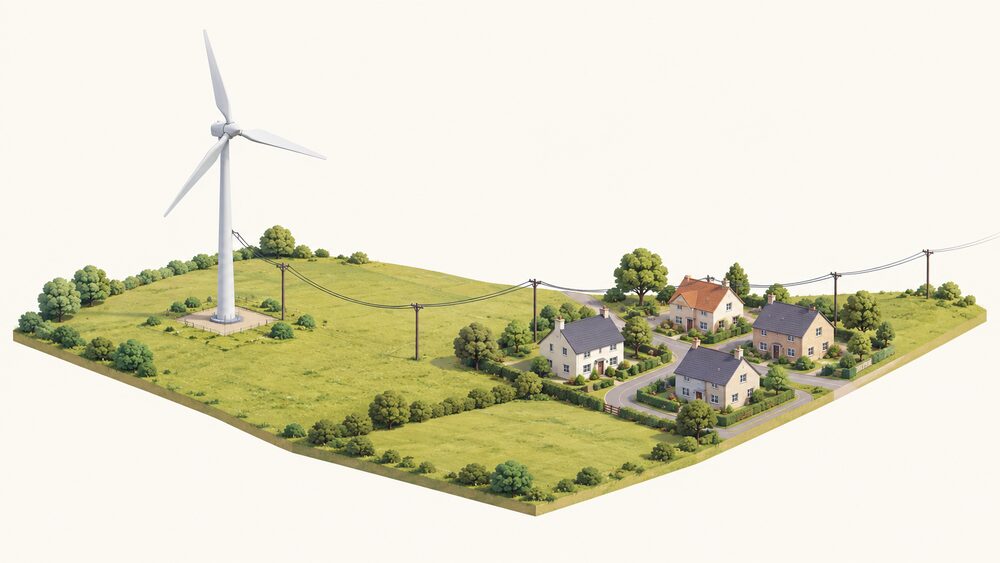
A community wind or hydro scheme is a generating installation, typically a single turbine, a small cluster of turbines, or a run-of-river hydro plant, in which the local community holds an ownership stake. That stake can take several forms. The community may own the asset outright, may hold a share alongside a commercial developer, or may receive a guaranteed proportion of the project's revenue through a shared ownership arrangement. CARES explicitly funds shared ownership projects, meaning a community taking a stake in a development rather than building one alone1.
The distinction matters because the two models carry different risks. Outright ownership gives the community the full revenue but also the full construction, operation and maintenance burden. Shared ownership gives a smaller, more predictable return with less exposure to technical failure. Both are grid-connected: the electricity flows to the network and is sold, and the community's benefit is the income rather than the electrons.
Community hydro schemes follow the same logic. A run-of-river plant uses the natural fall of a watercourse without impounding it, and the community's return depends on flow and head rather than on wind speed. The technical requirements for a hydro scheme, including abstraction licences and environmental screening, are covered in the site's micro hydro power pages.
The Welsh Government's analysis of renewable energy to 2050 recommends a 10% offer for community ownership, meaning individuals and households, and a separate 10% of local ownership for any Wales-based organisation5. Those are recommendations from a consultation, not yet a statutory requirement.
Community wind and hydro schemes across the UK: Scotland, Wales and the rest
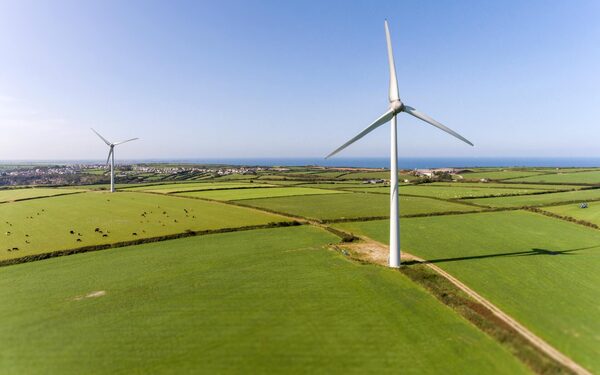
Scotland has the most developed community energy infrastructure in the UK. CARES provides a network of development officers across Scotland to give free, expert and impartial advice and support to community groups, charities and other eligible organisations seeking to explore their renewable energy options1. The scheme encourages community ownership of renewable energy projects and aims to ensure that delivery comes with benefits for people in Scotland1.
Wales has moved more recently. Ynni Cymru was established by the Welsh Government in 2023 to promote community ownership of renewable energy and drive Wales' transition to a low-carbon economy4. The Welsh Government has also consulted on a proposed public energy company that would aim to increase Welsh ownership of energy projects and help ensure that more of the economic benefits from Wales' energy resources flow to people, communities, businesses and public services in Wales6.
England and Northern Ireland have less dedicated community energy machinery. The Feed-in Tariff scheme, now closed to new applicants, applied in England, Wales and Scotland7. The Domestic Renewable Heat Incentive applied in England, Scotland and Wales8. The Energy Company Obligation applies in England, Scotland and Wales9. Northern Ireland runs its own Northern Ireland Sustainable Energy Programme, and its framework document states that solar PV, micro CHP, micro hydro and micro wind are not considered cost effective at this time for non-priority renewable funding10.
The practical consequence is that a community group in Scotland has a named scheme, a development officer network and a funding track record to draw on. A group in Wales has a newer programme with capital grant rounds. A group in England or Northern Ireland has to assemble support from a wider and less certain set of sources.
| Nation | Main community energy route | Status |
|---|---|---|
| Scotland | CARES, delivered by Local Energy Scotland | Operating, over 960 projects supported3 |
| Wales | Ynni Cymru | Established 20234 |
| England | No dedicated community scheme; general grant landscape | Feed-in Tariff closed to new applicants7 |
| Northern Ireland | NISEP; micro hydro and micro wind excluded from non-priority funding10 | Operating |
CARES: Scotland's scheme and its 2 GW community energy target
CARES was established in 2010 as a successor to the Scottish and Community Household Renewable Initiative11. The current contract period commenced in April 2021 and ran for a period of four years, to March 202511. The scheme's purpose is to encourage community ownership of renewable energy projects across Scotland, helping to maximise the benefits of renewable energy systems and ensuring that the delivery of community energy comes with benefits for people in Scotland1.
The target it supports is two GW of community and locally owned energy in Scotland1. That is a Scottish Government target, and progress against it is measured through the community and locally owned energy statistics. The figures have been revised: in April 2026, Energy Saving Trust revised the local authority owned solar thermal capacity, the reported headline capacity and progress towards the 2GW target following an error identified in a Local Authority Survey return13. Households reading capacity figures should note that the headline number has moved.
The scheme's reach has grown steadily. In 2021, CARES had offered funding of over £51 million and supported over 600 projects to develop, own or take a stake in local renewable energy projects across Scotland11. By 2025, that had risen to over £67 million in funding and over 960 projects supported, with 63 MW of renewable energy installed2. The number of organisations advised rose from over 1,200 to over 1,300 over the same period2.
"CARES has advised over 1,300 organisations and provided over £67 million in funding to communities throughout Scotland"
The growth in project numbers against a slower growth in installed capacity reflects the mix of what CARES supports. Much of its work is advice, feasibility and development support rather than capital installation, so a rising project count does not translate one-for-one into megawatts.
What CARES funds: grants, advice and development support
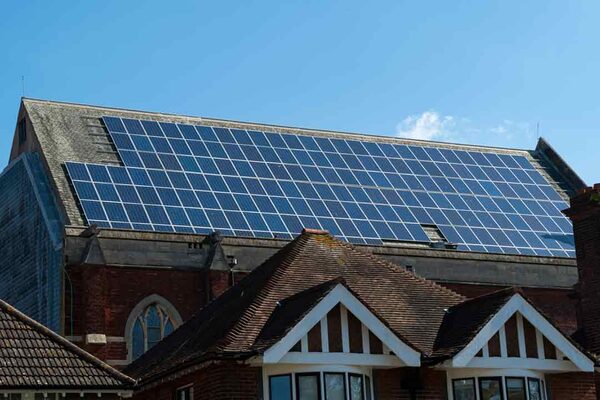
CARES funds both capital and non-capital activity. Enablement grant funding of up to £25,000 can be accessed in order to fund non-capital aspects of projects11. That covers the early work: feasibility studies, professional fees, business case development and the technical assessments a group needs before it can commit to construction. It is the stage at which most community energy ideas either become viable or stop.
Beyond enablement, CARES supports renewable energy, heat decarbonisation and energy efficiency projects, including shared ownership projects1. The scheme also provides dedicated guidance for repowering projects, including support on financing, evaluation and governance, as well as targeted support from Local Energy Scotland through CARES, including help to develop proposals1. Repowering matters because Scotland's earliest wind farms are reaching the end of their operational life, and the pilot scheme gives local groups across Scotland the chance to lease windfarm sites on publicly owned land managed by Forestry and Land Scotland1.
The first CARES community buildings funding round awarded over £2.6 million to 74 organisations to install renewable technologies in Scotland's community buildings5. That is a distinct strand aimed at the village hall, sports club and community centre end of the market, where the building itself is the energy user rather than a generation asset.
For households rather than community groups, the wider grant landscape is different. Energy supplier schemes and grants support making energy-saving improvements to your home14. In Northern Ireland, NI Energy Advice offers free advice on saving energy in your home, energy efficiency grants, and oil buying clubs15. The Warm Homes Plan provides funding, grants and loans for domestic PV installations and low carbon technologies such as solar panels, batteries and heat pumps16.
CARES by the numbers: over 960 projects and 63 MW installed
The headline figures for CARES are worth setting out plainly, because they are the best available measure of community energy activity in the UK.
| Measure | Figure | Date |
|---|---|---|
| Projects supported | over 960 | 20253 |
| Organisations advised | over 1,300 since inception | 20252 |
| Funding provided | over £67 million | 20252 |
| Renewable capacity installed | 63 MW | 20253 |
| Community buildings funding, first round | over £2.6 million to 74 organisations | 20225 |
The 63 MW figure is the installed renewable energy capacity attributable to CARES support3. For context, that is community and locally owned generation, not domestic microgeneration. It is a small fraction of Scotland's total renewable capacity, and it is the product of a scheme that has been running since 2010.
The project count and the capacity figure tell different stories. Over 960 projects supported against 63 MW installed implies an average of well under a tenth of a megawatt per project, which is consistent with a portfolio dominated by small installations, feasibility work and shared ownership stakes rather than large generation assets. The scheme's value is spread across many small projects rather than concentrated in a few large ones.
The funding total has grown from over £51 million in 2021 to over £67 million in 202511. That is a rise of roughly a third over four years, against a project count that rose from over 600 to over 960 over a comparable period11. The two figures come from documents of different dates, so they are best read as a trend rather than a precise series.
Ynni Cymru: Wales' community energy scheme
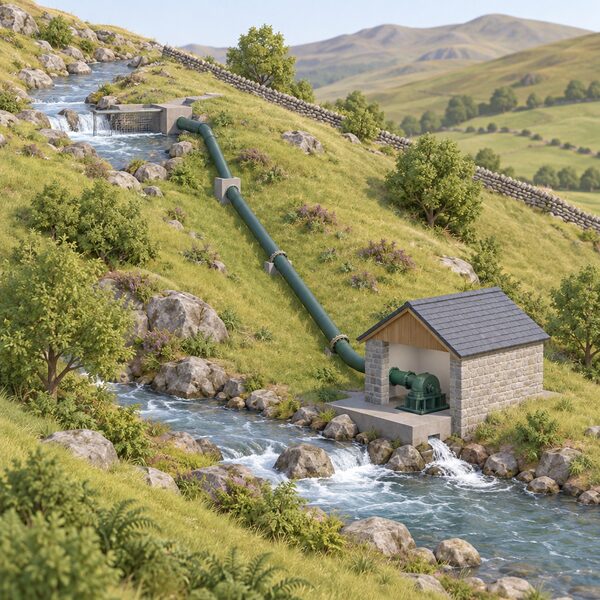
Ynni Cymru was established by the Welsh Government in 2023 to promote community ownership of renewable energy and drive Wales' transition to a low-carbon economy4. It is the Welsh counterpart to CARES, though younger and with a different funding structure.
The Welsh Government announced the third round of the Ynni Cymru Grant Capital Scheme for 2026-27, with £10 million available and applications opening in March 202617. The scheme guidance page was last updated on 21 May 202618. The capital grant scheme is the main funding vehicle for community-led energy projects in Wales.
Welsh policy on community ownership is more prescriptive than Scotland's in one respect. The Welsh Government's analysis recommends a 10% offer for community ownership, meaning individuals and households, and a separate 10% of local ownership for any Wales-based organisation5. It also recommends exploring how the distribution of Community Benefit Funds from large projects could be coordinated to generate the most value creation, retention and distribution of value5. Those are recommendations from a 2023 consultation, and the Welsh Government's stated position is that strong support for community ownership of renewable energy should support greater resources into community action and enterprise5.
The Welsh Government has also consulted on a proposed public energy company that would aim to increase Welsh ownership of energy projects and help ensure that more of the economic benefits from Wales' energy resources flow to people, communities, businesses and public services in Wales6. That proposal is separate from Ynni Cymru and is not yet an operating company.
For Welsh households, the practical community energy route runs through the Ynni Cymru capital grant rounds. The Green Homes Wales Scheme operates in domestic properties located in Wales and covers certain types of energy efficiency improvement measures and low carbon heating systems19. It works in conjunction with collective purchasing schemes being organised by a number of local authorities in Wales20.
UK Government support and the shared ownership right
The UK Government's community energy policy is in a transitional state. The Local Power Plan, published in February 2026, is designed to provide £1bn in funding for community-owned clean energy projects across the UK21. Great British Energy is due to start delivering direct financial support and enabling capacity and capability support to local government and community energy projects in 202621.
The shared ownership right is the more significant long-term change. Secondary legislation will be brought forward in 2027 to enact the Infrastructure Act 2015 provision for a community right to own a proportion of on and offshore renewable energy developments22. The Local Power Plan also includes a plan to consult in 2026 on a mandatory shared ownership offer to communities21. Neither is yet in force, and until the secondary legislation is made, shared ownership remains a voluntary arrangement negotiated between developers and communities.
In October 2025, over £5.5 million of combined grant funding from the Scottish Government and GB Energy was announced to support 46 community groups in Scotland, delivered through the CARES Community Energy Growth Fund managed by Local Energy Scotland23. That is the Community Energy Generation Growth Fund, and it represents the point at which GB Energy money began flowing into the existing Scottish delivery structure.
The wider renewable energy context is one of scale. Allocation Round 6 of the contracts for difference scheme secured 128 projects and 9.6 GW of capacity24. ScotWind involves 20 offshore wind projects with an average spend of £1.5 billion in Scotland across each project25. Community schemes are a small part of that picture, and the shared ownership right is intended to give communities a defined slice of it.
How a community gets started: eligibility and the development officer network
The starting point in Scotland is the CARES development officer network. It provides free, expert and impartial advice and support to community groups, charities and other eligible organisations seeking to explore their renewable energy options1. That advice covers the technical, financial and governance questions a group faces before it can apply for funding.
The eligibility boundary is drawn around organisations with a community benefit purpose rather than around individuals. CARES provides advice and funding to communities across Scotland, and its purpose is to encourage community ownership and ensure that delivery comes with benefits for people in Scotland1. Rural businesses and public sector organisations are not the primary audience, though the scheme's language does not exclude organisations that can demonstrate a community benefit.
The process typically runs in stages:
- Initial advice from a development officer on whether the site and technology are viable.
- Feasibility work, often funded by an enablement grant of up to £25,00011.
- Governance and financing work, including the legal structure for community ownership.
- Capital funding application, or negotiation of a shared ownership stake with a developer.
- Construction, commissioning and connection to the grid.
For repowering projects, there is dedicated guidance covering financing, evaluation and governance, plus targeted support from Local Energy Scotland through CARES, including help to develop proposals1. The pilot scheme gives local groups across Scotland the chance to lease windfarm sites on publicly owned land managed by Forestry and Land Scotland1.
In Wales, the equivalent route runs through the Ynni Cymru capital grant scheme, with applications opening in March 2026 for the 2026-27 round17. Welsh Government analysis recommends providing support for communities to develop smart local energy systems where these could help balance supply and demand or provide a solution where grid capacity is constrained5.
What owning a scheme means for household energy independence
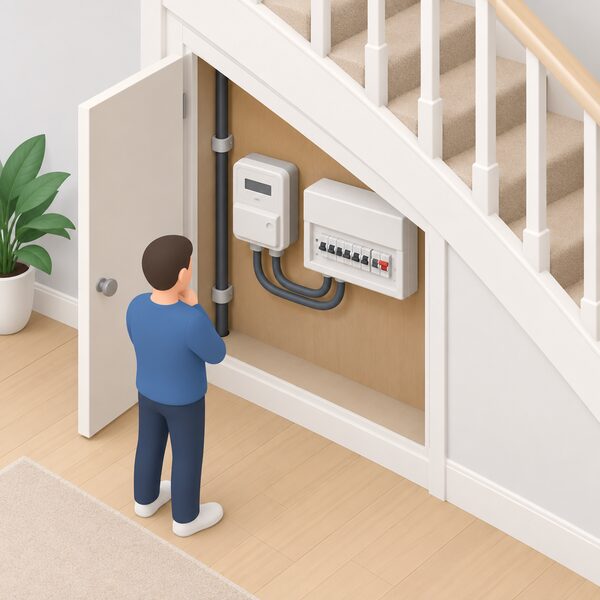
A community wind or hydro scheme changes a household's energy position in a specific and limited way. It does not disconnect the home from the grid, and it does not replace the household's electricity supplier. The household still buys its electricity, still pays standing charges, and still depends on the network. What the scheme provides is a local income stream, usually through a community benefit fund or a dividend, and a degree of collective ownership of generation.
The dependence that remains is substantial. The scheme itself depends on the grid to export its electricity, on a buyer for that electricity, and on the planning and licensing regime. A community hydro scheme depends on water flow and on abstraction licences. A community wind scheme depends on wind speed and on grid connection capacity. None of that is within the community's control.
For a household wanting a more direct form of energy independence, the route is domestic microgeneration rather than community ownership. The site's microgeneration pages cover micro wind, micro hydro, micro-CHP and fuel cells, and the microgeneration and energy independence page sets out what domestic generation can and cannot do. A household with a suitable watercourse should look at micro hydro power, and one with a suitable wind resource at domestic wind turbines.
The financial support landscape for households is separate from the community energy schemes. The Energy Company Obligation is a requirement placed upon energy companies to help improve the domestic energy efficiency of lower income homes, and Housing Benefit is a qualifying benefit under the Affordable Warmth route26. The scheme applies in England, Scotland and Wales9. The Social Housing Decarbonisation Fund was a grant funding programme for energy efficiency and low carbon heating measures, open to local authorities and social housing landlords in England, with Wave 2.1 proposing energy performance improvements to around 90,000 social homes27.
Public funding for decarbonising homes and businesses was £6.6 billion from 2021 to 2025, with a further commitment of £6 billion from 2025 to 202829. That is the wider pot from which both domestic and community schemes draw.
The honest summary is that community wind and hydro schemes deliver collective financial benefit and a visible local asset. They do not deliver household energy independence in the sense of a home that generates and stores its own power. A household wanting that has to look at its own roof, its own watercourse or its own off-grid system, and treat the community scheme as a supplement rather than a substitute.
Sources29 cited
- Local and small scale renewables, Scottish Government, 2026-09-17
- Scotland's Climate Change Plan 2026-2040, Scottish Government, 2025-11-06
- Tackling fuel poverty in Scotland: periodic report 2021-2024, Scottish Government, 2025-04-01
- £10 million to support community-led energy projects across Wales, Welsh Government, 2025-05-01
- Preparing Wales for a renewable energy 2050, Welsh Government, 2023-10
- Shape plans for a new clean energy company owned by Wales, for the benefit of Wales, Business Wales, 2026-09-07
- Feed-in Tariff annual report SY14, Ofgem, 2024-12
- Domestic RHI Essential Guide, Ofgem, 2024-06
- ECO4 government response, DESNZ, 2022-04-01
- NISEP Framework Document, Utility Regulator Northern Ireland, 2009-09
- Heat in Buildings Strategy: achieving net zero emissions in Scotland's buildings, Scottish Government, 2021-10-07
- Heat in Buildings Strategy 2022 update: progress, Scottish Government, 2022-10-31
- Community and locally owned energy in Scotland 2025, Energy Saving Trust, 2026-04-15
- Get help with your energy bills, Ofgem, 2026-09-17
- Cost of living and winter support, Belfast City Council, 2026-09-20
- Warm Homes Plan, House of Commons Library, 2026-06-25
- £10 million to help Welsh communities cut energy bills, Welsh Government, 2026-03
- Apply: Ynni Cymru capital grant funding scheme, Welsh Government, 2026-05-21
- Green Homes Wales Scheme loan standard terms and conditions, Development Bank of Wales, 2026-09-17
- £5 million to help Welsh households invest in greener homes, Welsh Government, 2026-03-05
- Local Power Plan evidence annex, DESNZ, 2026
- Shared ownership, Community Energy England, 2027
- Over £5.5 million to support community energy generation schemes, Community Energy Scotland, 2025-10-02
- Accelerating to net zero: responding to the CCC progress report, DESNZ, 2024-12-17
- Scotland's Climate Change Plan 2026-2040, Scottish Government, 2025-11-06
- Energy Company Obligation (ECO) scheme, Leeds City Council, 2026-09-20
- Social Housing Decarbonisation Fund Wave 1 impact evaluation, DESNZ, 2026-08-27
- Social Housing Decarbonisation Fund, DESNZ, 2024-05-13
- Heat pumps investment roadmap, DESNZ, 2021
 Community Energy in the UKWhat community energy means in practice, the legal structures used, and the types of project householders can join or benefit from.
 Hydropower and Pumped StorageExplains the UK's conventional hydro fleet, concentrated in Scotland and Wales, and the pumped storage schemes that store energy at scale.
 Community Energy in EnglandCommunity energy lets neighbours own their own power together, often through solar panels, and share the money it makes.
 Community Energy StatisticsHow much of the UK's energy comes from projects owned by local people, and is that number growing?
 Community Energy in ScotlandCommunity energy in Scotland lets you join a local scheme for cheaper, greener heat and power, or get advice and funding to make your own home warmer and cheaper to run.
 Community Energy in WalesWales wants more of its energy owned by local people, not big companies.