
In this guide
The Microgeneration Certification Scheme is the UK's certification scheme for microgeneration installation companies and products, covering small-scale renewables from solar panels and heat pumps to small wind turbines1. It sets and maintains technical standards for installations and products, certifies installers and products against those standards, issues MCS certificates for completed eligible installations, and assists certification bodies in addressing consumer issues2. For micro wind, that means a product standard (MCS 006), installation standards that an installer must be certified against (MIS 3003 for wind), and the MCS 020 planning standards that permitted development rights in England, Scotland and Wales point to by name.
For a household the practical answer is this: MCS certification is not a legal requirement to own a wind turbine or a hydro scheme, but it is a gateway. Export payments under the Smart Export Guarantee require a solar PV, wind or micro-CHP installation up to and including 50 kW to be certified under MCS or an equivalent scheme and installed by an MCS or equivalent installer3. Permitted development rights for domestic wind turbines require compliance with the MCS planning standards or an equivalent5. And access to many UK government incentives depends on using a certified installer6.
Micro hydro sits awkwardly in this structure. MCS product certification for electrical technologies is capped at 50 kW7, and under the Feed-in Tariff all hydro installations, at any size, were accredited through the ROO-FIT route rather than the MCS route8. Home Energy Scotland states that a renewables system funded through its grants and loans must use an MCS installer and an MCS or Solar-Keymark certified product, "except for micro-hydro systems which will be assessed on a case-by-case basis"9. Hydro householders should expect an assessed, negotiated route rather than a tick-box certificate.
What MCS certification is and what it covers
MCS is an independent certification scheme for microgeneration installation companies and products17. It is described by government guidance as government-backed, and by MCS itself as the UK's quality mark for renewable energy systems18. It certifies low-carbon products and installations used to produce electricity and heat from renewable sources2, and its quality mark shows that a product, or an installation including one or more MCS certificated product, meets requirements defined in the MCS standards19.
Two strands run in parallel. Product certification tests the hardware: MCS certified installers use MCS certified small wind turbines, meaning the product has been tested for quality, reliability and performance20. Installer certification covers the company: certified installers must follow the criteria set out in the MCS Installation Standards and install to industry-recognised standards while adhering to recognised safety practices21. Certification is technology specific. MCS will not consider a complaint where the installer "was not MCS certified for the renewable technology you've had installed at the time of the installation"14, so a firm certified for solar PV is not thereby certified for wind.
MCS is based at Sci-Tech Daresbury in Cheshire, and profits made by MCS fund the MCS Foundation's activities16. It facilitates Technical Working Groups, conducts research on industry developments and analyses updates to referenced standards22. It is also the approved certification scheme for the Clean Heat Market Mechanism23, and is reported as undergoing reform with greater industry involvement and a stated shift towards technical competence and installation quality24.
For independence, the lens matters. Certification makes a turbine or a hydro scheme legible to schemes and suppliers: it does not generate a single extra kilowatt hour. A household off grid with no export payment and no grant gains from MCS only the assurance of a tested product and a company under scheme oversight.
Wind and hydro under the 50 kW ceiling
MCS product certification for electrical technologies runs to 50 kW7. That threshold recurs throughout the schemes that reference MCS. Under the Feed-in Tariff, an MCS-FIT installation was a solar PV or wind installation with a declared net capacity at or below 50 kW, or a micro-CHP installation up to the 2 kW scheme maximum8. Ofgem guidance for licensed suppliers lists eligibility as "Wind with a declared net capacity of 50kW or less"25. Non-MCS certified installations of 50 kW or less of wind or solar PV were not eligible for FITs at all26.
Hydro is the exception that shapes the whole page. ROO-FIT installations were "solar PV and wind installations with a DNC above 50kW and all AD and hydro installations"8. Every hydro scheme, however small, went through the accreditation route rather than the MCS route.
| Technology | MCS route threshold | Route above it |
|---|---|---|
| Wind | DNC 50 kW or less8 | ROO-FIT accreditation8 |
| Solar PV | DNC 50 kW or less8 | ROO-FIT accreditation8 |
| Micro-CHP | up to 2 kW scheme maximum8 | not applicable |
| Hydro | no MCS route under FIT8 | ROO-FIT for all sizes8 |
The Smart Export Guarantee licence conditions repeat the ceiling: for installations of 50 kW or less generating from combined heat and power, solar photovoltaic or wind, the installation must be certified under MCS or an equivalent scheme and installed by an MCS or equivalent installer4. Government consultation material framed this as "minimum safety standards for consumer protection for generators with Solar PV, wind and mCHP installations up to and including 50kW"3. Scottish Government consultation material describes domestic micro-scale wind turbines as being under 50 kW capacity27.
One tax point is worth stating plainly because it is often assumed to follow certification: from 1 October 2019 the installation of wind and water turbines became standard rated for VAT28. Certification does not change that.
Further detail on the capacity bands and metering sits with selling electricity from a wind, hydro or CHP generator and the Feed-in Tariff for wind, hydro and micro-CHP.
MCS 006: the product standard for micro and small wind turbines
MCS 006 is the certification code for micro and small wind turbines10. In August 2024 MCS updated the standard to incorporate the RenewableUK Small Wind Turbine Standard (2014)11, aligning the scheme's testing requirements with the sector's own document. Manufacturers describe certification against the current standard as a distinct achievement: SD Wind Energy states that the SD6 Small Wind Turbine "has achieved the new MCS Product Certification Standard"30.
Certification under MCS 006 is what allows a turbine to be used in a certified installation. Certified installers use MCS certified small wind turbines, meaning the product has been tested for quality, reliability and performance20, and the resulting system will be "designed and installed in accordance with MCS Standards"20.
A separate document, MCS 020, carries the planning standards. Legislation defines the MCS Planning Standards as "the product and installation standards for air source heat pumps and wind turbines specified in Microgeneration Certificate Scheme MCS 020(a) and MCS 020(b) respectively"13. In 2025, England's permitted development legislation substituted a reference to MCS 006 with "MCS 020 b) - Wind Turbine Sound Calculation (For Permitted Development Installations)"31, which separates the sound calculation used for planning from the product testing standard.

There is no equivalent named hydro product standard in the same structure. For hydro the practical certification questions sit with abstraction and environmental consenting, covered in water abstraction licences and permits for home hydro.
Certification is written into permitted development rights
Wind turbines are unusual among microgeneration technologies in that the certification scheme is named in planning law. The Planning Portal states that development is permitted for a stand alone wind turbine only if the installation complies with the MCS Planning Standards (MCS 020) or equivalent standards5, and applies the same condition to building-mounted turbines32. The Microgeneration Certification Scheme "includes clear standards to support the installation of wind turbines and air source heat pumps" in this planning context.
In Scotland, Class 6G covers free standing wind turbines within the curtilage of a dwelling and requires that "the wind turbine must comply with MCS Planning Standards for wind turbines or equivalent standards"33. The same wording applies to Class 6HC, covering a wind turbine on a detached dwellinghouse33. Scottish Government Circular 1/2024 on householder permitted development rights restates it: "The turbine must comply with MCS planning standards for wind turbines or equivalent standards"34. Earlier policy notes phrase it as the turbine being installed in accordance with MCS planning standards applicable to domestic wind turbines or an equivalent standard.
Welsh legislation made in 2026 carries the same definition of MCS Planning Standards by reference to MCS 020(a) and MCS 020(b)13.
Network operator guidance summarises the permitted development test for householders: both types of turbine must meet the standard of the Microgeneration Certification Scheme, there must be no existing turbine or air source heat pump at the property, and the bottom of the turbine's blades must be at least five metres from the ground35.
The phrase "or equivalent standards" matters. It leaves room for a turbine certified to an equivalent scheme, but the burden of demonstrating equivalence falls on the applicant. Nation-by-nation detail is set out in the planning pages for England, Scotland, Wales and Northern Ireland.
What a certified wind installer must do and use

MCS 020 states the installer requirement for wind directly: "The wind turbine shall be installed by an MCS Contractor certificated in accordance with MIS 3003"12. MIS 3003 is therefore the installation standard a company must hold to install domestic wind under the scheme; MIS 3001 is the corresponding installation standard cited for hydro.
Beyond the technical standard, certified installers carry duties towards the customer. MCS installer rules include "a legally binding commitment to adhere to consumer protection law"36. The MCS Customer Commitment, issued January 2025, requires certified installers to comply with all relevant, current consumer protection legislation, with products of good quality, fit for purpose and as described15. Installers must:
- Follow the criteria in the MCS Installation Standards21
- Use MCS certified products in the installation20
- Keep the customer fully informed of products and services, the installation timeline and any delays
- Provide realistic estimates showing how the system is likely to perform, before a contract is entered into, that are truthful, accurate and complete15
- Give clear information on how to contact them with questions, concerns or complaints37
- Acknowledge a complaint within two working days and respond effectively37
- Keep records of all complaints received, along with the actions taken37
- Signpost customers to the MCS complaints process if they are unhappy with the outcome37
- Treat all customers fairly and respectfully, identifying and supporting consumers in vulnerable circumstances38
Certification also has a membership condition attached: a requirement of companies wanting to gain MCS certification is that they are members of a CTSI Approved Consumer Code of Practice scheme in the first instance39. MCS currently recognises two approved consumer codes.
Once commissioned, the installation is registered. Scheme specifications require that the installation be registered by the MCS Contractor on the MCS Installation Database no later than 10 working days after commissioning, with an MCS Certificate generated40; MCS tells consumers they will receive their certificate within 10 working days of completion. The certificate is proof that the installation is MCS-certified, and Ofgem guidance is explicit that certificates "should only be issued once the installation is fully installed and commissioned", with certificates issued before completion ineligible41.
As part of that process the installer gives the customer's name, address and contact details to MCS so that MCS can check how the installation has gone15.
Finding and verifying a certified installer
Certification can be checked free of charge. MCS states that an installer's certification can be confirmed "by checking our Find an Installer online tool or contacting our Customer Support Helpdesk"42, and the helpdesk number is 0333 103 813043. MCS also advises looking for the MCS Certified Mark for reassurance that an installer is certified44. The Energy Saving Trust operates a Renewables Installer Finder on which MCS certified installers can be searched by area with customer reviews45, and its general guidance points householders to the MCS find an installer tool46.
For wind specifically, the Energy Saving Trust recommends getting quotes from at least three different MCS certified installers47. The Renewable Energy Consumer Code advises ensuring that the company is certified by MCS, describing it as the government's product and installer certification scheme48.
Verification matters because the certified name and the company at the door are not always the same. In November 2025 MCS reported that installers under investigation had had "their ability to operate as a certified installer removed", and that in those cases "the certified installers did not carry out the installations"49. In an earlier case MCS confirmed that a named company "is not an MCS certified installer"50.
Design-stage predictions, not verified performance

This is the limit householders most often misread. Government analysis of the heat pump transition states plainly that "MCS requires installers to provide a design-stage prediction of system efficiency, not verify actual performance"51. The same analysis records that "MCS does not require remediation of systems that are underperforming relative to their design"51. The certificate confirms that a certified company installed a certified product to the scheme's standards; it does not confirm that the machine went on to produce the energy predicted.
What the scheme does require is honesty at the point of sale. Certified installers must provide realistic estimates showing how the system is likely to perform, before a contract is entered into, and ensure they are truthful, accurate and complete15. Citizens Advice describes the output: "If you use an MCS installer, they should give you a written 'performance estimate'. This will show you the highest and lowest amount of energy the installer thinks the new system might use over a year"52.
Product testing carries a similar boundary. MCS certified installers only use renewable technologies that have been tested for quality, reliability and performance in line with MCS Product Standards21. That is type testing of a model, not a warranty on the specific unit at a specific site. For wind, the site is decisive, and a design prediction rests on assumed wind speeds: see wind speed and siting for a home wind turbine and how much electricity a home wind turbine produces.
The government analysis also identifies what the standards do not reach: MCS "specifies handover documentation but not the quality of verbal explanation, household understanding, structured follow-up or ongoing support"51. For a wind or hydro owner who will be managing a generator for decades, that gap is real.
"MCS does not require remediation of systems that are underperforming relative to their design."
Consumer protection: complaints, time limits and dispute resolution
Using an MCS certified installer gives protection if something goes wrong44, and MCS states that it aims to put consumer protection at the heart of the scheme38. The process is sequential: contact the installer first, after which MCS acts as "your single point of contact for complaints about MCS certified installers or installations"14. MCS acknowledges a complaint within five working days53.
MCS will consider complaints about system performance and design, quality of work, incomplete installation, delayed installation, commissioning and handover, installer conduct, damage to property, mis-selling, contractual issues, issues with the product, and breach of the Customer Commitment14. A whistleblowing route exists for reporting illegal, unethical or harmful behaviour from a certified installer54, though MCS cannot help where a whistleblower provides no evidence14.
What MCS can do on a complaint includes communicating with third parties on the householder's behalf, sharing details with the installer's certification body and, where applicable, its consumer code, and referring the case to the Alternative Dispute Resolution provider it partners with if no agreed resolution is reached and the case meets the criteria, with MCS paying for that referral14. Its ultimate sanction, where an installer is not willing or able to install to a high standard in compliance with MCS requirements, is to withdraw the installer's MCS certification14. The MCS Installer Agreement, as described in June 2026, also "gives MCS the authority to directly suspend or withdraw installers who are falling short of expectations, particularly when it comes to consumer protection"55.
The limits are equally firm. MCS is "not accredited to offer dispute resolution and so won't be able to help directly anymore at this point" once a case passes beyond its remit53. It will not take a complaint where the installation was completed over six years ago, five years in Scotland, citing consumer protection legislation14, and Ofgem guidance states that for MCS certified installations the deadline "is no more than two years after the date that the system was commissioned"43. Where an installer is no longer certified or no longer trading, MCS states: "We can still review your complaint and let you know what options are available"14. A temporary suspension of an installer does not remove the right to complain14.
Ofgem guidance directs consumers to contact MCS over issues with the installation process, the installer, or the MCS certificate or product43, and its Feed-in Tariff dispute guidance states that if a complaint is not resolved, the MCS Administrator will advise how to make a complaint about the MCS installer56.
MCS support is available by phone, video call, email, live chat and post, with a Customer Support helpline open 8.30am to 4.30pm Monday to Friday38. MCS recognises that vulnerability can be permanent, transitory or temporary, provides alternative formats such as large font, will work with a trusted relative or friend of a consumer if requested, and signposts organisations such as Citizens Advice38.
What certification unlocks

Certification is a condition of entry to most of the public support that exists for household generation. MCS certified products and installers give access to government incentive schemes such as the Smart Export Guarantee and the Boiler Upgrade Scheme57; SEG applicants must show that their installation and installer are certified through MCS or an accredited equivalent scheme58. For grants, the installer must be from an MCS certified business to access schemes such as the Boiler Upgrade Scheme or Home Energy Scotland funding59, and Boiler Upgrade Scheme rules require that all installations be carried out by MCS-certified installers60.
| Scheme | MCS position | Relevance to wind or hydro |
|---|---|---|
| Smart Export Guarantee | MCS or equivalent certification of installation and installer, 50 kW and under4 | Applies to wind; hydro not listed in the 50 kW category4 |
| Feed-in Tariff (closed) | MCS route for wind at DNC 50 kW or less8 | All hydro went through ROO-FIT8 |
| Home Energy Scotland grants and loans | MCS installer and MCS or Solar-Keymark product required | Micro hydro assessed case by case9 |
| Boiler Upgrade Scheme | MCS certified installer, certified for heat pumps and/or biomass1 | Heat only, not wind or hydro |
Boiler Upgrade Scheme guidance also notes that where MCS contacts a property owner for additional checks, "Property owners should aim to respond within seven days"61.
Historically, installers had to be both MCS certified and a member of a CTSI approved Consumer Code to access incentives such as the Feed-in Tariff and the Renewable Heat Incentive62, and government registration guidance stated that to qualify for schemes such as the Renewable Heat Incentive or Green Homes Grant, installation contractors must be certified by MCS and install MCS certified products63.
The certificate itself is the record that the installation was done by a certified installer using certified products, and is required when accessing some grants and incentives20. Wider funding routes are set out in grants and funding for micro wind, hydro and micro-CHP and the microgeneration pillar.
Where certification leaves a household's independence
MCS certification improves the quality floor and opens the schemes, but it does not remove dependence. A certified wind installation still depends on the distribution network operator for a compliant connection, on a supplier for any export payment, on a manufacturer for spares, and on the continued trading of the installer for warranty work. MCS oversight ends at the boundaries described above: a design-stage prediction rather than verified output, no requirement to remediate underperformance, a six-year complaint window (five in Scotland), and no accreditation to resolve disputes itself.
For micro hydro, the dependence is different again: the absence of a routine MCS pathway means the scheme is assessed individually, and the consenting and environmental requirements, not certification, set the timetable. For an off-grid wind or hydro owner taking no grant and no export payment, certification is optional, and the trade-off is the loss of the scheme's complaints route alongside the freedom from it. Related reading: installing and maintaining a domestic wind turbine, small wind turbine standards and certification and micro hydro power for homes.
Sources63 cited
- Boiler Upgrade Scheme guidance for installers v5.1, Ofgem, 2026-07-02
- MCS consumers homepage, MCS, 2026-06-23
- The future for small-scale low-carbon generation, GOV.UK, 2019-01
- Smart Export Guarantee draft licence conditions, GOV.UK, 2026-09-17
- Planning permission for stand alone wind turbines, Planning Portal, 2026-09-17
- Solar panel grants and incentives, The CPA, 2026-05-21
- Certifying your product, MCS, 2026-05-18
- Feed-in Tariffs: generators, Ofgem, 2026-09-17
- Grants and loans, Home Energy Scotland, 2026-09-17
- MCS microgeneration certification, BSI, 2026-09-17
- Updates to four MCS product standards, MCS, 2024-08-02
- MCS 020 Planning Standards Issue 1.2, MCS, 2015-05-01
- The Town and Country Planning (General Permitted Development) (Amendment) (Wales) Order 2026, legislation.gov.uk, 2026-03-10
- Consumer complaints, MCS, 2026-09-07
- MCS Customer Commitment issue 1.0, MCS, 2025-01-01
- Scheme governance, MCS, 2026-07-06
- Boiler Upgrade Scheme, Ofgem, 2026-09-17
- Solar panel installation, Energy Saving Trust, 2026-09-07
- MCS product certification, Kiwa, 2026-09-17
- Small wind turbines, MCS, 2026-08-18
- Why MCS certification matters, MCS, 2026-08-17
- MCS working groups, MCS, 2026-07-06
- Clean Heat Market Mechanism, MCS, 2026-05-08
- Heat pump roundtable report, SNIPEF, 2026-02
- FIT guidance for licensed electricity suppliers v17.1, Ofgem, 2024-09-06
- Feed-in Tariff scheme factsheet, Ofgem, 2013-03
- Permitted development rights sustainability appraisal, Scottish Government, 2019-06
- VAT energy-saving materials guidance, HMRC, 2019-10-01
- MCS microgeneration certification, BSI, 2026-09-17
- SD6 achieves latest MCS product standards, SD Wind Energy, 2026-09-20
- The Town and Country Planning (General Permitted Development) (England) (Amendment) Order 2025, legislation.gov.uk, 2025-05-06
- Planning permission for building-mounted wind turbines, Planning Portal, 2026-09-17
- The Town and Country Planning (General Permitted Development) (Scotland) Amendment Order 2024, legislation.gov.uk, 2024-05-24
- Circular 1/2024: householder permitted development rights, Scottish Government, 2024-05-28
- Renewable energy FAQs, Electricity North West, 2023-02-23
- Low carbon landscape 2026, MCS, 2026-09-17
- Complaints handling for installers, MCS, 2026-05-13
- Our approach to supporting customers, MCS, 2026-09-07
- Renewable Energy Consumer Code, Chartered Trading Standards Institute, 2026-09-20
- Solar panel installation scheme specification, Sell2Wales, 2026-06-15
- Feed-in Tariff FAQ v5, Ofgem, 2018-12
- Be scam aware, MCS, 2026-06-09
- Domestic RHI: who to contact, Ofgem, 2026-09-17
- Your renewable installation, MCS, 2026-08-03
- Solar panels, Home Energy Scotland, 2026-09-20
- Generating renewable electricity, Energy Saving Trust, 2025-12-11
- Wind turbines, Energy Saving Trust, 2026-05-20
- Advice for consumers, Renewable Energy Consumer Code, 2026-09-17
- MCS certification removed from non-compliant installers, MCS, 2025-11-20
- Beware of junk mail and free solar PV letters, Renewable Energy Consumer Code, 2020-08-13
- Consumer-focused report on the heat pump transition, GOV.UK, 2026-05
- Find an installer for energy efficiency home improvements, Citizens Advice, 2025-04-04
- What to do if things go wrong, MCS, 2026-09-07
- Whistleblowing, MCS, 2026-05-13
- Ian Rippin on the future of consumer protection, MCS, 2026-06-22
- Feed-in Tariffs dispute resolution, Ofgem, 2026-09-17
- MCS at Everything Electric, MCS, 2024-01-29
- Smart Export Guarantee: earn money for exporting electricity, GOV.UK, 2020-01-01
- How to find a trustworthy installer, Nesta, 2025-01-21
- Boiler Upgrade Scheme guidance for property owners v5, Ofgem, 2026-04-28
- Boiler Upgrade Scheme guidance for installers v5, Ofgem, 2026-04-28
- Faulty or underperforming system FAQs, Renewable Energy Consumer Code, 2017-04-10
- Register energy devices in homes or small businesses, GOV.UK, 2021-03-31
 Small Wind Turbine StandardsA small wind turbine needs the right certificate before it can go up, and that affects whether you need planning permission and whether you can get paid for the electricity you send to the grid.
 MCS ExplainedMCS is the quality mark for solar panels, heat pumps and other home renewables.
 MCS CertificationWhy do so many installers and tariff schemes ask about MCS certification when you get solar panels?
 Installer QualificationsWhat training and qualifications should a heat pump installer actually have?
 G98 and G99 Grid ConnectionConnecting a wind turbine, hydro turbine or micro-CHP unit at home raises the question of whether it needs G98 or G99.
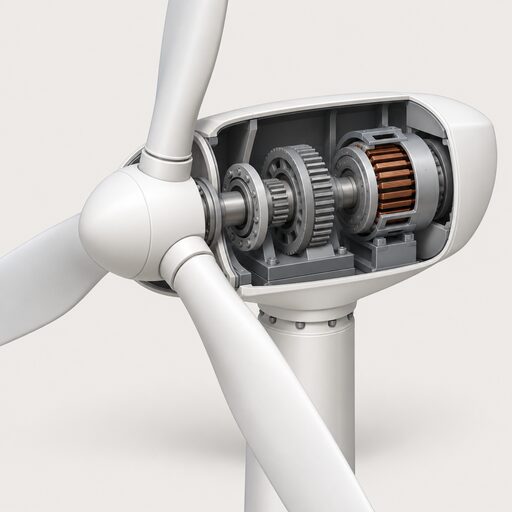 Domestic Wind TurbinesCan a wind turbine really power a home, and is your site windy enough?