
In this guide
The Feed-in Tariff (FIT) scheme is closed to new applications. It closed on 1 April 2019, and Ofgem states that all pathways for accreditation are now closed1. Anyone searching for a feed in tariff wind turbine rate today is looking at a scheme that no longer accepts applicants, but which still pays the households and landowners who accredited wind, hydro and micro-CHP installations before that date.
What continues is substantial. Accredited installations that meet their ongoing obligations receive tariff payments for both the renewable electricity they generate and the renewable electricity they export into the national grid2. Closure does not affect installations which are already accredited1. Across the scheme's lifetime, the installations supported through the FIT hold 6.5 GW of generating capacity3, and 73.7 TWh was generated during the lifetime of the scheme, of which 19.5 TWh was exported to the grid2.
For a household with an accredited turbine, hydro scheme or micro-CHP unit, the FIT is a long-dated, index-linked income stream tied to a fixed eligibility period. For everyone else, it is a closed route. The alternatives that remain, including the Smart Export Guarantee, sit outside this scheme and are covered elsewhere on this site.
The Feed-in Tariff scheme: what it was and why it closed
The FIT scheme was designed by government to promote the uptake of small-scale renewable and low-carbon electricity generation5. It was introduced on 1 April 2010 by the Department for Energy and Climate Change, and it replaced the Renewables Obligation as the main support for PV, wind and hydro installations with a declared net capacity of 50kW or less, the category the scheme called micro installations6. It operated across England, Wales and Scotland3.
The scheme closed to new applications on 1 April 2019, barring some exceptions in response to disruption caused by COVID-196. Different Ofgem documents give the boundary slightly differently: one states the scheme closed to new applications from 1 April 20191, another that it closed to new applications received after 31 March 2019, subject to certain conditions7, and a third that it closed to new applicants from 31 March 2019, subject to several time-limited extensions and grace periods8.
Those grace periods mattered at the margin. ROO-FIT installations which applied for pre-accreditation before 31 March 2019 retained their regular validity period in which to apply, including community energy installations, and MCS installations which commissioned and had an MCS issue date before 31 March 2019 could apply until 31 March 20209. Those windows have long since closed.
The reason the closure matters for energy independence is structural. The FIT was the mechanism that made a domestic wind turbine or a small hydro scheme financially legible to a household: a published rate, a fixed period, a licensed supplier obliged to pay. With the scheme shut, the support framework for new micro wind, hydro and micro-CHP moved to the Smart Export Guarantee and to installer-quoted arrangements, which is a different proposition for anyone weighing up a scheme today.
Wind, hydro and micro-CHP: the technologies the scheme covered and their capacity limits
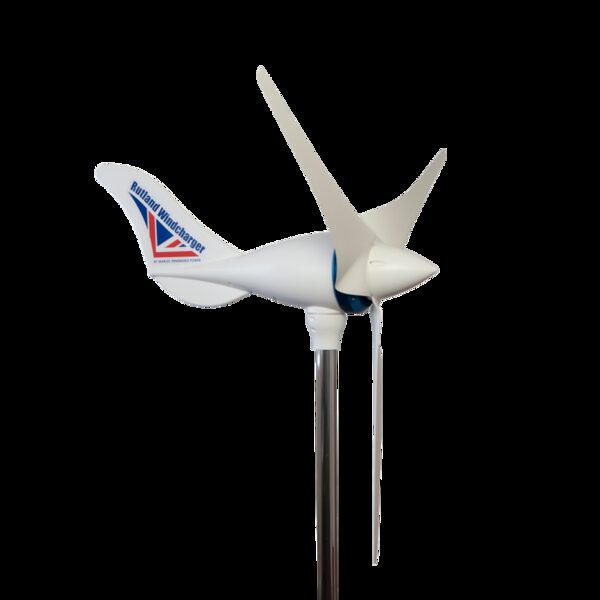
Anyone who had installed an eligible installation using one of the supported technology types could apply for accreditation: solar photovoltaic, wind, micro combined heat and power, hydro and anaerobic digestion10. Installations could have a Total Installed Capacity up to 5MW, or 2kW for micro-CHP3.
The capacity ceiling was not uniform. Installations using solar PV, wind, hydro and anaerobic digestion technologies were eligible up to 5MW11, while fossil fuel-derived combined heat and power was capped at 2kW, the category the scheme called micro-CHP7. The legislation underpinning the scheme describes it as supporting installations with a capacity of 5MW or less12.
Micro-CHP was treated as a pilot rather than a mainstream technology. A pilot programme was run to allow micro combined heat and power units to participate, provided their capacity was not greater than 2kW, and units had to be MCS fitted and accredited through the MCS13. An early statement of the scheme set the pilot ceiling at 2kW or less, up to a maximum of 30,000 eligible installations14. That cap on numbers is the clearest signal that micro-CHP was never expected to reach the deployment of wind or solar under the FIT.
| Technology | Capacity limit under FIT | Tariff period length |
|---|---|---|
| Solar PV | 5MW TIC11 | Quarterly15 |
| Wind | 5MW TIC11 | Quarterly15 |
| Hydro | 5MW TIC11 | Quarterly15 |
| Anaerobic digestion | 5MW TIC11 | Quarterly15 |
| Micro-CHP | 2kW TIC, pilot capped at 30,000 installations13 | Six monthly15 |
The distinction between quarterly and six-monthly tariff periods is not cosmetic. It determined how often a generator's rate could be reset by the deployment cap mechanism, and it is one of the reasons micro-CHP installations behave differently from wind and hydro in the scheme's records.
How FIT payments worked: generation and export tariffs, index-linked
Accredited installations that meet their ongoing obligations receive tariff payments for both the amount of renewable electricity they generate and the renewable electricity they export into the national grid2. The scheme requires participating licensed electricity suppliers to make payments to owners of installations accredited to the scheme for the electricity that their installations generate and export2.
Both generation and export tariff rates are index-linked, which means that they increase and decrease with inflation11. The adjustment is annual, based on the percentage increase or decrease in the Retail Price Index over the 12-month period ending on 31 December of the previous year16. Generation and export tariffs are adjusted every financial year by the RPI percentage increase or decrease over the previous calendar year17.
Payments are usually quarterly, based on meter readings submitted by FIT generators to their FIT licensee18. Where export cannot be measured on installations with a Total Installed Capacity of 30kW or less, export is deemed rather than metered: at 50% of generation for micro-CHP, AD, solar PV and wind, and at 75% of generation for hydro19. That hydro figure is the highest deemed rate in the scheme, reflecting the more predictable output of a well-sited water turbine.
The scale of the payment flow is visible in the scheme's accounts. In Scheme Year 13, FIT Generators were paid just over £1.63 billion, of which export payments to FIT Generators totalled £80,733,281, including £15,556,101 in metered export payments2. In Scheme Year 14, the value of the FIT scheme was almost £1.86 billion, which included £1.76 billion in generation payments and £78 million in export payments, an increase of £125.3 million (7.3%) compared to SY133.
"Both generation and export tariff rates are index-linked, which means that they increase and decrease with inflation."
Wind's share of the scheme: 7,546 installations and 11.90% of lifetime capacity
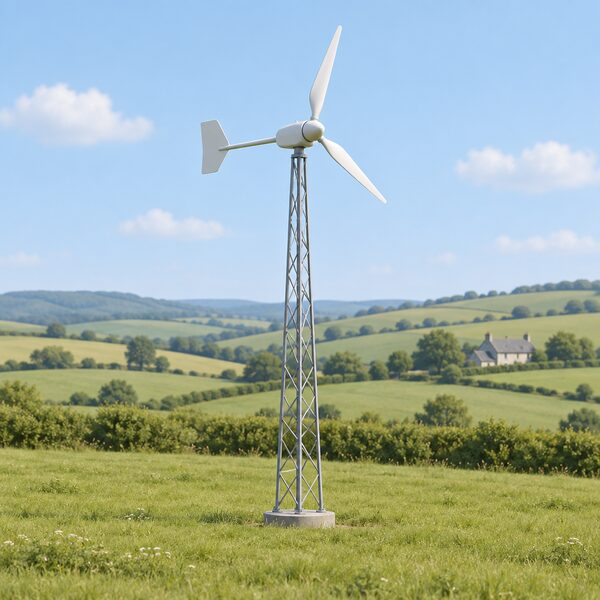
Wind was the second largest technology by capacity on the scheme, behind solar. At the end of Scheme Year 13 there were 7,546 wind installations on the register, with 1,273 MW of wind installed capacity2. By the end of September 2024, wind accounted for 11.90% of accredited capacity on the scheme20, a figure reported as 11.89% in the following quarter's data5.
The scheme as a whole was overwhelmingly domestic in count and mixed in capacity. Domestic installations account for the largest proportion of scheme accreditations at 95.38%, and 45.53% of capacity, or 2,955 MW3. Microgenerators make up 99.21% of accredited installations, accounting for 53.78% of installed capacity, with the remaining 46.22% coming from installations above 50kW3. Wind sits across both halves of that split, because domestic turbines and larger community machines were both eligible.
The cumulative picture is of a scheme that accredited 870,164 small-scale low-carbon installations over its life3. The total number of active accreditations in SY14 fell by 206 to 869,857, as installations reached the end of their eligibility periods and left the active count3. That decline is now the dominant trend: the number of new accreditations continues to fall following scheme closure, given accreditations were limited to the exceptions described in the guidance2.
For a household, the wind share matters less than the shape of the wind fleet. Wind installations are fewer than solar but larger on average, which is why wind's capacity share runs at roughly a fifth of its installation share. A domestic turbine is a capital-heavy, site-dependent asset, and the FIT's 20-year index-linked term was what made the arithmetic work for the households that installed one.
Where wind FIT installations are concentrated: Scotland's 42% share
Wind deployment under the FIT was not spread evenly. Over 42% of all FIT onshore wind installations are in Scotland2. Scotland with 65,432 installations is only eighth regionally in terms of installations accredited, but second in terms of installed capacity at 12.21%, and the average capacity of installations in Scotland is higher due primarily to the significance of onshore wind in the country compared to other regions2.
More recent quarterly data puts Scotland's share of scheme lifetime capacity at 12.25%, or 0.80 GW, and its share of installations at 7.52%21. The regional pattern is consistent across the scheme's history: there is a greater proportion of solar PV deployment in the south and higher levels of hydro and wind deployment in Wales and Scotland2. The highest proportion of installations and total capacity over 50kW was focused in Scotland and the South West, with the lowest around the North East and London2.
The South West, by contrast, leads on count and on overall capacity share, with the greatest number of installations at 123,307 and the highest proportion of installed capacity at 17.90% in the SY13 data2, reported as 123,256 installations and 17.86% of installed capacity in the SY14 annual report3.
| Region | Installations | Share of lifetime capacity |
|---|---|---|
| South West | 123,2563 | 17.86%3 |
| Scotland | 65,432 (SY13)2 | 12.25%, 0.80 GW21 |
The concentration in Scotland reflects resource, not policy preference: onshore wind in Scotland has the capacity factor to justify larger machines, and the FIT's capacity bands rewarded that. For a household in a low-wind region, the same scheme paid the same rates on a machine that would generate materially less, which is why the deployment map looks the way it does.
Hydro and micro-CHP under the scheme: smaller counts, different tariff periods
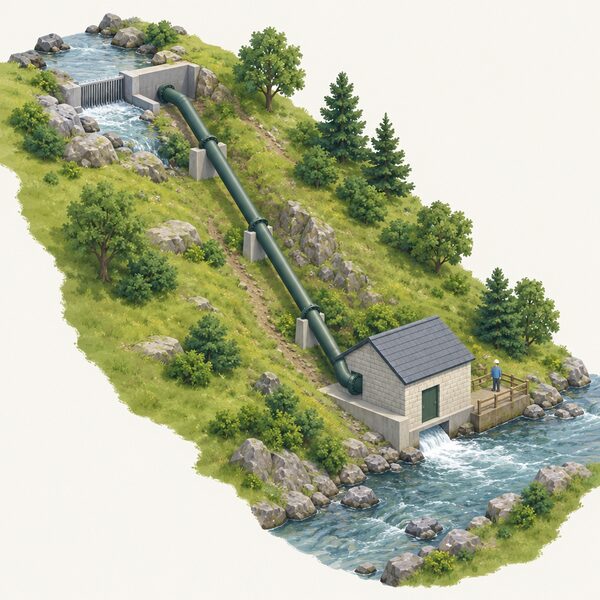
Hydro and micro-CHP were the scheme's smallest categories by count, and both were treated differently from wind and solar in the rules.
Hydro installations numbered 301 at the end of Scheme Year 13, with 772 MW of hydro installed capacity2. That capacity figure is large relative to the installation count because hydro schemes, even at the smaller end, tend to be larger per site than a domestic turbine. Hydro's tariff periods are quarterly, in line with solar PV, wind and anaerobic digestion: tariff periods for all solar photovoltaic, wind, hydro, and anaerobic digestion installations are quarterly15.
Micro-CHP is the outlier. Tariff periods for micro CHP installations are six monthly15, and the scheme's key terms define a tariff period as a repeating three month period for solar PV, wind, hydro and AD installations, but a repeating six month period for Micro CHP installations10. Except for CHP installations, which have 6 month long tariff periods6.
Support length differs too. FIT generators receive support for between 10 to 25 years depending on technology type, capacity, when their installation was commissioned, and whether it was previously accredited under the Renewables Obligation scheme4. Most generators accredited on the FIT are eligible to receive payments for a maximum period of 20 years following their eligibility date, and all micro-CHP installations have a maximum eligibility period of 10 years3. The expired installations reported in the scheme's quarterly data are all micro-CHP technology types which are eligible to receive support for 10 years4.
Regional reporting reflects how few of these installations there are. For some regions, micro-CHP, anaerobic digestion and hydro figures are not included in the breakdown due to low numbers of the technologies22. A household looking for a like-for-like comparison of hydro or micro-CHP deployment by region will not find one in the published statistics.
What closure means for existing generators: payments continue, obligations remain
The closure of the scheme does not affect the payments received by installations already accredited under the scheme23. Installations already accredited under the scheme will continue to receive payments, provided they meet their ongoing obligations6. Generator obligations under their statement of FIT terms, the terms and conditions they agreed with their FIT licensee, run for the duration of the eligibility period1.
The payment chain has protections built in. A Continuity of FIT Payments Direction may be issued to all Voluntary and Mandatory FIT licensees, ensuring that FIT generators receive payments which were previously missed by a failed FIT licensee17. If a generator receives payments from a FIT licensee that has failed, payments will not transfer automatically, and the generator must agree to a new statement of FIT terms with the new licensee and provide up-to-date meter readings before payments restart17.
FIT licensees are not obligated to make FIT payments until they are satisfied that the information is accurate and the eligible installation meets the necessary FIT requirements, that the installation has appropriate metering, that the necessary Central FIT Register entry and Ofgem confirmation email have been received, and that a statement of FIT terms has been agreed16. A FIT licensee shall not make any FIT payments if Ofgem informs it that an accredited FIT installation has been suspended or withdrawn11.
The Central FIT Register and how to check or query an installation's status

The Central FIT Register is the database of all accredited FIT installations managed by Ofgem2. It is a database of all FIT accredited installations5, and the published installation reports are based on the installations registered on it24. Ofgem's graphical data represents installations that have completed the FIT accreditation process and are on the Central FIT Register22.
Administration of the FIT scheme is split between Ofgem and FIT Licensees10. Much of the day-to-day administration is handled by FIT Licensees, including making FIT payments, taking and verifying meter readings, handling complaints and updating generator details10. FIT licensees must implement processes to detect abnormal generation and export meter readings before making FIT payments11, and Ofgem conducts annual audit programmes to ensure that suppliers and generators comply with the FIT scheme requirements2.
Ownership queries go through a defined route. An Ownership Register Query can be submitted to the Ofgem Central FIT Register team at FITOwnership@ofgem.gov.uk, and the requester will be required to provide documentary proof of identity or other appropriate documentation, as requested by Ofgem, before information can be released25. A FIT company can only provide details of an installation when the person requesting it has a legitimate claim over the ownership of the installation12.
For ROO-FIT installations, the generator must inform Ofgem, in addition to the FIT licensee, of any changes to the installation or its ownership by updating the Renewable Electricity Register17. The generator should first get the change noted on the Register by emailing the Renewables Team inbox at renewable@ofgem.gov.uk, and the team will send a transfer request form to complete and return with supporting documentation6. Where the installation is solar PV, the new generator will need to make a new multi-installation declaration6.
Disputes are narrower than many assume. Only the owner of the installation or those who have been assigned FIT Payment rights, known as nominated recipients, may complain or raise a dispute, although non-owners may still make certain information requests25. FIT Licensees must promptly inform Ofgem's Central FIT Register and the Counter Fraud team if they believe an error has occurred in relation to eligibility, or there is a possibility of fraud or abuse, before the next FIT payment is due6.
The scheme's lifetime record: 6.5 GW installed and 73.7 TWh generated
The FIT's lifetime totals are the clearest measure of what the scheme built. The installations supported through the FIT hold 6.5 GW of generating capacity3, a small increase of just under 5.01 MW on the previous year's total of 6.48 GW3. Over 6.48 GW of low carbon generating capacity was deployed under the FIT since its start2.
Generation over the scheme's life reached 73.7 TWh, of which 19.5 TWh was exported to the grid2. In Scheme Year 14 alone, a total of 8.3 TWh of renewable electricity was generated on the FIT scheme, a decrease of around 0.56 TWh (6.7%) from SY13 levels, and approximately 1.3 TWh was exported to the grid, 0.04 TWh higher than the previous year3.
The quarterly capacity series shows the scheme's slow drift as installations leave. Total accredited capacity stood at 6,490 MW at 31 December 202426, 6,492.7 MW at 31 March 202520, and 6,490 MW at 30 September 202421. The differences are small because the scheme is closed: capacity now moves only when installations are withdrawn or reach the end of their eligibility period.
| Measure | Figure | Period |
|---|---|---|
| Installed capacity | 6.5 GW3 | Scheme lifetime |
| Lifetime generation | 73.7 TWh2 | Scheme lifetime |
| Lifetime export | 19.5 TWh2 | Scheme lifetime |
| Generation in SY14 | 8.3 TWh3 | 1 April 2023 to 31 March 2024 |
| Export in SY14 | approximately 1.3 TWh3 | 1 April 2023 to 31 March 2024 |
| Scheme value in SY14 | almost £1.86 billion3 | 1 April 2023 to 31 March 2024 |
The scheme's legal basis is the Feed-in Tariffs Order 2012 as amended and conditions 33 and 34 of the Standard Conditions of Electricity Supply Licence3. That matters for anyone trying to understand what happens next: the obligations on licensees and generators are licence conditions and statutory instruments, not voluntary arrangements, which is why payments have continued through supplier failures and scheme closure alike.
Ongoing duties for FIT generators: reporting battery storage, metering and equipment changes
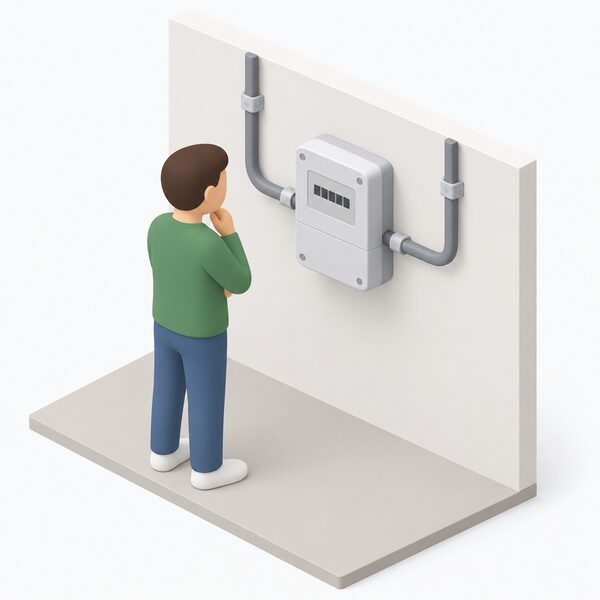
Payments depend on the generator keeping the record accurate. Replacing generating equipment, or adding capacity, must be reported to the FIT licensee1. The installation of battery storage with a FIT installation must be reported to the FIT licensee1, and replacing or moving of metering must be reported to the FIT licensee1. A generator must notify the FIT licensee of any modifications to an accredited installation that increase or decrease its total installed capacity from the same type of eligible technology17.
Metering is the generator's responsibility. FIT generators are responsible for registering with a FIT licensee, from whom they receive payments, and for providing meter readings and any other information that might be required about their installation17. It is the consumer's responsibility to ensure the generation meter, the meter which records the amount of energy generated, is recording accurately, to report suspected faults to the FIT company as soon as possible, and to arrange replacement by the company that originally installed it12.
Ownership changes carry their own process. A deceased account holder's spouse can take over the FIT generator account and continue receiving payments by submitting meter readings, relevant evidence and the FIT company's transfer of ownership form completed in full12. Switching licensee requires the generator to agree to a new statement of FIT terms with the new licensee and provide up-to-date meter readings before payments start17.
When installations reach the end of their eligibility period they are no longer classified as active installations and are not included in the figures reported2. Other technology types will start to reach the end of their eligibility periods on the FIT scheme from 2027, in Scheme Year 172. For a household with an accredited wind turbine or hydro scheme, the practical position is that the income is secure for the term, but it is not automatic: it depends on readings, notifications and an accurate register entry, and it ends on a date fixed at accreditation.
Sources26 cited
- Scheme closure, Ofgem, 2026-09-17
- Feed-in Tariffs Annual Report Scheme Year 13, Ofgem, 2023-12
- FIT Annual Report Scheme Year 14, Ofgem, 2026-09-17
- FIT Quarterly Report Issue 64, Ofgem, 2026-06-29
- FIT Quarterly Report Issue 63, Ofgem, 2026-03-30
- Guidance for FIT Generators V18, Ofgem, 2026-04-01
- Feed-in Tariffs Guidance for Renewable Installations V16, Ofgem, 2021-12-13
- Feed-in Tariffs Order 2019 impact assessment, legislation.gov.uk, 2019-06
- FIT FAQ v5, Ofgem, 2018-12
- Key terms explained: Feed-in Tariffs, Ofgem, 2026-09-17
- FIT Guidance for Licensed Electricity Suppliers V17.1, Ofgem, 2024-09-06
- Feed-in Tariffs, Energy Ombudsman, 2026-09-20
- Feed-in Tariff scheme factsheet, Ofgem, 2013-03
- FITs annual report 2011-2012, Ofgem, 2012-12-19
- Feed-in Tariffs deployment caps reports, Ofgem, 2026-09-17
- Guidance for suppliers v14, Ofgem, 2021-08
- Feed-in Tariffs: information for FIT generators, Ofgem, 2026-09-17
- Feed-in Tariffs Guidance for Licensed Electricity Suppliers V15.0, Ofgem, 2023-04-03
- Feed-in Tariff guidance for renewable installations v10.2, Ofgem, 2016-06-20
- FIT Quarterly Report Issue 58, Ofgem, 2025-03-31
- FIT Quarterly Report Issue 59, Ofgem, 2024-12-31
- Feed-in Tariffs quarterly statistics, Ofgem, 2026-09-17
- Guide to closure, Ofgem, 2020-09
- Feed-in Tariff installation report 30 June 2026, Ofgem, 2026-07-17
- Dispute resolution, Ofgem, 2026-09-17
- FIT Quarterly Report Issue 60, Ofgem, 2024-12-31
 Microgeneration and IndependenceWhat can you use when solar cannot cover winter evenings, and does it really make you independent?
 G98 and G99 Grid ConnectionConnecting a wind turbine, hydro turbine or micro-CHP unit at home raises the question of whether it needs G98 or G99.
 Solar Export PaymentsIf you have solar panels, how do you actually get paid for the electricity you send back to the grid?
 Small Wind Turbine StandardsA small wind turbine needs the right certificate before it can go up, and that affects whether you need planning permission and whether you can get paid for the electricity you send to the grid.
 Domestic Wind TurbinesCan a wind turbine really power a home, and is your site windy enough?
 Closed Energy PoliciesIf a scheme you used has closed, do you still get paid?