
In this guide
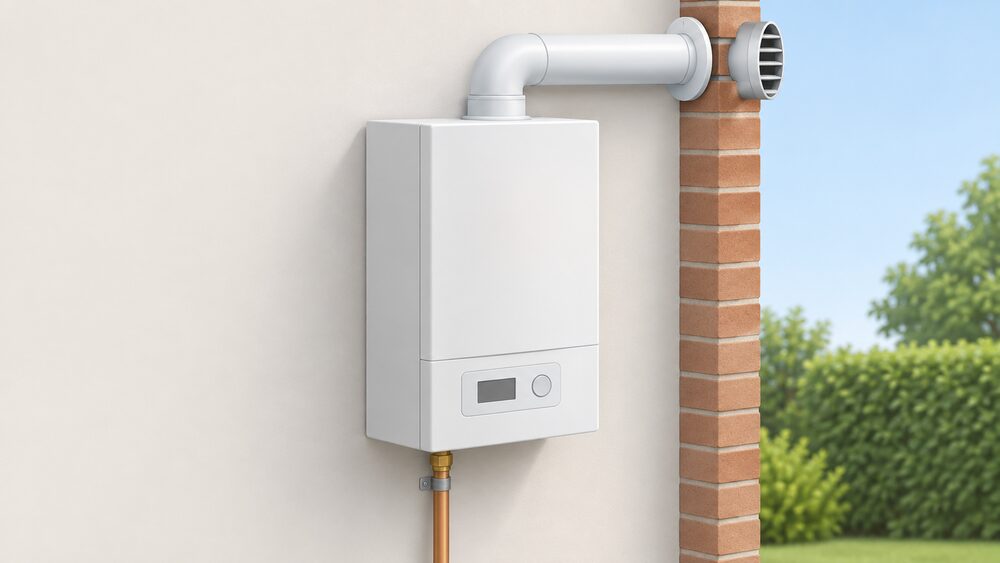
A micro combined heat and power (micro CHP) system is a home heating option that generates both heat and electricity from a single energy source1. It is a boiler first and a generator second: its primary function is to run central heating for the home, and it also produces heat and hot water while generating about 1kW of electricity as it runs2. The main output is heat, with some electricity generation, at a typical ratio of about 6:1 for domestic appliances3.
Three broad technology families reach the domestic market. Engines, which include Stirling, internal combustion, turbine and Rankine cycle designs, and fuel cells, which convert gas to electricity electrochemically rather than by burning it4. Stirling engine units are the type most often fitted in UK homes; internal combustion engines have higher electrical efficiency but are larger and mainly installed in commercial-scale applications3. Fuel cell micro-CHP has been in a pre-commercial state, with 15,000 fuel cells under test in Japan5.
The technology is a marginal one in the UK. Micro-CHP is not included in Feed-in Tariff capacity statistics because it makes up less than 0.001% of total installed capacity in one quarterly report and less than 0.002% in another6. It remains an eligible technology for the Smart Export Guarantee, so a household that installs one can be paid for what it exports, but the installed base is negligible beside solar PV and wind.
What micro-CHP is: heat first, electricity as a by-product
The defining feature of a micro-CHP unit is that it is not a power station that happens to make heat. It is a heating appliance that recovers electricity from the process. A micro CHP system generates both heat and electricity from a single energy source, and it can be set up to prioritise either heating or electricity, depending on your needs1. In practice the heat side dominates: the main output of a micro-CHP system is heat, with some electricity generation, at a typical ratio of about 6:1 for domestic appliances3.
That ratio is the single most important number for understanding the technology. For every unit of electricity the unit produces, it produces roughly six units of heat. A household buying a micro-CHP unit is buying a boiler, and the electricity is a by-product of the heat demand it was already going to meet.
Most types of mCHP are heat led, and the demand for heat coincides with the demand for power4. That coincidence is the reason the technology works at all: the unit runs when the house is cold, which is also when lights, appliances and heating pumps are drawing power. The electricity generated is used in the home first, reducing the amount imported from the grid, and any surplus can be exported.
The carbon case rests on efficiency rather than on fuel. While it uses fossil fuels, micro CHP is still considered a low-carbon option because it uses fuel more efficiently than separate heating and grid electricity1. That is a statement about the fuel it displaces, not about the fuel it burns: the unit still runs on gas, and the household remains connected to the gas main and to the electricity grid.
For a household's energy independence, the position is mixed and worth stating plainly. A micro-CHP unit reduces the amount of electricity drawn from the grid, because generation happens inside the home at the moment of heat demand. It does not remove dependence on the gas network, on a gas supplier, or on the grid for the hours when the heating is off. It is a partial substitution, not a severance.
Stirling engine, fuel cell or combustion: the types of micro-CHP
The generic term mCHP covers a multitude of technologies broadly divided into engines and fuel cells4. Within the engine family, the designs named in the sources are Stirling, internal combustion, turbine and Rankine cycle4. Each converts the same gas into heat and electricity by a different route, and the route determines the size, the electrical efficiency and the applications the unit suits.
Stirling engine. An external combustion engine: heat is applied to the outside of a sealed cylinder, and the gas inside expands and contracts to drive a piston coupled to a generator. It is quiet, has few moving parts, and suits the domestic scale. The trade-off is electrical efficiency, which is lower than an internal combustion engine of the same output.
Internal combustion engine. The engines can have a higher electrical efficiency than a Stirling engine, but are larger and mainly installed in commercial-scale applications3. This is the technology of the large CHP installations that have been in use for some time in Northern Ireland in large scale installations such as hospitals and leisure centres2. It is not the design a household buys.
Fuel cells. A fuel cell converts the chemical energy of a fuel directly into electricity, without combustion, and produces heat as a by-product. Micro CHP is in a pre-commercial state, with 15,000 fuel cells under test in Japan5. Fuel cell units have been offered to UK households, and the technology is the subject of its own certification and performance questions.
Turbine and Rankine cycle. These are the remaining engine variants named in the technology classification4. They are not the designs that reach domestic kitchens in volume.
| Type | How it makes electricity | Typical scale | Electrical efficiency |
|---|---|---|---|
| Stirling engine | External combustion drives a piston | Domestic | Lower than internal combustion3 |
| Internal combustion | Fuel burned in a cylinder | Commercial | Higher than Stirling3 |
| Fuel cell | Electrochemical conversion, no combustion | Pre-commercial, domestic trials5 | Not stated in the sources |
| Turbine and Rankine cycle | Working fluid drives a turbine | Not domestic in the sources4 | Not stated in the sources |
The practical consequence for a household is that the choice is narrow. The Stirling engine is the design that has been sold as a domestic boiler replacement, and the fuel cell is the design that has been offered as a premium alternative. The internal combustion engine belongs to a different scale of building.
How much electricity a domestic unit actually produces: around 1 kW once warmed up
A typical domestic system will generate up to 1kW of electricity once warmed up3. Official guidance for Northern Ireland gives the same figure: it also generates about 1kW of electricity while it's running2. The two sources agree, and the qualifier matters as much as the number.
The unit does not produce 1kW from the moment it is switched on. It reaches that output once warmed up, which means the first minutes of a heating cycle produce less. Over a day, the electricity generated is the area under that curve, not the peak multiplied by the hours.
The amount of electricity generated over a year depends on how long the system is able to run3. This is the variable a household controls, and it is set by the weather and the occupancy pattern rather than by the specification of the unit. A home that heats for long periods through a cold winter will run the unit for many more hours than a well-insulated home that heats briefly, and will therefore generate more electricity, while burning more gas to do it.
The regulatory ceiling for the technology is 2kW. Installations could have a capacity of up to 5 megawatt, or 2 kilowatt for Micro CHP9. Guidance for Feed-in Tariff generators describes fossil fuel-derived Combined Heat and Power (CHP) up to 2kW or "microCHP"10. A domestic unit therefore sits well inside the definition, and the 1kW figure is the realistic operating output rather than the limit.
For energy independence, this is the honest arithmetic. A 1kW output running for a few hours a day offsets a meaningful share of a home's baseload, particularly in winter when the heating runs longest. It does not cover a home's demand, and it does not run at all in summer, when the heating is off and the household is entirely dependent on the grid.
Fuels: mains gas, LPG, oil and bio-liquids
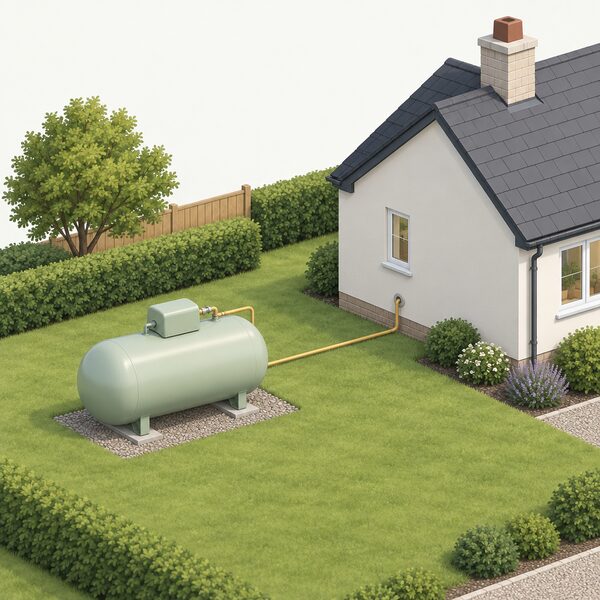
Micro CHP systems for homes typically use mains gas or liquefied petroleum gas (LPG) as fuel1. Official guidance for Northern Ireland states simply that a CHP unit is gas-fired2. Domestic micro-CHP systems are usually powered by mains gas or liquified petroleum gas (LPG), however some models are now available that run on oil or bio-liquids, including biodiesel3.
That gives three fuel routes, and the choice is usually made by geography rather than preference.
Mains gas. The default. The notional dwelling used in building regulations modelling has mains gas as its main heating fuel for space and water11, and the gas network reaches most UK homes. A gas micro-CHP unit connects to the same supply as a conventional boiler.
LPG. For homes off the gas main but with a storage tank. The permitted development regime includes liquid petroleum gas tanks as well as oil storage tanks12, so a tank installation can often proceed without a planning application. LPG is more expensive per unit of energy than mains gas, which changes the running economics of any gas appliance.
Oil and bio-liquids. Some models run on oil or bio-liquids, including biodiesel3. This is the route for the off-gas-grid household. Off-gas-grid households use a range of other fuels to heat their homes including heating oil, liquefied petroleum gas (LPG), solid fuels, mains electricity, and microgeneration13. Official statistics on the housing stock classify archetypes by main heating fuel, including oil and other solid fuel or LPG categories14, which confirms that a substantial part of the housing stock sits outside the gas network.
Where solid fuel is involved, the rules tighten. In a smoke control area, only authorised or certified manufactured solid fuels may be burned15. A bio-liquid unit is not a solid fuel appliance, but the point stands that fuel choice carries regulatory consequences as well as cost ones.
There is a hydrogen pathway in the technology's own literature. Micro CHP units that can operate on hydrogen are described alongside units providing heat and electricity from the current natural gas supply4. That is a statement about what the technology could do on a hydrogen grid, not about what is available to a household now.
Costs, installation and servicing compared with a standard boiler
A micro-CHP system will cost more than a traditional boiler3. That is the headline, and the sources give no figure to attach to it. Prices for micro-CHP units are installer-quoted, and no published UK price is available in the material behind this page.
Servicing costs and maintenance should be similar to a standard boiler, although a specialist will be required3. The reason for the specialist is that the unit contains both a gas appliance and a generator, so the engineer needs competence in both. The servicing interval is not stated in the sources; the comparison given is to a standard boiler, which is the reference point a household already knows.
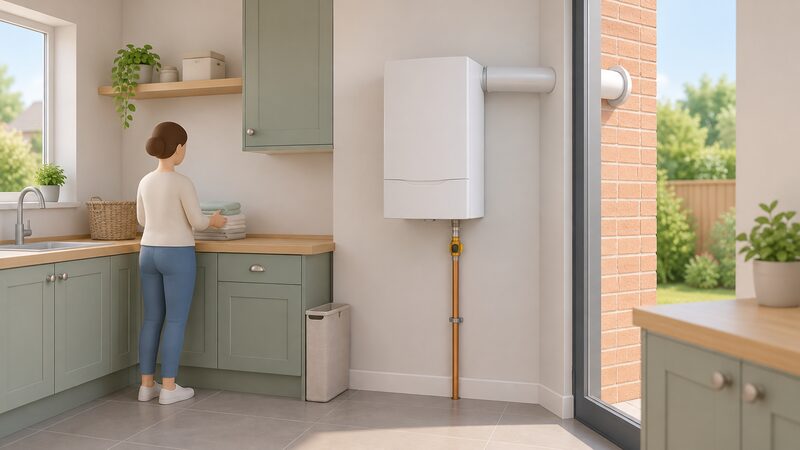
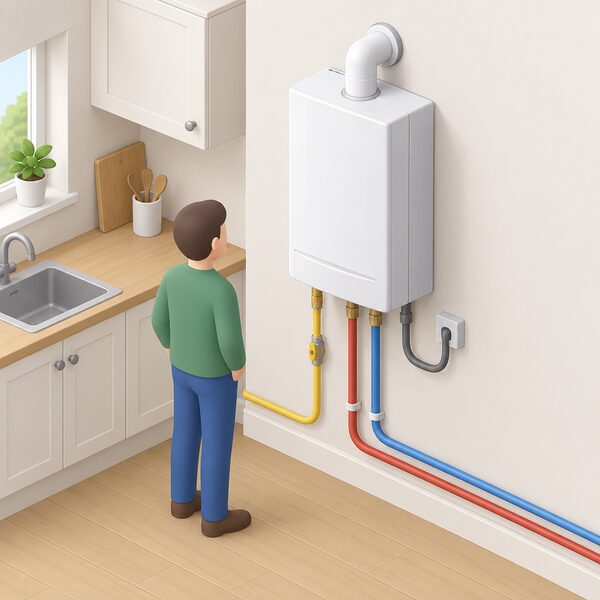
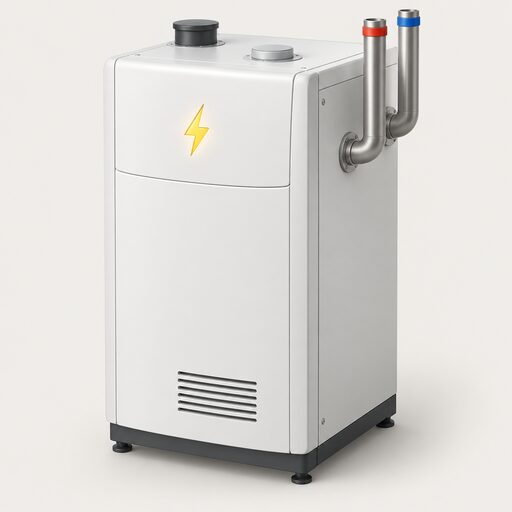
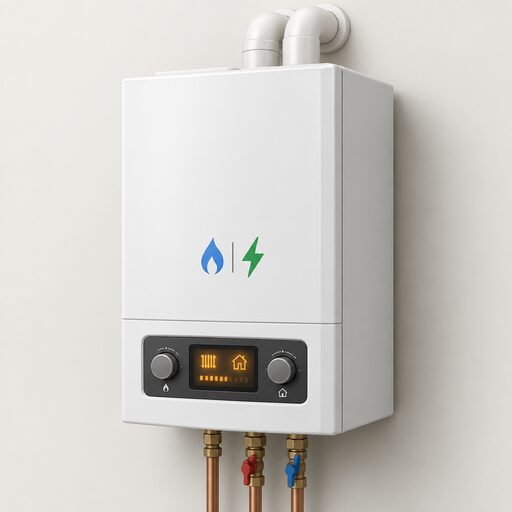
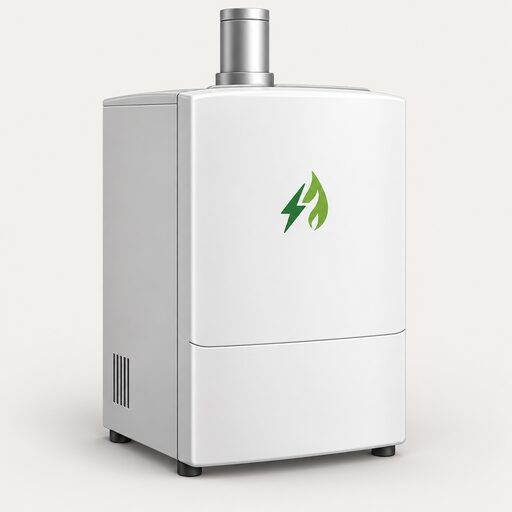
Installation is closer to a boiler swap than to a generation project. Micro CHP units are compact and come in similar sizes and styles to standard boilers, with options for wall-mounted or floor-standing installation1. If you already have a conventional boiler, then a micro-CHP unit should be able to replace it, as it's roughly the same size3. The unit takes the place of the boiler, connects to the same gas supply, and uses a flue.
The certification route is the same as for other microgeneration. Your new system will be designed and installed in accordance with MCS Standards, and certified installers use MCS certified micro CHP systems, which means the product being used has been tested for quality1. Micro combined heat and power units are eligible for certification under the Microgeneration Certification Scheme16.
| Item | Micro-CHP | Standard boiler |
|---|---|---|
| Purchase cost | More than a traditional boiler3 | Reference point |
| Servicing cost | Similar to a standard boiler3 | Reference point |
| Who services it | A specialist is required3 | Gas-safe engineer |
| Size and style | Compact, similar to standard boilers, wall or floor mounted1 | Wall or floor mounted |
| Certification | MCS Standards, MCS certified product and installer1 | Not applicable |
The cost comparison has to be read alongside the output. A household pays more up front for a unit that produces up to 1kW of electricity while it runs3. Whether that premium is recovered depends on how many hours the unit runs each year, the price of the gas it burns and the value of the electricity it displaces or exports. None of those is fixed, and the sources give no payback period.
Selling surplus electricity: SEG eligibility and export
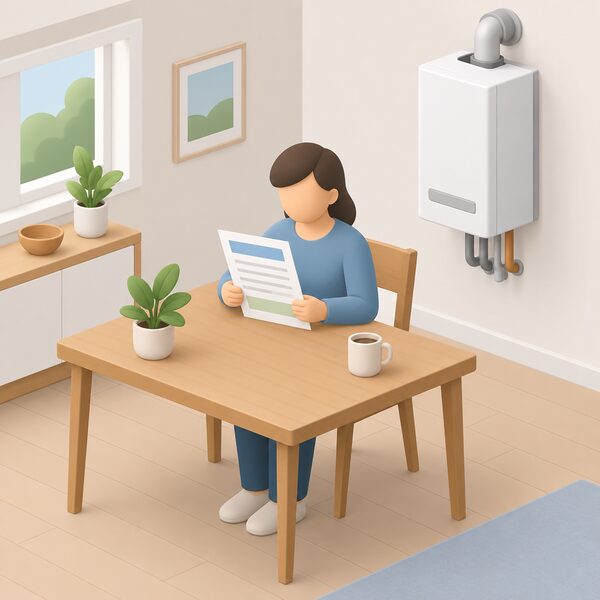
Micro combined heat and power (micro-CHP) is an eligible technology type for the Smart Export Guarantee17. The scheme exists so that a household can sell surplus electricity to the grid8. Anyone with an installation of one of the following technology types up to a capacity of 5MW, or up to 50kW for micro-CHP, can apply8. The eligible technologies are solar photovoltaic, wind, micro combined heat and power, hydro and anaerobic digestion8.
The capacity limit is generous relative to the technology. A domestic micro-CHP unit is defined at up to 2kW9, far below the 50kW ceiling for the technology under the SEG17. The limit is not the constraint on a household installation.
Certification is the constraint. For solar PV, wind and micro-CHP installations up to 50kW this will mean presenting a Microgeneration Certification Scheme certificate or equivalent18. The SEG and the government's previous Feed-in Tariff and Renewable Heat Incentive schemes all require the renewable energy installation to be certified and to meet MCS standards19. For low carbon heating, or solar panels to be eligible for the Warm Homes Plan scheme, they must be installed using a MCS approved product, by a MCS certified installer, to the relevant MCS installation standard20. To qualify for any government scheme including SEG and the Warm Homes Plan, the installer and installation must be certified21.
The practical sequence for a household is therefore:
- Choose a micro-CHP unit that holds MCS certification.
- Use an MCS certified installer, who will design and install to MCS Standards1.
- Keep the MCS certificate, which is what the SEG application requires18.
- Apply to a SEG licensee for an export tariff.
The Feed-in Tariff, the scheme that preceded the SEG, is closed to new applicants, and its micro-CHP capacity limit was 2 kilowatt9. Micro-CHP does not appear in the Feed-in Tariff quarterly capacity statistics because its share is below the reporting threshold6.
Planning permission and flue rules for micro-CHP
Planning permission is not normally needed when installing a micro-combined heat and power system in a house if the work is all internal22. The flue is where the rules begin to bite, because it is the part of the installation that sits on the outside of the building.
Fitting, altering or replacing an external flue, chimney, or soil and vent pipe is normally considered to be permitted development, not requiring planning consent, if the stated conditions are met23. The same wording appears in the Welsh guidance24 and in the Planning Portal's own flue guidance25. If the boiler or heating system requires the installation of a flue outside, then you may need planning permission, though it will normally fall under permitted development26.
The conditions matter. Flues on the rear or side elevation of the building are allowed to a maximum of one metre above the highest part of the roof22. In a conservation area or in a World Heritage site the flue should not be fitted on the principal or side elevation if it would be visible from a highway22. If the project also requires an outside building to store fuel or related equipment, the same rules apply to that building as to other extensions and garden outbuildings22.
There are exclusions. Changes of use and New Dwellinghouses are excluded from the flue allowances, which means converted houses or houses created through permitted development rights do not get the same freedom25. For buildings that are not dwellinghouses or blocks of flats, the installation, alteration or replacement of a flue forming part of a microgeneration combined heat and power system is covered by Class O of the permitted development legislation28.
Listed buildings and designated areas need a check before work starts. If the building is listed or in a designated area, even if you enjoy permitted development rights, it is advisable to check with your local planning authority before a flue is fitted, and consent is likely to be needed for internal alterations22.
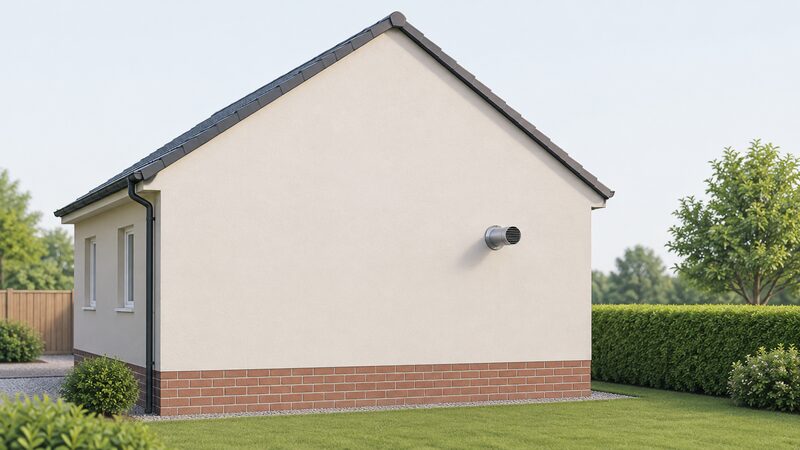
Two further rules apply to the installation itself. Adding electrical work or new installations, including small scale generators such as microCHP units, requires notification to Building Control29. And where a flue is fitted, the notice plate must convey the location of the hearth, fireplace or flue box, the category and generic appliance types, the type, size and manufacturer's name, and the installation date30. Plastic flue pipe systems must be appropriately designated in accordance with BS EN 14471:2005 to suit the appliance, fuel and flue characteristics30.
Where micro-CHP fits: homes and small offices, and its limits
The technology suits a building with a long, steady heat demand and a gas supply. A house with a conventional boiler and a gas main is the core case: the unit is roughly the same size as the boiler it replaces3, and it can be wall-mounted or floor-standing1. Small offices and commercial premises with similar continuous heat demand are the other natural fit, and it is at that scale that internal combustion CHP has been installed3.
The limits are structural rather than fixable by choosing a bigger model.
- It runs only when there is heat demand. The micro-CHP boiler will need to be on for it to generate any electricity3. No heat demand means no generation.
- Output is small. Up to 1kW once warmed up3, against a domestic baseload that can exceed that figure.
- The ratio is fixed by physics. About 6:1 heat to electricity for domestic appliances3, so the electricity is always the smaller product.
- It burns fossil fuel. While it uses fossil fuels, micro CHP is still considered a low-carbon option because it uses fuel more efficiently than separate heating and grid electricity1. The carbon benefit is relative, not absolute.
- The UK installed base is negligible. Micro-CHP makes up less than 0.001% of total installed capacity in one quarterly report6 and less than 0.002% in another7.
- Fuel cell units remain pre-commercial. Micro CHP is in a pre-commercial state, with 15,000 fuel cells under test in Japan5.
For energy independence, the honest summary is that a micro-CHP unit reduces the electricity a household imports while the heating runs, and gives it an export route for any surplus under the SEG8. It leaves the household connected to the gas network or dependent on a delivered fuel, dependent on a supplier for that fuel, and dependent on the grid for every hour the heating is off. It is a more efficient way to use a fossil fuel, not a route off the network.
Where a household is weighing the options, the comparison pages on micro-CHP versus a gas boiler and micro-CHP versus an air source heat pump set out the alternatives, and micro-CHP cost, output and running costs covers the economics in more detail. The wider picture of home generation technologies sits on the microgeneration pillar page.
Sources30 cited
- Micro CHP, MCS Certified, 2026-08-17
- Micro combined heat and power, nidirect, 2026-09-17
- Micro combined heat and power, Energy Saving Trust, 2022-08-05
- Micro-CHP technology classification, HHIC, 2018-08-24
- Microgeneration Strategy Scotland, Scottish Government, 2012-06-22
- Feed-in Tariffs Quarterly Report Issue 64, Ofgem, 2026-06-29
- Feed-in Tariffs Quarterly Report Issue 63, Ofgem, 2026-03-30
- Smart Export Guarantee, Ofgem, 2026-09-17
- Feed-in Tariffs, Ofgem, 2026
- Guidance for FIT Generators V18, Ofgem, 2026-04-01
- Approved Document L Volume 1 Dwellings, HM Government, 2026-09-17
- Fuel tanks, Planning Portal, 2026-09-17
- Off-gas-grid households, House of Commons Library, 2026-09-17
- Ofgem archetypes update 2024, Ofgem, 2024-02
- Smoke control area guidance, Welsh Government, 2025-07-30
- MCS Microgeneration Certification, BSI, 2026-09-17
- Smart Export Guarantee: generators, Ofgem, 2026-09-17
- Smart Export Guarantee Annual Report Year 5, Ofgem, 2025-12
- Microgeneration Certification Scheme, House of Commons Library, 2026-05-13
- Warm Homes: Social Housing Fund wave 3 scheme guidance, HM Government, 2026-06
- POSTnote: microgeneration, Parliamentary Office of Science and Technology, 2026-06-25
- Micro combined heat and power: planning permission, Planning Portal, 2026
- Flue, chimney or soil and vent pipe: planning permission, Planning Portal, 2026-09-17
- Planning permission: flue, chimney or soil and vent pipe, Welsh Government, 2026-09-17
- Flue, chimney or soil and vent pipe, Planning Portal, 2026-09-17
- Boilers and heating planning permission, Planning Portal, 2026
- Planning permission: micro combined heat and power, Welsh Government, 2026-09-17
- The Town and Country Planning (General Permitted Development) Order 2015, Schedule 2, Part 14, legislation.gov.uk, 2026-09-17
- Building Control application guidance notes, London Borough of Bromley, 2026-09-17
- Building Regulations Part J: heat producing appliances, Welsh Government, 2026-09-17
 Micro-CHP for HomesA micro-CHP boiler makes electricity while it heats your home, but only when the heating is on.
 Micro-CHP Cost and OutputDomestic micro-CHP costs more than a conventional boiler and produces roughly 1kW of electricity alongside its heat.
 Micro-CHP Performance TestingHow well a micro-CHP boiler performs in your home decides what you get paid and what you save.
 The Full Wind, Hydro and Micro-CHP GuideCould a small wind turbine or water wheel work at your home, and what about boilers that make their own electricity?
 Microgeneration and IndependenceWhat can you use when solar cannot cover winter evenings, and does it really make you independent?
 Which Homes Suit a Heat PumpMost UK homes can have a heat pump fitted, so the real question is whether yours makes it easy or expensive.