
In this guide
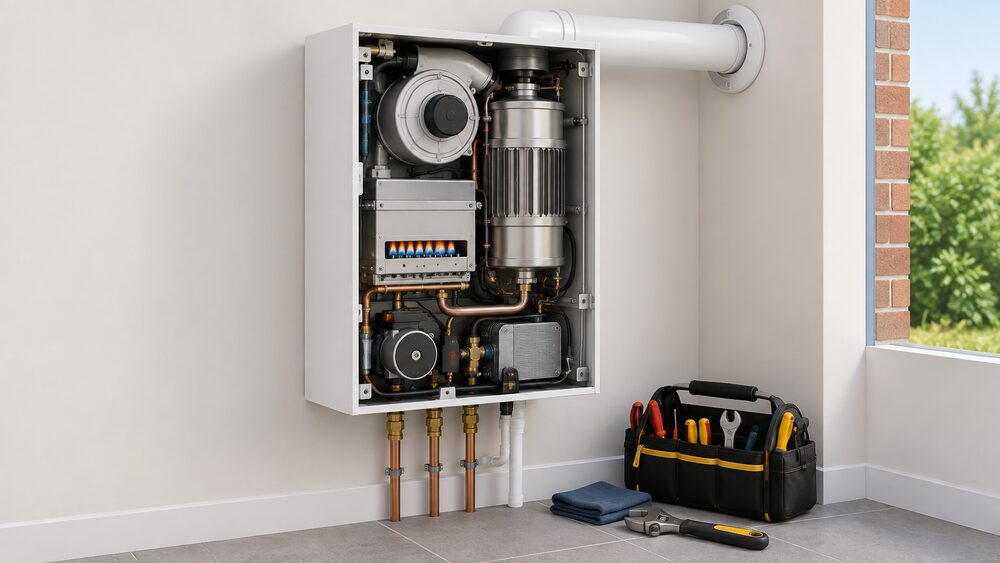
The Baxi Ecogen was the micro-CHP boiler most widely sold to UK households: a wall-mounted gas boiler with a Stirling engine inside that generated electricity as it heated the home. It is discontinued. Baxi no longer lists it among its domestic products, and no direct micro-CHP successor has taken its place in the company's range.
What the Ecogen did is still worth understanding, because the questions owners ask are practical ones. Official guidance describes micro-CHP of this type as generating about 1kW of electricity while it is running1, and the technology was eligible for Feed-in Tariff payments, with micro-CHP installations carrying a maximum eligibility period of 10 years2. Baxi sold three variants: the Ecogen 24/1.0, the Ecogen 24/1.0 LPG and the Ecogen System4.
For a household, the position is straightforward. An Ecogen in place today is a gas appliance that still needs gas, a gas supplier and a Gas Safe registered engineer, and it generates electricity only when it is firing for heat. It reduces the amount of electricity drawn from the grid, but it does not remove the grid connection, the gas connection or the dependence on a manufacturer for parts.
A discontinued product: what that means for owners
Discontinued does not mean withdrawn for safety reasons, and it does not mean the appliance must come out. It means the manufacturer has stopped selling it as a new product, so the routes that matter to an owner change: spares, technical support, warranty cover and the eventual replacement decision.
Baxi's current support position is set out on its repairs page. The company states that it offers servicing for boilers, filters, cylinders, air source heat pumps and more, and that repairs are carried out by Baxi Gas Safe registered engineers using Baxi Genuine Parts5. That is a general statement covering the ranges Baxi supports; it does not name the Ecogen, and no published list of Ecogen spare parts availability appears in the material reviewed. An owner should treat parts availability as the practical question, not the brand's willingness to attend.
The wider lesson from discontinued heating products is that guarantees and certificates can lapse independently of the appliance. Official guidance on approved innovation measures records products whose British Board of Agrément certificates have been withdrawn, including Smart Fix Systems RIRI (Aerogel), Q-Bot and Instaclad7. Those are insulation products rather than boilers, but the mechanism is the same: a third-party approval that a household may have relied on can be withdrawn while the installed product remains in place.
Where an installer has ceased trading, an Insurance Backed Guarantee exists to provide protection in the event the installer cannot honour the terms of their written guarantee, subject to policy terms and conditions8. That is the route that matters for workmanship cover on an older installation, and it is separate from any manufacturer's warranty on the appliance itself.
What the Ecogen was: a Stirling engine boiler that generated electricity
Micro-CHP uses fuel efficiently to create heat and electricity6. That single sentence is the whole idea: instead of burning gas only to make hot water, the appliance also produces a small amount of electrical power as a by-product of the heat it was already generating.
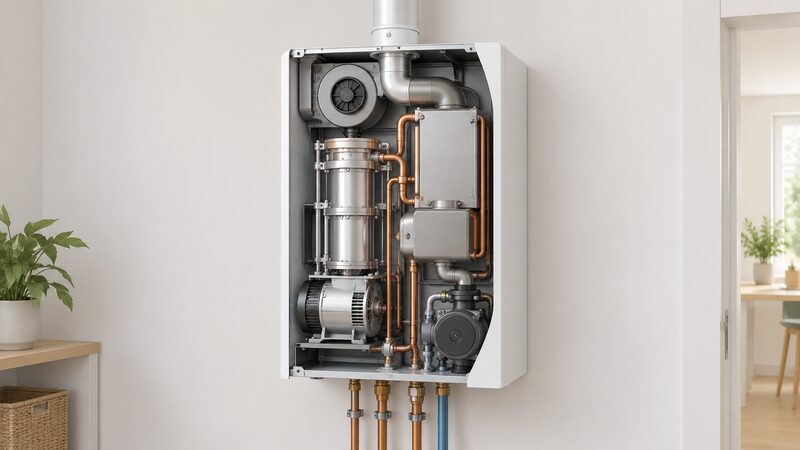
The Ecogen did this with a Stirling engine. Independent guidance describes Stirling engines as a normal boiler with a Stirling engine built in6. The engine sits in the flue path or beside the burner, driven by the temperature difference between the hot combustion gases and the cooler return water, and it turns a generator. There is no combustion inside the engine itself, which is why the technology is described as an add-on to a conventional boiler rather than a different kind of boiler.
That architecture explains both the appeal and the limits. The appliance still has a burner, a heat exchanger, a pump, a fan and a flue, so it needs the same annual servicing and the same Gas Safe registered attention as any other gas boiler. What it adds is a generator and its controls, which are the parts most likely to become unsupportable once a product leaves the catalogue.
The electrical side of a micro-CHP installation is not a plug-in affair. A generator connected to a home's wiring operates in parallel with the grid, and the engineering recommendation that governs single premises connections sets out the protection and interface requirements for that arrangement4. Any replacement or repair that touches the generating side of an Ecogen falls under those rules, not just the gas regulations.
The range: Ecogen 24/1.0, the LPG variant and the Ecogen System
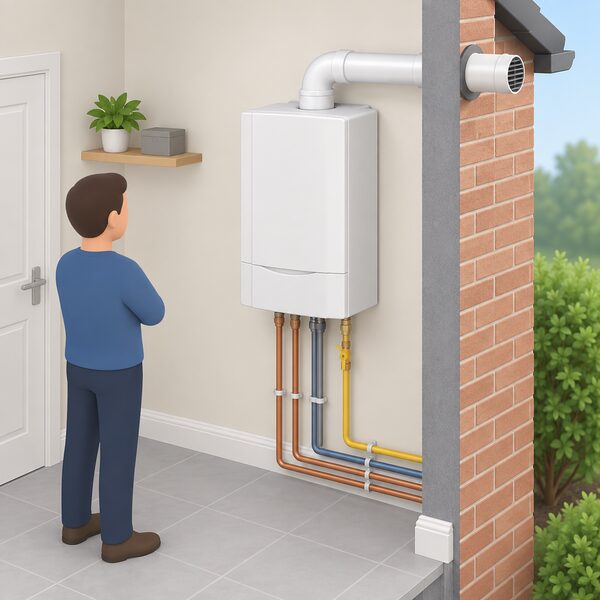
Three products were sold under the Ecogen name. The specific products are the Baxi Ecogen 24/1.0, the Baxi Ecogen 24/1.0 LPG and the Baxi Ecogen System4. The naming carries the key specification: 24 refers to the nominal heat output in kilowatts, and 1.0 refers to the nominal electrical output in kilowatts.
| Product | Fuel | Nominal heat output | Nominal electrical output |
|---|---|---|---|
| Baxi Ecogen 24/1.0 | Mains gas | 24kW | 1.0kW |
| Baxi Ecogen 24/1.0 LPG | LPG | 24kW | 1.0kW |
| Baxi Ecogen System | Mains gas | Not stated | Not stated |
The LPG variant matters for rural households. Micro-CHP systems for homes typically use mains gas or liquefied petroleum gas as fuel6, and LPG is a delivered fuel rather than a piped one, so an off-grid property running an Ecogen on LPG was dependent on tanker deliveries and a storage tank rather than a gas network. LPG emits 35% less CO2 than coal and 12% less than oil9, which is the environmental case for it against oil in off-grid homes, though it is not a zero-carbon fuel.
The Ecogen System variant was intended for installations with a separate hot water cylinder rather than instantaneous hot water. Baxi's current system boiler range continues that pattern, with the MainEco Compact System described as a cupboard fit boiler and the Megaflo Compact System described as compatible with market-leading Megaflo Eco cylinders10. Those are the products a household replacing an Ecogen System would be looking at today, and they are conventional boilers with no generating capability.
How much electricity it produced and how it fitted the home
The headline figure is about 1kW of electricity while the unit is running1. That is the instantaneous output, not a daily total, and the distinction is the whole story of micro-CHP performance.
Because the engine runs only when the boiler fires, annual generation depends on how many hours the home calls for heat. A household running the boiler through a long winter and using it for hot water will accumulate far more generating hours than a well-insulated flat with a short heating season. The technology was sized to match a home's heat demand, not to maximise electrical output, which is why the electrical rating is small relative to the heat rating.
Historic scheme data shows how small the installed base was. In the year to 31 March 2012, micro-CHP installations accredited under the Feed-in Tariffs scheme generated 241.9 MWh and exported 114.5 MWh11. Those are scheme-wide totals across all accredited micro-CHP in Great Britain, not figures for a single home, and they illustrate the scale of the technology rather than the output of one unit.
The capacity ceiling for the technology was set in the scheme rules. Micro-combined heat and power was defined as up to 2kW total installed capacity12, and micro-CHP installations of 2kW or less were handled under the MCS application process managed by FIT licensees13. The Ecogen's 1.0kW electrical rating sat comfortably inside that ceiling.
For a household, the practical effect was a modest reduction in imported electricity during the heating season. The unit did not store electricity, did not run when the heating was off, and did not remove the need for a grid connection. More on how these systems compare with other microgeneration options is set out in micro-CHP types and micro-CHP cost and output.
Efficiency and running characteristics compared with a standard boiler
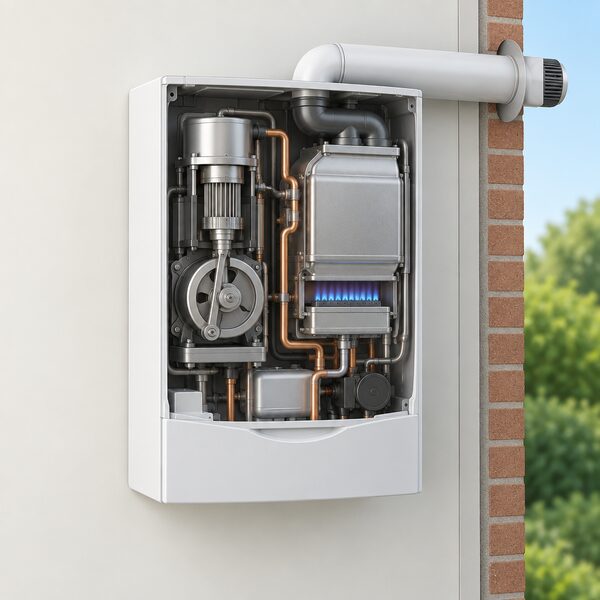
The Ecogen was a condensing boiler at heart, so its thermal efficiency was in the same territory as a conventional condensing appliance of its era. What differed was the overall fuel utilisation: because the unit produced electricity as well as heat, a higher proportion of the energy in the gas ended up as useful output rather than lost as heat in the flue.
That advantage is real but bounded. The electrical output is about 1kW against a 24kW heat output, so the generating side is a small fraction of the total. The efficiency gain depends on the electricity being used on site or exported, and on the boiler running long enough for the engine to contribute.
Running characteristics differ from a standard boiler in ways an owner would notice. A Stirling engine has moving parts that a conventional boiler does not, and it operates when the boiler fires, so the appliance carries the noise of both a burner and an engine. Independent guidance describes Stirling engines simply as a normal boiler with a Stirling engine built in6, which is accurate but understates the additional mechanical complexity.
For comparison, conventional boilers are marketed on quiet operation as a distinct feature. Quiet Mark lists the Vaillant ecoTEC pro boiler range14, the ecoTEC sustain combi range15, the ecoTEC plus combi range16, the ecoTEC plus combi boiler 202317, the ecoTEC exclusive Green IQ range18 and the ecoTEC plus system boiler range19. No equivalent listing applies to the Ecogen, and no published noise figure for it appears in the material reviewed.
Modern conventional boilers also carry features the Ecogen never had. The ecoTEC exclusive Green IQ range uses an Extra-Condense heat exchanger18, and the ecoTEC plus combi boiler 2023 is described as hydrogen prepared, suitable to work safely and efficiently with up to a 20% hydrogen mix17. Those are developments in the mainstream boiler market that arrived after micro-CHP's moment had passed.
Installation, servicing and spare parts today
Servicing an Ecogen today means finding an engineer willing to work on a discontinued micro-CHP appliance, and establishing whether the parts needed are still obtainable. Baxi's published position is that it offers servicing for boilers, filters, cylinders, air source heat pumps and more, with repairs carried out by Baxi Gas Safe registered engineers using Baxi Genuine Parts5. The company also publishes a fault code reference covering a wide set of current models, including the Baxi 600 and 800 combi and system ranges, the Baxi Assure range, the Baxi Platinum range, the Baxi Megaflo System and the Baxi EcoBlue range20. The Ecogen is not among the models listed on that page.
That absence is the practical signal. Fault diagnosis on a current Baxi boiler can be done against a published code list; on a discontinued model, diagnosis depends on the attending engineer's familiarity and on the manufacturer's technical support for a product it no longer sells.
Independent guidance on micro-CHP handover sets out what an owner should have received at installation: a list of the system's key parts, health and safety guidance, a recommended servicing and maintenance schedule, the manufacturer's instruction manual or manuals, and all relevant guarantees and warranties6. For an Ecogen owner, that documentation is now the most useful thing in the house, because it records the exact model, the installation date and the terms that applied.
Does the Ecogen qualify for feed-in tariff payments?
Micro-CHP was an eligible technology under the Feed-in Tariffs scheme. Anyone who had installed an eligible installation using one of the qualifying technology types could apply for accreditation, and those types were solar photovoltaic, wind, micro combined heat and power, hydro and anaerobic digestion2. The scheme required participating licensed electricity suppliers to make payments on electricity generated or exported by accredited installations21, and its purpose was to pay eligible installations for the generation and export of renewable and low carbon electricity22.
The terms for micro-CHP were less generous than for some other technologies. All micro-CHP installations had a maximum eligibility period of 10 years3, against the longer terms available to solar PV. Generators using solar PV, wind, hydro, anaerobic digestion and fossil fuel-derived combined heat and power were able to apply for FIT payments subject to eligibility requirements13, and micro-CHP capacity of 2kW or less was handled under the MCS application process managed by FIT licensees13.
The scheme is closed to new applicants, so an Ecogen installed now could not accredit. For an owner whose unit was accredited at the time, payments ran for the eligibility period that applied. Scheme statistics show how few micro-CHP installations there were: for some regions, micro-CHP, anaerobic digestion and hydro figures are not included in the breakdown due to low numbers of the technologies23, and 99.21% of accredited installations on the scheme are microgenerators, accounting for 53.78% of installed capacity3.
Export payments today sit under a different scheme. The Smart Export Guarantee covers installations of qualifying technology types up to a capacity of 5MW, or up to 50kW for micro-CHP24. The full history of the closed scheme is covered in the Feed-in Tariff for wind, hydro and micro-CHP, and current export routes in selling electricity from a wind, hydro or CHP generator.
Where micro-CHP fits in household energy independence
Micro-CHP changes one thing and leaves everything else in place. It generates electricity on site while the boiler runs, which reduces the amount imported from the grid during the heating season. It does not store that electricity, does not run without a call for heat, and does not remove the gas connection, the gas supplier or the grid connection.
The dependence it leaves is substantial. The fuel is mains gas or LPG6, so the household remains tied to a gas network or to delivered tanker fuel. The appliance needs a Gas Safe registered engineer and manufacturer parts, and for a discontinued model both become harder to secure over time. The generating side needs a connection agreement with the network operator, under the engineering recommendation covering single premises4.
The capacity limits that applied to micro-CHP also frame what it can do. Micro-combined heat and power was defined as up to 2kW total installed capacity12, and microgeneration legislation sets a 50 kilowatt ceiling for a system that generates electricity25. A microgeneration system is treated as itself an energy-saving material for the purposes of the relevant group26, which is the legal recognition that on-site generation counts as an efficiency measure.
For a household weighing options today, the routes that change the fuel rather than supplementing it are covered in micro-CHP vs a condensing gas boiler and micro-CHP vs an air source heat pump. Baxi's own current direction is visible in its product range: conventional gas combi, system and heat-only boilers, plus the Amptec S, described as a state-of-the-art electric system boiler providing an energy-efficient alternative heating and hot water solution to gas27. Baxi heating boilers and Glow Worm boilers are British-made28, which keeps the supply chain for parts and service domestic.
Funding for home energy improvements runs through separate schemes. ECO4 Flex focuses on supporting low income and vulnerable households and improving the least energy efficient homes29, and there are a number of schemes available on the ECO Flex website to help fund necessary home energy improvements30. The Clean Heat Grant scheme offers upfront capital grants to enable the installation of heat pumps and, in limited circumstances, biomass boilers31. None of these funds a replacement micro-CHP boiler, because none is sold.
The wider picture of where micro-CHP sits among home generation technologies is set out in microgeneration beyond solar and in micro-CHP performance testing and certification.
Sources31 cited
- Micro-combined heat and power, nidirect, 2026-09-17
- Feed-in Tariffs (FIT), Ofgem, 2026-09-17
- Feed-in Tariffs Annual Report Scheme Year 14, Ofgem, 2026-09-17
- G98 Single Premises, Energy Networks Association
- Repairs, Baxi, 2026-09-17
- Micro CHP, MCS Certified, 2026-08-17
- ECO4 innovation approved innovation measures, Ofgem, 2026-02
- Insurance Backed Guarantees, Flexi-Orb, 2026-02-25
- LPG in the home, Liquid Gas UK, 2026-09-20
- System boilers, Baxi, 2026-09-17
- Feed-in Tariffs Annual Report 2011-2012, Ofgem, 2011
- Feed-in Tariffs FAQ, Ofgem, 2016-07
- Feed-in Tariffs Annual Report Scheme Year 13, Ofgem, 2023-12
- Vaillant ecoTEC pro boiler range, Quiet Mark, 2026-09-17
- Vaillant ecoTEC sustain combi boilers, Quiet Mark, 2026-09-17
- Vaillant ecoTEC plus combi boilers, Quiet Mark, 2026-09-17
- Vaillant ecoTEC plus combi boiler 2023, Quiet Mark, 2026-09-17
- Vaillant ecoTEC exclusive Green IQ, Quiet Mark, 2026-09-17
- Vaillant ecoTEC plus system boiler range, Quiet Mark, 2026-09-17
- Error codes, Baxi, 2026-09-17
- Feed-in Tariffs Quarterly Report Issue 63, Ofgem, 2026-03-30
- FIT Guidance for Licensed Electricity Suppliers V17.1, Ofgem, 2024-09-06
- Feed-in Tariffs Quarterly Statistics, Ofgem, 2026-09-17
- Smart Export Guarantee (SEG), Ofgem, 2026-09-17
- Microgeneration definition, legislation.gov.uk, 2026-09-17
- Energy-saving materials, legislation.gov.uk, 2024-02-01
- New Baxi Amptec S electric boiler, CIPHE, 2025-09-04
- Different boiler types, Uswitch, 2026-09-18
- Statement of intent for ECO4 and Great British Insulation Scheme, Birmingham City Council, 2024-08-26
- Minimum energy efficiency standards, Carmarthenshire County Council, 2026-09-20
- Energy terms explained, Ofgem, 2026
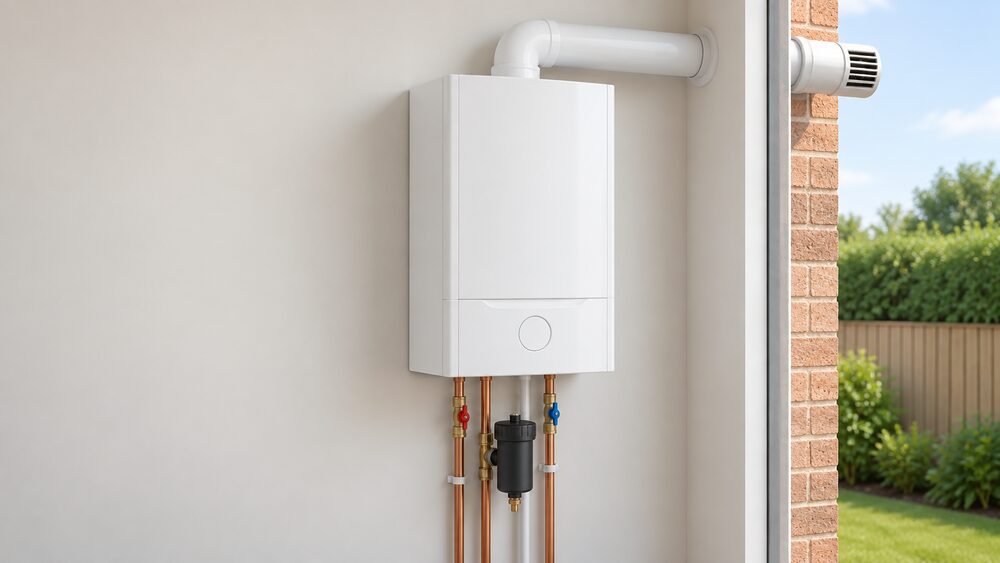 Baxi boilersBaxi is a British boiler maker based in Preston, selling combi, system, heat-only and electric models through UK merchants, with warranties up to 10 years and a growing heat pump and controls range.
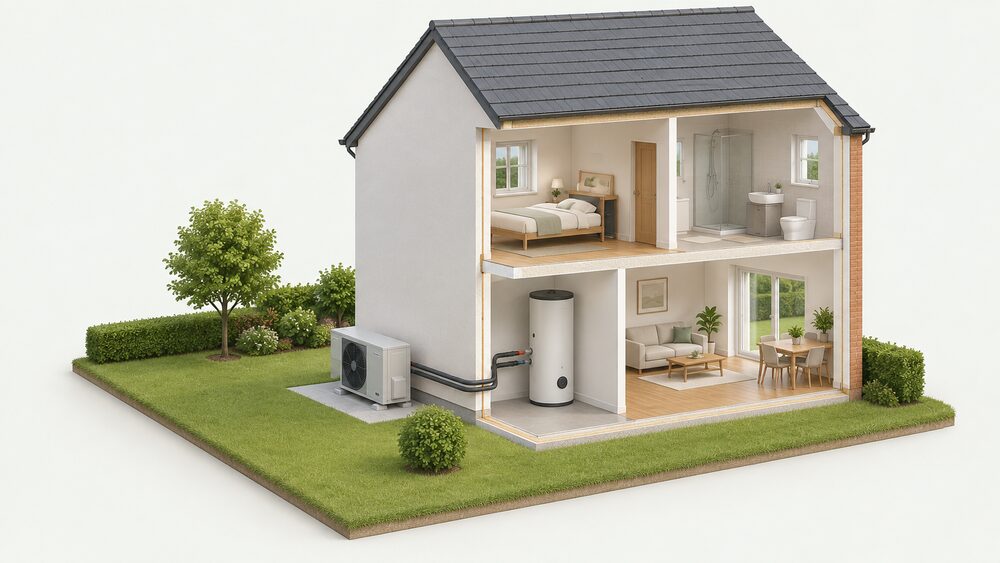 Baxi air source heat pumpsBaxi now makes air source heat pumps for UK homes, including the HP40, HP60 and Assure models, plus hybrid versions that work alongside an existing boiler.
 Baxi Heating ControlsWhich Baxi thermostat or smart control works with your boiler, and can you fit it yourself?
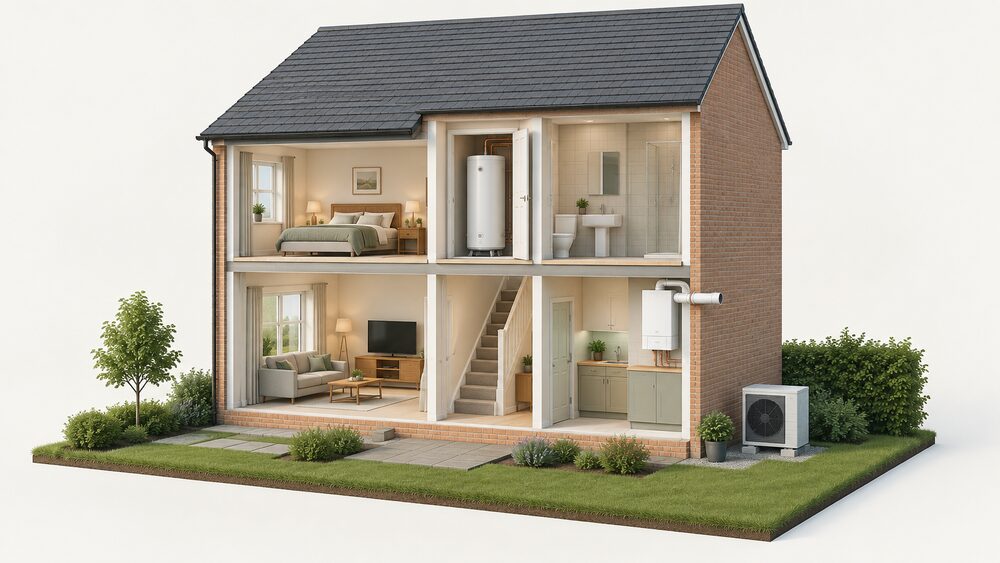 Baxi boilers, cylinders and heat pumpsWhich Baxi boiler suits your home, and is a combi, system or heat only model the right choice?