
In this guide
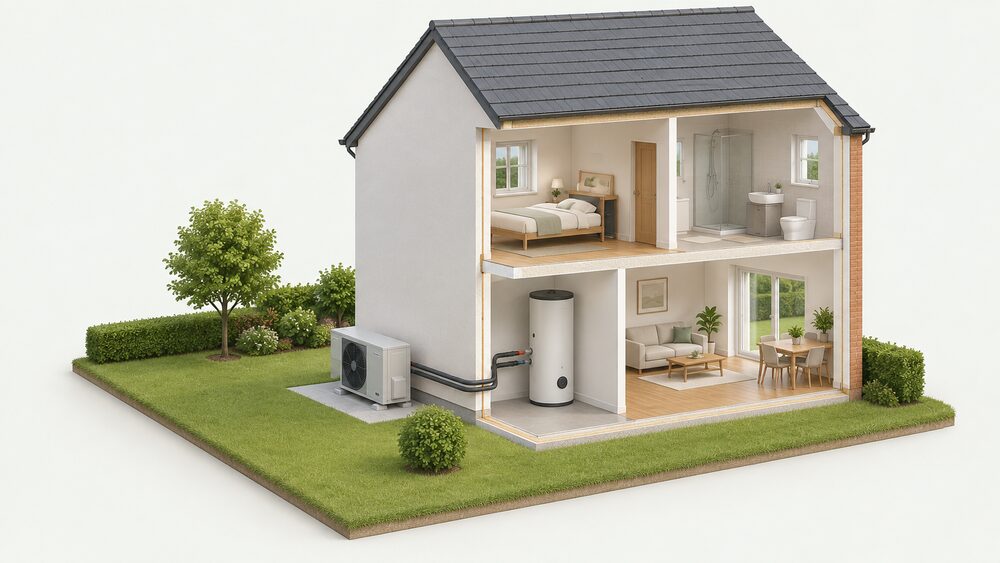
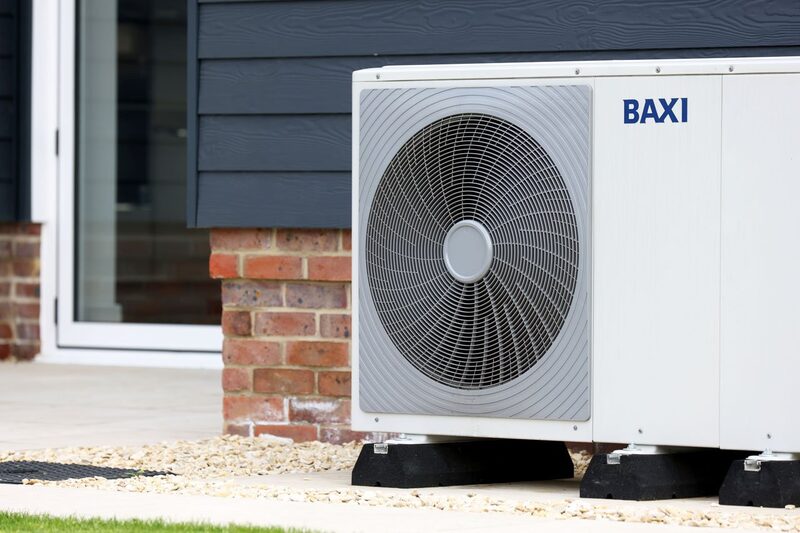
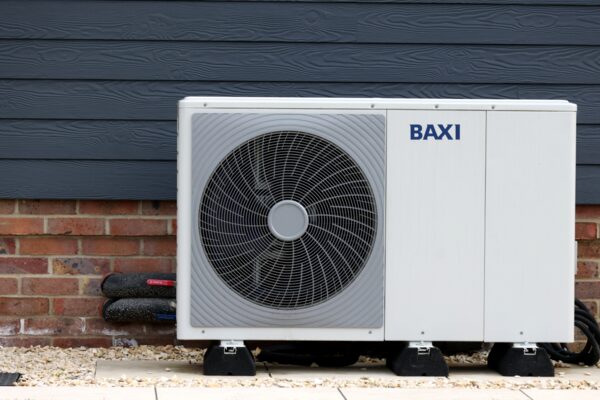
Baxi sells a small family of monobloc air source heat pumps for UK homes: the HP40, the HP60, and the Assure HP50 and HP55. All are monobloc, meaning the refrigerant circuit is sealed inside the outdoor unit and only water and pipework cross the wall into the house1. Outputs run from 4kW to 13kW, and the maker states the range can run at up to 530% efficiency2.
The headline efficiency figure is a SCOP of up to 5.34 at 35°C flow temperature, published for the Assure HP55 and matched by the HP60 at its 4kW size4. That is a seasonal measure, not a peak, and it falls as flow temperature rises: the HP60 at 13kW is listed at 4.70 at 35°C and 3.73 at 55°C4.
For a household, the appeal is a British-built cylinder paired with a familiar brand, and the dependence is the same as any heat pump: electricity, a grid connection, and an outdoor unit that Baxi states generally cannot be relocated once installed6.
The Baxi heat pump range: HP40, HP50, HP55 and HP60 monobloc models
Every Baxi heat pump is a monobloc air source unit. The HP40 is the entry model, available on its own or bundled with a Baxi Air Source Heat Pump Cylinder1. The HP60 is described as a high temperature monobloc, designed to deliver reliable heating and hot water with quiet, efficient operation4. The Assure HP50 and Assure HP55 sit in the same family, with the HP55 also described as a high temperature monobloc5.
The distinction that matters most is the "high temperature" label on the HP55 and HP60. A high temperature unit is intended to reach flow temperatures that suit existing radiators more closely, which reduces the amount of emitter replacement a retrofit needs. The HP40 is the more conventional model in that respect.
| Model | Type | Outputs | Best published SCOP at 35°C |
|---|---|---|---|
| HP40 | Monobloc | 4kW to 13kW, single phase12 | 5.03 (7kW and 8kW)12 |
| HP60 | High temperature monobloc | 4kW to 13kW4 | 5.34 (4kW)4 |
| Assure HP50 | Monobloc | 4kW to 13kW11 | up to 5.0311 |
| Assure HP55 | High temperature monobloc | 4kW to 13kW5 | up to 5.345 |
The HP40 and HP60 are the two models named in Baxi's cashback promotion, which offered £500 per qualifying installation registered by 31 December 202610. The Assure models are aimed at the specifier and social housing market rather than the retail replacement trade13.
Efficiency: SCOP up to 5.34 at 35°C and 530% overall
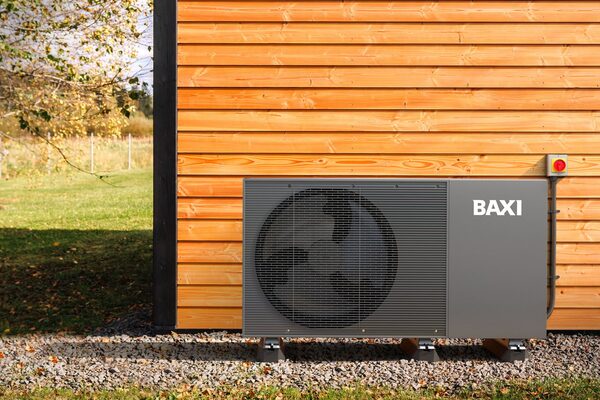
Baxi states that its air source heat pumps can run at up to 530% efficiency6. That is a marketing headline for the best case, and the model-level SCOP figures published on the product pages are the ones tied to specific appliances.
The pattern across the range is consistent. The Assure HP55 and the HP60 at 4kW both reach a SCOP of 5.34 at 35°C4. The HP60 at 6kW is listed at 5.22, at 8kW at 5.20, at 11kW at 4.77 and at 13kW at 4.704. The HP40 is listed at 4.77 at 5kW and 5.03 at 7kW and 8kW12. The Assure HP50 is listed at up to 5.0311.
Two things drive the spread. The first is output size: larger units in the same family tend to show lower seasonal figures, because the same compressor and heat exchanger are being asked to do more. The second is flow temperature. The HP60 at 13kW is listed at 4.70 at 35°C but 3.73 at 55°C, and at 8kW at 3.89 at 55°C4. Running a heat pump hotter costs efficiency, which is why emitter sizing and fabric improvements matter more than the badge on the outdoor unit.
The HP40's 45°C figures show the same effect within one model: 3.93 at 4kW, rising to 4.19 at 8kW, then falling to 3.88 at 13kW12. Baxi notes that selections and sizing offered by the company use nominal values unless otherwise stated5. For how SCOP differs from COP and from a measured SPF, see heat pump efficiency.
Output sizes from 4kW to 13kW: matching the model to the home
Baxi states that its heat pumps have an output of between 4kW and 13kW3. The HP40 is available in 4kW to 13kW all single phase, with optional triple phase for larger outputs12. The HP60 and Assure HP55 are available in 4kW to 13kW, all single phase with optional triple phase for large outputs4. The Assure HP50 is listed across 4kW, 5kW, 7kW, 8kW, 11kW and 13kW, with 11kW and 13kW also offered in three phase11.
The physical size changes with output, and that matters for siting. The smaller 4kW and 6kW units in the HP55 and HP60 families measure 1301mm wide, 725mm high and 426mm deep4. The 8kW, 11kW and 13kW units measure 872mm wide, 523mm high and 1390mm deep, with a unit volume of 0.59 m³5. The HP40's 4kW and 5kW models are 1309mm wide and 700mm high, while its 7kW to 13kW models are 850mm high12.
Choosing between them is a heat loss calculation, not a rule of thumb. Baxi's own guidance is that a site survey and heat loss calculation determine what a property needs, and that modifications such as radiator upsizing, insulation, glazing and draught sealing may follow14. The range runs from 4kW to 13kW across the families: the Assure HP50 is listed at 4kW, 5kW, 7kW, 8kW, 11kW and 13kW, with 11kW and 13kW also offered in three phase, and the Assure HP55 is available in outputs of 4kW to 13kW, all single phase with optional three phase for the large outputs11. For the sizing process itself, see heat pump sizing.
What a Baxi heat pump needs from your home: cylinder, radiators and outdoor space
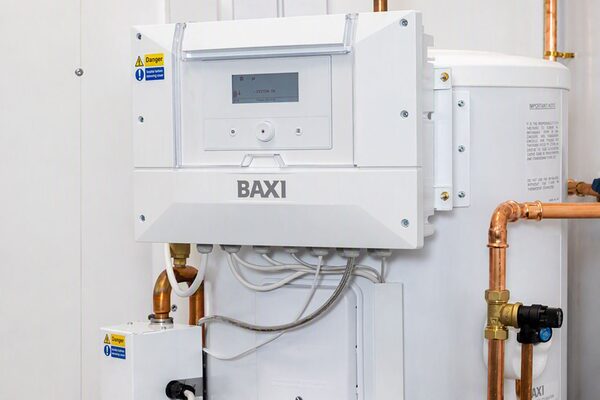
A Baxi heat pump needs a compatible hot water cylinder unless the household is using a hybrid system15. Baxi makes its own: the Baxi Air Source Heat Pump Cylinder is manufactured in the UK by Baxi and Heatrae Sadia, and carries a 2 year warranty as standard with 10 years on the inner stainless steel tank7. Baxi also sells buffer tanks designed for use with its air source heat pumps10.
Outdoor space is the constraint that catches people out. Baxi states that its heat pumps require between 1 and 1.5 metres of clear space in front to work properly, and 300mm between the back of the unit and the wall6. That is a larger footprint than most gas boiler flues need, and it is the reason siting is settled at survey stage.
Radiators are the other variable. A high temperature model such as the HP55 or HP60 is intended to work with existing emitters more readily, but Baxi's own guidance is that a heat loss calculation determines whether radiator upsizing is needed14. The cylinder, buffer and emitter questions are covered in more depth at hot water cylinders for heat pumps and radiators and emitters.
Running one well: continuous operation, summer use, holiday and frost protection modes
Baxi's operating guidance is that a heat pump should be kept active throughout the summer months, in order for it to work in the most efficient way and to heat water for showers and household tasks16. This is a different rhythm from a gas boiler, which can be switched off entirely between heating seasons. A heat pump that is shut down for the summer loses the efficiency of continuous low-level operation and still has to produce hot water.
Baxi states that its air source heat pumps generally feature a holiday mode, which maintains efficiency and keeps the house at a comfortable temperature for return17. There is also a frost protection mode, which Baxi says can prevent frozen pipes and other potential issues in the winter months17.
Cooling is available on some models. Baxi states that some heat pumps have a cooling function, which may be beneficial during the hotter months, so long as the system has been designed for it15. That is a specification decision rather than a retrofit, and it is covered further at using a heat pump for cooling.
The refrigerant in the HP40 is R32 across all listed models12. Baxi's units also carry safety features including pressure relief valves and temperature sensors, providing protection against overheating and excessive pressure18. For the wider picture on controls and weather compensation, see heat pump controls.
Installation, planning permission and installer support

Baxi's installation route is a postcode search: a householder enters a postcode and is matched with local, trained engineers who provide a no-obligation quote19. Baxi states that it supports installers with MCS, which is the route to grant funding access15. The company also states that the use of a competent installer is vital to ensure safety18.
On planning permission, Baxi's guidance is that permission is typically not needed, as installation typically comes under permitted development rules, though certain requirements may apply for homes in conservation or built-up areas16. The same wording appears on the HP40 product page12. Permitted development rights are devolved, so the position differs across England, Scotland, Wales and Northern Ireland; the four national pages are at England, Scotland, Wales and Northern Ireland.
Baxi's own service plans cover boilers, filters, cylinders and air source heat pumps, with cover running until the end of the product warranty and all work carried out with Baxi genuine parts20. For the installation process from survey to handover, see heat pump installation.
Warranty: 2, 5 or 7 years, with an annual service condition
Baxi's warranty terms vary by model, and the published figures form a ladder rather than a single number. A Baxi Air Source Heat Pump comes with a 2 year warranty as standard8. The HP40 carries up to a 5 year enhanced warranty, and the HP60 and Assure HP55 carry up to a 7 year enhanced warranty4. The Assure HP50 is listed with a 2 year warranty11. Baxi's general heat pump guidance states up to 7 years warranty15, and its service plan page describes 2, 5 or 7 year warranties depending on the model9.
The condition attached to all of them is servicing. Baxi states that a heat pump will need to have a service at least once a year in order to maintain its warranty16, and repeats on its service plan page that heat pumps should be serviced each year to maintain the warranty terms and conditions9. Baxi describes the annual service as not only important from a safety point of view, but also a requirement for warranty18.
Registration is done online through the warranty section of the Baxi website, or by calling the warranty registration phoneline21. Baxi's warranty terms state that the installer must register the warranty within 30 days of commissioning8. If a unit is already registered, the online form will say so once the serial number is entered21. Servicing and warranty questions are covered further at heat pump servicing and warranty.
Baxi as a company: British-made since 1866 and what owners report
Baxi is headquartered in Warwick and is described as one of the biggest boiler manufacturers in Europe22. Its UK brand portfolio includes Baxi, Potterton, Main Heating, Heatrae Sadia, Megaflo, Remeha, Andrews Water Heaters, Potterton Commercial and Packaged Plant Solutions23. Main is a boiler brand owned by Baxi, and Potterton was bought by Baxi in recent years22.
Manufacturing is British. Baxi boilers are manufactured in the UK, and independent guidance describes both Baxi heating boilers and Glow Worm boilers as British-made24. The Baxi Air Source Heat Pump Cylinder is specially designed and manufactured in the UK by Baxi and Heatrae Sadia experts7.
On owner satisfaction, Which? reports that 83% of Baxi owners told it they are satisfied with their boiler22. That figure relates to boilers rather than heat pumps, and it is a survey result rather than a performance guarantee. The CIPHE reported in June 2026 that a Baxi HP60 replaced a failed oil boiler at a home in Skibbereen, West Cork, cutting running costs and raising the BER rating to A126. That is a single case study in a different jurisdiction, and it is reported rather than independently verified.
For a household weighing independence, the position is straightforward. A Baxi heat pump moves space heating and hot water off gas and onto electricity, which removes the gas supplier from the equation but leaves the household dependent on the electricity grid and on a supplier for that electricity. The outdoor unit is a manufacturer's product with a manufacturer's warranty, serviced annually to keep that warranty valid, and Baxi states it generally cannot be relocated once installed. The cylinder is UK-made, which shortens the supply chain for that component. What changes, and what does not, is set out at heat pumps and household energy independence.
Sources26 cited
- Air source heat pumps, Baxi
- Air source heat pumps professional range, Baxi
- What size air source heat pump do I need, Baxi
- HP60 high temperature monobloc air source heat pump, Baxi
- Baxi Assure HP55 high temperature monobloc air source heat pump, Baxi
- Advantages and disadvantages of air source heat pumps, Baxi
- Baxi air source heat pump cylinder, Baxi
- Heat pump warranty, Baxi
- Air source heat pump service plans, Baxi
- Baxi buffer tanks, Baxi
- Baxi Assure HP50 monobloc air source heat pump, Baxi
- Baxi HP40 monobloc air source heat pump, Baxi
- Baxi Assure products, Baxi
- Professional products, Baxi
- Heat pump advice, Baxi
- Can an air source heat pump work alongside a boiler, Baxi
- Will an air source heat pump work while on holiday, Baxi
- Are air source heat pumps safe, Baxi
- Heat pumps, Baxi
- How to register your boiler warranty and keep it valid, Baxi
- Warranty registration, Baxi
- Baxi boilers review, Which?
- Different boiler types, Uswitch
- New Baxi heat pump offering, CIPHE
- Written evidence, UK Parliament
- Baxi heat pump case study, CIPHE
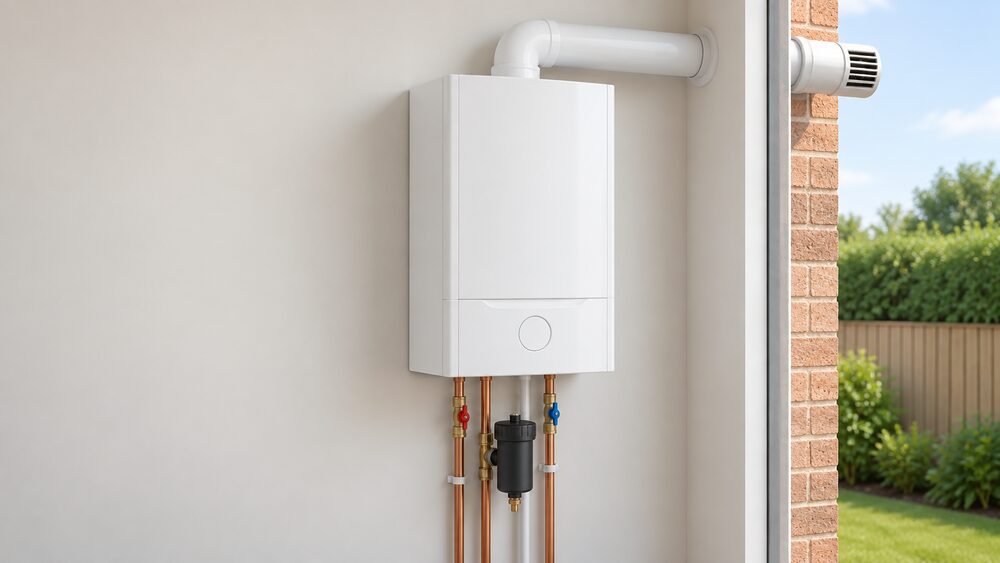 Baxi boilersBaxi is a British boiler maker based in Preston, selling combi, system, heat-only and electric models through UK merchants, with warranties up to 10 years and a growing heat pump and controls range.
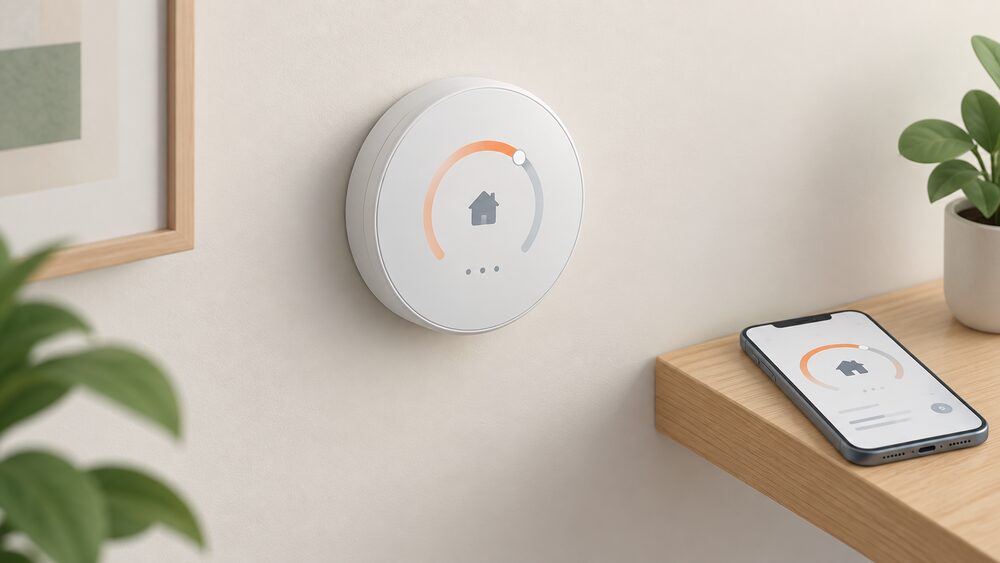 Baxi Heating ControlsWhich Baxi thermostat or smart control works with your boiler, and can you fit it yourself?
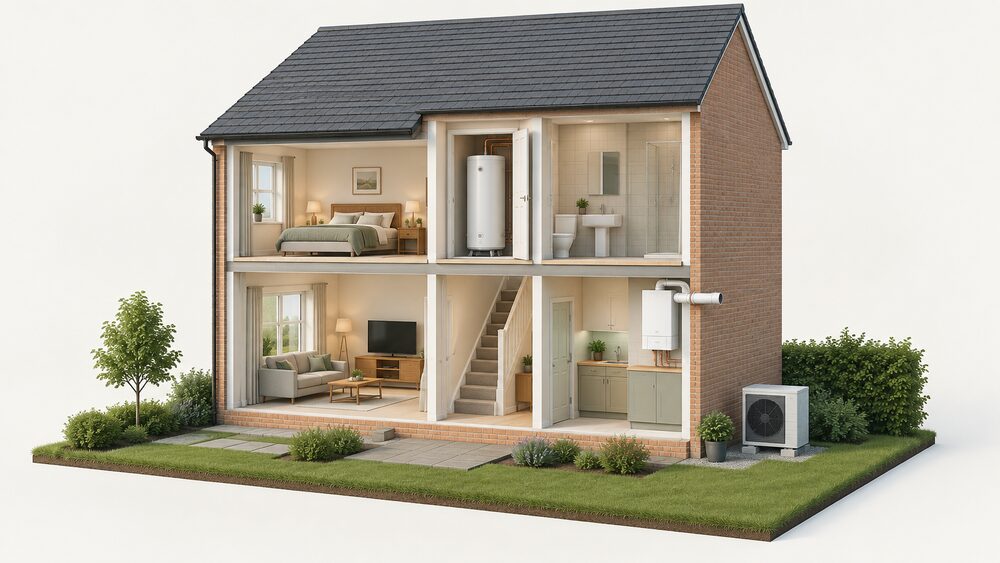 Baxi boilers, cylinders and heat pumpsWhich Baxi boiler suits your home, and is a combi, system or heat only model the right choice?
 Baxi EcogenThe Baxi Ecogen was the main micro-CHP boiler sold to UK households, generating around 1kW of electricity while it ran.